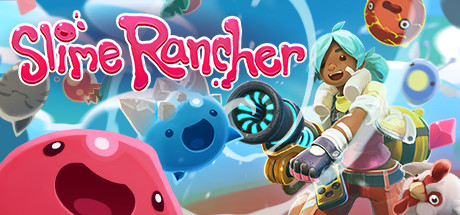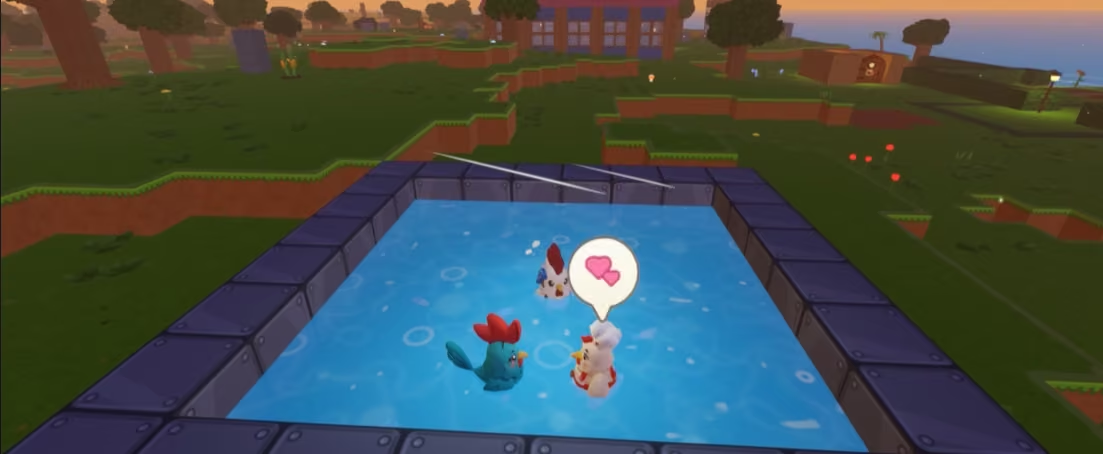
I was given access to the beta of Cluckopia by its developer, and I approached it with cautious curiosity. Cozy games built around gathering resources, crafting, and exploring colorful worlds aren’t usually my first choice, although I did spend an embarrassing number of hours playing Slime Rancher. When these games get their progression and atmosphere right, they can be surprisingly addictive.
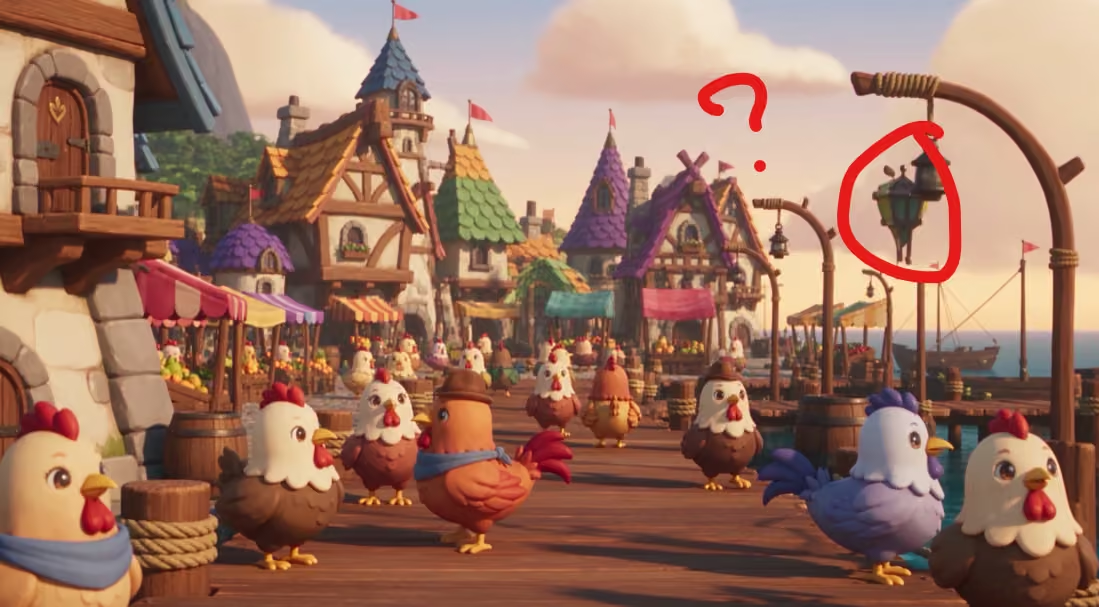
Unfortunately, Cluckopia didn’t make a particularly convincing first impression. Its opening sequence immediately struck me as AI slop, and even the studio’s logo seemed to share that same synthetic aesthetic. Whether these elements were actually created using AI or not, they lacked the personality I’d expect from a game that relies so heavily on charm.
Thankfully, things improved once I started playing.
A surprisingly welcoming little world
The first thing that won me over was the chickens themselves. Their adorable vocalizations, reminiscent of Animal Crossing but adapted to their feathered personalities, give the characters an immediate sense of warmth.
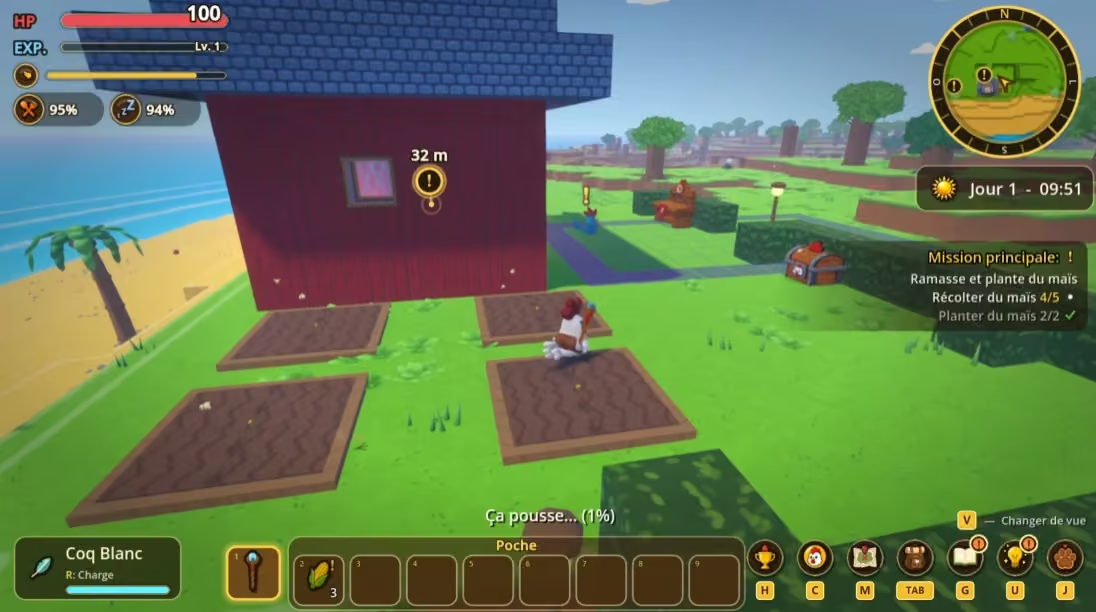
The interface is another genuine highlight. It’s colorful, readable, and remarkably approachable. Information is presented clearly, menus are pleasant to navigate, and the overall experience doesn’t feels intimidating at all.
Combined with its gentle atmosphere and lack of graphic violence, these qualities make Cluckopia particularly suitable for younger players. I can easily imagine children discovering the basics of crafting, gathering, and adventure games here.
Unfortunately, this attention to accessibility doesn’t always extend to the controls, as my controller wasn’t detected, and I was forced to play with mouse and keyboard.
More adventure than construction
Despite its voxel-based world, Cluckopia isn’t really a sandbox construction game. Its blocky environments seem primarily designed to support a structured adventure, with resource gathering and building acting as secondary systems.
There are some thoughtful touches. Destroying the base of a tree causes the remaining blocks to fall, saving me from the tedious process of dismantling it piece by piece. I also liked the idea of blueprints to help place blocks. In theory, this should make construction accessible to players who aren’t particularly interested in designing everything themselves.
In practice, however, the structures I encountered weren’t especially complicated to build. I found myself questioning whether blueprints were really necessary, particularly since they didn’t even automatically handle the roof. The system feels caught somewhere between creative freedom and convenience without fully committing to either.
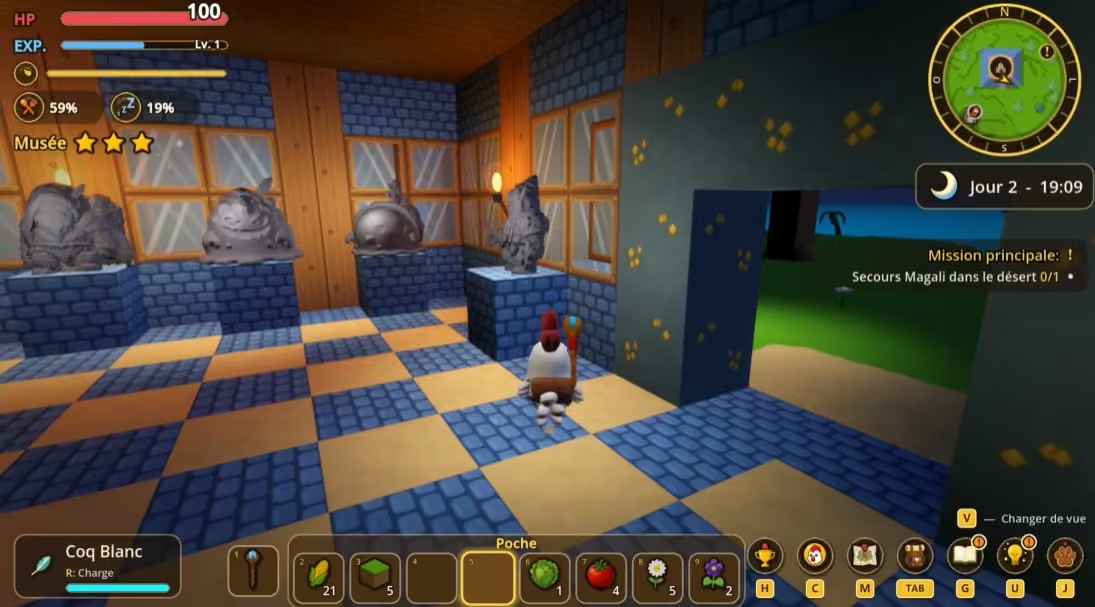
The museum, clearly reminiscent of Animal Crossing, is a more promising addition. Having a dedicated place to collect and display discoveries feels perfectly suited to this kind of game, potentially giving players a reason to engage with the world beyond its main objectives.
When simple actions become unnecessarily frustrating
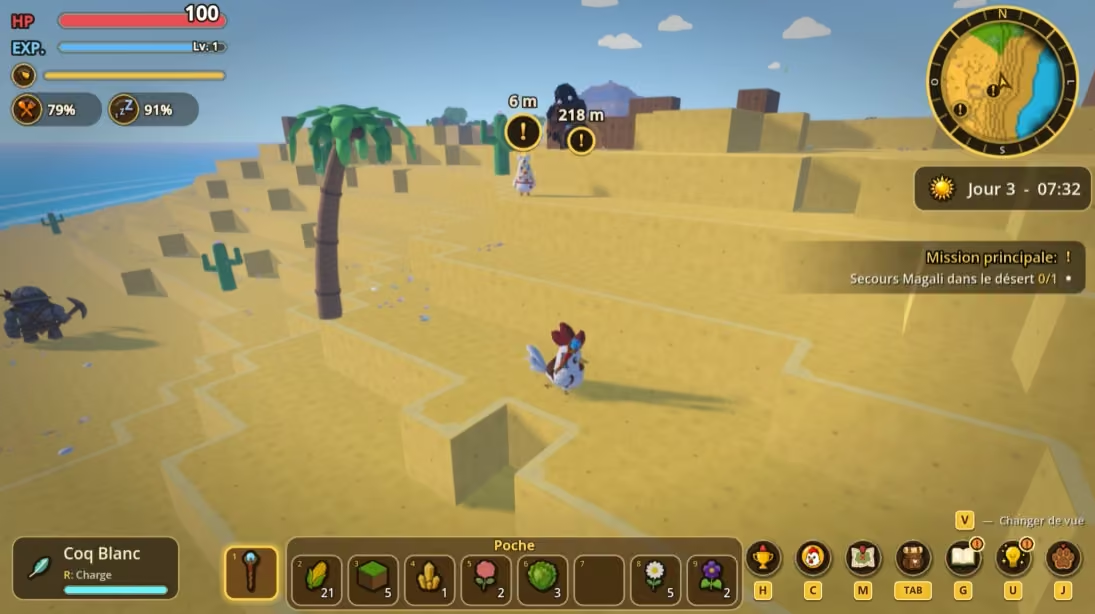
My biggest complaints concern the moment-to-moment gameplay.
Mining, for instance, requires repeatedly clicking the mouse rather than simply holding down the button. Considering how frequently the player needs to gather materials, this becomes irritating remarkably quickly. There’s no meaningful challenge involved, just unnecessary physical repetition.
The interaction system is similarly inconsistent. Left-clicking might activate an equipped item or perform a regular attack, depending on what I’m holding. Unfortunately, it’s not always clear beforehand whether an item can be activated, turning what should be an intuitive action into a guessing game.
I eventually discovered that fighting with empty hands provides a charged attack capable of instantly destroying surrounding blocks. It’s actually a satisfying alternative to conventional mining, although it has its own peculiar limitations. If an NPC happens to be standing on a block, the attack simply refuses to destroy it.
Construction suffers from another frustrating communication problem. Sometimes the game informs me that I can’t build something in a particular location without explaining why. A simple visual indicator would make these restrictions considerably easier to understand.
Individually, none of these problems is disastrous. Together, however, they create friction in activities that should feel effortless in a relaxing adventure.
There’s also a surprising lack of character animation. Sleeping doesn’t have a dedicated animation, and neither does flying, which feels like a missed opportunity when the protagonist is literally a chicken. A little exaggerated wing-flapping could have made movement much more expressive and enjoyable.
These details matter because they help establish a physical connection between the character and the world. Without them, certain actions feel strangely mechanical.
An island that doesn’t quite reward exploration
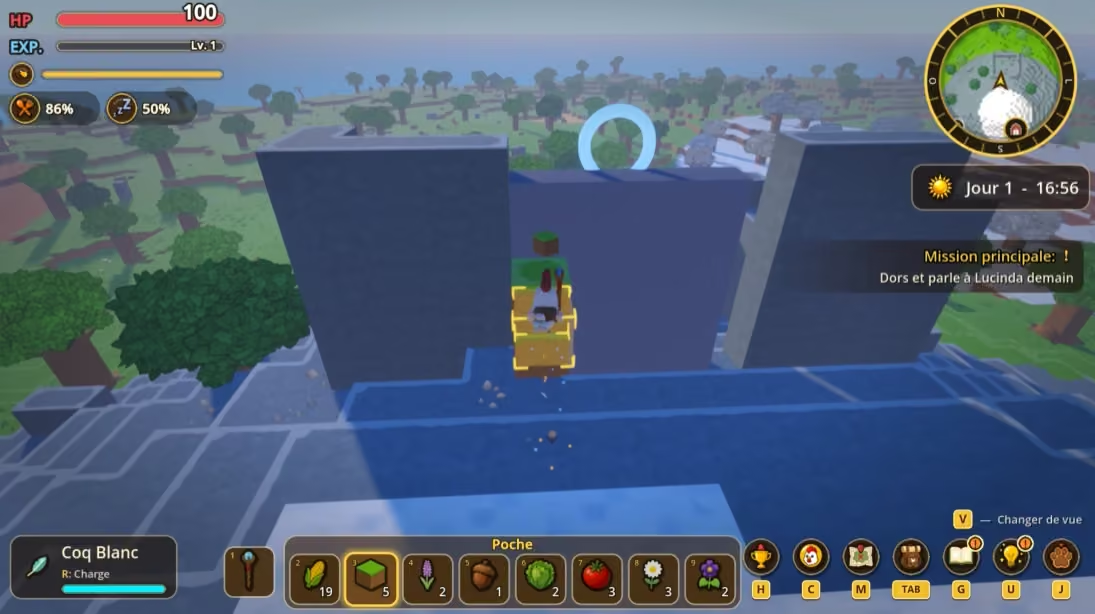
The world itself left me somewhat underwhelmed.
At least in the beta I played, the adventure takes place on a relatively small island that can be explored without much difficulty. That isn’t inherently a problem. A compact environment filled with meaningful discoveries can be far more engaging than an enormous, repetitive open world.
Unfortunately, I didn’t find particularly strong incentives to explore beyond the main objectives.
Golden eggs are scattered around the environment, and I initially enjoyed searching for them. Yet I didn’t encounter any obvious reward associated with collecting them during my session. Perhaps their purpose becomes apparent later, but without meaningful feedback, my motivation to hunt them gradually disappeared.
I also noticed clouds floating above the island, suggesting potential vertical exploration, but I couldn’t reach them yet, the game hinting that I needed to progress further in the game.
Of course, these limitations might partly reflect the beta’s unfinished state. Still, the experience made it clear that Cluckopia is less interested in open-ended exploration than in guiding players through its story.
And unfortunately, the story wasn’t particularly compelling either.
A story that struggles to create motivation
The central premise involves a chicken searching for legendary roosters, an objective that felt rather arbitrary to me.
I’m perfectly happy to accept an absurd premise in a whimsical game, but even the silliest adventures benefit from some narrative motivation. Here, the quest seemed to come out of nowhere, without giving me much reason to care about its outcome.
One mission, involving rescuing a hen stranded in the desert and surrounded by relatively powerful enemies, worked better mechanically. The danger created some tension and provided a concrete objective.
Narratively, however, the situation felt contrived. Why was this character alone in such a dangerous location? The game didn’t seem particularly interested in answering that question.
My journey eventually came to an end after approximately one hour, when the progression started requiring me to give gifts to various hens.
By that point, the prospect of spending considerable time fulfilling what appeared to be repetitive requests wasn’t especially appealing. I hadn’t developed enough attachment to the characters or the story to justify continuing, so I stopped without completing the beta.
A promising game still searching for its identity
There’s an undeniably charming foundation here. The characters are endearing, the interface is excellent, and the welcoming atmosphere could make this a wonderful introduction to adventure and crafting games for children.
But for someone already familiar with the genre, I struggled to find a compelling reason to keep playing. Construction lacks depth, exploration doesn’t consistently reward curiosity, and the narrative provides little motivation to push through the more repetitive objectives.
The numerous control frustrations only amplify these weaknesses.
Of course, this is a beta, and my impressions are limited to roughly an hour of gameplay. Some mechanics may reveal greater depth later, and there’s certainly room for the developer to improve the experience before release.
I left its colorful island with some affection for its inhabitants, but not quite enough curiosity to find out what they wanted from me next.