100 Doors Game - Escape from School Thumbnail

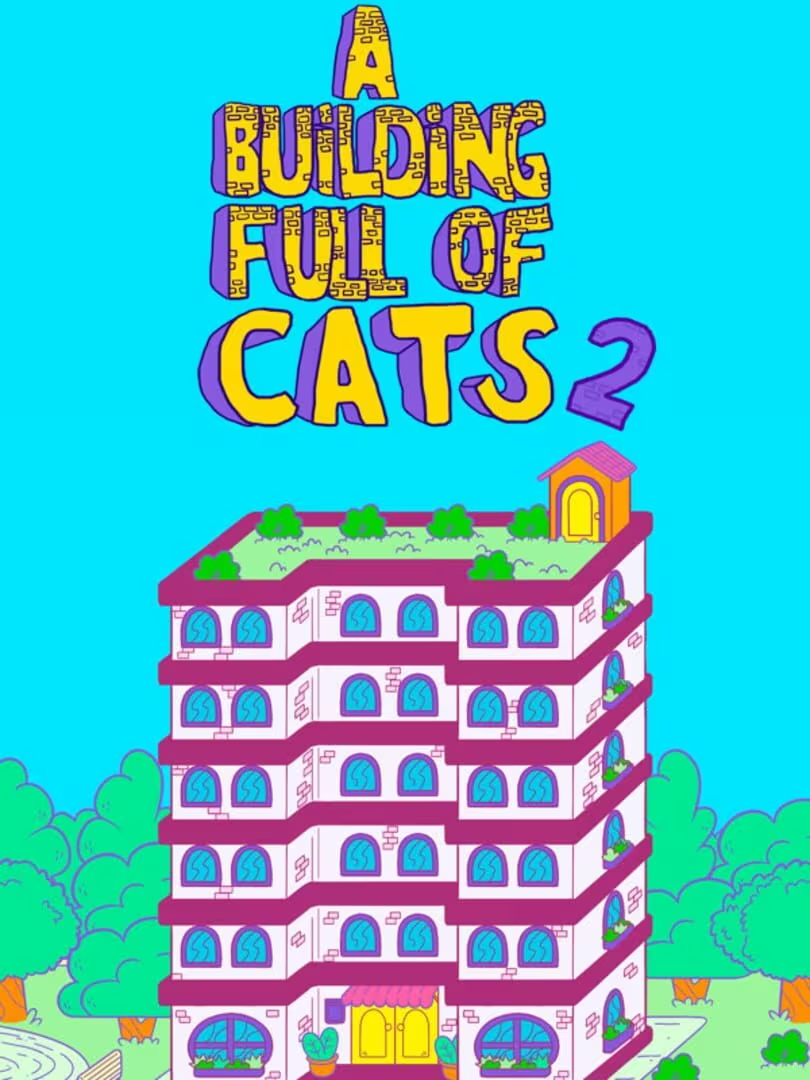
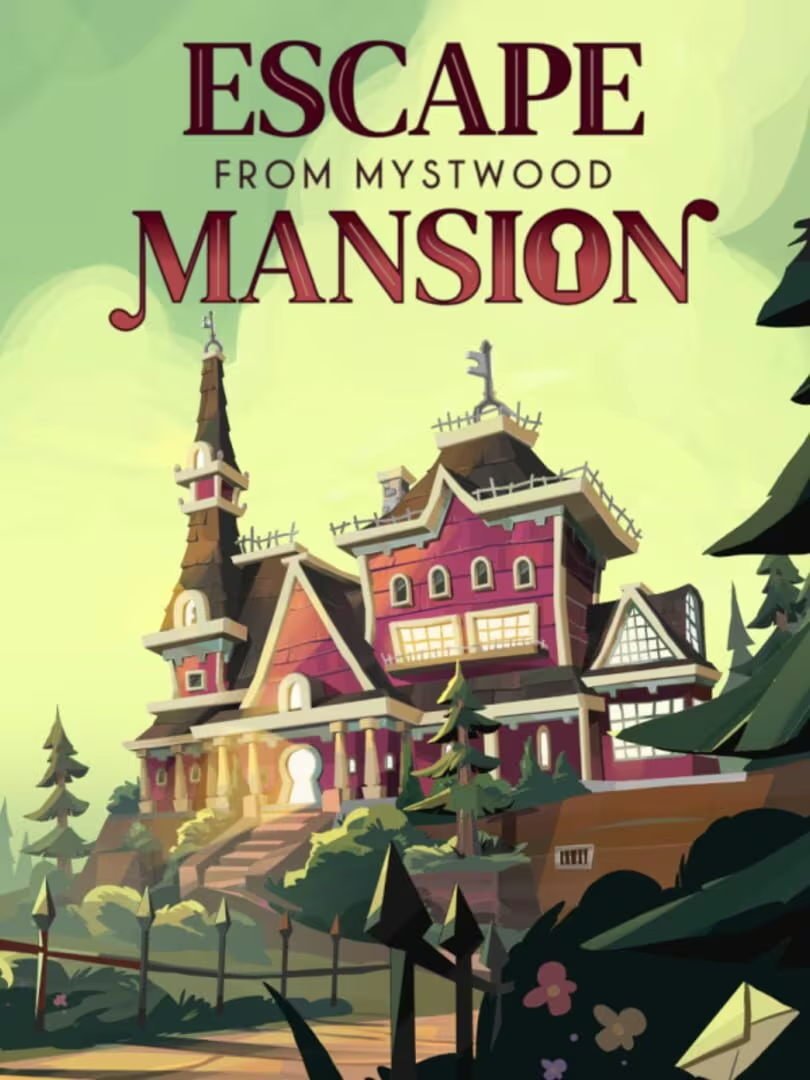
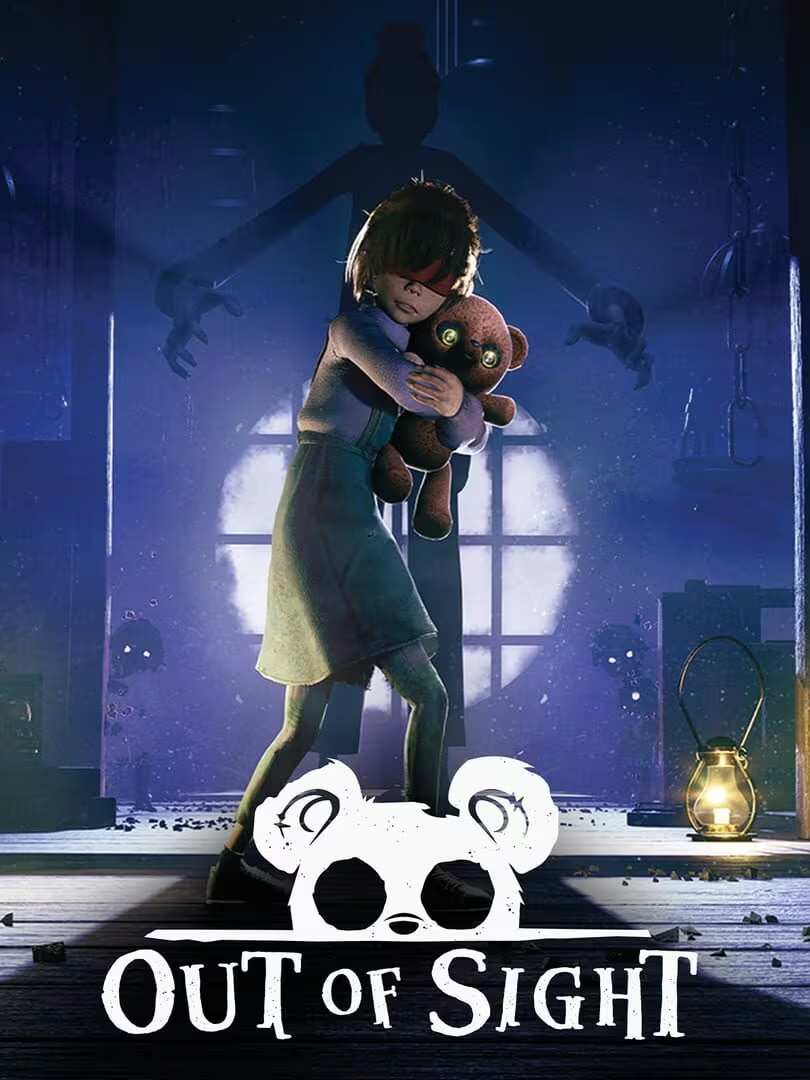
100 Doors Game - Escape from School similar games & best alternatives

100 Doors Game - Escape from School

PC (Microsoft Windows), Nintendo Switch, Mac, Android • 2020

Related articles

Quick resume

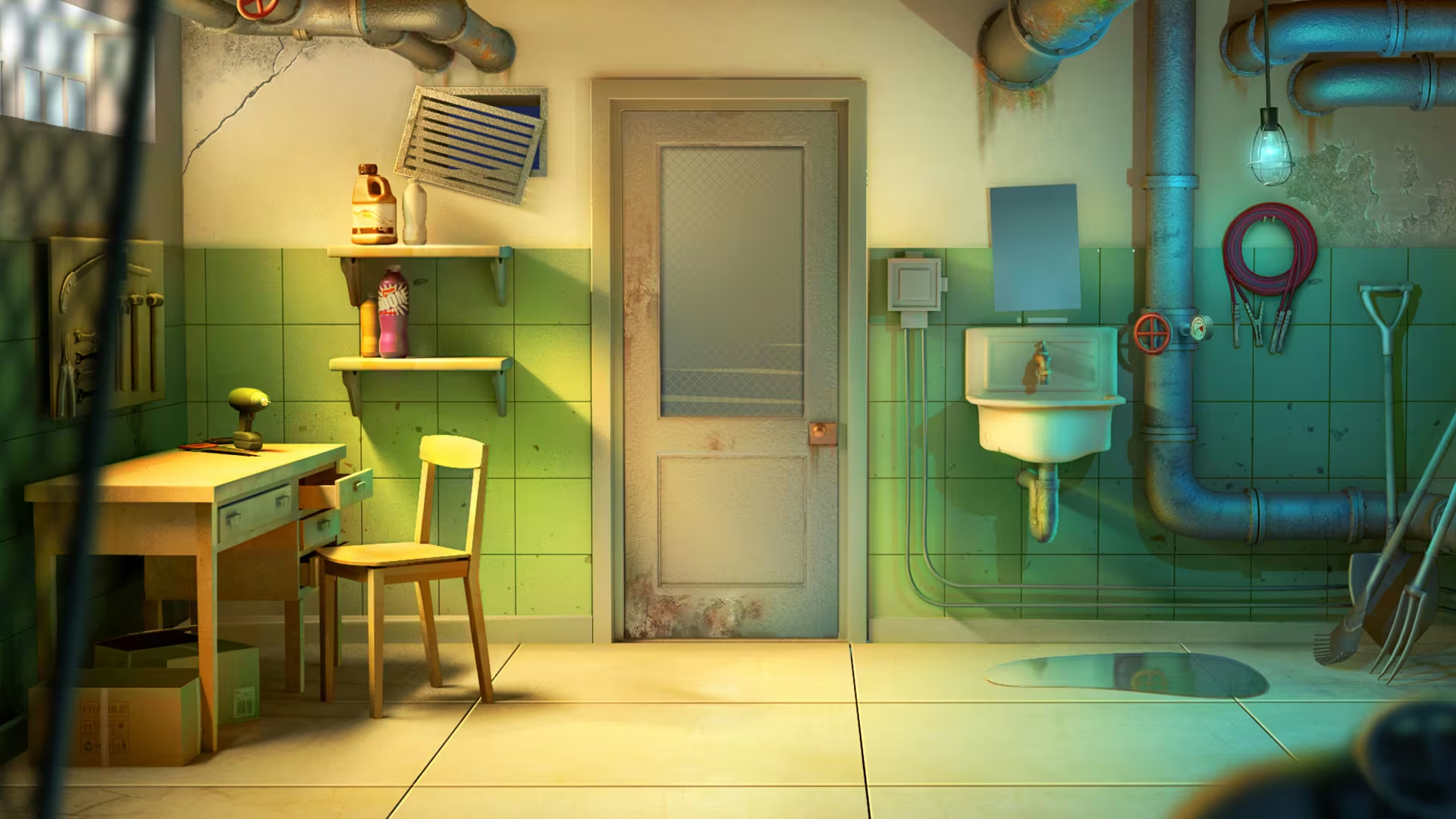
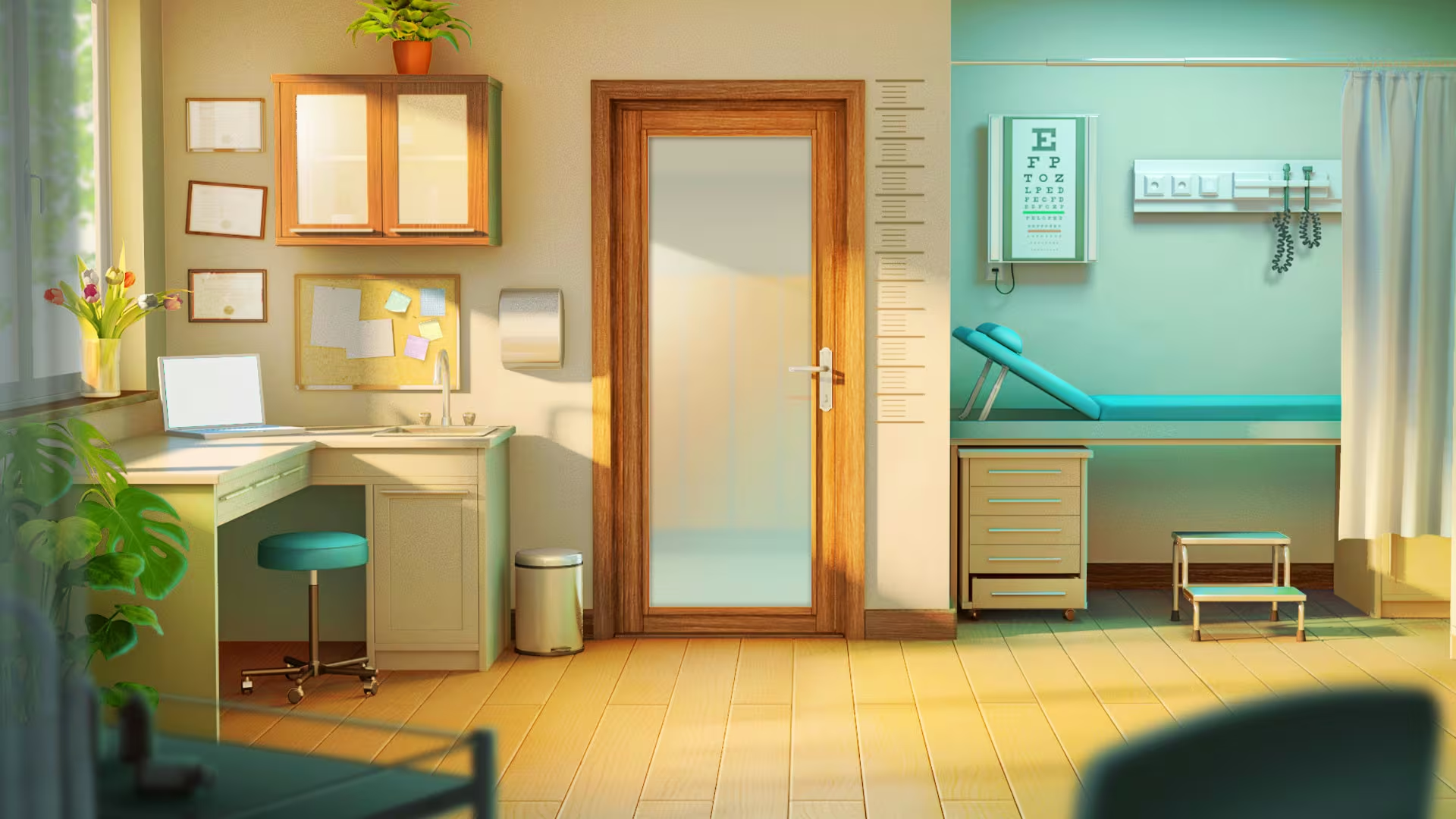
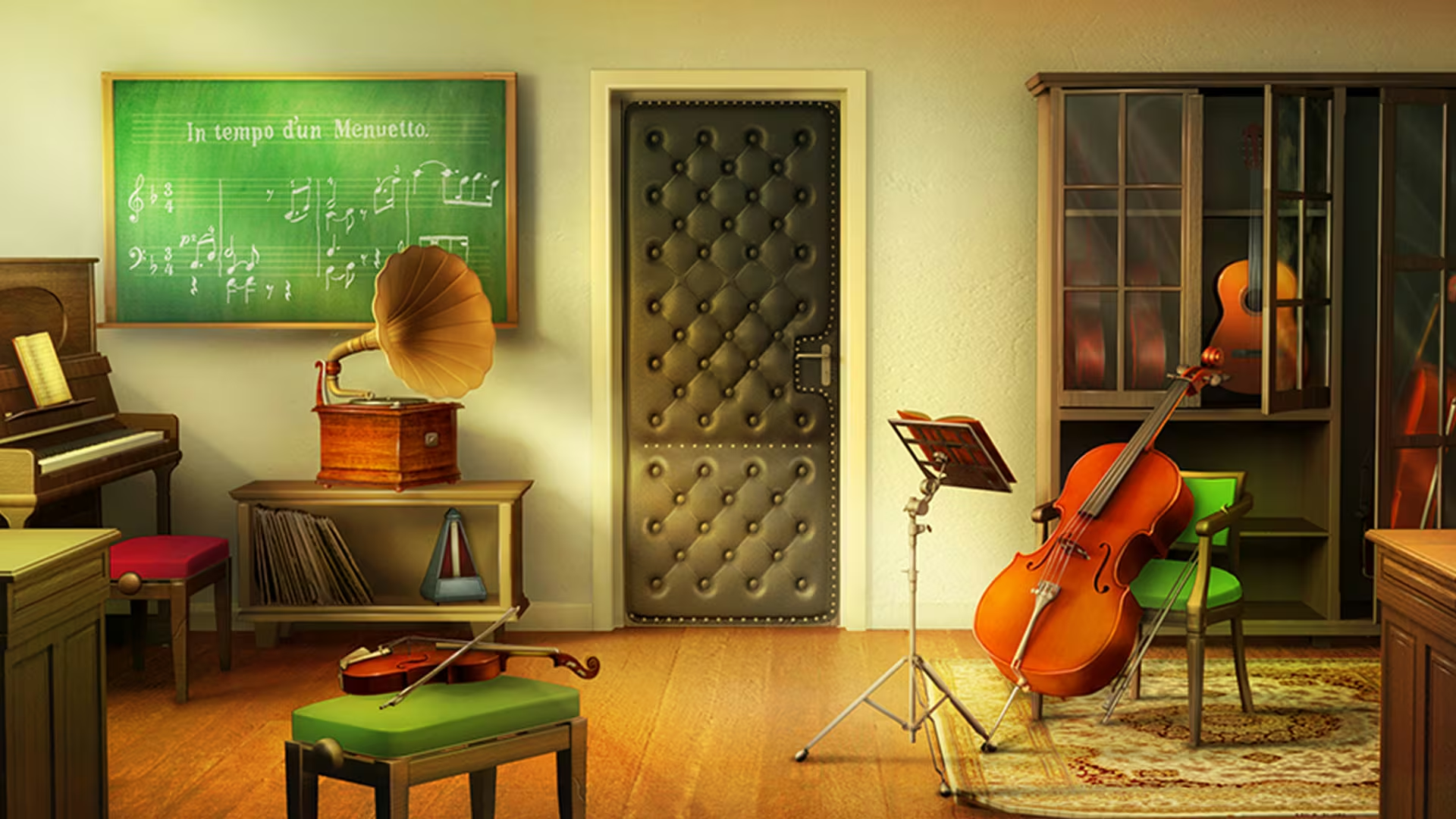
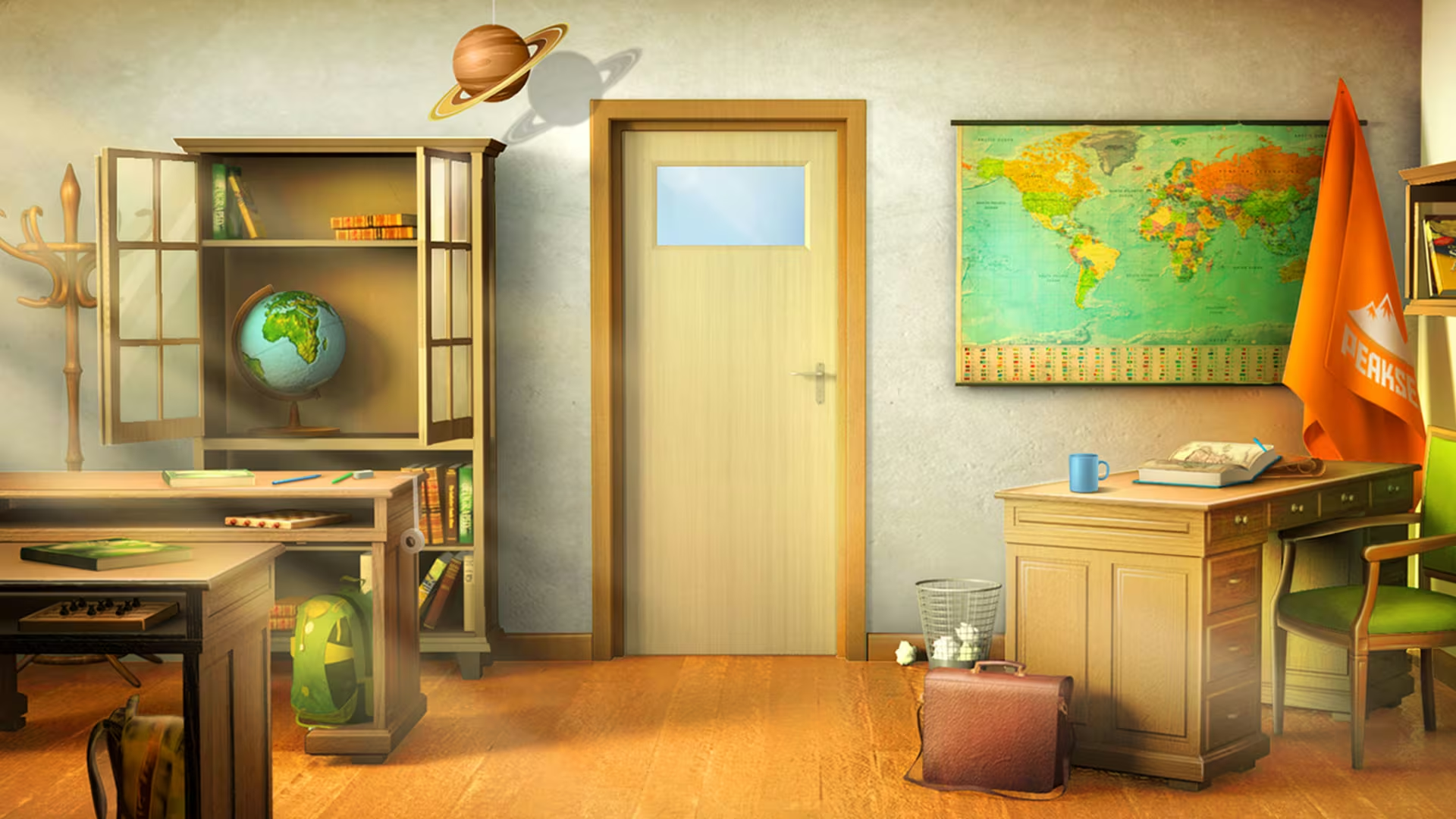
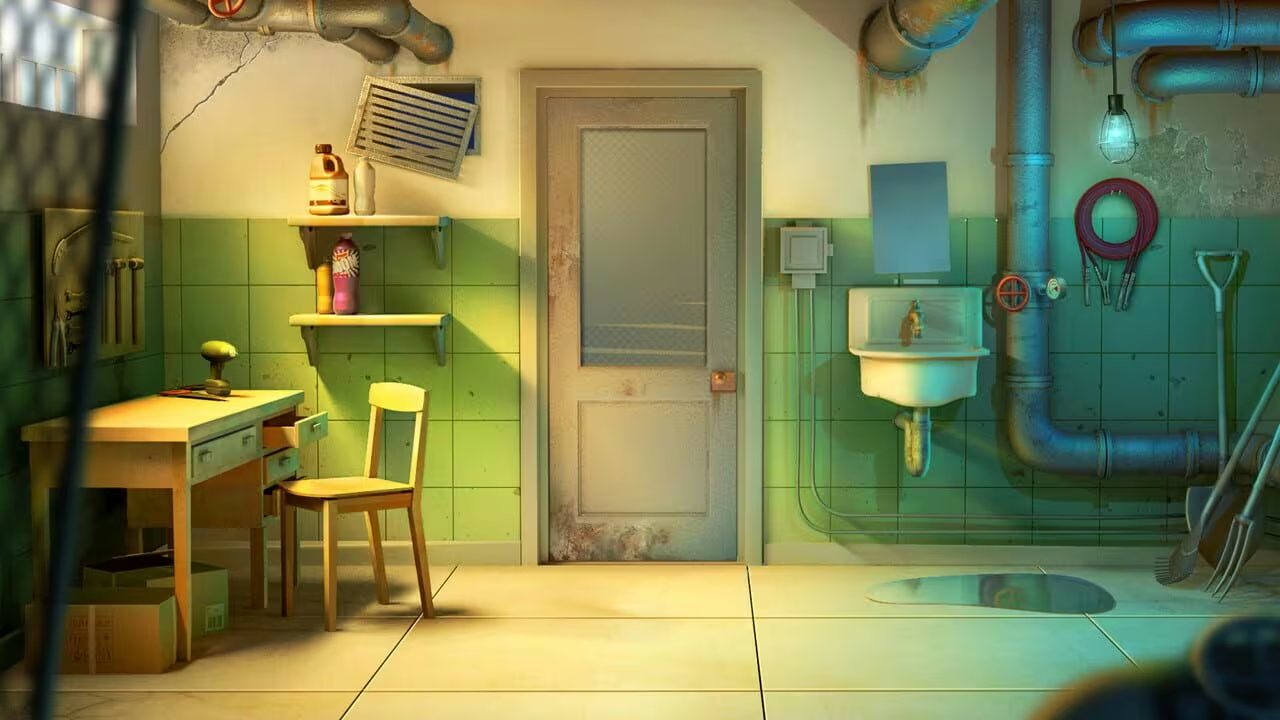
A girl named Mia is locked inside a school. Help her escape by solving puzzles and riddles, as well as finding hidden objects along the way that open the doors of every single room she finds herself trapped in.

Global score

74/100

Genres

Adventure, Casual, Free To Play, Point-and-click, Puzzle

Similar games

    Pros

    • Free to play
    • Challenging and varied puzzles
    • Relaxing and accessible gameplay
    • Good length with 140 levels
    • Hints and skip options available

    Cons

    • Repetitive room designs
    • Some puzzles unintuitive or frustrating
    • Mobile port feel with ui issues
    • Microtransactions for hints and skips
    • Lack of narrative depth and social features

    Analysis

    Broadly representative of its motivational profile, with a few distinct shifts. Motivations that often define this kind of title include Fantasy, Violence, Story, Thrill. Here, the score leans higher than usual among comparable games on Story. It leans lower than usual among comparable games on Expression, Exploration.

    How to use the graph
    Similar games map

    Each dot is a game. They are arranged from the same motivation profile as in the “Motivations” section below. Closer dots usually mean more similar reasons to play (exploration, competition, relaxation, etc.)—not that one game is “better” than another.

    • Larger dot with a light outline: the game you are viewing.
    • Colour: groups of games with comparable motivation patterns (statistical clusters).
    • Hover a dot to see the game name; click to open its page.
    • Scroll or double-click the chart to zoom out and see more games.

    Why don’t the axes read like a score? This view uses t-SNE: it only keeps who is close to whom. The scales are not “good to bad” or hours played—they separate groups on the map. Read distance between dots, not the axis numbers.

    Motivations

    • Autonomy
      3

      "Players freely choose how to solve puzzles and can skip or use hints, indicating moderate control over actions."

    • Competence
      4

      "Game challenges players with increasingly difficult puzzles requiring logic, knowledge, and problem-solving skills."

    • Competition
      -4

      "Focus is on individual puzzle solving without competitive elements or leaderboards."

    • Continuation
      2

      "Some players report addictive qualities and long playtime, though repetitiveness causes others to disengage."

    • Cooperation
      -5

      "Single-player experience with no cooperative or multiplayer elements."

    • Creativity
      2

      "Players solve puzzles creatively but within predefined room designs and puzzle structures."

    • Domination
      -5

      "No social dominance or power exertion; purely individual puzzle solving."

    • Escapism
      3

      "Players use the game as a relaxing distraction and mental challenge, escaping daily routine."

    • Expectation
      -4

      "Players engage voluntarily for fun and challenge, not due to obligation or pressure."

    • Experimenting
      3

      "Players try different puzzle-solving approaches and experiment with objects to find solutions."

    • Exploration
      -3

      "Limited exploration as rooms repeat visually; focus is on puzzle solving rather than discovering new environments."

    • Expression
      -4

      "No character or environment customization; players interact with fixed scenes."

    • Fantasy
      -4

      "Realistic school setting with puzzles based on real-world knowledge and logic."

    • Fellowship
      -5

      "No community or social features; solitary gameplay."

    • Growth
      4

      "Players develop problem-solving skills and knowledge through progressively harder puzzles."

    • Health
      -5

      "Sedentary gameplay with no physical activity involved."

    • Idle
      -3

      "Requires focused attention to solve puzzles; not suitable for passive or background play."

    • Intimacy
      -5

      "No social or emotional relationship building within the game."

    • Leadership
      -5

      "No leadership or group management roles; purely individual play."

    • Progression
      3

      "Progression through unlocking doors and completing puzzles, though no item collection or upgrades."

    • Relaxation
      3

      "Many players find the game relaxing and a good way to unwind despite occasional frustration."

    • Sensation
      1

      "Simple graphics and sound provide mild sensory stimulation without intense excitement."

    • Status
      -5

      "No social recognition or status systems present."

    • Story
      1

      "Minimal narrative about escaping school; story is light and secondary to puzzles."

    • Strategy
      3

      "Puzzles require logical thinking and problem solving, though not deep strategic planning."

    • Thrill
      -2

      "Low suspense or risk; gameplay is calm with occasional frustration but no intense thrills."

    • Value
      3

      "Free to play with optional microtransactions; players perceive good value for time spent."

    • Violence
      -5

      "No violence; gameplay centers on puzzle solving and exploration."

    • Survival
      -5

      "No survival or threat elements; stable and safe game environment."

    Last update: 29/04/2026