1000 Amps Thumbnail

1000 Amps similar games & best alternatives
1000 Amps

PC (Microsoft Windows), Mac • 2012

Related articles

Quick resume

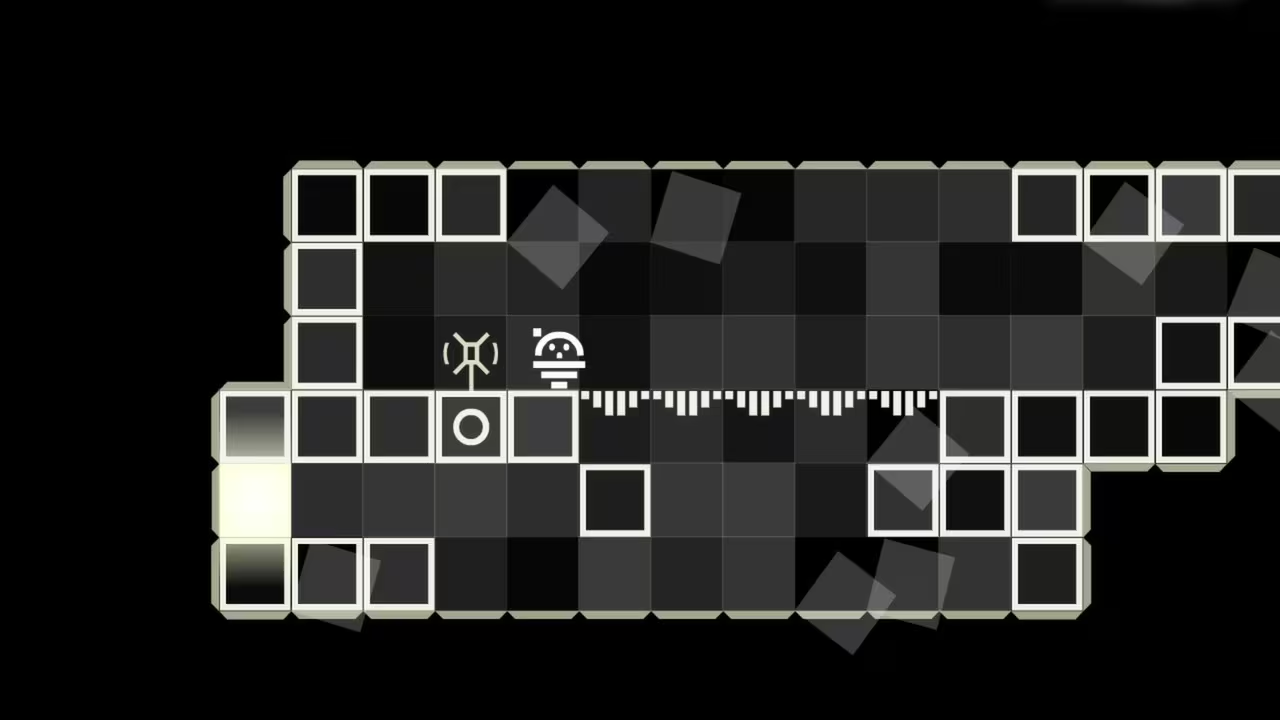
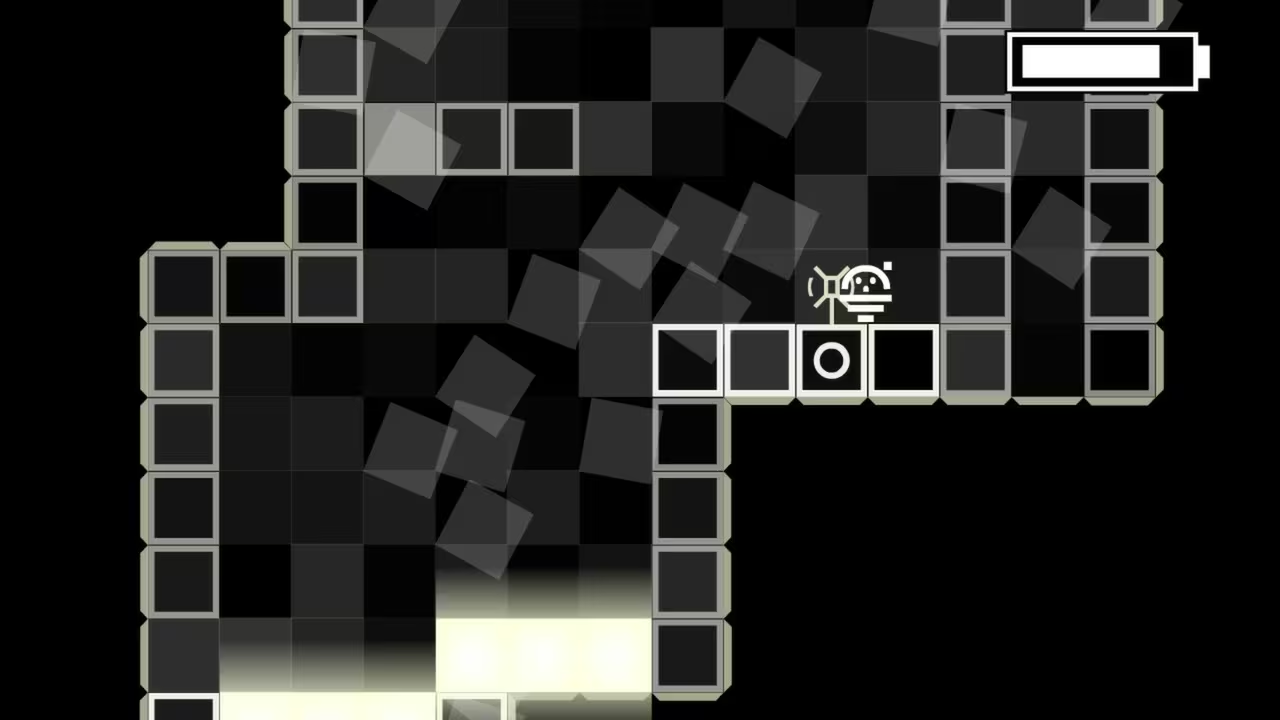
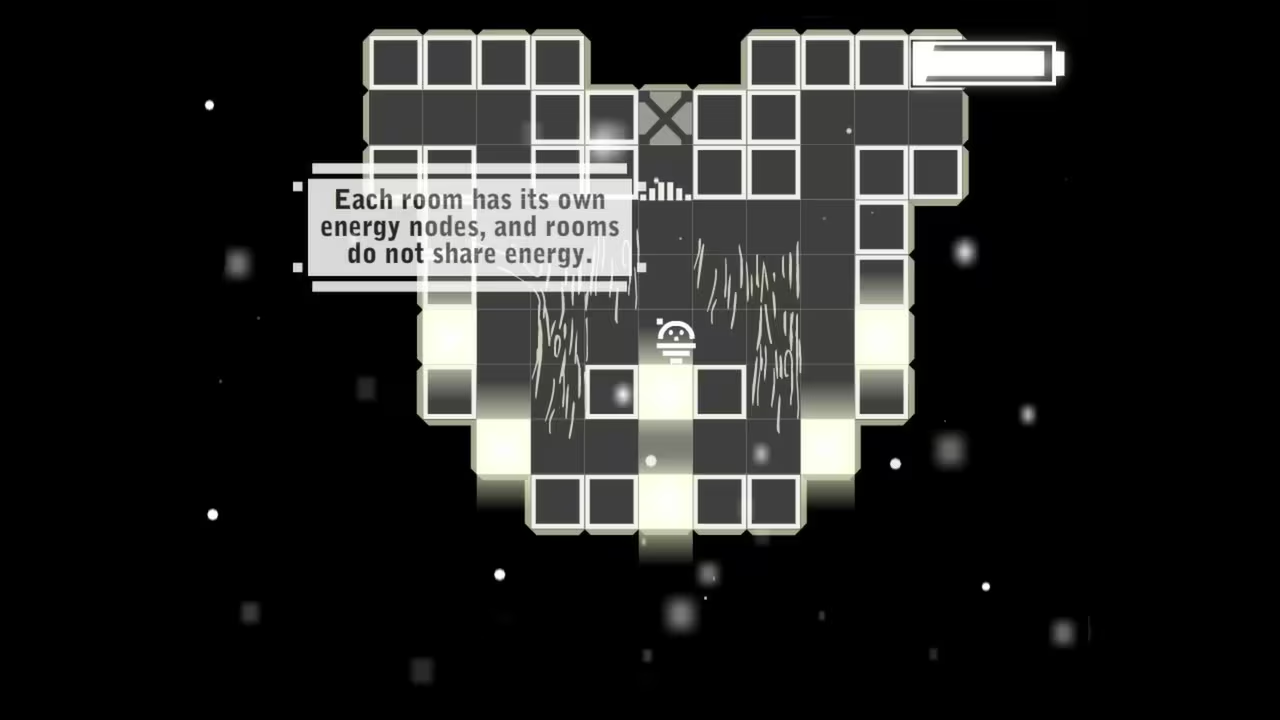
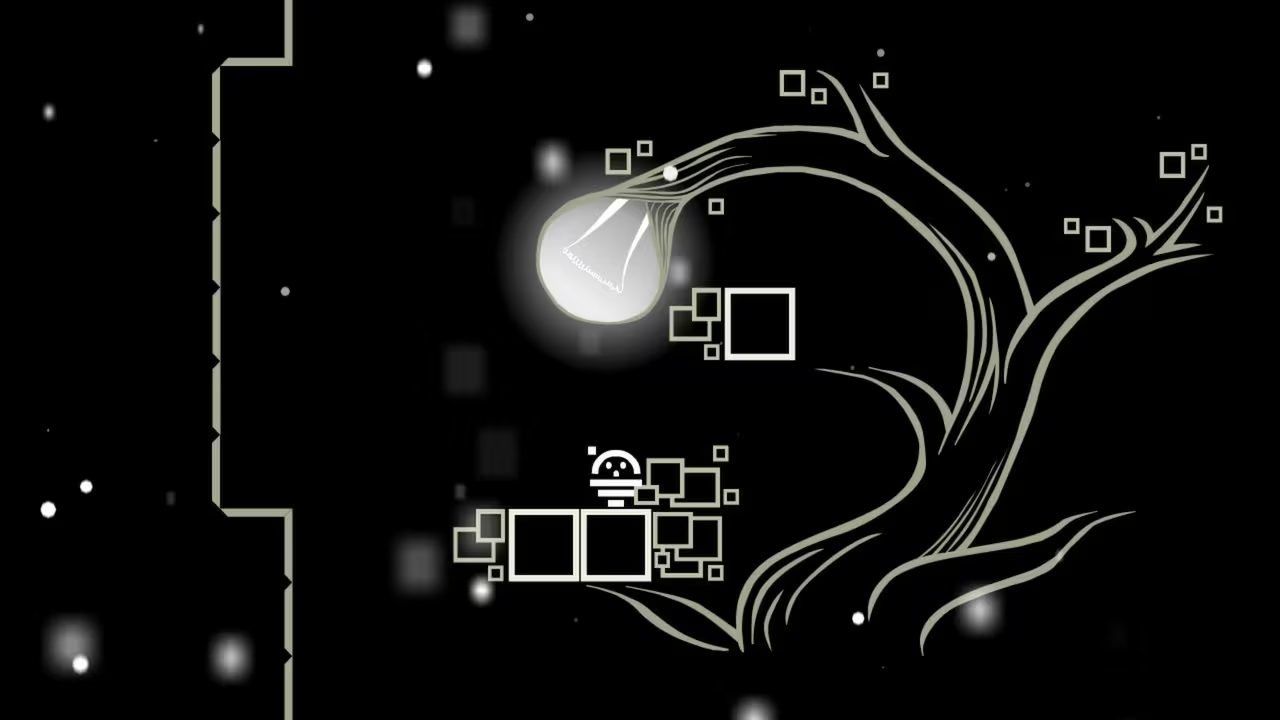
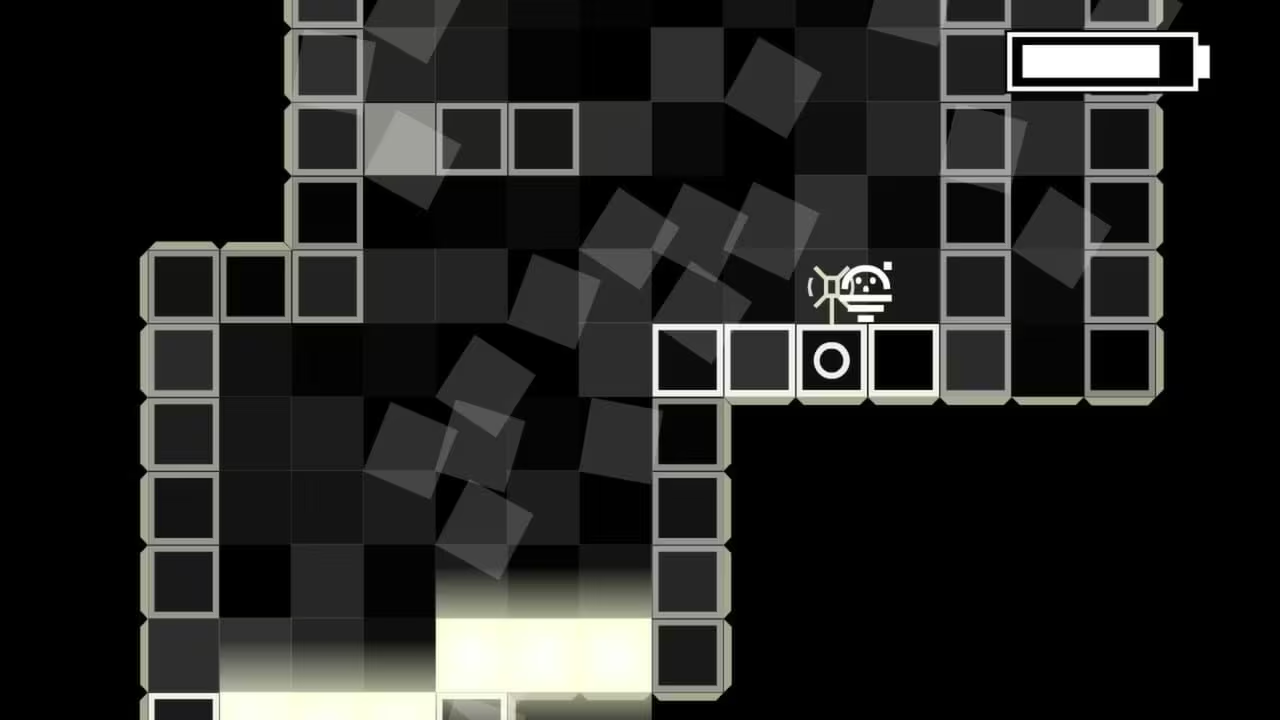
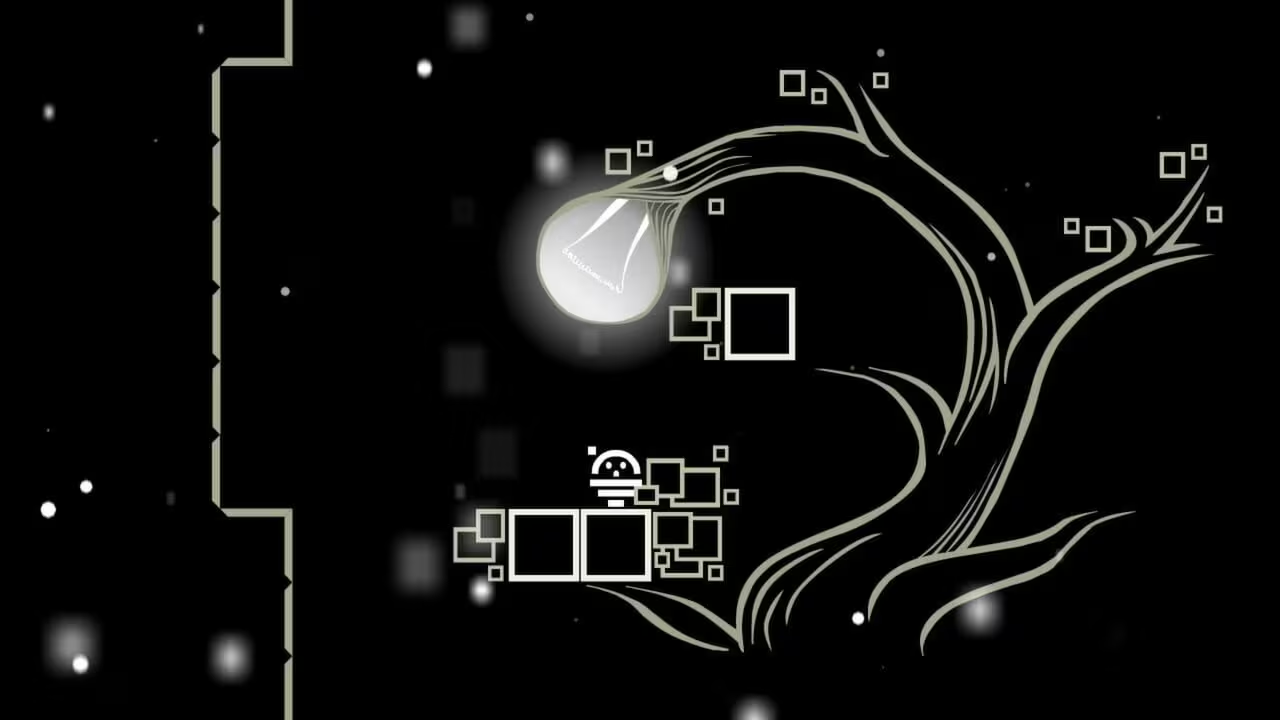
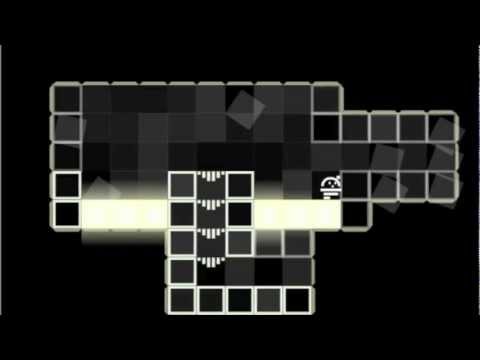
Light up the world! As Plug, you are charged with restoring the expansive Amp-Tree-System, and thwarting an enigmatic intruder.

Global score

79/100

Genres

Adventure, Indie, Platform, Puzzle

Similar games

    Pros

    • Unique and clever puzzle mechanics
    • Large interconnected map with exploration
    • Gradual difficulty curve and satisfying progression
    • Minimalist art style with atmospheric sound
    • Good value for price and playtime

    Cons

    • Frustrating backtracking and navigation
    • Low resolution and poor map usability
    • Final boss fight considered difficult and repetitive
    • Lack of controller support and technical issues in original flash version
    • Minimal story and repetitive music

    Analysis

    Broadly representative of its motivational profile, with a few distinct shifts. Motivations that often define this kind of title include Survival, Violence, Fellowship, Expression. Here, the score leans higher than usual among comparable games on Exploration. It leans lower than usual among comparable games on Expression, Story.

    How to use the graph
    Similar games map

    Each dot is a game. They are arranged from the same motivation profile as in the “Motivations” section below. Closer dots usually mean more similar reasons to play (exploration, competition, relaxation, etc.)—not that one game is “better” than another.

    • Larger dot with a light outline: the game you are viewing.
    • Colour: groups of games with comparable motivation patterns (statistical clusters).
    • Hover a dot to see the game name; click to open its page.
    • Scroll or double-click the chart to zoom out and see more games.

    Why don’t the axes read like a score? This view uses t-SNE: it only keeps who is close to whom. The scales are not “good to bad” or hours played—they separate groups on the map. Read distance between dots, not the axis numbers.

    Motivations

    • Autonomy
      4

      "Players freely explore a large interconnected map with multiple paths and choose their own order to acquire upgrades and solve puzzles."

    • Competence
      3

      "The game offers a gradual difficulty curve with puzzles requiring skillful platforming and problem solving, rewarding mastery."

    • Competition
      -5

      "No evidence of competitive modes or player comparison; focus is on individual exploration and puzzle solving."

    • Continuation
      2

      "Many players report addictive gameplay and desire to complete 100%, though some frustration and backtracking can cause breaks."

    • Cooperation
      -5

      "Single-player experience focused on individual puzzle solving and exploration without multiplayer or cooperative elements."

    • Creativity
      2

      "Players experiment with different abilities and puzzle approaches, but mostly work within designed puzzle constraints."

    • Domination
      -5

      "No elements of exerting control or superiority over others; gameplay is solitary and non-confrontational."

    • Escapism
      3

      "Players use the game as a relaxing distraction with immersive exploration and puzzle solving in a unique world."

    • Expectation
      -4

      "Players engage voluntarily for enjoyment and challenge, with no indication of obligation or external pressure."

    • Experimenting
      3

      "The game encourages trying new abilities and puzzle solutions, with some rooms requiring creative approaches."

    • Exploration
      5

      "Core gameplay revolves around exploring a large map, discovering hidden rooms, and uncovering secrets."

    • Expression
      -5

      "No customization or avatar personalization; the game uses a fixed minimalist art style."

    • Fantasy
      2

      "The game features a fictional robotic character and abstract world, but grounded in puzzle-platformer mechanics."

    • Fellowship
      -5

      "No social or community features; players experience the game individually."

    • Growth
      3

      "Players learn new skills and abilities, improving their problem-solving and platforming over time."

    • Health
      -5

      "Sedentary gameplay with no physical activity or health-related features."

    • Idle
      -3

      "Requires focused attention and continuous engagement to solve puzzles and progress."

    • Intimacy
      -5

      "No social or emotional connection features; purely solo gameplay."

    • Leadership
      -5

      "No leadership or group management elements; single-player experience."

    • Progression
      4

      "Players collect upgrades and abilities that enable access to new areas and easier puzzle completion."

    • Relaxation
      3

      "Generally described as a calming and satisfying experience, though some frustration occurs in parts."

    • Sensation
      1

      "Minimalist visuals and sound provide moderate sensory stimulation; some players find music repetitive."

    • Status
      -5

      "No social recognition or ranking systems; achievements are personal."

    • Story
      1

      "Light narrative about restoring power and defeating an intruder, but story is minimal and secondary to gameplay."

    • Strategy
      3

      "Requires planning routes, timing, and puzzle-solving strategies to progress and unlock areas."

    • Thrill
      -2

      "Mostly calm and methodical gameplay with occasional moments of tension, especially in boss fight."

    • Value
      4

      "Players generally feel the game offers good value for its price and playtime, especially on sale."

    • Violence
      -5

      "No combat or destructive gameplay; focus on constructive puzzle solving and exploration."

    • Survival
      -4

      "No threat of failure or death; stable conditions with some challenge but no survival mechanics."

    Last update: 29/04/2026