911 Operator similar games & best alternatives
911 Operator
2017
Related articles
Quick resume
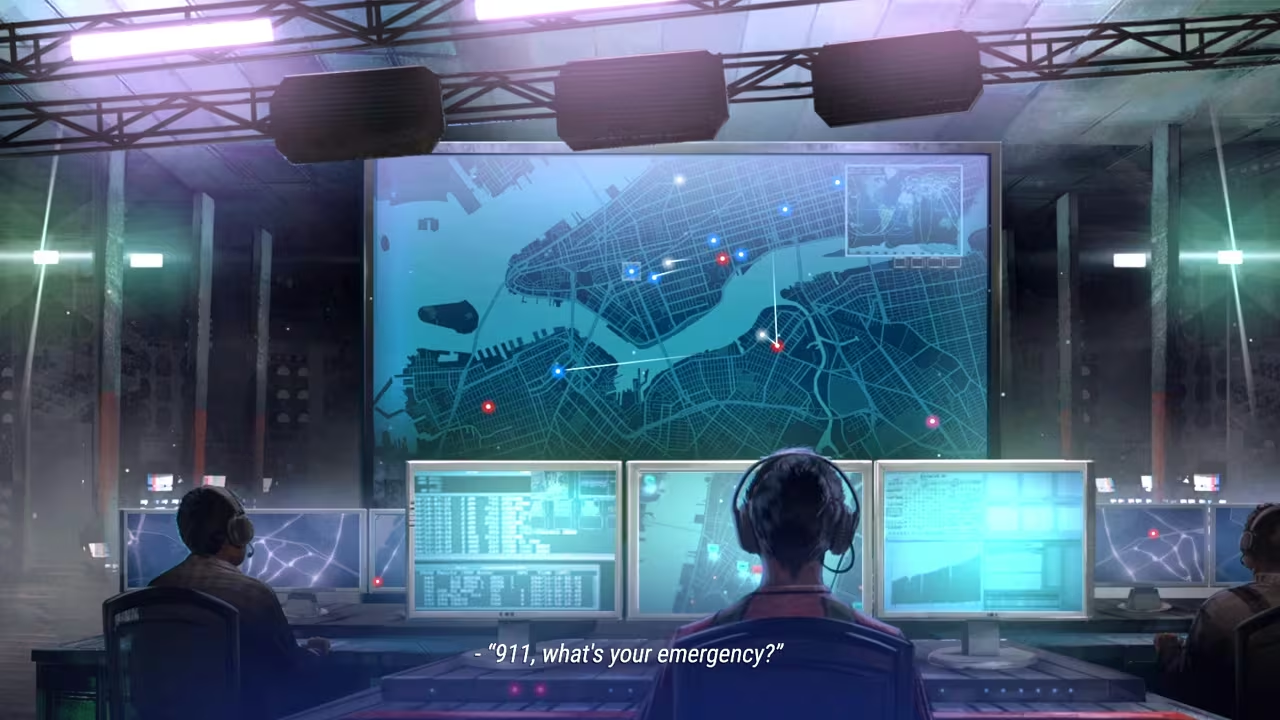
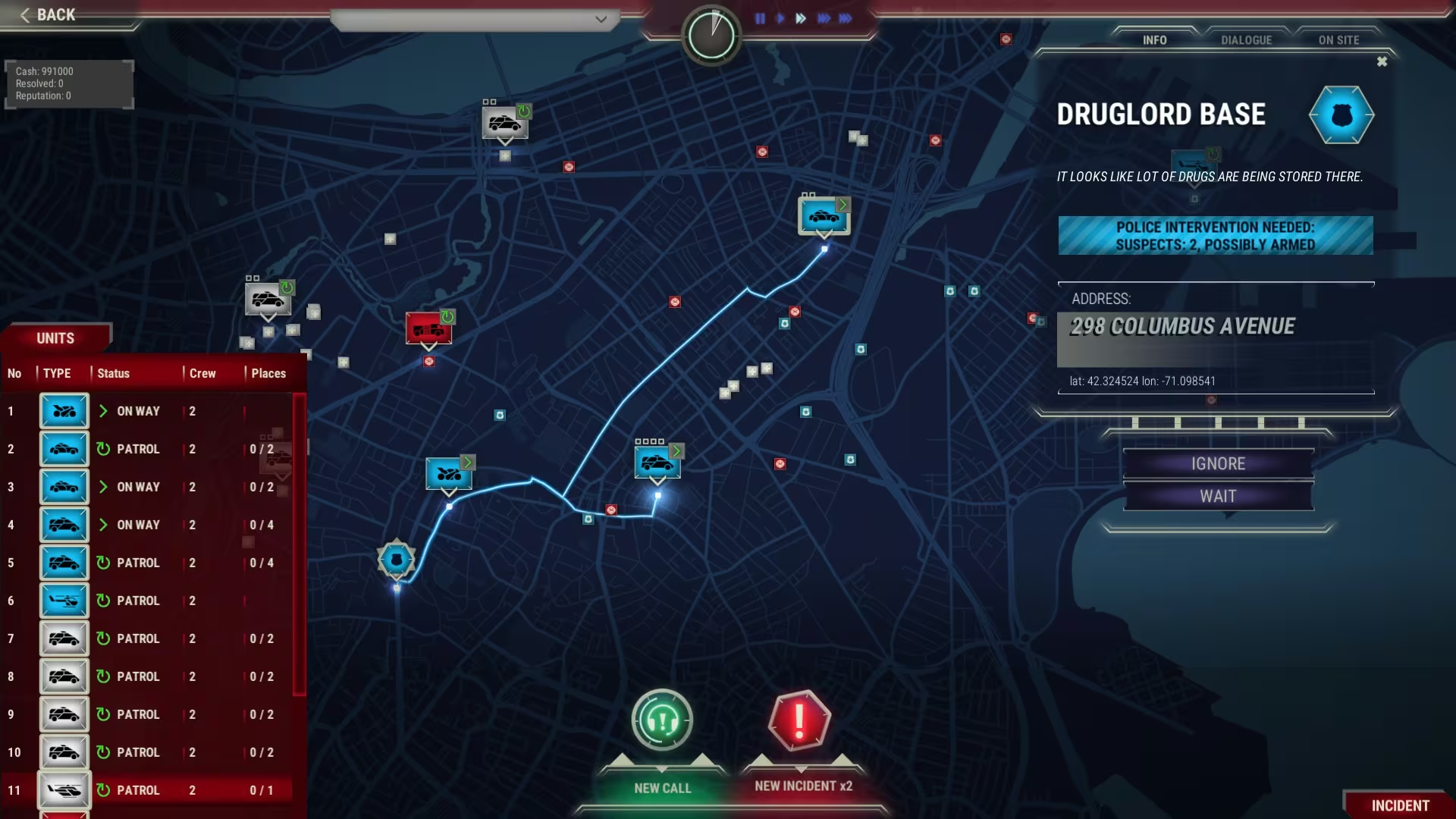
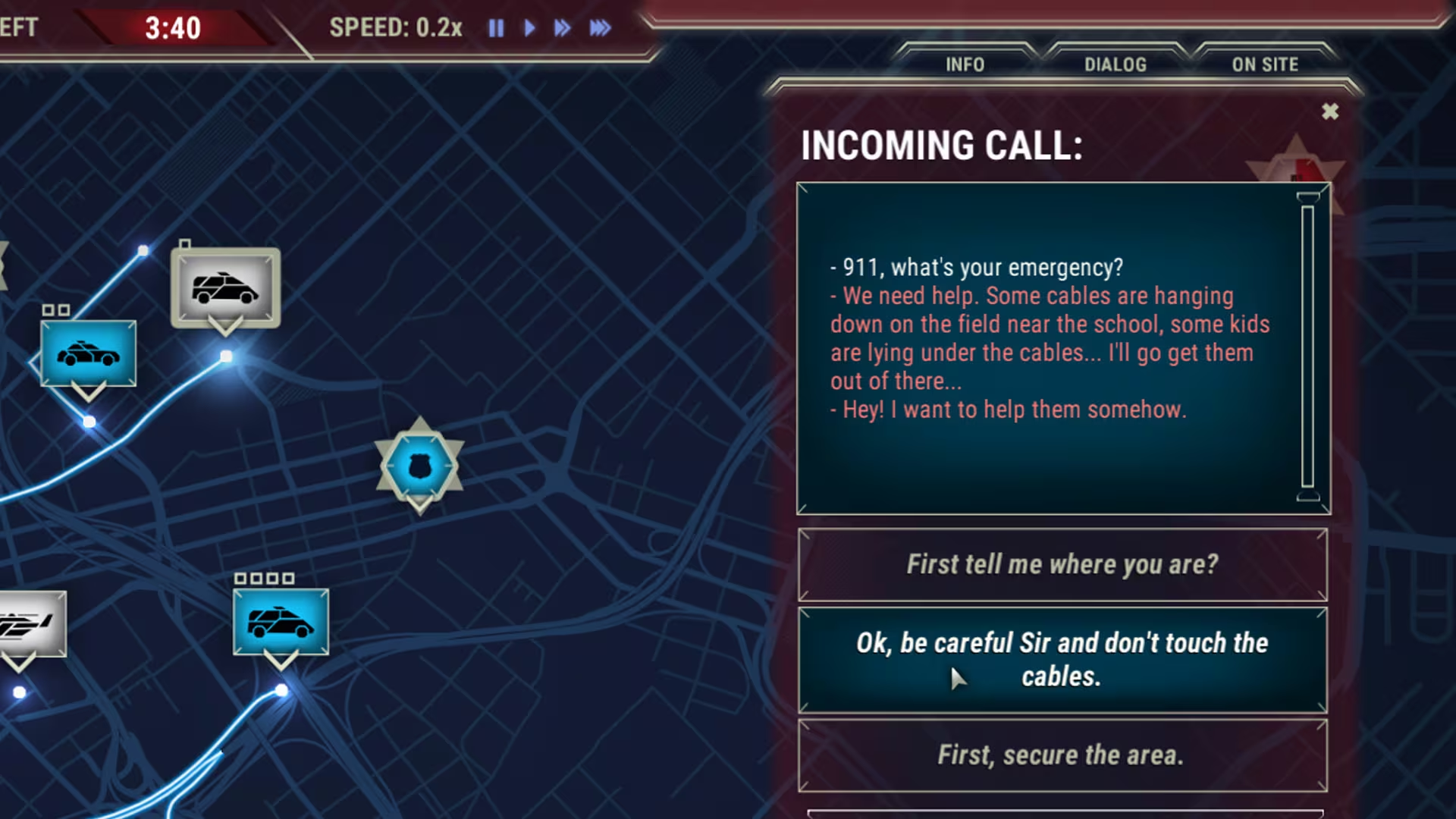
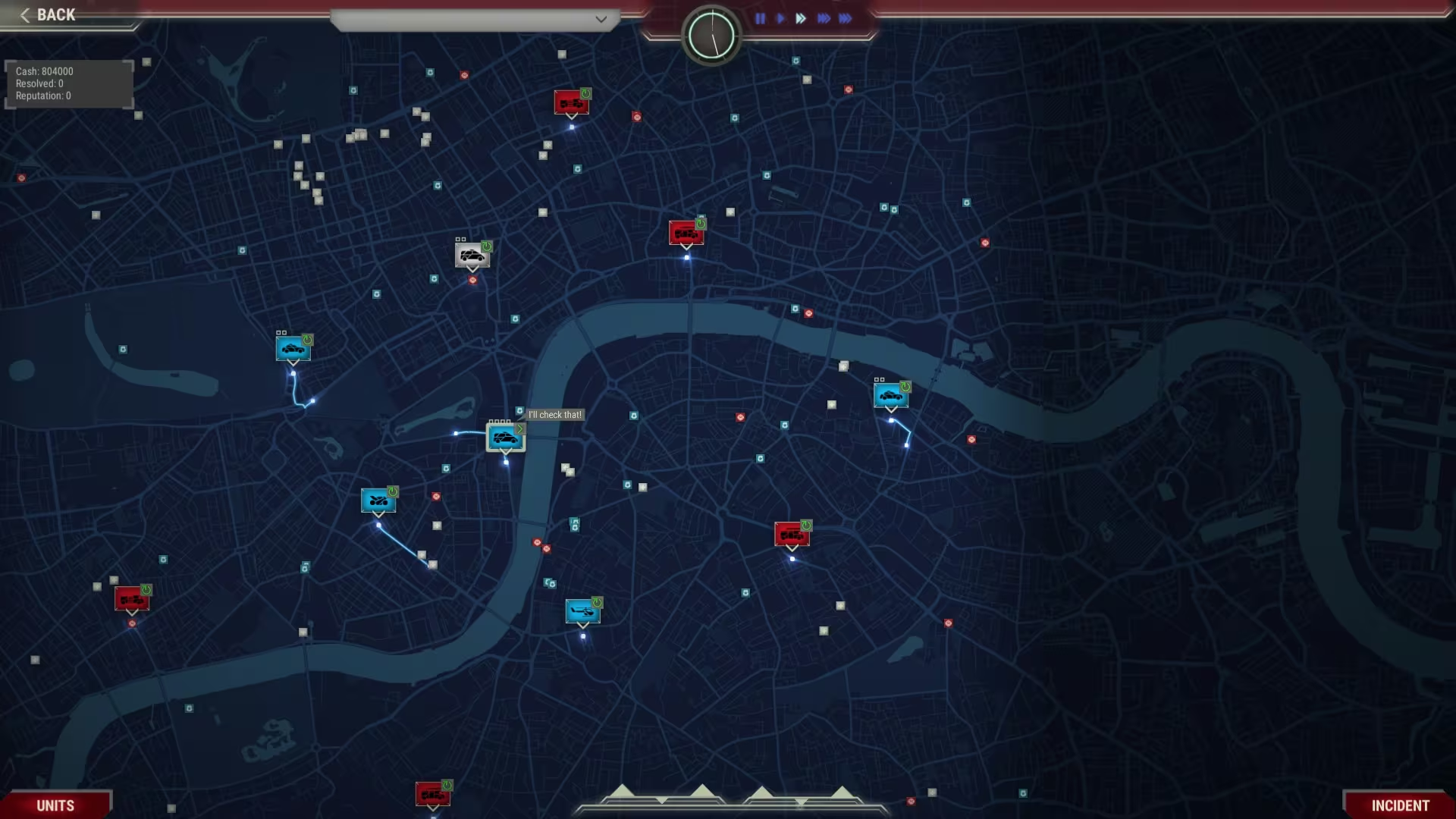
Game about the difficult work of people that manage emergency lines and services. Answer incoming calls and react properly - give first aid instructions, advise, dispatch correct number of firemen / police / ambulances, or sometimes - just ignore the call. Play on ANY CITY in the world!
Global score
89/100
Genres
Casual, Indie, Simulator, Strategy
Similar games
Pros
- Realistic emergency dispatch simulation
- Ability to play in real-world cities worldwide
- Educational content on first aid and emergency procedures
- Engaging voice acting and emotional calls
- Strategic resource and personnel management
Cons
- Repetitive calls and scenarios over time
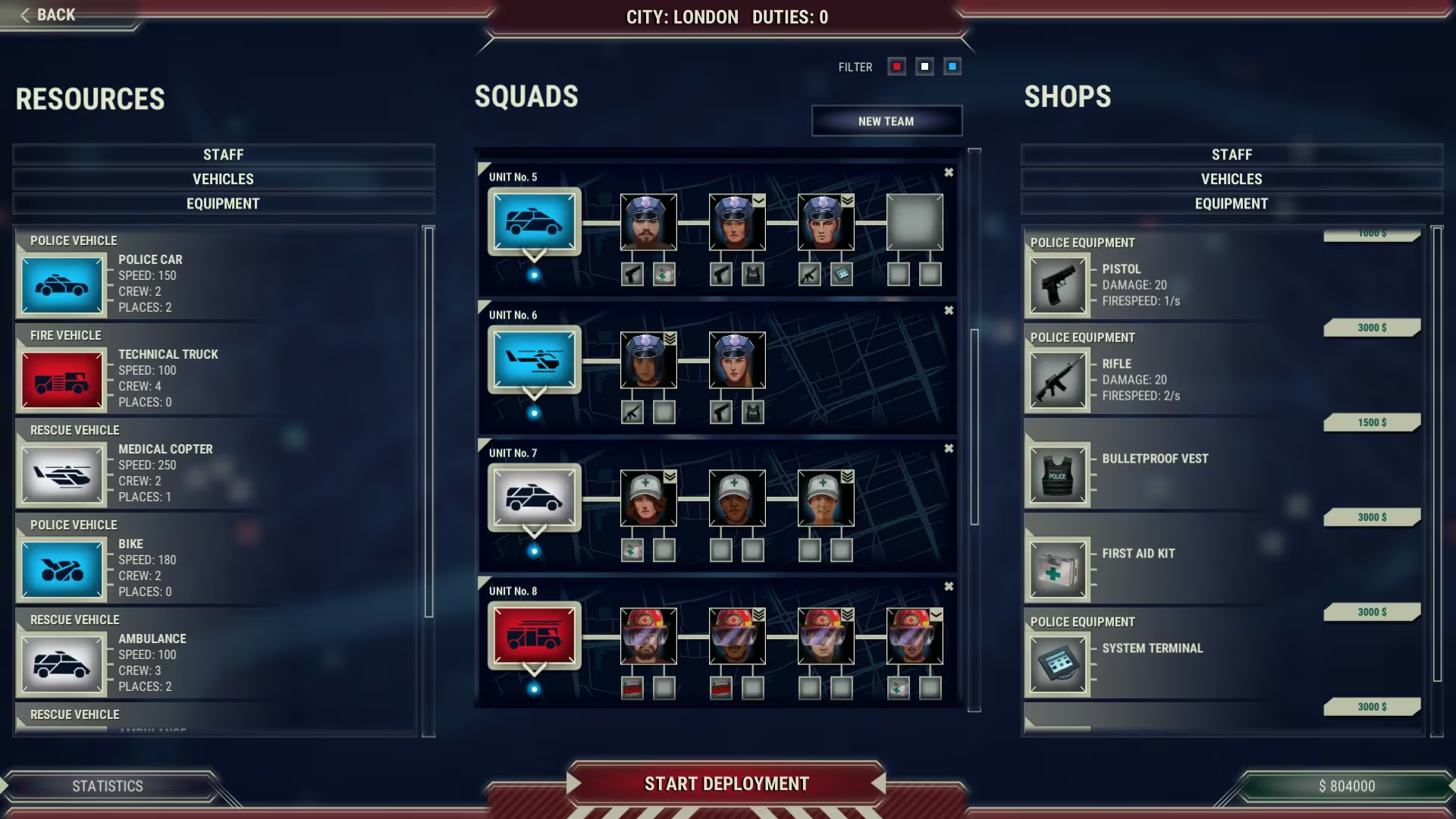
- Limited variety of equipment and vehicles
- Minimal graphics and visual presentation
- No multiplayer or cooperative play
- Some ui and control issues reported
Analysis
Broadly representative of its motivational profile, with a few distinct shifts. Motivations that often define this kind of title include Leadership, Survival, Violence, Strategy. It leans lower than usual among comparable games on Fantasy, Violence, Relaxation.
How to use the graph
Similar games map
Each dot is a game. They are arranged from the same motivation profile as in the “Motivations” section below. Closer dots usually mean more similar reasons to play (exploration, competition, relaxation, etc.)—not that one game is “better” than another.
- Larger dot with a light outline: the game you are viewing.
- Colour: groups of games with comparable motivation patterns (statistical clusters).
- Hover a dot to see the game name; click to open its page.
- Scroll or double-click the chart to zoom out and see more games.
Why don’t the axes read like a score? This view uses t-SNE: it only keeps who is close to whom. The scales are not “good to bad” or hours played—they separate groups on the map. Read distance between dots, not the axis numbers.
Motivations
-
Autonomy4
"Players have control over dispatch decisions, resource allocation, and prioritization of calls, reflecting high autonomy."
-
Competence4
"Game challenges players to manage limited resources, make quick decisions, and handle complex emergencies, providing skill-based feedback."
-
Competition-3
"Focus is on personal management and decision-making without direct comparison or ranked competition."
-
Continuation3
"Players report engaging gameplay with some repetitiveness but continue playing for hours and across multiple sessions."
-
Cooperation-4
"Gameplay centers on individual management of emergency services rather than multiplayer or team cooperation."
-
Creativity3
"Players customize units with equipment and choose deployment strategies, showing creative problem solving."
-
Domination-5
"Interactions are professional and cooperative in nature; no evidence of exerting superiority or dominance over others."
-
Escapism4
"Players use the game to immerse in a stressful but engaging emergency dispatch role, escaping real life."
-
Expectation-4
"Players engage voluntarily out of interest and intrinsic motivation rather than obligation or pressure."
-
Experimenting3
"Players try different strategies, equipment loadouts, and city maps, exploring game mechanics actively."
-
Exploration4
"Ability to play in real-world cities worldwide encourages discovery and exploration of new maps."
-
Expression2
"Limited avatar customization but players express themselves through tactical choices and equipment setups."
-
Fantasy-3
"Game emphasizes realistic emergency scenarios and procedures rather than fictional or fantastical elements."
-
Fellowship-4
"Primarily a single-player experience with minimal social or community interaction."
-
Growth4
"Players learn emergency procedures, improve management skills, and gain knowledge through gameplay."
-
Health-4
"Sedentary gameplay with no physical activity or health-related mechanics."
-
Idle-3
"Requires continuous attention and multitasking; not suited for passive or idle play."
-
Intimacy-4
"Social interactions are limited to professional calls; no close personal relationships formed."
-
Leadership4
"Players lead and manage emergency teams, making authoritative decisions on resource deployment."
-
Progression4
"Players accumulate money, upgrade equipment, hire staff, and unlock new cities, showing clear progression."
-
Relaxation-3
"Game is often tense and stressful, simulating high-pressure emergency situations."
-
Sensation2
"Audio and voice acting provide emotional engagement, though graphics are minimalistic."
-
Status-4
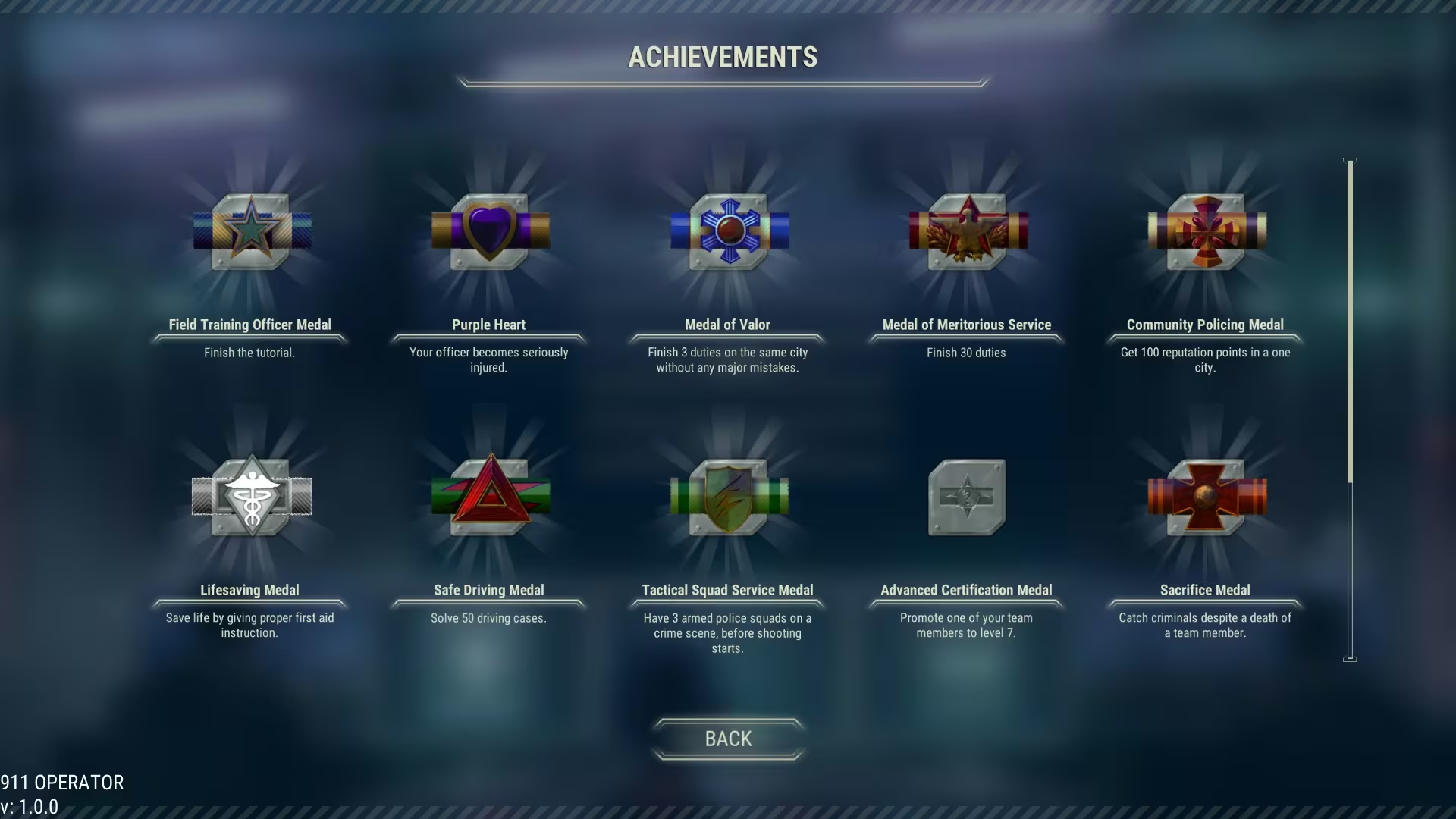
"Achievements and reputation are internal; no social status or popularity elements emphasized."
-
Story2
"No overarching narrative but emergent stories arise from calls and scenarios."
-
Strategy4
"Players must plan resource allocation, prioritize calls, and manage logistics strategically."
-
Thrill3
"Tense and suspenseful emergency calls create moments of thrill and emotional impact."
-
Value3
"Players find good value especially on sale; educational content adds to perceived worth."
-
Violence-3
"Violence is present in scenarios but focus is on managing emergencies, not on combat or destruction."
-
Survival3
"Players must avoid failure by managing limited resources and responding timely to emergencies."
Last update: 29/04/2026