Blue Prince Thumbnail

Blue Prince similar games & best alternatives
Blue Prince

PC (Microsoft Windows), Mac, Xbox Series X|S, PlayStation 5, Nintendo Switch 2 • 2025

Related articles

Quick resume

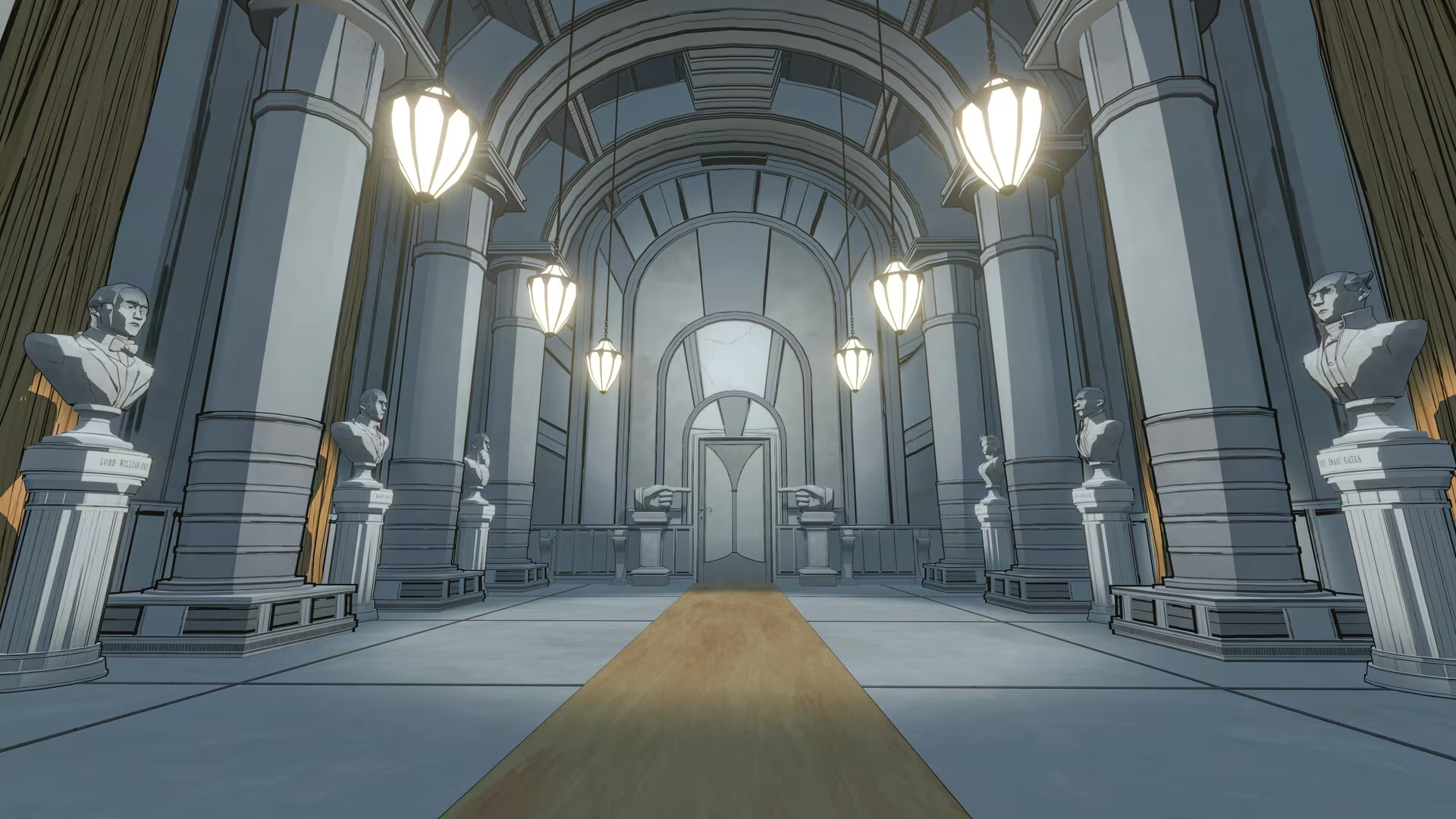
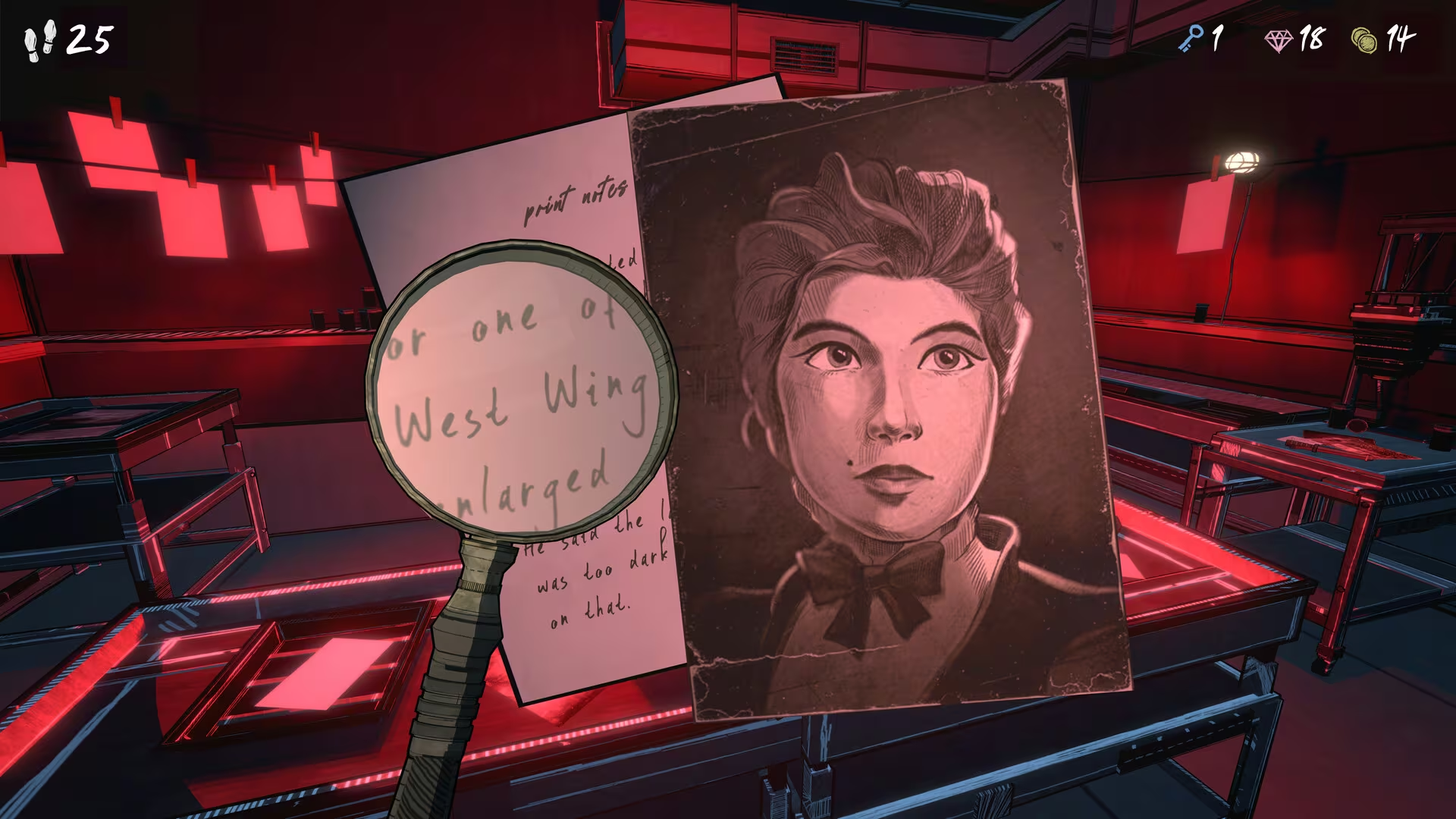
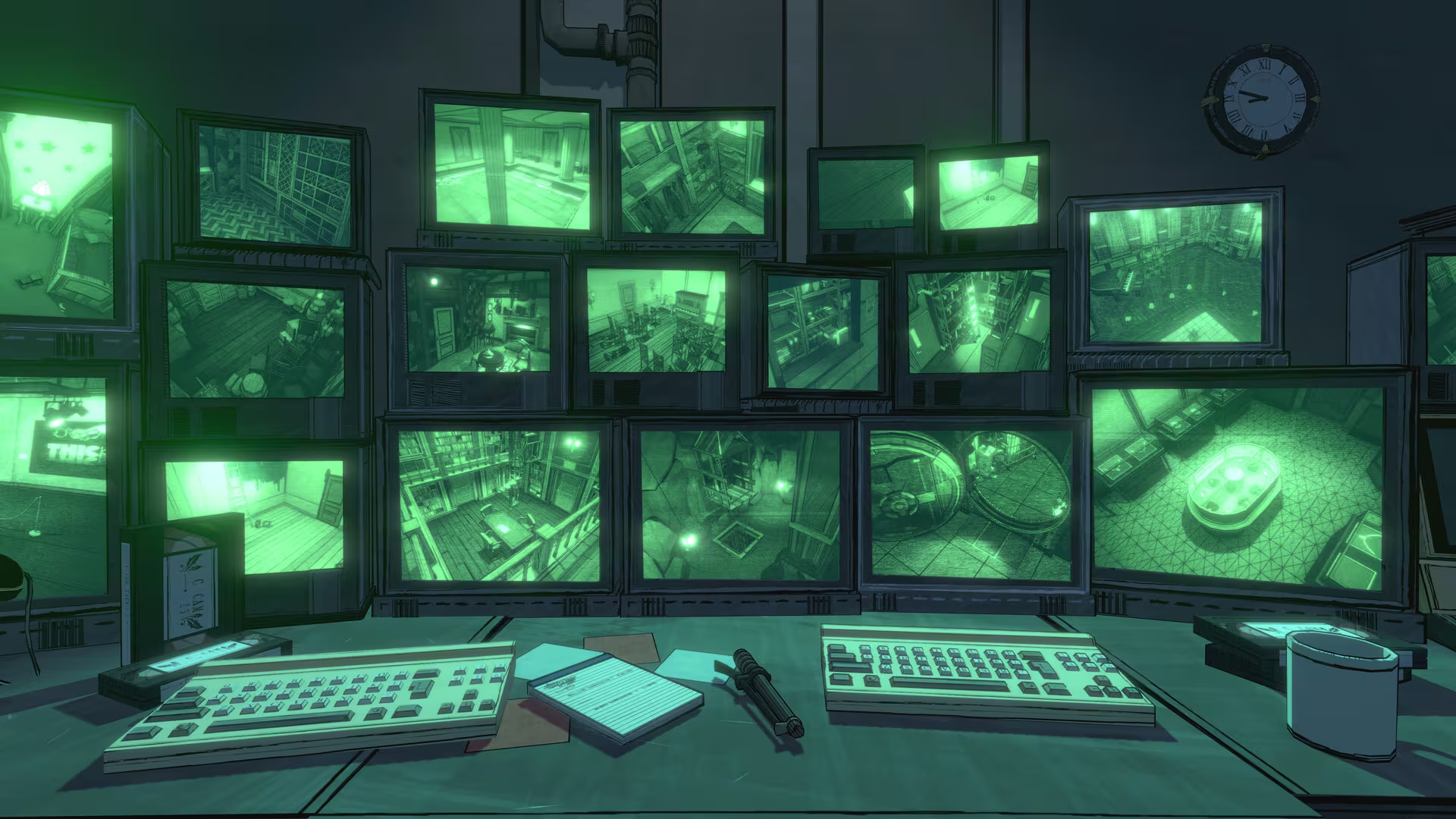
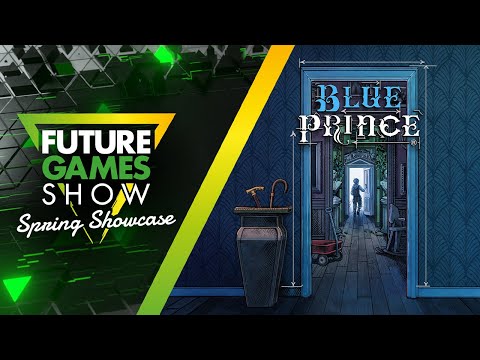
Welcome to Mt. Holly, where every dawn unveils a new mystery. Navigate through shifting corridors and ever-changing chambers in this genre-defying strategy puzzle adventure. But will your unpredictable path lead you to the rumored Room 46?

Global score

87/100

Genres

Adventure, Indie, Strategy, Puzzle

Similar games

    Pros

    • Unique and deep puzzle design
    • Immersive atmosphere and music
    • Strong narrative and lore integration
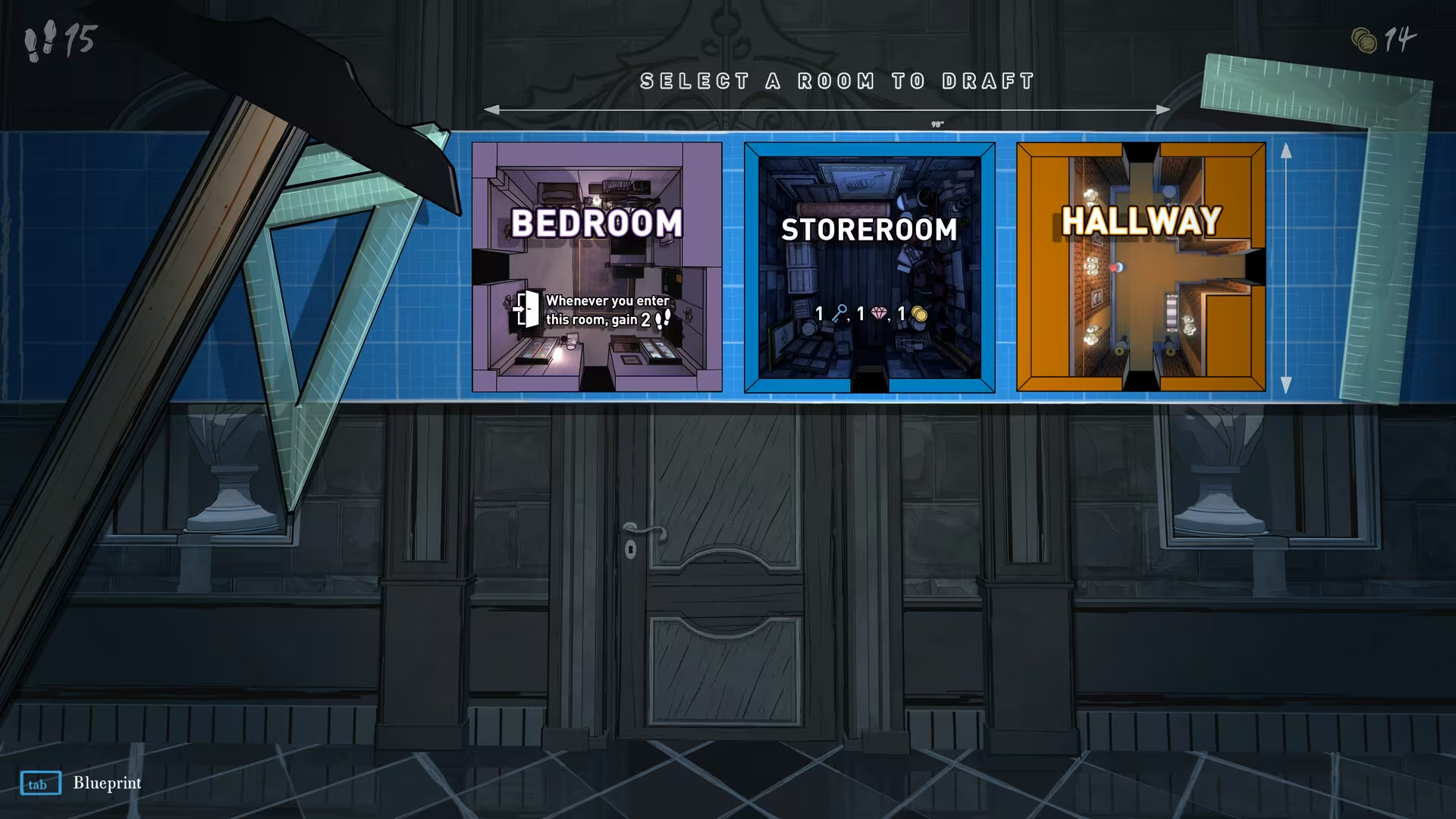
    • Engaging room drafting mechanic
    • High replay value with meta progression

    Cons

    • Frustrating rng can hinder progress
    • Slow pacing and lack of save mid-run
    • Some ui and qol issues (e.g. note taking not integrated)
    • Endgame can feel tedious and overly complex
    • Performance issues on some hardware

    Analysis

    Less representative of its motivational profile, with noticeable differences. Motivations that often define this kind of title include Fellowship, Cooperation, Leadership, Violence. Here, the score leans higher than usual among comparable games on Cooperation, Fellowship. It leans lower than usual among comparable games on Violence.

    How to use the graph
    Similar games map

    Each dot is a game. They are arranged from the same motivation profile as in the “Motivations” section below. Closer dots usually mean more similar reasons to play (exploration, competition, relaxation, etc.)—not that one game is “better” than another.

    • Larger dot with a light outline: the game you are viewing.
    • Colour: groups of games with comparable motivation patterns (statistical clusters).
    • Hover a dot to see the game name; click to open its page.
    • Scroll or double-click the chart to zoom out and see more games.

    Why don’t the axes read like a score? This view uses t-SNE: it only keeps who is close to whom. The scales are not “good to bad” or hours played—they separate groups on the map. Read distance between dots, not the axis numbers.

    Motivations

    • Autonomy
      4

      "Players freely draft rooms and make strategic decisions each run, managing resources and exploration paths."

    • Competence
      4

      "Game challenges players with complex puzzles and strategic resource management requiring skill and learning."

    • Competition
      -4

      "Focus is on personal puzzle solving and exploration without direct comparison or ranked modes."

    • Continuation
      4

      "Players invest many hours, repeatedly returning to progress through layered puzzles and mysteries."

    • Cooperation
      1

      "Some players mention playing cooperatively or sharing discoveries, but game is primarily single-player."

    • Creativity
      3

      "Players creatively draft mansion layouts and experiment with room placement and puzzle approaches."

    • Domination
      -5

      "No evidence of exerting control over others; interactions are solo and puzzle-focused."

    • Escapism
      4

      "Players use the game as immersive puzzle exploration and mental engagement, escaping real life."

    • Expectation
      -4

      "Players engage voluntarily driven by curiosity and intrinsic interest in puzzles and mystery."

    • Experimenting
      4

      "Game encourages trying new room combinations, puzzle solutions, and strategies to progress."

    • Exploration
      5

      "Core gameplay involves discovering new rooms, secrets, lore, and puzzle clues in an evolving mansion."

    • Expression
      2

      "Players personalize mansion layout and take notes, but no character customization noted."

    • Fantasy
      3

      "Game features an alternate history setting with mysterious lore and cosmic horror elements."

    • Fellowship
      0

      "Primarily a solo experience; some social sharing but no strong community focus in gameplay."

    • Growth
      5

      "Strong emphasis on learning, note-taking, and gradual mastery of puzzles and game systems."

    • Health
      -5

      "Sedentary gameplay with no physical activity or health-related mechanics."

    • Idle
      -4

      "Requires focused attention and continuous engagement during runs; no background play."

    • Intimacy
      -5

      "No close social or emotional relationships formed through gameplay."

    • Leadership
      -5

      "No leadership or group management roles; purely individual puzzle solving."

    • Progression
      5

      "Players accumulate permanent upgrades, knowledge, and unlock new rooms and puzzles over time."

    • Relaxation
      2

      "Atmospheric and immersive but some frustration from RNG and slow pacing reduces relaxation."

    • Sensation
      3

      "Enjoyable art style, music, and ambient sounds contribute to sensory engagement."

    • Status
      -5

      "No social status or recognition mechanics; achievements are personal milestones."

    • Story
      4

      "Narrative is slowly revealed through environmental storytelling, lore, and puzzle discovery."

    • Strategy
      4

      "Requires planning room placement, resource management, and puzzle solving strategies."

    • Thrill
      1

      "Some tension from RNG and puzzle difficulty but overall a calm, cerebral experience."

    • Value
      4

      "Players report high value for time invested due to depth, content, and replayability."

    • Violence
      -5

      "No combat or destructive gameplay; focus on constructive puzzle solving."

    • Survival
      1

      "Some resource and stamina management to avoid run failure, but low-risk environment."

    Last update: 29/04/2026