City Game Studio: Your Game Dev Adventure Begins Thumbnail

City Game Studio: Your Game Dev Adventure Begins similar games & best alternatives

City Game Studio: Your Game Dev Adventure Begins

PC (Microsoft Windows) • 2021

Related articles

Quick resume

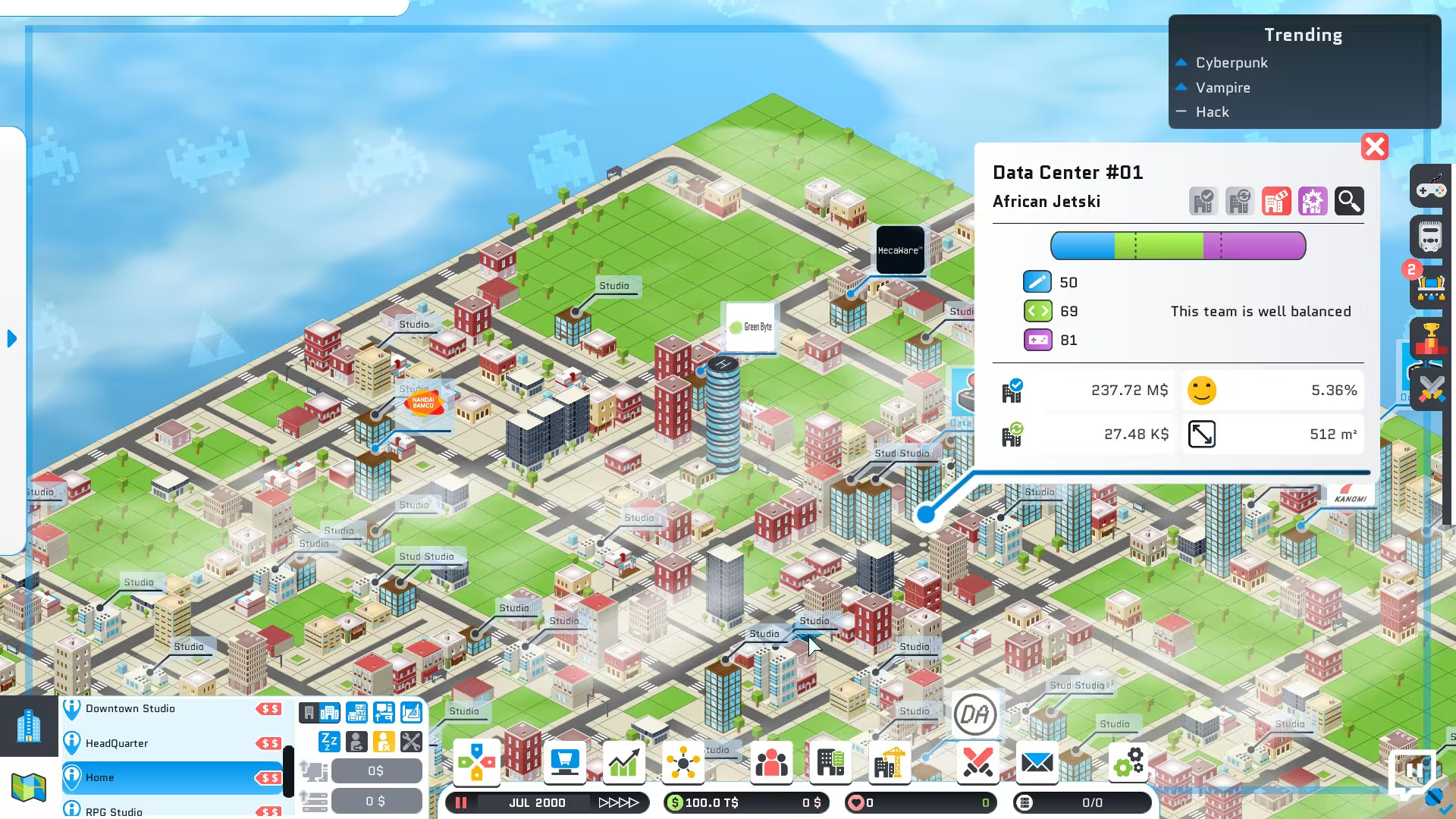
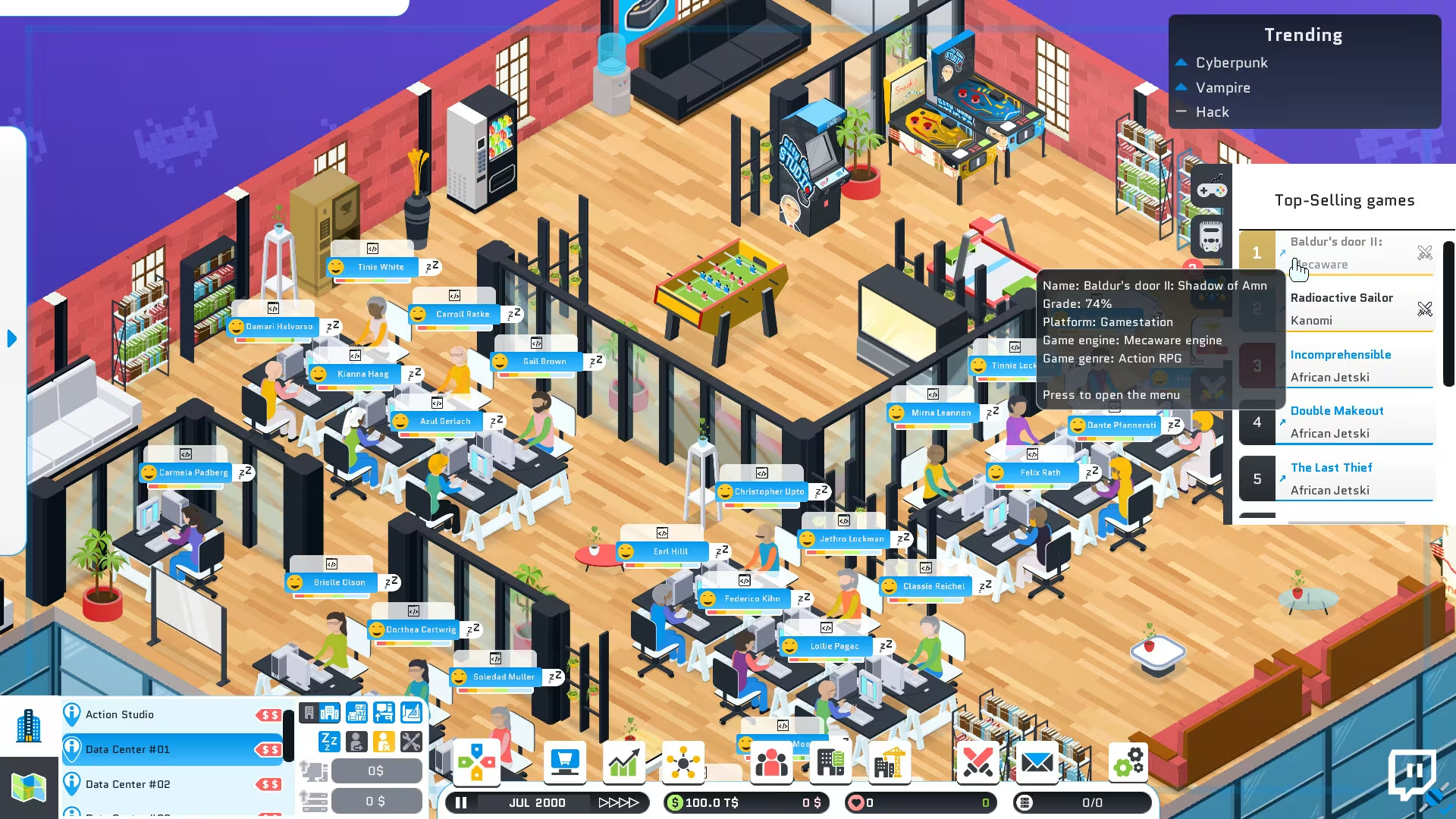
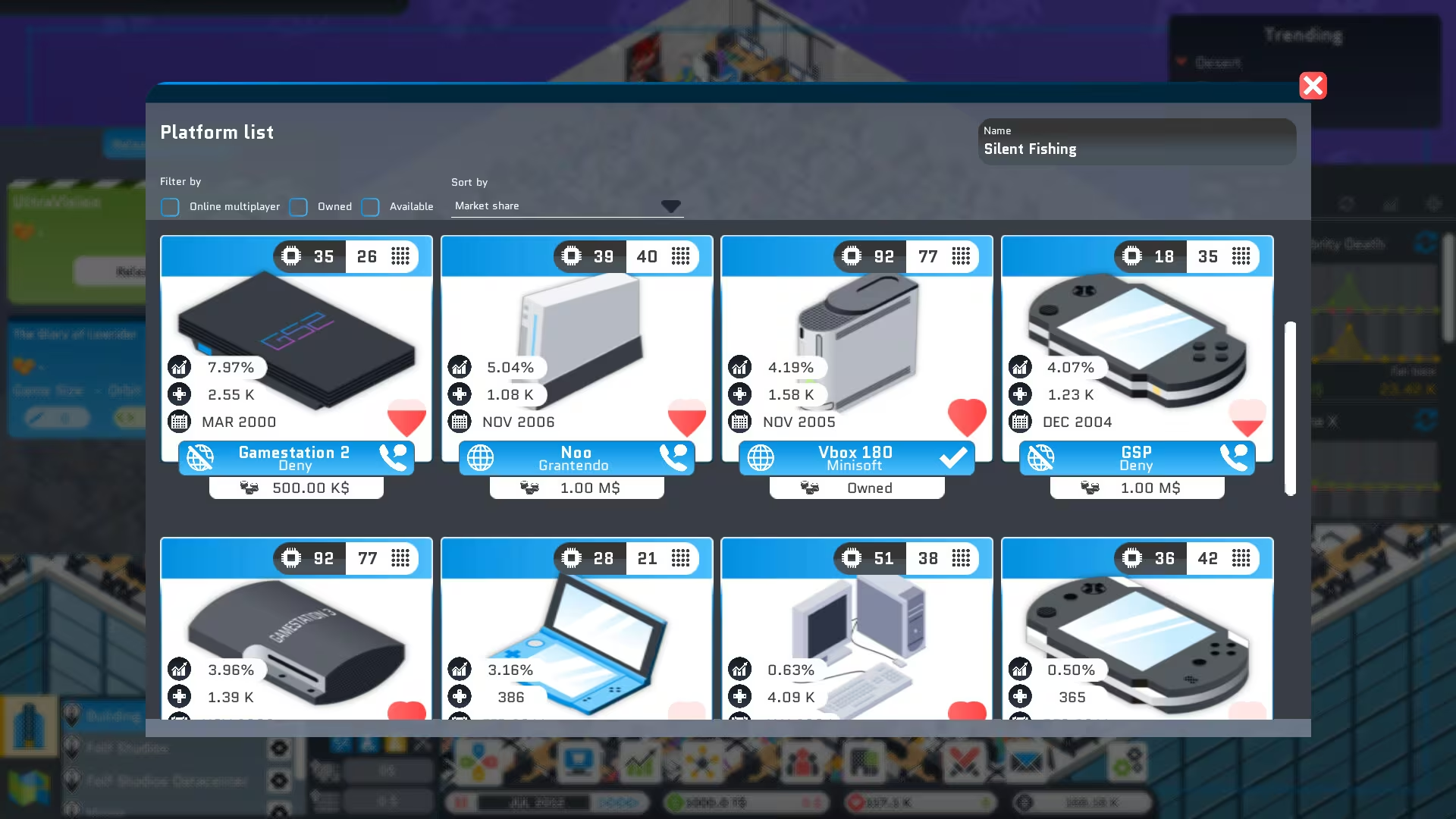
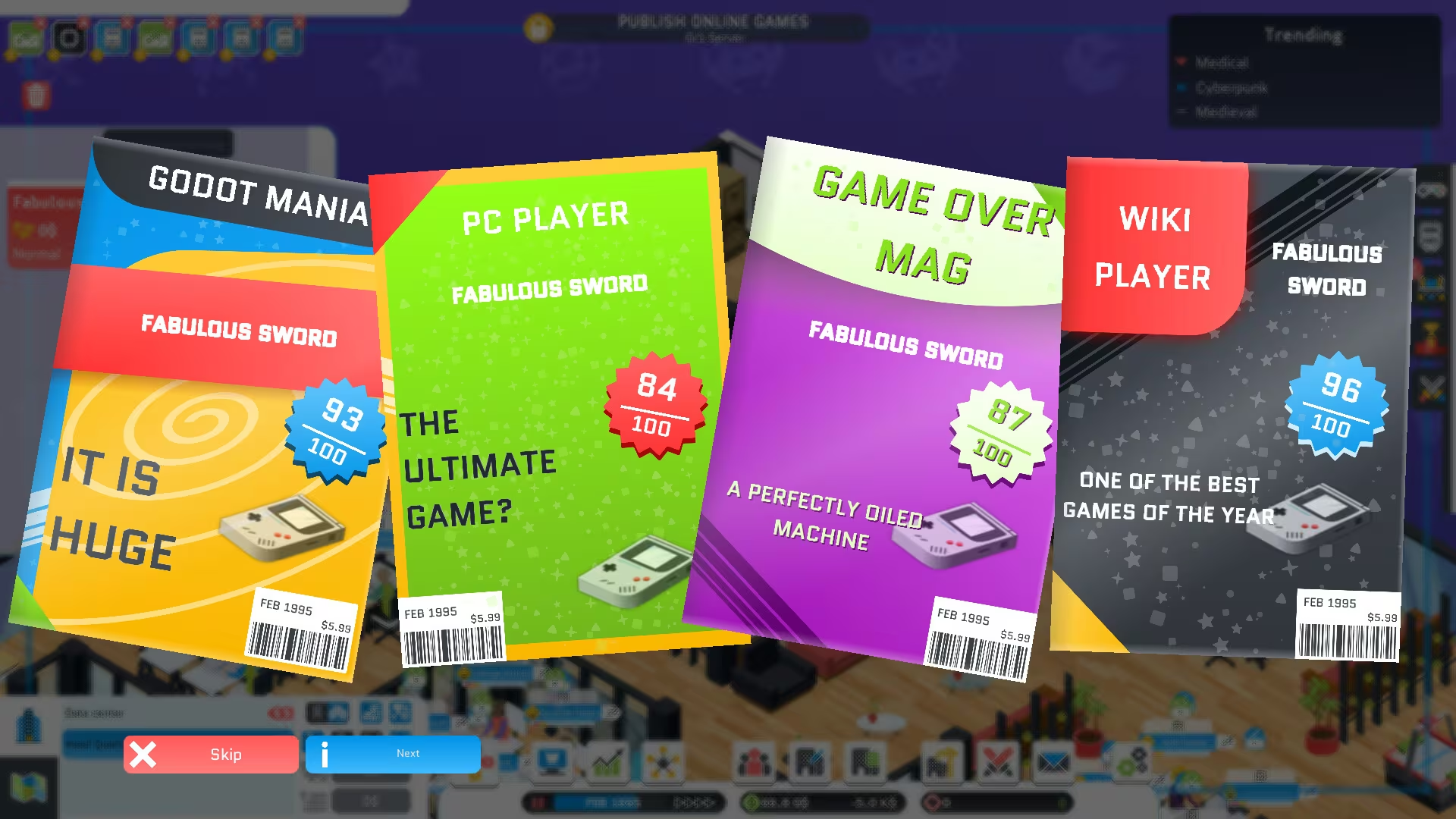
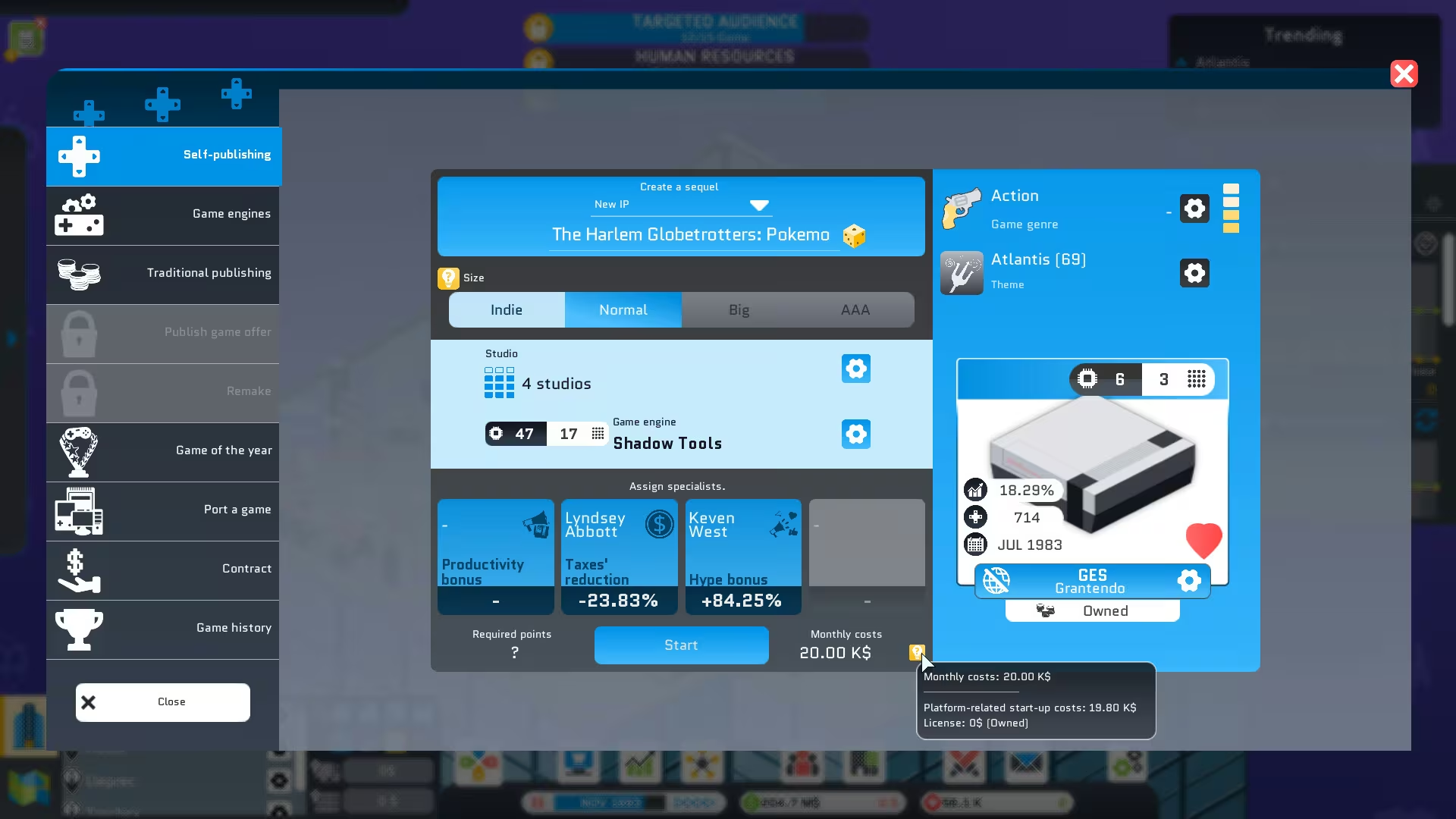
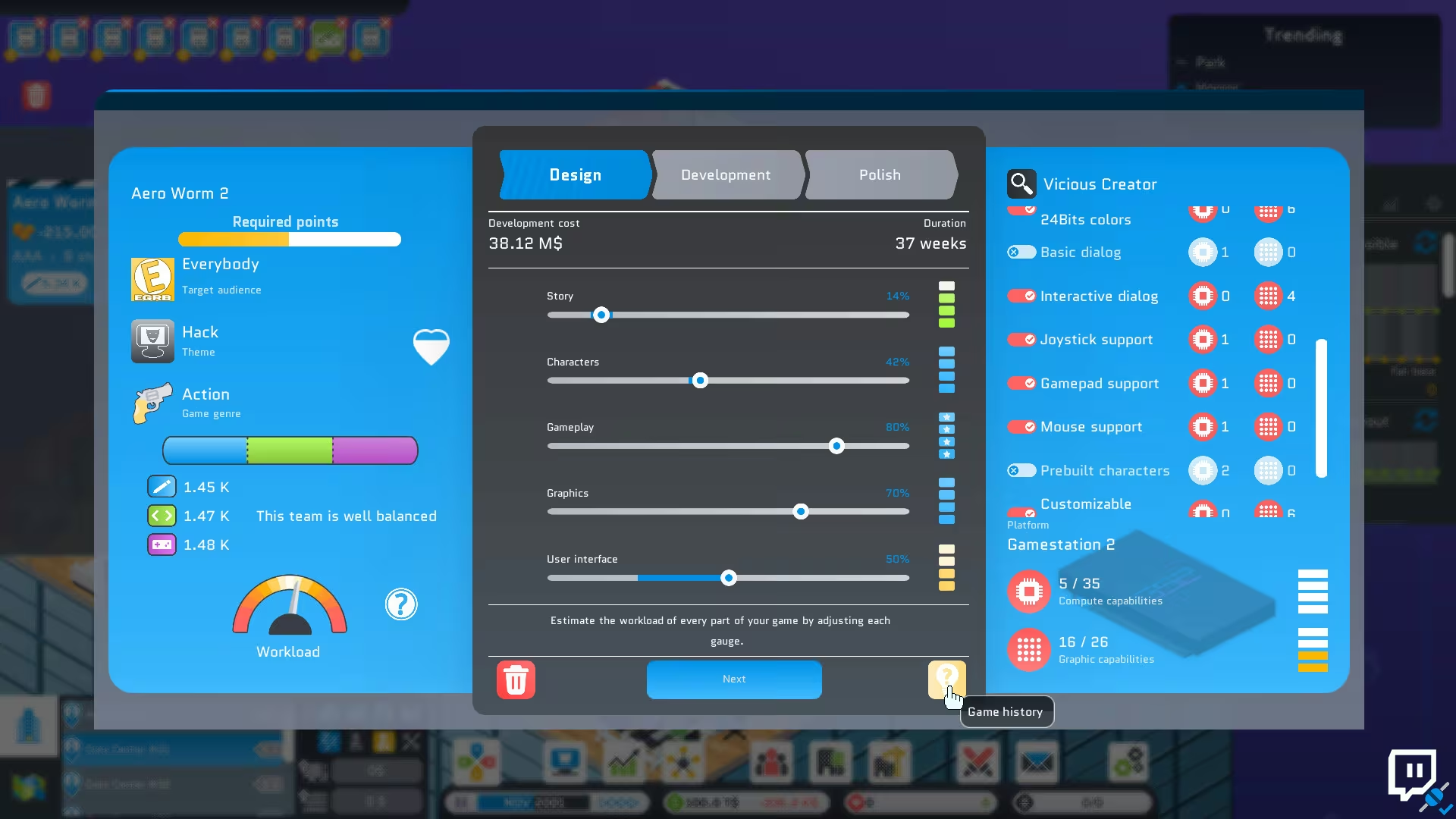
Manage a game studio from the dawn of the gaming industry in 1976. Your journey starts with small indie titles and grows into a gaming empire. Develop, design, and conquer the industry. From humble beginnings to gaming legend – it’s your story, your studio, your legacy!

Global score

92/100

Genres

Adventure, Casual, Indie, Simulator, Strategy

Similar games

    Pros

    • Deep and engaging game development simulation
    • Multiple studios and console creation
    • Frequent developer updates and community engagement
    • High replayability with mod support
    • Immersive and satisfying management mechanics

    Cons

    • Some ui and micromanagement complexity
    • Competition ai could be deeper
    • Early access bugs and polish needed
    • Limited social and multiplayer features
    • Some repetitive gameplay elements

    Analysis

    Less representative of its motivational profile, with noticeable differences. Motivations that often define this kind of title include Competition, Fellowship, Domination, Status. It leans lower than usual among comparable games on Violence, Fantasy, Intimacy.

    How to use the graph
    Similar games map

    Each dot is a game. They are arranged from the same motivation profile as in the “Motivations” section below. Closer dots usually mean more similar reasons to play (exploration, competition, relaxation, etc.)—not that one game is “better” than another.

    • Larger dot with a light outline: the game you are viewing.
    • Colour: groups of games with comparable motivation patterns (statistical clusters).
    • Hover a dot to see the game name; click to open its page.
    • Scroll or double-click the chart to zoom out and see more games.

    Why don’t the axes read like a score? This view uses t-SNE: it only keeps who is close to whom. The scales are not “good to bad” or hours played—they separate groups on the map. Read distance between dots, not the axis numbers.

    Motivations

    • Autonomy
      4

      "Players have extensive control over game development, studio management, hiring, and strategic decisions such as creating consoles and negotiating licenses."

    • Competence
      4

      "The game involves skillful balancing of development sliders, managing multiple studios and employees, and strategic planning to succeed."

    • Competition
      3

      "There is competition with AI studios, buying out competitors, sabotage, and market share battles, though some reviews note competition could be deeper."

    • Continuation
      4

      "Many players report long play sessions, habitual returns, and high engagement over many hours and years of updates."

    • Cooperation
      1

      "Some cooperative elements exist such as multiple studios working on the same project, but mostly gameplay is focused on individual management."

    • Creativity
      4

      "Players can customize offices, create game engines, design consoles, and mod the game, allowing significant creative expression."

    • Domination
      2

      "Players can buy out competitors and dominate the market, exerting control over others, though interactions remain mostly strategic rather than social."

    • Escapism
      3

      "The game offers an immersive simulation that many players use for relaxation and distraction from real life."

    • Expectation
      -4

      "Players engage voluntarily out of personal interest and enjoyment; no evidence of obligation or pressure."

    • Experimenting
      4

      "Players experiment with many genres, themes, consoles, and development strategies, encouraged by mod support and updates."

    • Exploration
      2

      "Exploration is mostly about discovering new genres, consoles, and game combos over time rather than physical exploration."

    • Expression
      3

      "Customization of studios, game engines, and game elements allows for player expression."

    • Fantasy
      -2

      "The game simulates realistic business and game development scenarios rather than imaginative fiction."

    • Fellowship
      2

      "There is a community and multiplayer is requested, but gameplay is primarily single-player with limited social interaction."

    • Growth
      4

      "Players develop skills in managing studios, optimizing game development, and strategic business growth."

    • Health
      -4

      "The game is a sedentary management simulation with no physical activity."

    • Idle
      -3

      "Requires active management and attention; some micromanagement and multitasking involved."

    • Intimacy
      -4

      "Social interactions are limited to strategic competition; no close personal relationships."

    • Leadership
      4

      "Players lead multiple studios, manage staff, and make high-level decisions guiding their company."

    • Progression
      5

      "Strong emphasis on accumulating studios, employees, consoles, game engines, and market share."

    • Relaxation
      3

      "Many players find the game relaxing and enjoyable despite some challenge."

    • Sensation
      2

      "Visuals are simple but satisfying; the game focuses more on strategic satisfaction than sensory stimulation."

    • Status
      3

      "Players gain recognition through market dominance, game hits, and owning studios, though social status is limited."

    • Story
      2

      "Some narrative elements and historical progression exist, but gameplay is mostly context-free management."

    • Strategy
      5

      "High mental challenge with planning, resource allocation, negotiation, and problem solving."

    • Thrill
      2

      "Some suspense in managing finances and competition, but overall controlled and predictable environment."

    • Value
      4

      "Players perceive good value for time and money due to depth, frequent updates, and replayability."

    • Violence
      -5

      "No combat or destruction; focus is on constructive business and creative activities."

    • Survival
      3

      "Players must avoid bankruptcy and manage risks to keep their company alive and growing."

    Last update: 29/04/2026