Dude, Stop Thumbnail

Dude, Stop similar games & best alternatives

Dude, Stop

PC (Microsoft Windows), Nintendo Switch, Mac, Linux • 2018

Related articles

Quick resume

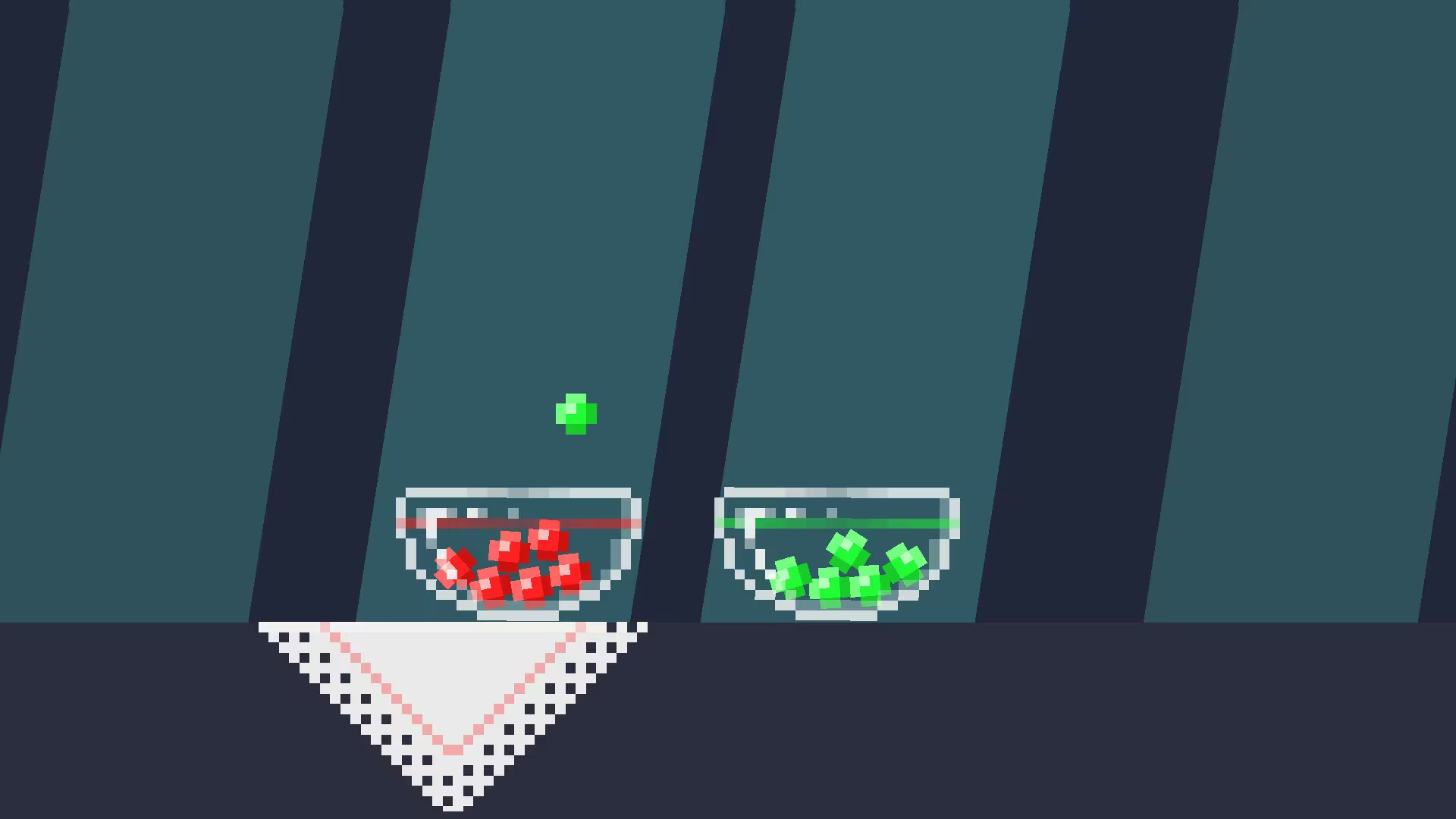
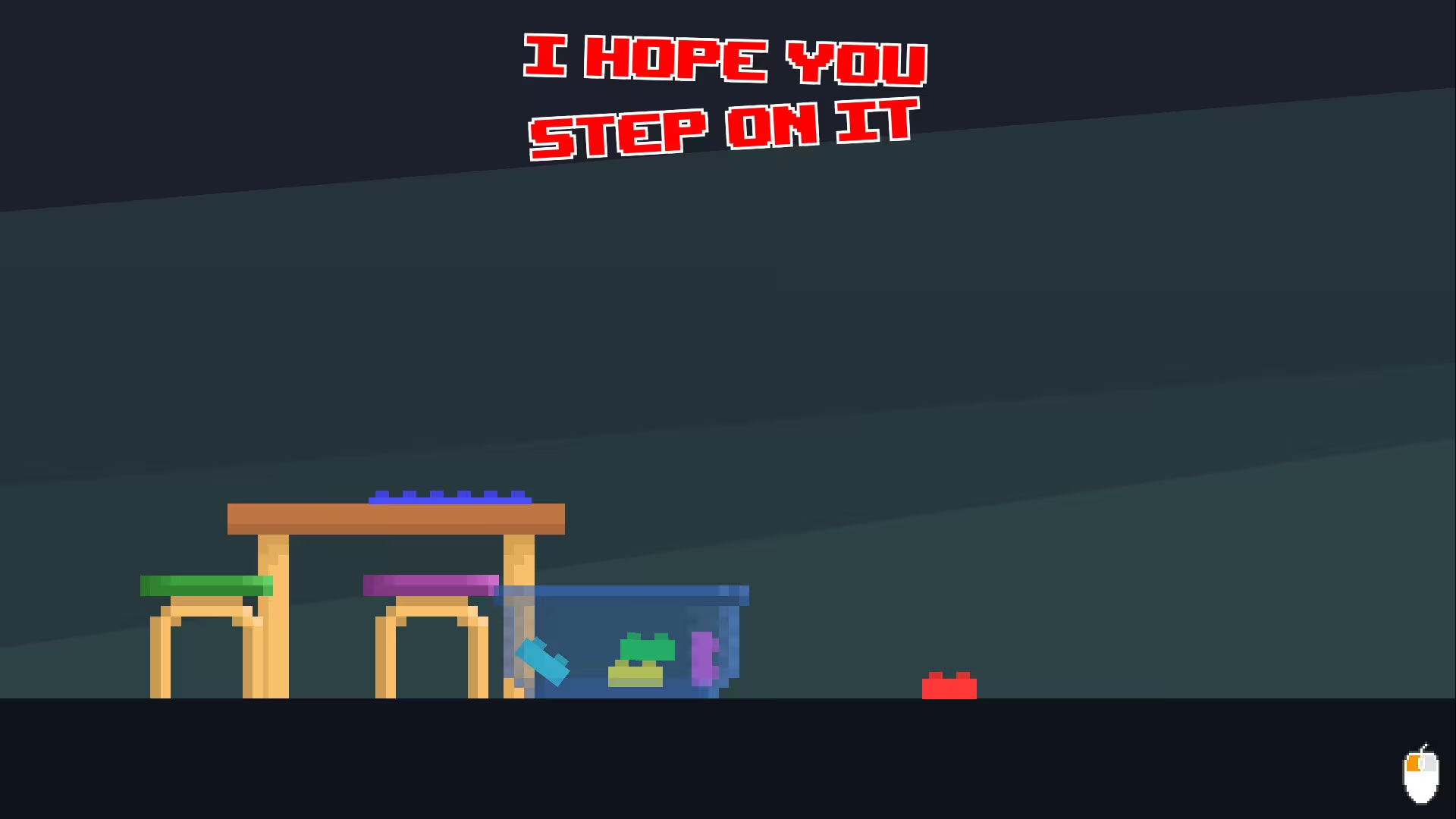
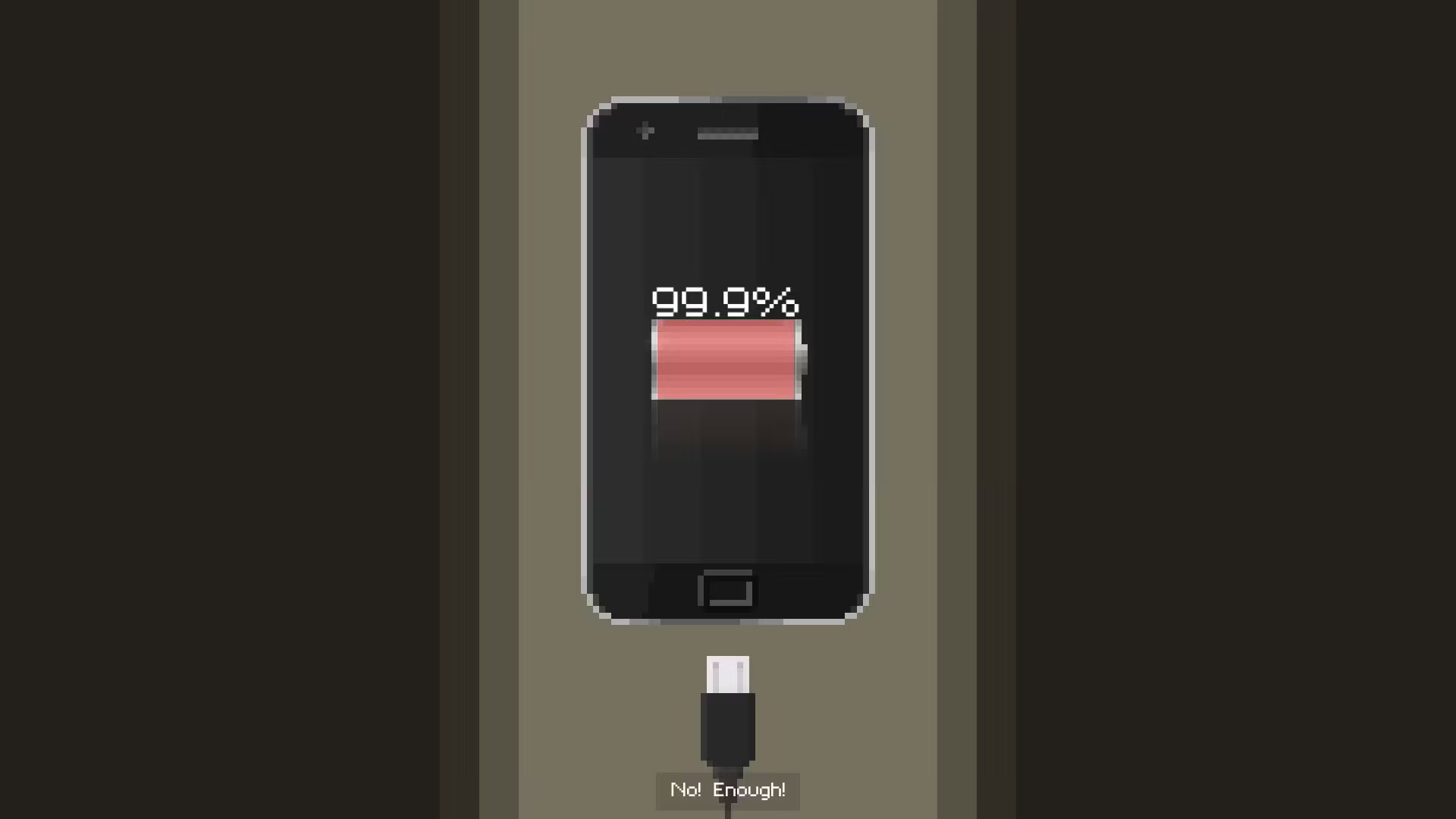
"So, I made a game, right? I filled it with harmless funny puzzles, narrated it a little bit, and then players started making fun of it! They broke the game, ignored my rules! They... they... laughed at me! As if it was some kind of a joke! Why do they have to be so mean?!" - developer of Dude, Stop

Global score

87/100

Genres

Adventure, Casual, Indie, Point-and-click, Puzzle

Similar games

    Pros

    • Humorous and entertaining narrator
    • Unique meta-narrative puzzle gameplay
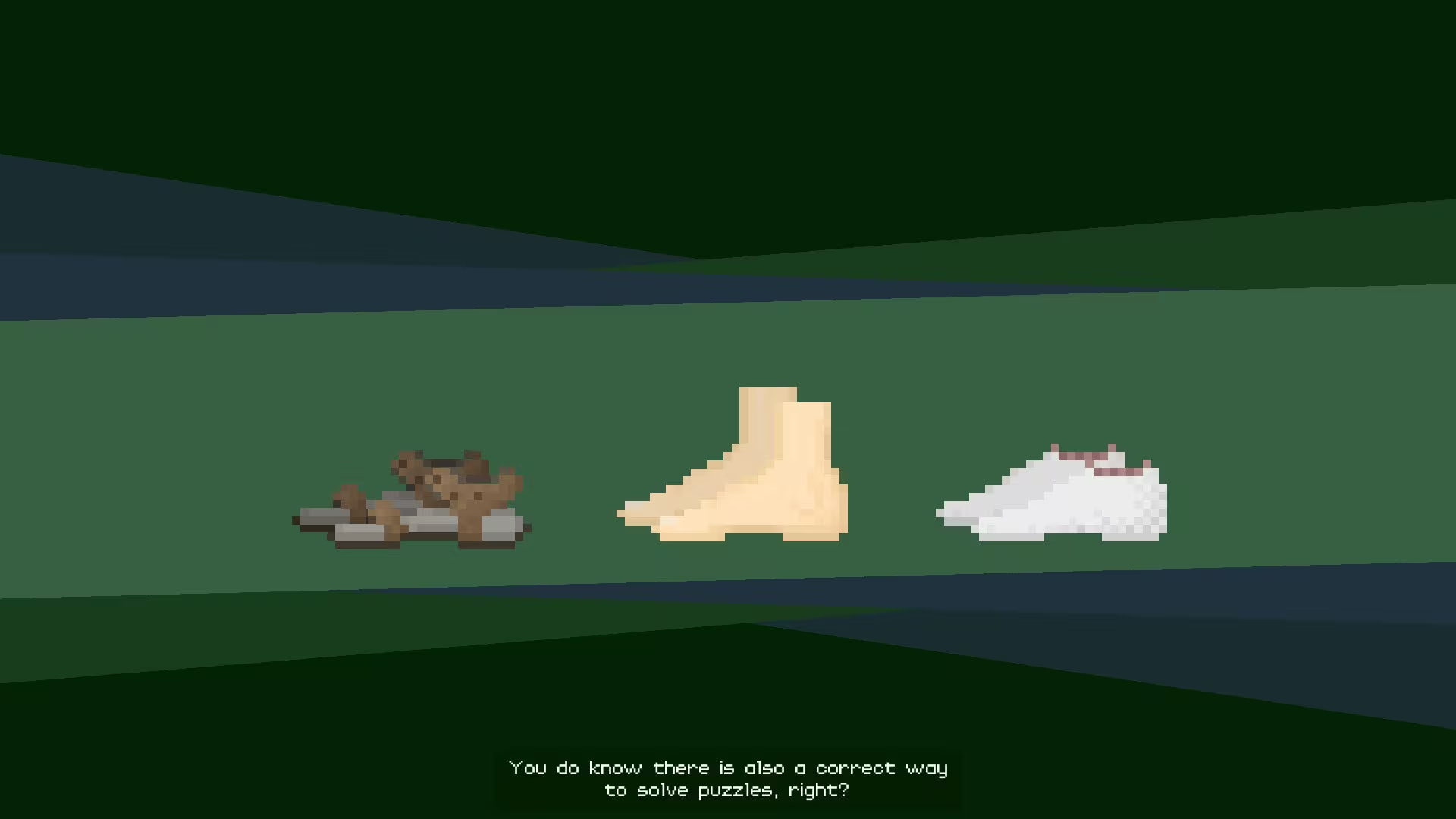
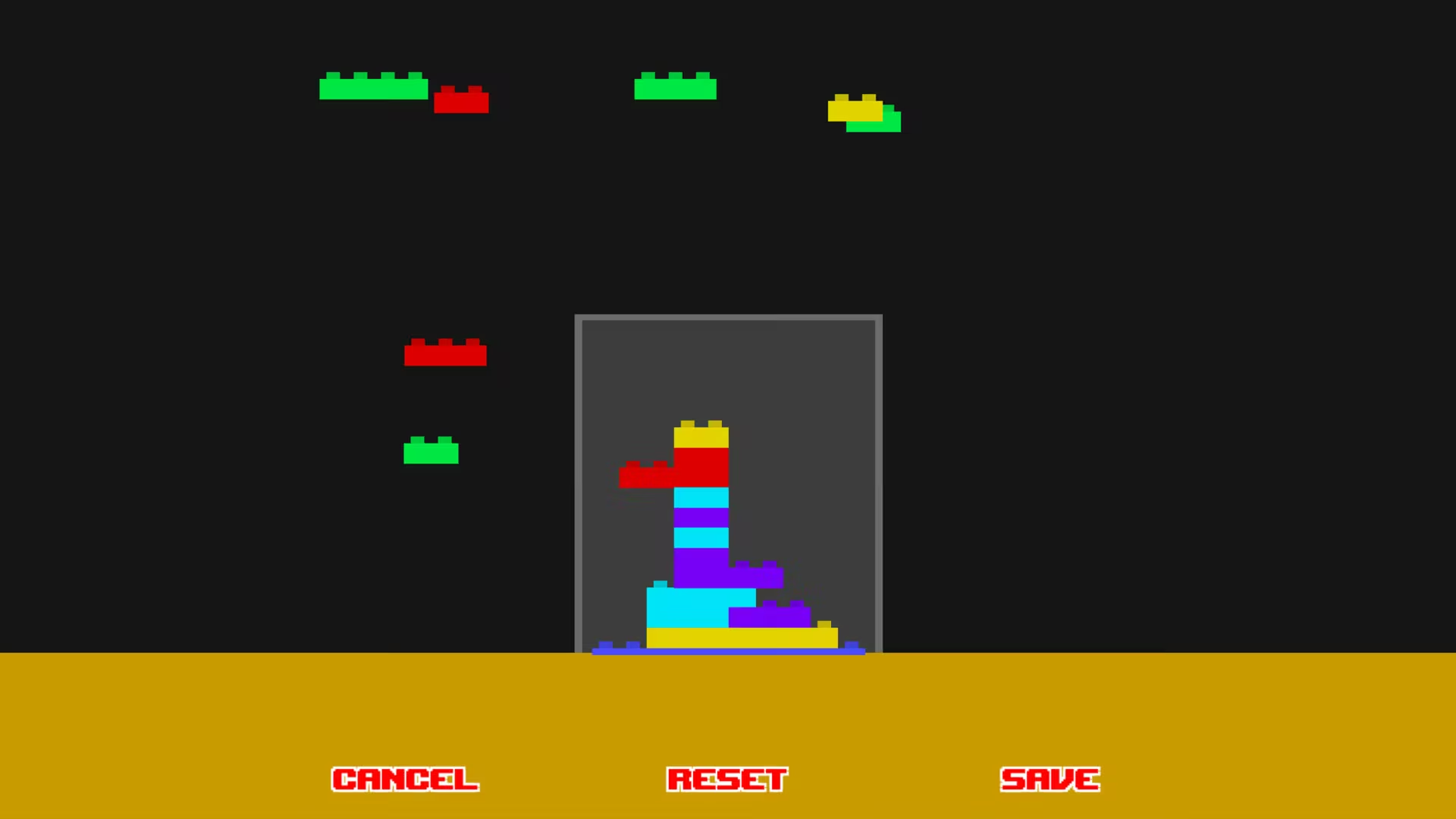
    • Multiple puzzle solutions including 'wrong' ways
    • Charming pixel art style
    • Achievements add replay value

    Cons

    • Short game length
    • Repetitive narrator lines on replay
    • Some achievements require replaying entire game
    • Overpriced at full price
    • Limited puzzle difficulty and depth

    Analysis

    Less representative of its motivational profile, with noticeable differences. Motivations that often define this kind of title include Survival, Violence, Fellowship, Expression. Here, the score leans higher than usual among comparable games on Experimenting. It leans lower than usual among comparable games on Value, Sensation.

    How to use the graph
    Similar games map

    Each dot is a game. They are arranged from the same motivation profile as in the “Motivations” section below. Closer dots usually mean more similar reasons to play (exploration, competition, relaxation, etc.)—not that one game is “better” than another.

    • Larger dot with a light outline: the game you are viewing.
    • Colour: groups of games with comparable motivation patterns (statistical clusters).
    • Hover a dot to see the game name; click to open its page.
    • Scroll or double-click the chart to zoom out and see more games.

    Why don’t the axes read like a score? This view uses t-SNE: it only keeps who is close to whom. The scales are not “good to bad” or hours played—they separate groups on the map. Read distance between dots, not the axis numbers.

    Motivations

    • Autonomy
      3

      "Players have freedom to solve puzzles in multiple ways, including intentionally breaking rules to annoy the narrator, though progression requires some forced actions."

    • Competence
      2

      "Puzzles are generally easy but require some thinking and experimentation, with achievements providing moderate challenge."

    • Competition
      -4

      "Singleplayer game focused on personal experience without competitive elements or leaderboards."

    • Continuation
      1

      "Some players replay for achievements and to explore different outcomes, but overall the game is short and has limited replay value."

    • Cooperation
      -5

      "Entirely singleplayer with no cooperative or multiplayer features."

    • Creativity
      3

      "Players can experiment with puzzle solutions and choose to follow or break rules, enabling creative problem solving."

    • Domination
      -5

      "No social dominance or power dynamics; interactions are with the narrator character only."

    • Escapism
      3

      "Players enjoy humorous distraction and lighthearted gameplay to relieve stress and escape reality."

    • Expectation
      -4

      "Players engage voluntarily for fun and humor without external pressure or obligation."

    • Experimenting
      4

      "Game encourages trying different puzzle solutions, including intentionally 'wrong' ones to trigger unique reactions."

    • Exploration
      2

      "Players discover secrets, hidden achievements, and alternate puzzle outcomes, though within a limited game world."

    • Expression
      -3

      "Minimal character or environment customization; expression mainly through player choices in puzzle solving."

    • Fantasy
      2

      "Game features a meta-narrative and fictional narrator character with humorous, exaggerated reactions."

    • Fellowship
      -5

      "No social or community features; solo play only."

    • Growth
      2

      "Players develop puzzle-solving skills and learn game mechanics, though challenges are generally light."

    • Health
      -5

      "Sedentary gameplay with no physical activity involved."

    • Idle
      -3

      "Requires active attention to solve puzzles; some waiting during narration but mostly focused engagement."

    • Intimacy
      -5

      "No social or emotional relationships formed; interaction is with game narrator only."

    • Leadership
      -5

      "No leadership or group management elements."

    • Progression
      3

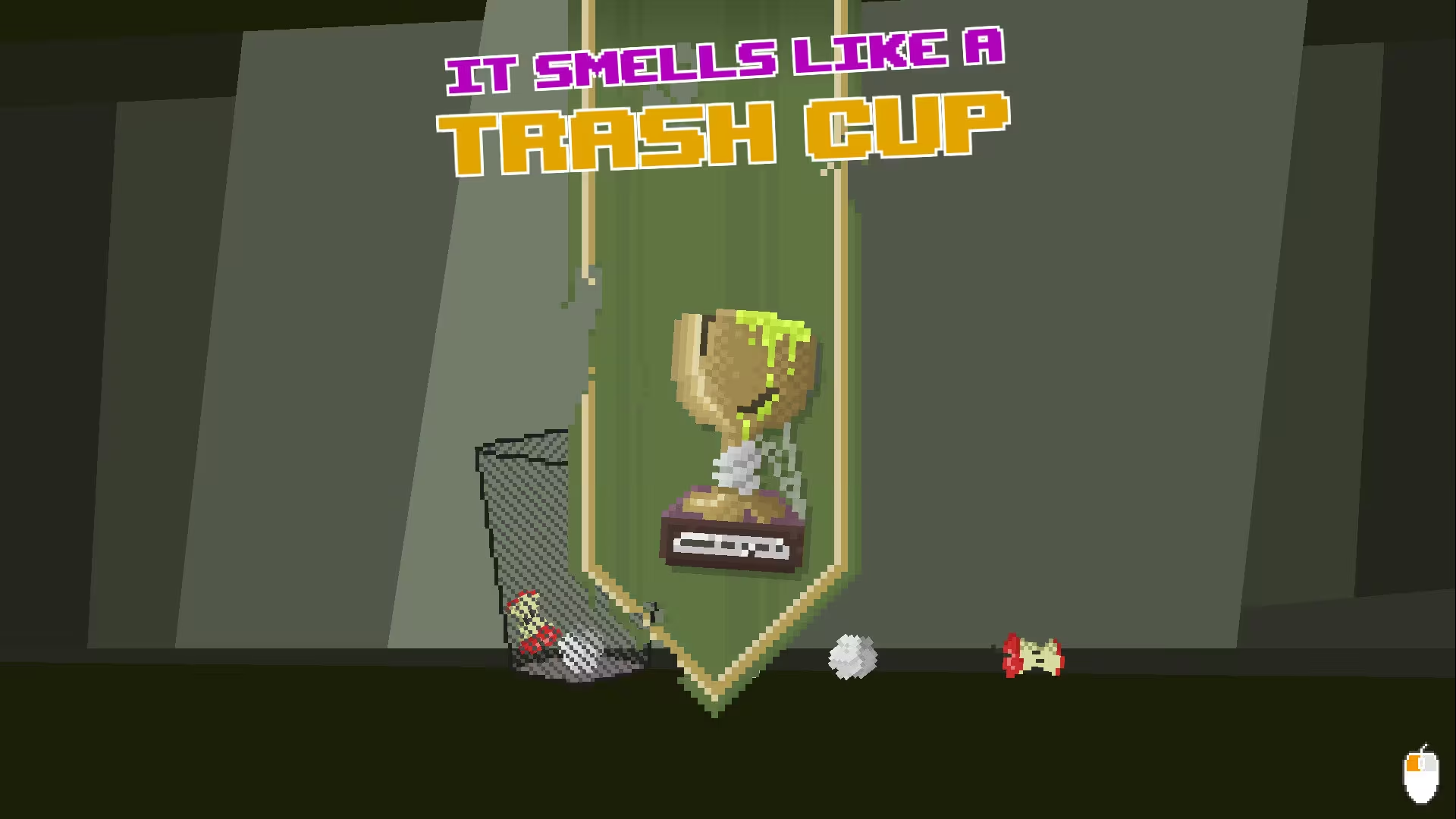
      "Players unlock trophies, achievements, and new puzzle packs as they progress."

    • Relaxation
      2

      "Humorous tone and light puzzles provide a relaxed, casual experience despite some mild tension from narrator reactions."

    • Sensation
      1

      "Simple pixel art and audio with some amusing voice acting; sensory stimulation is moderate."

    • Status
      -5

      "No social recognition or status systems present."

    • Story
      2

      "Contains a light meta-narrative with humorous narrator and evolving plot elements."

    • Strategy
      1

      "Puzzles require some problem solving but are generally straightforward and easy."

    • Thrill
      0

      "Mild tension from narrator reactions but no significant suspense or risk."

    • Value
      -2

      "Many players feel the game is overpriced for its short length; better value on sale."

    • Violence
      -5

      "No combat or destructive gameplay; focus on puzzle solving and humor."

    • Survival
      -5

      "No survival or threat avoidance mechanics."

    Last update: 29/04/2026