Expeditions: Conquistador similar games & best alternatives

Expeditions: Conquistador
2013
Related articles
Quick resume
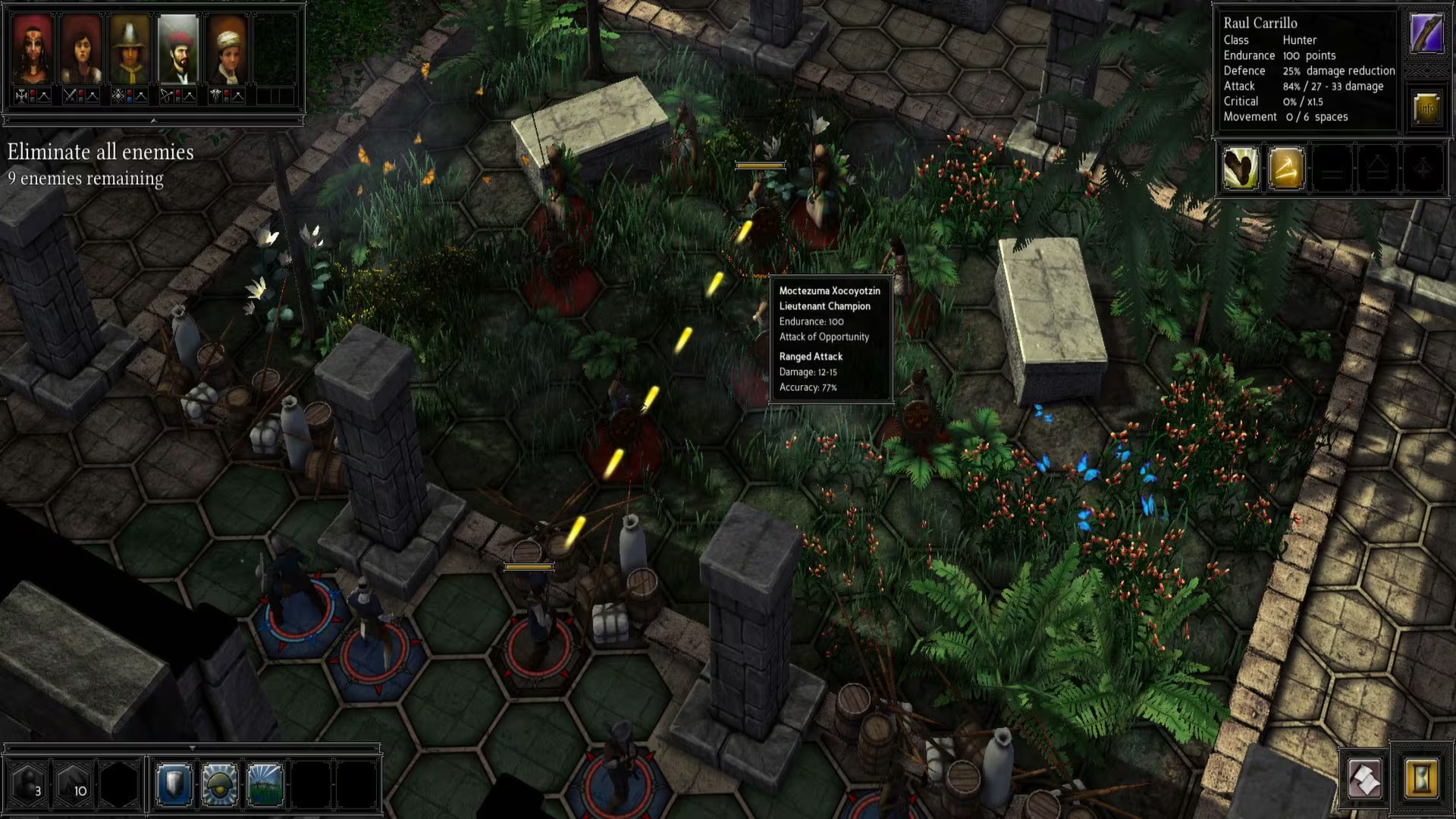
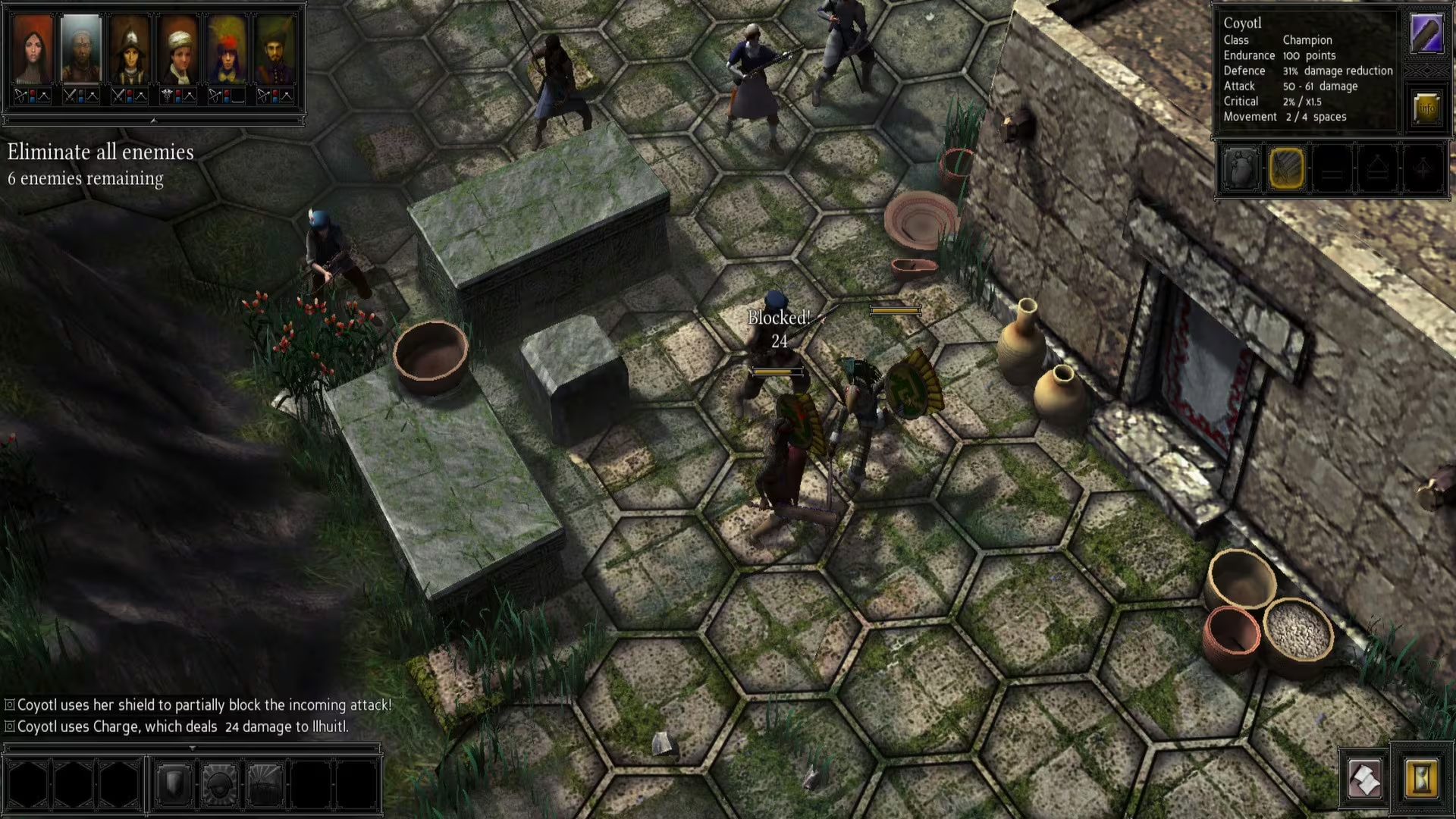
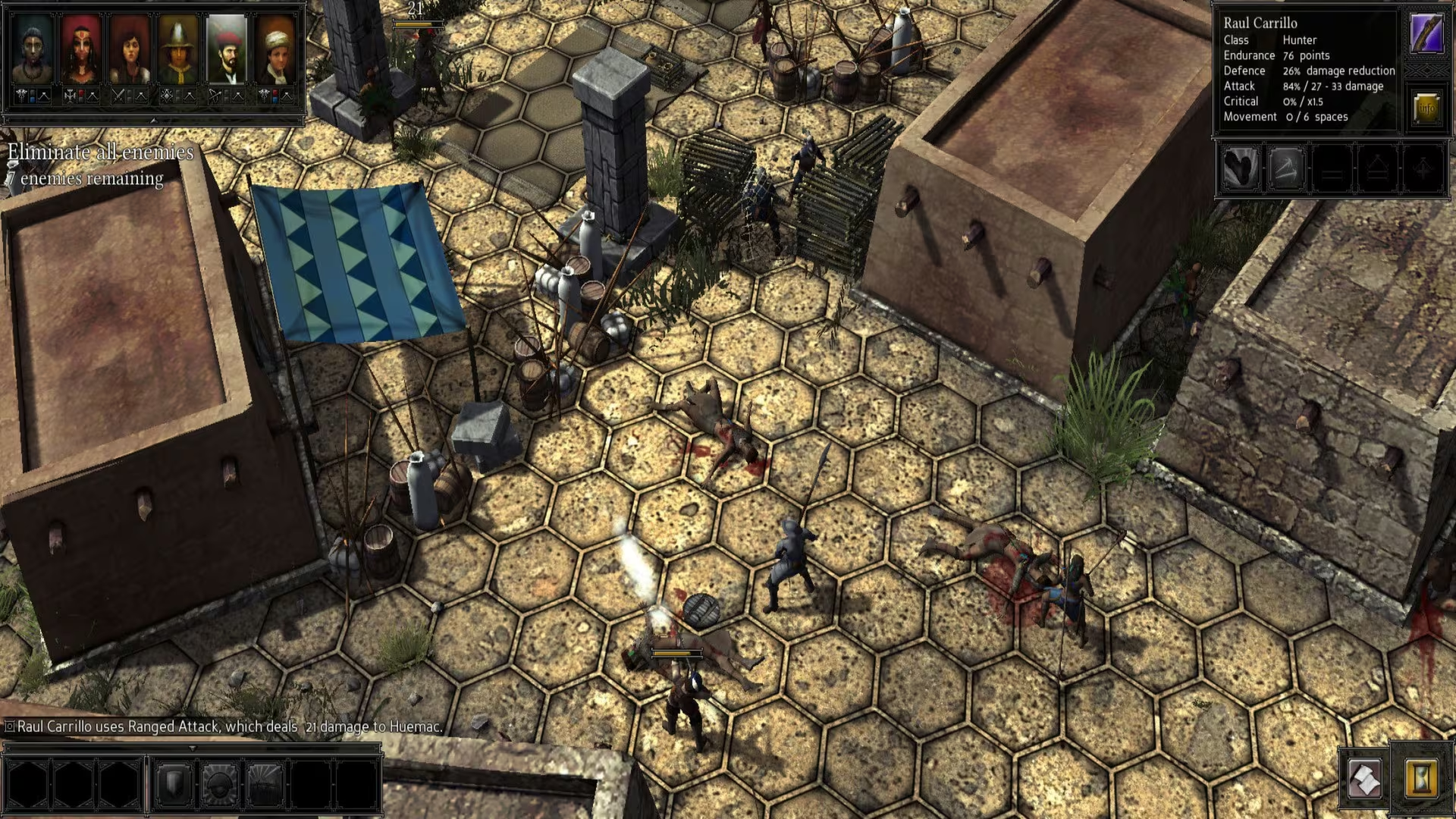
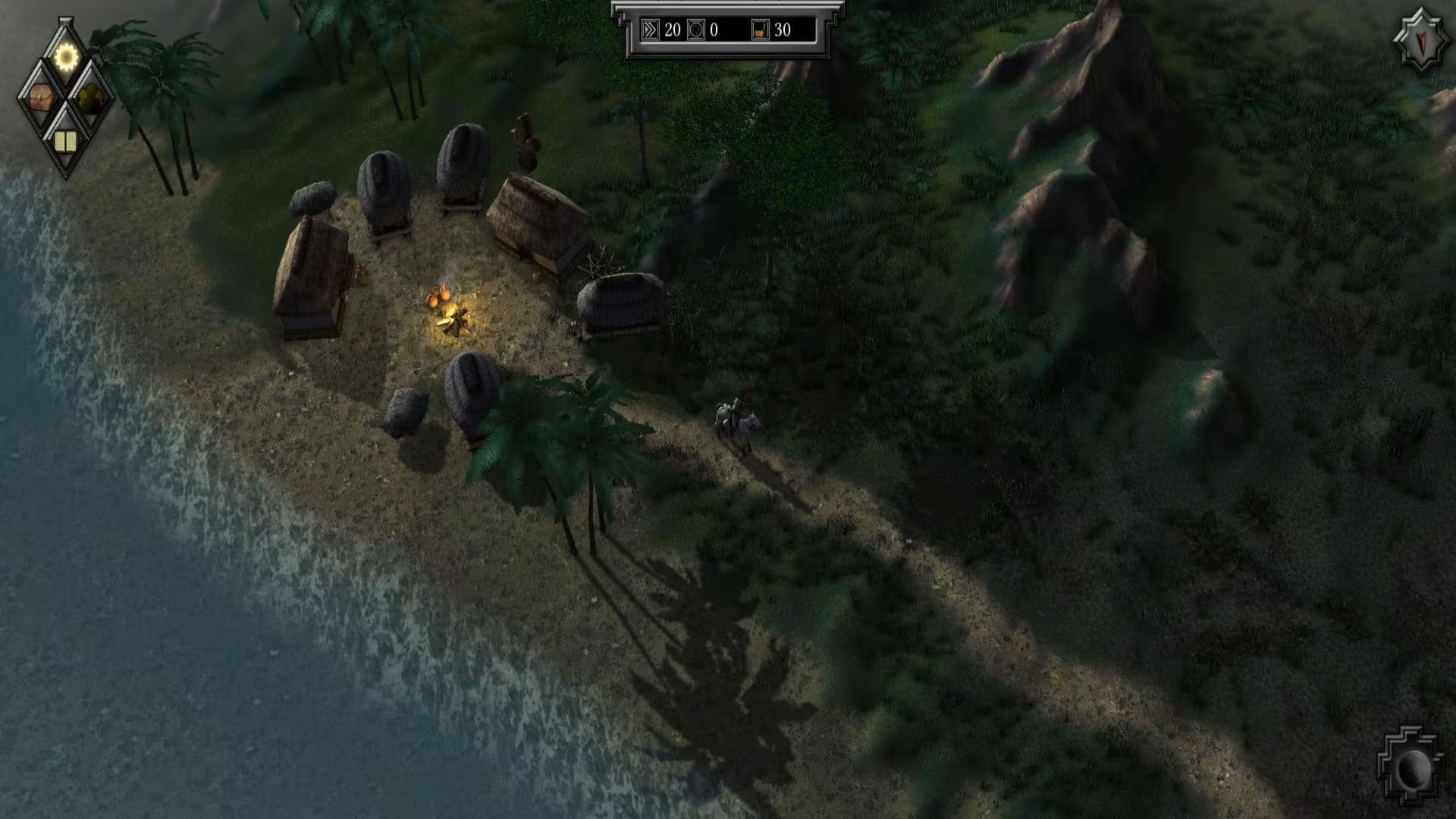
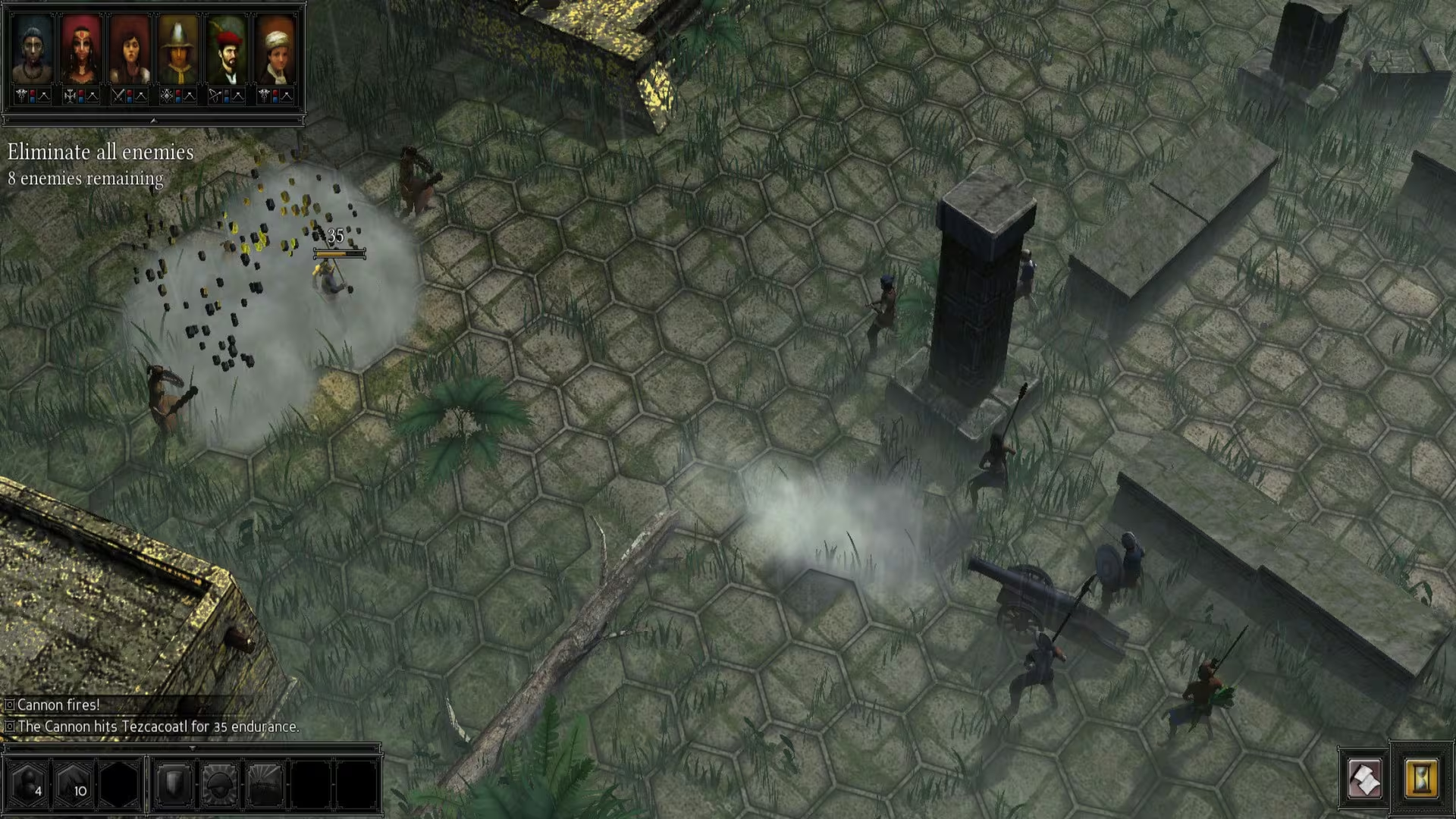
Conquer the New world: In the 16th Century, Spanish explorers and soldiers reached the shores of America. The search for gold, fame, and adventure drove these travelers into a treacherous wilderness where they faced hunger, disease, and dangerous predators. In their wake, the Aztec Empires lay in ruins.
Global score
79/100
Genres
Indie, Role-playing (RPG), Strategy, Simulator, Tactical
Similar games
Pros
- Deep historical setting and narrative
- Challenging tactical combat
- Meaningful player choices and party dynamics
- Long playtime and replayability
- Immersive atmosphere and soundtrack
Cons
- Dated graphics and limited camera control
- Some repetitive exploration and camp management
- Combat ai and ranged weapon balance issues
- Interface clunkiness and occasional bugs
- Limited side quests and story depth
Analysis
Less representative of its motivational profile, with noticeable differences. Motivations that often define this kind of title include Cooperation, Fellowship, Intimacy, Leadership. Here, the score leans higher than usual among comparable games on Leadership, Story. It leans lower than usual among comparable games on Fantasy.
How to use the graph
Similar games map
Each dot is a game. They are arranged from the same motivation profile as in the “Motivations” section below. Closer dots usually mean more similar reasons to play (exploration, competition, relaxation, etc.)—not that one game is “better” than another.
- Larger dot with a light outline: the game you are viewing.
- Colour: groups of games with comparable motivation patterns (statistical clusters).
- Hover a dot to see the game name; click to open its page.
- Scroll or double-click the chart to zoom out and see more games.
Why don’t the axes read like a score? This view uses t-SNE: it only keeps who is close to whom. The scales are not “good to bad” or hours played—they separate groups on the map. Read distance between dots, not the axis numbers.
Motivations
-
Autonomy4
"Players have significant freedom in choosing party members, making strategic and moral decisions, and directing exploration and combat."
-
Competence3
"Combat is challenging and requires tactical skill; resource and party management add complexity, though some tasks become routine over time."
-
Competition-3
"Focus is on personal progress and story; no evidence of ranked or leaderboard competition."
-
Continuation4
"Long play sessions with 20-30+ hours campaign length and replayability; players report being hooked and playing extensively."
-
Cooperation2
"Players manage a party with interpersonal dynamics and morale; cooperation within the group is important though multiplayer is absent."
-
Creativity2
"Players customize party composition, skills, and equipment; crafting traps and managing camp tasks add creative elements."
-
Domination-2
"Interactions emphasize party morale and shared decision-making; no evidence of exerting control or superiority over others."
-
Escapism4
"Immersive historical setting and story provide escape from real life; players enjoy deep roleplaying and exploration."
-
Expectation-4
"Players engage voluntarily out of interest and enjoyment; no indication of obligation or external pressure."
-
Experimenting3
"Players experiment with different party compositions, strategies, and moral choices; multiple endings encourage exploration."
-
Exploration4
"Exploration of maps, discovery of locations, and random events are core gameplay elements driving curiosity."
-
Expression3
"Party customization and character personalities allow self-expression through playstyle and decision-making."
-
Fantasy-3
"Strong historical realism focus with minimal supernatural elements; setting grounded in plausible 16th century events."
-
Fellowship2
"Players feel connected to their party and its interpersonal dynamics; no multiplayer or broader community focus."
-
Growth4
"Learning combat tactics, managing resources, and developing characters provide meaningful personal development."
-
Health-4
"Gameplay is sedentary with no physical activity; players manage health of party members but not their own physical health."
-
Idle-3
"Requires focused attention during combat and resource management; some repetitive camp management but generally engaging."
-
Intimacy2
"Close relationships and morale among party members are important; no evidence of forming close social bonds beyond party."
-
Leadership4
"Player leads and manages a diverse party, making strategic and moral decisions affecting group cohesion and success."
-
Progression4
"Character leveling, skill acquisition, equipment upgrades, and story advancement provide strong progression."
-
Relaxation2
"Some players find the game relaxing and immersive, though difficulty and resource management can create tension."
-
Sensation1
"Soundtrack and art contribute to atmosphere; sensory stimulation is moderate and contextually appropriate."
-
Status-4
"No social status or popularity mechanics; focus is on individual experience and party management."
-
Story5
"Strong narrative immersion with branching storylines, character interactions, and meaningful player choices."
-
Strategy4
"Requires tactical combat planning, resource and party management, and strategic decision-making."
-
Thrill3
"Combat and survival challenges create suspense and excitement; random events add unpredictability."
-
Value4
"Players report high value for time and money with many hours of gameplay and replayability."
-
Violence3
"Combat and conquest involve violence and destruction consistent with historical setting."
-
Survival4
"Resource management, injury treatment, and camp defense are critical to avoiding failure and staying alive."
Last update: 29/04/2026