Game Corp DX Thumbnail

Game Corp DX similar games & best alternatives

Game Corp DX

PC (Microsoft Windows), Linux • 2015

Related articles

Quick resume

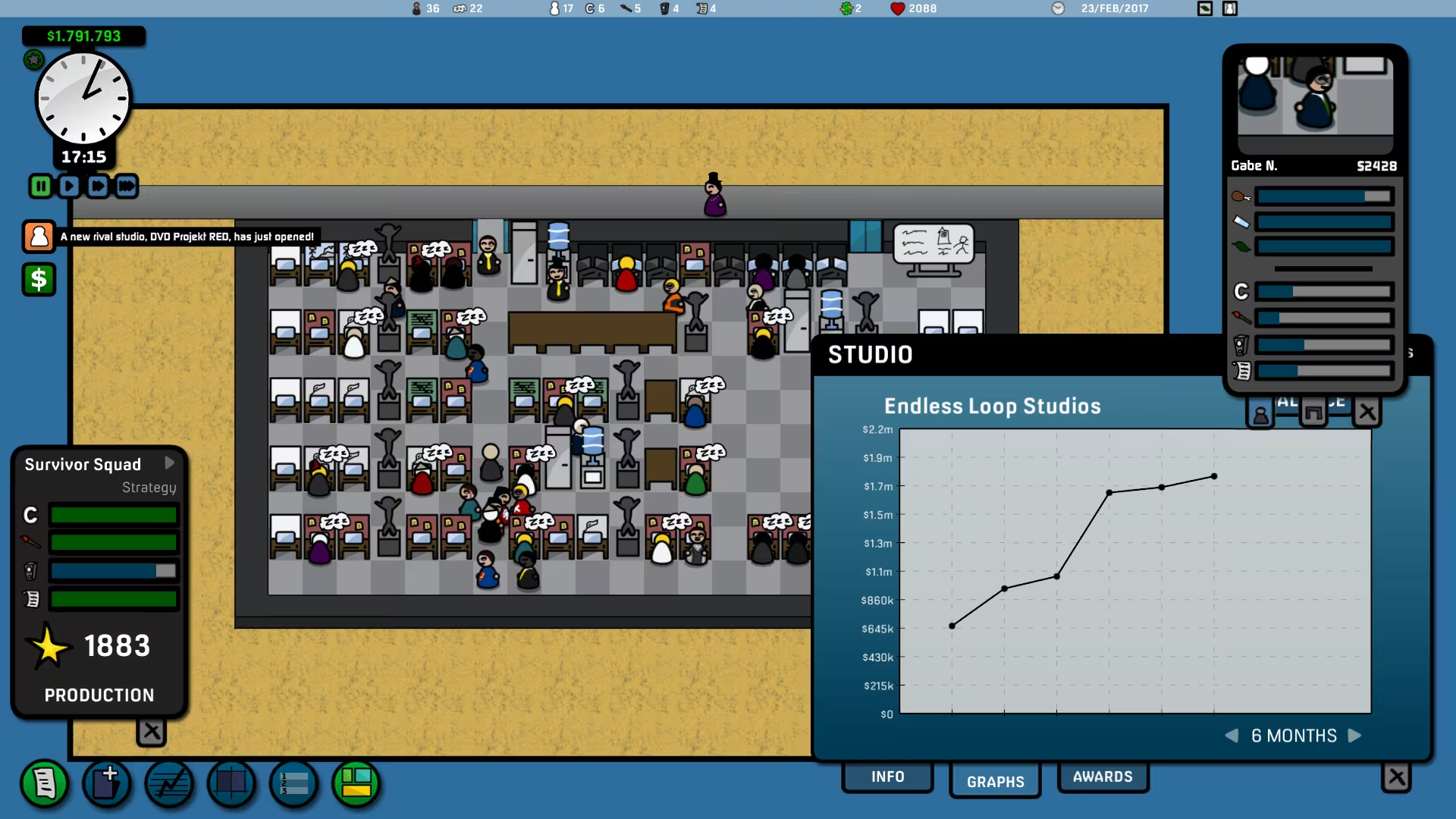
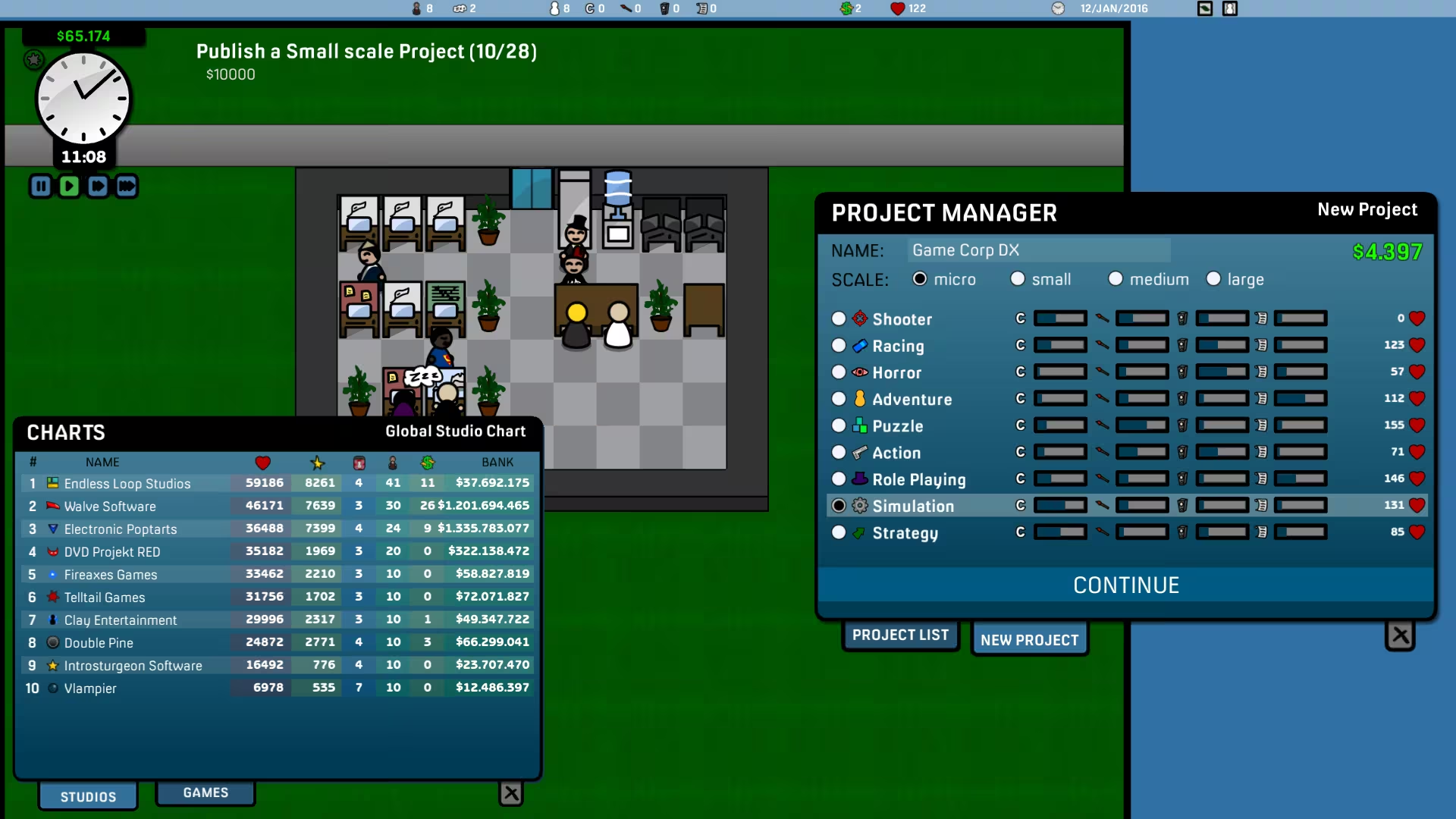
Manage your Game Studio, earn big bucks, impress the critics, beat rival studios and clean up at the awards!

Global score

88/100

Genres

Indie, Simulator

Similar games

    Pros

    • Affordable price
    • Simple and accessible gameplay
    • Relaxing and casual experience
    • Customizable studio and game naming
    • Humorous references and easter eggs

    Cons

    • Short playtime and limited replay value
    • Lack of depth and complexity
    • Minimal challenge especially on normal difficulty
    • Limited office building options
    • No multiplayer or social features

    Analysis

    Broadly representative of its motivational profile, with a few distinct shifts. Motivations that often define this kind of title include Idle, Thrill, Violence, Survival. Here, the score leans higher than usual among comparable games on Leadership, Competition, Status.

    How to use the graph
    Similar games map

    Each dot is a game. They are arranged from the same motivation profile as in the “Motivations” section below. Closer dots usually mean more similar reasons to play (exploration, competition, relaxation, etc.)—not that one game is “better” than another.

    • Larger dot with a light outline: the game you are viewing.
    • Colour: groups of games with comparable motivation patterns (statistical clusters).
    • Hover a dot to see the game name; click to open its page.
    • Scroll or double-click the chart to zoom out and see more games.

    Why don’t the axes read like a score? This view uses t-SNE: it only keeps who is close to whom. The scales are not “good to bad” or hours played—they separate groups on the map. Read distance between dots, not the axis numbers.

    Motivations

    • Autonomy
      4

      "Players have freedom to manage their studio, assign staff, choose game genres, and customize office layout, showing control over decisions."

    • Competence
      3

      "Game involves skill development of employees, strategic assignment to projects, and managing resources, though overall difficulty is low and gameplay is simple."

    • Competition
      2

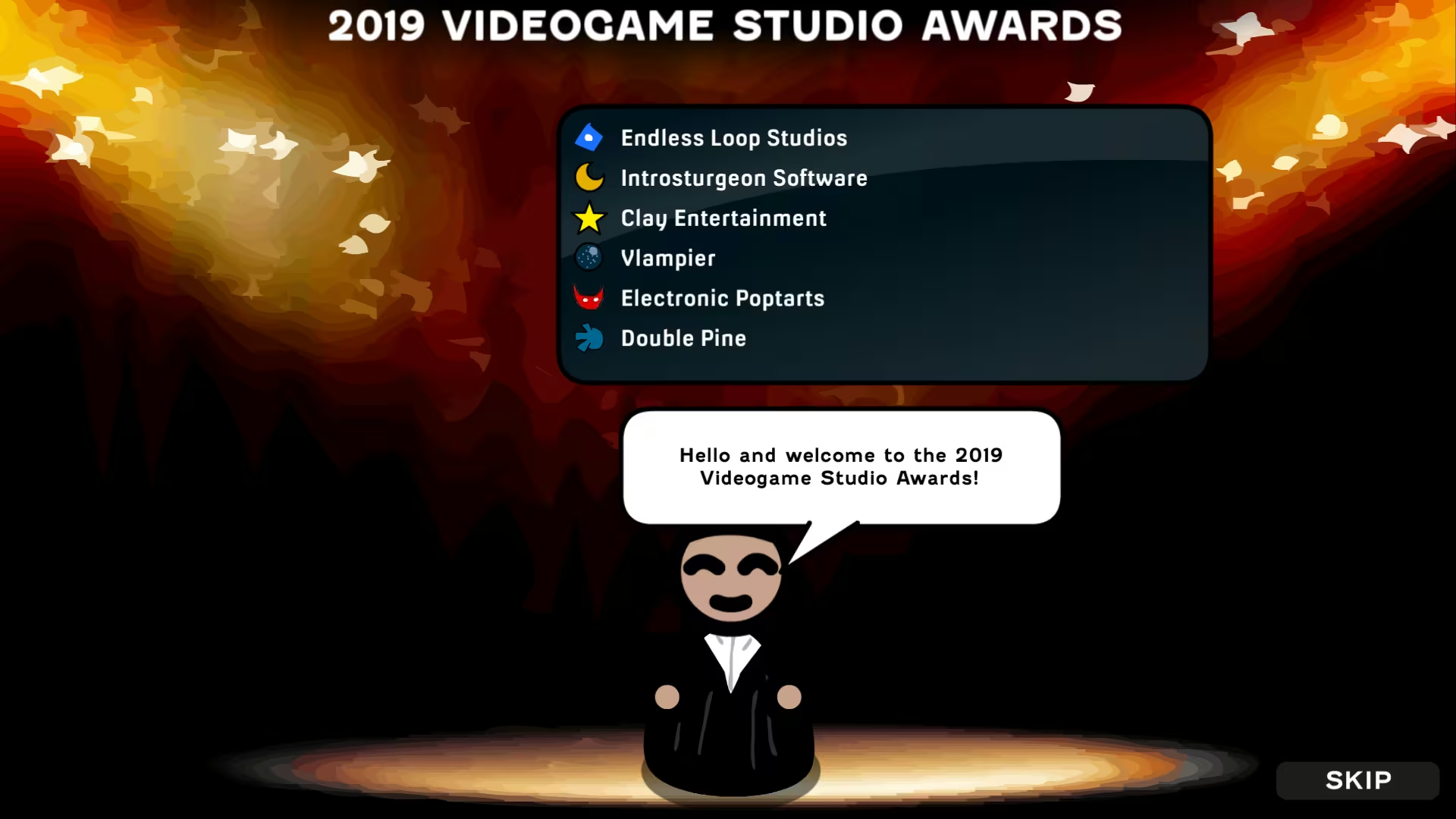
      "Includes competition with rival studios and annual awards, but competition is mild and mostly AI-driven without direct player versus player interaction."

    • Continuation
      1

      "Players report short play sessions (3-7 hours) with limited replay value; some addiction for casual play but game is easily completed."

    • Cooperation
      -4

      "Gameplay focuses on single-player management with no multiplayer or cooperative elements."

    • Creativity
      3

      "Players can customize studio layout, name games and studios, and assign staff roles, allowing creative expression within constraints."

    • Domination
      -3

      "Interactions with rivals are limited to competition; no player-imposed control or authority over others."

    • Escapism
      3

      "Players use the game as a relaxing, casual time-killer and distraction from real life."

    • Expectation
      -4

      "Players engage voluntarily for fun and relaxation, with no obligation or external pressure."

    • Experimenting
      2

      "Some experimentation with staff assignments and game genres is possible, but overall gameplay is streamlined and repetitive."

    • Exploration
      -3

      "Game world is limited with fixed office spaces and no open exploration or discovery."

    • Expression
      3

      "Allows naming games and studios, customizing office layout, and hiring unique characters, supporting player expression."

    • Fantasy
      -1

      "Game simulates realistic game development studio management with humorous fictional elements but no strong fantasy themes."

    • Fellowship
      -4

      "Single-player experience with minimal social interaction or community involvement."

    • Growth
      3

      "Players develop employee skills and grow their company, learning management strategies."

    • Health
      -5

      "Sedentary gameplay with no physical activity involved."

    • Idle
      2

      "Game allows fast-forwarding and some idle moments, but requires periodic player input and management."

    • Intimacy
      -5

      "No social or emotional relationship building; purely individual gameplay."

    • Leadership
      4

      "Player leads and manages their studio, directing staff and company growth."

    • Progression
      4

      "Players accumulate employees, office upgrades, and game releases, progressing company status."

    • Relaxation
      4

      "Game is described as relaxing, casual, and a good way to unwind."

    • Sensation
      1

      "Simple graphics and music provide mild sensory stimulation; not intense or highly exciting."

    • Status
      1

      "Players gain recognition through awards and in-game rankings, but social status is limited to single-player context."

    • Story
      -3

      "No narrative or plot; gameplay is context-free management simulation."

    • Strategy
      3

      "Requires planning staff assignments, project management, and resource allocation, though complexity is moderate."

    • Thrill
      -2

      "Game is low-risk and casual with minimal suspense or tension."

    • Value
      4

      "Players perceive good value for money given low price and enjoyable gameplay."

    • Violence
      -5

      "No violence; gameplay focuses on constructive management and development."

    • Survival
      -1

      "Some financial risk management but generally low threat environment."

    Last update: 29/04/2026