Gone Home Thumbnail

Gone Home similar games & best alternatives
Gone Home

PC (Microsoft Windows), Mac, iOS, PlayStation 4, Xbox One, Nintendo Switch, Linux • 2013

Related articles

Quick resume

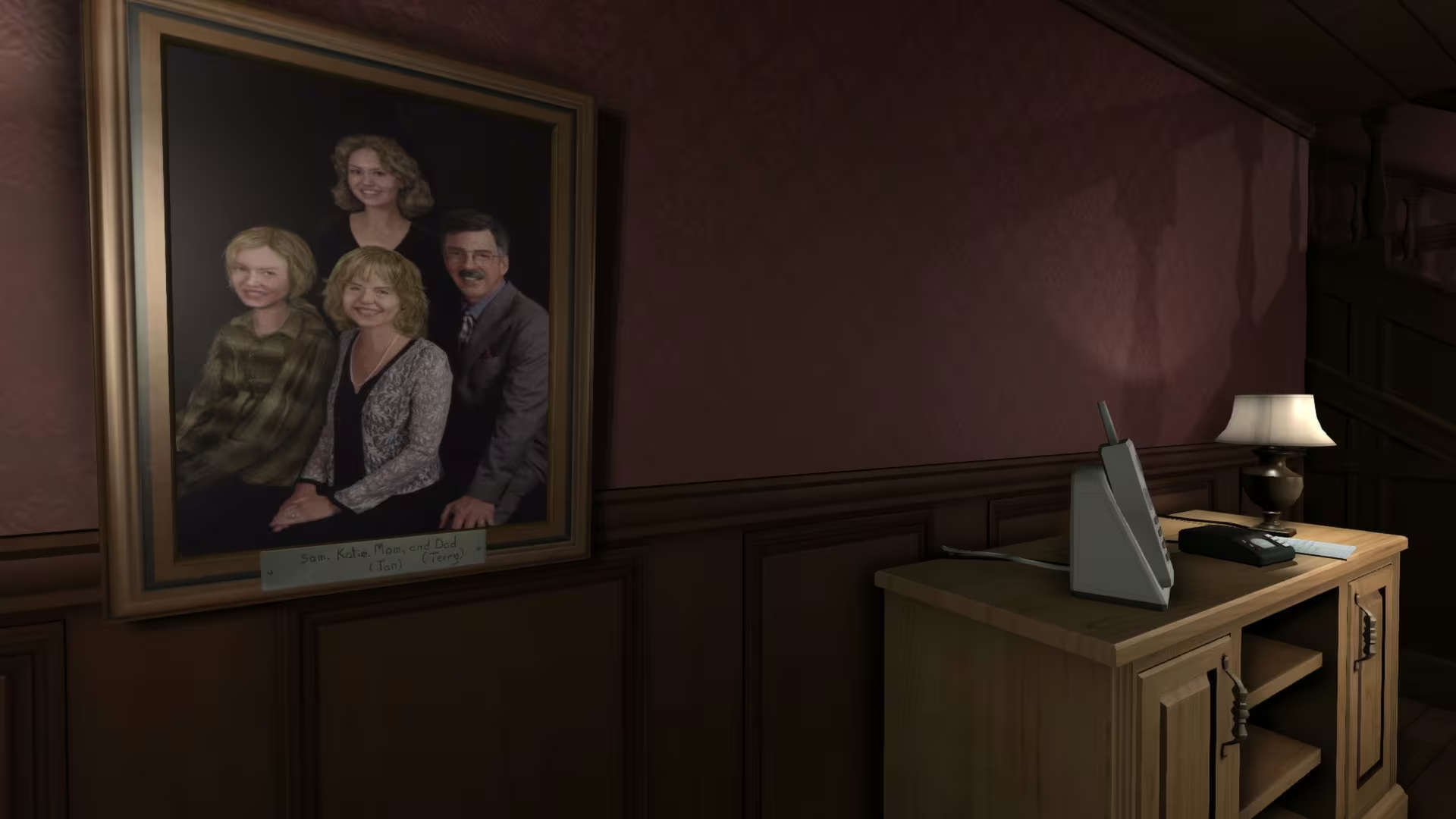
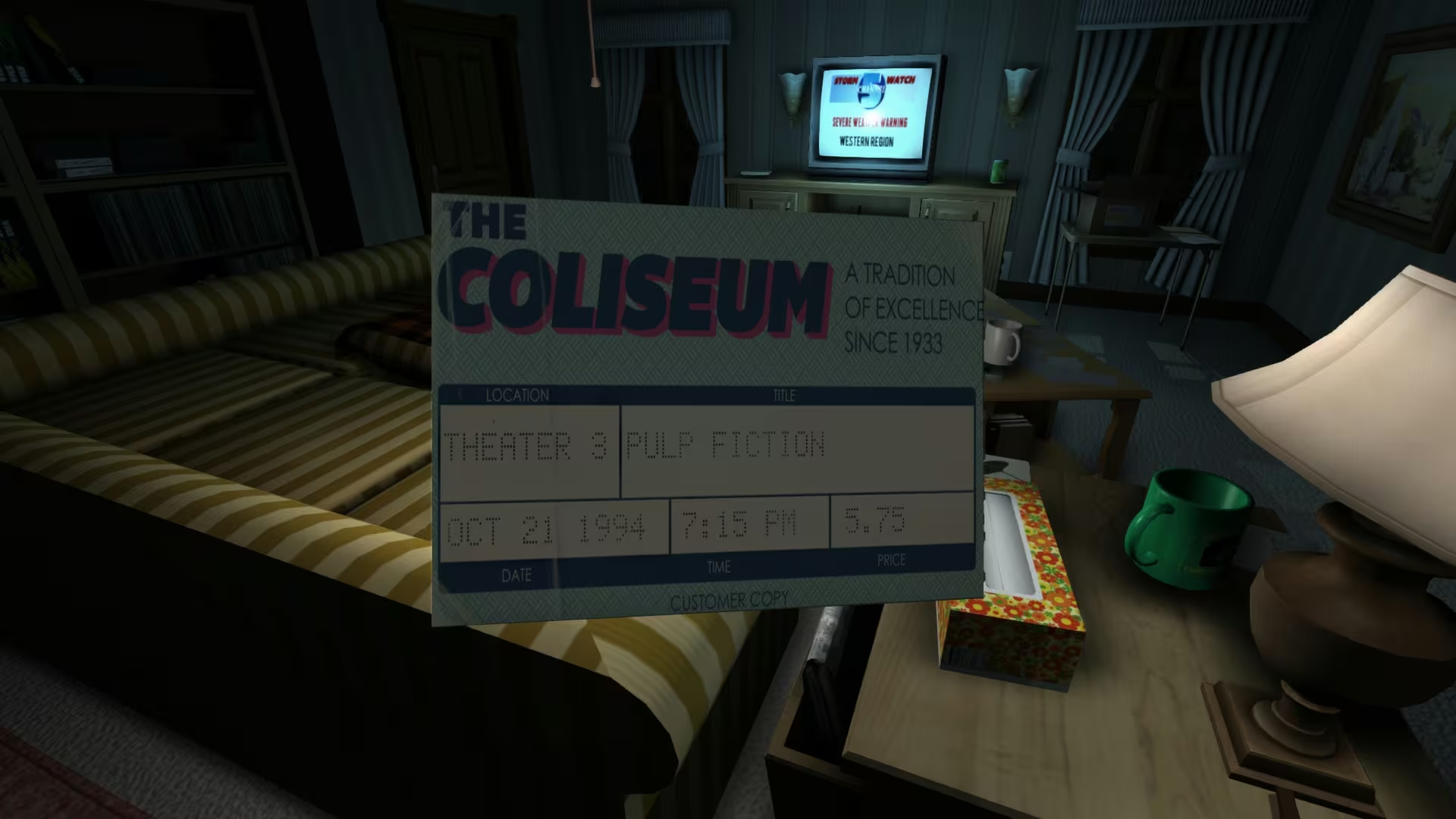
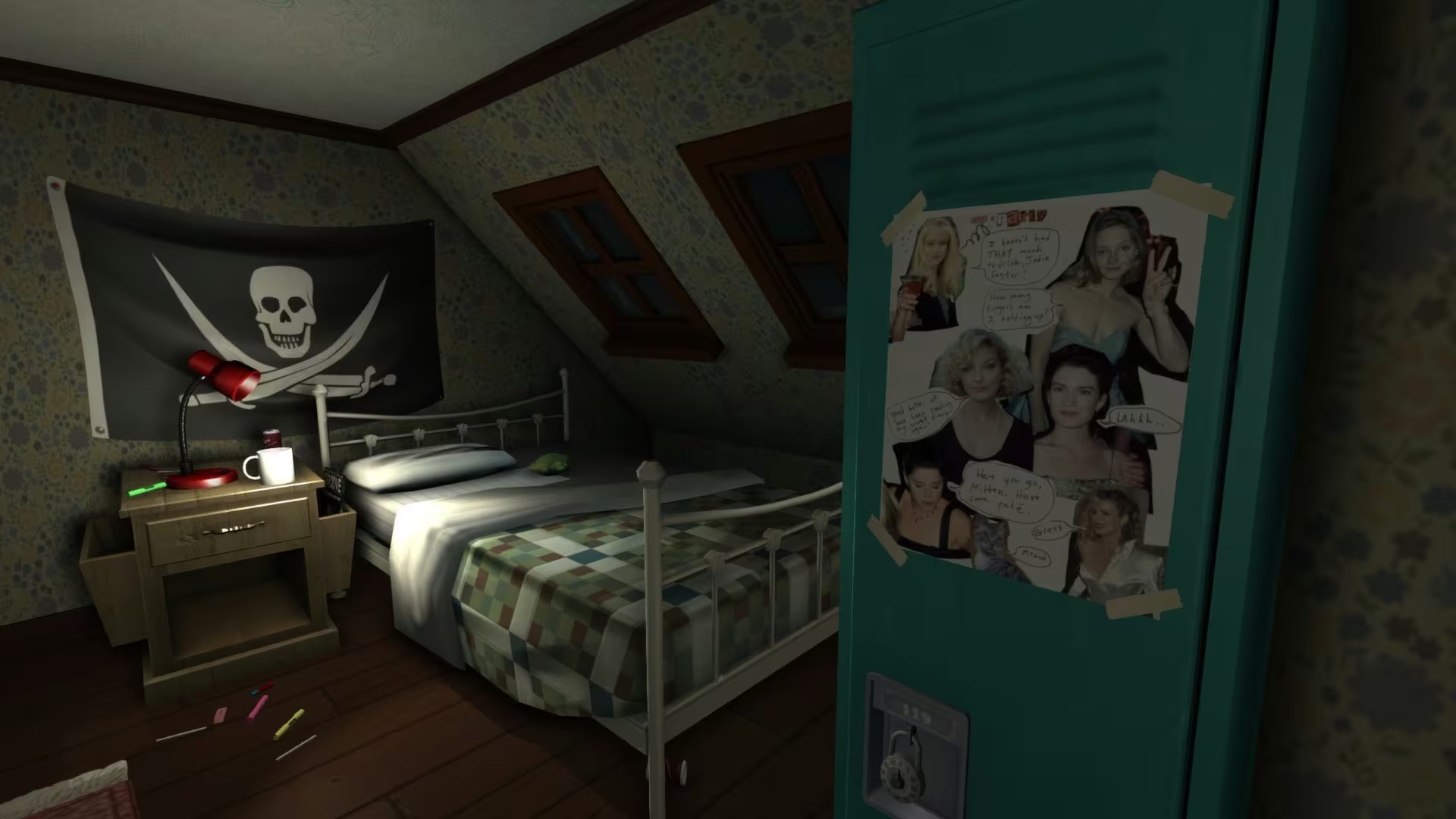
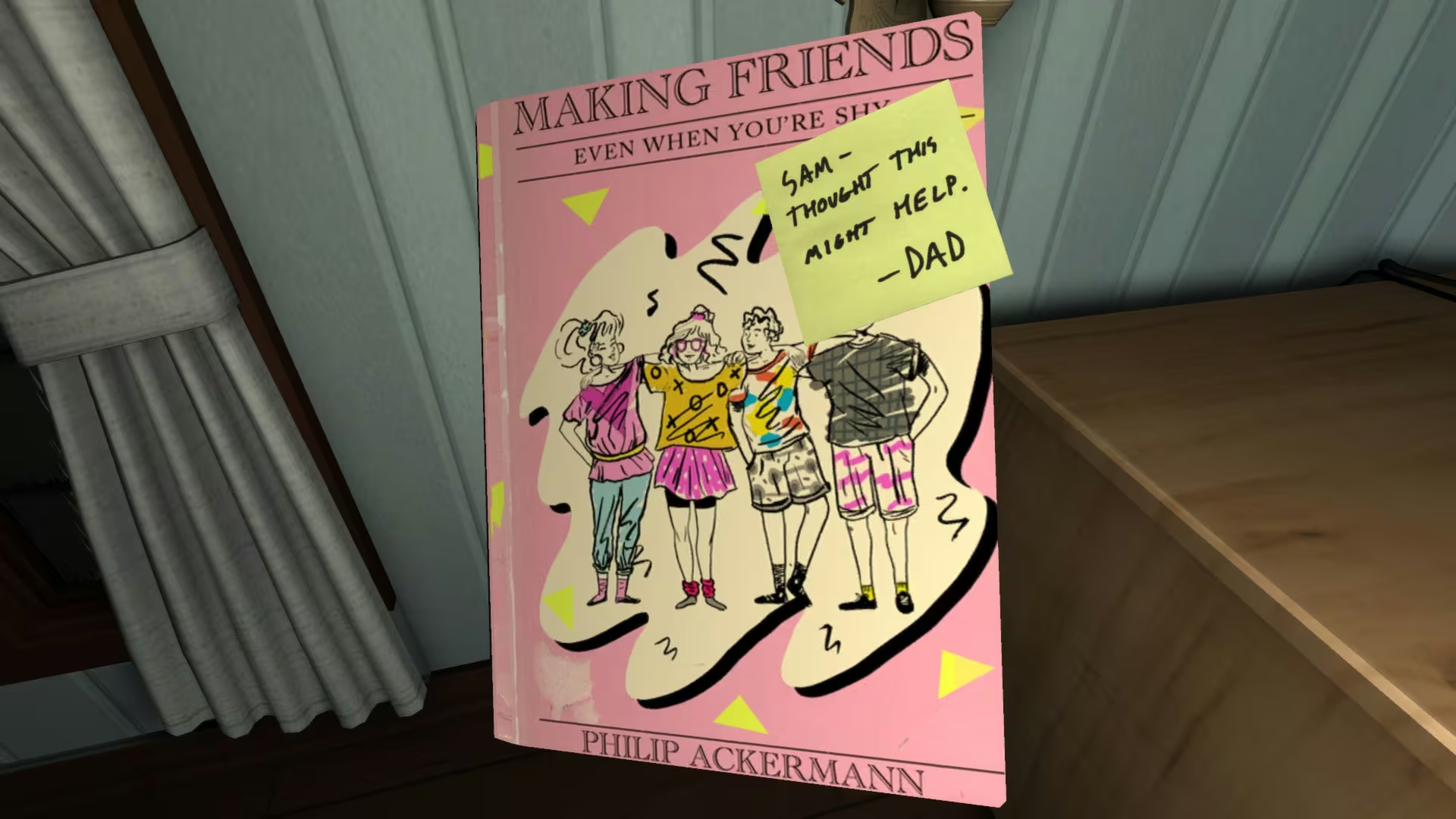
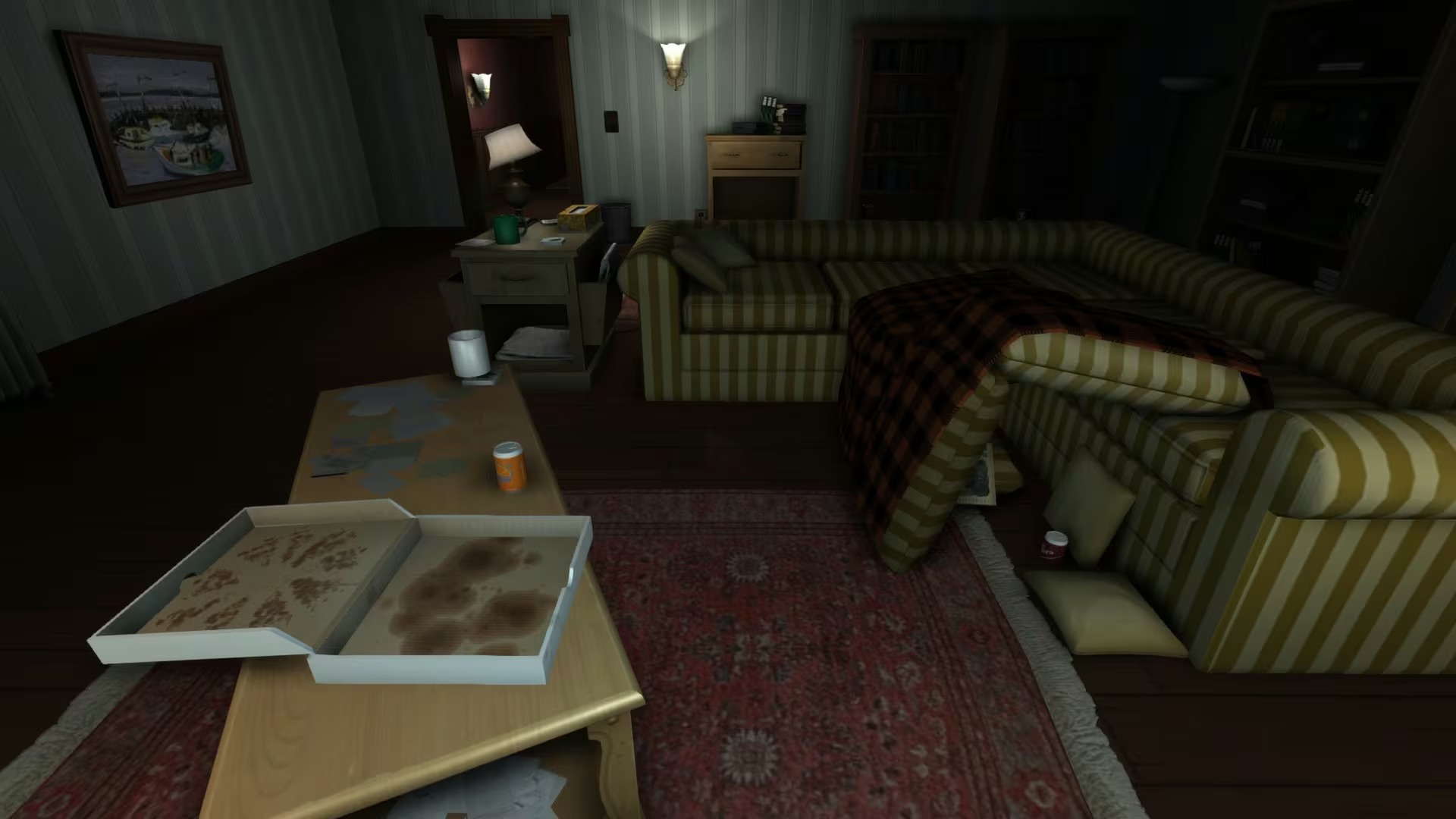
June 7th, 1995. 1:15 AM. You arrive home after a year abroad. You expect your family to greet you, but the house is empty. Something's not right. Where is everyone? And what's happened here? Unravel the mystery for yourself in Gone Home, a story exploration game from The Fullbright Company.

Global score

77/100

Genres

Adventure, Indie, Puzzle

Similar games

    Pros

    • Immersive narrative and atmosphere
    • Emotional and relatable story
    • Detailed 1990s setting and nostalgia
    • Strong voice acting and sound design
    • Freedom to explore at own pace

    Cons

    • Short playtime (~2-3 hours)
    • Limited gameplay mechanics
    • Low replay value
    • Price considered high by some
    • Linear story with limited player expression

    Analysis

    Less representative of its motivational profile, with noticeable differences. Motivations that often define this kind of title include Strategy, Survival, Competence, Violence. Here, the score leans higher than usual among comparable games on Exploration, Intimacy. It leans lower than usual among comparable games on Fantasy.

    How to use the graph
    Similar games map

    Each dot is a game. They are arranged from the same motivation profile as in the “Motivations” section below. Closer dots usually mean more similar reasons to play (exploration, competition, relaxation, etc.)—not that one game is “better” than another.

    • Larger dot with a light outline: the game you are viewing.
    • Colour: groups of games with comparable motivation patterns (statistical clusters).
    • Hover a dot to see the game name; click to open its page.
    • Scroll or double-click the chart to zoom out and see more games.

    Why don’t the axes read like a score? This view uses t-SNE: it only keeps who is close to whom. The scales are not “good to bad” or hours played—they separate groups on the map. Read distance between dots, not the axis numbers.

    Motivations

    • Autonomy
      4

      "Players freely explore the house at their own pace, deciding which objects to examine and how deeply to investigate the story."

    • Competence
      -1

      "Gameplay involves simple exploration and minimal puzzle solving, with no significant skill challenges."

    • Competition
      -5

      "No competitive elements; focus is on personal narrative experience without comparison to others."

    • Continuation
      -3

      "Short game length (~2-3 hours) with low replay value; players tend to finish once and move on."

    • Cooperation
      -5

      "Single-player experience focused on individual exploration and story discovery."

    • Creativity
      2

      "Players can interact with and examine many objects, piecing together the story creatively, but no building or modifying."

    • Domination
      -5

      "No social dominance or power dynamics; experience is solitary and respectful."

    • Escapism
      3

      "Immersive narrative and atmosphere provide an emotional escape from real life."

    • Expectation
      -4

      "Players engage voluntarily out of personal interest in story and exploration."

    • Experimenting
      2

      "Encourages exploration and discovery of story elements in non-linear ways."

    • Exploration
      5

      "Core gameplay is exploring a large house and uncovering hidden story elements."

    • Expression
      -3

      "Limited customization; players experience a fixed narrative and environment."

    • Fantasy
      -4

      "Grounded in realistic 1990s setting and family drama without supernatural elements."

    • Fellowship
      -5

      "Solo experience with minimal social interaction or community involvement."

    • Growth
      3

      "Players learn about characters and story through exploration and interpretation."

    • Health
      -5

      "Sedentary gameplay with no physical activity involved."

    • Idle
      -3

      "Requires focused attention during playthrough; not designed for casual or background play."

    • Intimacy
      4

      "Emotional connection to characters and story fosters a sense of closeness and empathy."

    • Leadership
      -5

      "No leadership or group management elements; purely individual experience."

    • Progression
      3

      "Progression through story is achieved by collecting and interpreting items and notes."

    • Relaxation
      4

      "Calm, atmospheric pacing encourages relaxation and immersion."

    • Sensation
      3

      "Strong audio and visual atmosphere with nostalgic 90s elements provide sensory engagement."

    • Status
      -5

      "No social status or recognition mechanics present."

    • Story
      5

      "Narrative-driven game with deep emotional storytelling and character development."

    • Strategy
      -3

      "Minimal strategic or problem-solving demands; mostly straightforward exploration."

    • Thrill
      1

      "Some suspenseful atmosphere but no real risk or intense thrills."

    • Value
      -2

      "Mixed player opinions on value due to short length and price; better on sale."

    • Violence
      -5

      "No violence or combat; focus on peaceful exploration and story."

    • Survival
      -5

      "No survival mechanics or threats; safe, stable environment."

    Last update: 29/04/2026