Grand Ages: Rome similar games & best alternatives
Grand Ages: Rome
2009
Related articles
Quick resume
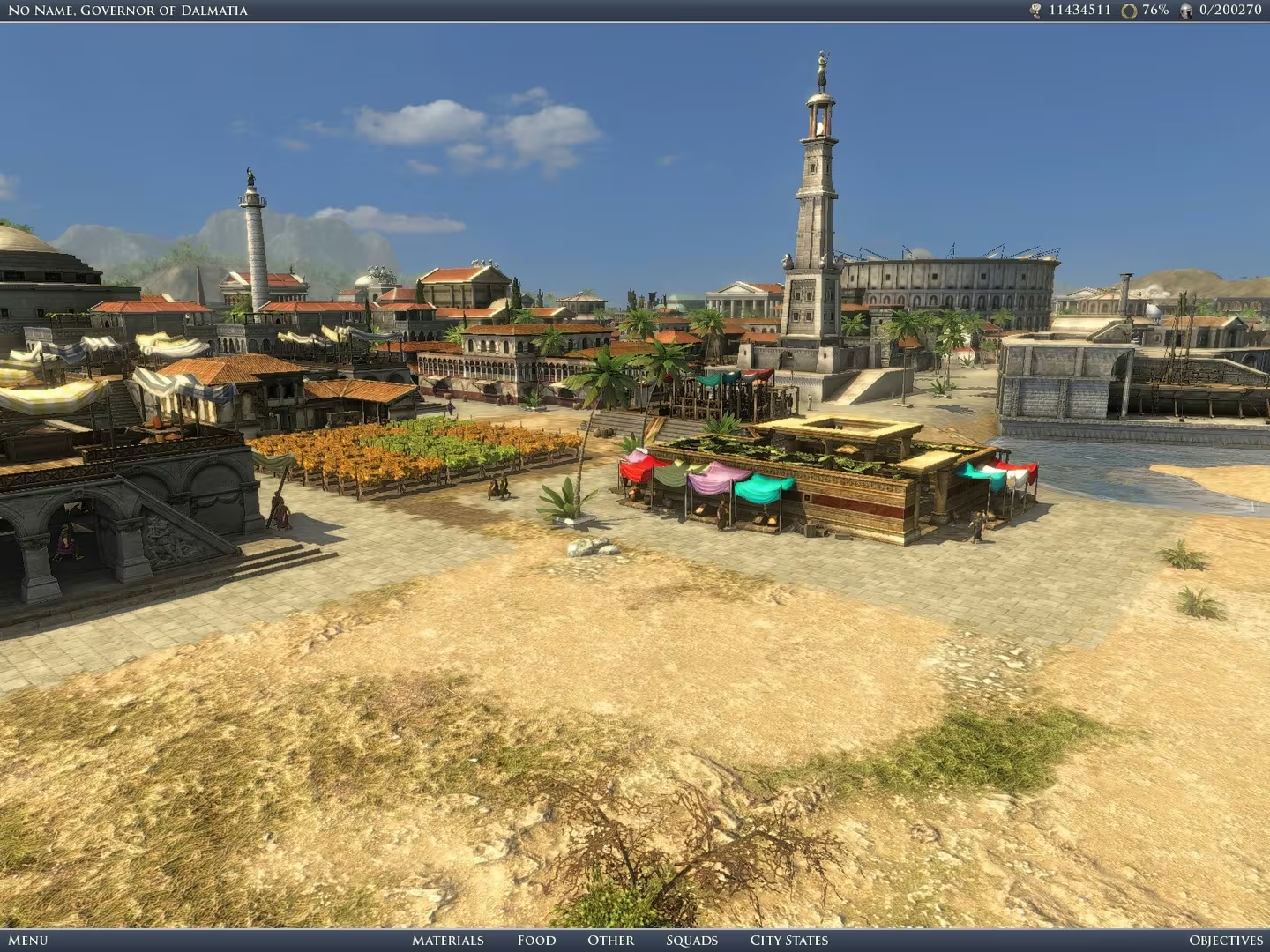
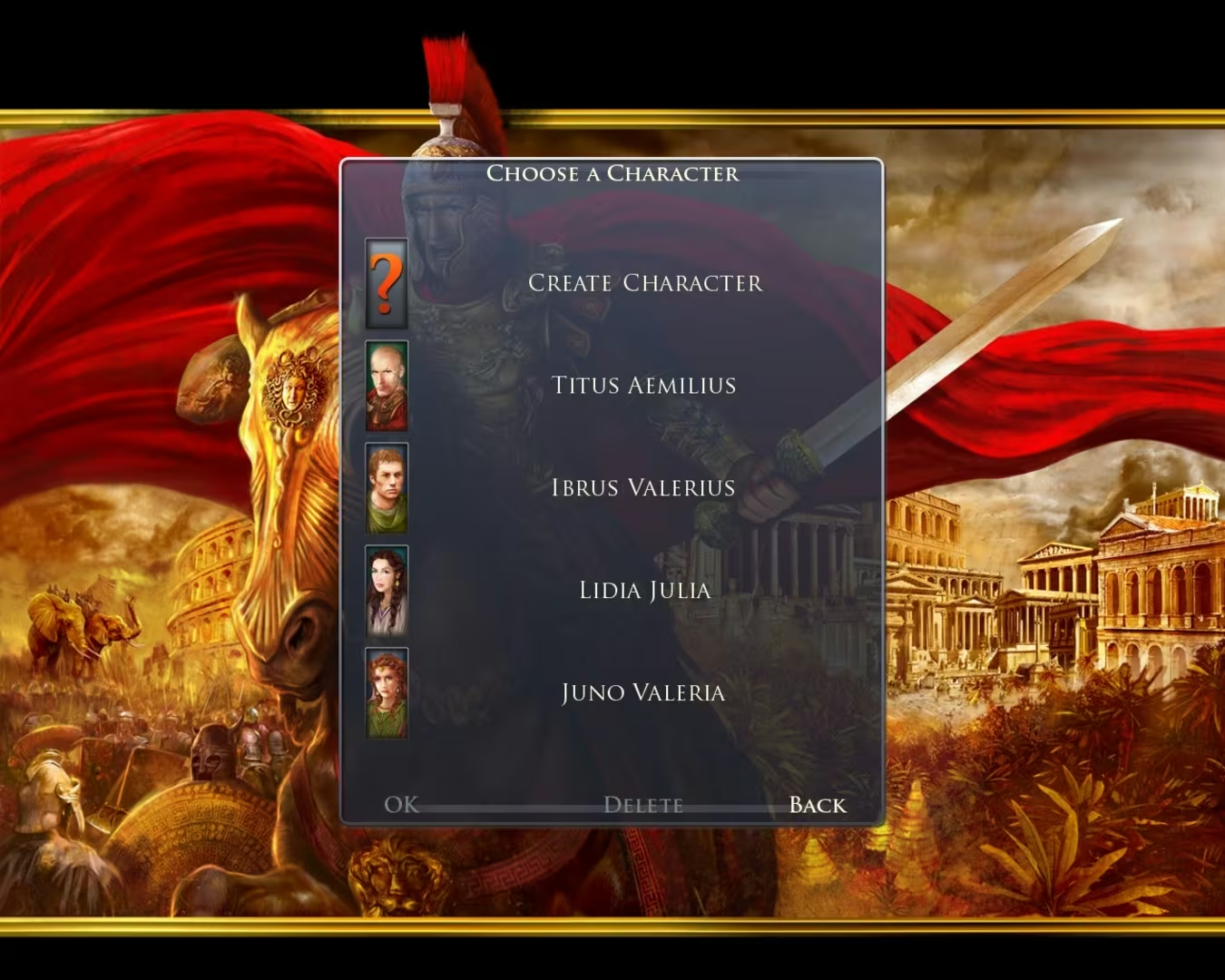
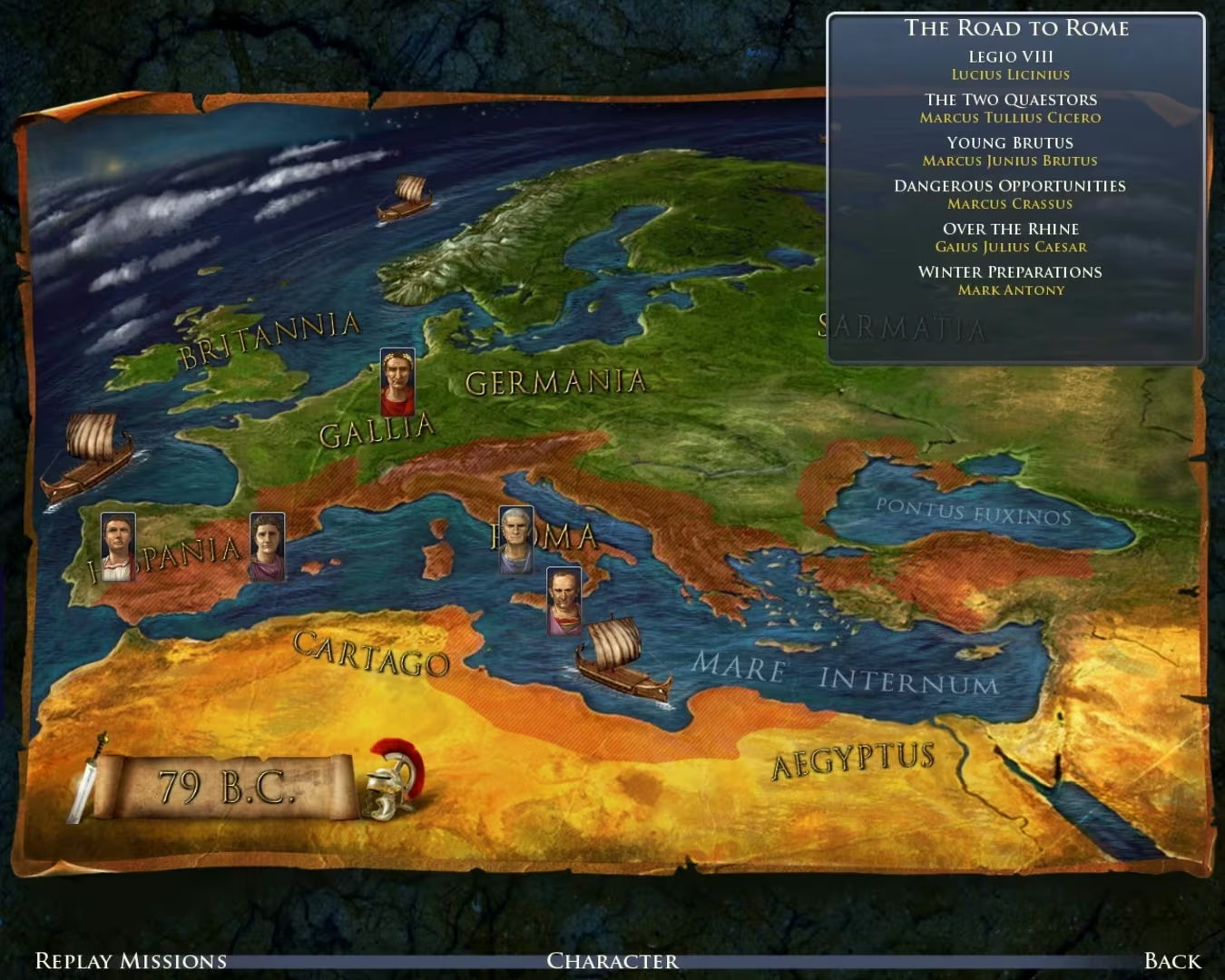
As Governor of a Roman Province in the time-honoured Roman Empire, its fortune very much lies in your hands. Choose one of five Roman noble families such as Caesar’s Julii with different abilities to accomplish the comprehensive missions.
Global score
75/100
Genres
Simulator, Strategy, Real Time Strategy (RTS)
Similar games
Pros
- Addictive and deep city building mechanics
- Beautiful and atmospheric graphics
- Long and varied campaign with progression
- Balanced mix of strategy and management
- Good value especially on sale
Cons
- Combat is shallow and limited
- Camera controls can be clunky
- Multiplayer servers are down
- Some missions can feel repetitive
- Learning curve can be steep for beginners
Analysis
A very typical example of its motivational profile. Motivations that often define this kind of title include Leadership, Survival, Violence, Strategy. Here, the score leans higher than usual among comparable games on Relaxation. It leans lower than usual among comparable games on Fantasy, Thrill.
How to use the graph
Similar games map
Each dot is a game. They are arranged from the same motivation profile as in the “Motivations” section below. Closer dots usually mean more similar reasons to play (exploration, competition, relaxation, etc.)—not that one game is “better” than another.
- Larger dot with a light outline: the game you are viewing.
- Colour: groups of games with comparable motivation patterns (statistical clusters).
- Hover a dot to see the game name; click to open its page.
- Scroll or double-click the chart to zoom out and see more games.
Why don’t the axes read like a score? This view uses t-SNE: it only keeps who is close to whom. The scales are not “good to bad” or hours played—they separate groups on the map. Read distance between dots, not the axis numbers.
Motivations
-
Autonomy4
"Players have freedom to build cities and choose strategies, with multiple families and skill trees allowing personal play styles."
-
Competence3
"Game requires learning complex resource management and city planning, with a moderate learning curve and skill development."
-
Competition-2
"Focus is mainly on single-player campaign and personal city building; multiplayer exists but is minor and servers are down."
-
Continuation4
"Players report long play sessions, habitual returns, and deep engagement with campaigns and city building."
-
Cooperation-3
"Game is primarily single-player focused with limited multiplayer and no strong emphasis on teamwork."
-
Creativity4
"Strong emphasis on city design, building placement, and customization of play style through estates and skill trees."
-
Domination-3
"Interactions with others are minimal and balanced; no evidence of exerting control or superiority over other players."
-
Escapism4
"Players use the game to immerse in ancient Rome, escape reality, and enjoy a relaxing yet engaging experience."
-
Expectation-4
"Players engage voluntarily out of interest and enjoyment, with no indication of obligation or external pressure."
-
Experimenting3
"Players explore different families, skill trees, and city layouts, experimenting with strategies and mechanics."
-
Exploration2
"Campaign offers different maps and scenarios, encouraging discovery of new challenges and city setups."
-
Expression3
"Customization of cities and character progression allows personal expression within the game."
-
Fantasy1
"Set in historical ancient Rome with some fictionalized elements; mostly realistic but with some narrative liberties."
-
Fellowship-3
"Minimal social interaction; mostly solo play with limited multiplayer engagement."
-
Growth3
"Players develop skills in city building, resource management, and strategic planning over time."
-
Health-5
"No physical activity involved; typical sedentary gameplay."
-
Idle-3
"Requires sustained attention and planning; not designed for casual or background play."
-
Intimacy-4
"No evidence of close social relationships or emotional sharing; interactions are limited and superficial."
-
Leadership2
"Players lead their own cities and armies, but no evidence of leading other players or groups."
-
Progression4
"Strong progression systems with character leveling, estates, and unlocking bonuses across missions."
-
Relaxation3
"Many players find the game relaxing and enjoyable, balancing challenge with flow."
-
Sensation2
"Visuals and sound are praised as atmospheric and pleasant but not highly stimulating or intense."
-
Status-3
"Little focus on social recognition or popularity; achievements are mostly personal."
-
Story3
"Campaign includes narrative elements with historical characters and evolving objectives."
-
Strategy4
"Requires strategic thinking in resource management, city layout, and military planning."
-
Thrill1
"Some tension from managing crises and attacks, but overall a controlled and steady experience."
-
Value4
"Players report good value for time and money, especially on sale, with long gameplay hours."
-
Violence1
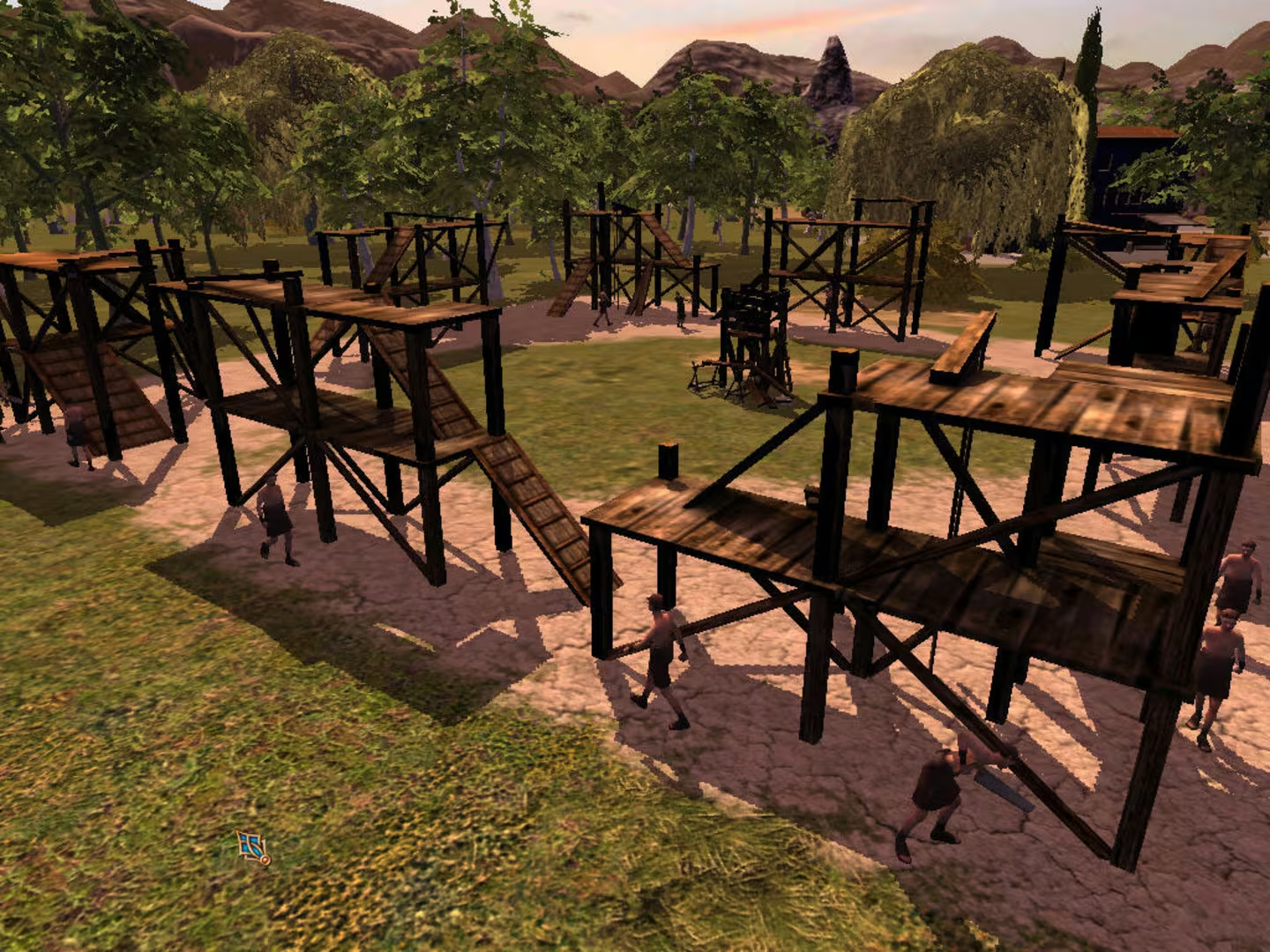
"Combat exists but is minor and simple; focus is more on city building than destruction."
-
Survival2
"Players must manage threats like fires, riots, and barbarian attacks to keep city stable."
Last update: 29/04/2026