Guilty as Sock! Thumbnail

Guilty as Sock! similar games & best alternatives
Guilty as Sock!

PC (Microsoft Windows), Mac • 2025

Related articles

Quick resume

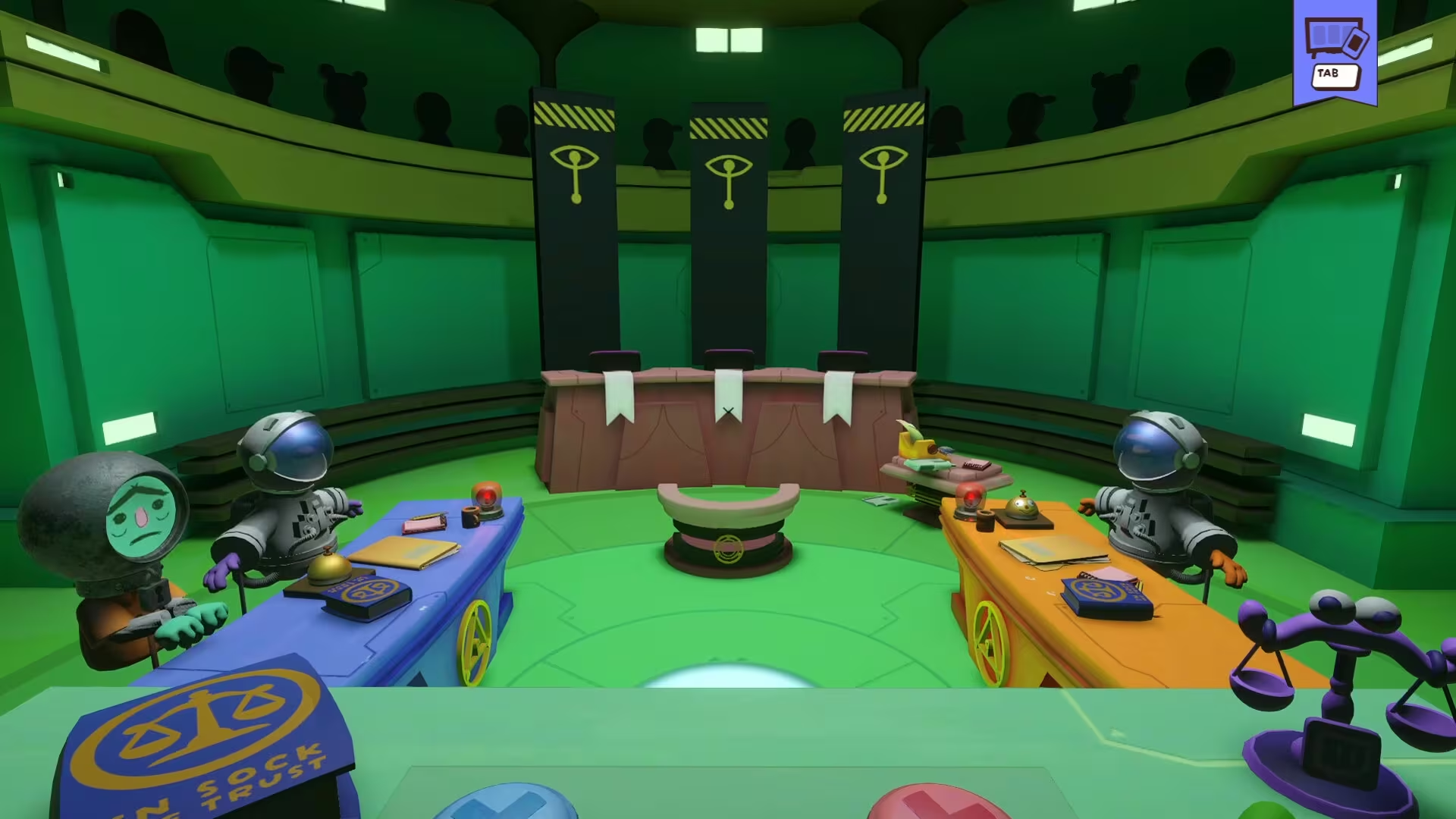
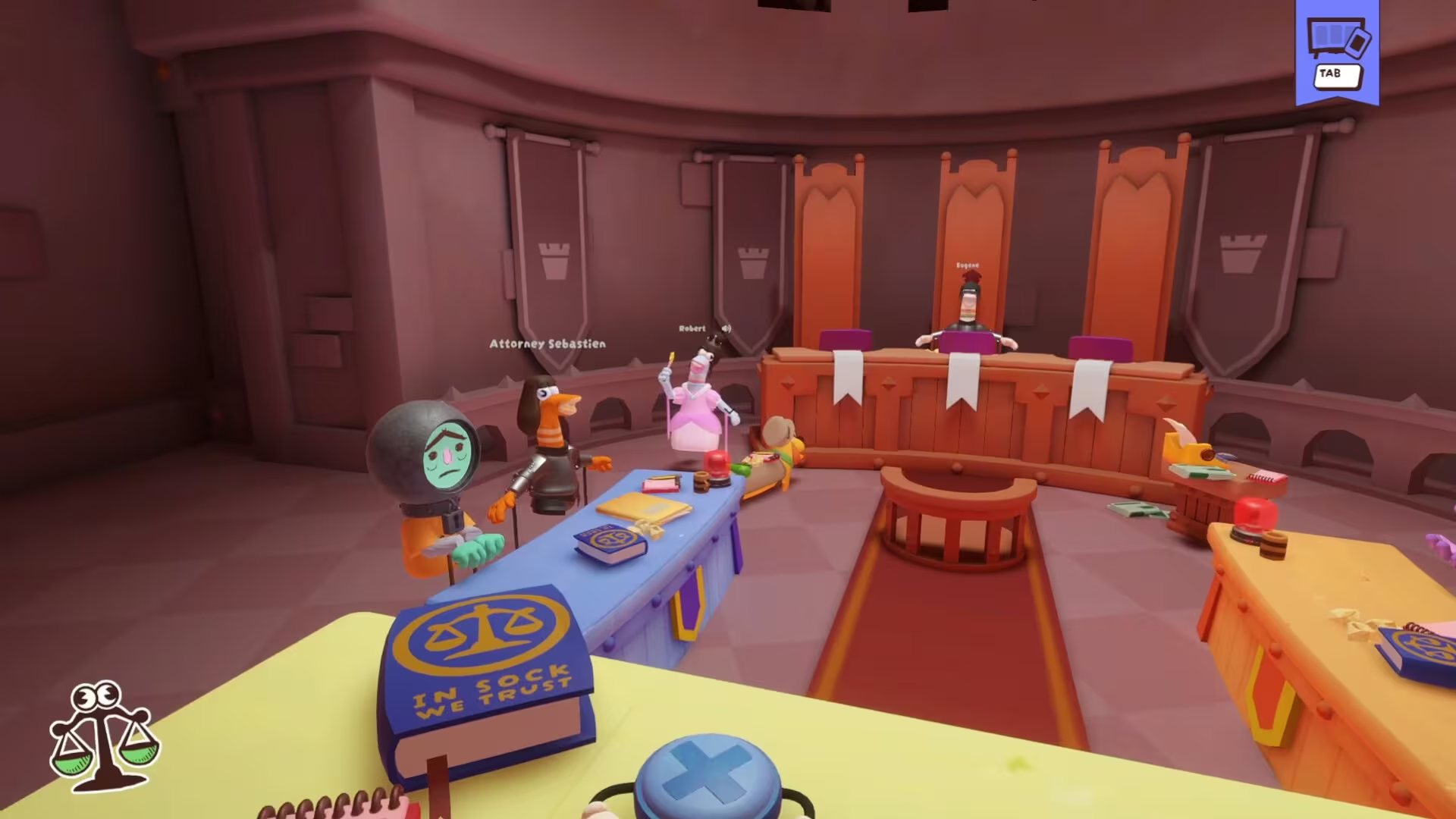
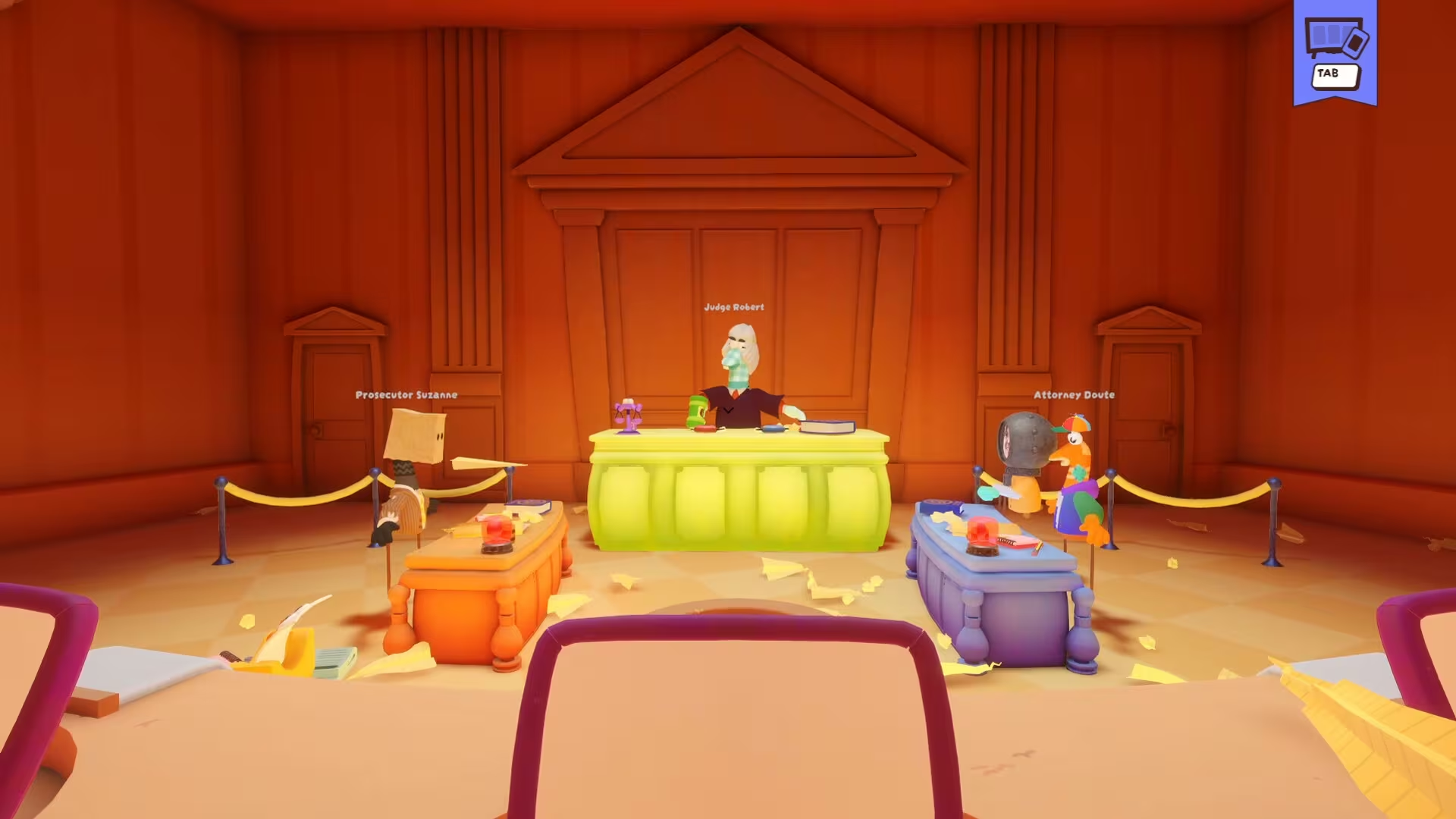
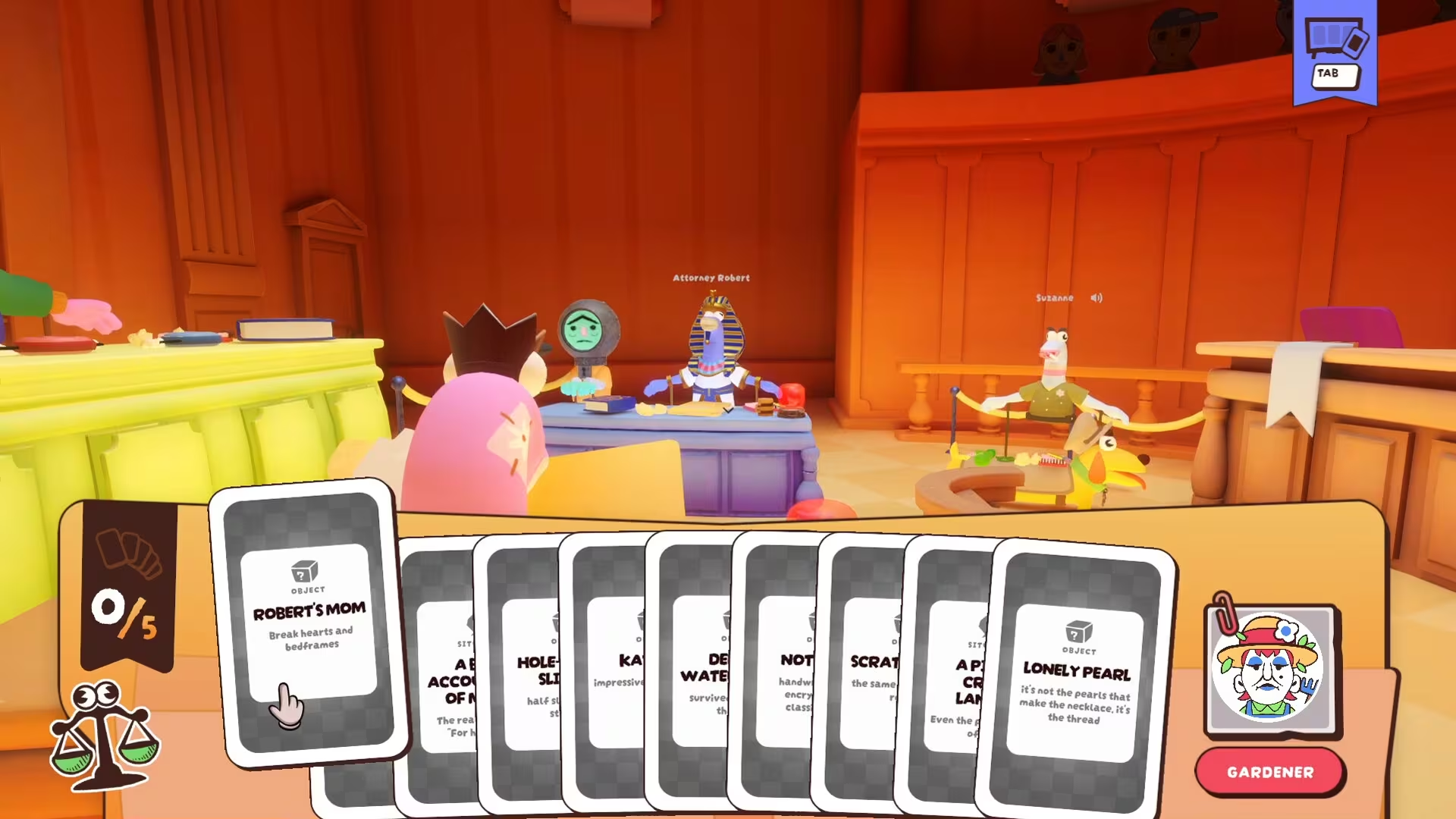
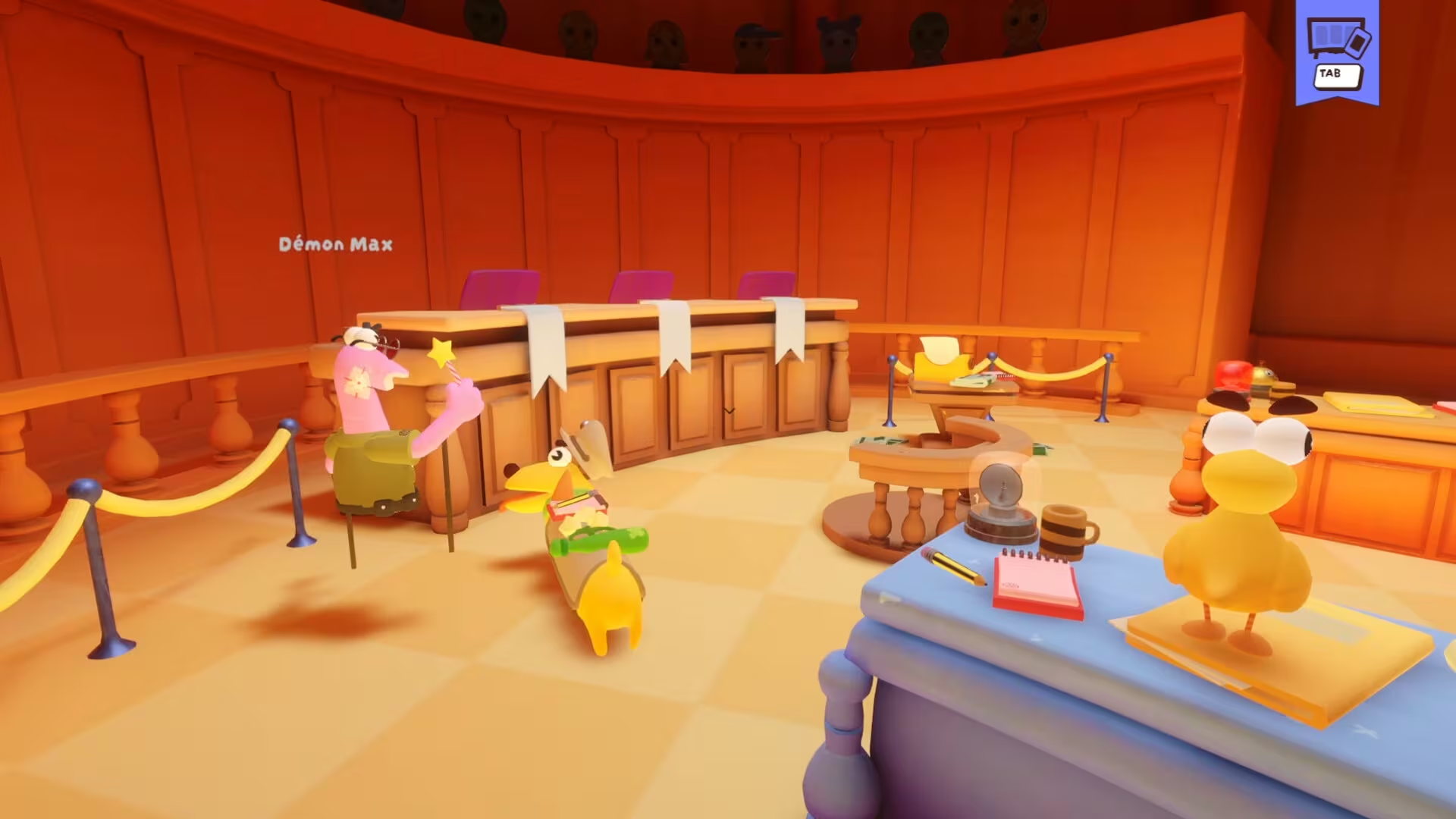
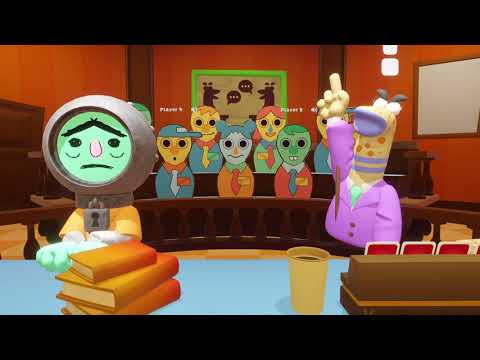
Enter a chaotic courtroom where socks play lawyers, prosecutors, and judges! Use absurd evidence, craft wild arguments, and deliver verdicts in this hilarious online party game. Improvise, strategize, and shout "Objection!"—because in Guilty as Sock!, chaos always wins!

Global score

90/100

Genres

Casual, Simulator, Indie, Card & Board Game

Similar games

    Pros

    • Highly creative and improvisational gameplay
    • Strong social and cooperative elements
    • Customizable evidence and roles
    • Humorous and absurd narrative experiences
    • Good value for price

    Cons

    • Requires funny and engaged friends for best experience
    • Public lobbies can be toxic or unfunny
    • Lack of structured rules may confuse new players
    • Limited gameplay depth beyond improv
    • Some roles less engaging

    Analysis

    Less representative of its motivational profile, with noticeable differences. Motivations that often define this kind of title include Cooperation, Fellowship, Intimacy, Leadership. It leans lower than usual among comparable games on Survival, Violence, Progression.

    How to use the graph
    Similar games map

    Each dot is a game. They are arranged from the same motivation profile as in the “Motivations” section below. Closer dots usually mean more similar reasons to play (exploration, competition, relaxation, etc.)—not that one game is “better” than another.

    • Larger dot with a light outline: the game you are viewing.
    • Colour: groups of games with comparable motivation patterns (statistical clusters).
    • Hover a dot to see the game name; click to open its page.
    • Scroll or double-click the chart to zoom out and see more games.

    Why don’t the axes read like a score? This view uses t-SNE: it only keeps who is close to whom. The scales are not “good to bad” or hours played—they separate groups on the map. Read distance between dots, not the axis numbers.

    Motivations

    • Autonomy
      5

      "Players have full freedom to improvise arguments, create stories, and direct their own actions with minimal game-imposed structure."

    • Competence
      3

      "Players engage in skillful improvisation and argumentation, but the game lacks traditional technical challenges or skill tests."

    • Competition
      2

      "There is a competitive element in winning cases, but the focus is more on collaborative storytelling than direct competition."

    • Continuation
      3

      "Players report long sessions and habitual play especially with friends, indicating sustained engagement."

    • Cooperation
      4

      "Strong emphasis on group roles and teamwork in courtroom roles to achieve shared goals in trials."

    • Creativity
      5

      "Highly creative gameplay requiring players to invent evidence, stories, and improvise freely."

    • Domination
      -3

      "Interactions are generally balanced with shared decision-making; no evidence of power imposition or trash talk dominance."

    • Escapism
      4

      "Players use the game as a humorous escape and social outlet, often to relieve stress and have fun."

    • Expectation
      -4

      "Engagement is voluntary and driven by intrinsic interest and enjoyment rather than obligation."

    • Experimenting
      4

      "Players frequently try new stories, roles, and custom evidence decks, exploring novel improvisational possibilities."

    • Exploration
      -2

      "Game setting is fixed (courtroom), with limited spatial exploration; focus is on narrative discovery."

    • Expression
      4

      "Customization of characters, evidence, and roles allows for personal expression and identity."

    • Fantasy
      3

      "Players engage in imaginative, absurd, and fictional courtroom scenarios far removed from reality."

    • Fellowship
      4

      "Strong social community aspect with shared humor and collaborative play emphasized."

    • Growth
      2

      "Players develop improvisation and argumentation skills, though learning curve is moderate."

    • Health
      -5

      "No physical activity involved; sedentary gameplay."

    • Idle
      -3

      "Requires continuous attention and active participation during sessions."

    • Intimacy
      2

      "Some social bonding and friendship formation reported, but mostly casual group interactions."

    • Leadership
      3

      "Roles like Judge involve guiding the flow and managing the courtroom, indicating leadership opportunities."

    • Progression
      -2

      "No traditional item or upgrade accumulation; progression is narrative and social rather than material."

    • Relaxation
      2

      "Players experience fun and laughter but also some tension from improvisation challenges."

    • Sensation
      1

      "Moderate sensory stimulation from voice chat and visual emotes; not heavily focused on sensory thrills."

    • Status
      -3

      "Minimal emphasis on social recognition or leaderboards; focus is on group fun rather than status."

    • Story
      5

      "Narrative immersion is central, with players co-creating stories and scenarios in each trial."

    • Strategy
      2

      "Some strategic thinking in argument construction and role use, but largely improvisational and freeform."

    • Thrill
      2

      "Some suspense and excitement from unpredictable courtroom drama and player interactions."

    • Value
      4

      "Players perceive strong entertainment value and replayability for the price paid."

    • Violence
      -4

      "No real violence; gameplay centers on verbal and social interaction rather than combat or destruction."

    • Survival
      -4

      "No survival or threat avoidance mechanics; stable social environment."

    Last update: 29/04/2026