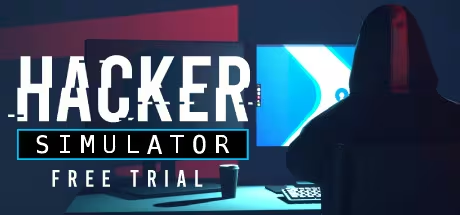
HackHub: Free Trial Thumbnail

HackHub: Free Trial similar games & best alternatives

HackHub: Free Trial

PC (Microsoft Windows) • 2024

Related articles

Quick resume

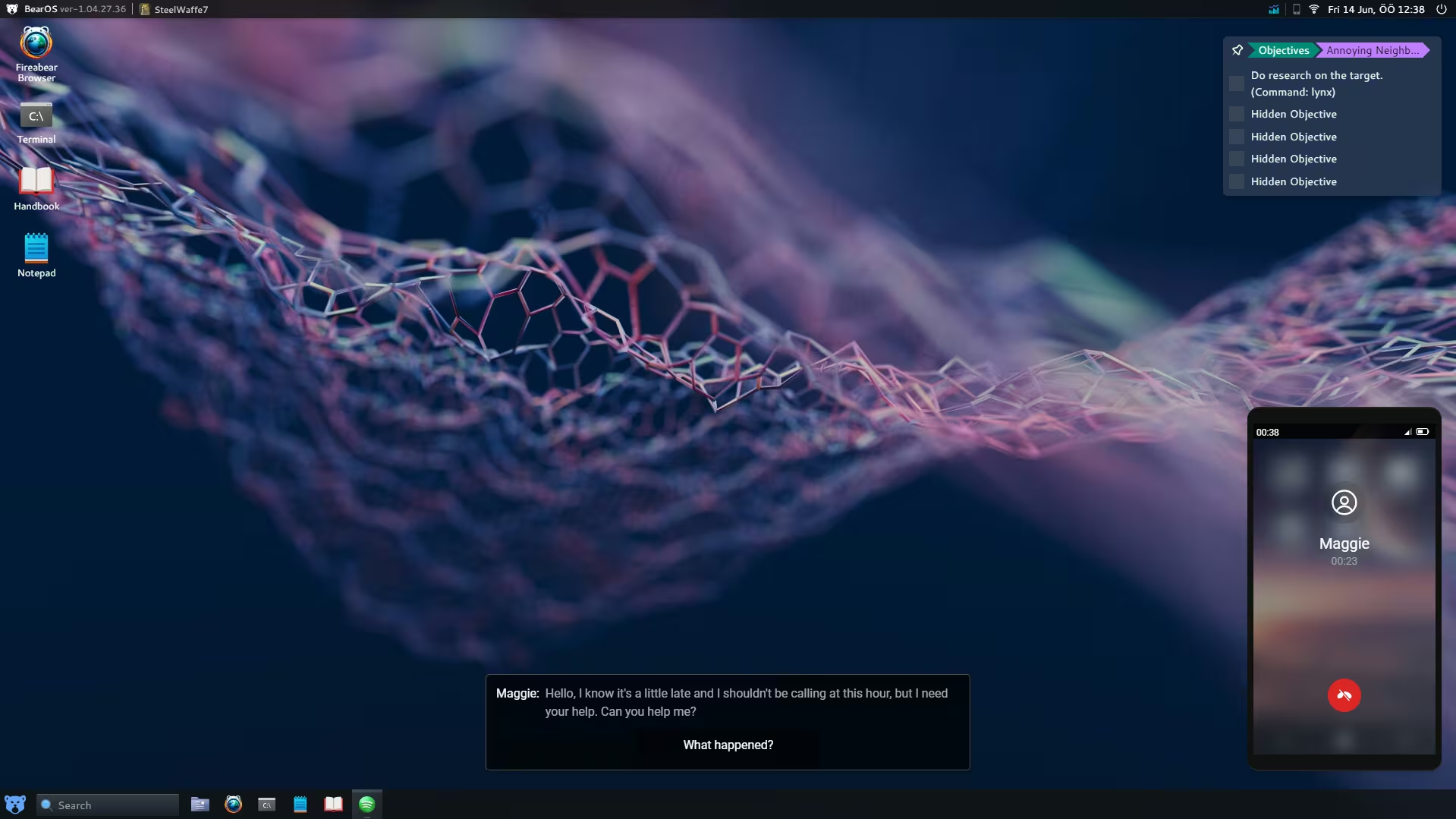
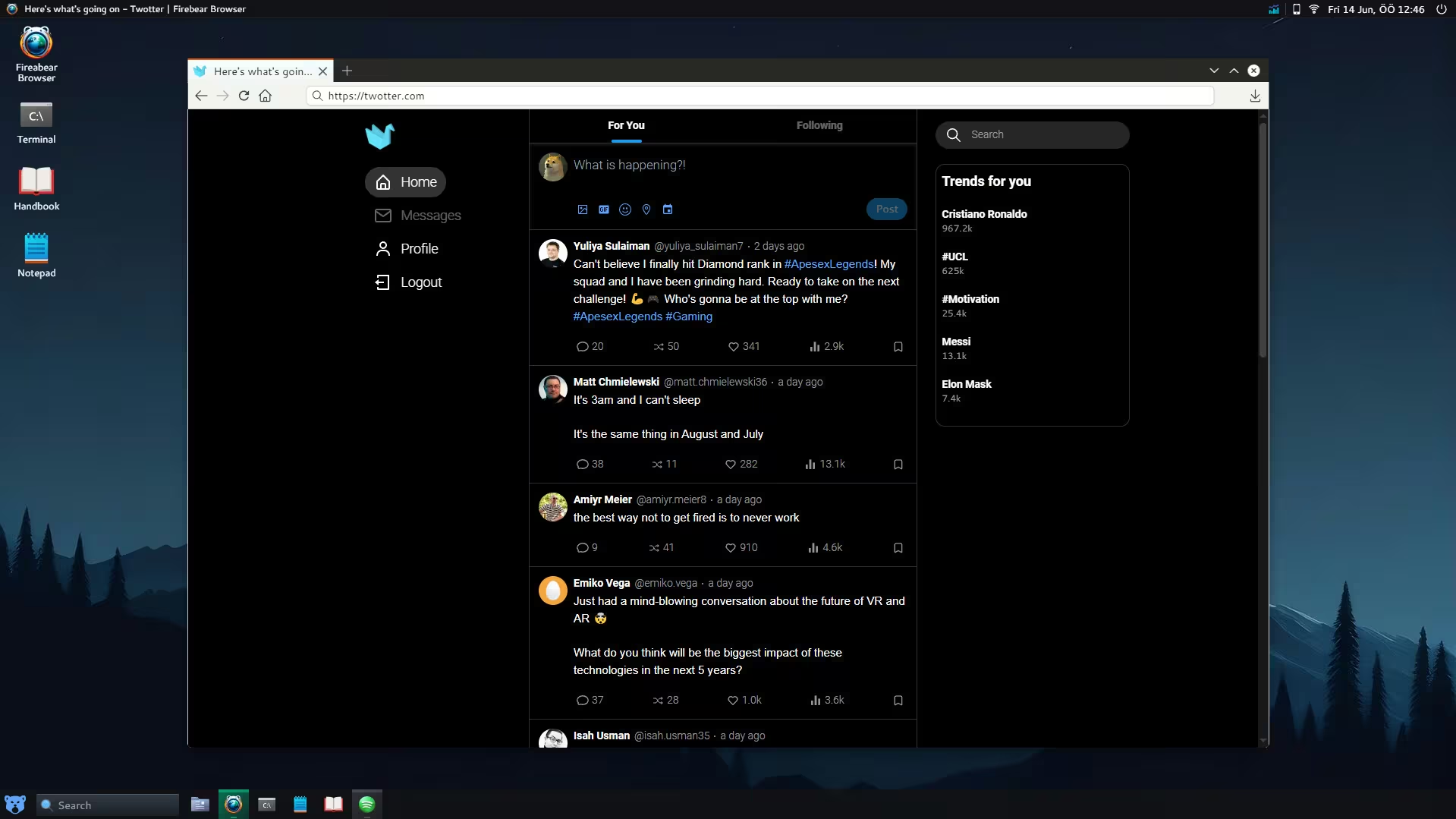
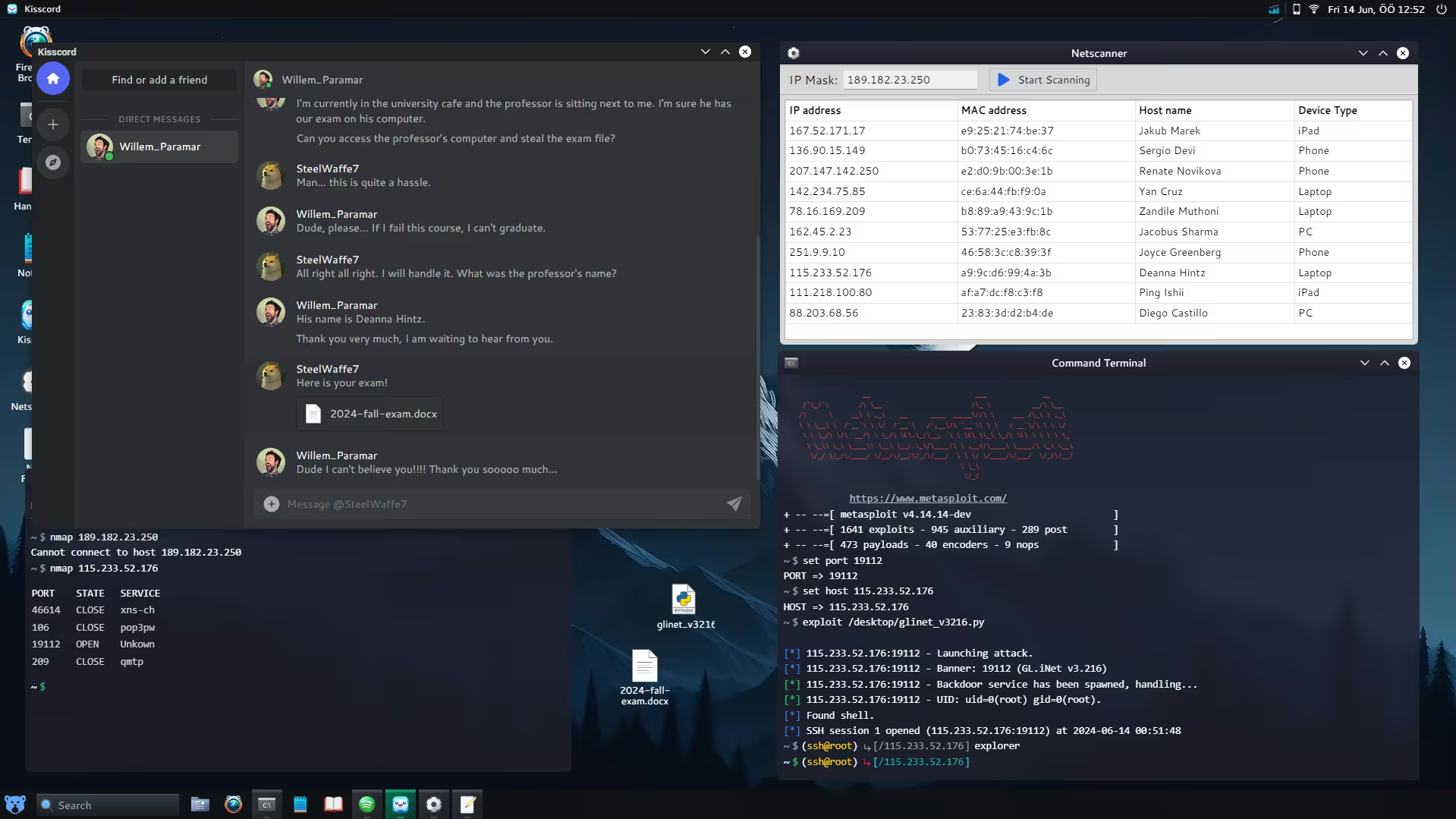
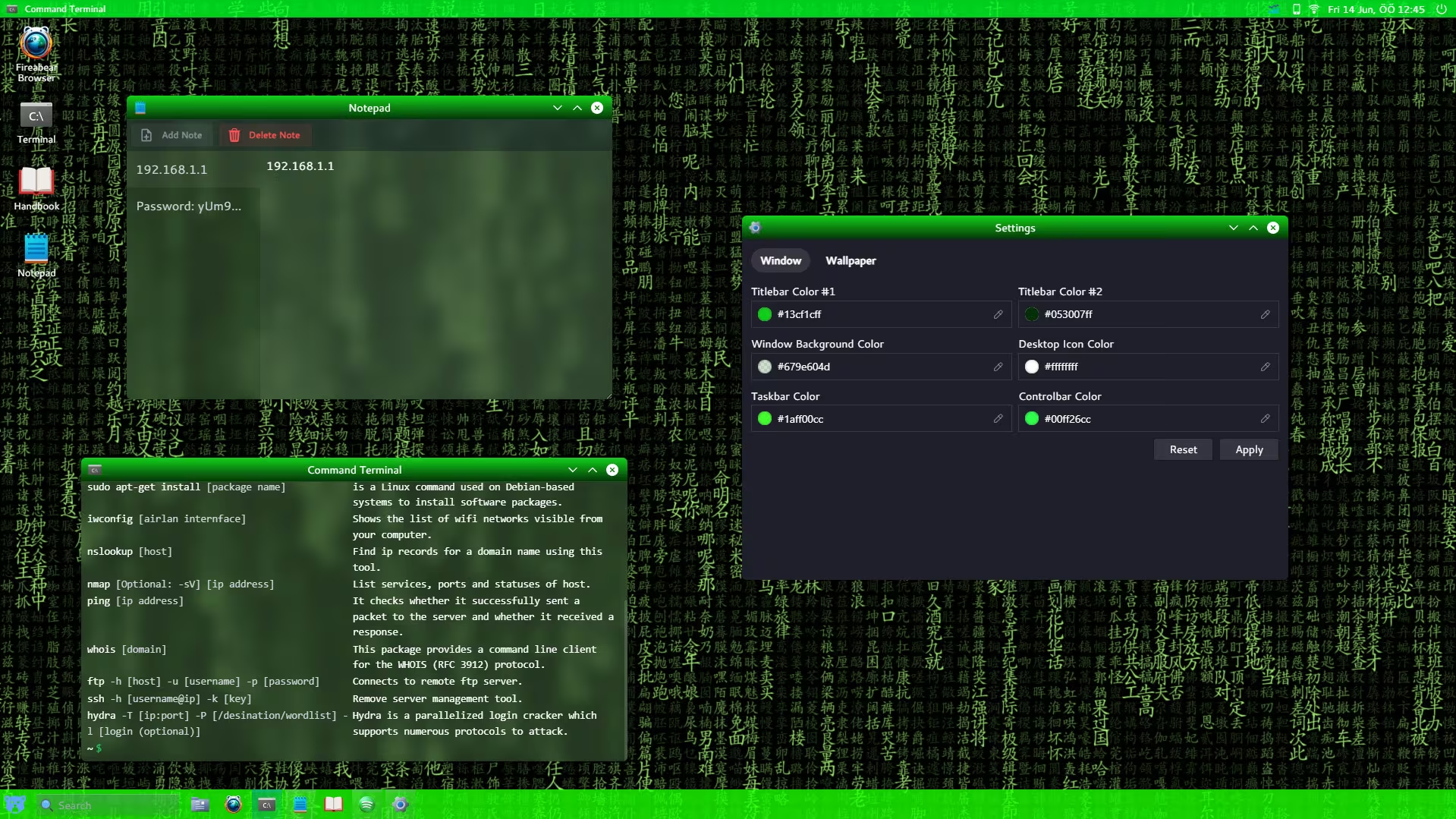
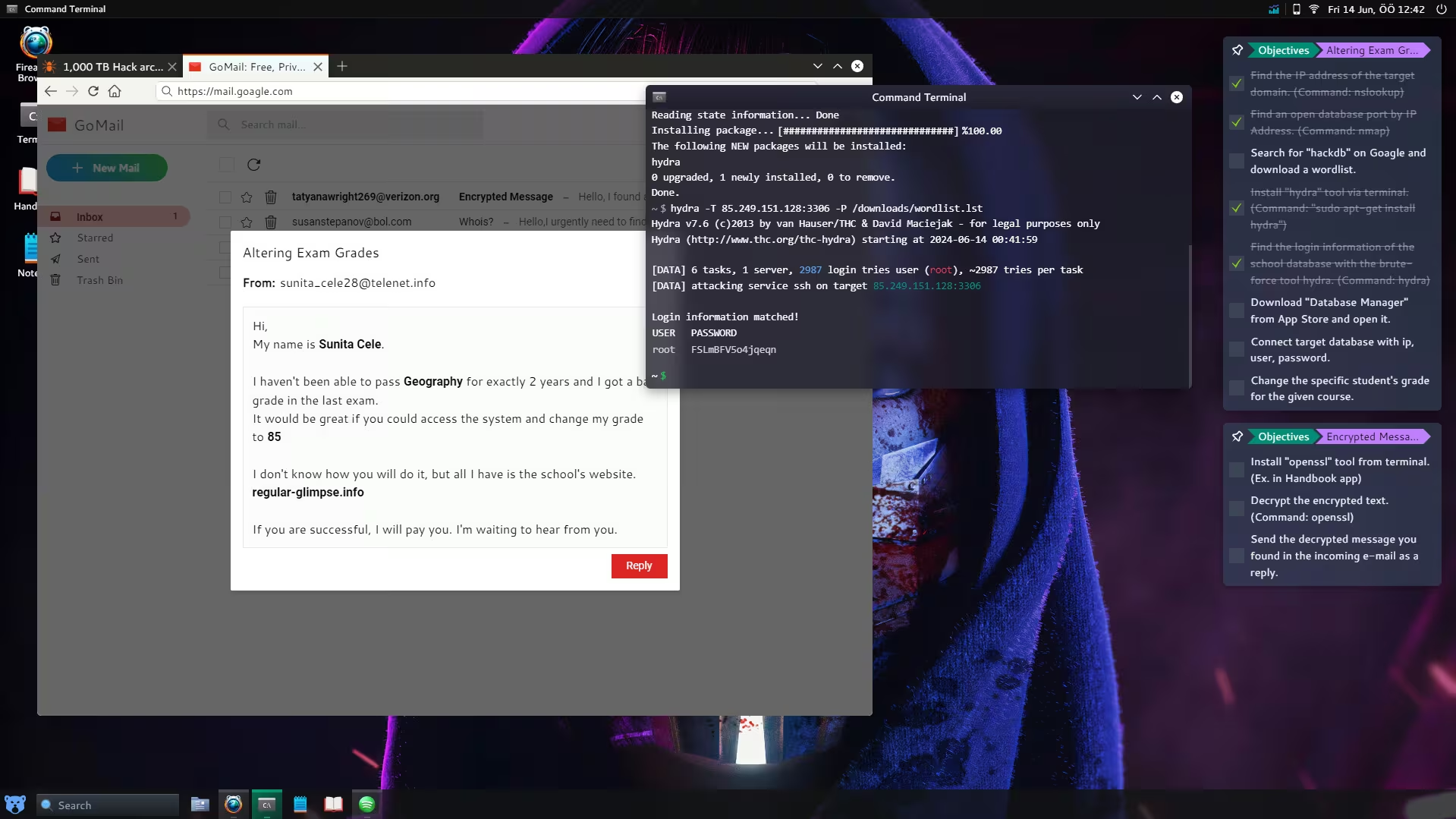
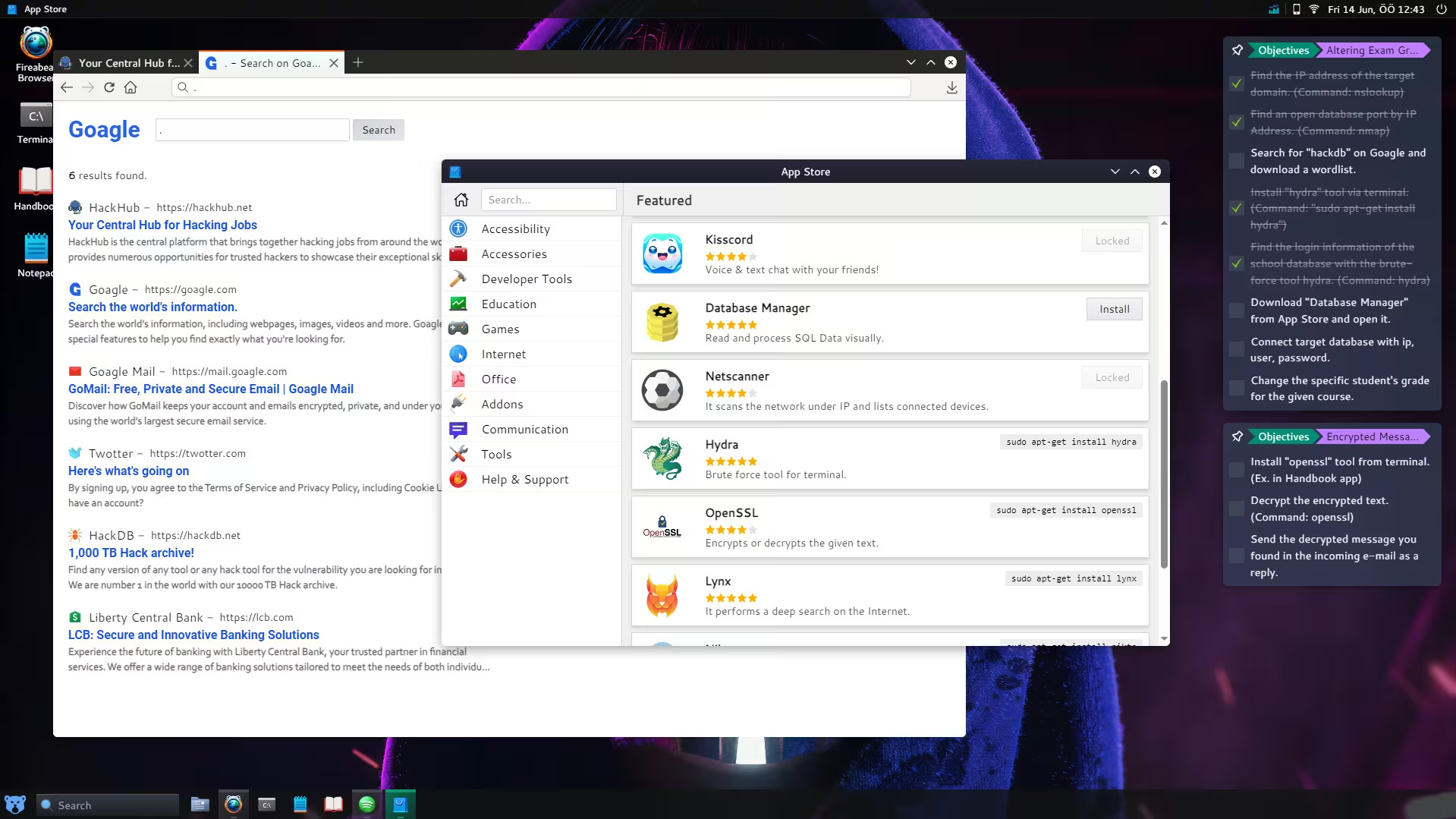
Unravel cyber secrets and foil mass surveillance as a skilled hacker in HackHub. Challenge authority, rewrite the rules, and emerge as the ultimate digital rebel.

Global score

95/100

Genres

Simulator, Strategy, Free To Play

Similar games

    Pros

    • Realistic hacking simulation with authentic commands
    • Engaging and educational gameplay
    • Immersive and well-designed ui
    • Good tutorial and learning curve
    • Positive community anticipation for full release

    Cons

    • Some ui and input frustrations (lack of autocomplete, case sensitivity)
    • Linear and scripted missions limit freedom
    • Ai voice acting and dialogue feel low quality
    • Occasional bugs and crashes reported
    • Limited multiplayer and social features in trial

    Analysis

    Broadly representative of its motivational profile, with a few distinct shifts. Motivations that often define this kind of title include Survival, Violence, Fellowship, Expression. Here, the score leans higher than usual among comparable games on Survival, Continuation, Competence.

    How to use the graph
    Similar games map

    Each dot is a game. They are arranged from the same motivation profile as in the “Motivations” section below. Closer dots usually mean more similar reasons to play (exploration, competition, relaxation, etc.)—not that one game is “better” than another.

    • Larger dot with a light outline: the game you are viewing.
    • Colour: groups of games with comparable motivation patterns (statistical clusters).
    • Hover a dot to see the game name; click to open its page.
    • Scroll or double-click the chart to zoom out and see more games.

    Why don’t the axes read like a score? This view uses t-SNE: it only keeps who is close to whom. The scales are not “good to bad” or hours played—they separate groups on the map. Read distance between dots, not the axis numbers.

    Motivations

    • Autonomy
      3

      "Players have freedom to explore commands and hacking methods within missions, though some tasks require following specific scripted steps."

    • Competence
      4

      "The game challenges players with realistic terminal commands and hacking puzzles that require skill and problem solving."

    • Competition
      -3

      "Focus is on individual progression and learning rather than competing against others; multiplayer is planned but not in trial."

    • Continuation
      4

      "Many users report long play sessions and high engagement, with desire to continue playing full release."

    • Cooperation
      -4

      "Gameplay is primarily single-player focused with no current cooperative elements in the trial."

    • Creativity
      2

      "Some room for experimentation with commands and approaches, but missions are mostly linear and scripted."

    • Domination
      -5

      "No evidence of exerting control over others; gameplay is personal and cooperative/competitive dominance is absent."

    • Escapism
      4

      "Players use the game as a fun, immersive distraction and learning tool, escaping into a hacker fantasy world."

    • Expectation
      -4

      "Players engage voluntarily out of interest and enjoyment, not obligation or external pressure."

    • Experimenting
      3

      "Players try different commands and approaches within constraints, though some mechanics are scripted and restrictive."

    • Exploration
      2

      "Some exploration of virtual OS and websites, but environments and missions are limited and mostly linear."

    • Expression
      -3

      "Limited customization or personalization; players mainly use predefined interfaces and assets."

    • Fantasy
      3

      "Game simulates hacking with some fictional elements and simplified gameplay, blending realism with fantasy."

    • Fellowship
      -4

      "No social or community features in the trial; gameplay is solitary."

    • Growth
      4

      "Players learn real-world hacking concepts and commands, gaining knowledge and skills."

    • Health
      -5

      "Sedentary computer gameplay with no physical activity involved."

    • Idle
      -3

      "Requires focused attention and active problem solving rather than passive or background play."

    • Intimacy
      -5

      "No evidence of close social relationships or emotional sharing; interactions are minimal and functional."

    • Leadership
      -5

      "No leadership or group management roles present in gameplay."

    • Progression
      3

      "Players progress through missions and unlock new commands and tools, though progression is linear."

    • Relaxation
      2

      "Some players find the gameplay engaging and satisfying, though others note tension from finicky inputs."

    • Sensation
      2

      "Enjoyable UI and sound design provide moderate sensory stimulation, but no intense thrills."

    • Status
      -4

      "No social status or recognition systems; focus is on personal achievement."

    • Story
      2

      "There is a narrative framework and missions with some dialogue, but story depth is limited in the trial."

    • Strategy
      3

      "Players must plan and use logic to solve hacking puzzles and complete objectives."

    • Thrill
      1

      "Some suspense from puzzle solving and suspicion meter, but overall low risk and controlled environment."

    • Value
      4

      "Players perceive good educational and entertainment value, especially given the free trial and planned full game."

    • Violence
      -5

      "No combat or destructive gameplay; focus is on constructive hacking simulation."

    • Survival
      1

      "Suspicion meter adds some risk of failure, but overall environment is stable and low threat."

    Last update: 29/04/2026