Hearts of Iron III Thumbnail

Hearts of Iron III similar games & best alternatives
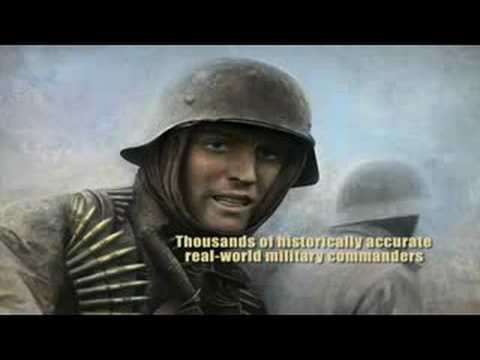
Hearts of Iron III

PC (Microsoft Windows), Mac • 2009

Related articles

Quick resume

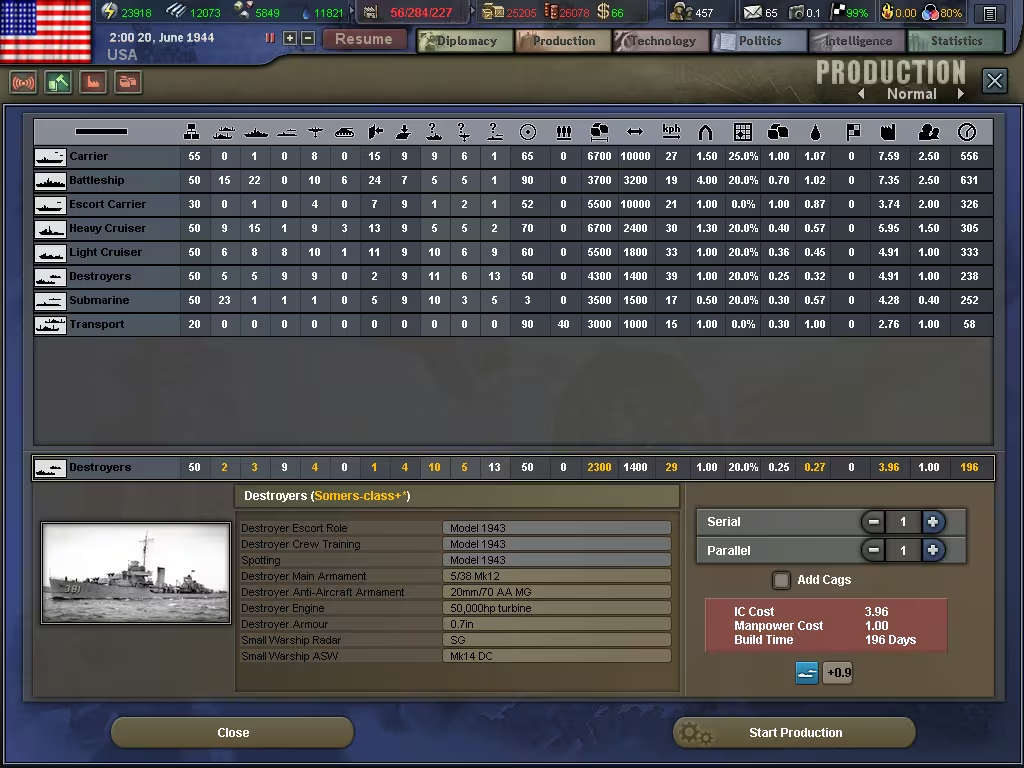
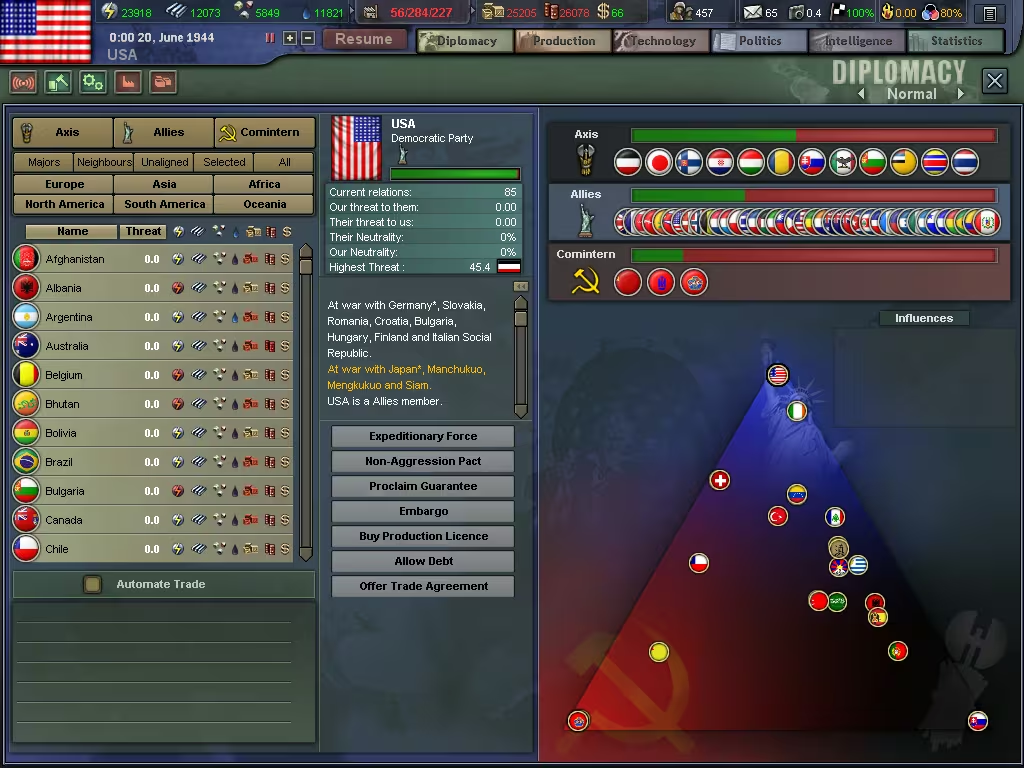
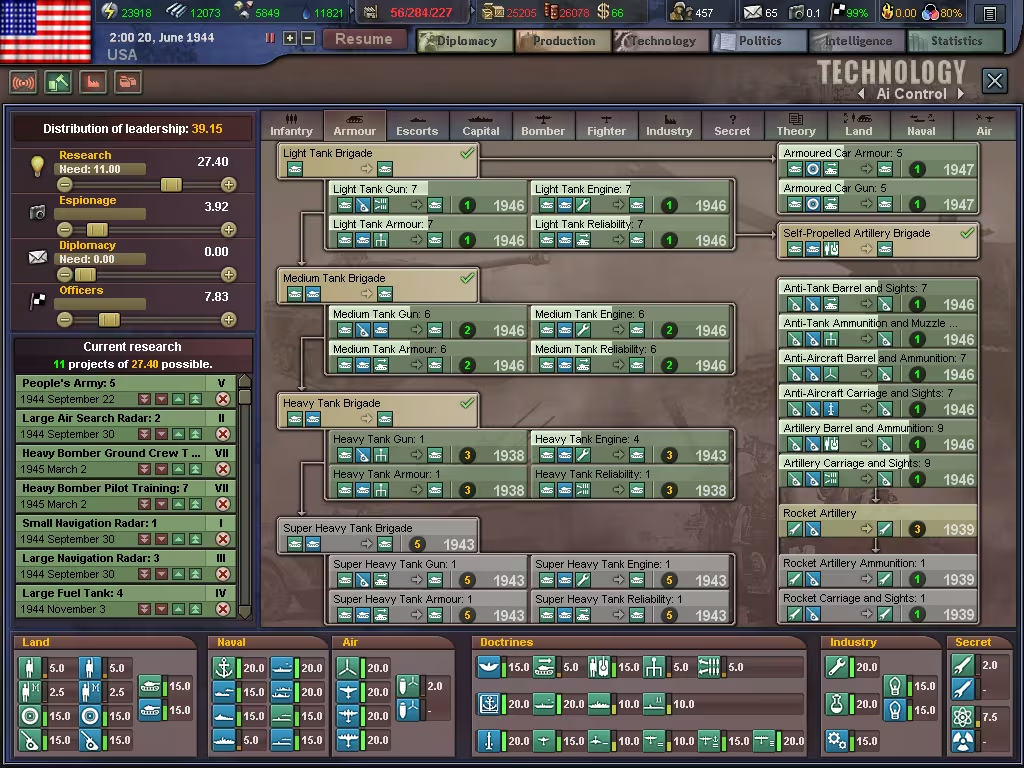
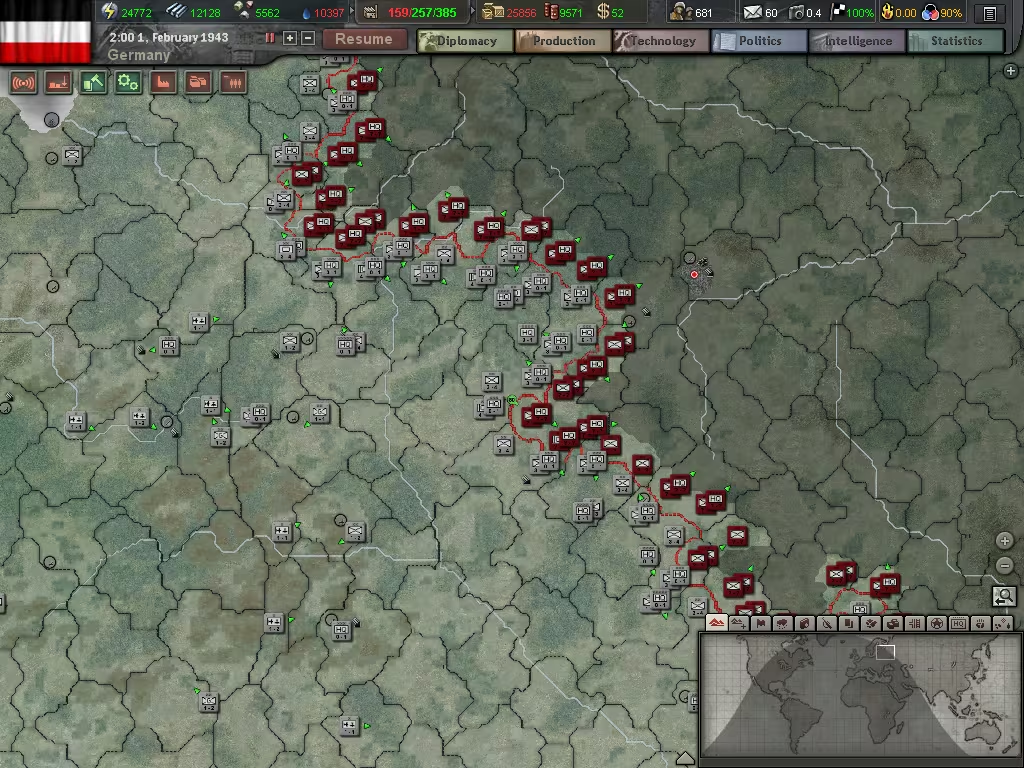
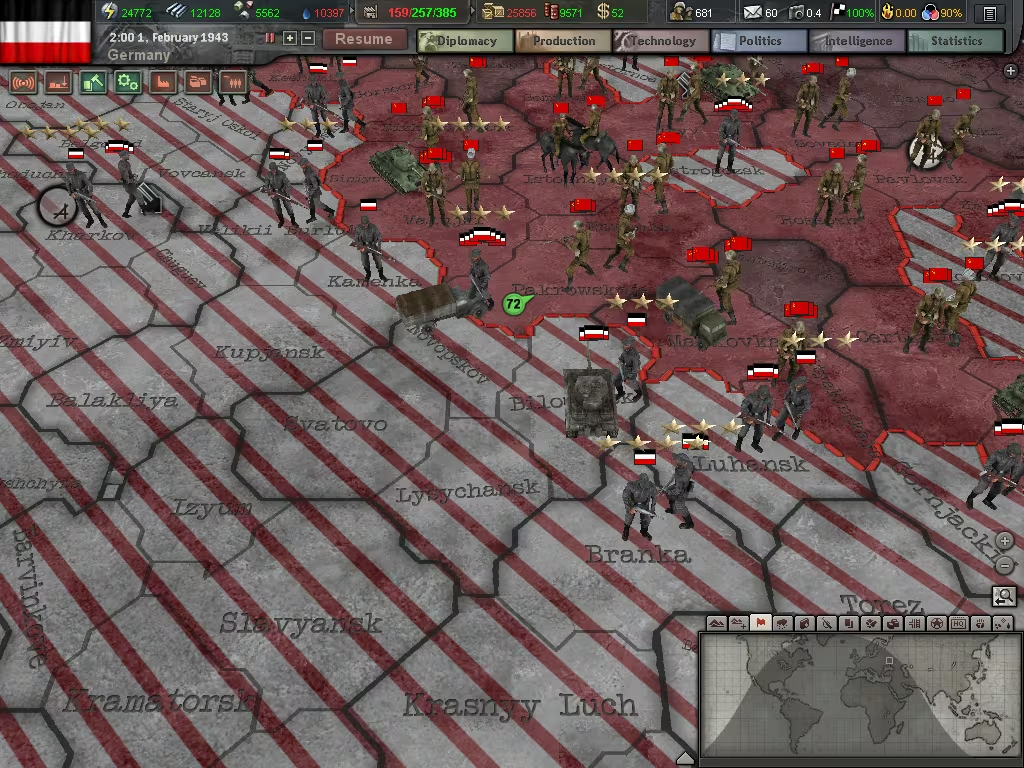
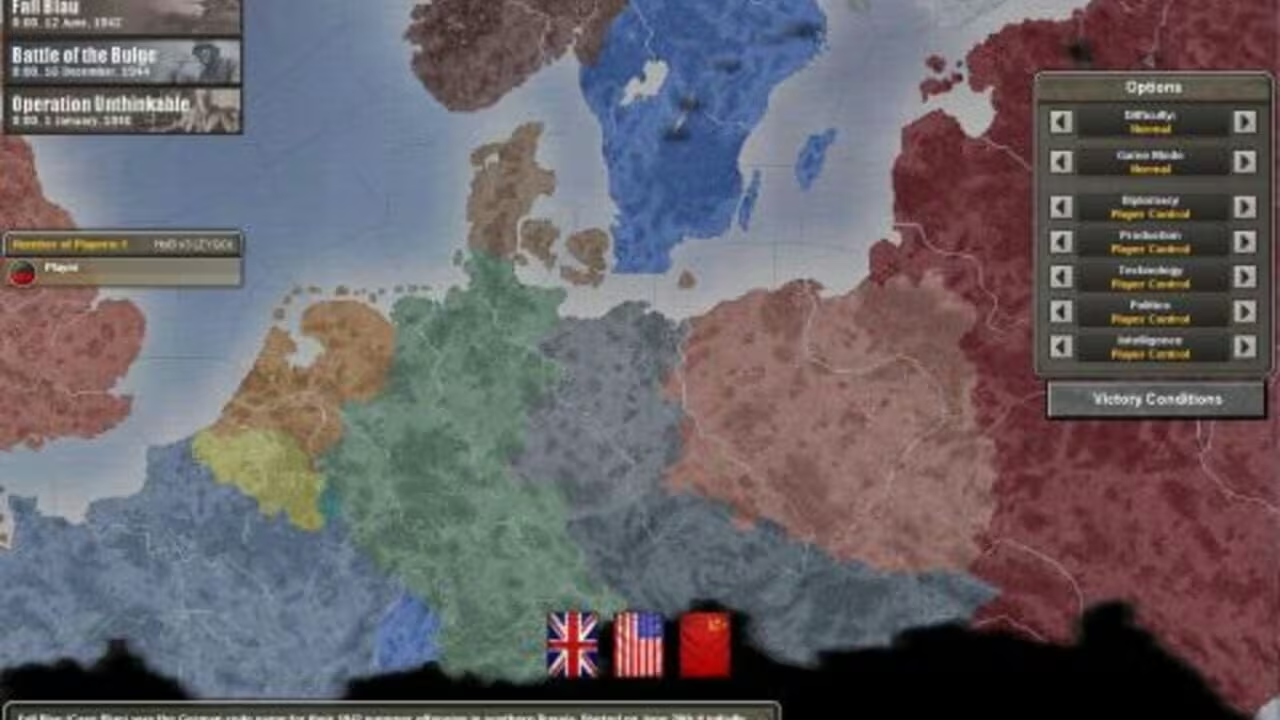
Hearts of Iron III lets you play the most engaging conflict in world history, World War 2, on all fronts as any country and through multiple different scenarios. Guide your nation to glory between 1936 and 1948 and wage war, conduct diplomacy and build your industry in the most detailed World War 2 game ever made.

Global score

76/100

Genres

Strategy, Real Time Strategy (RTS)

Similar games

    Pros

    • Extensive historical detail and alternate history possibilities
    • Deep and complex strategic gameplay
    • High replayability with many nations and scenarios
    • Strong multiplayer cooperation and competition
    • Immersive narrative and event system

    Cons

    • Steep learning curve and poor tutorial
    • Technical issues and crashes without dlc patches
    • Complex micromanagement can be overwhelming
    • Dated graphics and interface
    • Ai can be inconsistent or weak

    Analysis

    Less representative of its motivational profile, with noticeable differences. Motivations that often define this kind of title include Competition, Fellowship, Domination, Status. Here, the score leans higher than usual among comparable games on Story, Leadership. It leans lower than usual among comparable games on Intimacy.

    How to use the graph
    Similar games map

    Each dot is a game. They are arranged from the same motivation profile as in the “Motivations” section below. Closer dots usually mean more similar reasons to play (exploration, competition, relaxation, etc.)—not that one game is “better” than another.

    • Larger dot with a light outline: the game you are viewing.
    • Colour: groups of games with comparable motivation patterns (statistical clusters).
    • Hover a dot to see the game name; click to open its page.
    • Scroll or double-click the chart to zoom out and see more games.

    Why don’t the axes read like a score? This view uses t-SNE: it only keeps who is close to whom. The scales are not “good to bad” or hours played—they separate groups on the map. Read distance between dots, not the axis numbers.

    Motivations

    • Autonomy
      5

      "Players have full control over actions and decisions, including diplomacy, production, research, and military strategy with many possible alternate history outcomes."

    • Competence
      5

      "High skill ceiling with complex mechanics, micromanagement, and strategic planning required to be effective."

    • Competition
      3

      "Includes multiplayer and competitive elements, but many players also enjoy single-player at their own pace."

    • Continuation
      5

      "Players report very long sessions, habitual play, and deep engagement over hundreds or thousands of hours."

    • Cooperation
      2

      "Supports multiplayer cooperation and alliances, but many tasks can be delegated to AI or played solo."

    • Creativity
      4

      "Players can create custom divisions, strategies, and alternate history scenarios, allowing creative approaches."

    • Domination
      3

      "Game involves exerting military and political control over other nations, but multiplayer interactions vary."

    • Escapism
      4

      "Players use the game to immerse themselves in alternate history and complex strategic challenges, escaping real life."

    • Expectation
      -4

      "Players engage voluntarily out of interest and intrinsic motivation rather than obligation or pressure."

    • Experimenting
      4

      "Players try different nations, strategies, and alternate history paths, exploring game mechanics extensively."

    • Exploration
      2

      "Exploration is more strategic and political than geographic, with discovery of alternate outcomes and events."

    • Expression
      3

      "Customization of units, divisions, and strategies allows personal expression within the game."

    • Fantasy
      1

      "While based on historical events, players can create alternate history and improbable scenarios."

    • Fellowship
      2

      "Community and multiplayer groups exist, but many players also play solo with limited social interaction."

    • Growth
      5

      "Steep learning curve with ongoing skill development and strategic mastery over time."

    • Health
      -5

      "Sedentary gameplay with no physical activity involved."

    • Idle
      -4

      "Requires constant attention and micromanagement during play sessions."

    • Intimacy
      -4

      "Social interactions are mostly surface-level multiplayer cooperation; limited close relationships."

    • Leadership
      5

      "Players lead entire nations, manage armies, and make high-level strategic decisions."

    • Progression
      5

      "Players accumulate resources, technologies, units, and territory over time."

    • Relaxation
      -3

      "Game involves sustained tension and challenge rather than relaxation or flow."

    • Sensation
      1

      "Sensory stimulation is moderate, focused on strategic feedback rather than intense audiovisual excitement."

    • Status
      2

      "Recognition occurs in multiplayer communities and leaderboards but is limited in single-player."

    • Story
      4

      "Strong narrative immersion through historical events and alternate history possibilities."

    • Strategy
      5

      "Core gameplay revolves around complex mental challenge, planning, and problem solving."

    • Thrill
      3

      "Players experience suspense and thrill from strategic battles and unexpected outcomes."

    • Value
      4

      "High perceived value from extensive gameplay hours and replayability."

    • Violence
      4

      "Focus on combat, military conquest, and destruction in a war setting."

    • Survival
      4

      "Players must manage resources and avoid defeat to survive and succeed in war."

    Last update: 29/04/2026