Leap Year Thumbnail

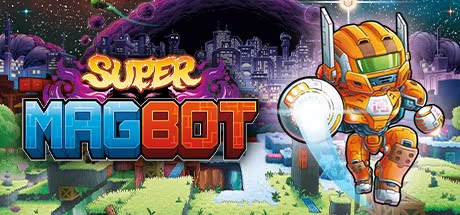
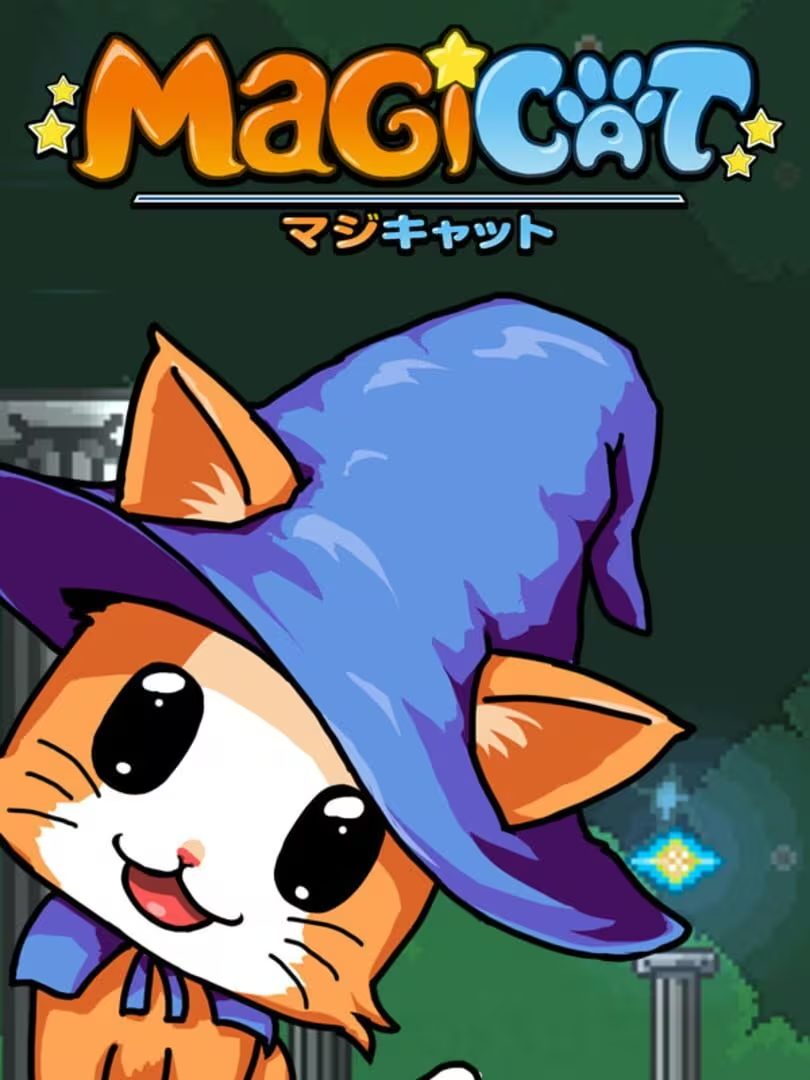
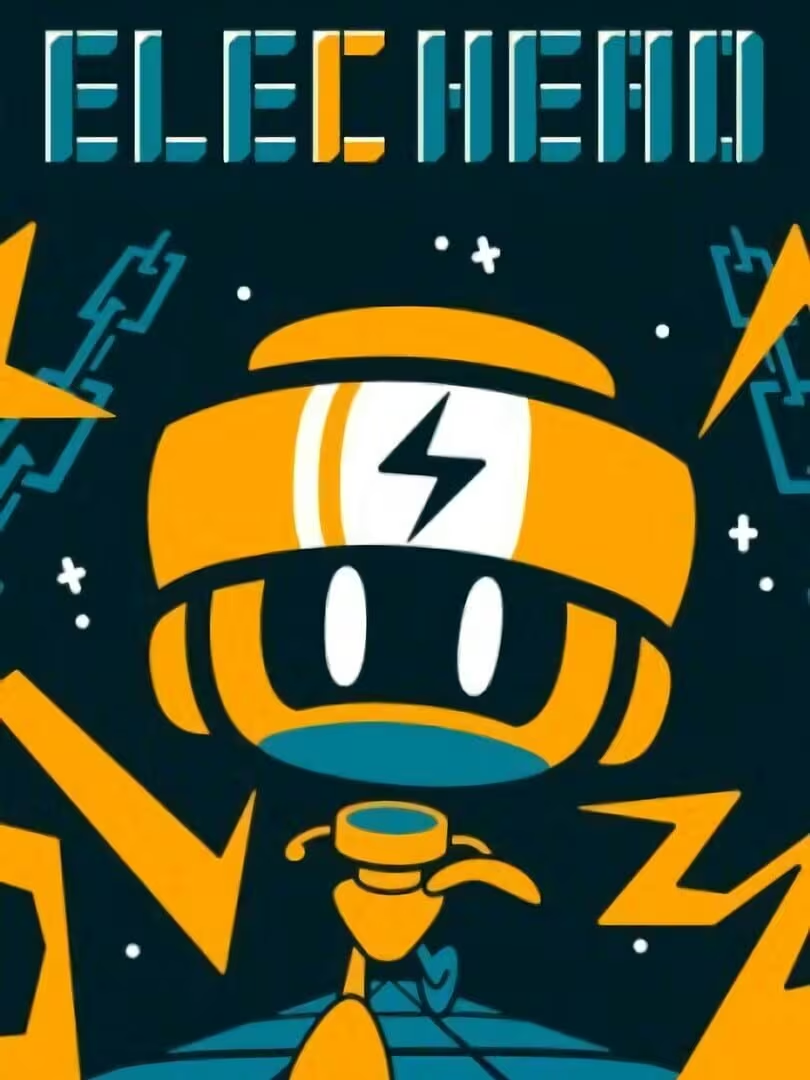
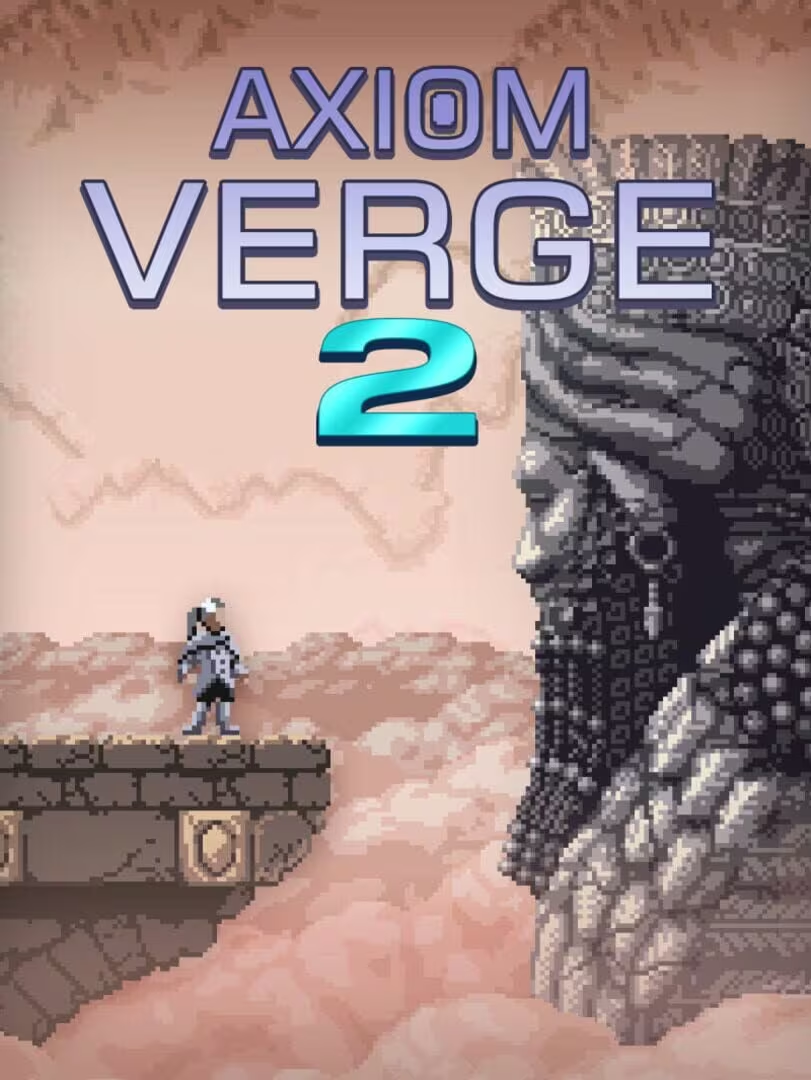
Leap Year similar games & best alternatives
Leap Year

PC (Microsoft Windows), Nintendo Switch • 2024

Related articles

Quick resume

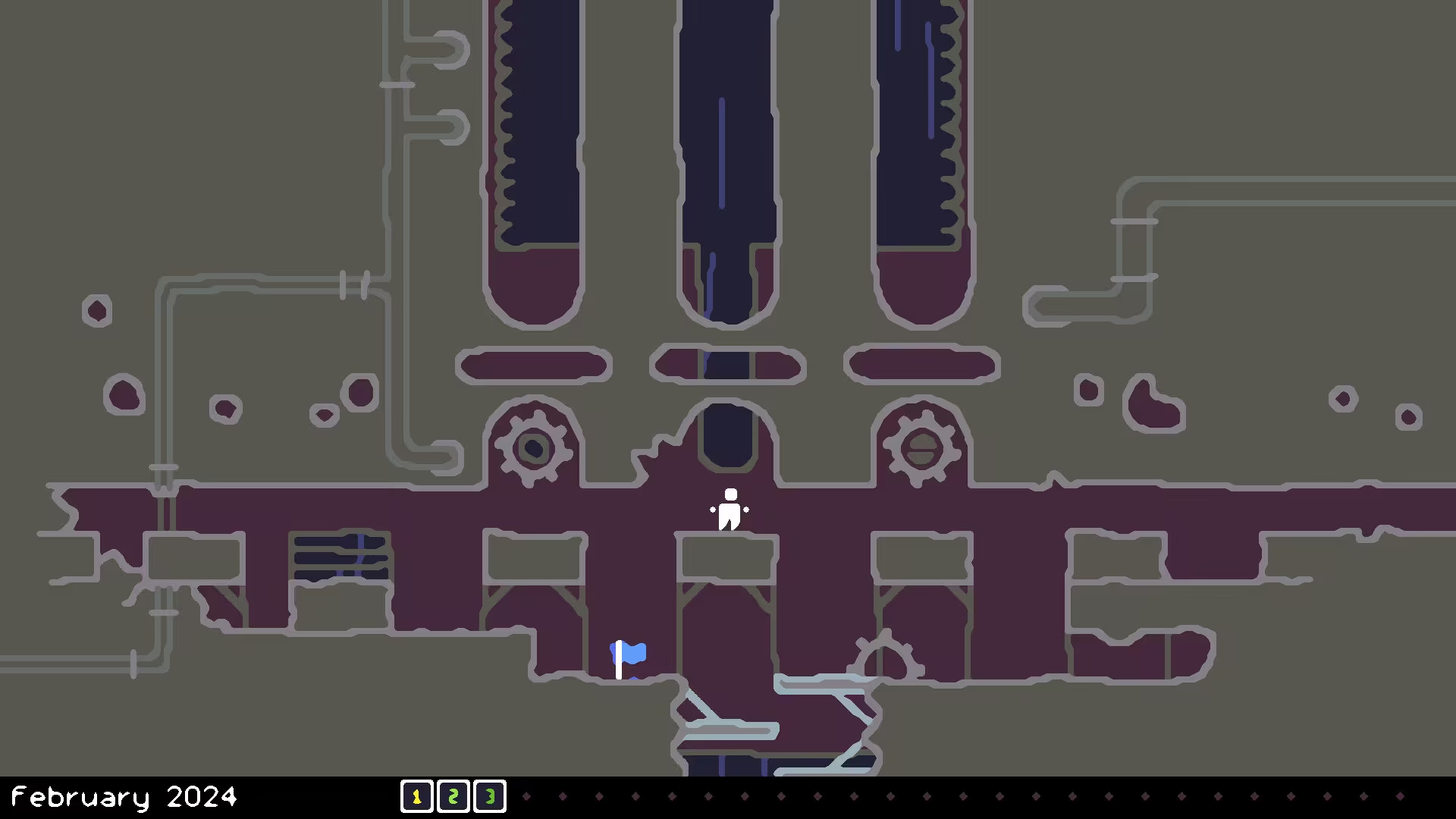
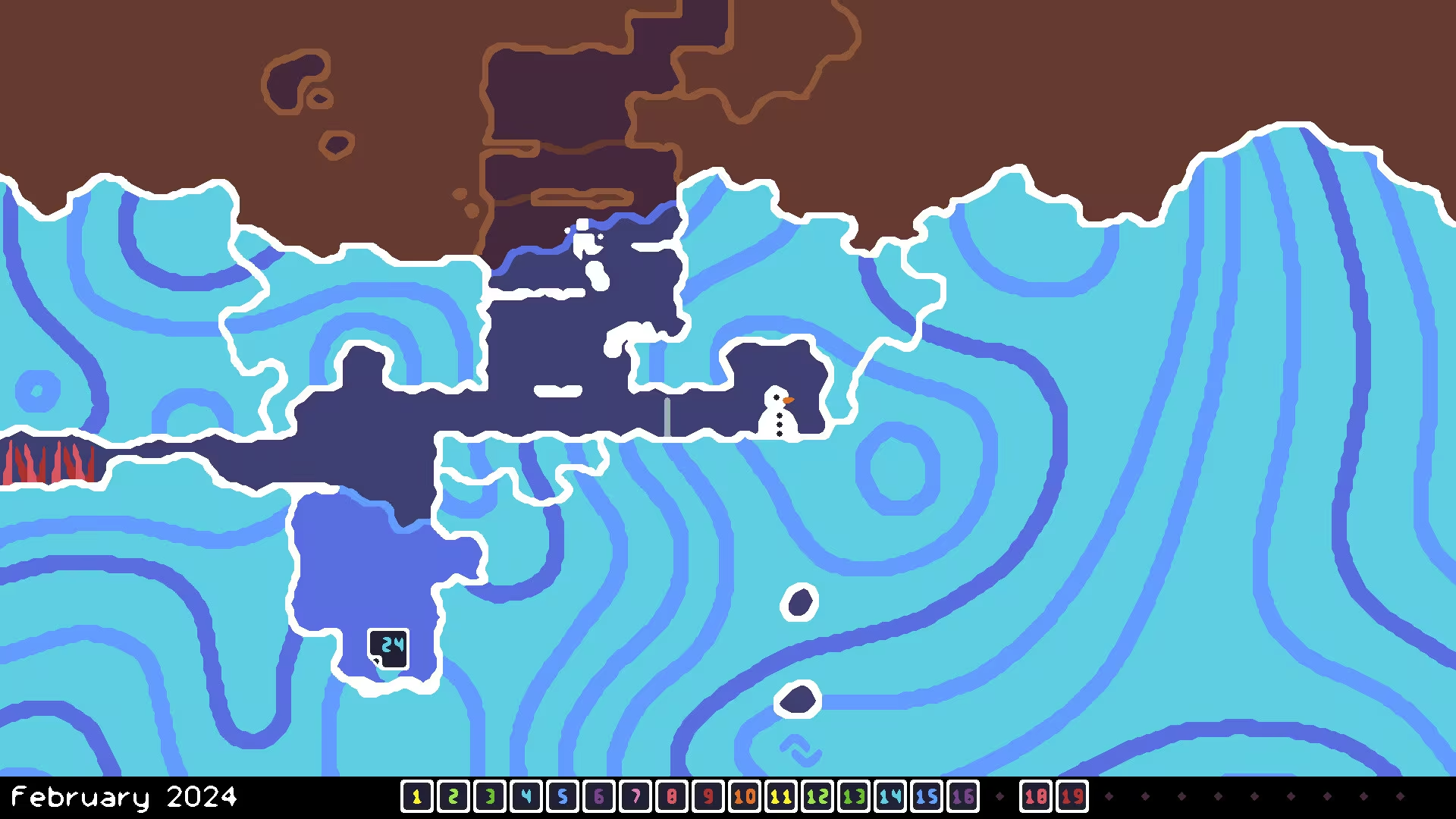
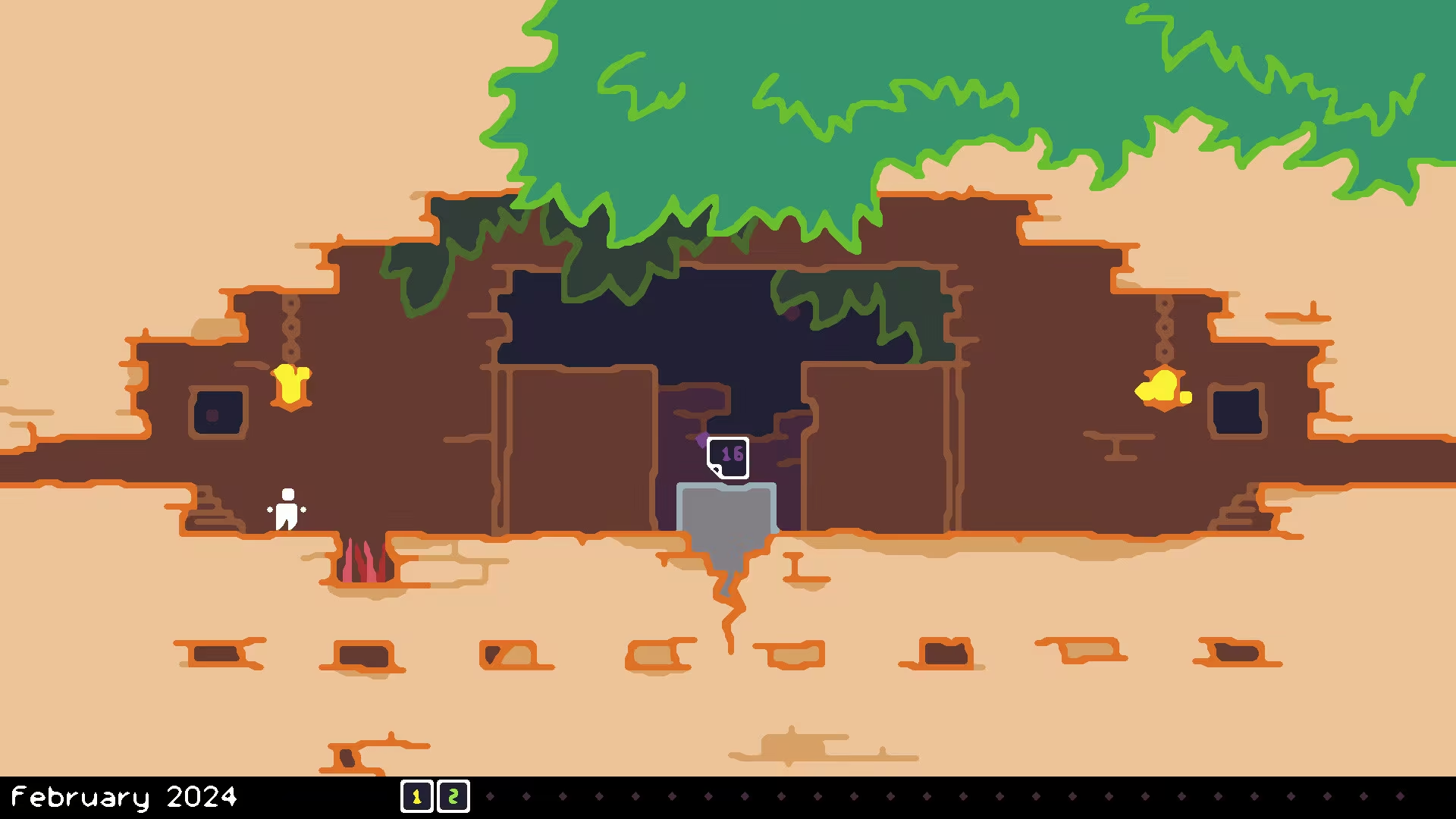
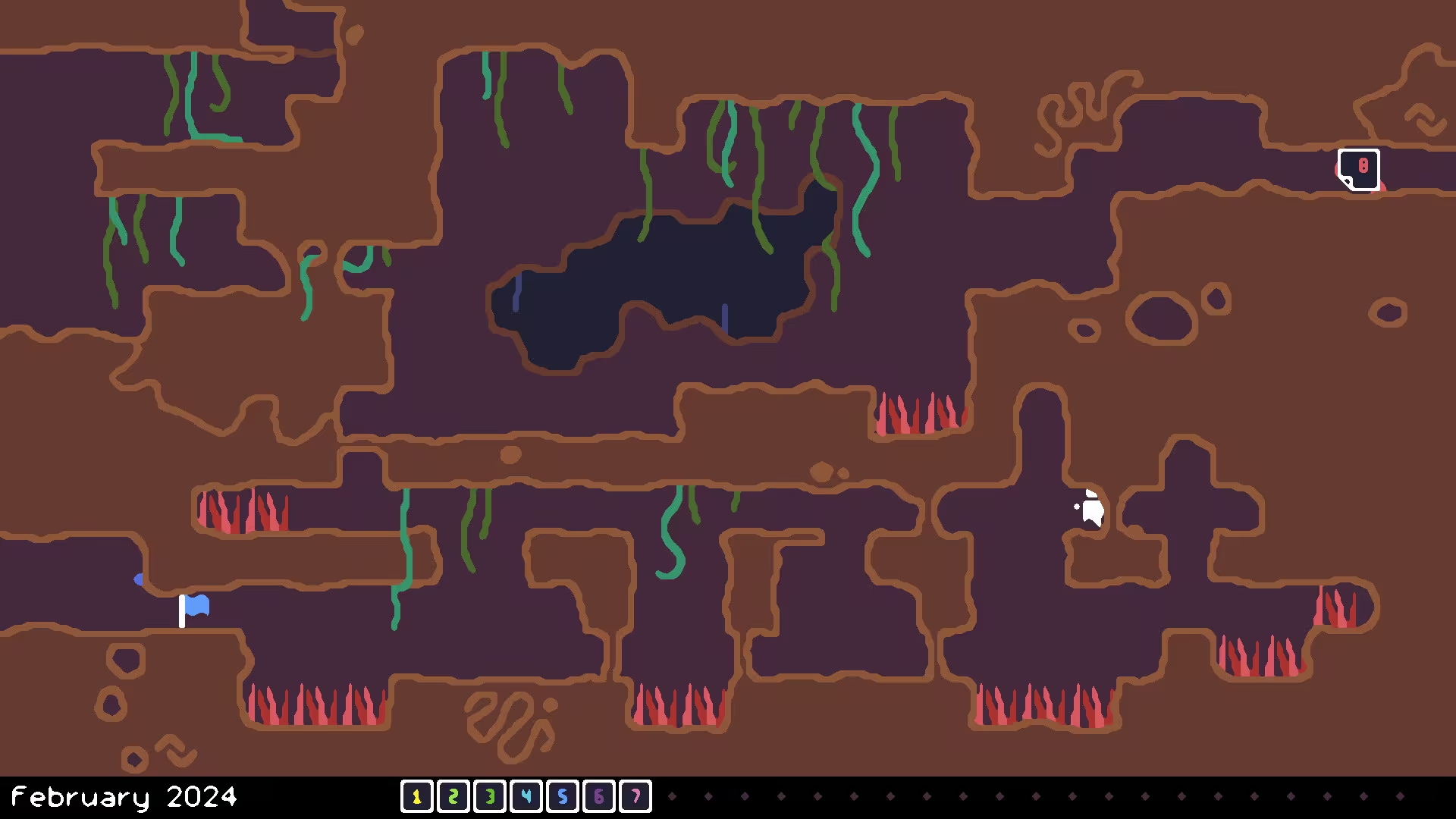
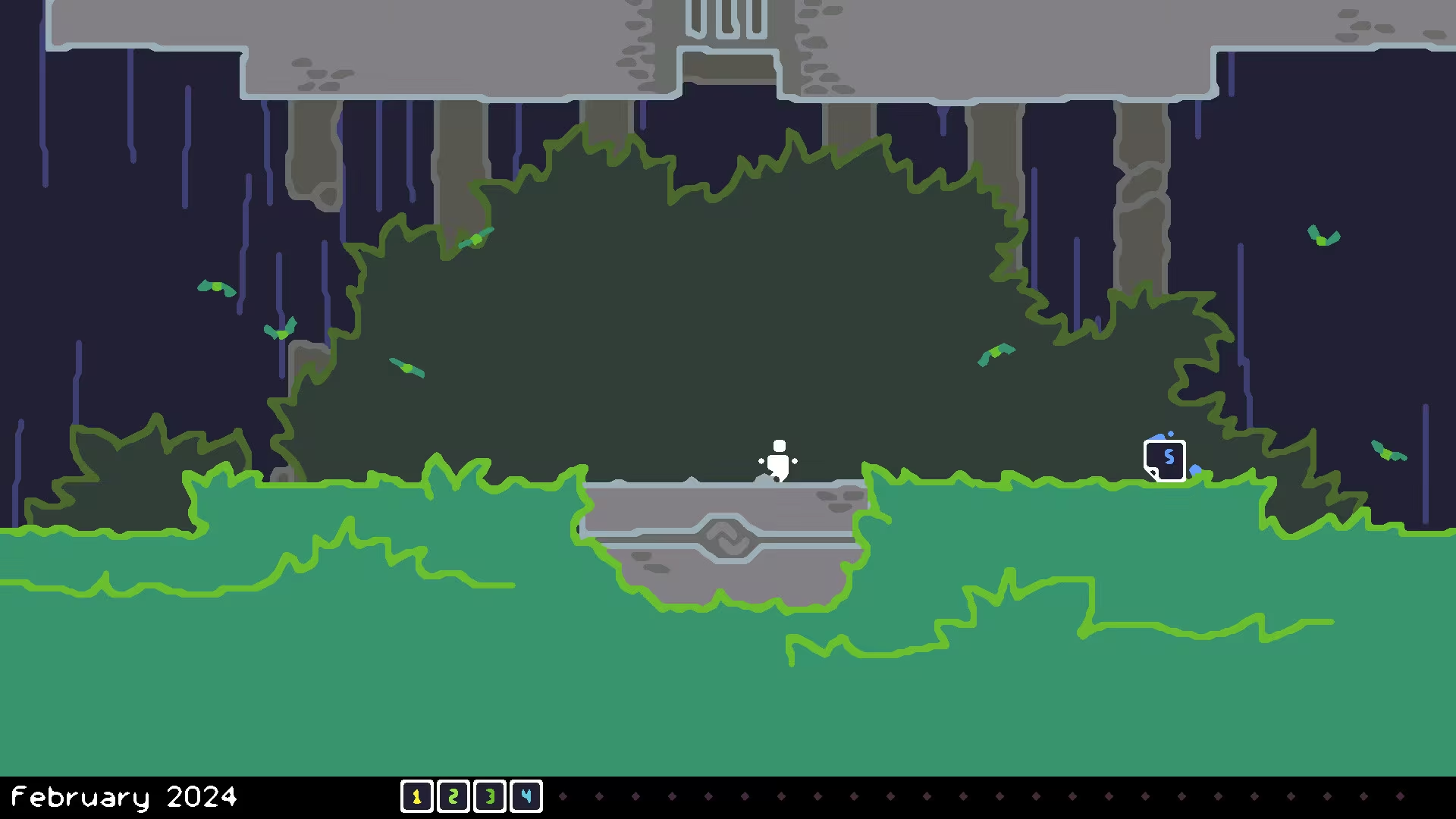
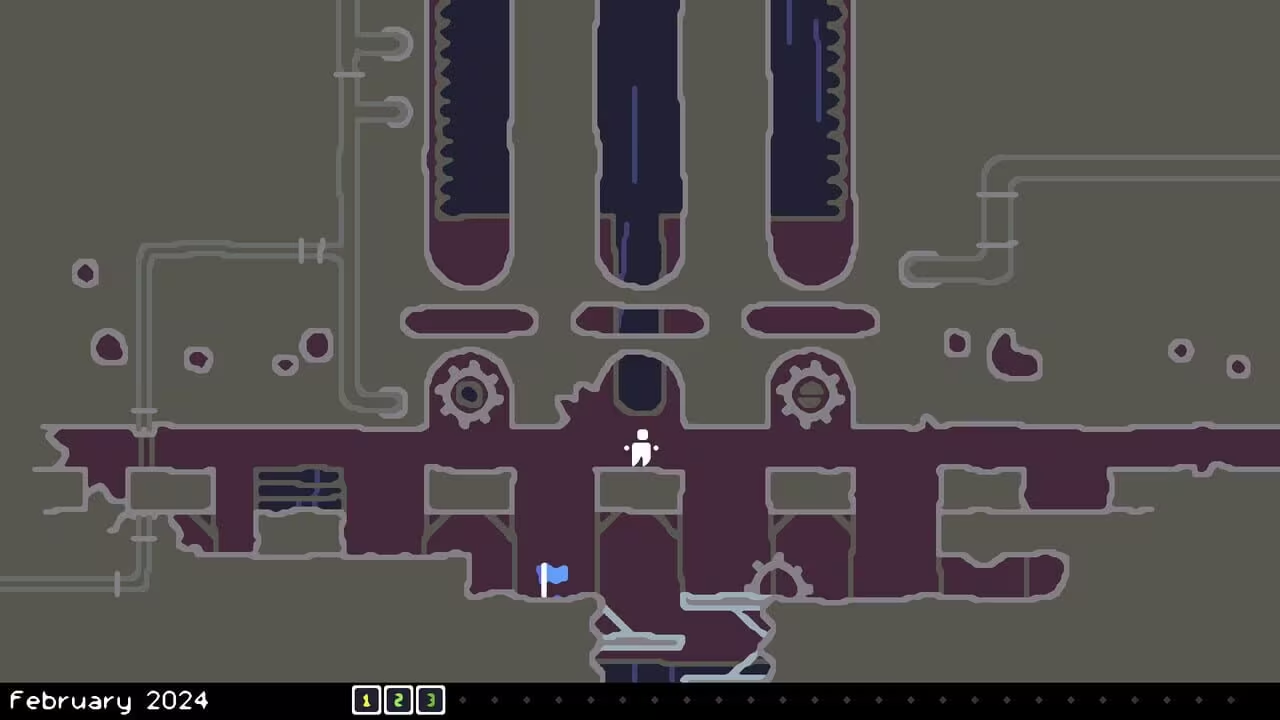
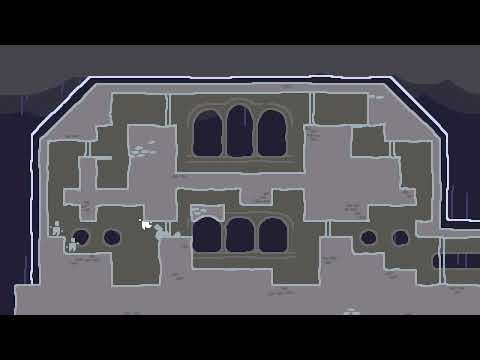
Leap Year is a clumsy platformer about knowledge and discovery. Explore a compact, hand drawn world filled with hidden paths. Understand the game’s secrets to reach new areas and collect all the pages of your calendar.

Global score

97/100

Genres

Action, Adventure, Indie, Platform, Puzzle

Similar games

    Pros

    • Innovative and clever puzzle mechanics
    • Tight and masterful level design
    • Short and satisfying gameplay length
    • Encourages discovery and experimentation
    • Charming minimalist art and music

    Cons

    • Slippery or floaty platforming controls
    • Some frustrating backtracking
    • Limited checkpoints in difficult sections
    • Minimal narrative or story depth
    • Short length may leave some wanting more

    Analysis

    Broadly representative of its motivational profile, with a few distinct shifts. Motivations that often define this kind of title include Fantasy, Violence, Story, Thrill. Here, the score leans higher than usual among comparable games on Fantasy, Exploration. It leans lower than usual among comparable games on Expression.

    How to use the graph
    Similar games map

    Each dot is a game. They are arranged from the same motivation profile as in the “Motivations” section below. Closer dots usually mean more similar reasons to play (exploration, competition, relaxation, etc.)—not that one game is “better” than another.

    • Larger dot with a light outline: the game you are viewing.
    • Colour: groups of games with comparable motivation patterns (statistical clusters).
    • Hover a dot to see the game name; click to open its page.
    • Scroll or double-click the chart to zoom out and see more games.

    Why don’t the axes read like a score? This view uses t-SNE: it only keeps who is close to whom. The scales are not “good to bad” or hours played—they separate groups on the map. Read distance between dots, not the axis numbers.

    Motivations

    • Autonomy
      4

      "Players freely explore and discover game mechanics on their own without forced progression or ability gating."

    • Competence
      3

      "The game challenges players with clever puzzles and platforming that require skill and understanding, though some platforming is described as slippery or floaty."

    • Competition
      -4

      "Focus is on personal discovery and puzzle solving at one's own pace; no mention of competitive modes or leaderboards."

    • Continuation
      2

      "Players often complete the game in one or two sessions and some engage in speedrunning or replaying for achievements."

    • Cooperation
      -5

      "Entirely a single-player experience with no cooperative or multiplayer elements."

    • Creativity
      4

      "Players creatively solve puzzles by discovering hidden mechanics and reinterpreting the environment."

    • Domination
      -5

      "No elements of exerting control over others; purely individual puzzle solving."

    • Escapism
      3

      "Players enjoy immersion in a unique, novel world and mechanics that distract from real life."

    • Expectation
      -4

      "Players engage voluntarily out of intrinsic interest and curiosity, often going in blind to maximize discovery."

    • Experimenting
      5

      "Core gameplay revolves around experimentation and discovering new mechanics through trial and error."

    • Exploration
      4

      "Exploration of a compact but cleverly designed map is central, with revisiting areas to apply new knowledge."

    • Expression
      -4

      "No character customization or cosmetic expression; minimalistic and uniform art style."

    • Fantasy
      2

      "The game presents an imaginative, abstract world with unconventional mechanics, though not heavily narrative or mythic."

    • Fellowship
      -5

      "No social or community features; entirely solo play."

    • Growth
      4

      "Players learn and develop understanding of game rules and mechanics to progress."

    • Health
      -5

      "Standard sedentary gameplay with no physical activity or health-related features."

    • Idle
      -4

      "Requires focused attention and puzzle solving; not a casual or background game."

    • Intimacy
      -5

      "No social or emotional relationship building; purely individual experience."

    • Leadership
      -5

      "No leadership or group management elements."

    • Progression
      3

      "Progression is knowledge-based rather than item or ability acquisition, but players collect calendar days as goals."

    • Relaxation
      2

      "Generally enjoyable and satisfying with moments of flow, though some frustration reported in platforming."

    • Sensation
      2

      "Simple but charming visuals and music provide pleasant sensory experience without intense stimulation."

    • Status
      -5

      "No social recognition or ranking systems."

    • Story
      -4

      "Minimal narrative or lore; focus is on mechanics and puzzle discovery rather than story immersion."

    • Strategy
      3

      "Requires mental challenge to figure out puzzles and plan routes, though mechanics are simple."

    • Thrill
      1

      "Some tension from challenging platforming and trial-and-error deaths, but mostly controlled puzzle solving."

    • Value
      4

      "Players consider the game a bargain for its short length and quality design."

    • Violence
      -5

      "No combat or destruction; gameplay is constructive puzzle solving."

    • Survival
      1

      "Players must avoid dying from fall damage, adding a survival element to platforming."

    Last update: 29/04/2026