Myst III: Exile Thumbnail

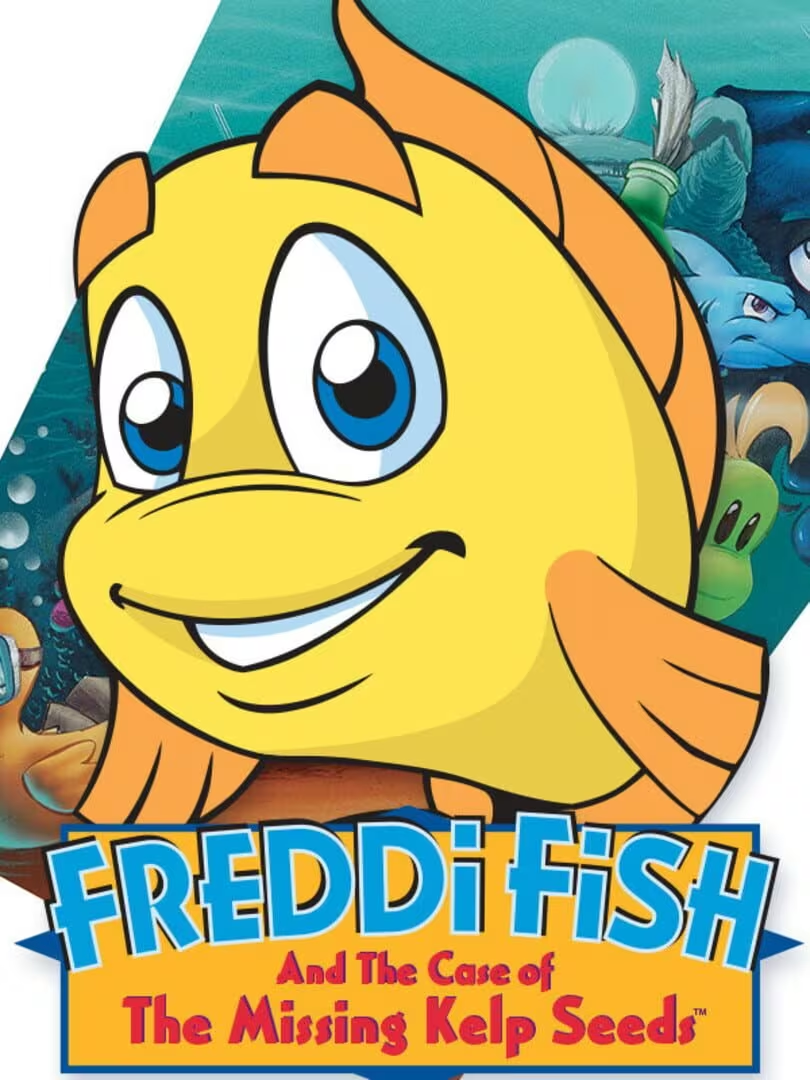
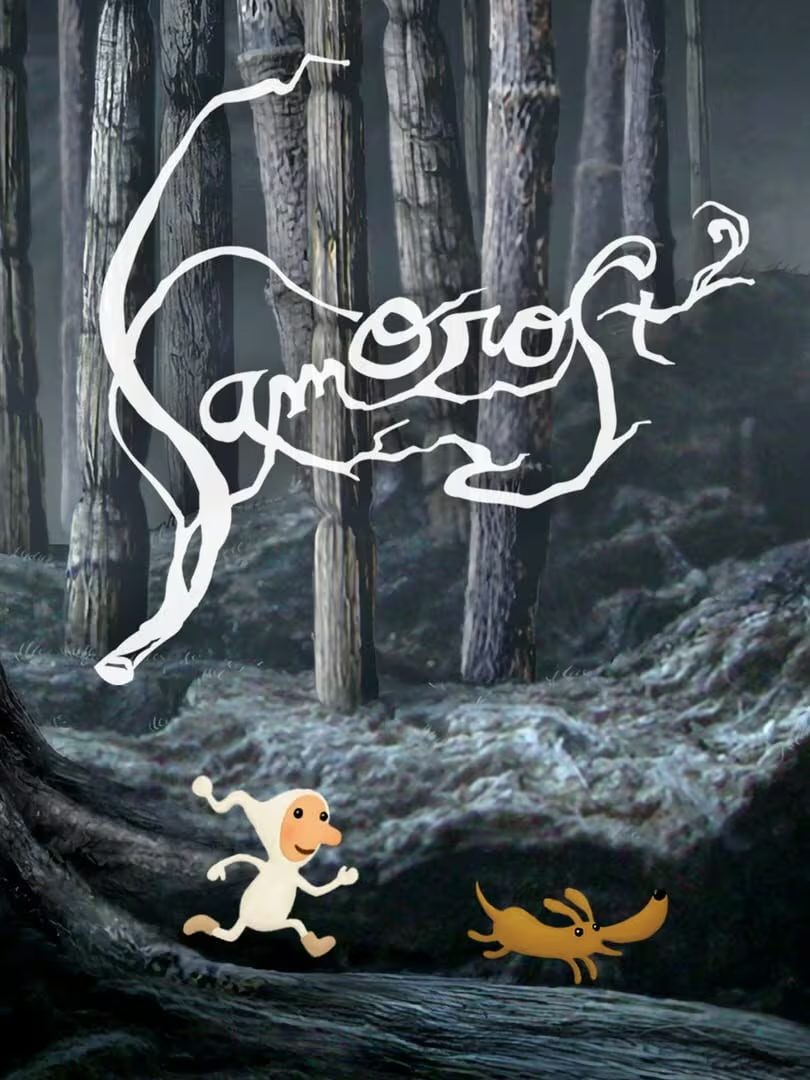
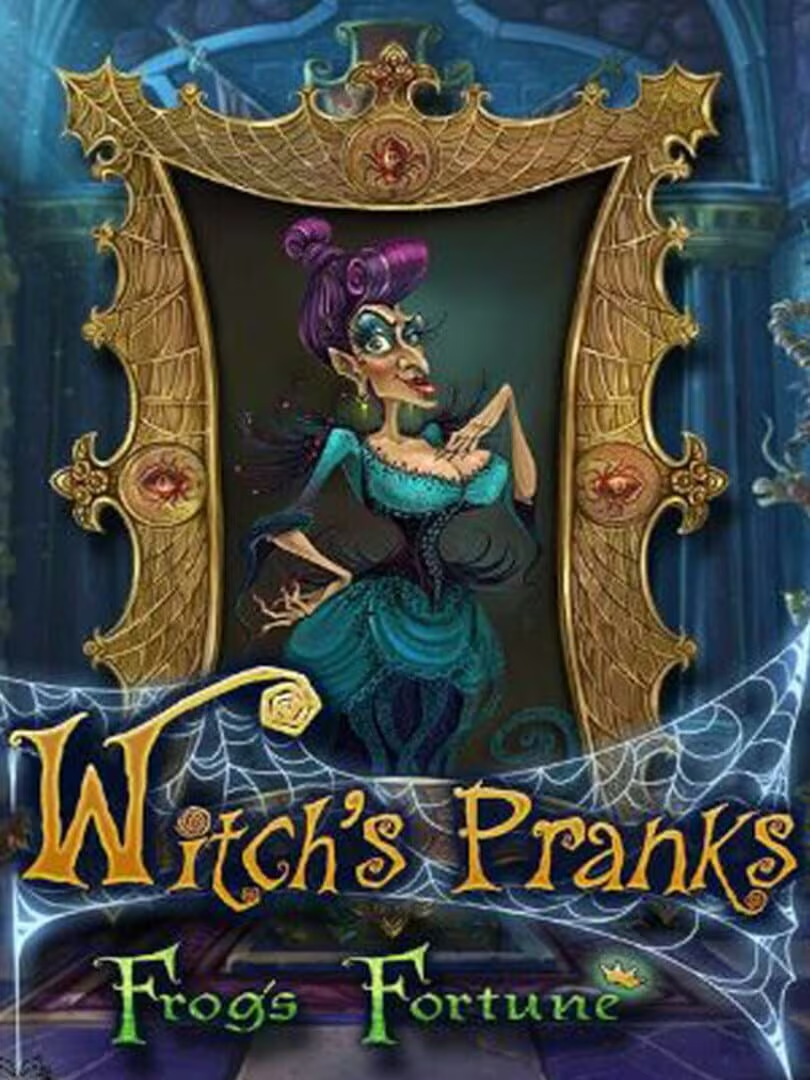
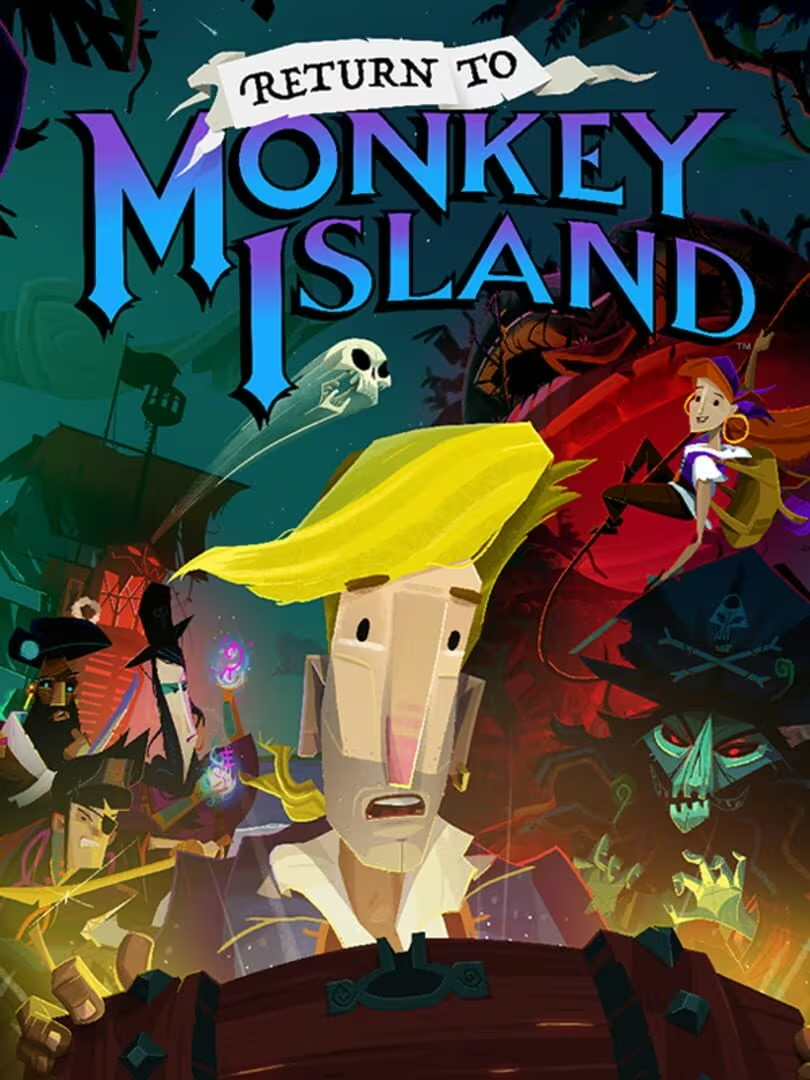
Myst III: Exile similar games & best alternatives

Myst III: Exile

PC (Microsoft Windows), PlayStation 2, Xbox, Mac • 2018

Related articles

Quick resume

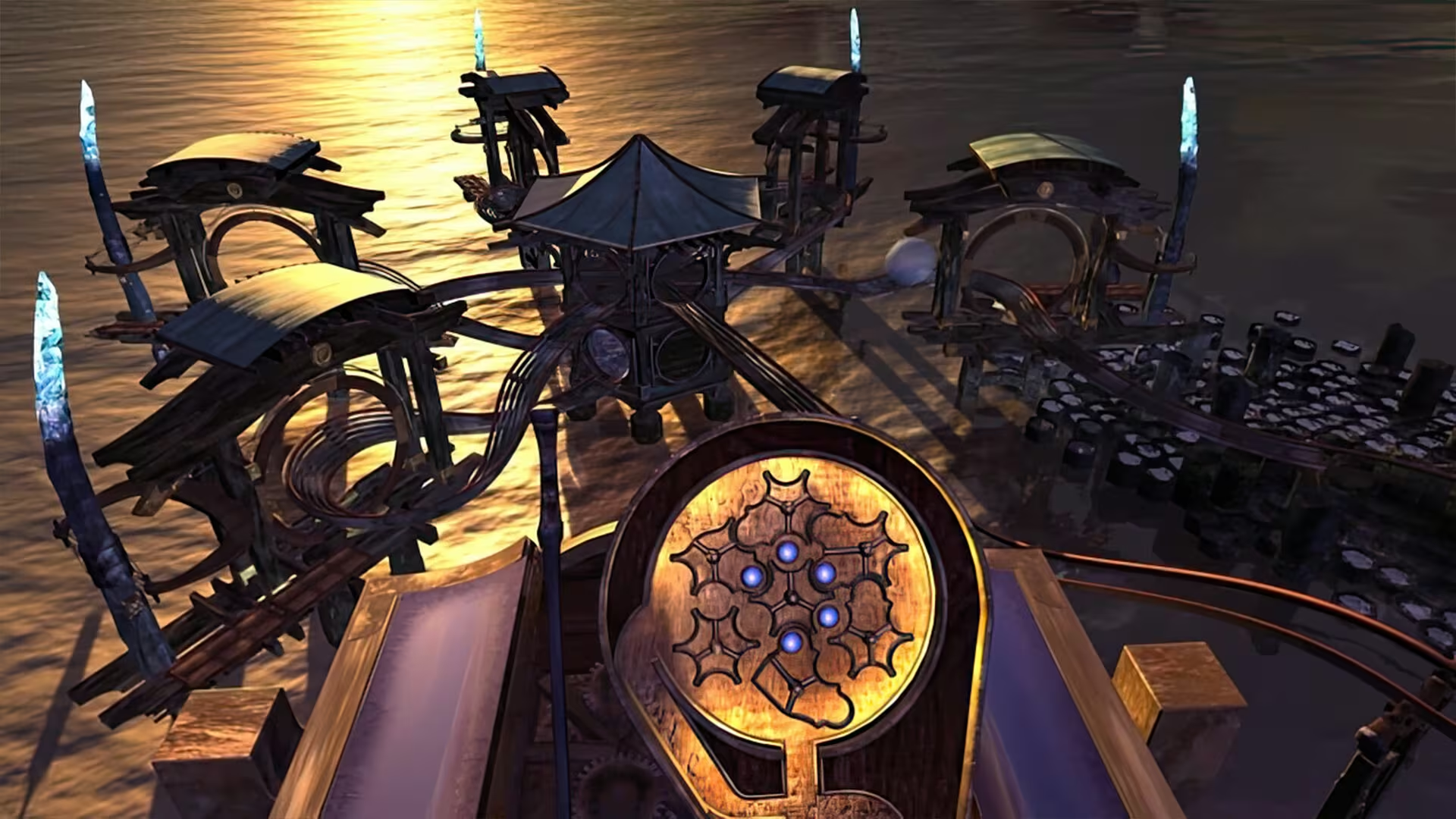
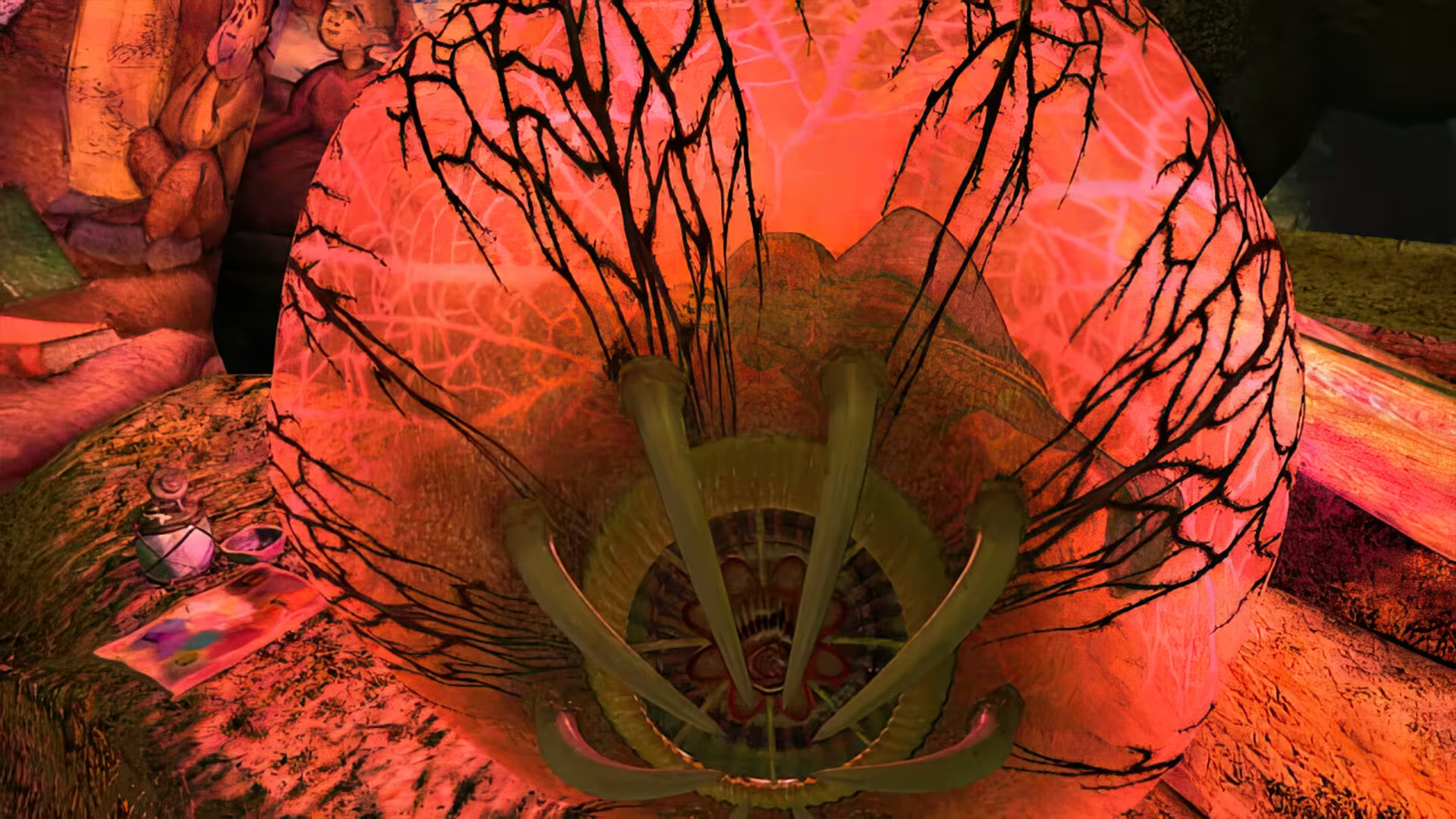
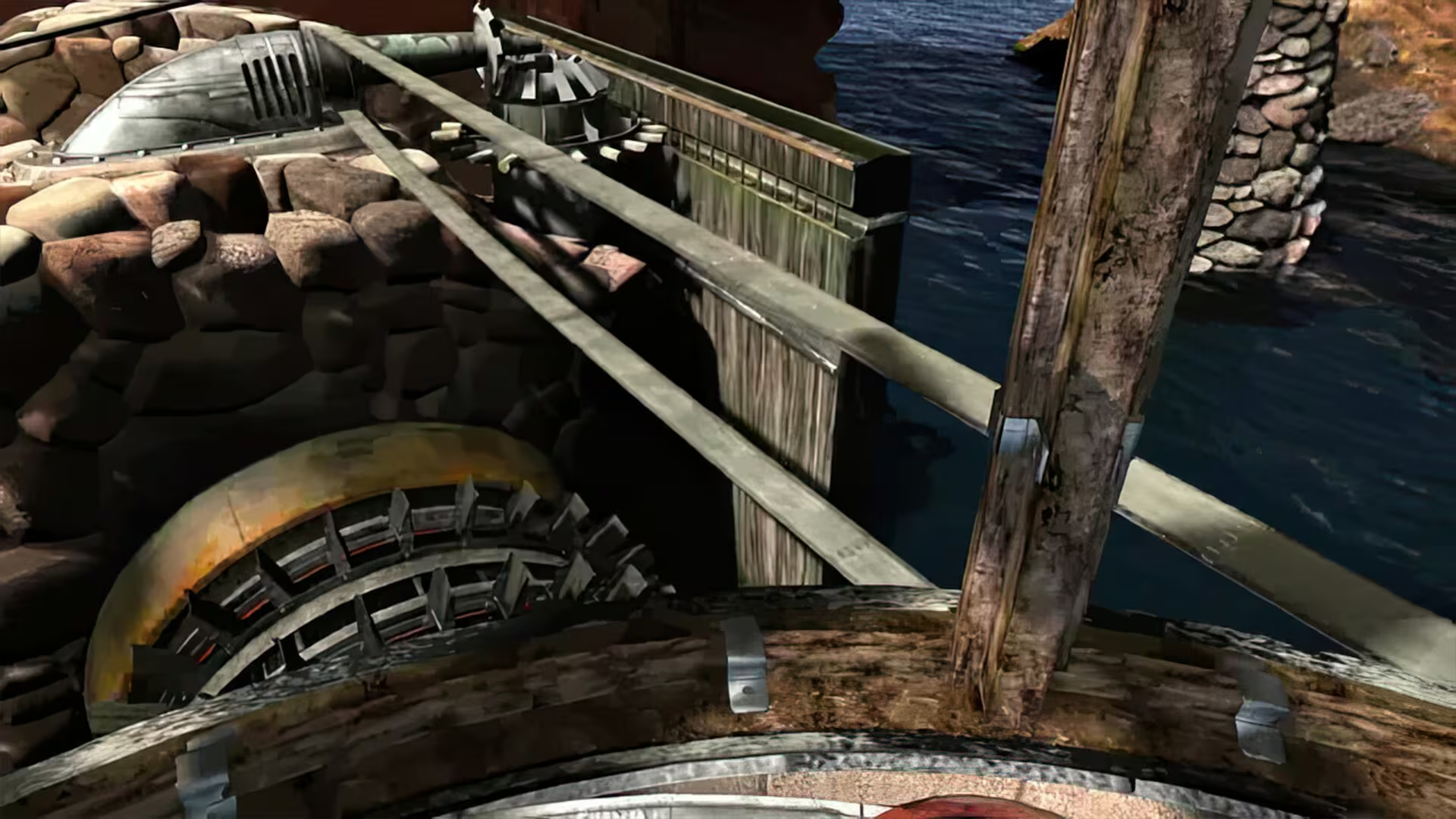
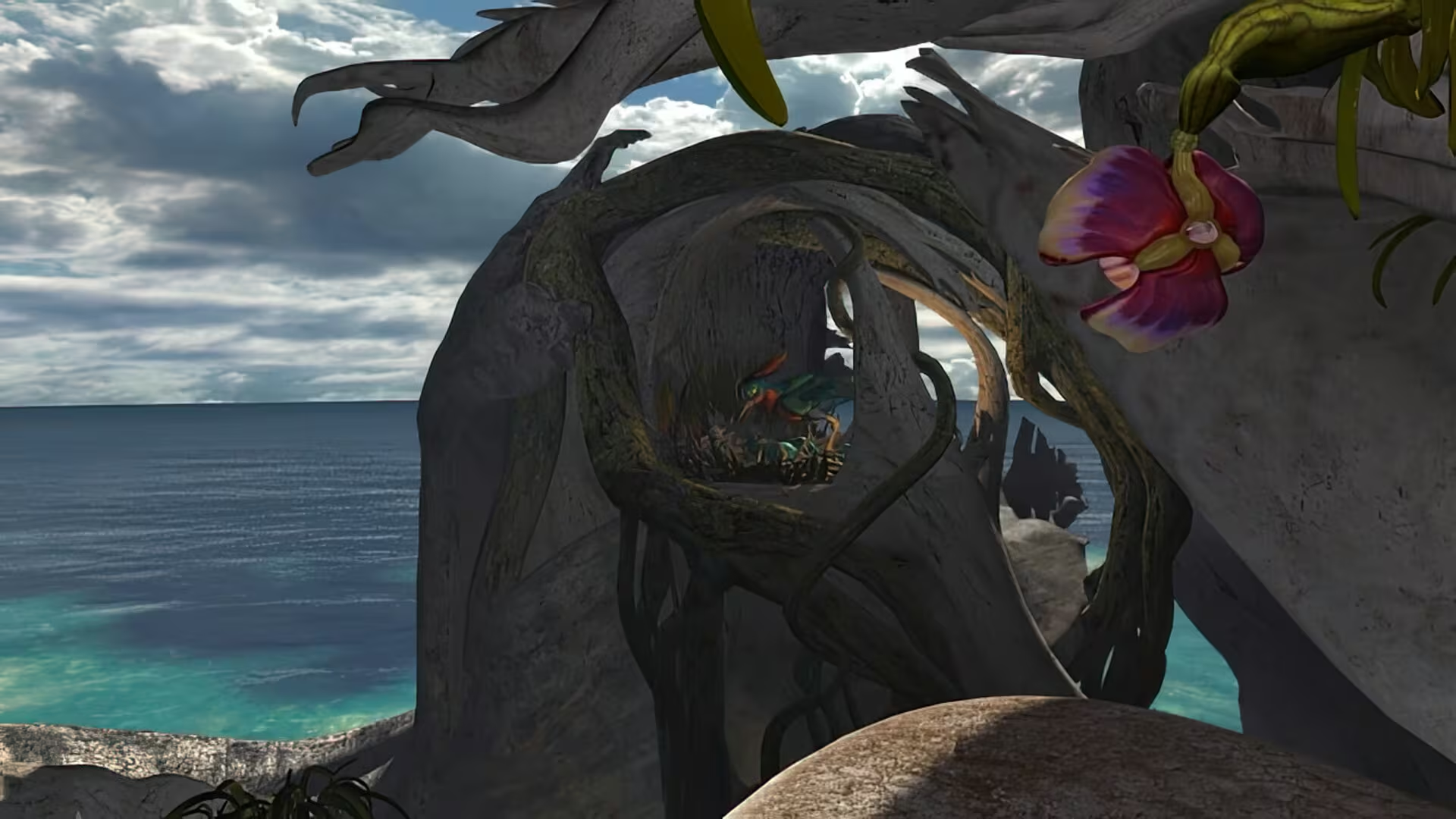
The story of Myst continues in this third entry of the series, originally released in 2001. Return to this strange and wondrous universe, where books become portals into worlds, and where the lessons of the past may yet hold meaning for today...

Global score

93/100

Genres

Adventure, Casual, Puzzle, Point-and-click

Similar games

    Pros

    • Immersive and atmospheric worlds
    • Challenging and rewarding puzzles
    • Engaging story with strong acting
    • Freedom to explore at own pace
    • Nostalgic appeal for myst fans

    Cons

    • Dated graphics and navigation issues
    • Some puzzles frustrating or obtuse
    • Limited player customization
    • Shorter length compared to other entries
    • Lack of modern quality-of-life features

    Analysis

    Broadly representative of its motivational profile, with a few distinct shifts. Motivations that often define this kind of title include Survival, Violence, Fellowship, Expression. Here, the score leans higher than usual among comparable games on Fantasy, Competence, Thrill.

    How to use the graph
    Similar games map

    Each dot is a game. They are arranged from the same motivation profile as in the “Motivations” section below. Closer dots usually mean more similar reasons to play (exploration, competition, relaxation, etc.)—not that one game is “better” than another.

    • Larger dot with a light outline: the game you are viewing.
    • Colour: groups of games with comparable motivation patterns (statistical clusters).
    • Hover a dot to see the game name; click to open its page.
    • Scroll or double-click the chart to zoom out and see more games.

    Why don’t the axes read like a score? This view uses t-SNE: it only keeps who is close to whom. The scales are not “good to bad” or hours played—they separate groups on the map. Read distance between dots, not the axis numbers.

    Motivations

    • Autonomy
      4

      "Players have freedom to explore multiple ages at their own pace with minimal hand-holding and no forced linearity."

    • Competence
      4

      "Challenging puzzles require skill, logic, and observation; players receive clear feedback and rewarding puzzle solutions."

    • Competition
      -5

      "No competitive elements; gameplay is single-player and focused on personal puzzle solving."

    • Continuation
      3

      "Players often replay the game and enjoy long sessions exploring and solving puzzles, showing attachment."

    • Cooperation
      -5

      "Entirely single-player experience with no multiplayer or cooperative gameplay."

    • Creativity
      3

      "Players engage in creative problem solving and exploration, though within predefined puzzle structures."

    • Domination
      -5

      "No social dominance or power dynamics; interaction is solely with the environment and puzzles."

    • Escapism
      5

      "Strong escapism through immersive, fantastical worlds and atmospheric storytelling."

    • Expectation
      -4

      "Players engage voluntarily out of intrinsic interest and nostalgia rather than obligation."

    • Experimenting
      3

      "Encourages experimentation with puzzle mechanics and exploration of environments."

    • Exploration
      4

      "Exploration of multiple distinct ages and discovery of hidden paths and clues is a core element."

    • Expression
      -3

      "Limited player customization; focus is on experiencing preset environments and story."

    • Fantasy
      5

      "Strong fantasy elements with imaginative worlds, lore, and narrative beyond realistic scenarios."

    • Fellowship
      -5

      "Minimal social interaction; experience is solitary and introspective."

    • Growth
      4

      "Players develop problem-solving skills and learn puzzle logic throughout gameplay."

    • Health
      -5

      "Sedentary gameplay with no physical activity or health-related mechanics."

    • Idle
      -4

      "Requires focused attention and continuous engagement to solve puzzles and progress."

    • Intimacy
      -5

      "No social or emotional relationship building; interactions are with game world only."

    • Leadership
      -5

      "No leadership or group management roles; single-player experience."

    • Progression
      3

      "Progression through puzzle completion and unlocking new areas, though no item collection or upgrades."

    • Relaxation
      3

      "Generally relaxing and immersive, though some puzzles cause frustration and tension."

    • Sensation
      3

      "Enjoyable audiovisual experience with atmospheric music and detailed environments."

    • Status
      -5

      "No social recognition or status systems; focus is on personal achievement."

    • Story
      4

      "Engaging narrative with characters and multiple endings enhances immersion."

    • Strategy
      3

      "Requires logical thinking and planning to solve puzzles, though no complex strategic gameplay."

    • Thrill
      1

      "Some suspense in story and puzzle solving, but overall low risk and controlled experience."

    • Value
      3

      "Offers good value for fans of the series and puzzle games, though some note short length and dated graphics."

    • Violence
      -5

      "No violence or combat; gameplay centers on constructive puzzle solving."

    • Survival
      -5

      "No survival mechanics or threats; stable, low-risk environment."

    Last update: 29/04/2026