Papers, Please Thumbnail

Papers, Please similar games & best alternatives

Papers, Please

PC (Microsoft Windows), Mac, iOS, Android, PlayStation Vita, Linux • 2013

Related articles

Quick resume

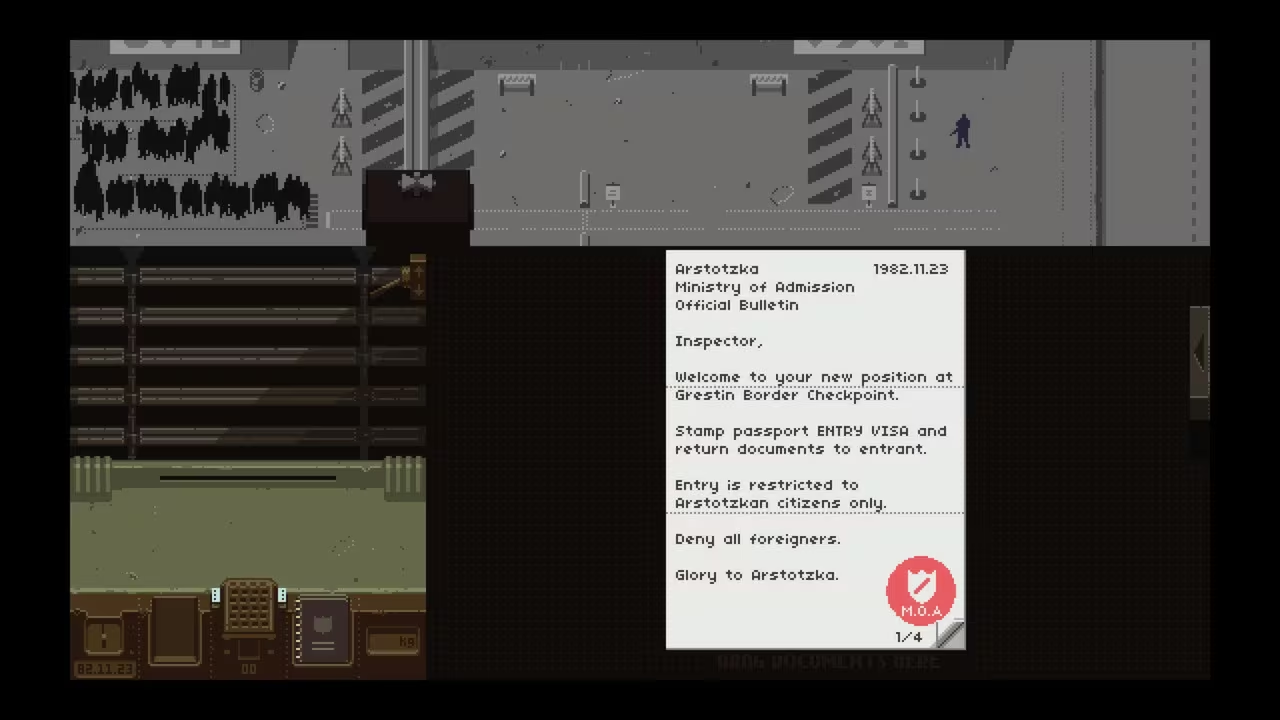
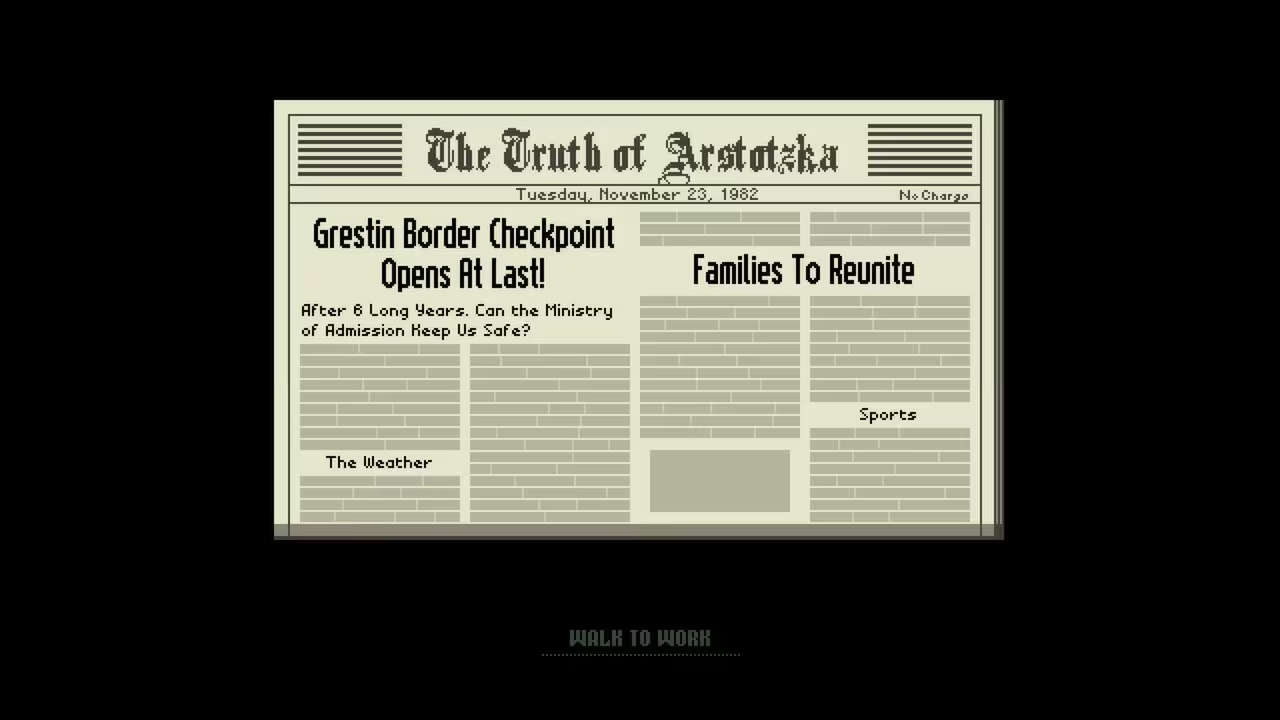
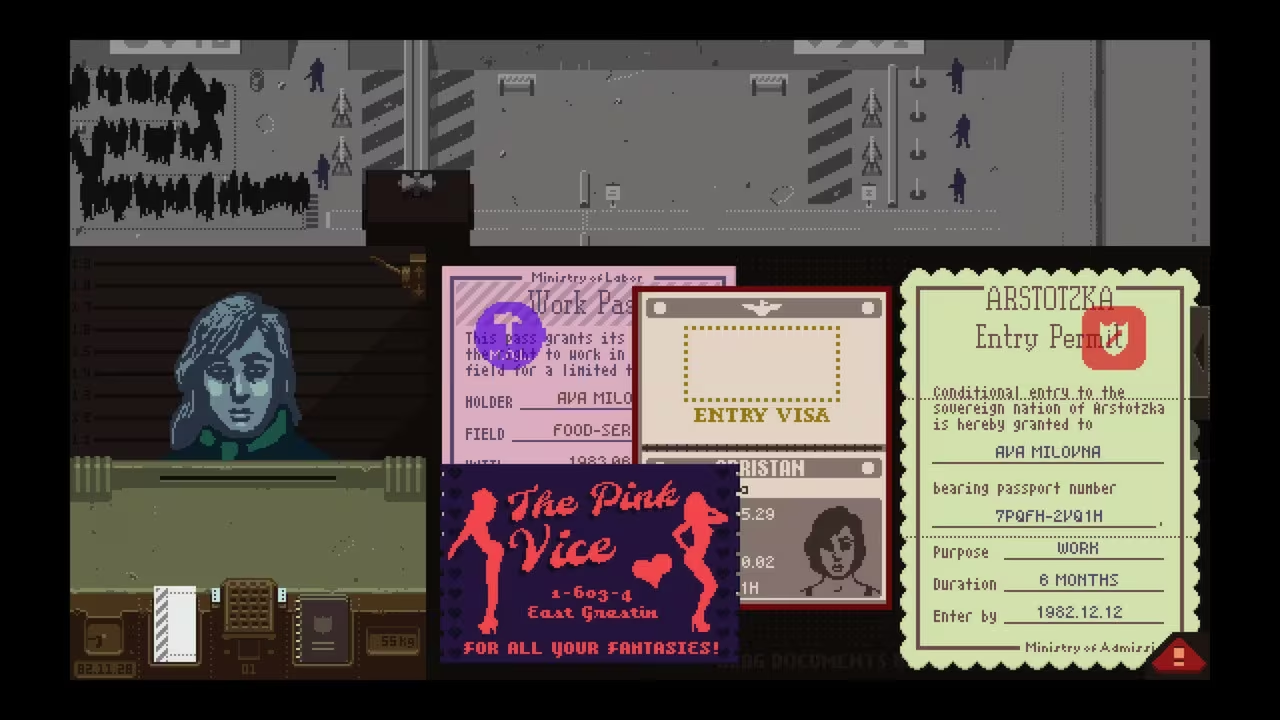
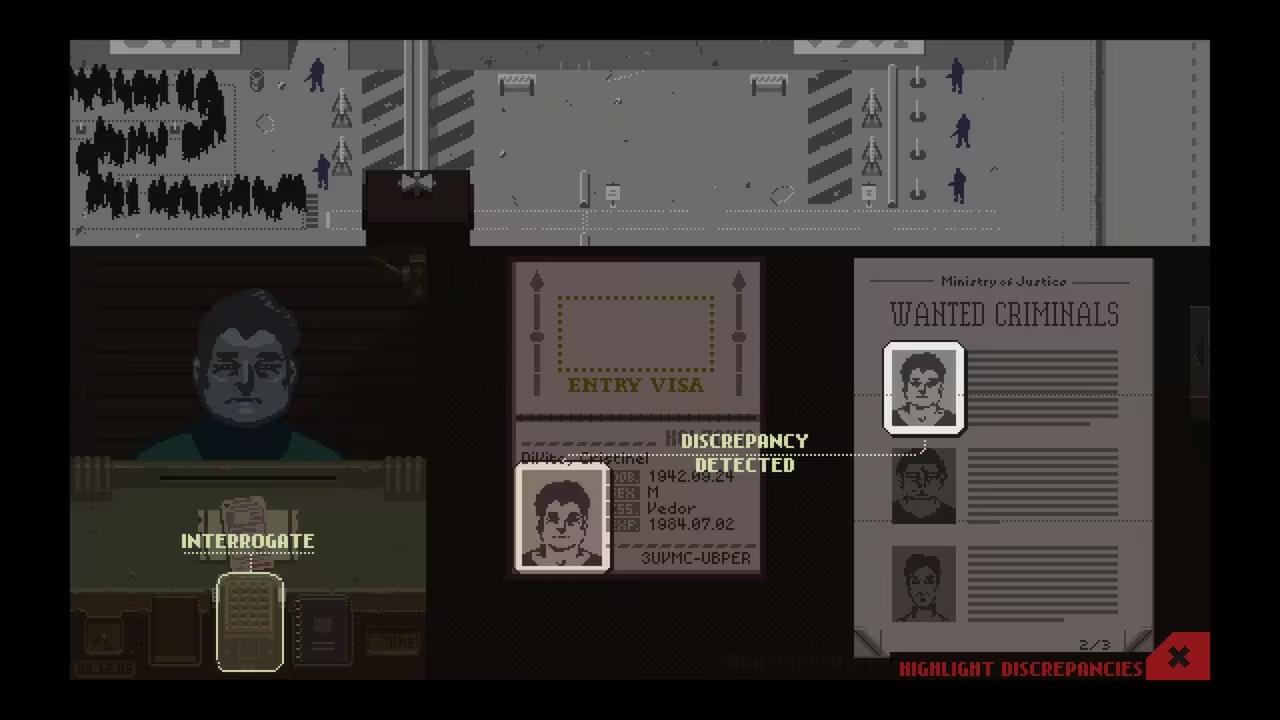
Congratulations. The October labor lottery is complete. Your name was pulled. For immediate placement, report to the Ministry of Admission at Grestin Border Checkpoint. An apartment will be provided for you and your family in East Grestin. Expect a Class-8 dwelling.

Global score

97/100

Genres

Adventure, Indie, Point-and-click, Simulator, Puzzle

Similar games

    Pros

    • Unique and immersive narrative
    • Challenging and engaging gameplay
    • Multiple endings and replayability
    • Strong moral and ethical dilemmas
    • Low system requirements

    Cons

    • Monotonous and repetitive gameplay for some
    • Pixel art graphics may not appeal to all
    • Limited social or cooperative features
    • Some players find difficulty curve steep
    • Interface can be cumbersome with many documents

    Analysis

    Less representative of its motivational profile, with noticeable differences. Motivations that often define this kind of title include Relaxation, Survival, Violence, Fellowship. It leans lower than usual among comparable games on Violence, Fantasy, Expression.

    How to use the graph
    Similar games map

    Each dot is a game. They are arranged from the same motivation profile as in the “Motivations” section below. Closer dots usually mean more similar reasons to play (exploration, competition, relaxation, etc.)—not that one game is “better” than another.

    • Larger dot with a light outline: the game you are viewing.
    • Colour: groups of games with comparable motivation patterns (statistical clusters).
    • Hover a dot to see the game name; click to open its page.
    • Scroll or double-click the chart to zoom out and see more games.

    Why don’t the axes read like a score? This view uses t-SNE: it only keeps who is close to whom. The scales are not “good to bad” or hours played—they separate groups on the map. Read distance between dots, not the axis numbers.

    Motivations

    • Autonomy
      4

      "Players make meaningful decisions about who to admit or deny, balancing personal ethics and rules, showing high control over actions."

    • Competence
      4

      "Game requires attention to detail, skillful document inspection, and adapting to changing rules, providing a challenging test of competence."

    • Competition
      -3

      "Focus is on personal performance and story progression; some mention of leaderboards in endless mode but not core motivation."

    • Continuation
      3

      "Many players report addictive gameplay and replayability due to multiple endings and moral dilemmas."

    • Cooperation
      -4

      "Gameplay is primarily single-player and individual; no cooperative elements described."

    • Creativity
      1

      "Limited creativity in gameplay; some player-driven moral choices and roleplaying add slight creative expression."

    • Domination
      -4

      "Interactions are balanced and respectful; no evidence of exerting superiority or power over others."

    • Escapism
      4

      "Players immerse in a dystopian world to escape reality, experiencing stress relief through engagement with the game’s narrative."

    • Expectation
      -4

      "Players engage voluntarily driven by intrinsic interest and curiosity about the moral and bureaucratic challenges."

    • Experimenting
      3

      "Players explore different endings and moral paths, experimenting with choices and strategies."

    • Exploration
      1

      "Exploration is limited to narrative and story variations rather than physical world discovery."

    • Expression
      -3

      "Minimal customization or personalization; expression mainly through decision-making rather than visual or avatar changes."

    • Fantasy
      -2

      "Set in a fictional but realistic dystopian setting; grounded in plausible scenarios rather than high fantasy."

    • Fellowship
      -4

      "Strongly single-player experience with little social or community interaction."

    • Growth
      3

      "Players develop skills in attention, memory, and decision-making; learn rules and improve efficiency."

    • Health
      -5

      "Sedentary gameplay with no physical activity involved."

    • Idle
      -4

      "Requires constant attention and focus due to time pressure and complexity."

    • Intimacy
      -3

      "Limited social interaction; emotional engagement is with story and characters rather than social relationships."

    • Leadership
      -4

      "No leadership or group management roles; player acts independently."

    • Progression
      3

      "Progression through unlocking endings, achievements, and story advancement."

    • Relaxation
      -3

      "Gameplay is tense and stressful, with pressure to perform and moral dilemmas."

    • Sensation
      1

      "Minimal sensory stimulation; atmosphere and music contribute to mood but not intense sensory fun."

    • Status
      -4

      "Achievements exist but social recognition or status seeking is not a core motivation."

    • Story
      5

      "Strong narrative immersion with multiple endings, moral choices, and emotional engagement."

    • Strategy
      3

      "Requires logical thinking, planning, and problem solving to manage documents and moral decisions."

    • Thrill
      3

      "Tension and suspense arise from moral dilemmas, time pressure, and consequences of decisions."

    • Value
      4

      "Players perceive high value for time and money due to unique gameplay and replayability."

    • Violence
      -4

      "Minimal violence; some scripted events but core gameplay is non-violent and focused on paperwork."

    • Survival
      4

      "Strong survival elements in managing family needs and avoiding penalties to keep job and family alive."

    Last update: 29/04/2026