Plutocracy Thumbnail

Plutocracy similar games & best alternatives

Plutocracy

PC (Microsoft Windows), Mac, Linux • 2019

Related articles

Quick resume

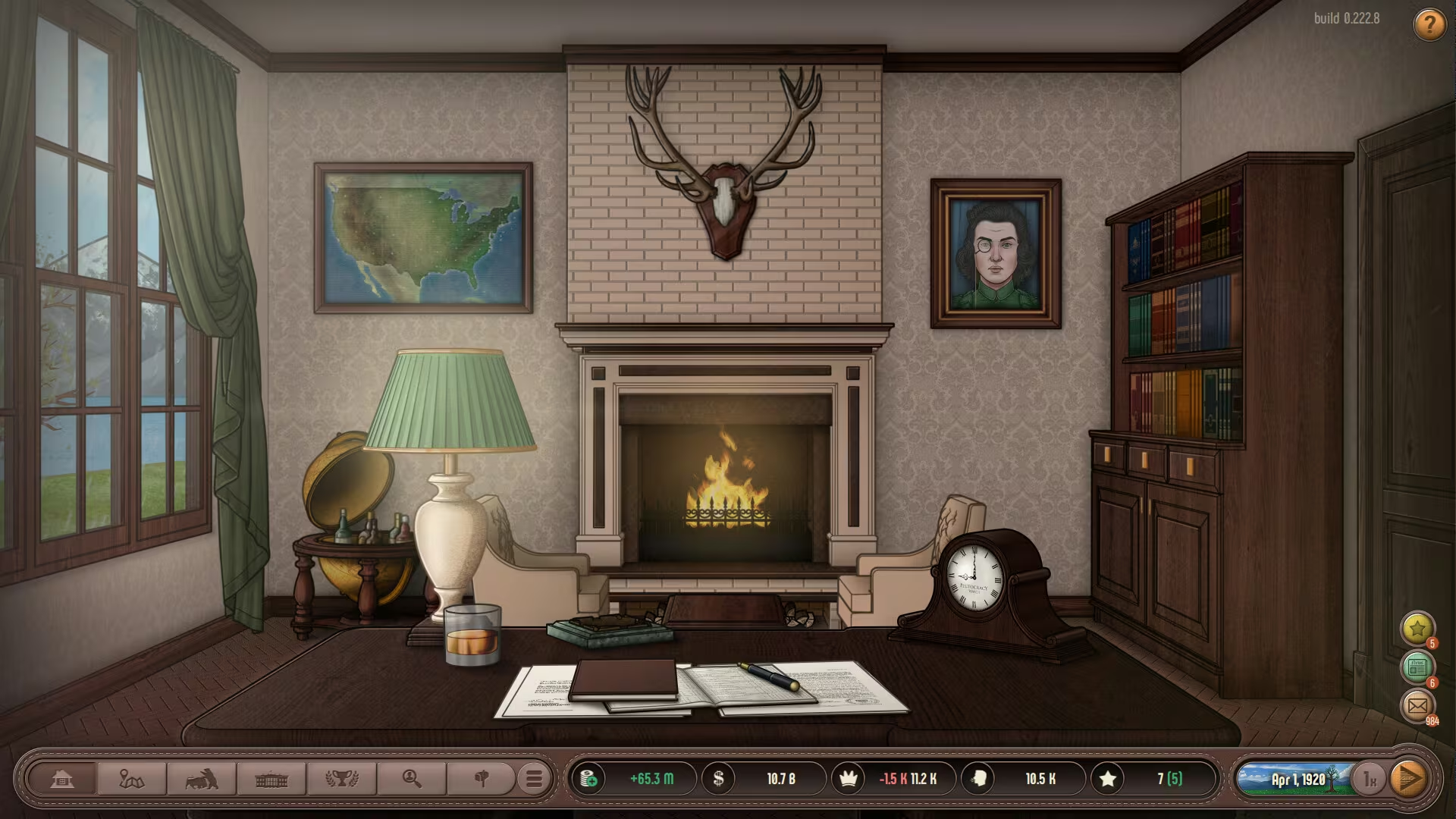
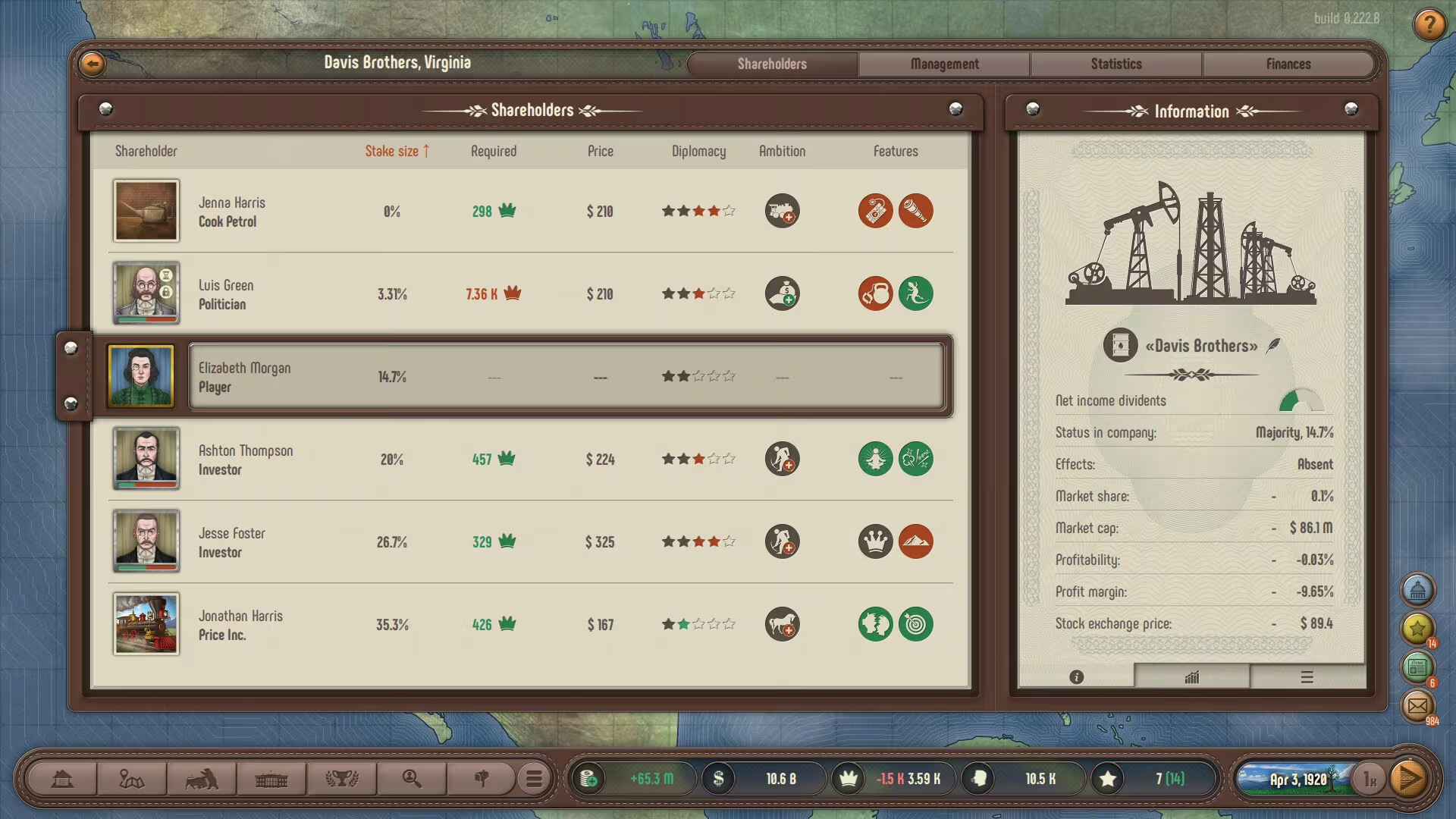
The business simulator Plutocracy gives you the chance to become wealthy and powerful to take control over the world. Where policy, laws, officials and people are only the chess pieces how do you play your game?

Global score

80/100

Genres

Indie, Simulator, Strategy, Early Access

Similar games

    Pros

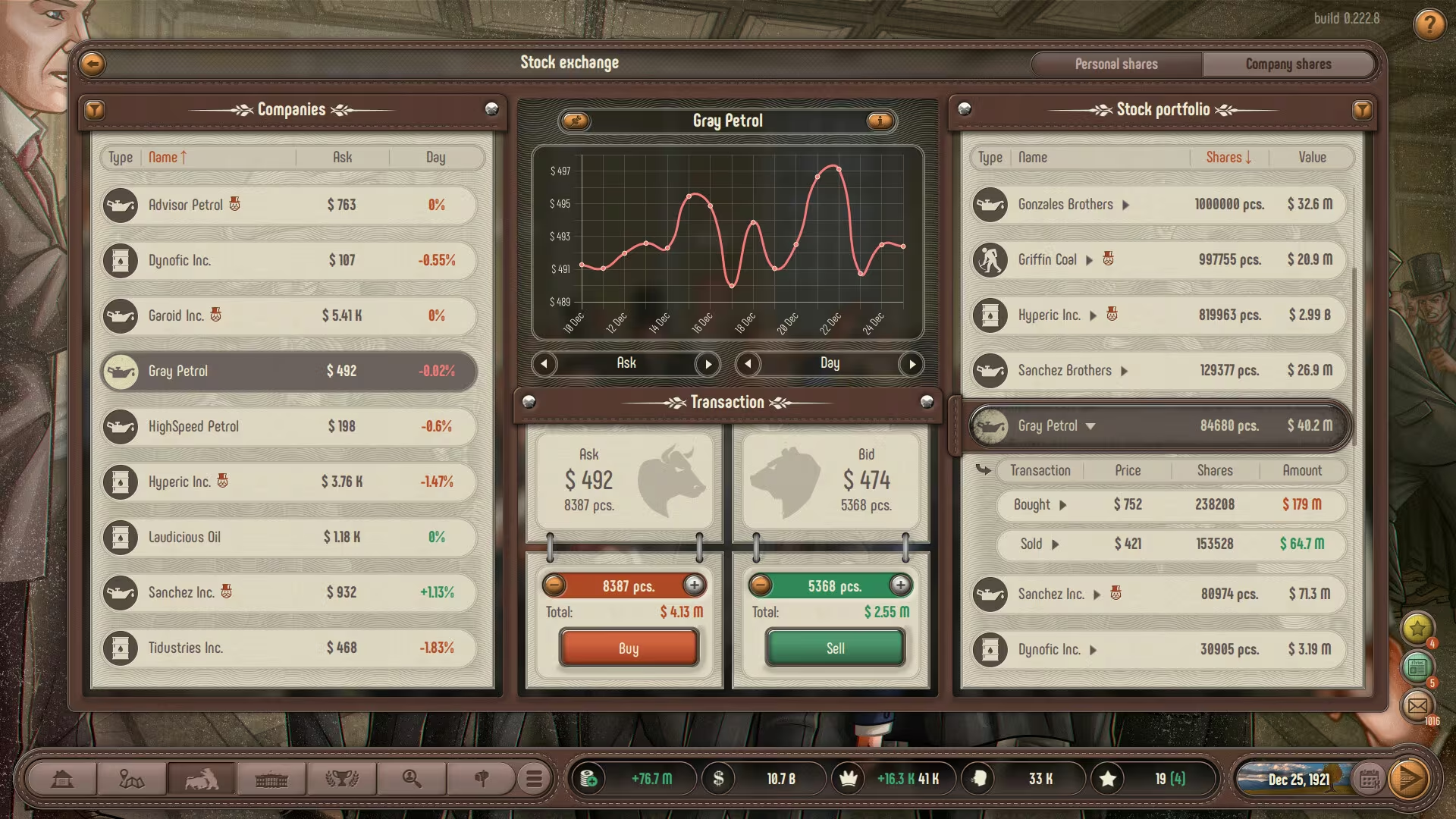
    • Deep and complex economic and political simulation
    • High player autonomy and strategic depth
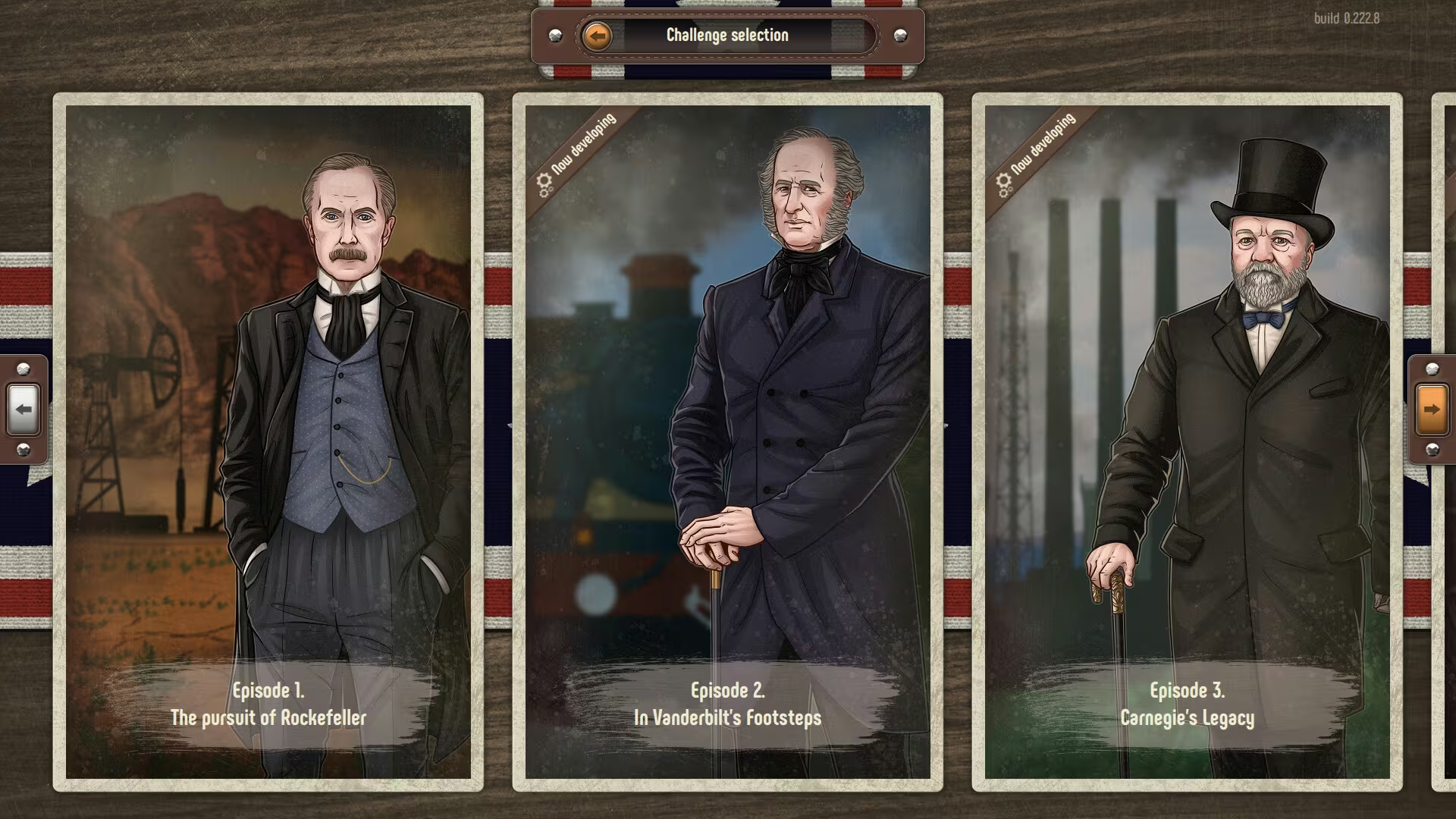
    • Engaging historical setting and art style
    • Regular developer updates and community support
    • Addictive gameplay with long sessions

    Cons

    • Early access with bugs and crashes
    • Steep learning curve and ui complexity
    • Repetitive grind in early game
    • Lack of multiplayer and social features
    • Some mechanics underdeveloped or unbalanced

    Analysis

    Less representative of its motivational profile, with noticeable differences. Motivations that often define this kind of title include Competition, Fellowship, Domination, Status. It leans lower than usual among comparable games on Fellowship, Violence, Cooperation.

    How to use the graph
    Similar games map

    Each dot is a game. They are arranged from the same motivation profile as in the “Motivations” section below. Closer dots usually mean more similar reasons to play (exploration, competition, relaxation, etc.)—not that one game is “better” than another.

    • Larger dot with a light outline: the game you are viewing.
    • Colour: groups of games with comparable motivation patterns (statistical clusters).
    • Hover a dot to see the game name; click to open its page.
    • Scroll or double-click the chart to zoom out and see more games.

    Why don’t the axes read like a score? This view uses t-SNE: it only keeps who is close to whom. The scales are not “good to bad” or hours played—they separate groups on the map. Read distance between dots, not the axis numbers.

    Motivations

    • Autonomy
      4

      "Players have control over strategic decisions such as company management, stock purchases, mergers, and political influence, indicating high autonomy."

    • Competence
      4

      "The game involves complex economic and political mechanics requiring skillful management and strategic thinking."

    • Competition
      3

      "Players compete against AI rivals for market dominance and political influence, though no explicit multiplayer competition yet."

    • Continuation
      4

      "Players report long sessions and habitual play, with some spending many hours in single sittings."

    • Cooperation
      -3

      "Gameplay focuses on individual empire building and competition; limited evidence of cooperative multiplayer or teamwork."

    • Creativity
      3

      "Players can customize strategies, manage companies, and influence politics, allowing creative approaches within the simulation."

    • Domination
      4

      "Players aim to dominate markets and political offices, exerting control over rivals and entities."

    • Escapism
      3

      "Players use the game as a complex simulation to immerse themselves and escape real life through strategic gameplay."

    • Expectation
      -4

      "Players engage voluntarily out of personal interest and intrinsic motivation rather than obligation."

    • Experimenting
      3

      "Players explore various economic and political strategies, experimenting with mergers, stock market tactics, and influence."

    • Exploration
      2

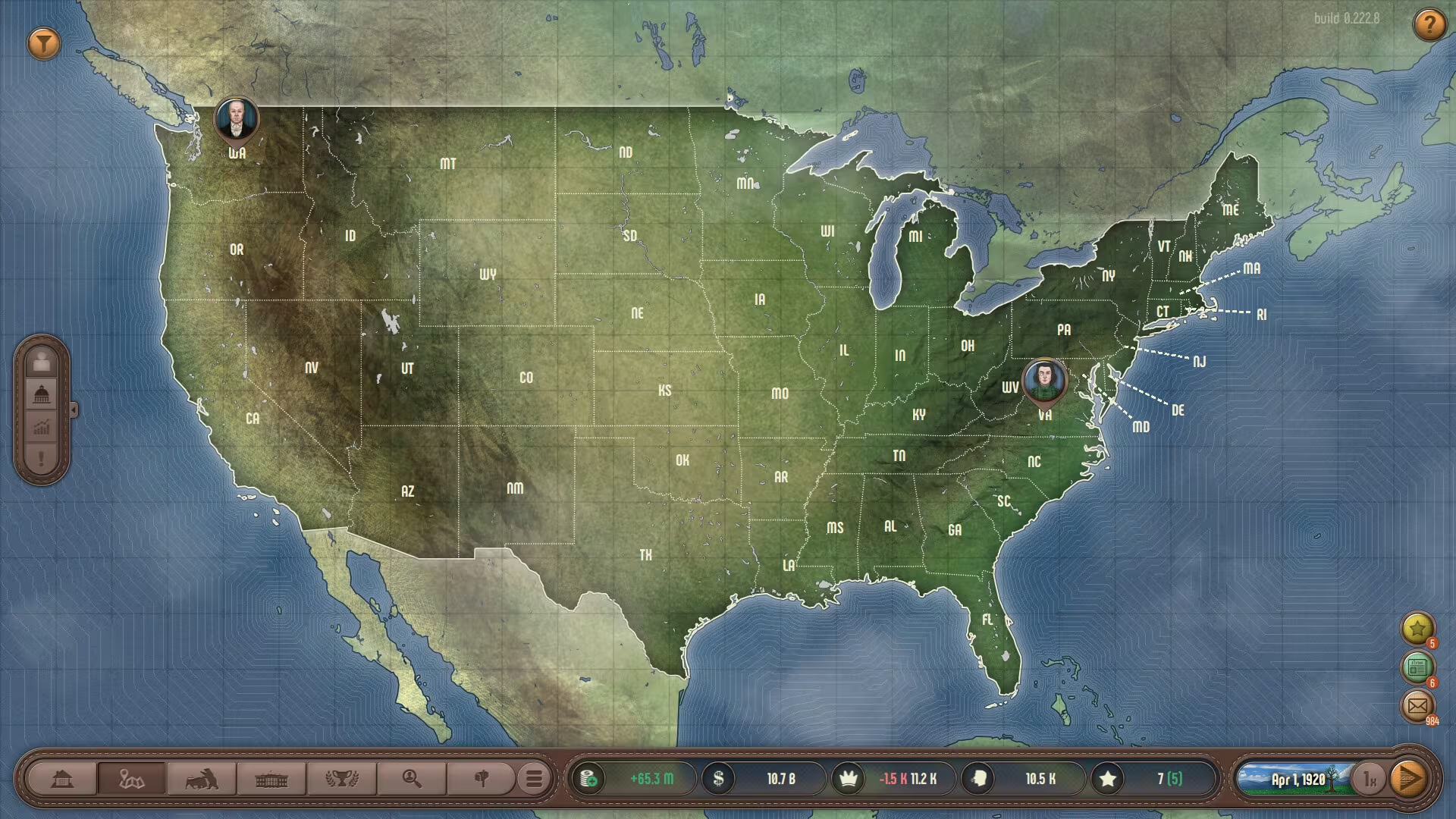
      "Players discover new states and unlock features over time, though the environment is historically fixed."

    • Expression
      2

      "Character customization and strategic choices allow some self-expression, though limited cosmetic options."

    • Fantasy
      2

      "Set in a stylized historical period with some fictionalized elements, blending realism with imaginative scenarios."

    • Fellowship
      -4

      "Gameplay is primarily single player with minimal social interaction or community engagement."

    • Growth
      4

      "Players develop skills in economic management and strategic planning, learning complex systems."

    • Health
      -5

      "Game is sedentary with no physical activity or health-related features."

    • Idle
      -4

      "Requires continuous attention and active management; not suitable for idle or background play."

    • Intimacy
      -5

      "No evidence of close social relationships or emotional sharing; interactions are transactional and strategic."

    • Leadership
      3

      "Players lead companies and influence political figures, guiding decisions and strategies."

    • Progression
      5

      "Strong focus on accumulating wealth, company shares, influence, and upgrades over time."

    • Relaxation
      2

      "Some players find the game relaxing and engaging, though complexity can cause tension."

    • Sensation
      1

      "Visuals and audio are decent but not highly stimulating; focus is on strategic depth rather than sensory excitement."

    • Status
      3

      "Players seek recognition as richest or most influential, gaining status within the game world."

    • Story
      -3

      "No narrative campaign; gameplay is sandbox style with historical context but no strong story immersion."

    • Strategy
      5

      "Core gameplay revolves around complex strategic decision making and problem solving."

    • Thrill
      2

      "Some suspense from negotiations and market fluctuations, but overall controlled and predictable environment."

    • Value
      3

      "Players perceive good value for time invested due to depth and ongoing updates."

    • Violence
      -3

      "No direct combat; some elements of sabotage and assassination exist but are strategic rather than violent."

    • Survival
      3

      "Players manage risks such as hostile takeovers and political opposition to maintain their empire."

    Last update: 29/04/2026