Poly Bridge Thumbnail

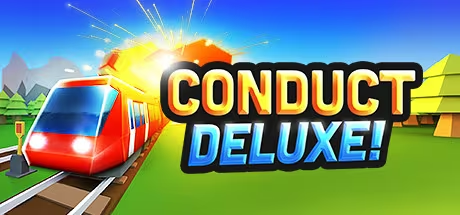
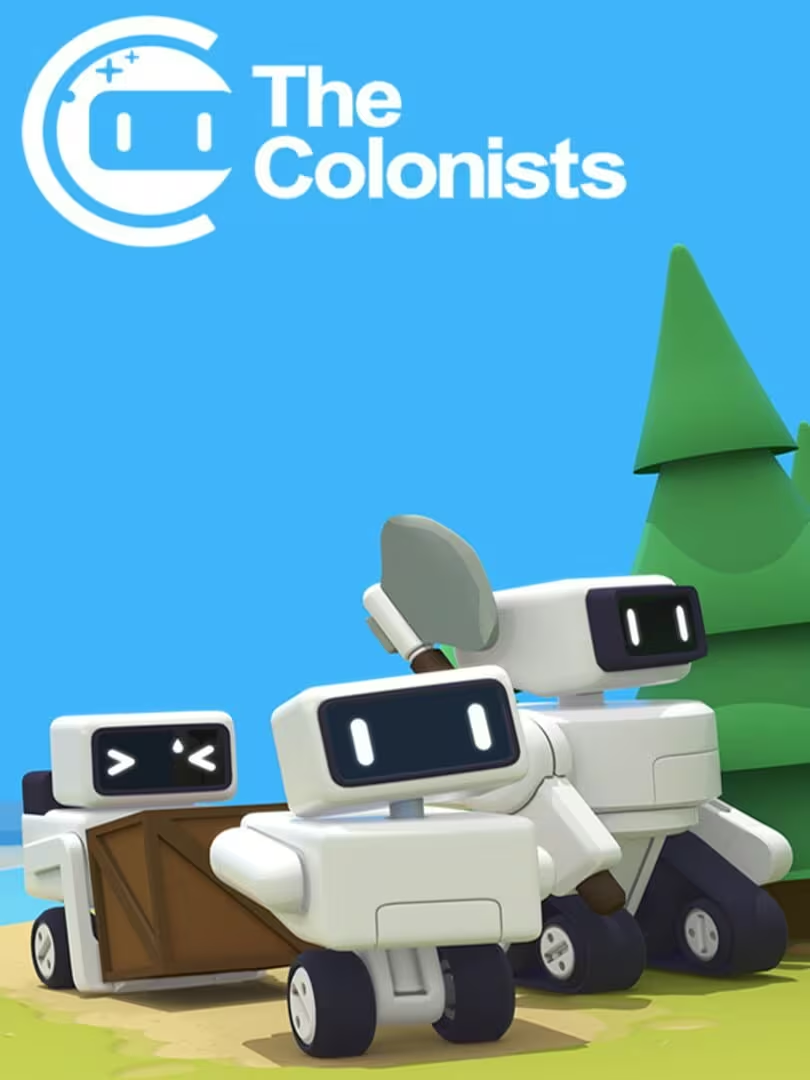
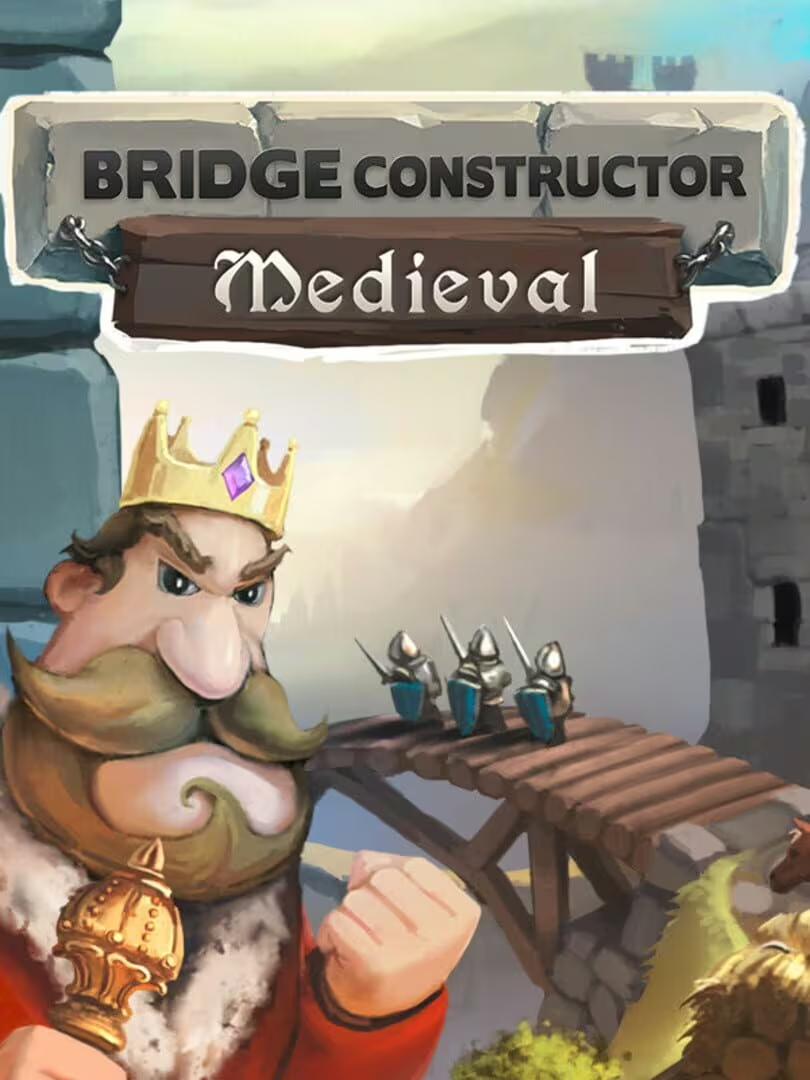
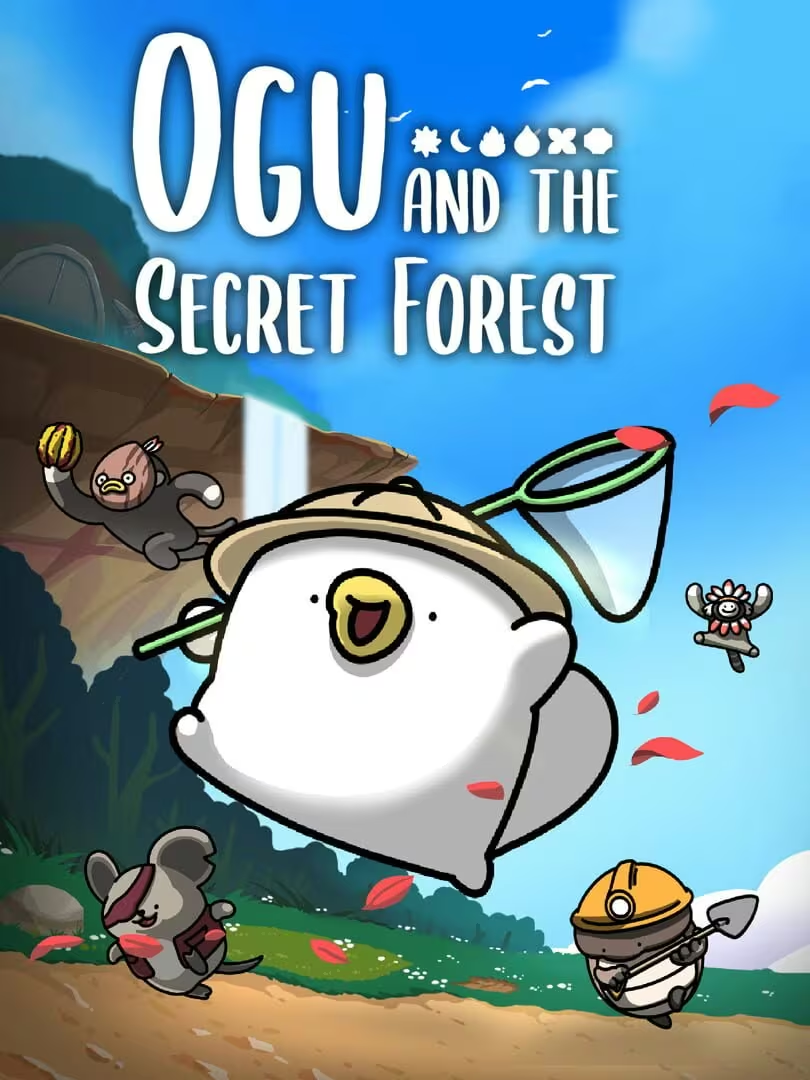
Poly Bridge similar games & best alternatives

Poly Bridge

PC (Microsoft Windows), Mac, iOS, Android, Nintendo Switch, Linux • 2016

Related articles

Quick resume

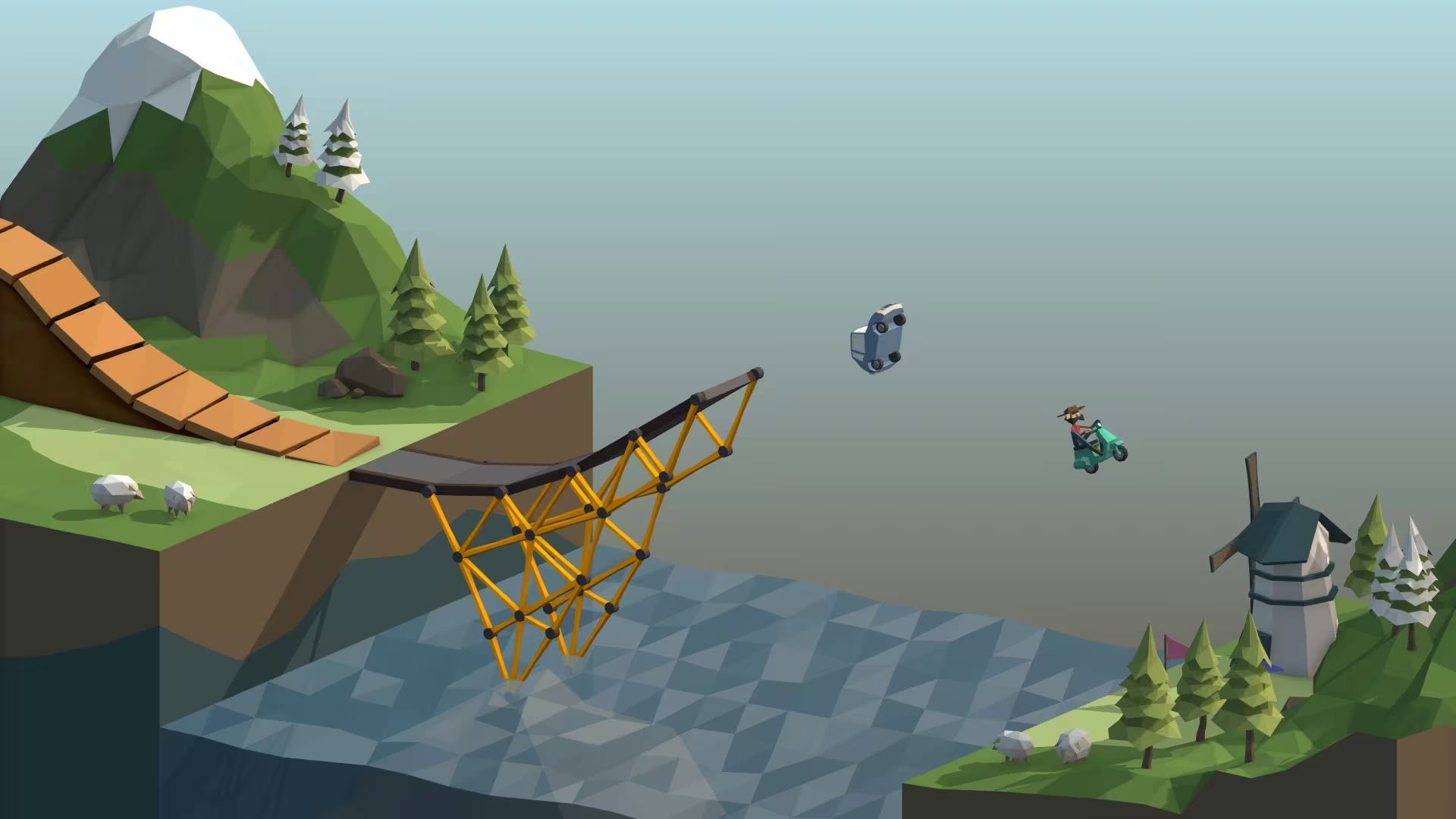
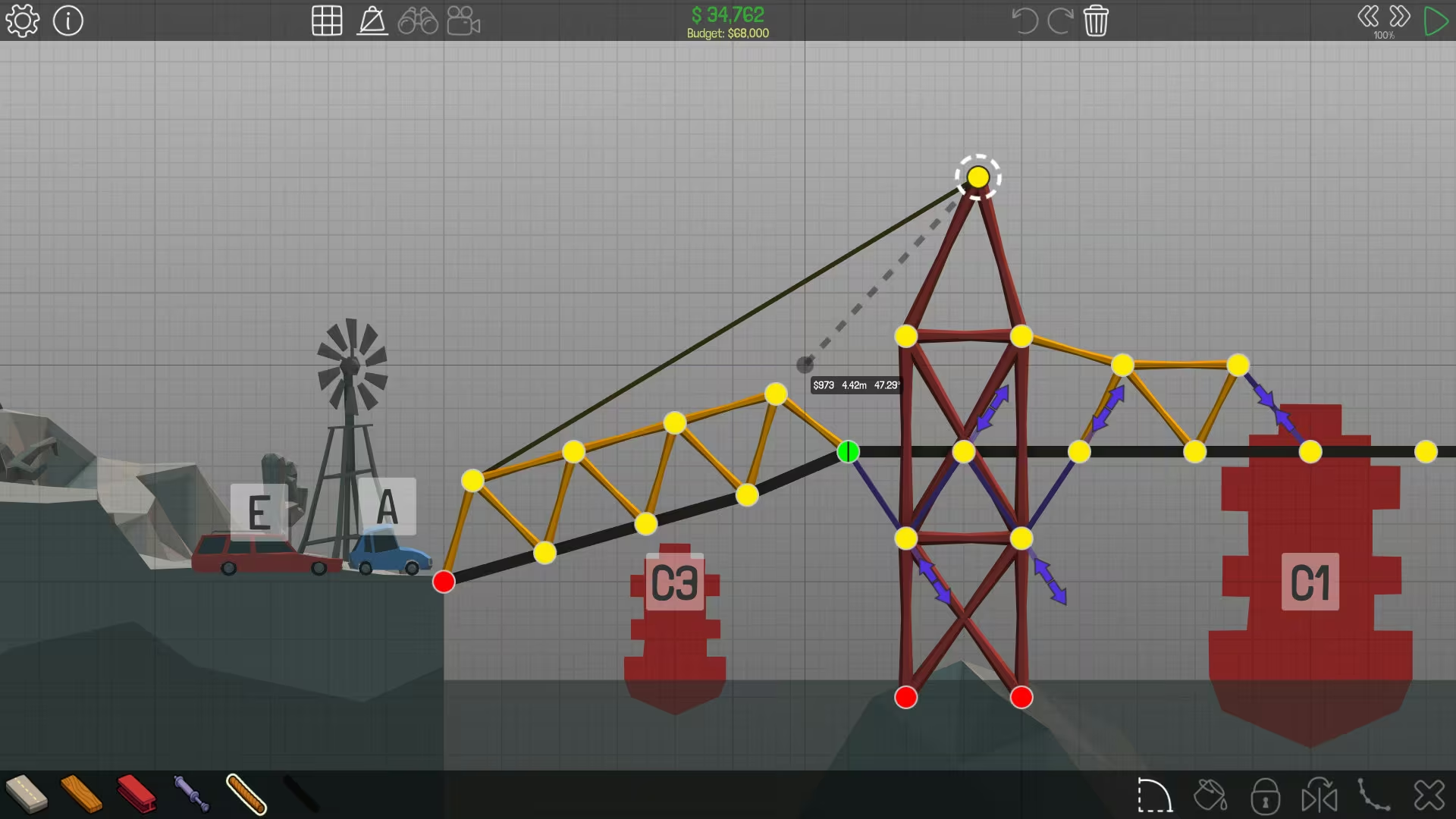
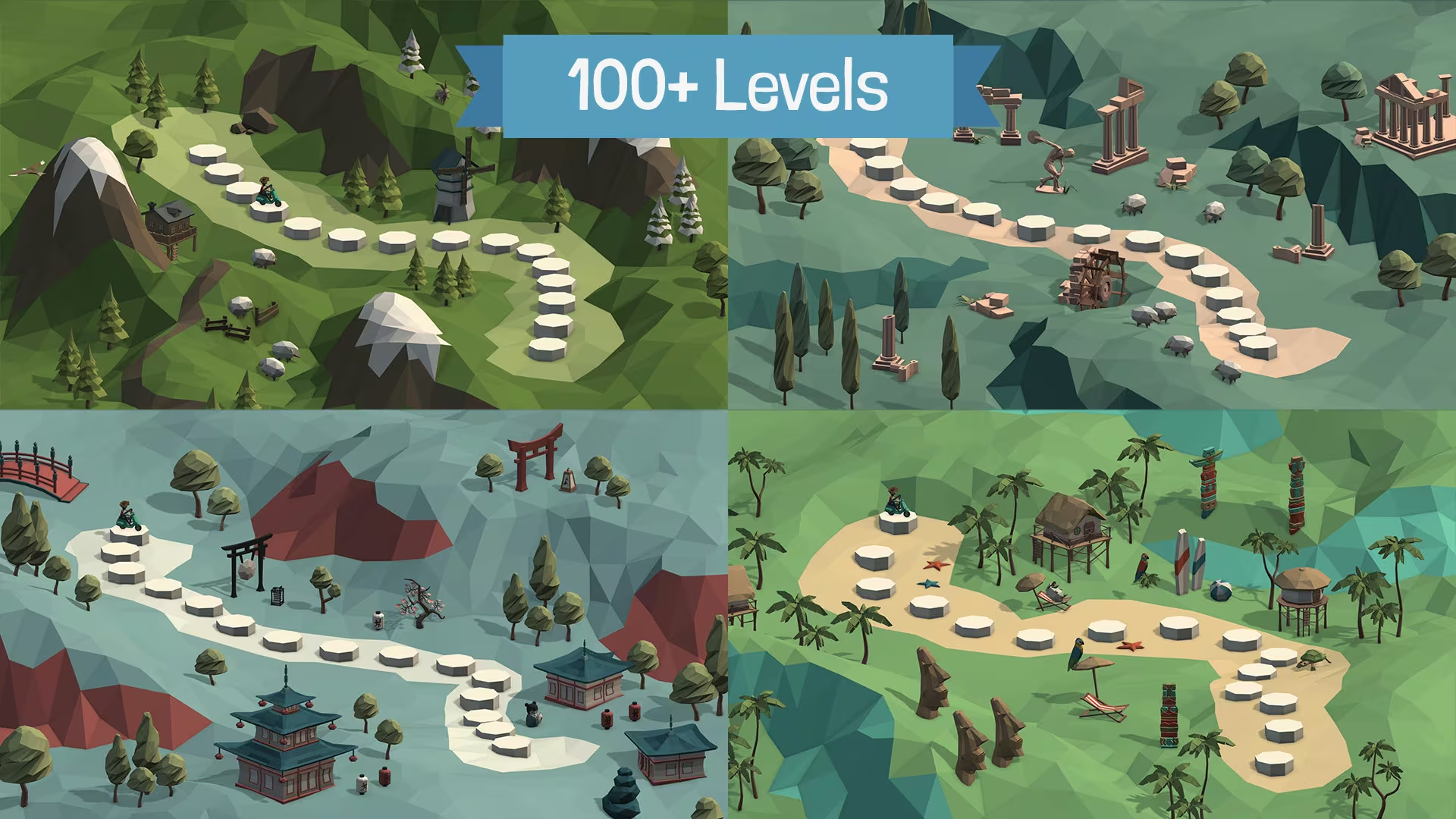
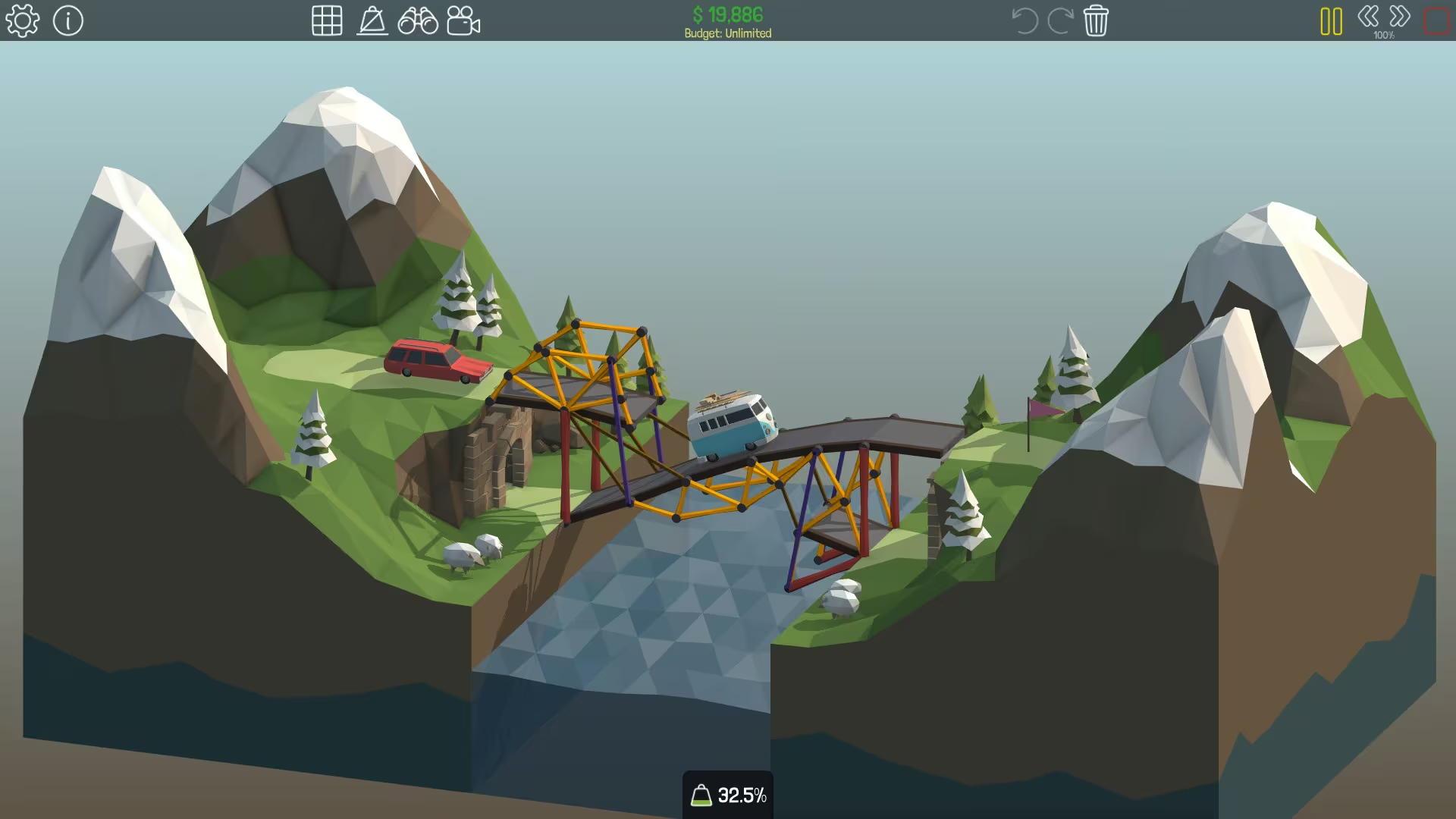
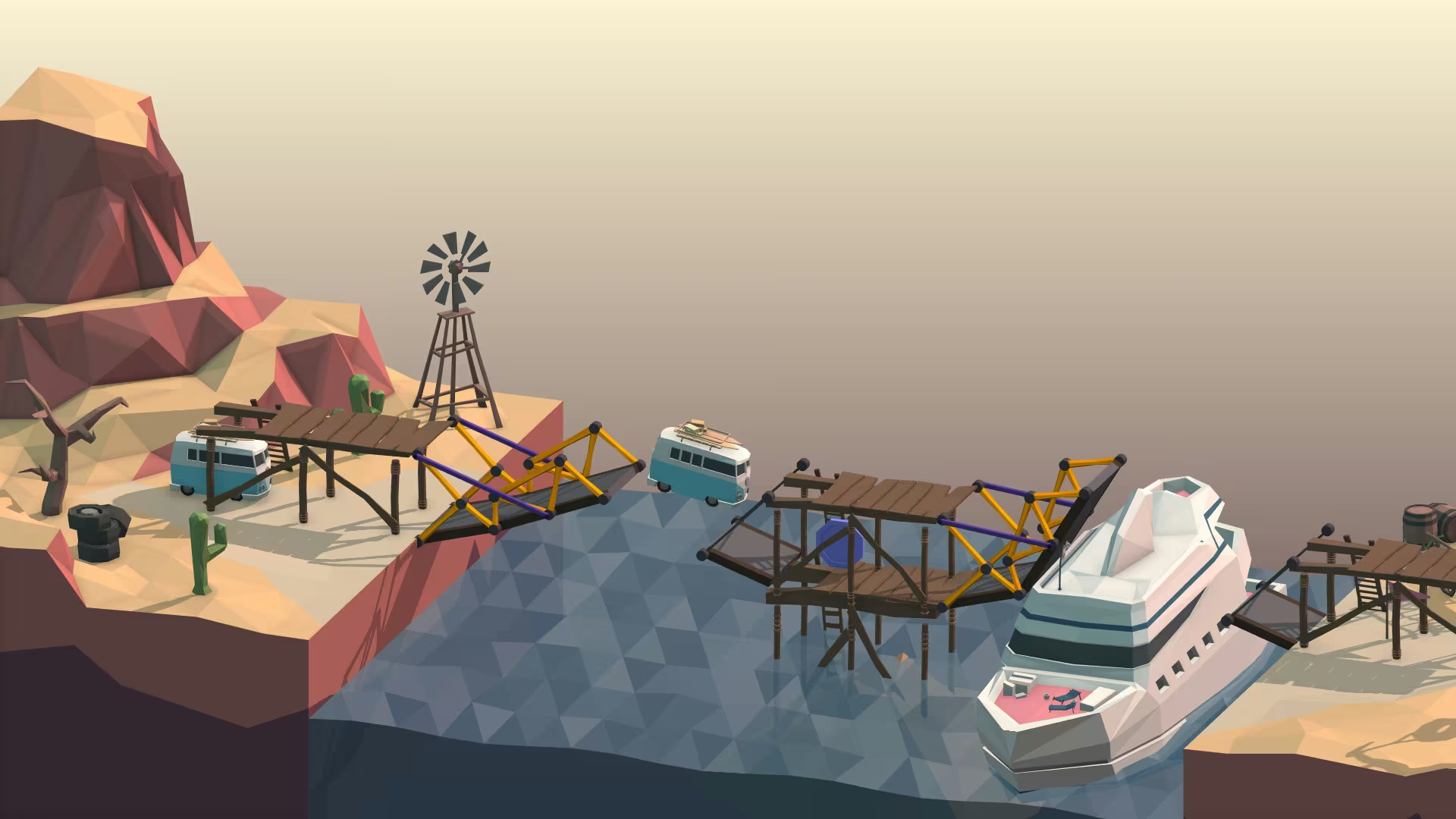
Unleash your engineering creativity with an engaging and fresh bridge-building simulator with all the bells and whistles. Enjoy hours of physics-based puzzle solving in the Campaign and then jump in the Sandbox to create your own bridge designs and puzzles!

Global score

91/100

Genres

Indie, Simulator, Puzzle

Similar games

    Pros

    • Creative and open-ended gameplay
    • Challenging and rewarding puzzles
    • Relaxing music and art style
    • Extensive content with workshop and sandbox
    • Good developer support and updates

    Cons

    • Occasional physics inconsistencies
    • Some levels require tedious optimization
    • Limited social or cooperative features
    • No narrative or story
    • Early access bugs in editor mode

    Analysis

    Broadly representative of its motivational profile, with a few distinct shifts. Motivations that often define this kind of title include Fantasy, Violence, Story, Thrill. Here, the score leans higher than usual among comparable games on Competition, Status. It leans lower than usual among comparable games on Story.

    How to use the graph
    Similar games map

    Each dot is a game. They are arranged from the same motivation profile as in the “Motivations” section below. Closer dots usually mean more similar reasons to play (exploration, competition, relaxation, etc.)—not that one game is “better” than another.

    • Larger dot with a light outline: the game you are viewing.
    • Colour: groups of games with comparable motivation patterns (statistical clusters).
    • Hover a dot to see the game name; click to open its page.
    • Scroll or double-click the chart to zoom out and see more games.

    Why don’t the axes read like a score? This view uses t-SNE: it only keeps who is close to whom. The scales are not “good to bad” or hours played—they separate groups on the map. Read distance between dots, not the axis numbers.

    Motivations

    • Autonomy
      5

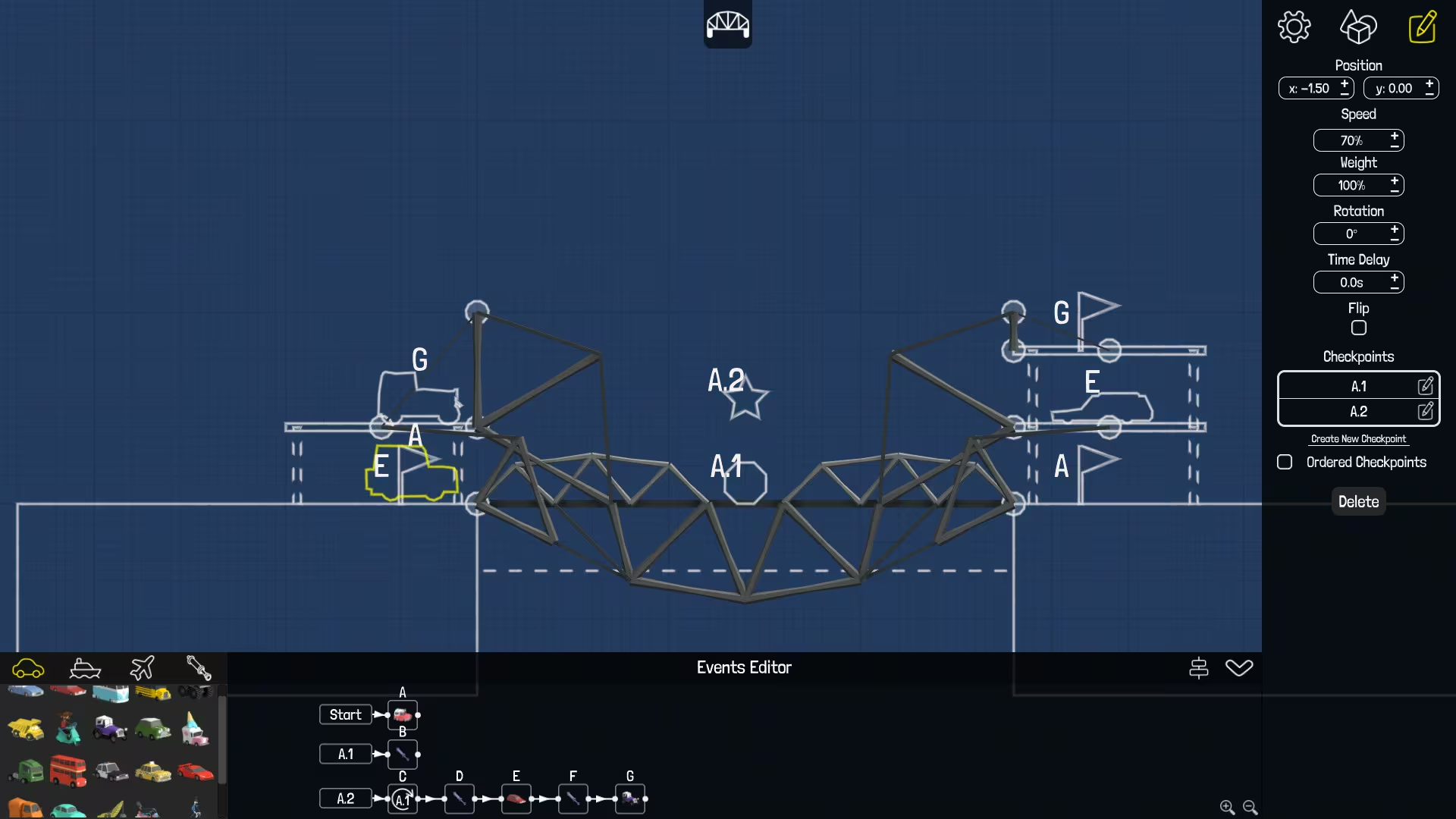
      "Players have full freedom to design bridges creatively within budget and material constraints, with sandbox and level editor modes supporting open-ended construction."

    • Competence
      4

      "The game challenges players with increasingly difficult puzzles requiring skillful engineering and problem solving, with feedback via success, budget, and stress ratings."

    • Competition
      2

      "Leaderboards and scoring under budget/stress provide light competitive elements, but gameplay is primarily single-player and self-paced."

    • Continuation
      4

      "Many players report long playtimes and habitual engagement due to challenging levels, sandbox mode, and workshop content."

    • Cooperation
      -4

      "Gameplay is focused on individual puzzle solving and bridge building; no multiplayer or cooperative mechanics."

    • Creativity
      5

      "Strong emphasis on creative problem solving and multiple solutions; sandbox and level editor encourage player creativity."

    • Domination
      -5

      "No evidence of exerting control or superiority over others; interactions are individual and non-confrontational."

    • Escapism
      3

      "Players use the game as a relaxing, stress-relieving puzzle experience with calming music and art style."

    • Expectation
      -4

      "Players engage voluntarily for fun and challenge, not due to obligation or external pressure."

    • Experimenting
      5

      "Encourages experimentation with different bridge designs, materials, and unconventional solutions."

    • Exploration
      1

      "Some exploration of new mechanics and level types, but environments are mostly familiar and repetitive."

    • Expression
      3

      "Players express themselves through unique bridge designs and creative engineering solutions."

    • Fantasy
      -3

      "Focuses on realistic physics and engineering principles rather than imaginative fiction or roleplay."

    • Fellowship
      -3

      "Limited social interaction; community exists but gameplay is primarily solo."

    • Growth
      4

      "Players develop engineering skills, problem solving, and creativity over time."

    • Health
      -5

      "Sedentary gameplay with no physical activity involved."

    • Idle
      -4

      "Requires focused attention and problem solving; not suitable for passive or background play."

    • Intimacy
      -5

      "No close social relationships or emotional sharing involved in gameplay."

    • Leadership
      -5

      "No leadership or group management roles; purely individual play."

    • Progression
      3

      "Progression through levels and unlocking new worlds; collecting achievements and improving scores."

    • Relaxation
      4

      "Relaxing music and art style combined with satisfying puzzle solving create a calming experience."

    • Sensation
      2

      "Enjoyable visual style and sound, but sensory stimulation is moderate and not intense."

    • Status
      1

      "Some recognition via leaderboards and workshop sharing, but limited social status impact."

    • Story
      -5

      "No narrative or story elements; gameplay is context-free puzzle solving."

    • Strategy
      4

      "Requires logical thinking, planning, and problem solving to build stable and cost-effective bridges."

    • Thrill
      1

      "Some tension from challenging puzzles and bridge collapses, but overall experience is calm and controlled."

    • Value
      4

      "Players perceive good value for money due to extensive content, replayability, and educational aspects."

    • Violence
      -5

      "No combat or destructive gameplay; focus is on constructive building."

    • Survival
      -3

      "No survival mechanics; stable puzzle environment with no threats."

    Last update: 29/04/2026