Pretty Girls Mahjong Solitaire Thumbnail

Pretty Girls Mahjong Solitaire similar games & best alternatives

Pretty Girls Mahjong Solitaire

PC (Microsoft Windows), Mac, PlayStation 4, Nintendo Switch, PlayStation 5 • 2015

Related articles

Quick resume

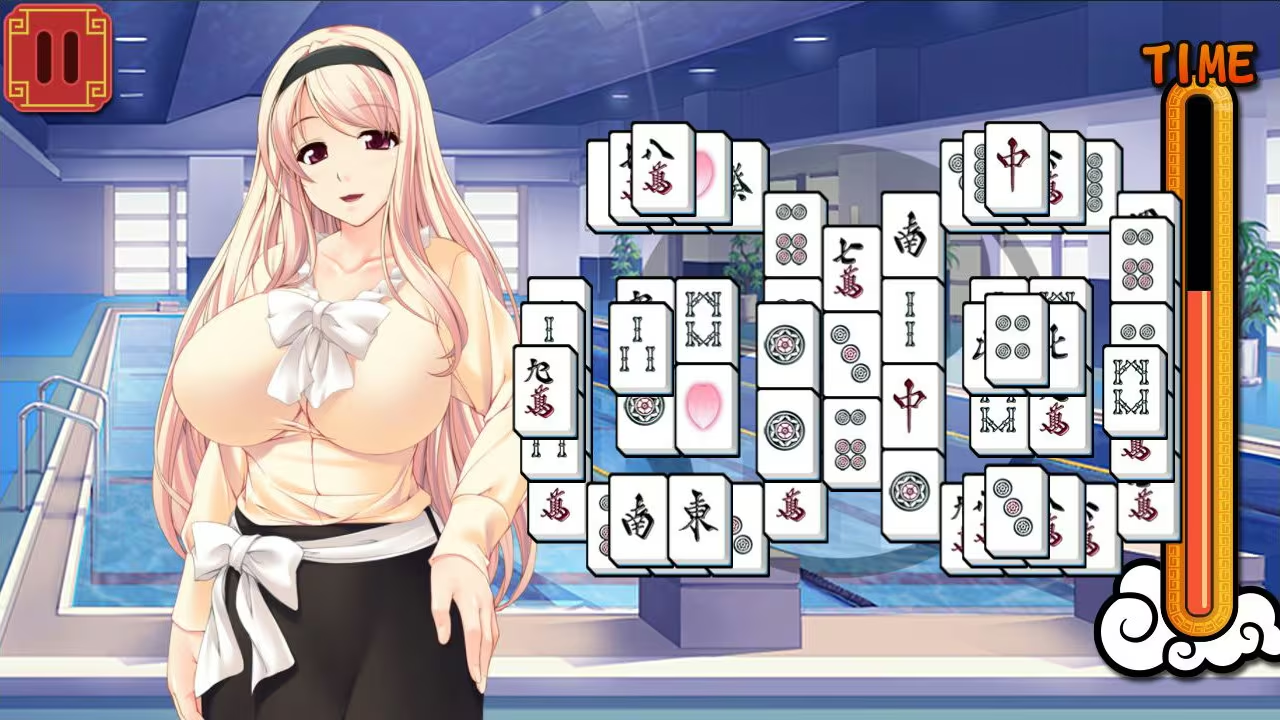
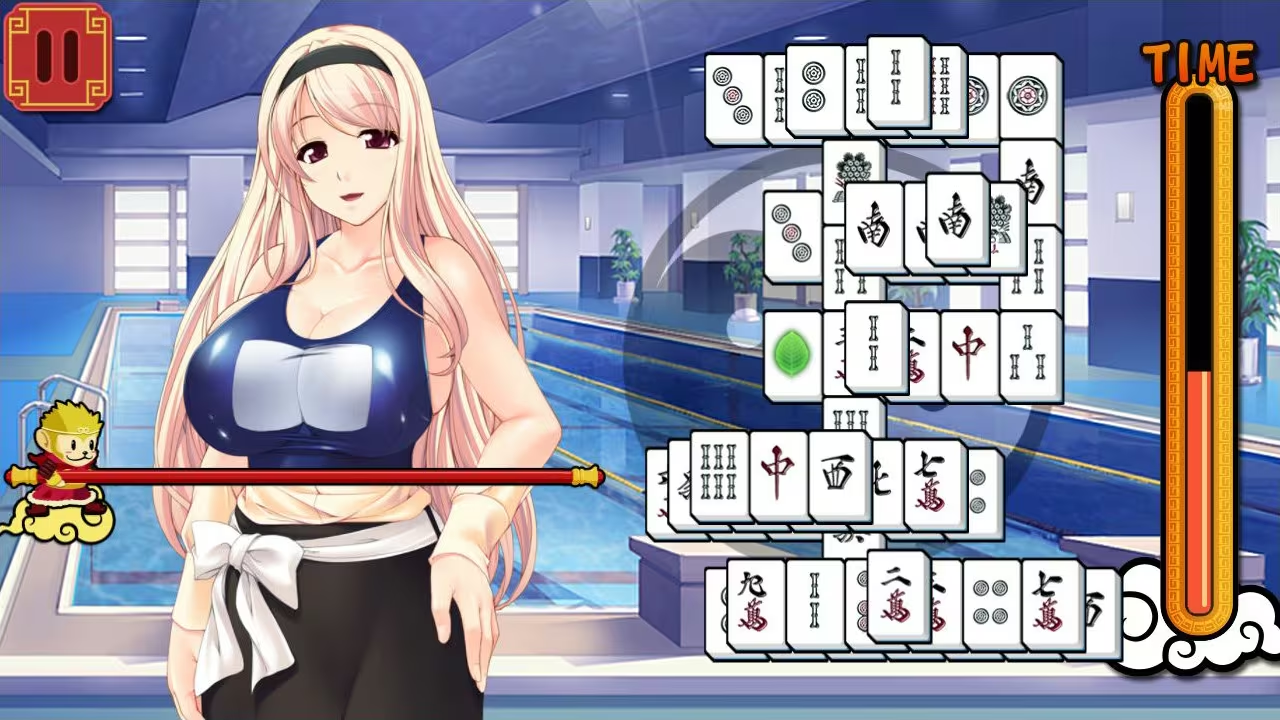
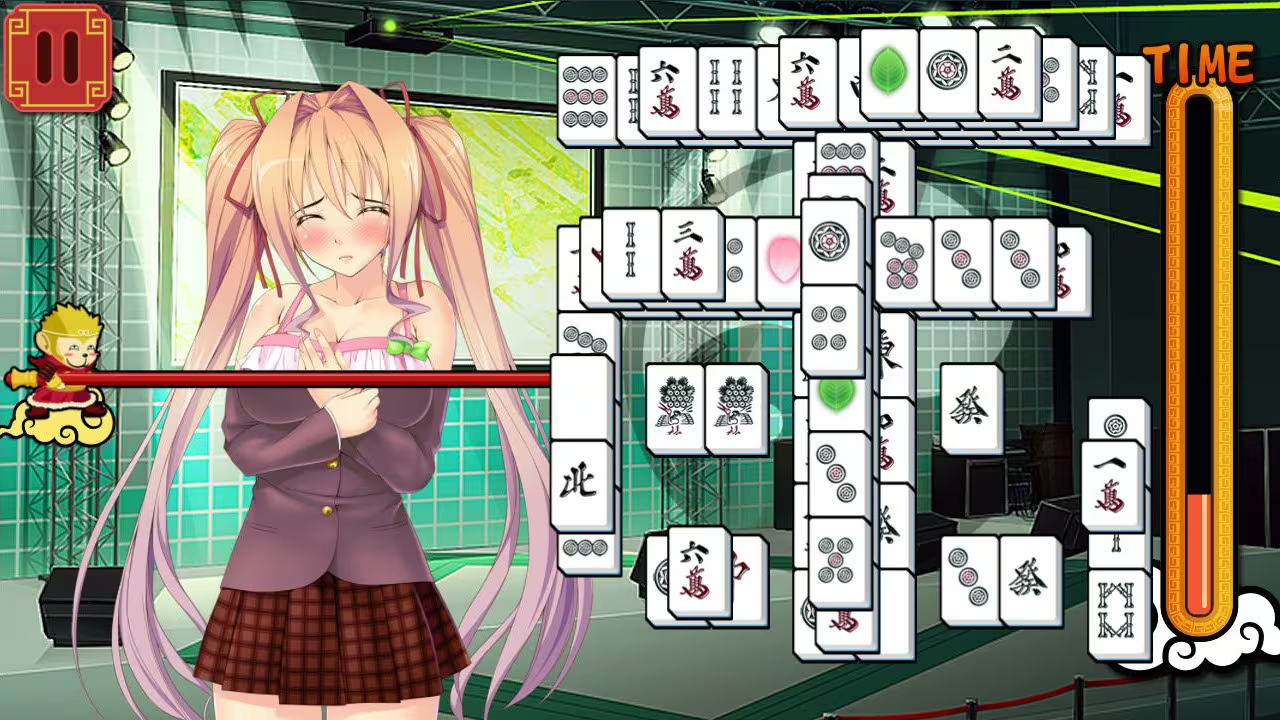
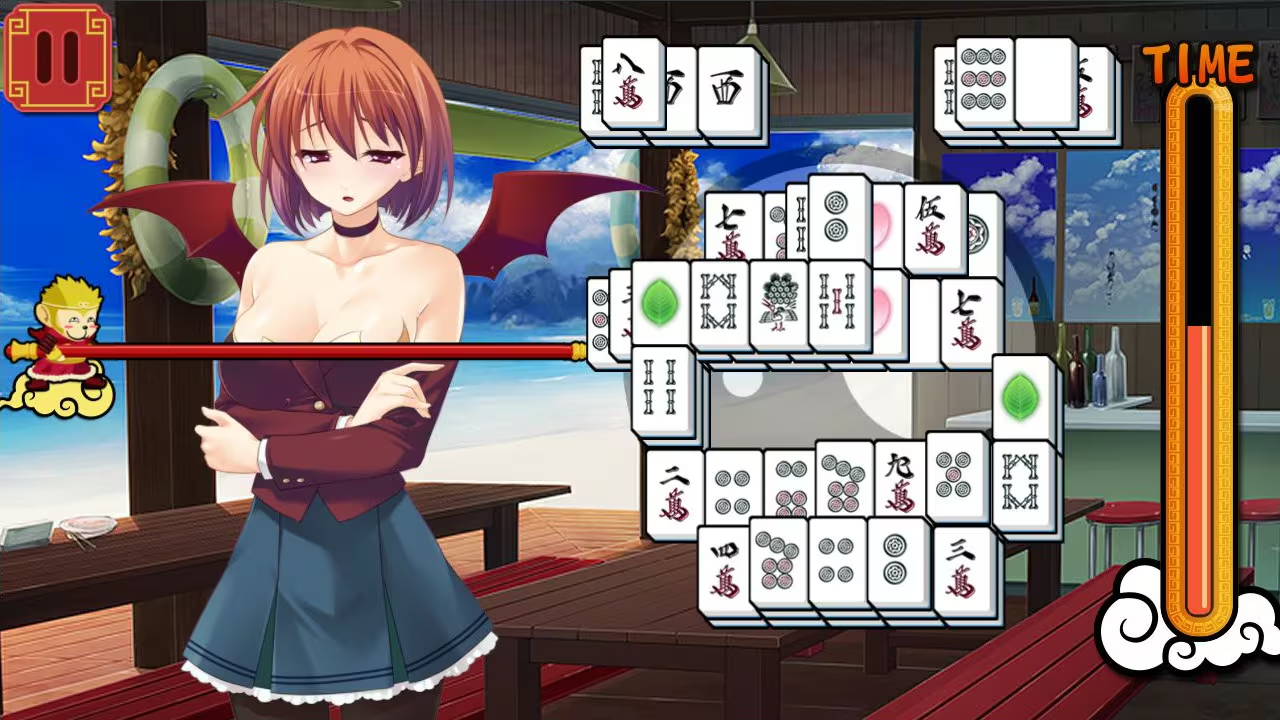
Watch Pretty Girls go wild in the all-new “Mahjong Solitaire”. Find pairs of tiles to delete them. Delete all tiles before time runs out to clear a round. As you clear stages, the girls get sexier and sexier!

Global score

77/100

Genres

Casual, Puzzle, Card & Board Game

Similar games

    Pros

    • Challenging and addictive mahjong solitaire gameplay
    • Attractive anime art and character outfits
    • Pleasant soundtrack
    • Easy achievements and trading cards
    • Easy mode option for accessibility

    Cons

    • Randomized tile layouts can create unwinnable stages
    • Time limits cause frustration
    • Lack of nudity despite suggestive theme
    • Repetitive character voice lines
    • Short overall game length and limited replayability

    Analysis

    Less representative of its motivational profile, with noticeable differences. Motivations that often define this kind of title include Creativity, Exploration, Expression, Story. Here, the score leans higher than usual among comparable games on Expression. It leans lower than usual among comparable games on Violence, Value.

    How to use the graph
    Similar games map

    Each dot is a game. They are arranged from the same motivation profile as in the “Motivations” section below. Closer dots usually mean more similar reasons to play (exploration, competition, relaxation, etc.)—not that one game is “better” than another.

    • Larger dot with a light outline: the game you are viewing.
    • Colour: groups of games with comparable motivation patterns (statistical clusters).
    • Hover a dot to see the game name; click to open its page.
    • Scroll or double-click the chart to zoom out and see more games.

    Why don’t the axes read like a score? This view uses t-SNE: it only keeps who is close to whom. The scales are not “good to bad” or hours played—they separate groups on the map. Read distance between dots, not the axis numbers.

    Motivations

    • Autonomy
      3

      "Players choose difficulty modes and decide how to approach tile matching, but tile layouts are randomized and some stages can be unwinnable, limiting full control."

    • Competence
      4

      "Game requires skillful tile matching and strategic thinking, especially in later stages with increasing difficulty and time pressure."

    • Competition
      -3

      "Focus is on individual play and personal challenge; no evidence of ranked modes or direct player comparison."

    • Continuation
      3

      "Players report long playtimes and repeated retries on difficult stages, indicating habitual engagement despite frustration."

    • Cooperation
      -5

      "Single-player game with no cooperative or multiplayer elements."

    • Creativity
      -4

      "Gameplay follows classic Mahjong Solitaire rules with no creation or modification; customization limited to unlocking preset outfits."

    • Domination
      -5

      "No evidence of exerting control or superiority over others; purely individual puzzle solving."

    • Escapism
      3

      "Players use the game as a relaxing or distracting activity, enjoying the anime aesthetic and music as a break from real life."

    • Expectation
      -4

      "Players engage voluntarily for enjoyment, with no indication of obligation or external pressure."

    • Experimenting
      -2

      "Limited experimentation due to fixed tile layouts per stage and no shuffle option in normal mode; easy mode adds some hints and shuffles."

    • Exploration
      -4

      "Game consists of predefined stages with no open exploration or discovery of new areas."

    • Expression
      2

      "Players unlock and view different outfits for characters, allowing some degree of self-expression via character customization."

    • Fantasy
      3

      "Anime girls and stylized outfits provide a fantasy element, though the gameplay itself is realistic tile matching."

    • Fellowship
      -5

      "No social or community features; strictly single-player experience."

    • Growth
      3

      "Players develop Mahjong Solitaire skills and improve through challenging puzzles."

    • Health
      -5

      "Sedentary gameplay with no physical activity involved."

    • Idle
      -3

      "Requires focused attention due to time limits and puzzle complexity; not suitable for passive or background play."

    • Intimacy
      -5

      "No close social interactions or emotional connections; character interactions are minimal and scripted."

    • Leadership
      -5

      "No leadership or group management elements present."

    • Progression
      4

      "Players progress by clearing stages, unlocking new outfits and achievements, showing clear accumulation of rewards."

    • Relaxation
      1

      "Some players find the game relaxing, but the timer and difficulty spikes cause tension and frustration for others."

    • Sensation
      2

      "Enjoyable anime art, music, and character voices provide sensory stimulation, though some find repeated sounds annoying."

    • Status
      -5

      "No social recognition or status systems; achievements are personal and not socially evaluated."

    • Story
      -4

      "No narrative or plot; game is purely puzzle-based with minimal character context."

    • Strategy
      4

      "Requires planning and logical thinking to avoid dead ends and manage tile removal order."

    • Thrill
      2

      "Timer and risk of unwinnable layouts add suspense and tension, creating moments of thrill."

    • Value
      -2

      "Players feel the game is overpriced at full price but good value when purchased on sale."

    • Violence
      -5

      "No violent or destructive gameplay elements; focus is on constructive puzzle solving."

    • Survival
      2

      "Time limits and risk of no moves create a survival-like pressure to complete puzzles before failure."

    Last update: 29/04/2026