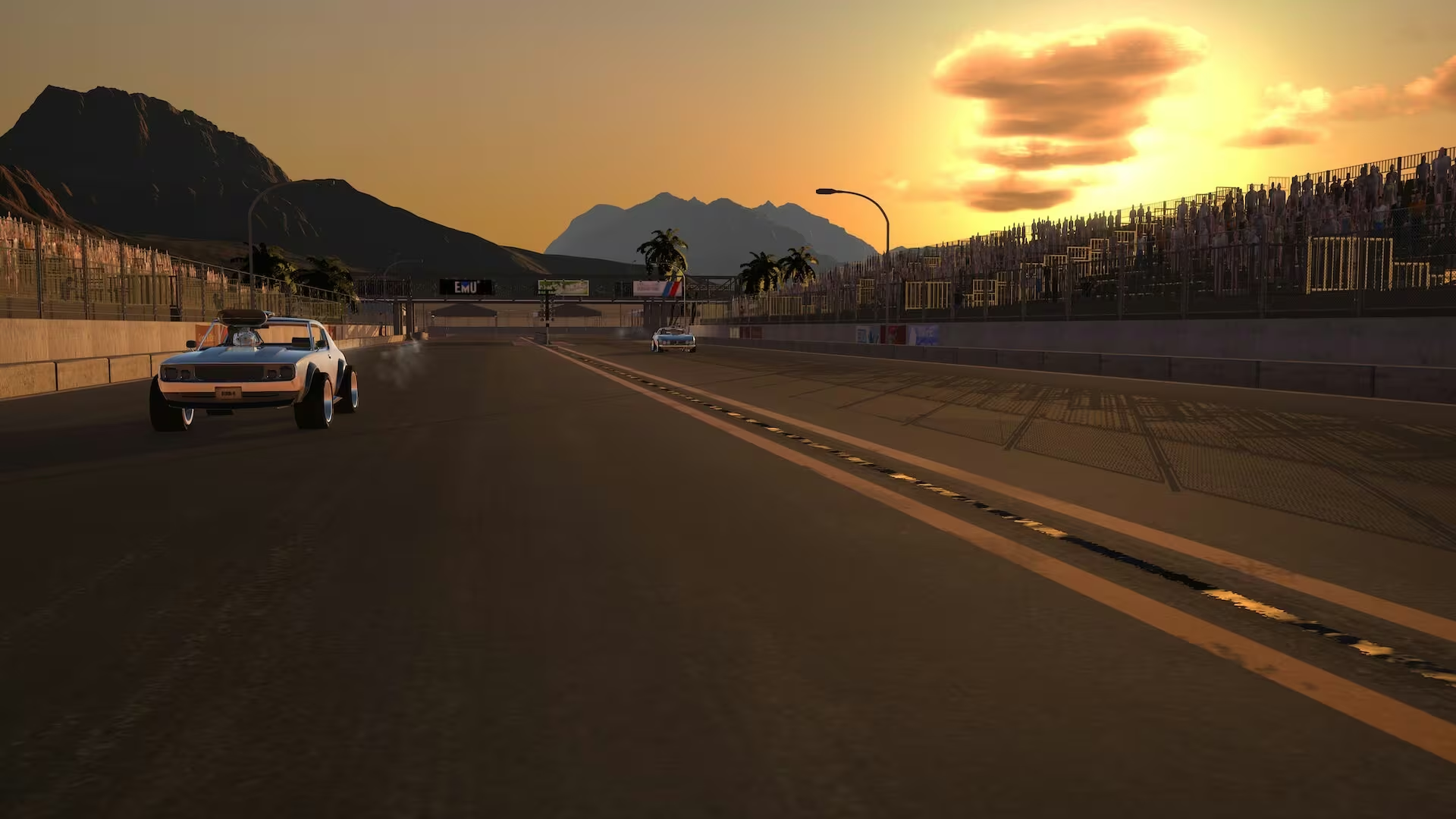
Revhead Thumbnail

Revhead similar games & best alternatives
Revhead

PC (Microsoft Windows), Mac, PlayStation 4, Xbox One, Xbox Series X|S, PlayStation 5, Linux • 2017

Related articles

Quick resume

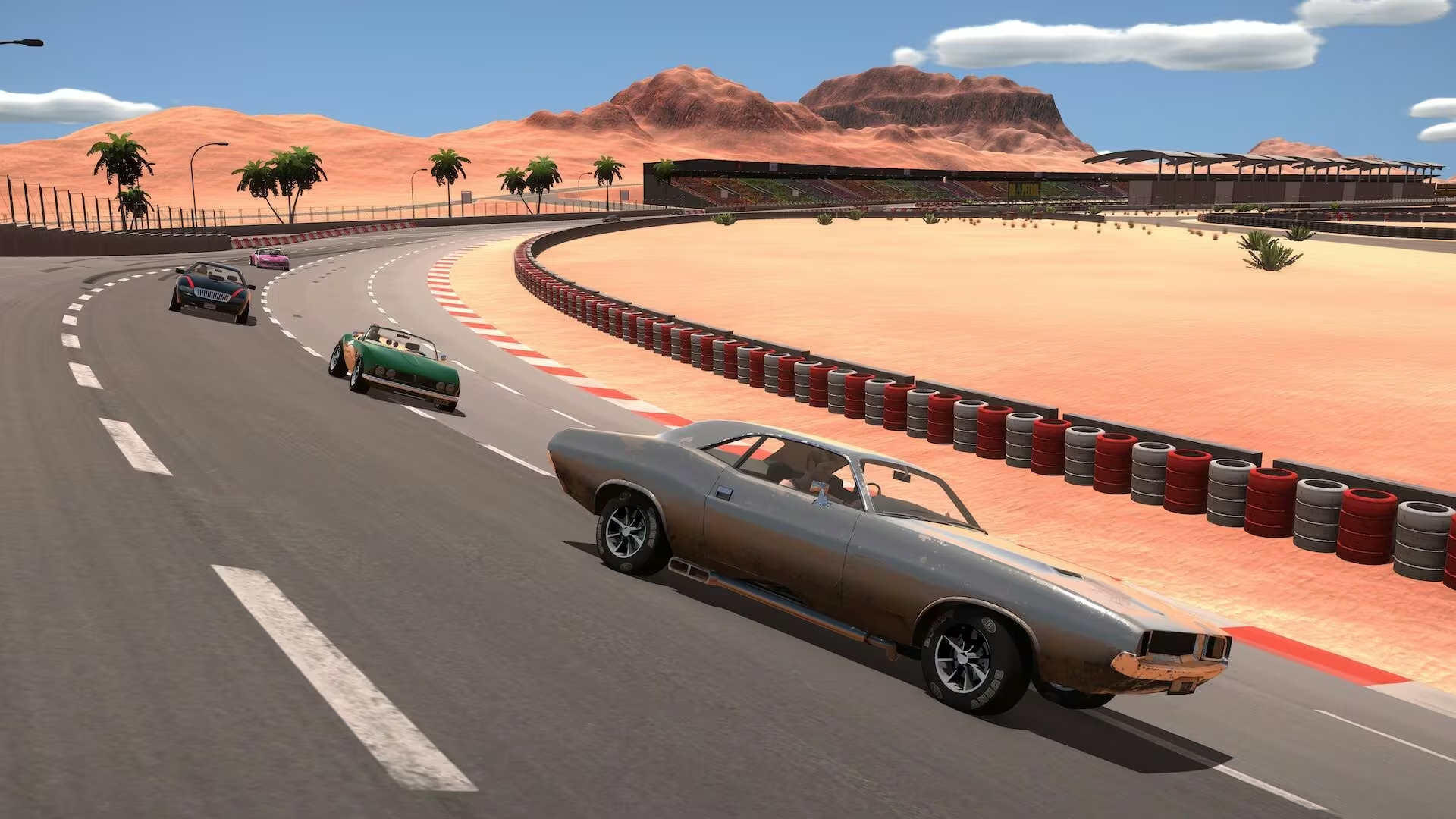
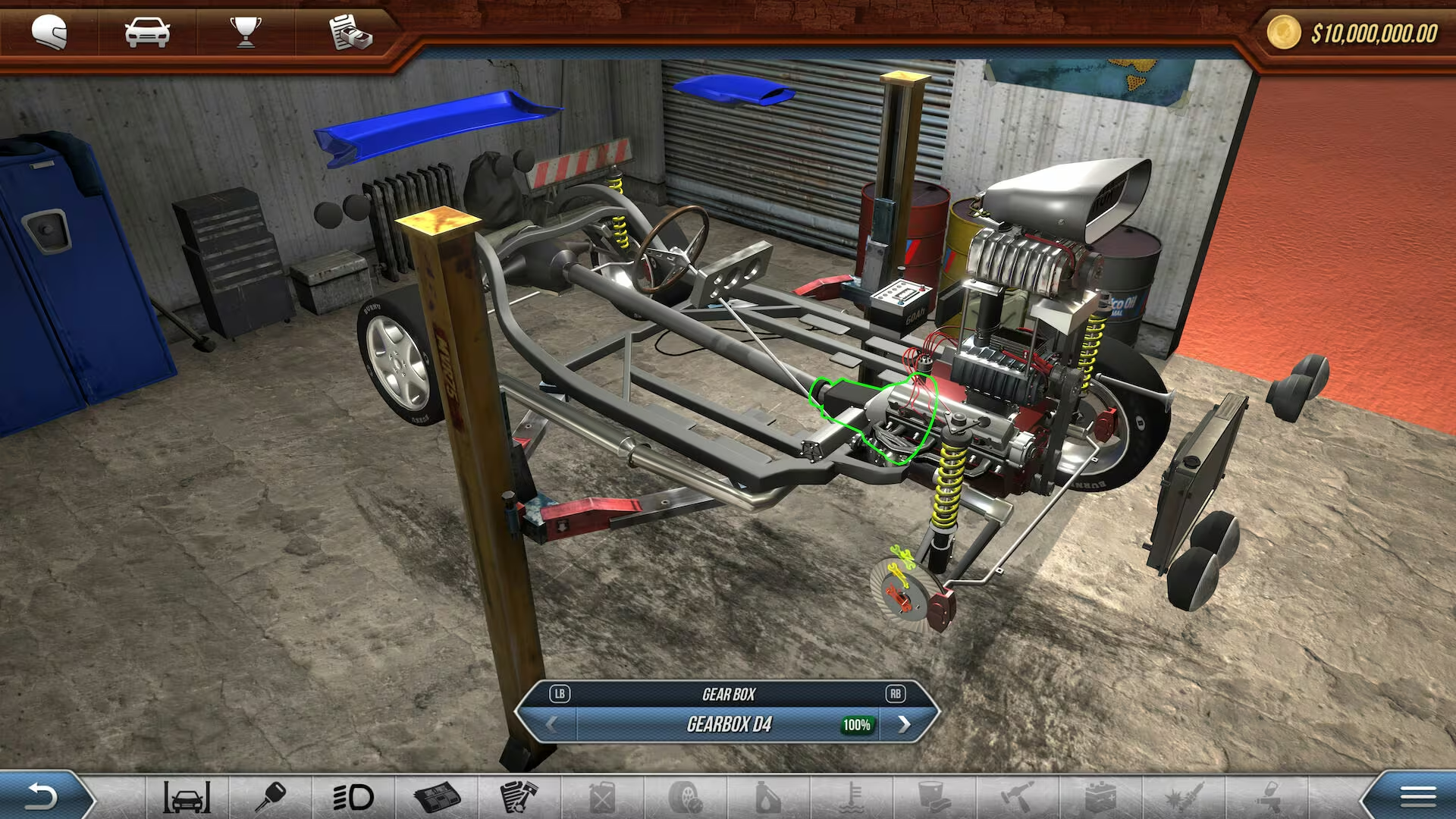
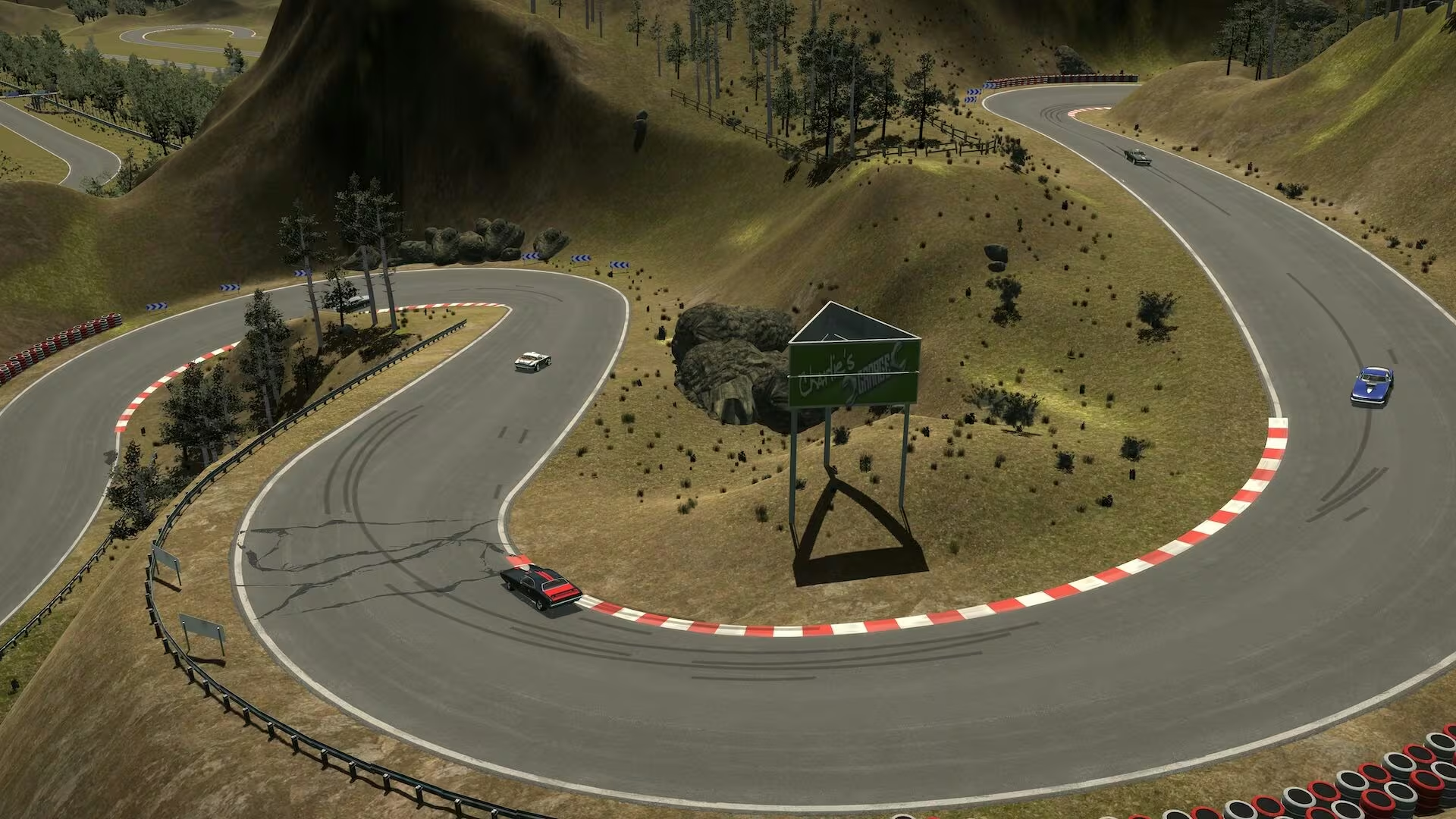
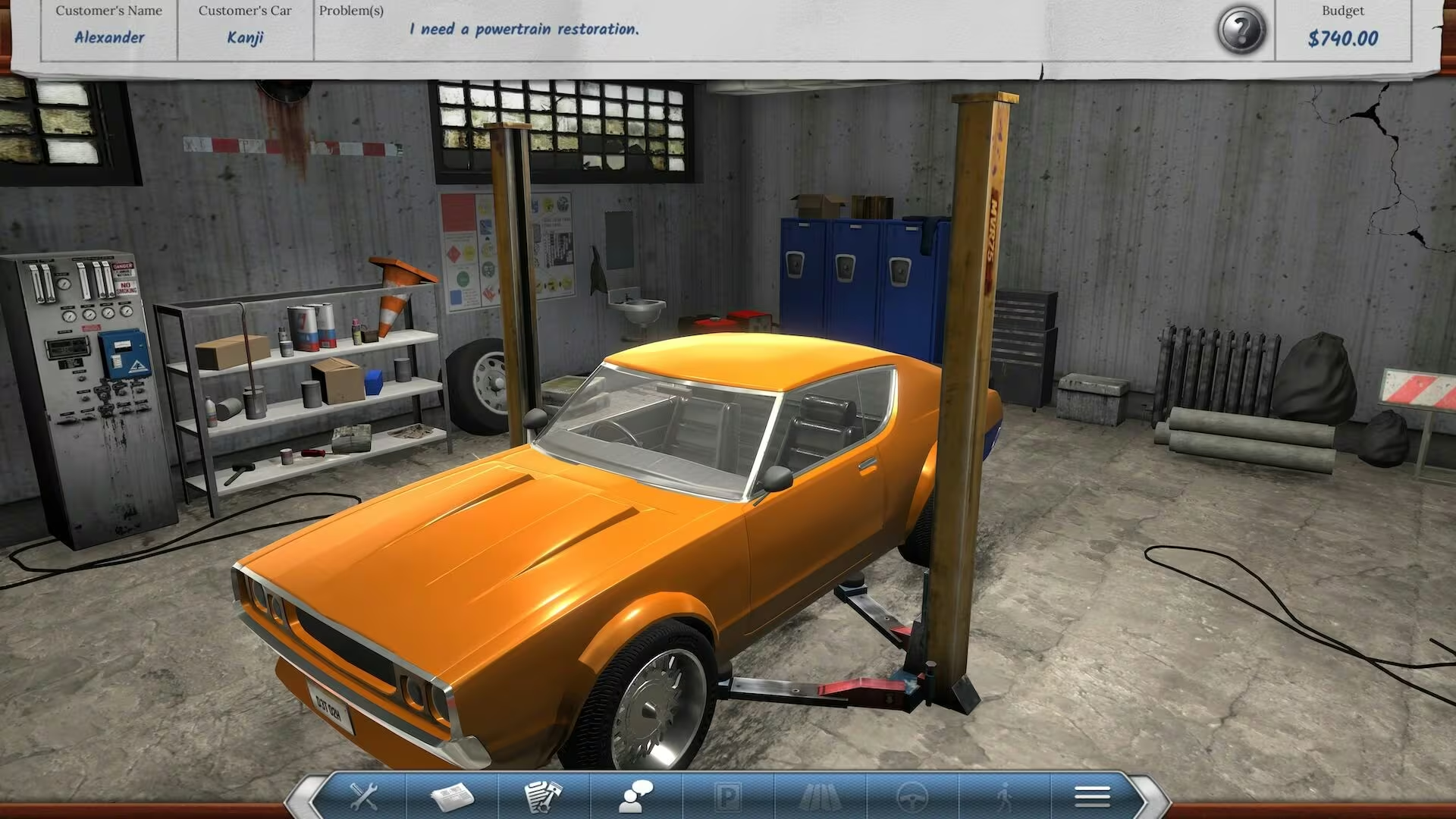
Revhead is a car racing simulation game, where you have to build your own race car. You start your journey somewhere in a small village in Australia. You have to think as a real Revhead! You can buy or sell cars and components, fix and tweak your car to make it the fastest around.

Global score

81/100

Genres

Action, Adventure, Casual, Indie, Racing, Simulator, Sport, Strategy, Arcade

Similar games

    Pros

    • Deep car customization and tuning
    • Realistic wear and maintenance mechanics
    • Varied racing types and open world exploration
    • Active developer support and frequent updates
    • Engaging progression and challenge

    Cons

    • Limited number of cars and tracks
    • Driving physics can feel awkward or floaty
    • Lack of multiplayer or social features
    • Some ui clunkiness and menu navigation issues
    • Graphics and audio are basic

    Analysis

    A very typical example of its motivational profile. Motivations that often define this kind of title include Competition, Status, Story, Expression. Here, the score leans higher than usual among comparable games on Story. It leans lower than usual among comparable games on Fantasy, Fellowship.

    How to use the graph
    Similar games map

    Each dot is a game. They are arranged from the same motivation profile as in the “Motivations” section below. Closer dots usually mean more similar reasons to play (exploration, competition, relaxation, etc.)—not that one game is “better” than another.

    • Larger dot with a light outline: the game you are viewing.
    • Colour: groups of games with comparable motivation patterns (statistical clusters).
    • Hover a dot to see the game name; click to open its page.
    • Scroll or double-click the chart to zoom out and see more games.

    Why don’t the axes read like a score? This view uses t-SNE: it only keeps who is close to whom. The scales are not “good to bad” or hours played—they separate groups on the map. Read distance between dots, not the axis numbers.

    Motivations

    • Autonomy
      4

      "Players have freedom to build, modify, and tune cars extensively, choosing parts and racing styles."

    • Competence
      4

      "Game challenges players to diagnose, repair, and optimize cars; racing requires skill and tuning knowledge."

    • Competition
      3

      "Includes AI races, time trials, and pink slip challenges; players compete against others' cars and times."

    • Continuation
      4

      "Many players report long play sessions and addiction to building and racing cars."

    • Cooperation
      -4

      "Gameplay is primarily single-player focused with no multiplayer or cooperative modes."

    • Creativity
      5

      "Extensive car customization and part swapping allows creative vehicle builds and tuning."

    • Domination
      -3

      "Interactions are mostly balanced; no evidence of trash talk or dominance over others."

    • Escapism
      4

      "Players use the game to immerse in car building and racing, escaping real life through detailed simulation."

    • Expectation
      -4

      "Players engage voluntarily out of personal interest and passion for cars and racing."

    • Experimenting
      5

      "Strong emphasis on trying new parts, setups, and tuning combinations to optimize performance."

    • Exploration
      3

      "Open world with multiple maps and tracks encourages discovery and free roaming."

    • Expression
      3

      "Limited visual customization but some paint and vinyl options allow personal expression."

    • Fantasy
      -3

      "Focus on realistic car mechanics and racing rather than imaginative or improbable fiction."

    • Fellowship
      -4

      "Minimal social or community features; mostly solo play with limited social interaction."

    • Growth
      4

      "Players learn car mechanics, tuning, and racing skills progressively."

    • Health
      -4

      "Sedentary gameplay with no physical activity involved."

    • Idle
      -3

      "Requires focused attention on building, tuning, and racing; not a casual idle game."

    • Intimacy
      -4

      "No evidence of close social relationships or emotional sharing in gameplay."

    • Leadership
      -4

      "No leadership or group management elements present."

    • Progression
      4

      "Players accumulate cars, parts, upgrades, and money to advance in the game."

    • Relaxation
      2

      "Some players find the game relaxing and satisfying, though racing can be challenging."

    • Sensation
      3

      "Enjoyable car sounds, engine noises, and racing excitement provide sensory stimulation."

    • Status
      2

      "Recognition comes from winning races and acquiring cars, but limited social visibility."

    • Story
      2

      "Some narrative elements and character roles, but focus is on gameplay rather than story."

    • Strategy
      4

      "Requires planning and problem solving in car building, tuning, and race preparation."

    • Thrill
      3

      "Racing and risk of car damage create suspense and excitement."

    • Value
      3

      "Players feel the game offers good value for time spent and price paid."

    • Violence
      -4

      "Focus on constructive car building and maintenance rather than destruction or combat."

    • Survival
      2

      "Players manage car condition and avoid failure to continue racing and progression."

    Last update: 29/04/2026