Rogue State Thumbnail

Rogue State similar games & best alternatives
Rogue State

PC (Microsoft Windows) • 2015

Related articles

Quick resume

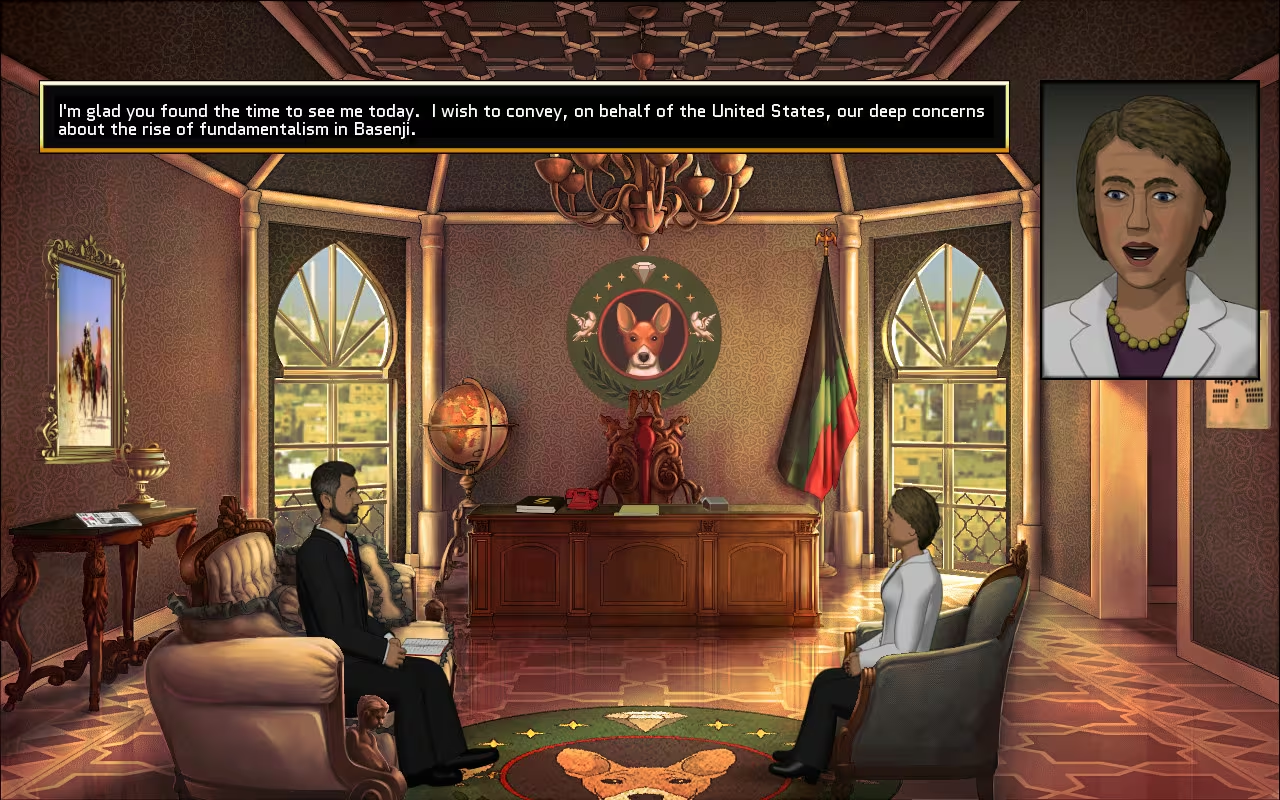
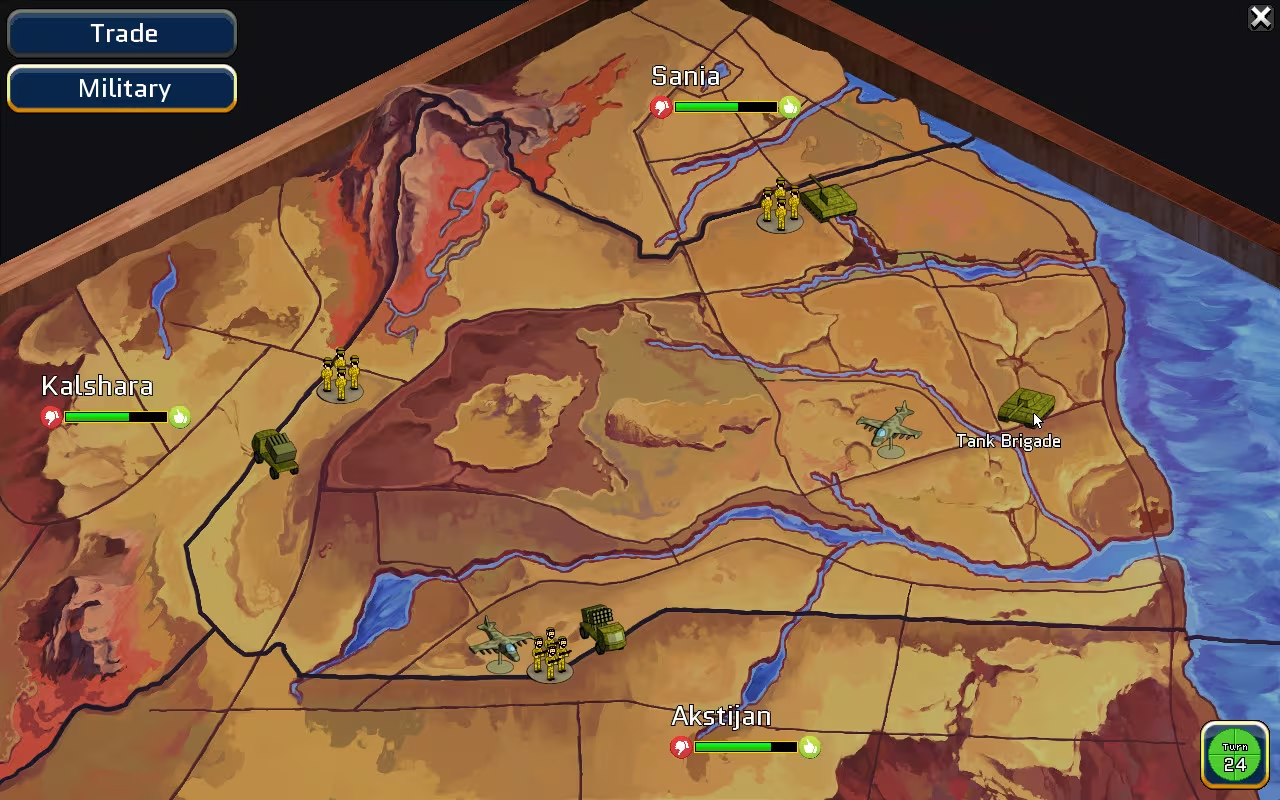
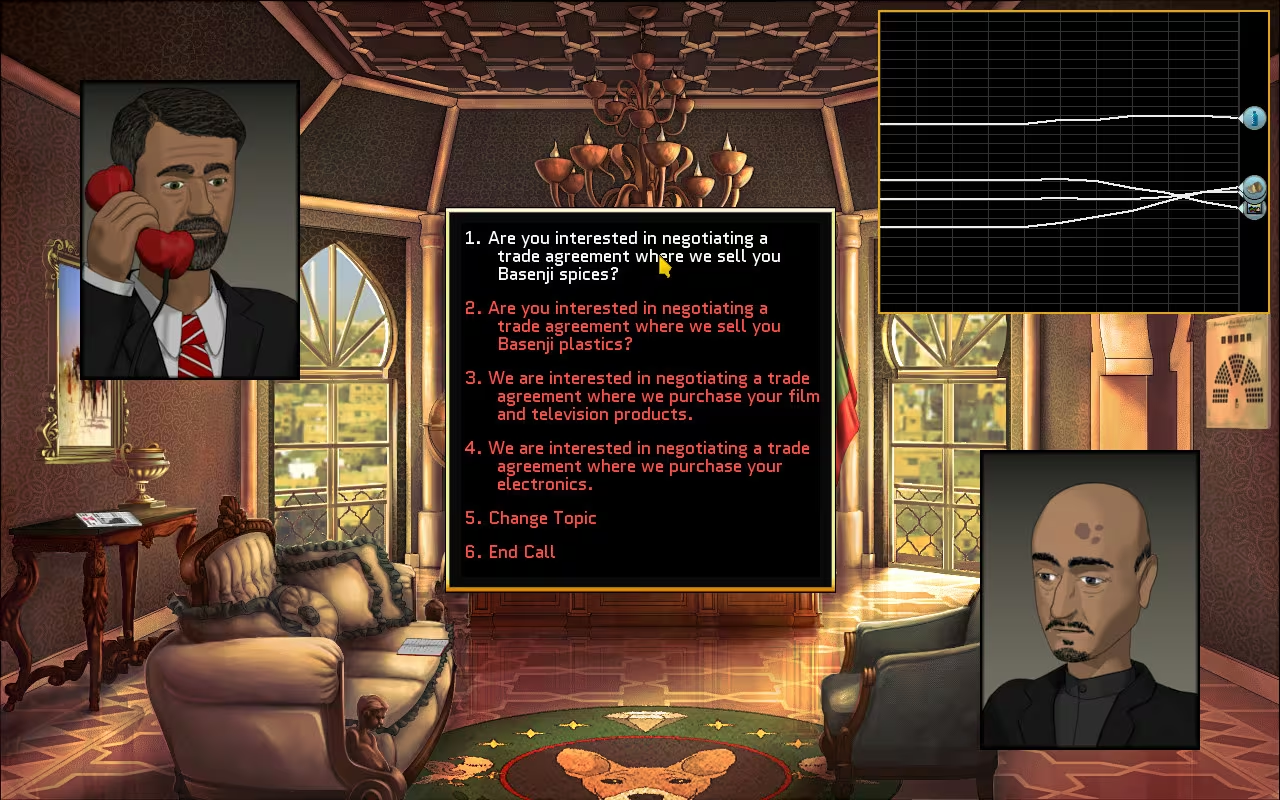
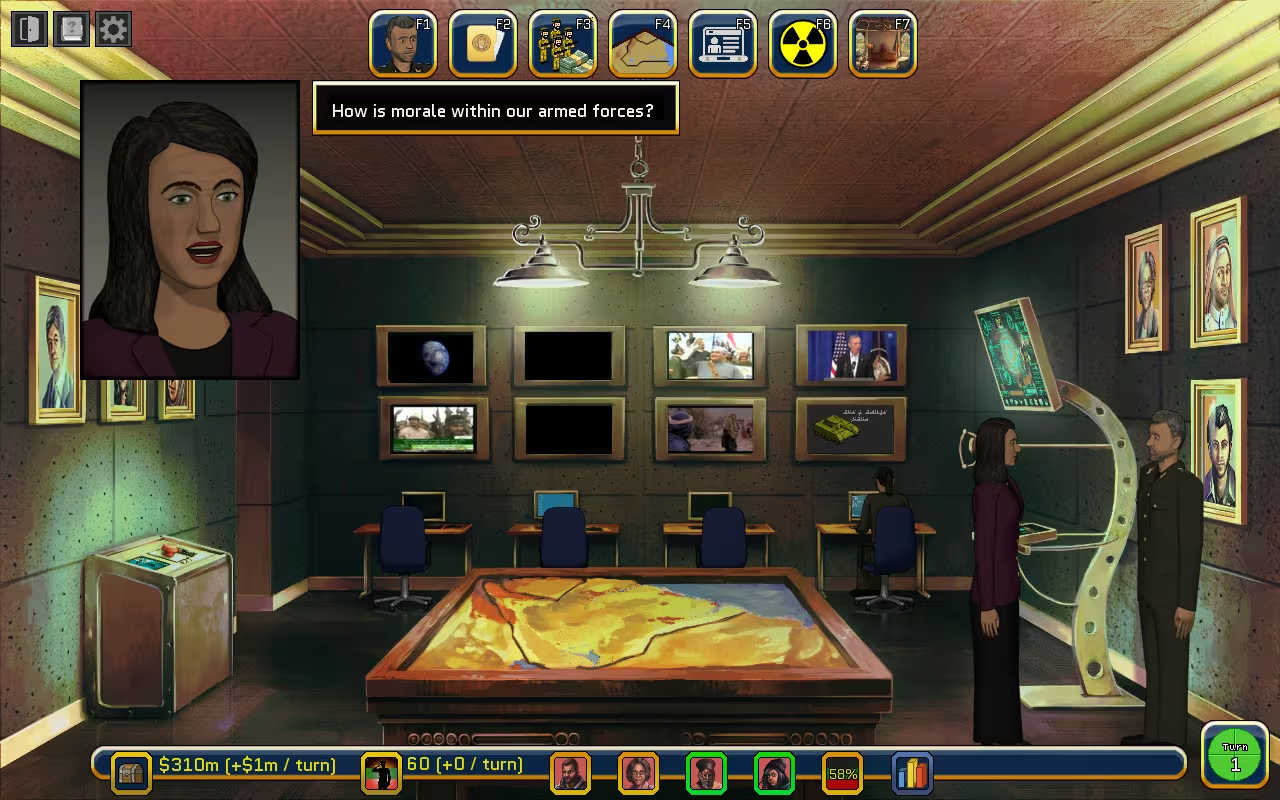
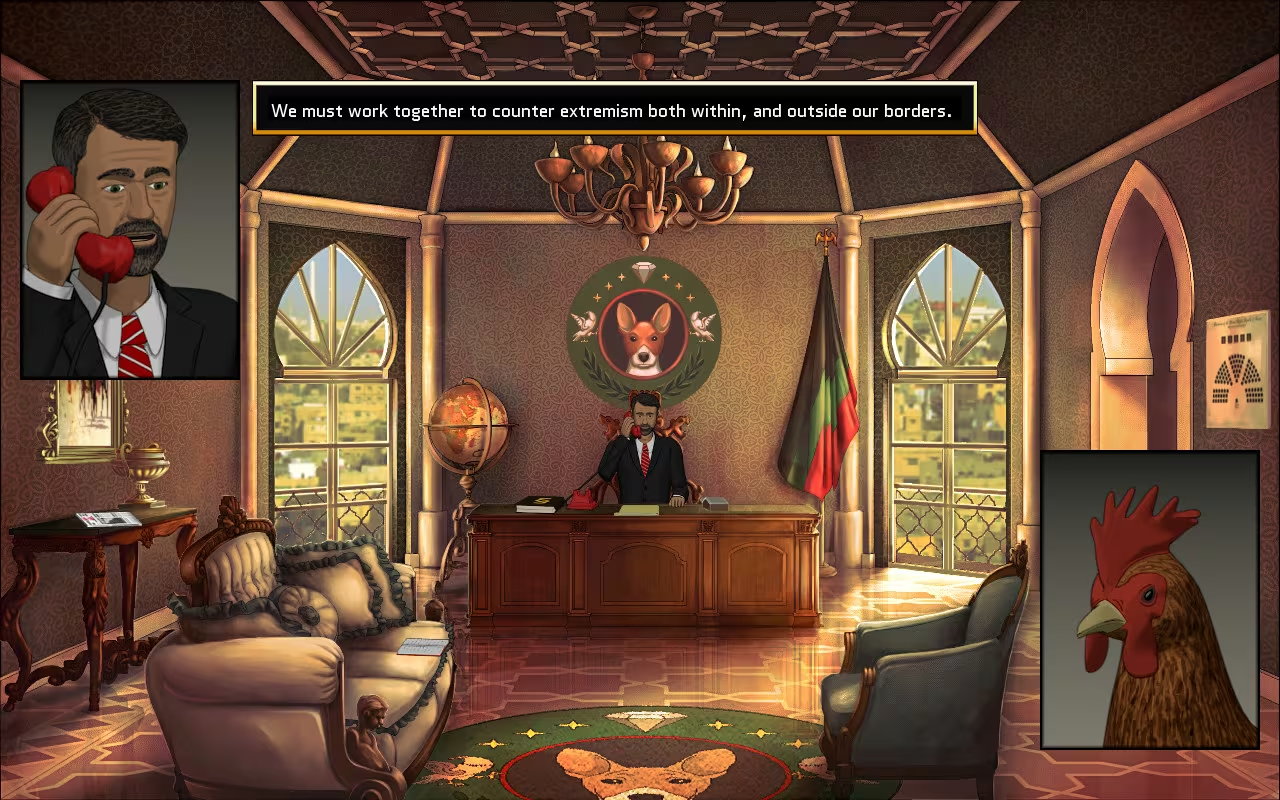
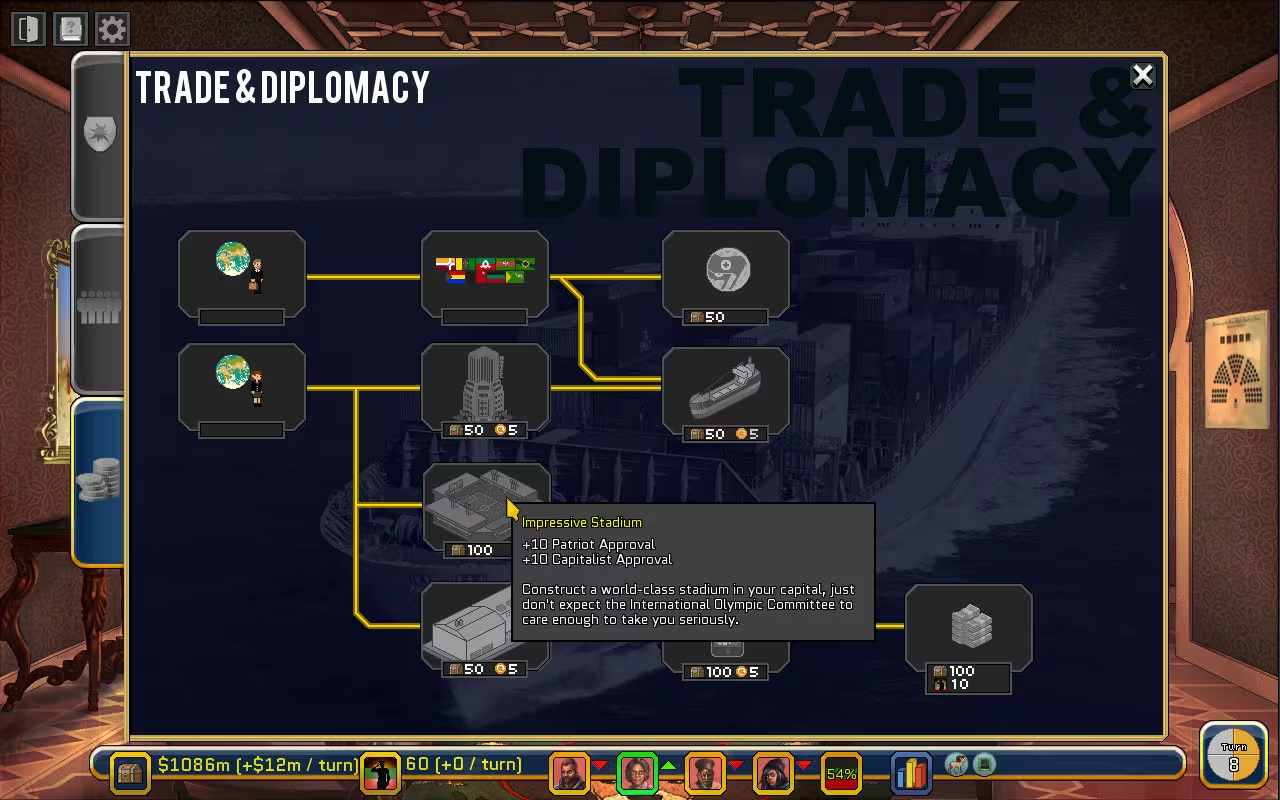
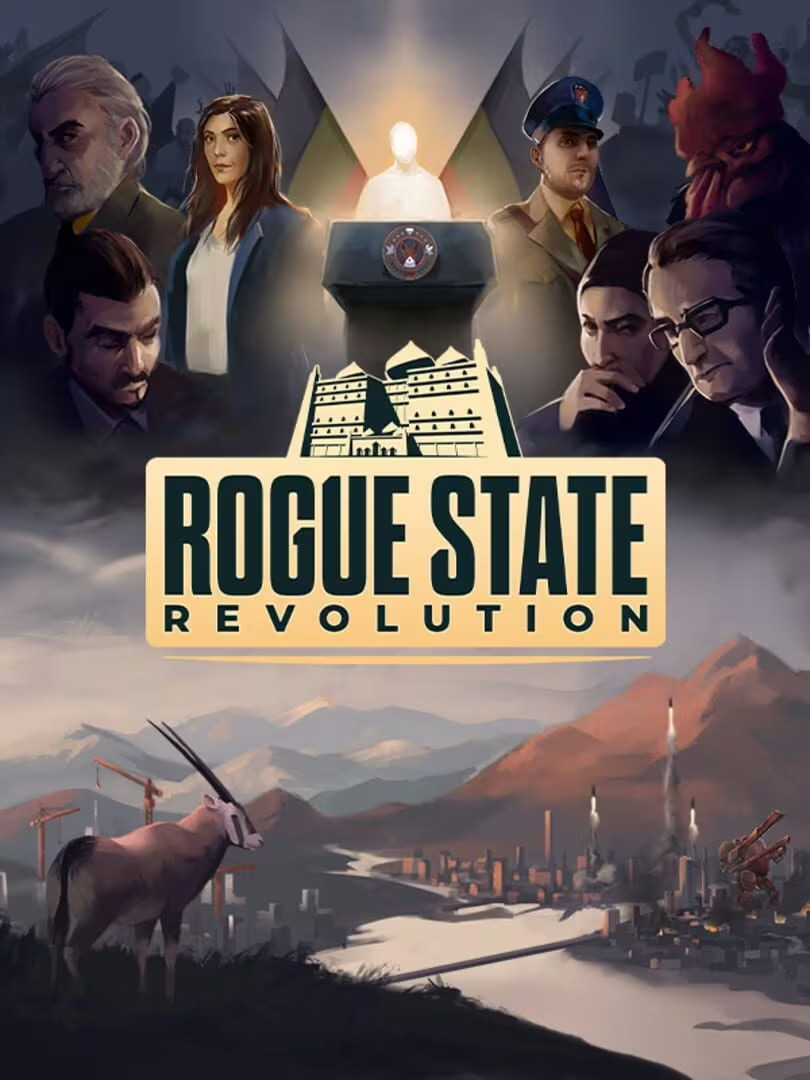
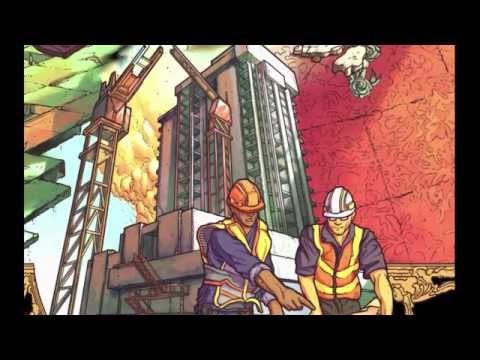
Assume control of a Middle Eastern country recovering from a violent revolution. Forge alliances, grow your economy, invade your neighbors, or pacify your population. Rogue State is a geopolitical strategy game that will force you to always stay one step ahead of your rivals to survive.

Global score

76/100

Genres

Indie, Simulator, Strategy

Similar games

    Pros

    • Challenging political strategy
    • High replayability with randomized events
    • Engaging narrative and humor
    • Active developer support
    • Unique middle eastern setting

    Cons

    • Clunky interface and animations
    • Some mechanics underexplained or opaque
    • Limited depth in diplomacy and military
    • Randomness can feel punishing or unfair
    • Graphics and voice acting are basic

    Analysis

    Less representative of its motivational profile, with noticeable differences. Motivations that often define this kind of title include Leadership, Survival, Violence, Strategy. Here, the score leans higher than usual among comparable games on Domination. It leans lower than usual among comparable games on Expression, Exploration.

    How to use the graph
    Similar games map

    Each dot is a game. They are arranged from the same motivation profile as in the “Motivations” section below. Closer dots usually mean more similar reasons to play (exploration, competition, relaxation, etc.)—not that one game is “better” than another.

    • Larger dot with a light outline: the game you are viewing.
    • Colour: groups of games with comparable motivation patterns (statistical clusters).
    • Hover a dot to see the game name; click to open its page.
    • Scroll or double-click the chart to zoom out and see more games.

    Why don’t the axes read like a score? This view uses t-SNE: it only keeps who is close to whom. The scales are not “good to bad” or hours played—they separate groups on the map. Read distance between dots, not the axis numbers.

    Motivations

    • Autonomy
      3

      "Players make many decisions about policies, diplomacy, and resource management, but within a constrained framework and randomized events."

    • Competence
      3

      "Players engage in strategic balancing of factions and resources with feedback on success, though some mechanics are simplified or opaque."

    • Competition
      -3

      "Focus is on managing own country and survival rather than direct competition or leaderboards."

    • Continuation
      3

      "Players report addictive gameplay with multiple playthroughs encouraged by random events and unlockables."

    • Cooperation
      -4

      "Gameplay is primarily single-player and independent, with limited interaction with AI neighbors and no multiplayer."

    • Creativity
      1

      "Some customization in policy choices and strategy, but limited ability to create or modify beyond preset options."

    • Domination
      1

      "Players exert control over their country and can engage in military actions, but no evidence of social domination or trash talk."

    • Escapism
      4

      "Players use the game to immerse in a fictional political scenario, escaping real life through strategic roleplay."

    • Expectation
      -4

      "Players engage voluntarily out of interest and enjoyment, not obligation or external pressure."

    • Experimenting
      3

      "Randomized events and multiple strategies encourage trying new approaches and adapting to changing conditions."

    • Exploration
      -2

      "Game world is limited to a fictional country and neighbors with no open-world exploration."

    • Expression
      -3

      "Limited character or environment customization; mostly preset visuals and political roles."

    • Fantasy
      2

      "Players experience a fictionalized political scenario with some satirical and exaggerated elements."

    • Fellowship
      -4

      "Minimal social interaction; primarily a solo experience with limited community engagement."

    • Growth
      3

      "Players learn to manage complex systems and improve strategies over multiple playthroughs."

    • Health
      -5

      "No physical activity or health-related gameplay elements."

    • Idle
      -3

      "Requires focused attention on turn-based decisions and management; not a background or idle game."

    • Intimacy
      -5

      "No evidence of close social relationships or emotional sharing; interactions are formal and strategic."

    • Leadership
      4

      "Players lead a country, make executive decisions, and manage various factions and ministers."

    • Progression
      3

      "Players accumulate resources, build infrastructure, and unlock projects and modifiers over time."

    • Relaxation
      -2

      "Game is challenging and sometimes punishing, creating tension rather than pure relaxation."

    • Sensation
      1

      "Some atmospheric music and art style provide sensory enjoyment, but graphics are simple and retro."

    • Status
      -3

      "No social recognition or popularity mechanics; focus is on internal game success."

    • Story
      3

      "Narrative elements and events provide story immersion and multiple endings."

    • Strategy
      4

      "Strong emphasis on strategic decision-making, resource management, and balancing competing interests."

    • Thrill
      2

      "Random events and crises create suspense and challenge, though outcomes can be unpredictable."

    • Value
      3

      "Players find good value in gameplay depth and replayability for the price paid."

    • Violence
      2

      "Includes military conflict and covert actions, though violence is abstracted and strategic."

    • Survival
      4

      "Core gameplay revolves around surviving political threats, crises, and maintaining power."

    Last update: 29/04/2026