Stranded In Time Thumbnail

Stranded In Time similar games & best alternatives

Stranded In Time

PC (Microsoft Windows), Mac, Linux • 2015

Related articles

Quick resume

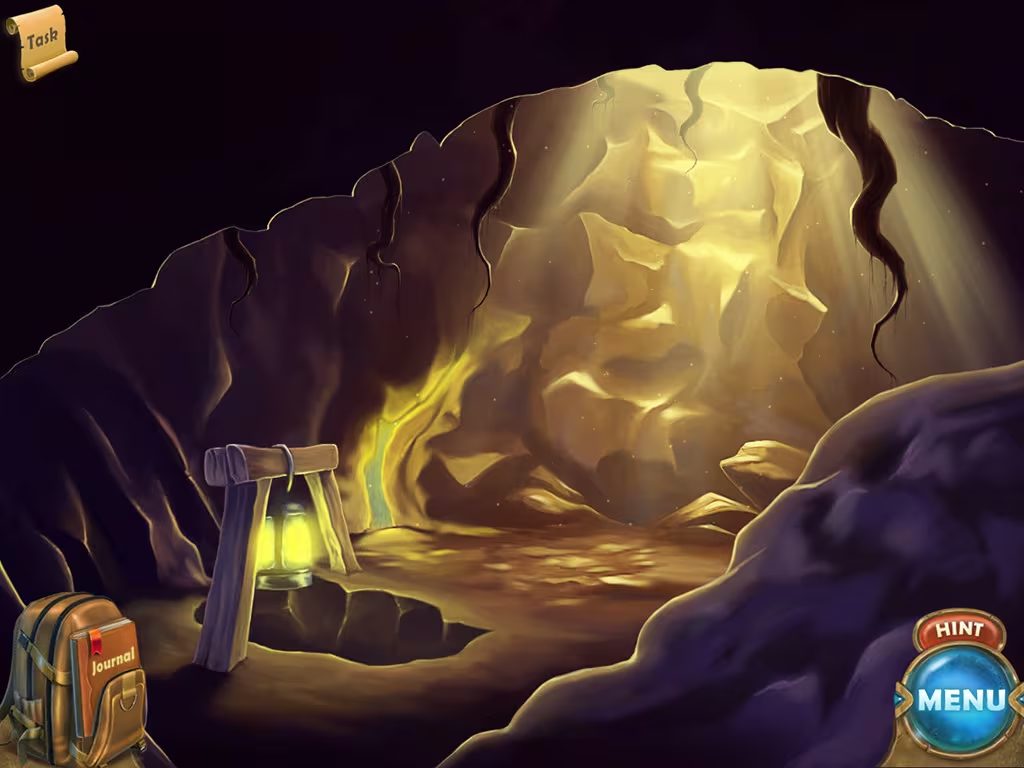
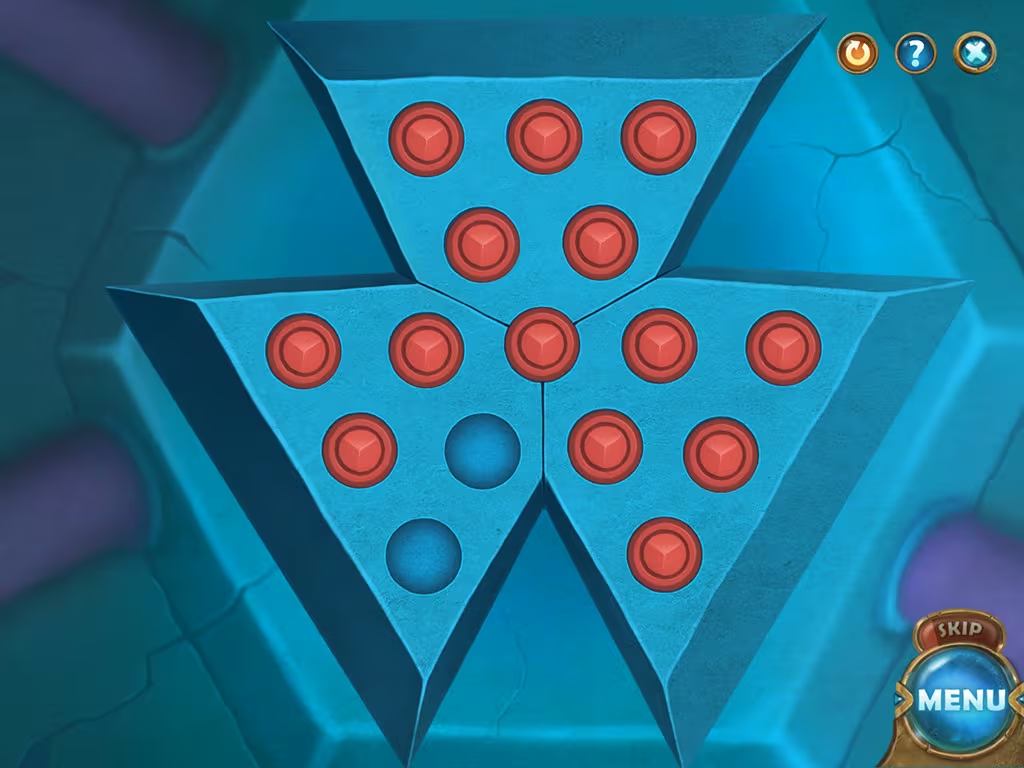
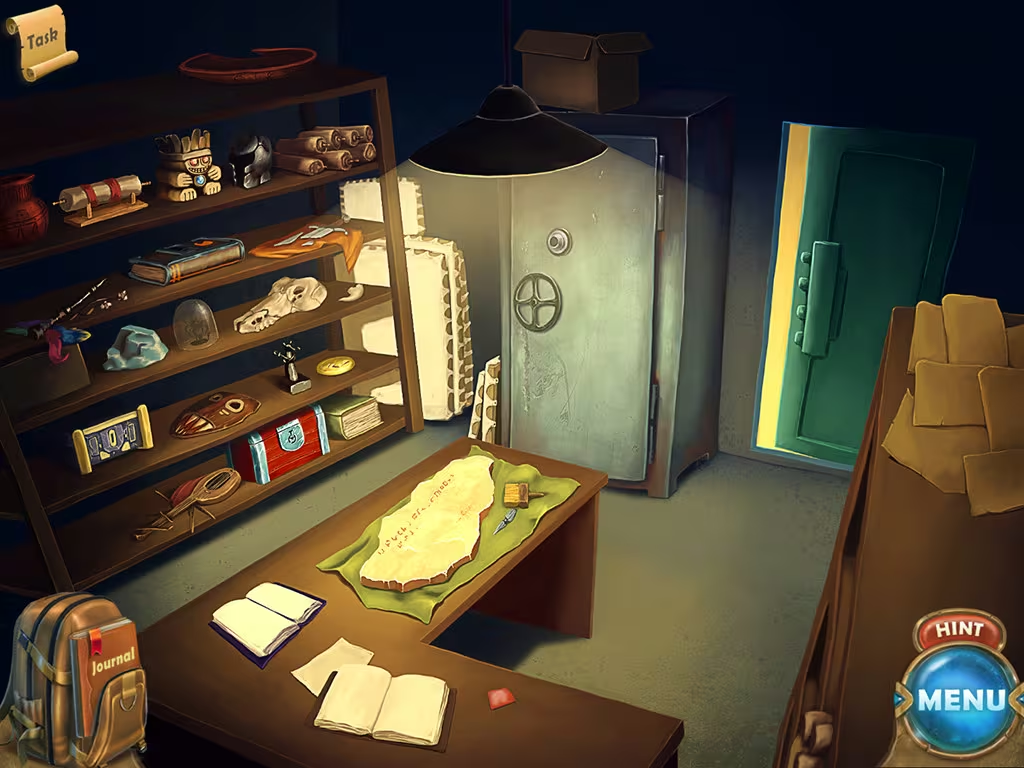
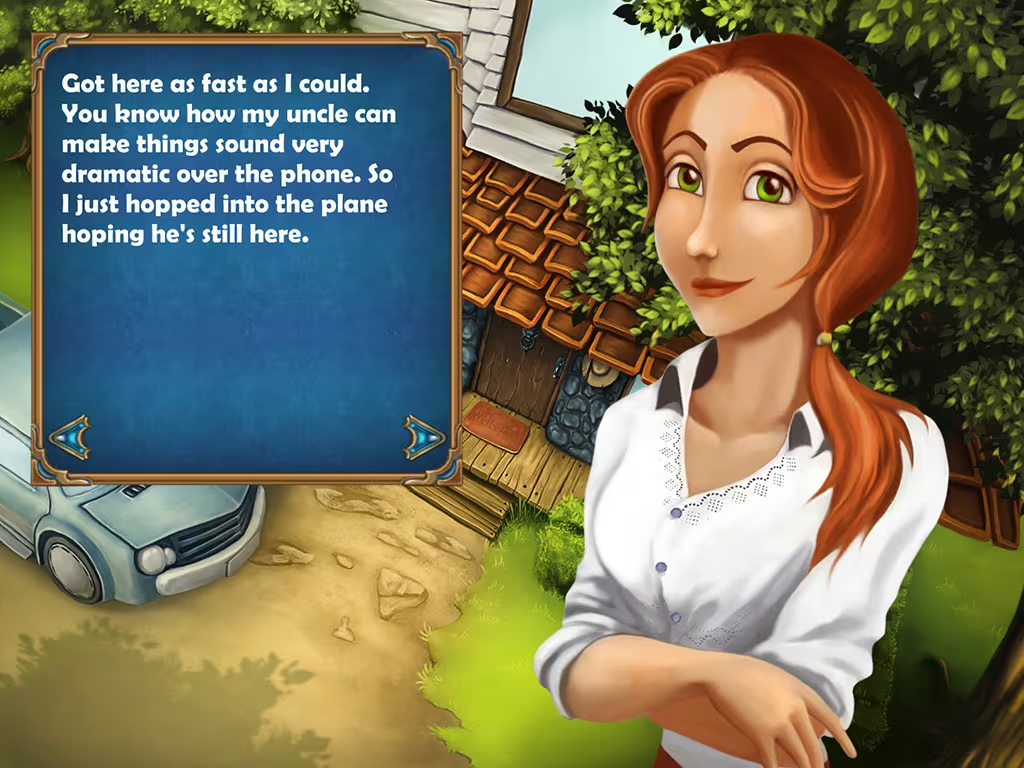
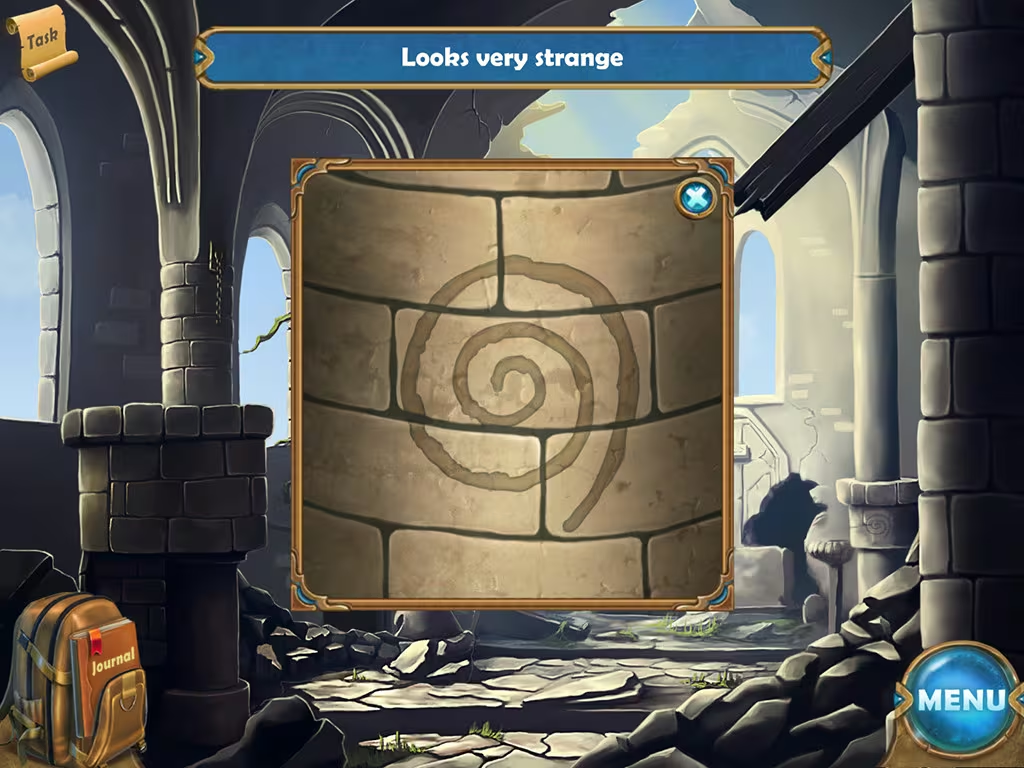
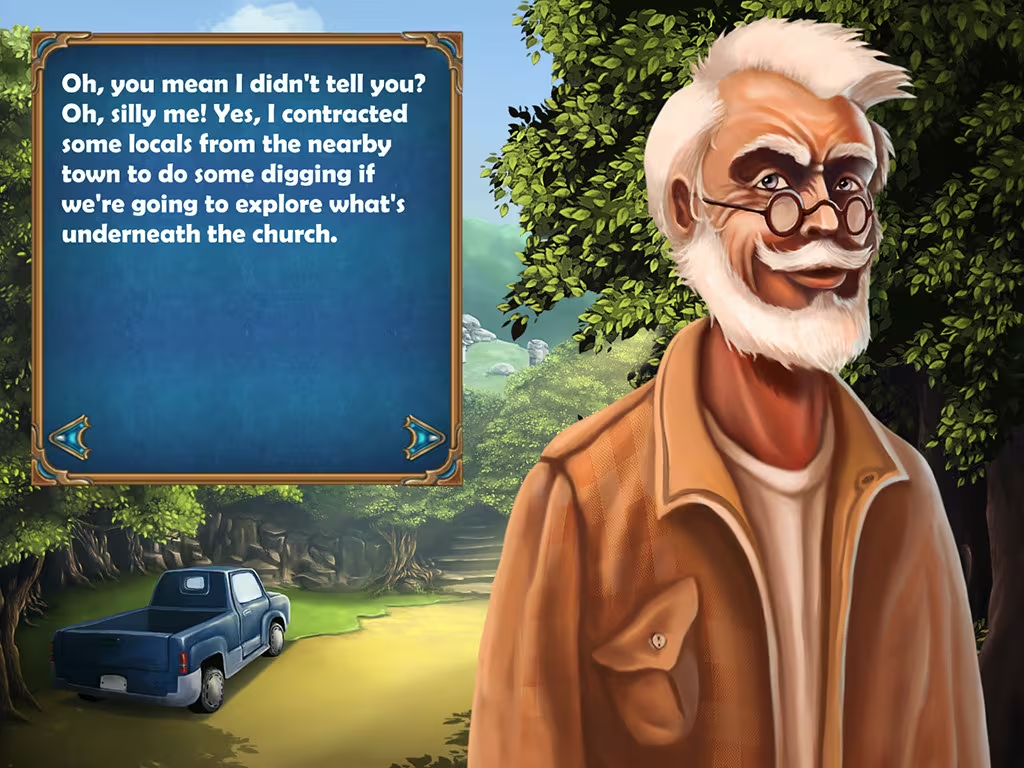
Stranded In Time takes you on a fun and exciting adventure to explore a mystery out of this world! Play as Olivia - a young woman from a big city - who joins her uncle Peter and writer Nick on an exploration of an abandoned church that hides a secret beyond any wild dream!

Global score

78/100

Genres

Adventure, Casual, Indie

Similar games

    Pros

    • Affordable price
    • Relaxing and casual gameplay
    • Pleasant art style and music
    • Helpful hint and skip systems
    • Short, accessible puzzle adventure

    Cons

    • Very short game length
    • Awkward dialogue and translation issues
    • Repetitive backtracking
    • Lack of polish and technical bugs
    • Limited story depth and character development

    Analysis

    A very typical example of its motivational profile. Motivations that often define this kind of title include Strategy, Survival, Competence, Violence. Here, the score leans higher than usual among comparable games on Strategy. It leans lower than usual among comparable games on Intimacy, Continuation.

    How to use the graph
    Similar games map

    Each dot is a game. They are arranged from the same motivation profile as in the “Motivations” section below. Closer dots usually mean more similar reasons to play (exploration, competition, relaxation, etc.)—not that one game is “better” than another.

    • Larger dot with a light outline: the game you are viewing.
    • Colour: groups of games with comparable motivation patterns (statistical clusters).
    • Hover a dot to see the game name; click to open its page.
    • Scroll or double-click the chart to zoom out and see more games.

    Why don’t the axes read like a score? This view uses t-SNE: it only keeps who is close to whom. The scales are not “good to bad” or hours played—they separate groups on the map. Read distance between dots, not the axis numbers.

    Motivations

    • Autonomy
      3

      "Players can explore locations and solve puzzles at their own pace with hint and skip options, allowing some control over gameplay."

    • Competence
      2

      "Puzzles provide some challenge but are generally easy or moderate; hint and skip features reduce frustration."

    • Competition
      -5

      "No competitive elements or player comparison; purely single-player casual experience."

    • Continuation
      -3

      "Short game length (~1.5-2 hours) and casual nature lead to limited long-term engagement."

    • Cooperation
      -5

      "Entirely single-player with no cooperative or multiplayer features."

    • Creativity
      1

      "Some creative puzzle designs and story elements, but largely follows standard point-and-click structures."

    • Domination
      -5

      "No elements of exerting control or superiority over others; cooperative and solo play only."

    • Escapism
      3

      "Players use the game as a relaxing distraction and stress relief, escaping real-life problems."

    • Expectation
      -4

      "Players engage voluntarily for casual enjoyment and personal interest, not out of obligation."

    • Experimenting
      -1

      "Mostly follows established puzzle and adventure game routines with limited novelty or experimentation."

    • Exploration
      2

      "Players explore multiple locations and revisit areas, though environments are familiar and limited."

    • Expression
      -5

      "No character customization or player-driven expression; uses fixed characters and visuals."

    • Fantasy
      3

      "Story involves imaginative fiction elements like time travel and aliens, creating a fantastical setting."

    • Fellowship
      -5

      "No social or community features; purely single-player experience."

    • Growth
      2

      "Players develop puzzle-solving skills and progress through story, though learning curve is mild."

    • Health
      -5

      "Sedentary gameplay with no physical activity or health-related features."

    • Idle
      3

      "Game supports casual, intermittent play sessions with simple mechanics and hint systems."

    • Intimacy
      -5

      "No close social interactions or relationship-building; limited to solo play."

    • Leadership
      -5

      "No leadership or group management elements; single-player only."

    • Progression
      3

      "Players collect items and complete puzzles to advance the story, showing clear progression."

    • Relaxation
      4

      "Casual gameplay, relaxing music, and low stress puzzles promote a calming experience."

    • Sensation
      1

      "Visuals and audio are pleasant but not highly stimulating; moderate sensory engagement."

    • Status
      -5

      "No social recognition or status systems; achievements and trading cards present but minimal impact."

    • Story
      2

      "Narrative is simple and light but present, providing some immersion and plot progression."

    • Strategy
      1

      "Puzzles require some problem solving but are straightforward and not deeply strategic."

    • Thrill
      -3

      "Low suspense or risk; gameplay is predictable and calm without intense thrills."

    • Value
      4

      "Good value for price, especially on sale; short but satisfying casual experience."

    • Violence
      -5

      "No combat or destructive elements; focus on puzzle solving and exploration."

    • Survival
      -5

      "No survival mechanics or threat avoidance; stable and safe gameplay environment."

    Last update: 29/04/2026