Strategic Command: World War I Thumbnail

Strategic Command: World War I similar games & best alternatives

Strategic Command: World War I

PC (Microsoft Windows) • 2019

Related articles

Quick resume

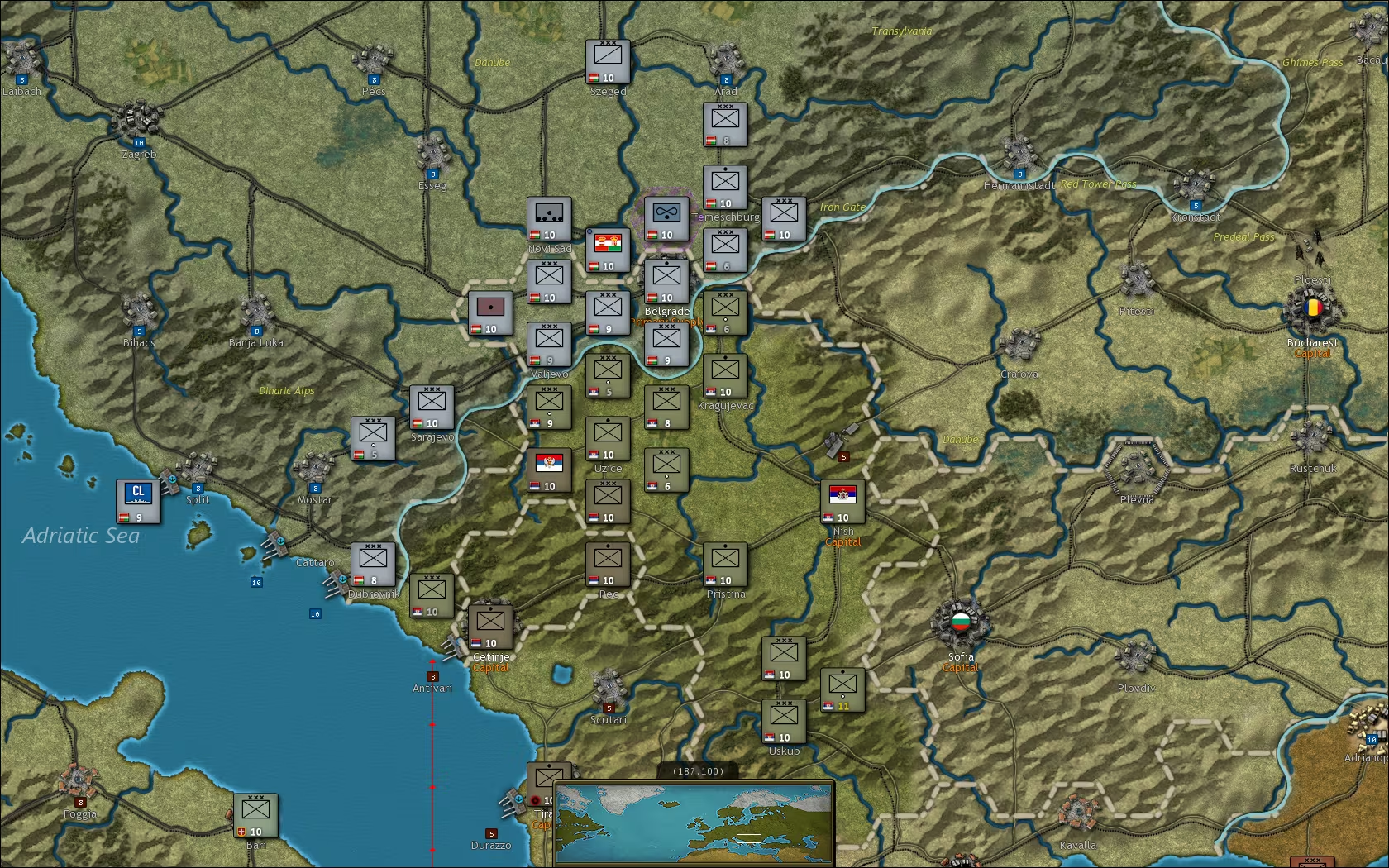
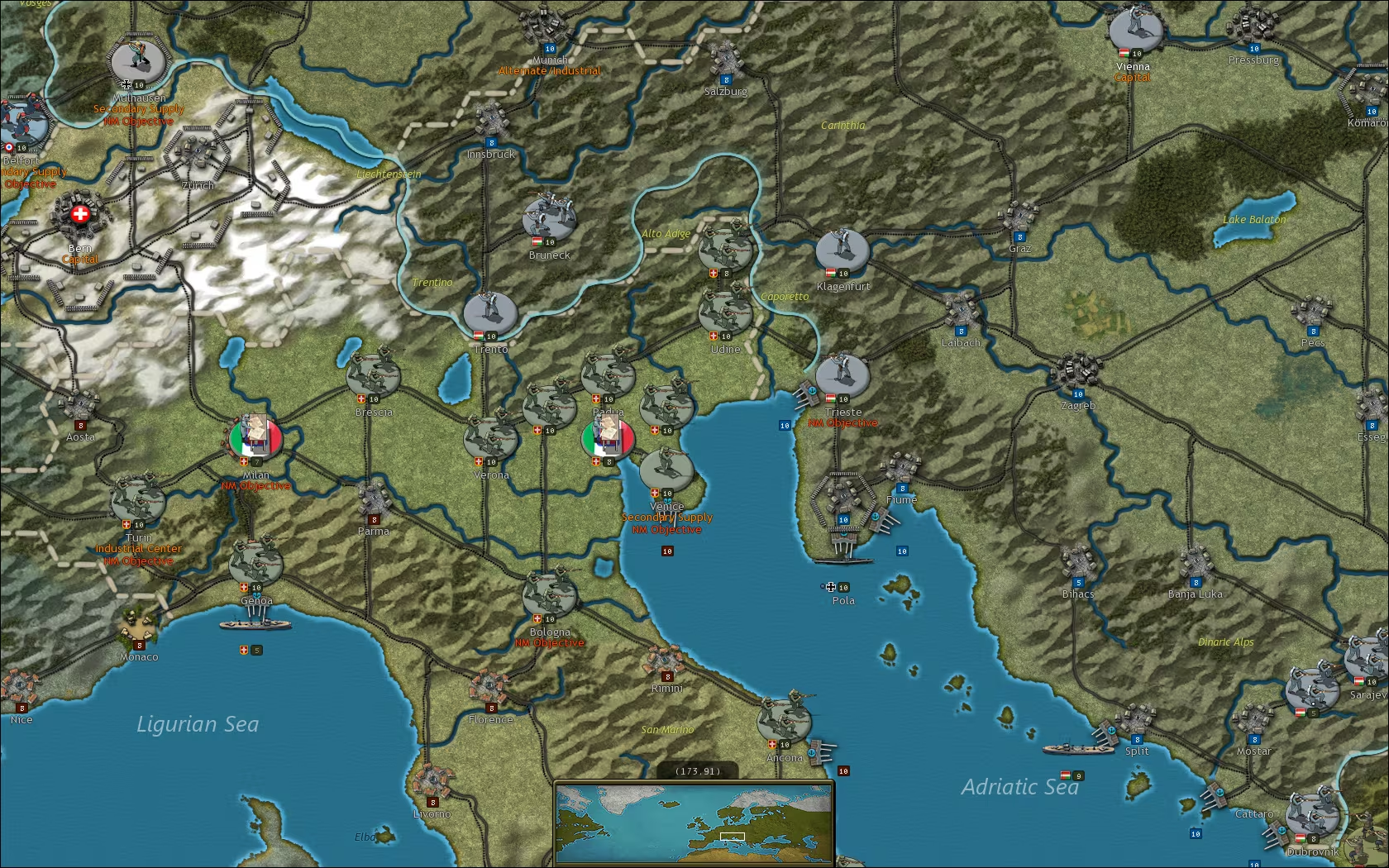
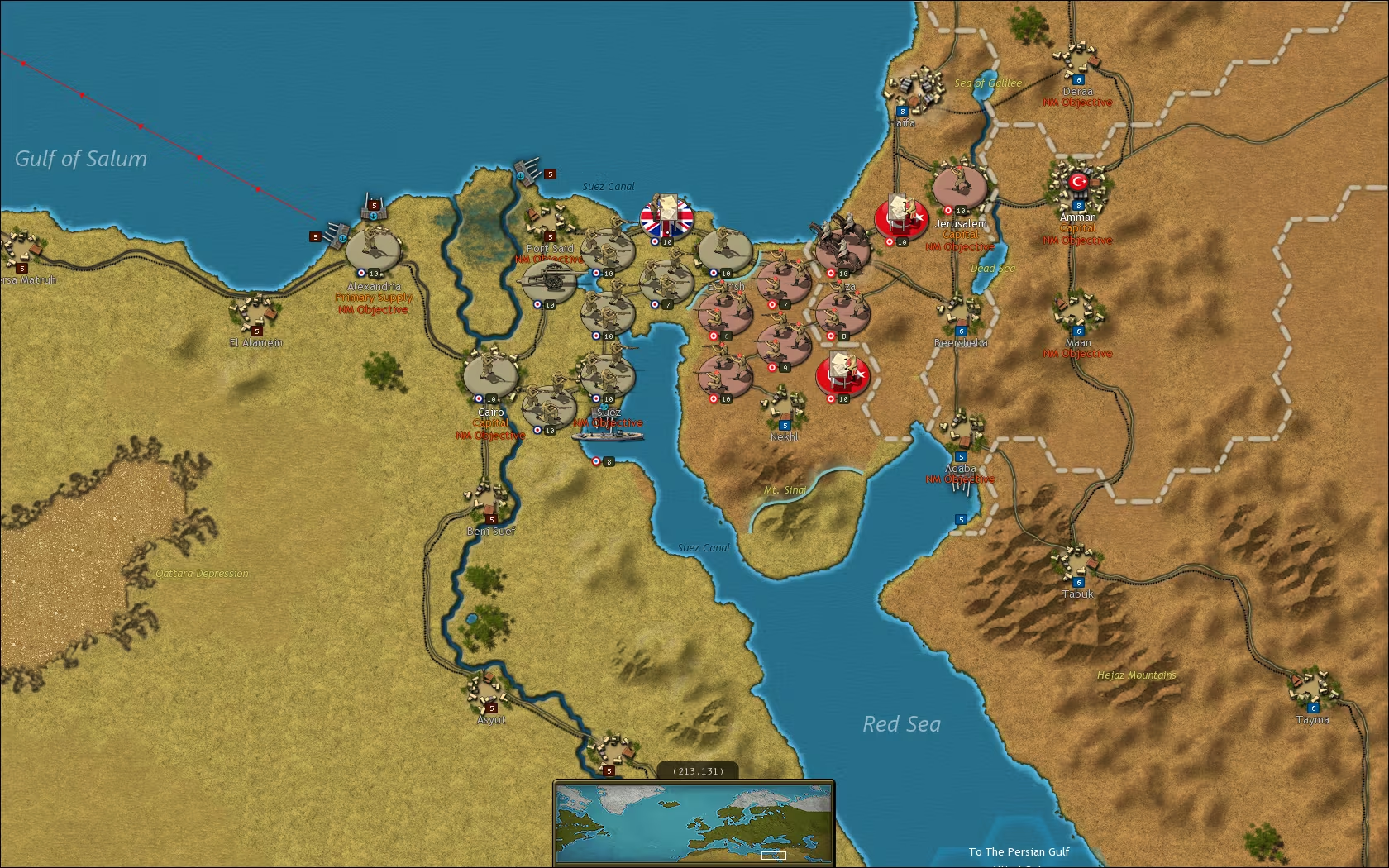
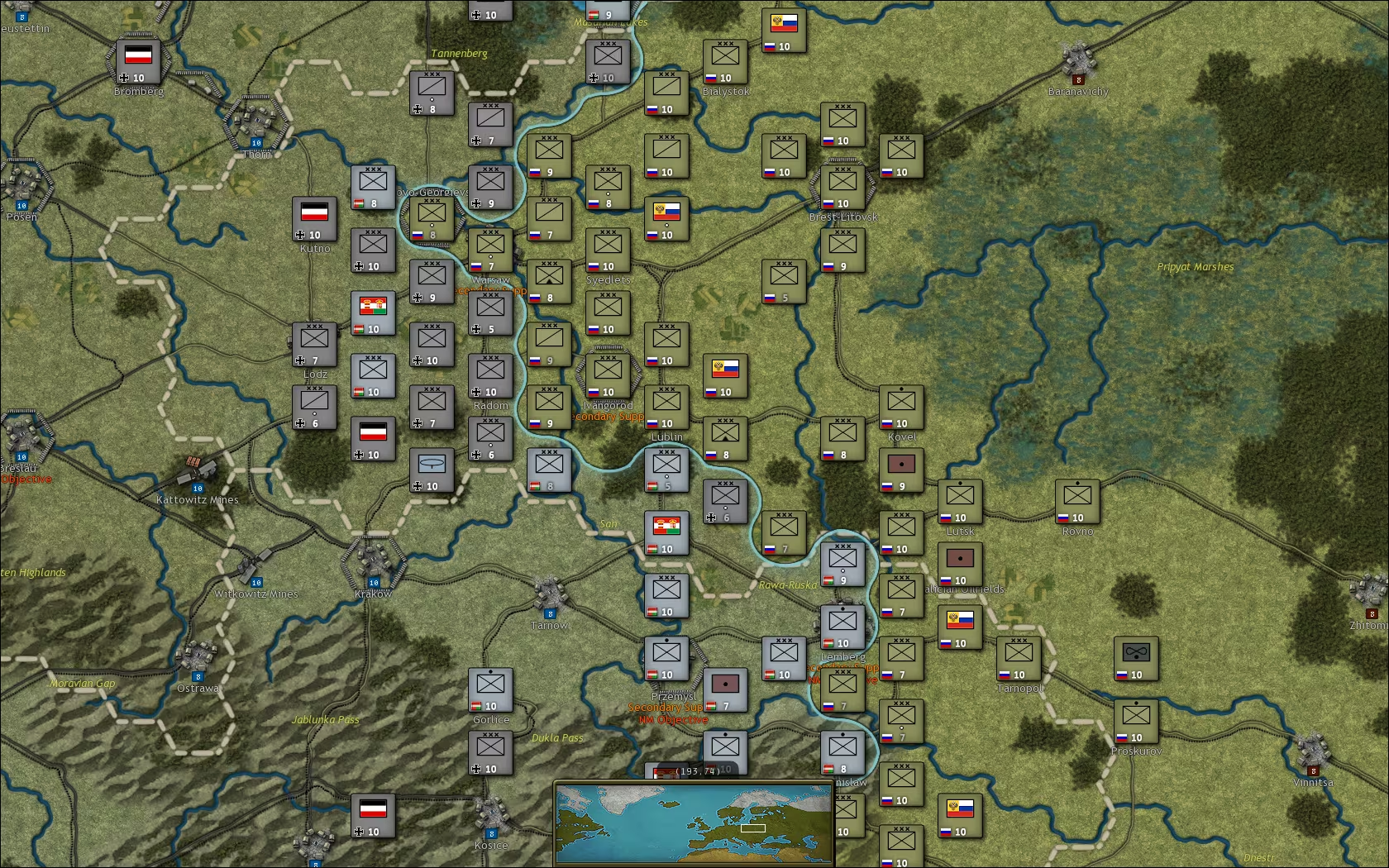
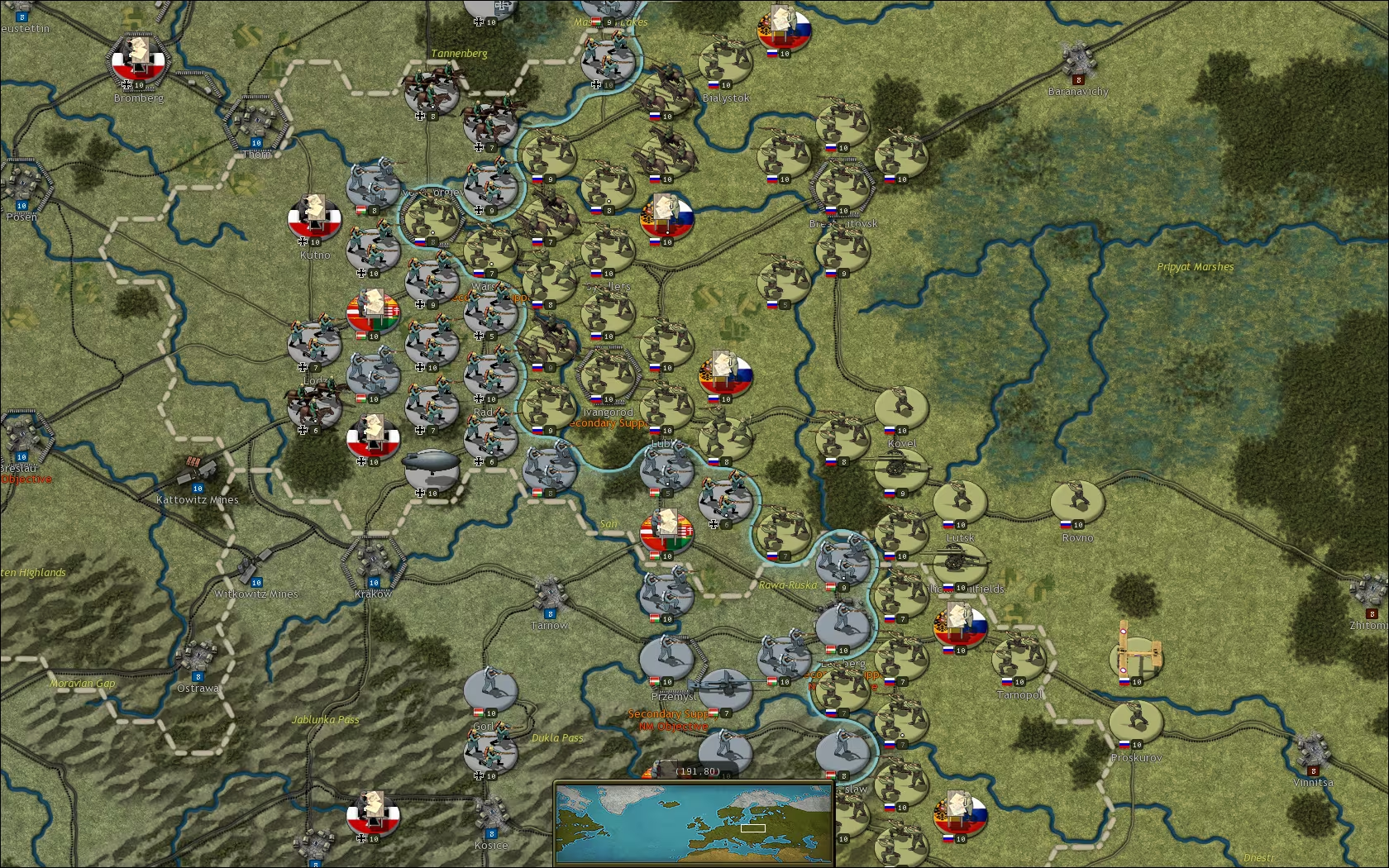
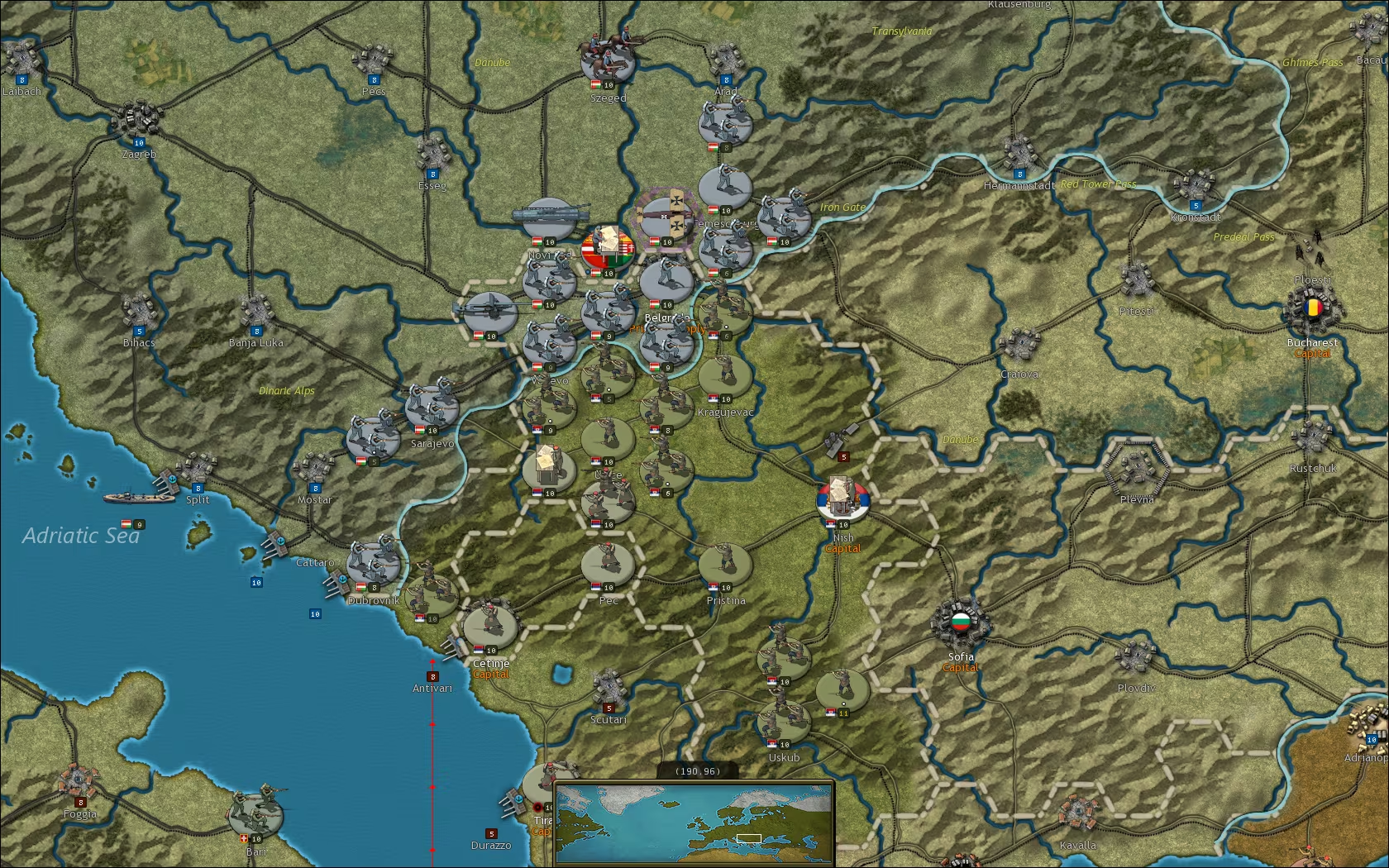
Strategic Command: World War I is a new chapter in the Strategic Command Franchise. Relive this momentous conflict from the opening shots of 1914 to the final offensives. Strategic Command: World War I covers all the main aspects and theatres of the war.

Global score

91/100

Genres

Strategy, Turn-based strategy (TBS)

Similar games

    Pros

    • Historical accuracy and depth
    • Addictive strategic gameplay
    • Modding and scenario editor
    • Good ai challenge
    • Multiplayer support

    Cons

    • Dated graphics and ui
    • Slow ai turns
    • Naval combat mechanics criticized
    • Diplomacy system limited
    • Steep learning curve without tutorial

    Analysis

    Less representative of its motivational profile, with noticeable differences. Motivations that often define this kind of title include Leadership, Survival, Violence, Strategy. Here, the score leans higher than usual among comparable games on Fellowship, Competition. It leans lower than usual among comparable games on Fantasy.

    How to use the graph
    Similar games map

    Each dot is a game. They are arranged from the same motivation profile as in the “Motivations” section below. Closer dots usually mean more similar reasons to play (exploration, competition, relaxation, etc.)—not that one game is “better” than another.

    • Larger dot with a light outline: the game you are viewing.
    • Colour: groups of games with comparable motivation patterns (statistical clusters).
    • Hover a dot to see the game name; click to open its page.
    • Scroll or double-click the chart to zoom out and see more games.

    Why don’t the axes read like a score? This view uses t-SNE: it only keeps who is close to whom. The scales are not “good to bad” or hours played—they separate groups on the map. Read distance between dots, not the axis numbers.

    Motivations

    • Autonomy
      4

      "Players have freedom to choose strategies, manage resources, and direct multiple fronts with flexible decisions."

    • Competence
      4

      "Game offers strategic depth and challenge requiring skillful planning, resource management, and tactical decisions."

    • Competition
      3

      "Includes multiplayer and AI opponents with strategic competition; some reviews highlight multiplayer intensity."

    • Continuation
      4

      "Highly addictive with players reporting long sessions and repeated playthroughs due to depth and replayability."

    • Cooperation
      2

      "Allows partial AI control of allies and some multiplayer cooperation, but much focus on individual control."

    • Creativity
      3

      "Includes modding tools and scenario editor enabling players to create and modify campaigns and maps."

    • Domination
      -3

      "Interactions emphasize balanced strategic play and mutual respect rather than dominance or trash talk."

    • Escapism
      4

      "Players use the game to immerse in historical scenarios and escape real life through strategic engagement."

    • Expectation
      -4

      "Players engage voluntarily out of interest and intrinsic motivation rather than obligation or pressure."

    • Experimenting
      4

      "Game encourages trying different strategies, alternate history outcomes, and exploring various fronts."

    • Exploration
      2

      "Some exploration of alternate scenarios and strategic options, though map and setting are historically fixed."

    • Expression
      2

      "Modding and scenario creation allow some self-expression, though in-game customization is limited."

    • Fantasy
      -4

      "Strong focus on historical accuracy and realistic WWI simulation rather than imaginative fiction."

    • Fellowship
      3

      "Multiplayer and community mods foster group identity and shared interest among players."

    • Growth
      4

      "Players develop strategic skills, learn historical context, and improve through repeated play."

    • Health
      -5

      "Typical sedentary computer game with no physical activity or health-related features."

    • Idle
      -3

      "Requires focused attention and thoughtful planning; not suited for casual or background play."

    • Intimacy
      -4

      "Social interactions are limited to strategic cooperation or competition with minimal emotional sharing."

    • Leadership
      3

      "Players lead entire nations and armies, making high-level decisions and guiding strategic direction."

    • Progression
      3

      "Includes research, production, and unit upgrades that accumulate over the course of the war."

    • Relaxation
      2

      "Some players find the strategic pacing relaxing, though the game can also be tense and challenging."

    • Sensation
      -2

      "Visuals are minimalistic and functional; sensory stimulation is moderate and not a primary focus."

    • Status
      2

      "Multiplayer and community recognition provide some social status, though not a dominant feature."

    • Story
      4

      "Historical events, flavor text, and scripted decisions provide narrative immersion in WWI context."

    • Strategy
      5

      "Core focus on mental challenge, planning, and problem solving at strategic and operational levels."

    • Thrill
      2

      "Tension arises from strategic decisions and combat outcomes, though overall pace is measured."

    • Value
      4

      "Players report high replayability and depth, providing good return on time and money invested."

    • Violence
      3

      "Combat and destruction are central, with emphasis on military engagements and attrition warfare."

    • Survival
      3

      "Players must manage resources and avoid defeat, reflecting the survival challenges of WWI."

    Last update: 29/04/2026