Supremacy: 1914 similar games & best alternatives
Supremacy: 1914
2019
Related articles
Quick resume
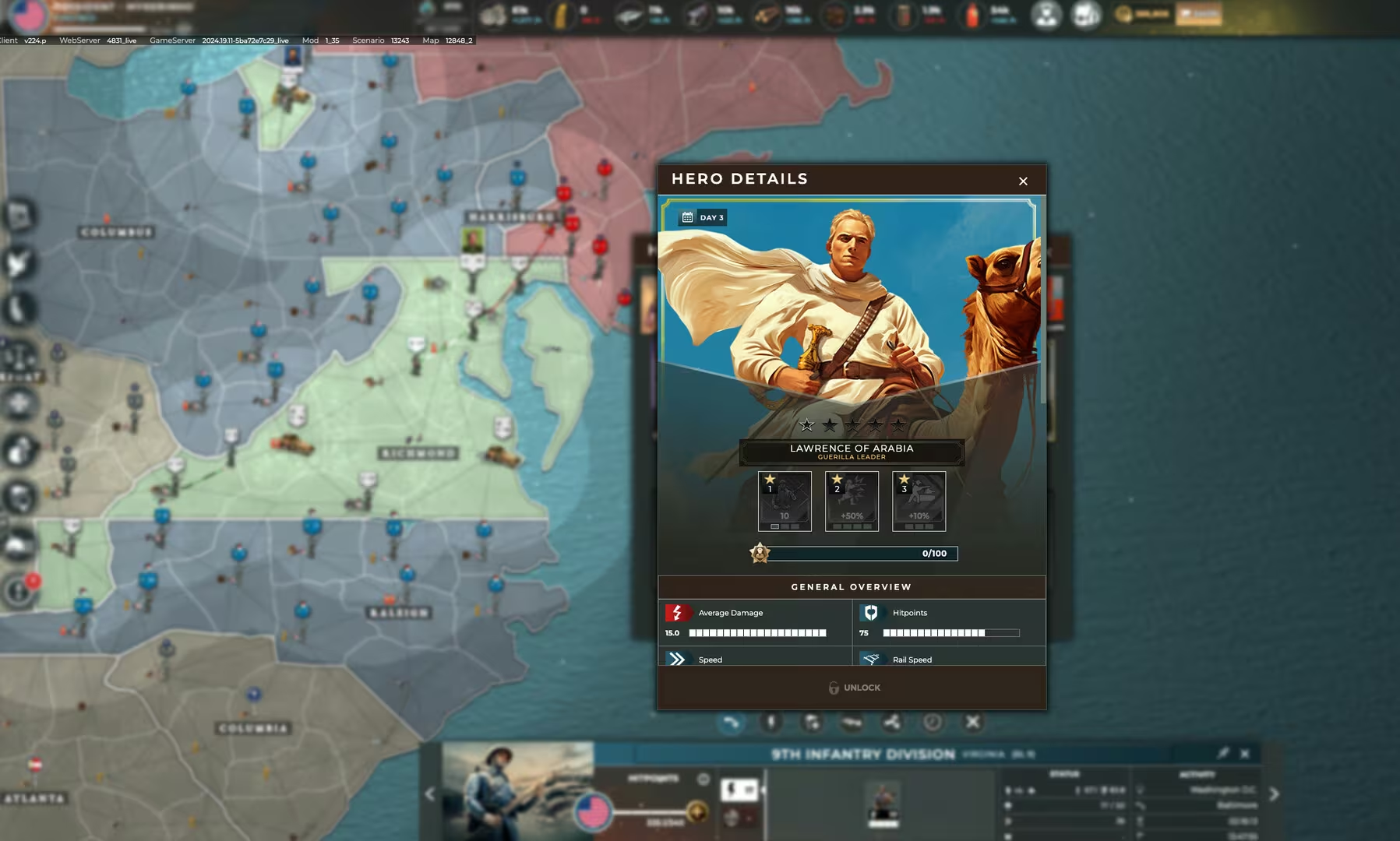
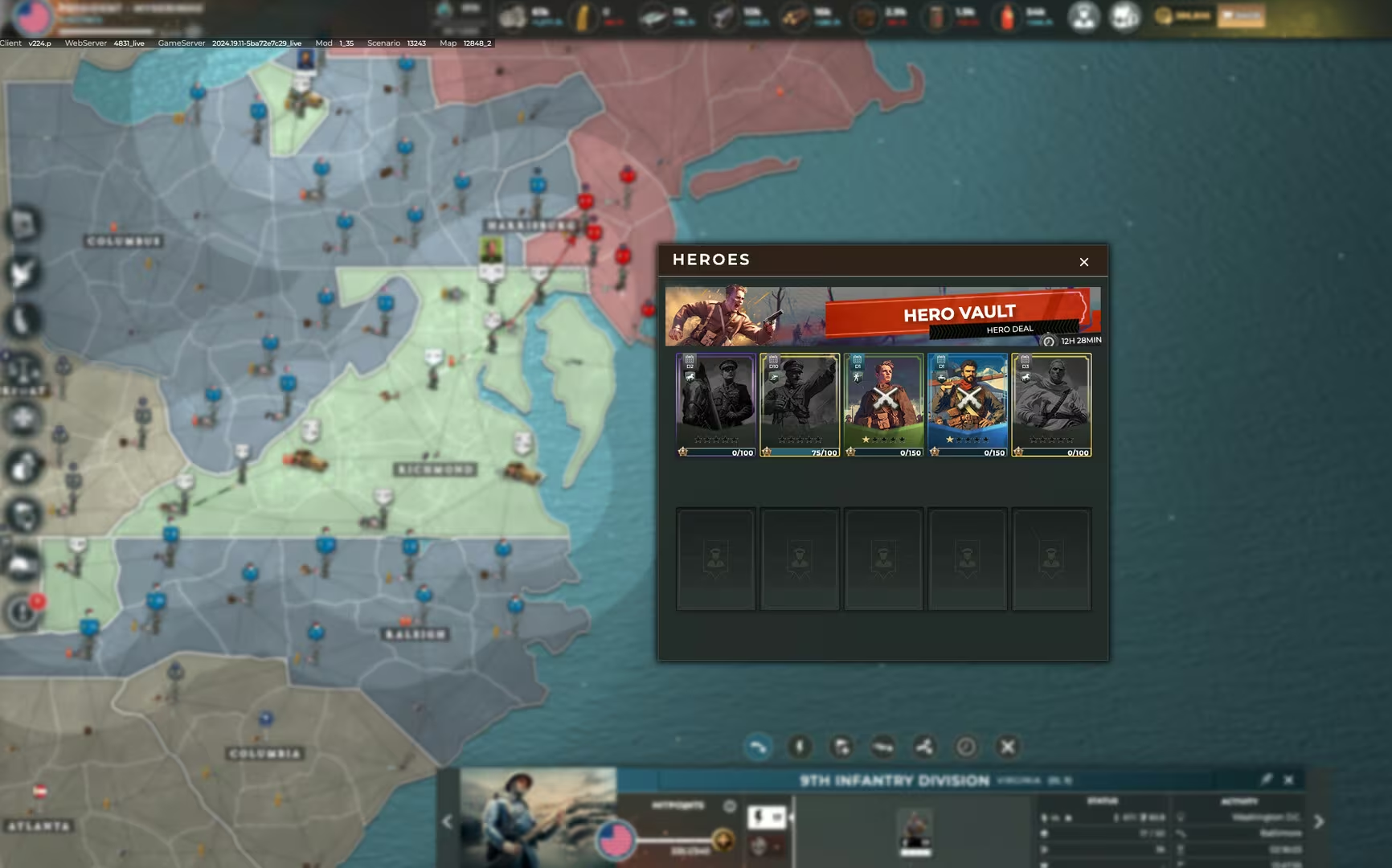
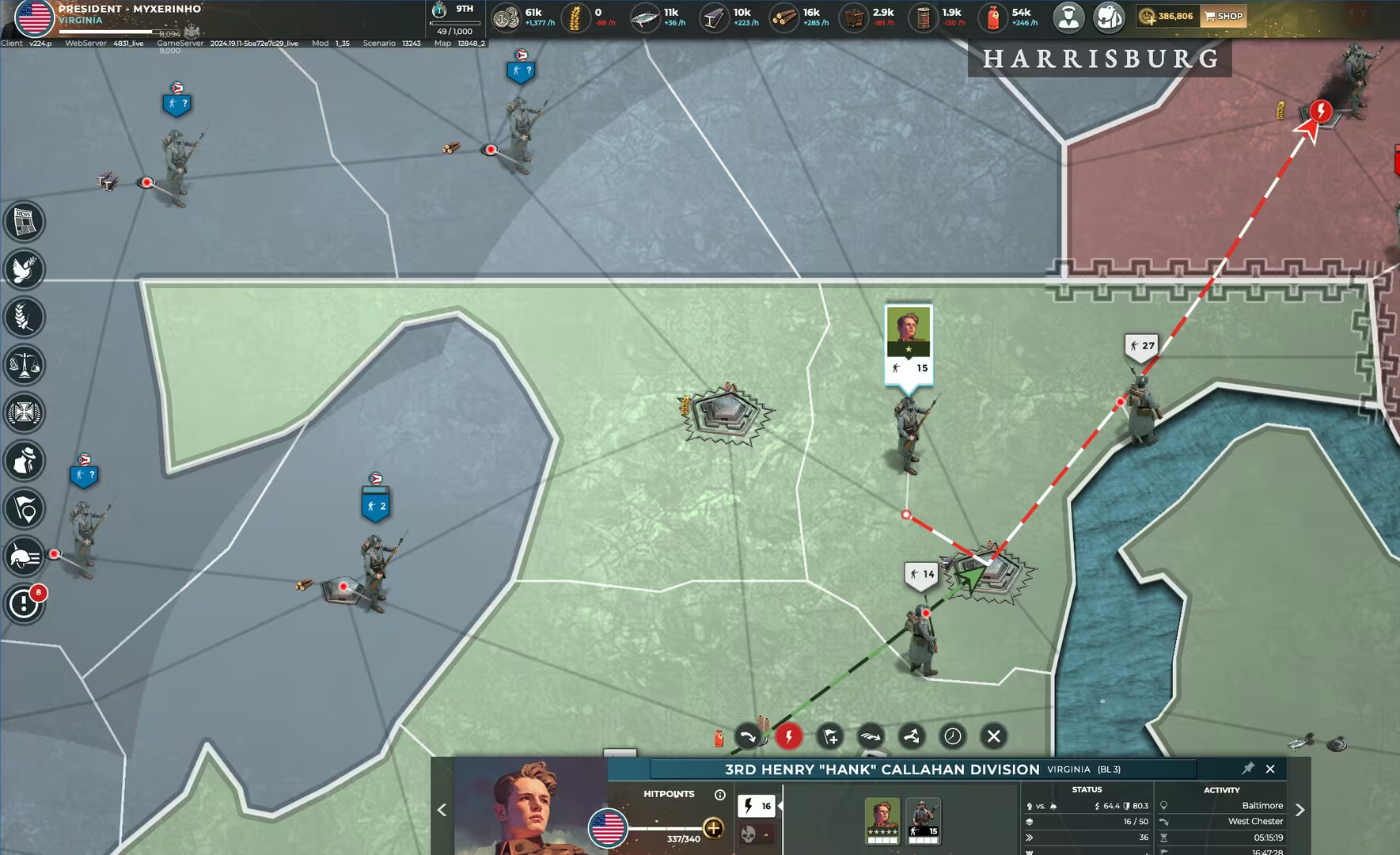
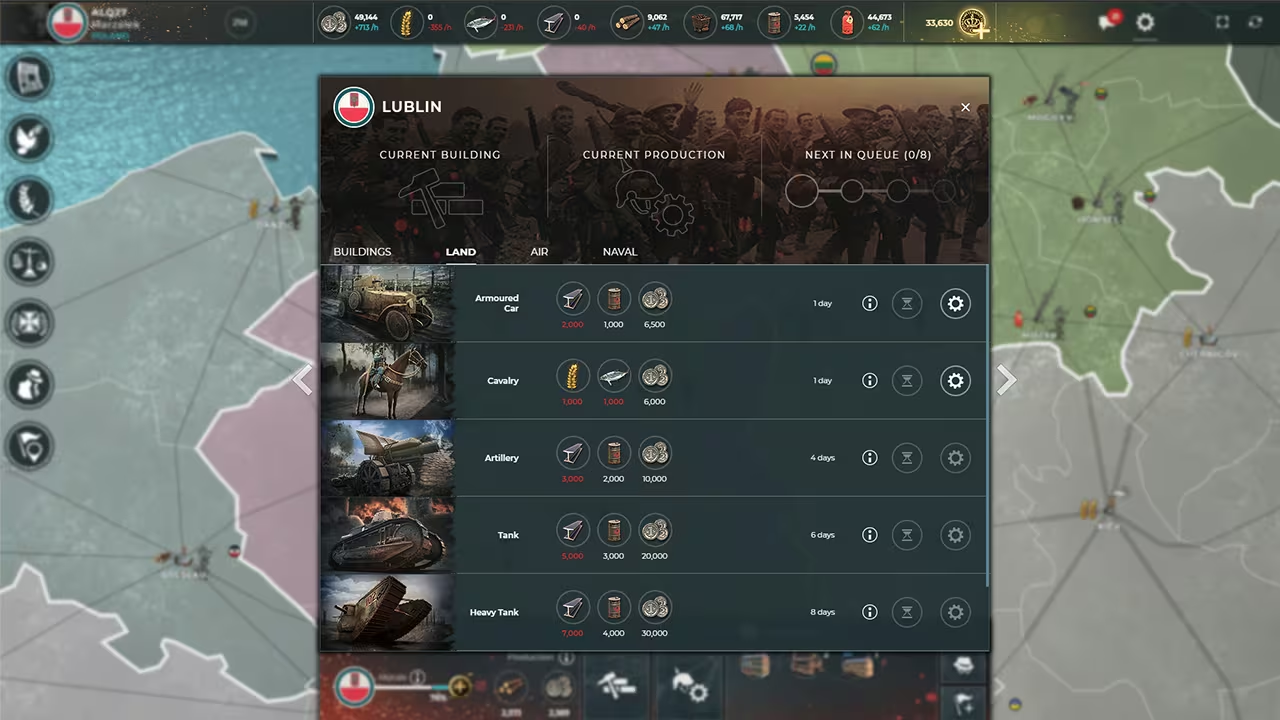
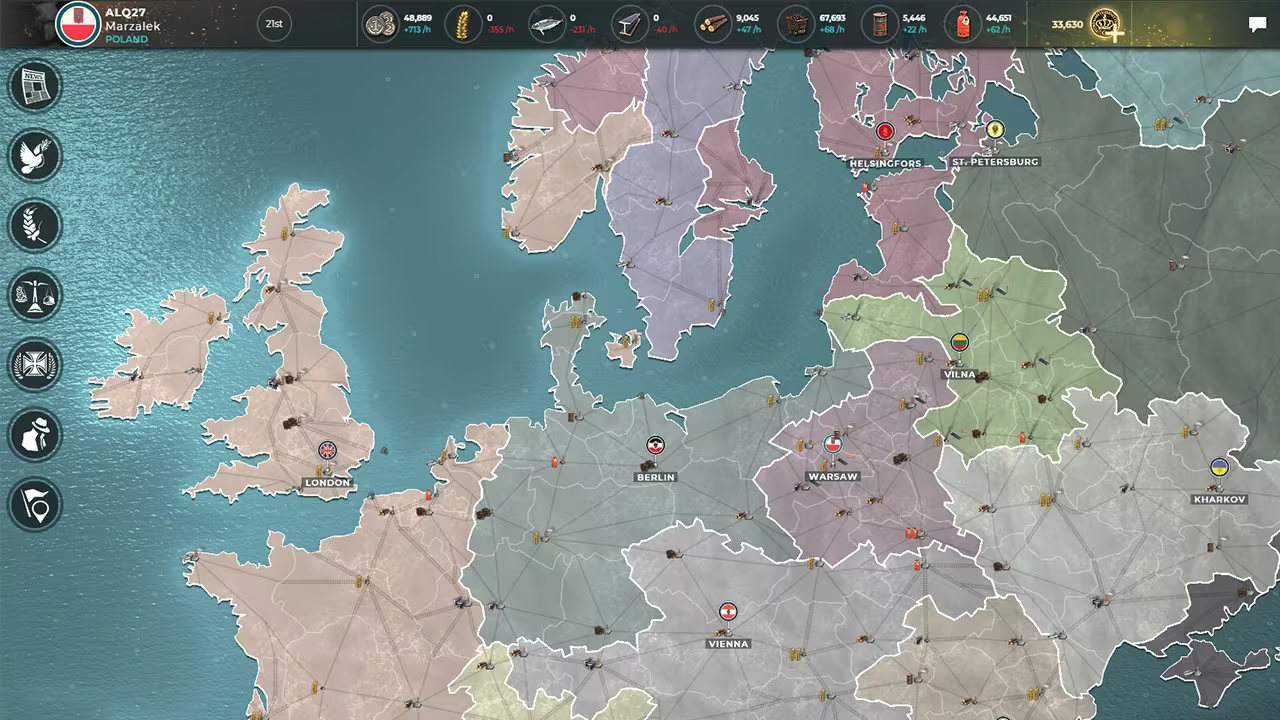
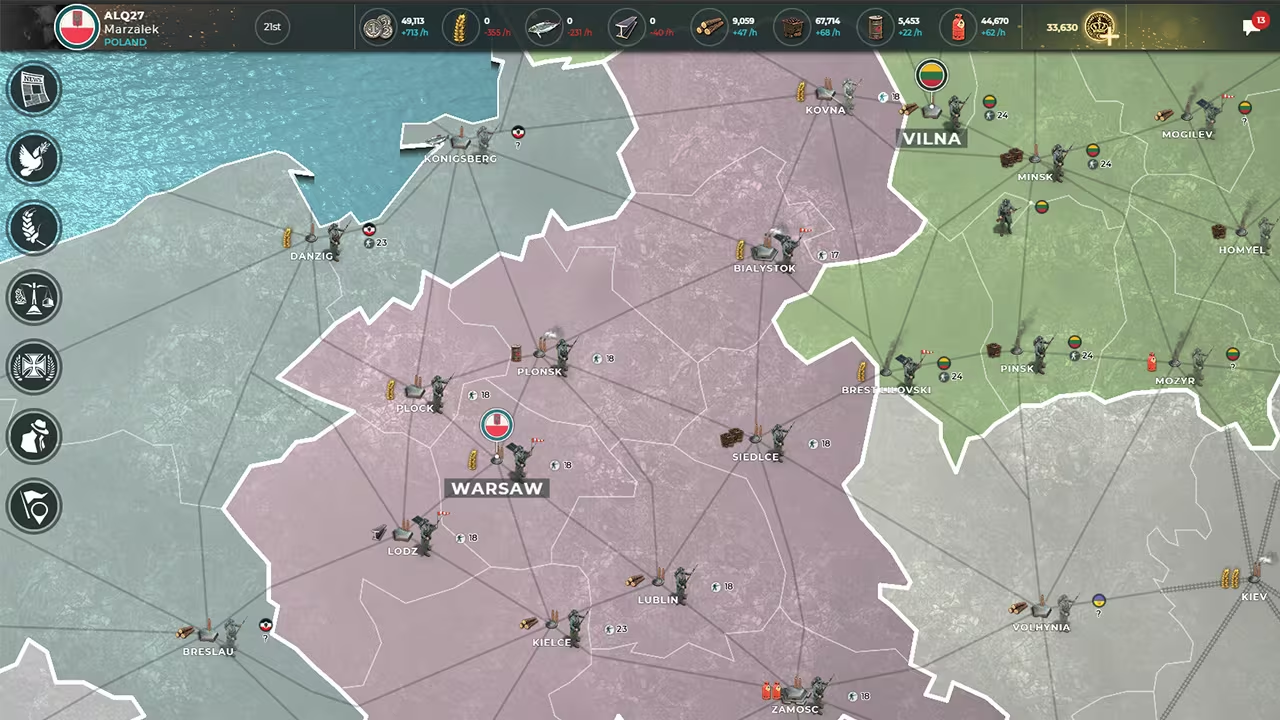
Take over the control of one of the mighty nations during the times of World War 1 in the biggest WW1 strategy game of all time. Conquer provinces, forge alliances and build up your economy in real-time on persistent maps. Build experimental weapons of World War 1 and become the one true superpower!
Global score
74/100
Genres
Massively Multiplayer, Simulator, Strategy, Free To Play
Similar games
Pros
- Deep strategic gameplay
- Strong multiplayer and diplomacy
- Long-term engagement
- Free-to-play accessibility
- Cross-platform support
Cons
- Pay-to-win elements
- Slow pacing with long wait times
- Server stability issues
- Steep learning curve for new players
- Limited customization and narrative
Analysis
Less representative of its motivational profile, with noticeable differences. Motivations that often define this kind of title include Competition, Fellowship, Domination, Status. Here, the score leans higher than usual among comparable games on Idle. It leans lower than usual among comparable games on Fantasy, Expression.
How to use the graph
Similar games map
Each dot is a game. They are arranged from the same motivation profile as in the “Motivations” section below. Closer dots usually mean more similar reasons to play (exploration, competition, relaxation, etc.)—not that one game is “better” than another.
- Larger dot with a light outline: the game you are viewing.
- Colour: groups of games with comparable motivation patterns (statistical clusters).
- Hover a dot to see the game name; click to open its page.
- Scroll or double-click the chart to zoom out and see more games.
Why don’t the axes read like a score? This view uses t-SNE: it only keeps who is close to whom. The scales are not “good to bad” or hours played—they separate groups on the map. Read distance between dots, not the axis numbers.
Motivations
-
Autonomy4
"Players have control over strategic decisions, diplomacy, resource management, and unit production, allowing personal freedom in gameplay."
-
Competence4
"Requires significant brain usage, strategic planning, and skillful management of resources and diplomacy."
-
Competition4
"Strong multiplayer focus with player vs player battles, alliances, and leaderboards; competition against others is central."
-
Continuation5
"Games are long-lasting, often taking days or weeks, encouraging habitual play and long-term engagement."
-
Cooperation4
"Emphasizes alliances, coalitions, and diplomacy with other players to achieve goals."
-
Creativity2
"Players can experiment with different strategies and unit combinations but within predefined game mechanics and structures."
-
Domination3
"Players often engage in power struggles, betrayals, and exert control over others, reflecting dominance motives."
-
Escapism3
"Provides a distraction and immersion into a WW1 strategic world, allowing escape from real-life stress."
-
Expectation-3
"Players engage voluntarily out of personal interest and intrinsic motivation rather than obligation or pressure."
-
Experimenting3
"Players try different strategies, alliances, and tactics, exploring game mechanics and outcomes."
-
Exploration1
"Some discovery in maps and strategic possibilities, but mostly familiar territory with known mechanics."
-
Expression-2
"Limited customization; players mostly use standardized units and maps with minimal avatar or environment personalization."
-
Fantasy-3
"Grounded in realistic WW1 scenarios and plausible historical settings rather than imaginative fiction."
-
Fellowship4
"Strong community aspect with alliances, friendships, and social interactions among players."
-
Growth3
"Players develop strategic skills, learn diplomacy, and improve over time through experience."
-
Health-4
"Sedentary gameplay with long sessions and no physical activity involved."
-
Idle4
"Designed for intermittent play with long real-time waits, allowing players to check in periodically."
-
Intimacy2
"Some close social bonds form through alliances and teamwork, though mostly strategic rather than emotional."
-
Leadership3
"Players often lead coalitions or alliances, guiding group strategies and decisions."
-
Progression4
"Focus on accumulating resources, upgrading units and infrastructure, and expanding territory."
-
Relaxation1
"Slow-paced gameplay can be relaxing for patient players, though some find it stressful due to long waits and betrayals."
-
Sensation1
"Moderate sensory stimulation with functional graphics and sound; focus is on strategy rather than sensory excitement."
-
Status3
"Recognition through alliances, victories, and leaderboards provides social status within the community."
-
Story-4
"No narrative or story focus; gameplay centers on strategy and player interactions without plot."
-
Strategy5
"Core gameplay revolves around deep strategic thinking, planning, and problem solving."
-
Thrill3
"Enjoyment from suspense, risk of betrayal, and tension in multiplayer battles."
-
Value1
"Free-to-play with optional purchases; some players feel pay-to-win aspects reduce perceived fairness but base game is accessible."
-
Violence4
"Combat and destruction are central mechanics, including battles and territorial conquest."
-
Survival3
"Players must manage threats, defend territory, and survive attacks in a competitive environment."
Last update: 29/04/2026