Supremacy: Call of War 1942 similar games & best alternatives
Supremacy: Call of War 1942
2017
Related articles
Quick resume
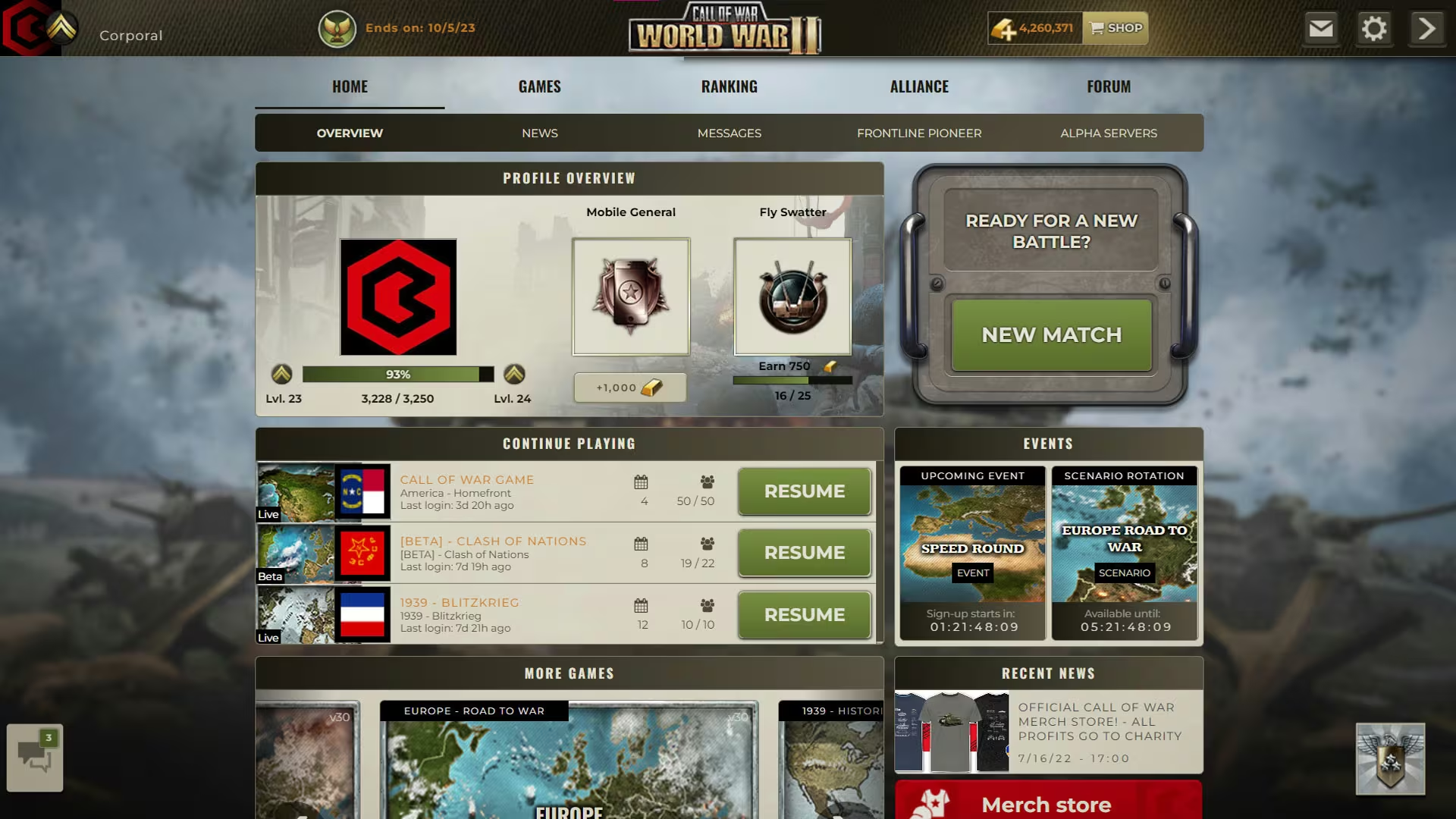
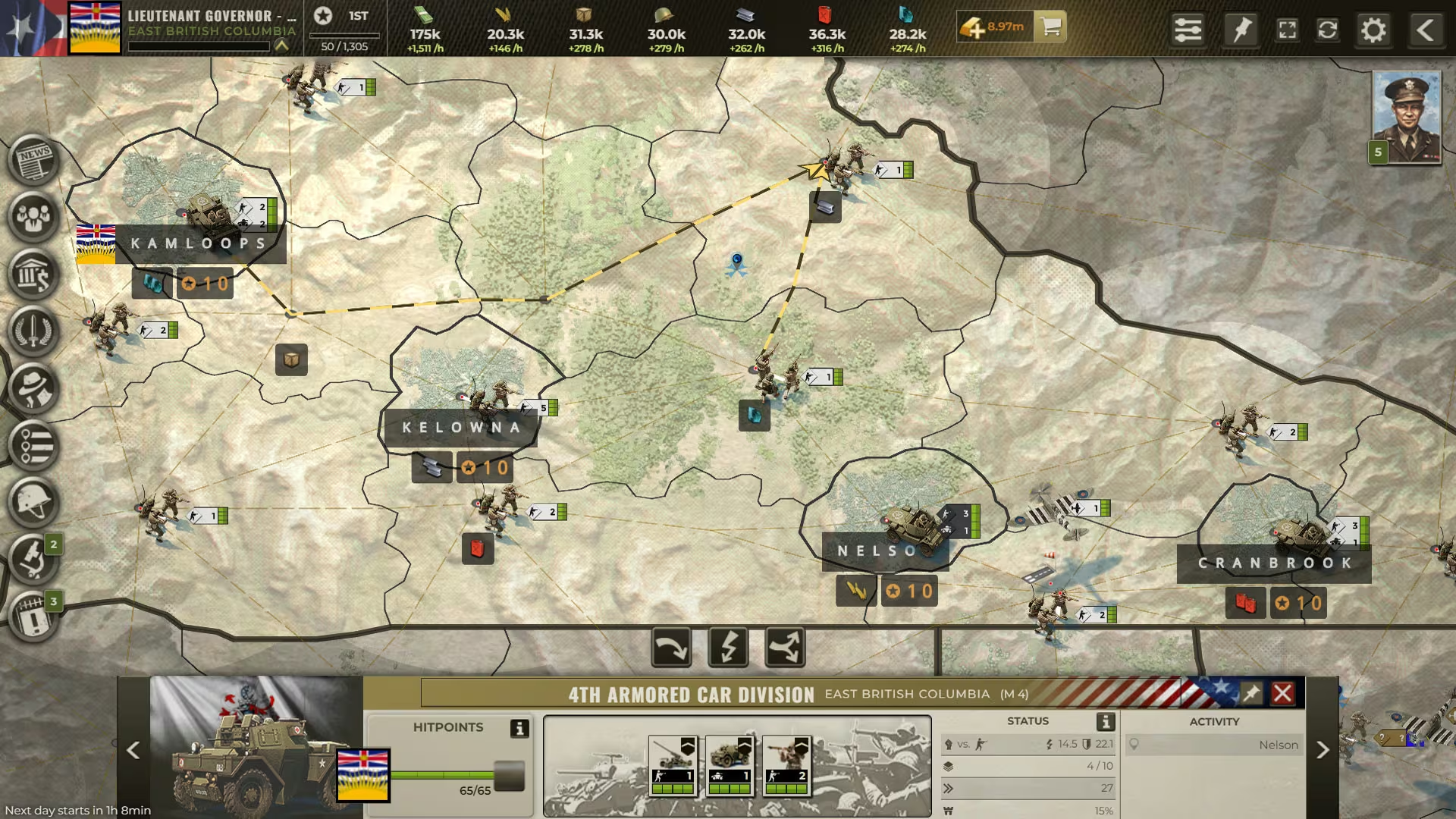
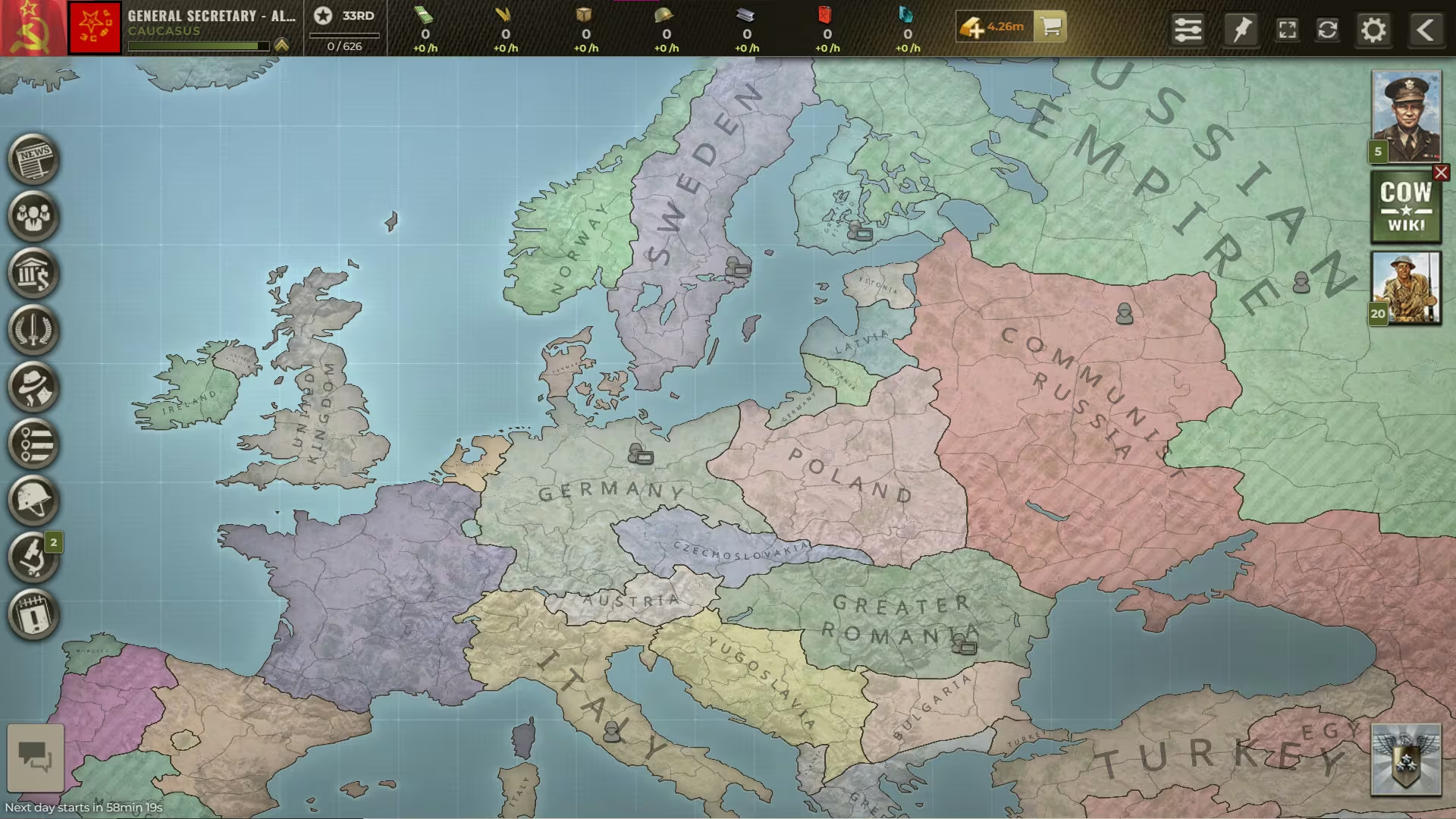
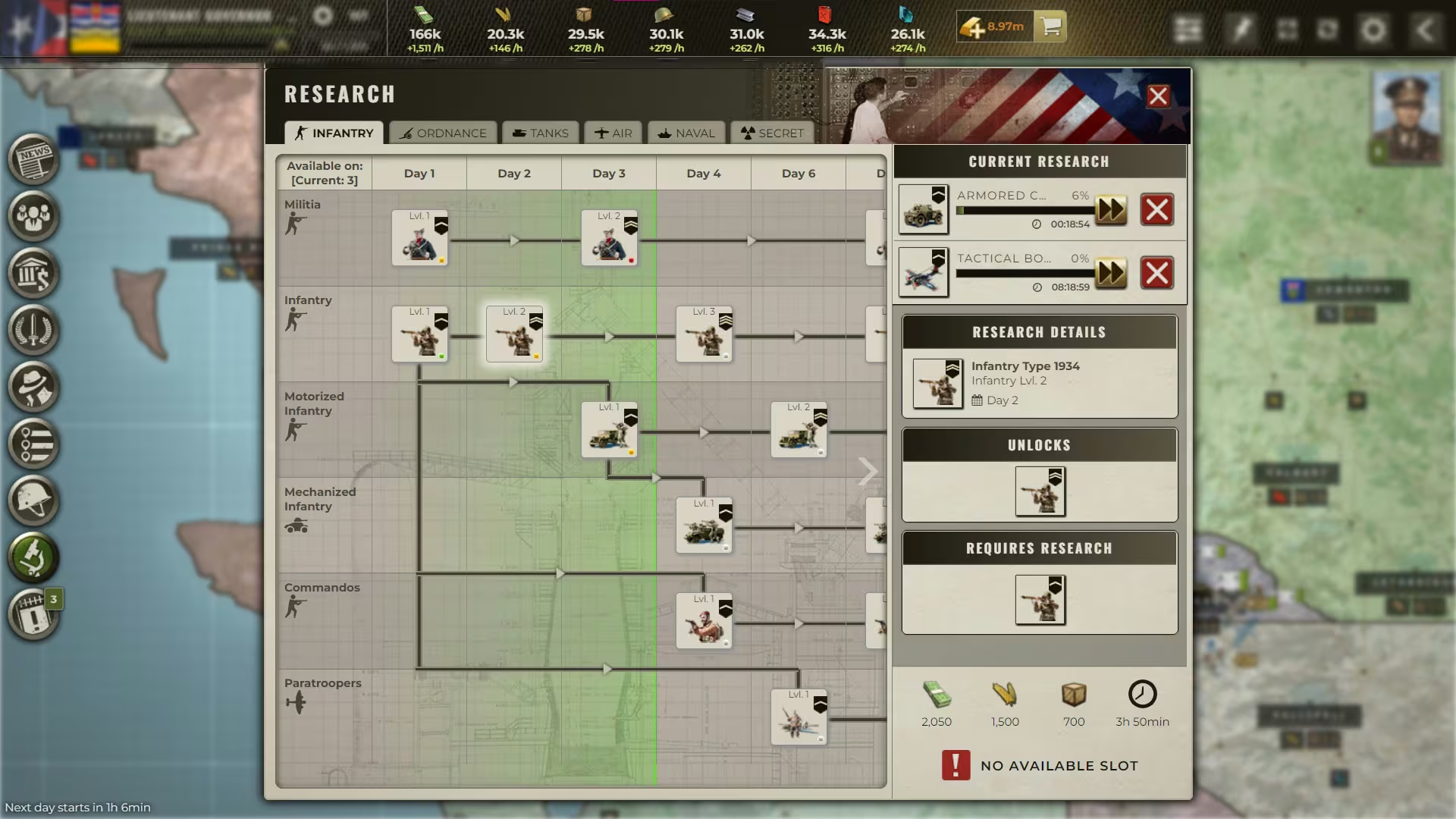
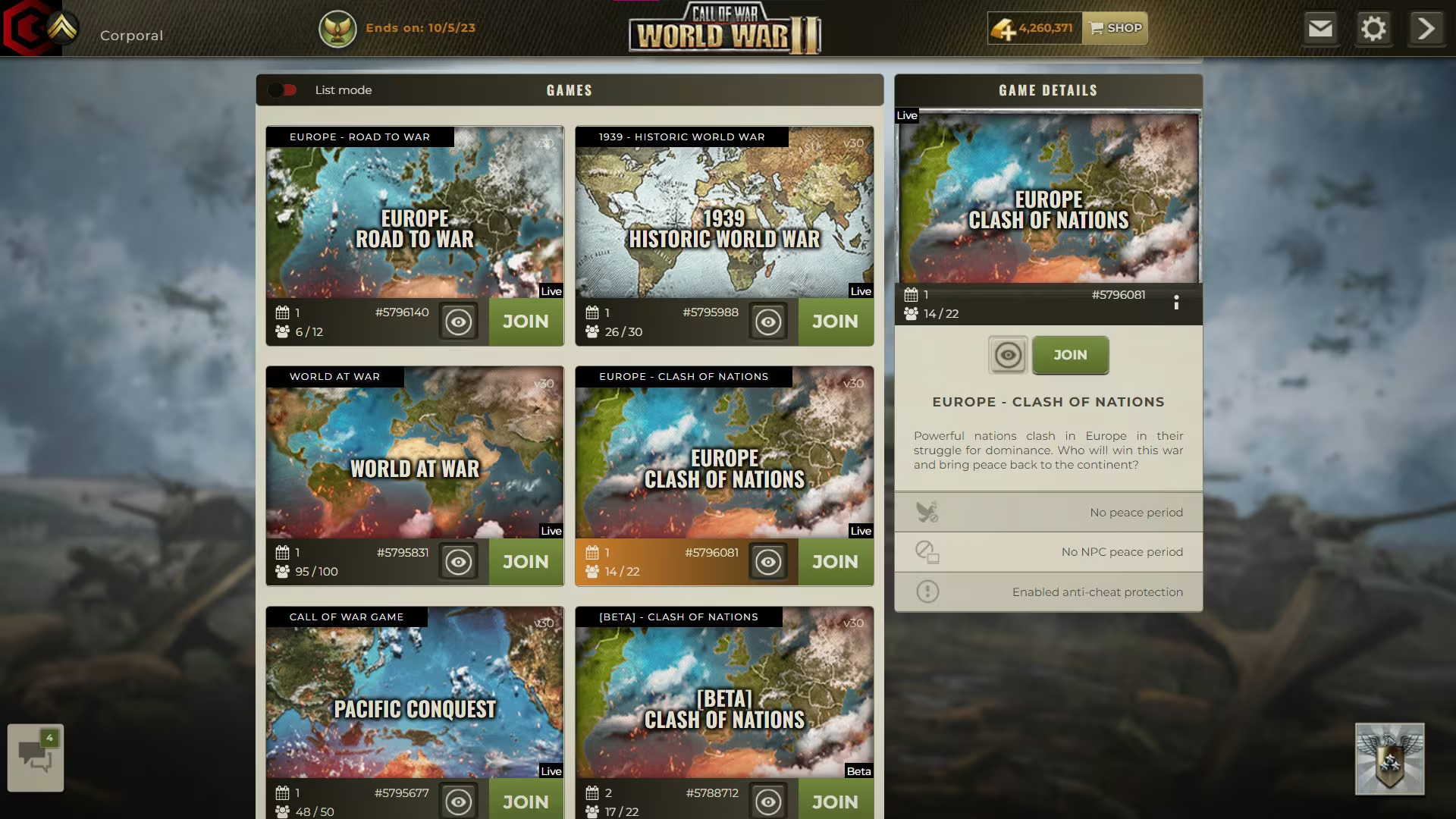
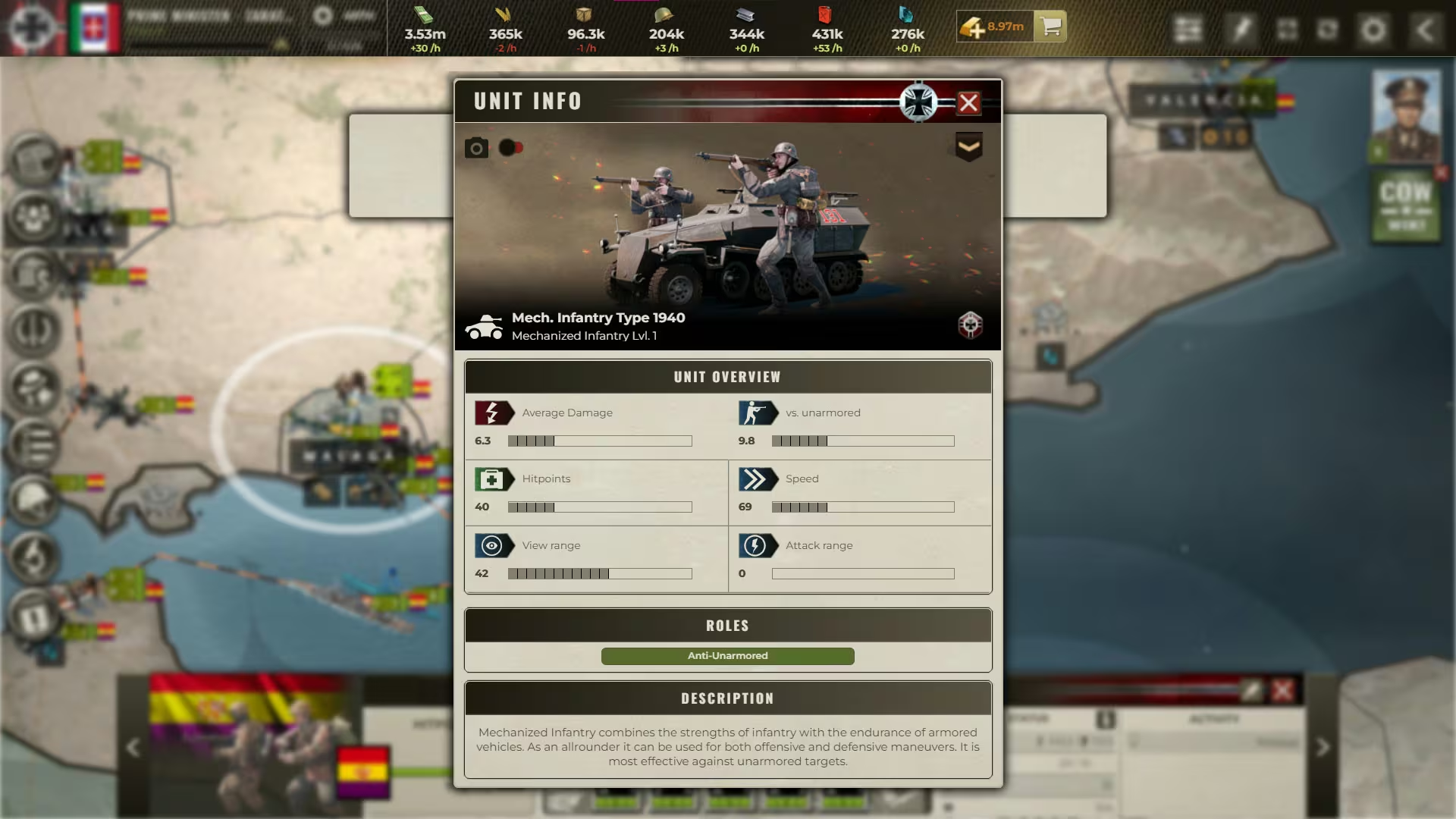
Take over the control of one of the mighty nations during the times of World War 2 in this persisting long-term strategy game. Conquer provinces, forge alliances and build up your economy in real-time. Research top secret weapons of World War 2 and become the one true superpower!
Global score
72/100
Genres
Massively Multiplayer, Simulator, Strategy, Free To Play
Similar games
Pros
- Free to play
- Deep strategic gameplay
- Long-term multiplayer matches
- Coalition and diplomacy mechanics
- Accessible on multiple platforms
Cons
- Pay-to-win elements
- Long match durations requiring time commitment
- Community toxicity and moderation issues
- Steep learning curve for new players
- Occasional bugs and glitches
Analysis
Less representative of its motivational profile, with noticeable differences. Motivations that often define this kind of title include Competition, Fellowship, Domination, Status. Here, the score leans higher than usual among comparable games on Idle. It leans lower than usual among comparable games on Fantasy, Expression.
How to use the graph
Similar games map
Each dot is a game. They are arranged from the same motivation profile as in the “Motivations” section below. Closer dots usually mean more similar reasons to play (exploration, competition, relaxation, etc.)—not that one game is “better” than another.
- Larger dot with a light outline: the game you are viewing.
- Colour: groups of games with comparable motivation patterns (statistical clusters).
- Hover a dot to see the game name; click to open its page.
- Scroll or double-click the chart to zoom out and see more games.
Why don’t the axes read like a score? This view uses t-SNE: it only keeps who is close to whom. The scales are not “good to bad” or hours played—they separate groups on the map. Read distance between dots, not the axis numbers.
Motivations
-
Autonomy4
"Players can direct their own strategies, choose nations, alliances, and tactics in a large-scale real-time strategy environment."
-
Competence4
"Game requires skillful planning, resource management, and strategic thinking to succeed, with feedback through victories and defeats."
-
Competition5
"Strong competitive multiplayer focus with matches involving dozens of players, leaderboards, and pay-to-win elements influencing outcomes."
-
Continuation5
"Long matches lasting days or weeks encourage habitual play and long-term engagement, with players investing significant time."
-
Cooperation3
"Coalitions and alliances allow teamwork and diplomatic cooperation, though trust issues and betrayals are common."
-
Creativity2
"Players can experiment with different strategies and doctrines, but game structures and units are predefined."
-
Domination4
"Players exert control over others through military conquest and diplomacy; pay-to-win players can dominate weaker opponents."
-
Escapism3
"Players use the game as a distraction and immersive experience in WWII strategy, though some report stress and paranoia."
-
Expectation-4
"Most players engage voluntarily out of interest and enjoyment rather than obligation or external pressure."
-
Experimenting3
"Players try various strategies, alliances, and tactics; some experimentation encouraged by diverse game mechanics."
-
Exploration1
"Limited exploration as maps and territories are known, but players discover strategic opportunities and diplomacy options."
-
Expression-2
"Minimal customization or self-expression; players mostly use standard units and visuals without personal modification."
-
Fantasy-3
"Focus on realistic WWII setting and plausible military scenarios rather than imaginative or fictional elements."
-
Fellowship3
"Community and alliances foster social interaction and group identity, though some toxicity and bans reported."
-
Growth3
"Players learn complex strategies and improve skills over time; game has a learning curve and depth."
-
Health-4
"Sedentary gameplay with long sessions; some players report negative effects on sleep and stress."
-
Idle4
"Real-time mechanics allow players to check in periodically rather than constant attention, but long waits exist."
-
Intimacy-3
"Social interactions are mostly strategic and surface-level; limited close emotional connections."
-
Leadership3
"Players lead alliances and coordinate group strategies, though leadership roles vary by player and match."
-
Progression4
"Players accumulate resources, units, and upgrades over time; progression is central to gameplay."
-
Relaxation-2
"Game can be stressful and demanding due to long matches and pay-to-win pressure, though some find it relaxing."
-
Sensation1
"Moderate sensory stimulation with functional graphics and sounds; not focused on intense audiovisual excitement."
-
Status3
"Recognition through rankings, leaderboards, and community reputation is important to many players."
-
Story0
"Minimal narrative or story immersion; gameplay focuses on strategy and multiplayer interaction rather than plot."
-
Strategy5
"Core gameplay revolves around deep strategic planning, resource management, and tactical decision-making."
-
Thrill3
"Players experience suspense and tension from long-term battles and uncertain outcomes."
-
Value3
"Free-to-play model with optional purchases; some players find good value, others criticize pay-to-win aspects."
-
Violence4
"Combat and destruction are central to gameplay, with military units engaging in battles and territorial conquest."
-
Survival3
"Players must manage threats and defend territories to survive and succeed in matches."
Last update: 29/04/2026