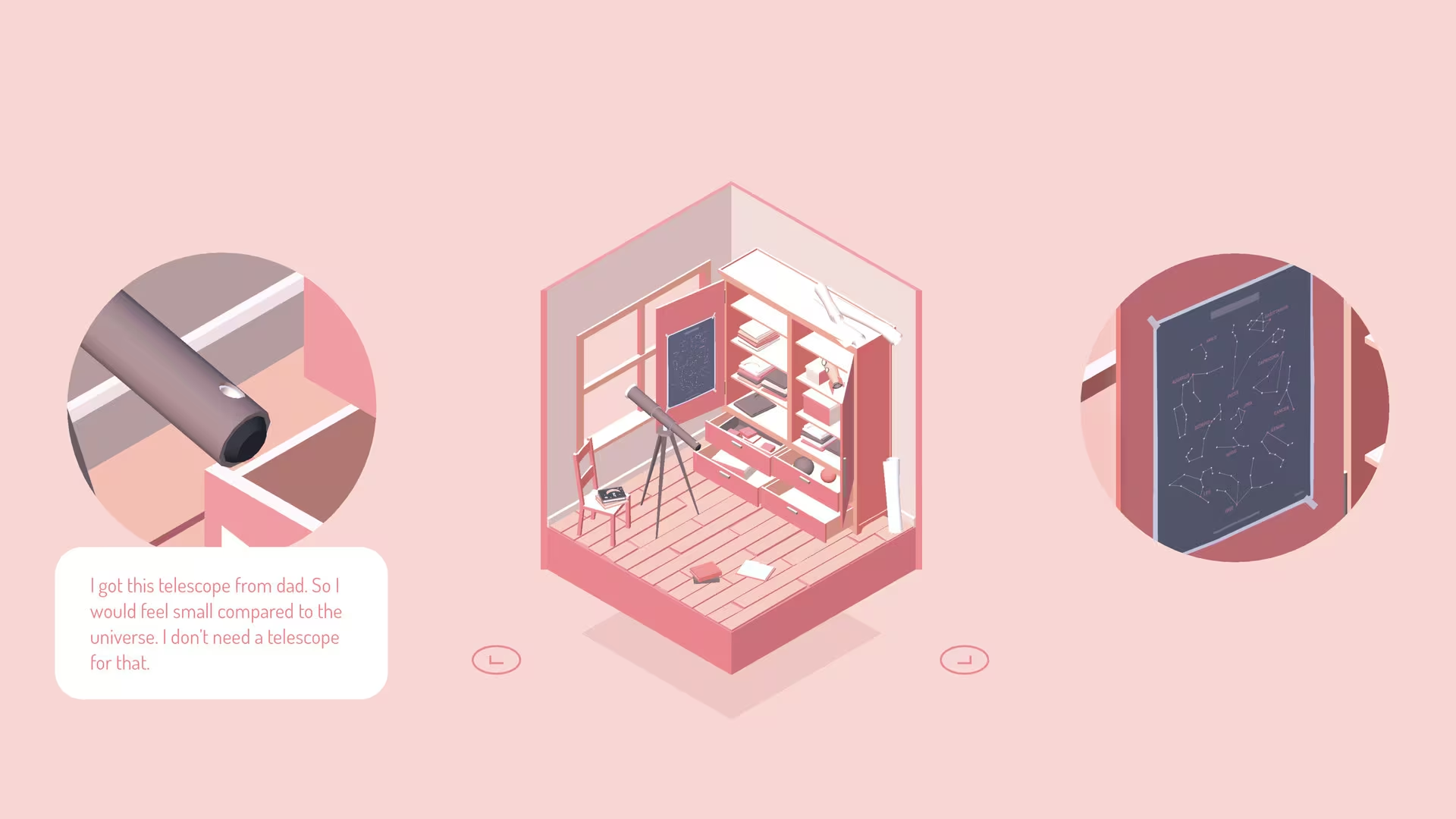
The Almost Gone Thumbnail

The Almost Gone similar games & best alternatives
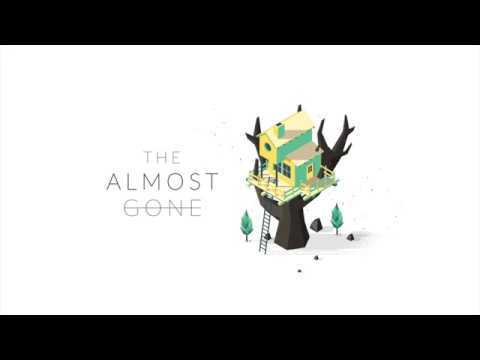
The Almost Gone

PC (Microsoft Windows), iOS, Mac, Android, Nintendo Switch • 2020

Related articles

Quick resume

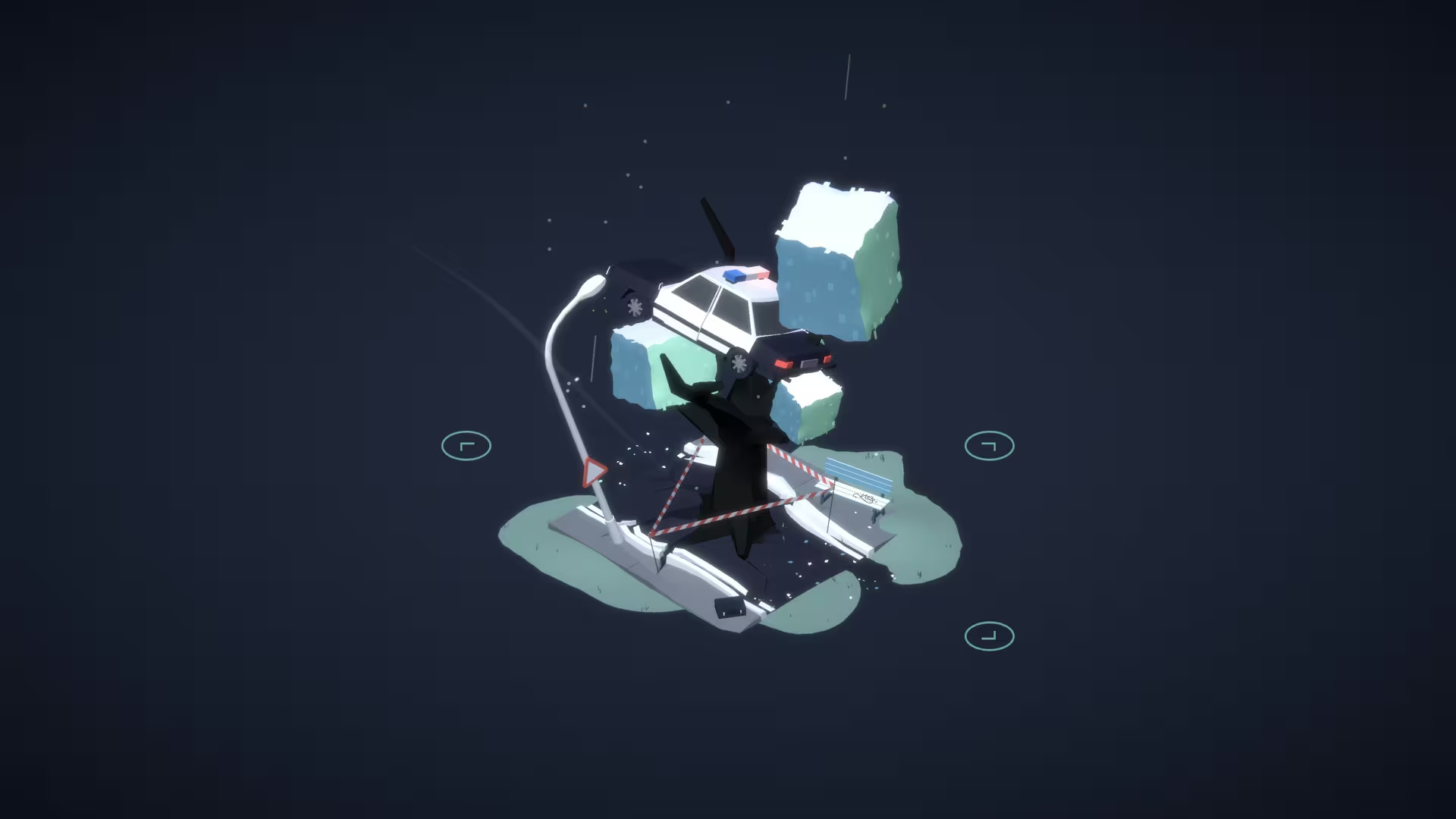
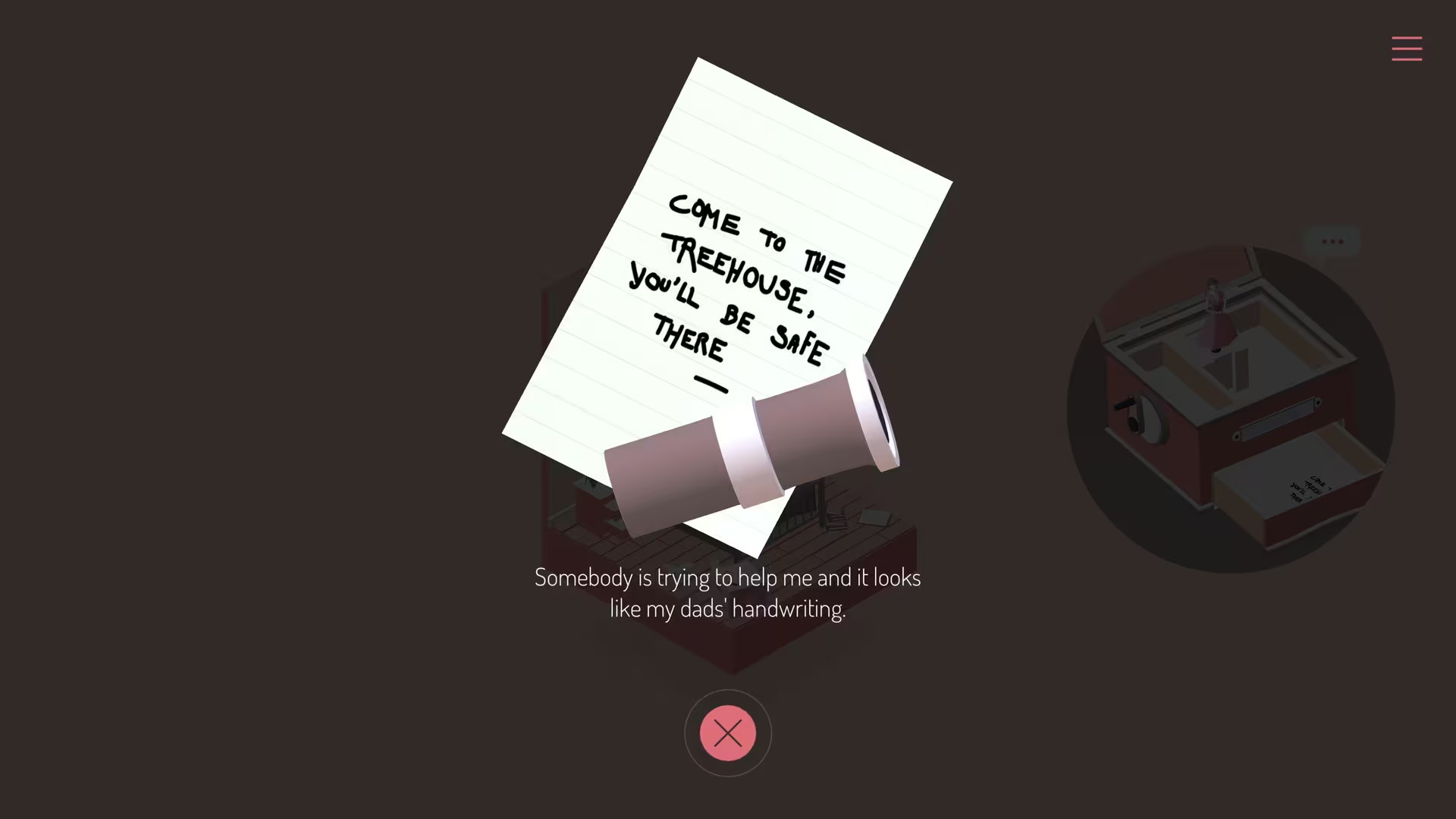
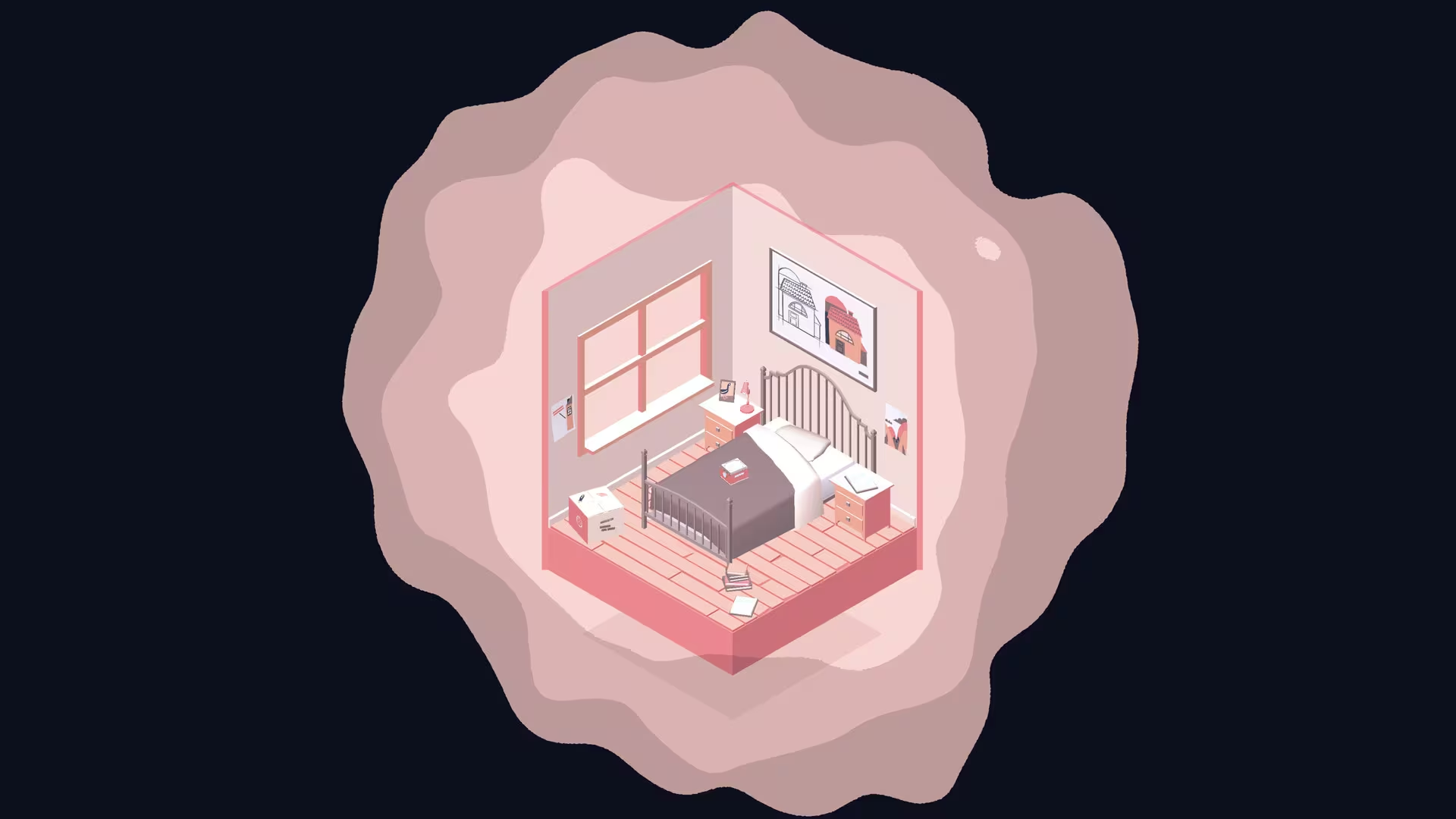
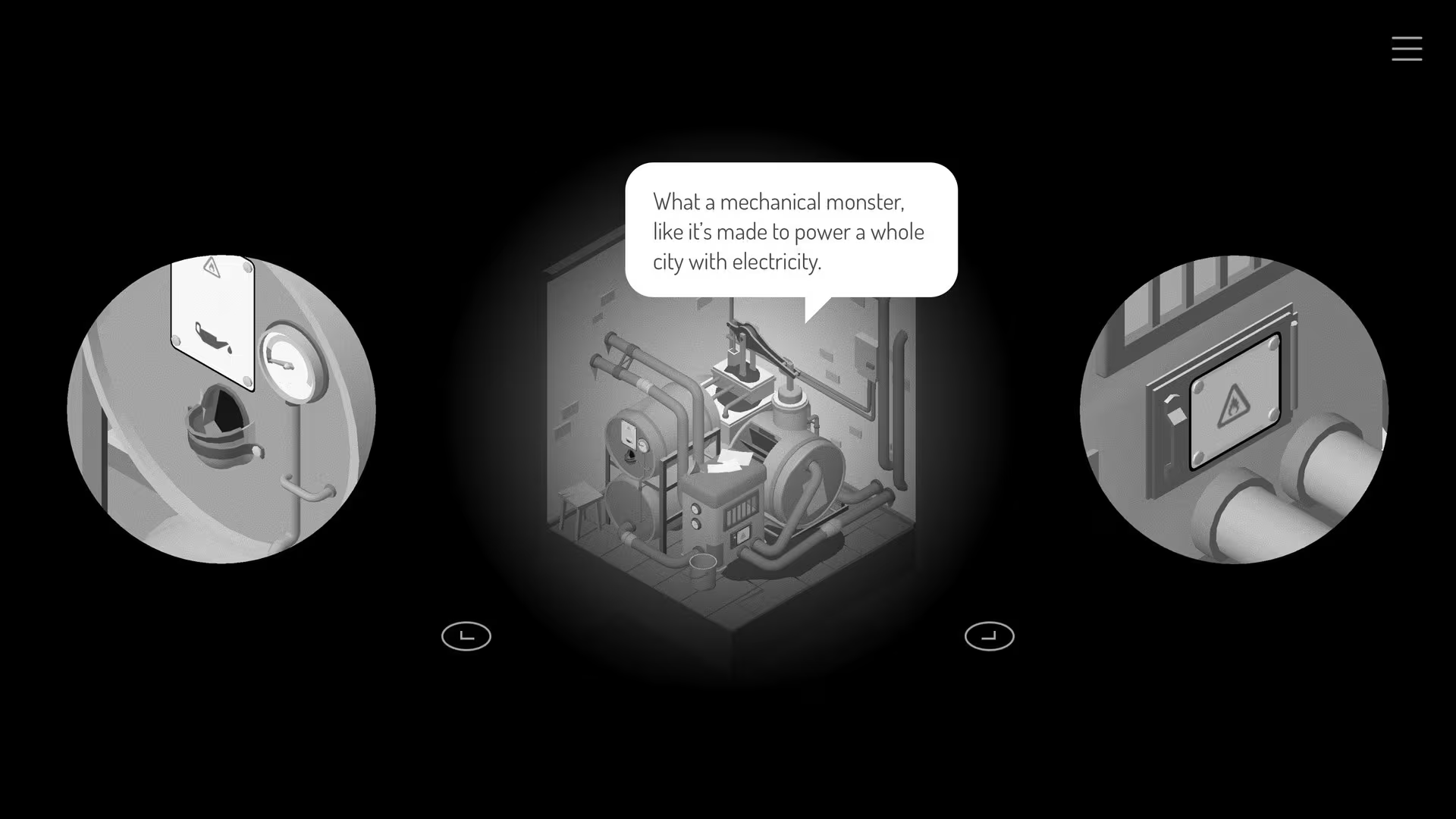
Experience the intricate dioramas and connections of your life, and the ripples we all make, in this award-winning narrative puzzle game about death, loss, and mental health.

Global score

80/100

Genres

Adventure, Indie, Point-and-click, Simulator, Puzzle

Similar games

    Pros

    • Unique rotating diorama puzzle mechanic
    • Atmospheric and emotional narrative
    • Beautiful minimalist art style
    • Accessible puzzle difficulty
    • Immersive sound design

    Cons

    • Story ending is ambiguous and unsatisfying for some
    • Short game length
    • Some tedious achievements requiring idling
    • Navigation between rooms can be confusing
    • Controls can feel clunky or unintuitive

    Analysis

    Broadly representative of its motivational profile, with a few distinct shifts. Motivations that often define this kind of title include Survival, Violence, Fellowship, Expression. Here, the score leans higher than usual among comparable games on Thrill. It leans lower than usual among comparable games on Expression, Value.

    How to use the graph
    Similar games map

    Each dot is a game. They are arranged from the same motivation profile as in the “Motivations” section below. Closer dots usually mean more similar reasons to play (exploration, competition, relaxation, etc.)—not that one game is “better” than another.

    • Larger dot with a light outline: the game you are viewing.
    • Colour: groups of games with comparable motivation patterns (statistical clusters).
    • Hover a dot to see the game name; click to open its page.
    • Scroll or double-click the chart to zoom out and see more games.

    Why don’t the axes read like a score? This view uses t-SNE: it only keeps who is close to whom. The scales are not “good to bad” or hours played—they separate groups on the map. Read distance between dots, not the axis numbers.

    Motivations

    • Autonomy
      3

      "Players explore dioramas and solve puzzles with freedom to rotate environments and investigate at their own pace."

    • Competence
      2

      "Puzzles are generally straightforward with some requiring attention to detail; players feel satisfaction when solving but difficulty is moderate."

    • Competition
      -5

      "No competitive elements or player comparison; focus is on individual puzzle solving and story exploration."

    • Continuation
      1

      "Some players engaged enough to complete the game in one sitting and replay for achievements, but overall short length limits long-term habitual play."

    • Cooperation
      -5

      "Single-player experience with no cooperative or multiplayer features."

    • Creativity
      2

      "Players creatively piece together story elements and solve puzzles using environmental clues; limited creation or modification of game elements."

    • Domination
      -5

      "No elements of exerting control or superiority over others; purely individual experience."

    • Escapism
      3

      "Players use the game to immerse in a dark, emotional narrative that provides a form of escape from reality."

    • Expectation
      -4

      "Players engage voluntarily out of interest in puzzles and story; no obligation or external pressure noted."

    • Experimenting
      2

      "Exploration of rotating dioramas and puzzle solving encourages trying different perspectives and approaches."

    • Exploration
      3

      "Players explore multiple interconnected rooms and environments, discovering clues and story details."

    • Expression
      -5

      "No customization or self-expression features; presentation is fixed and standardized."

    • Fantasy
      1

      "Story involves abstract and metaphorical elements related to trauma and death, but grounded in realistic emotional themes."

    • Fellowship
      -5

      "Experience is solitary with no social or community interaction."

    • Growth
      2

      "Players develop puzzle-solving skills and interpret narrative clues, gaining insight into story and mechanics."

    • Health
      -5

      "No physical activity or health-related gameplay elements."

    • Idle
      -3

      "Requires focused attention to solve puzzles and explore; some achievements encourage idling but core gameplay demands engagement."

    • Intimacy
      -4

      "Minimal social interaction; emotional connection is with story and characters rather than other players."

    • Leadership
      -5

      "No leadership or group management elements present."

    • Progression
      3

      "Players progress by collecting items and unlocking new areas and story segments."

    • Relaxation
      2

      "Atmosphere and pacing provide a contemplative, sometimes tense experience but generally balanced for flow."

    • Sensation
      2

      "Visuals and sound design create an eerie and immersive mood, though not highly stimulating or intense."

    • Status
      -5

      "No social recognition or status systems."

    • Story
      4

      "Strong narrative focus with emotional depth and mystery, though some find the ending ambiguous or unsatisfying."

    • Strategy
      1

      "Puzzles require some logical thinking and observation but are generally straightforward without complex planning."

    • Thrill
      2

      "Atmosphere creates suspense and unease, contributing to a mild thrill experience."

    • Value
      0

      "Mixed opinions on value; short length and some tedious achievements affect perceived return, but many find it worth price on sale."

    • Violence
      -4

      "No combat or destruction; focus is on puzzle solving and narrative exploration."

    • Survival
      -5

      "No survival mechanics or threat avoidance; stable puzzle environment."

    Last update: 29/04/2026