The White Laboratory Thumbnail

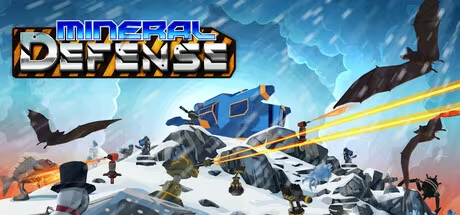
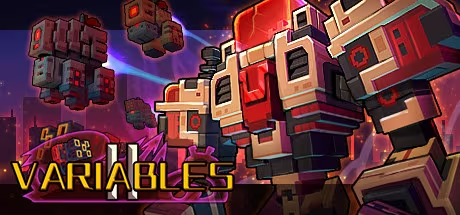
The White Laboratory similar games & best alternatives
The White Laboratory

PC (Microsoft Windows) • 2019

Related articles

Quick resume

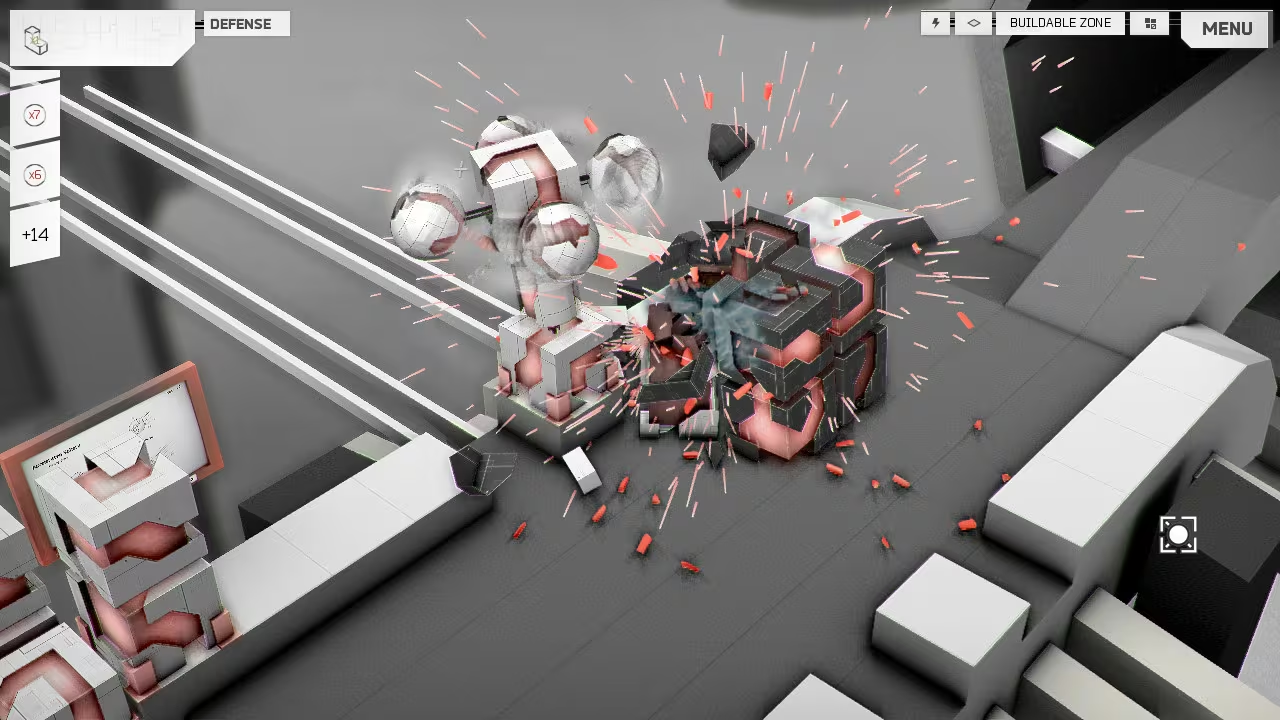
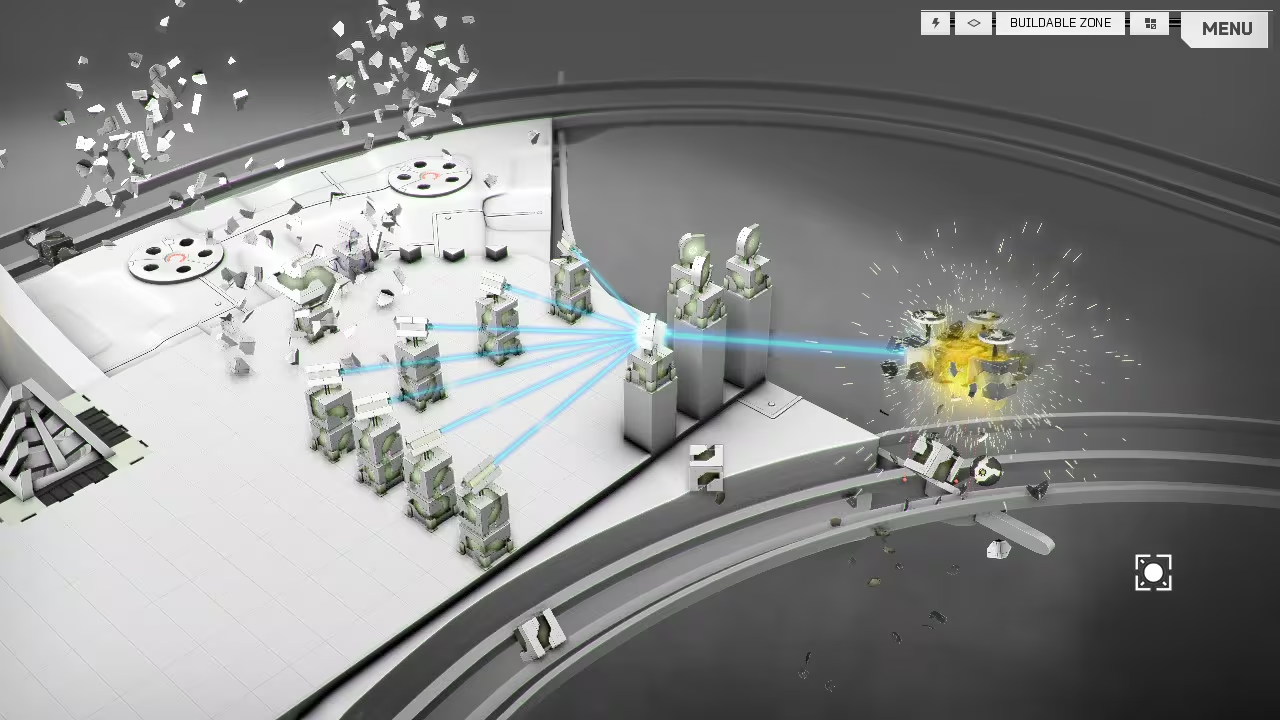
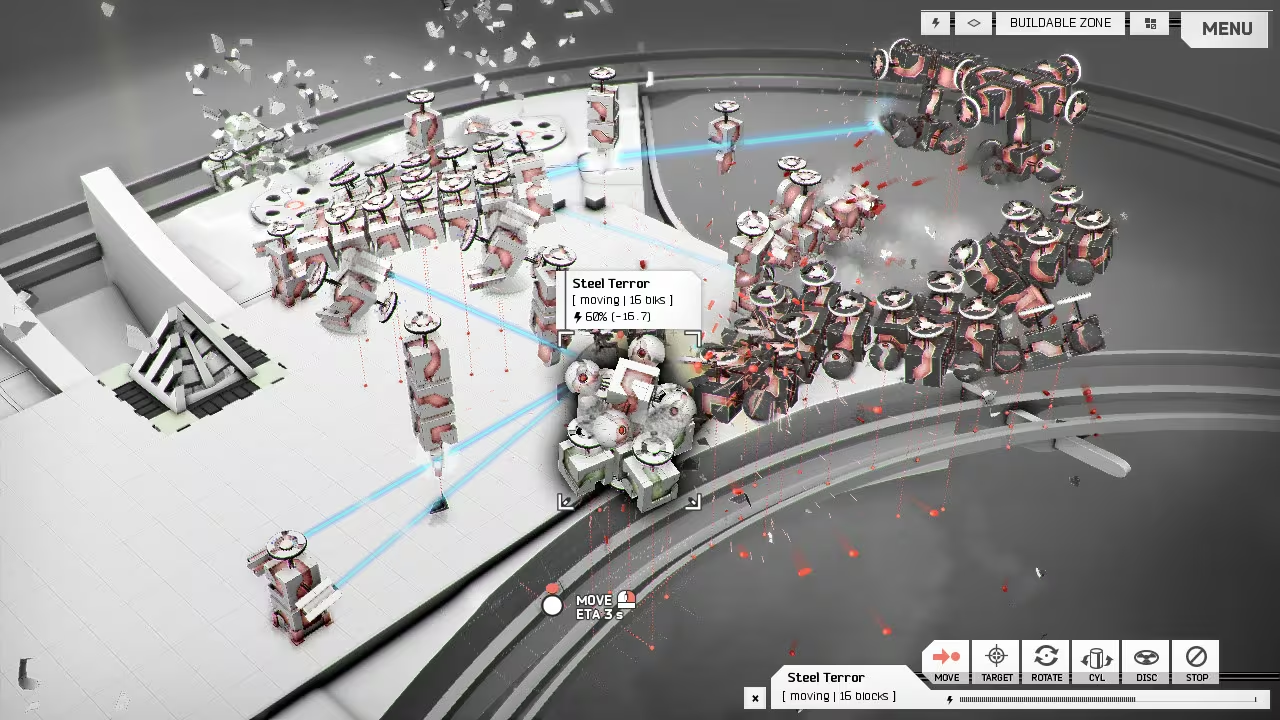
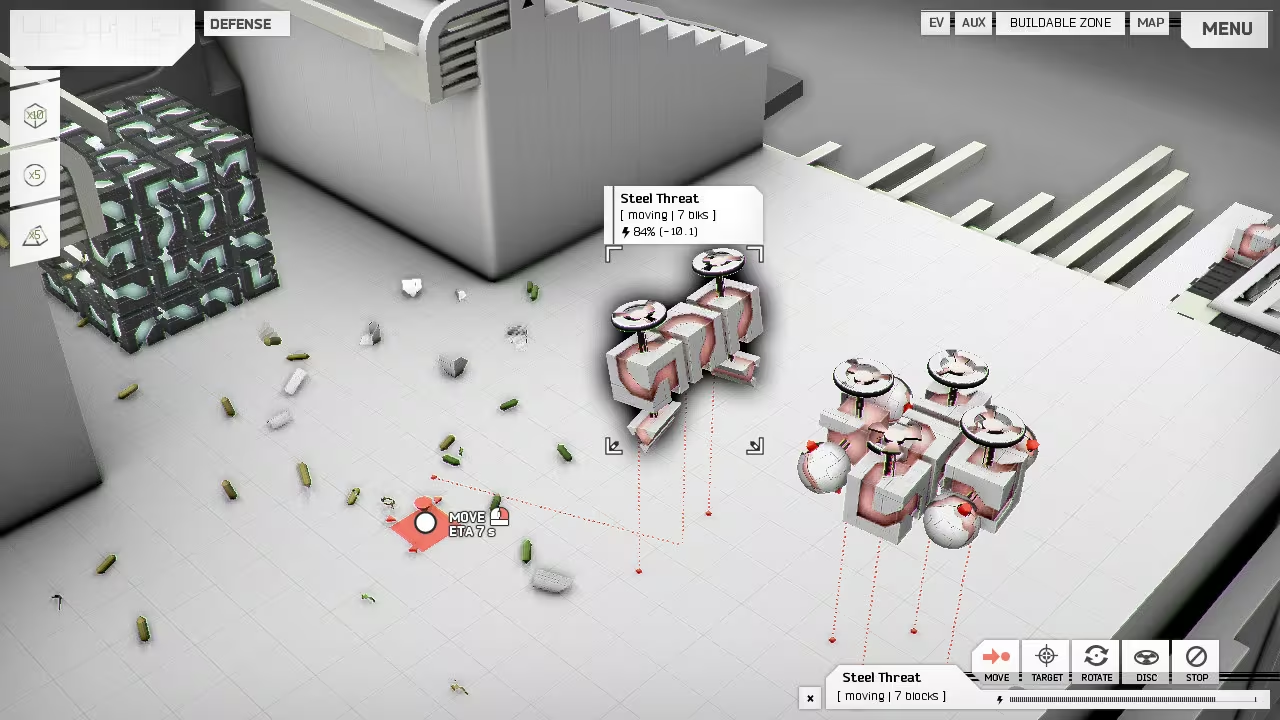
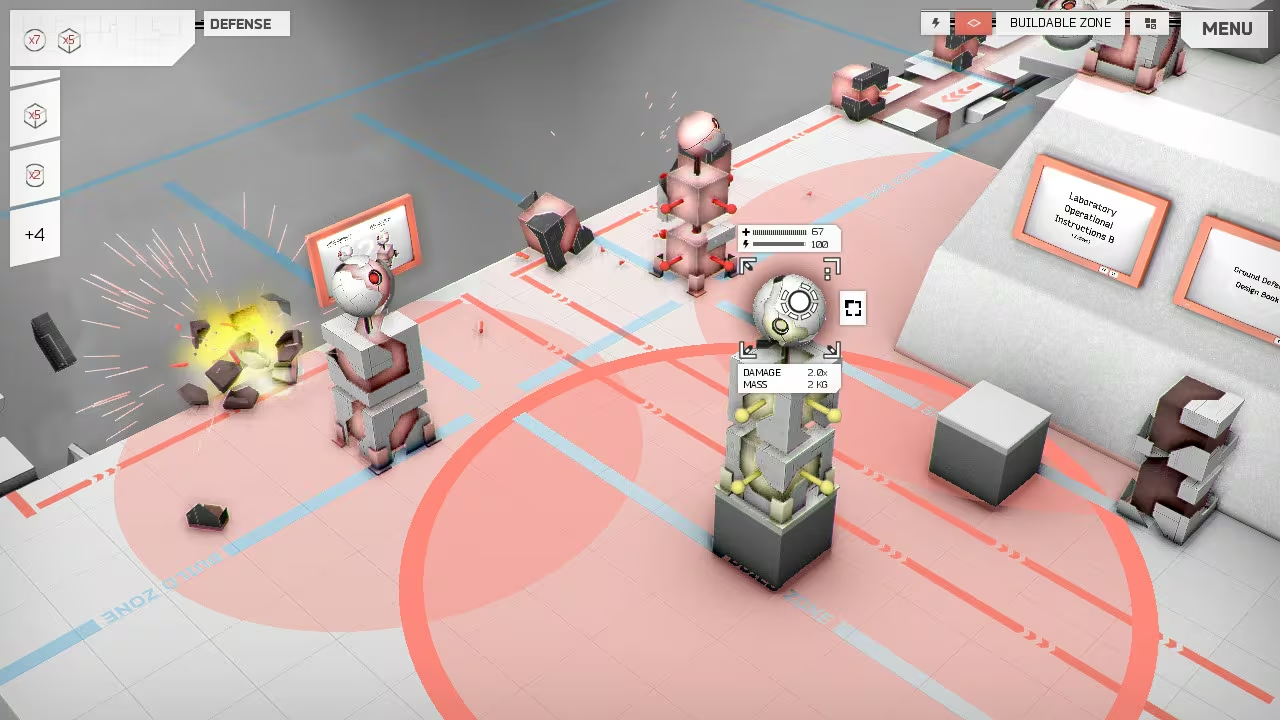
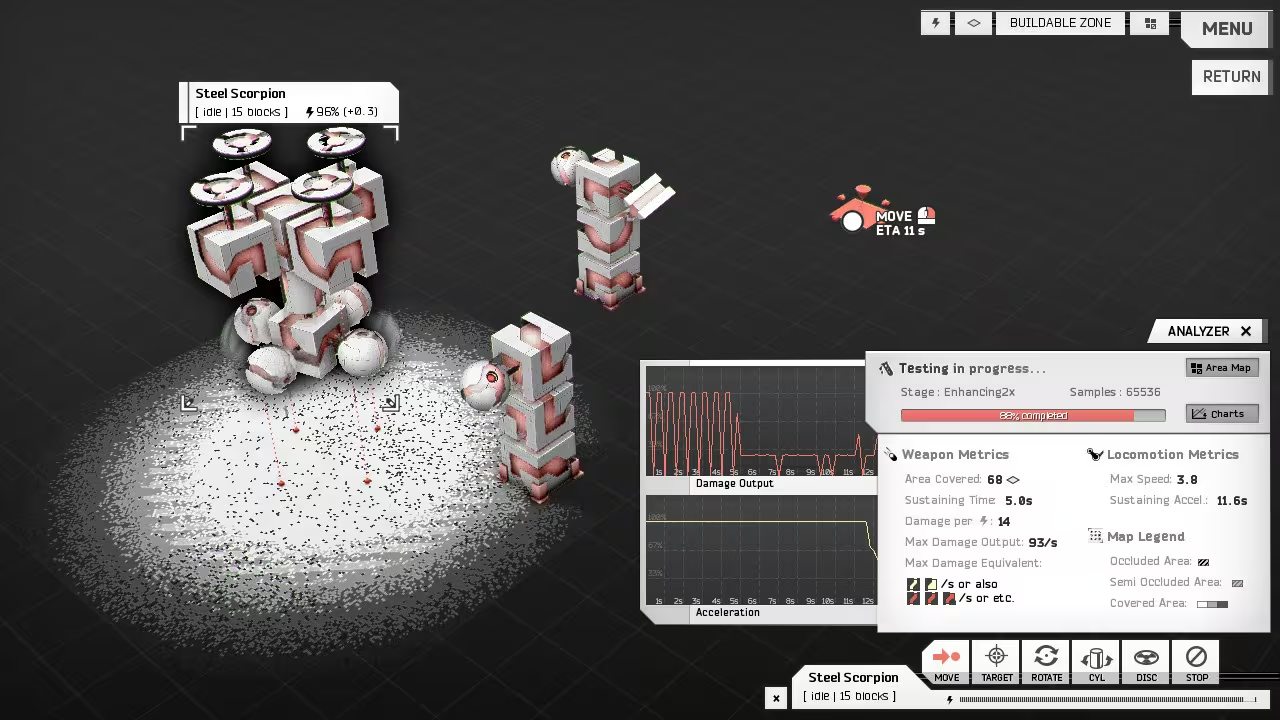
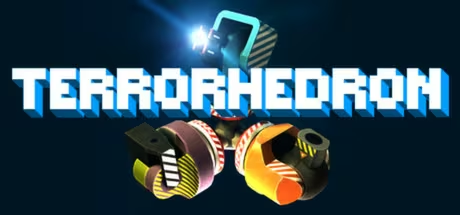
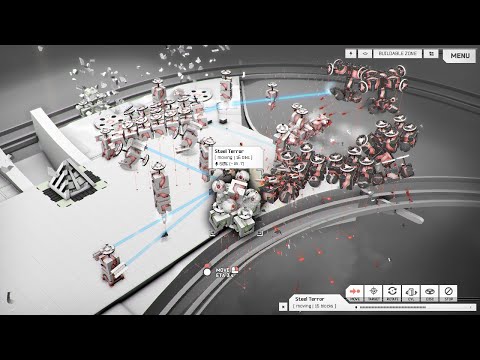
The White Laboratory is a sandbox style physics-based tower defense and RTS game in which you modularly build and command robotic structures. Use them to defend against or conquer other disobedient mechanical blocks on a facility floating in the atmosphere of a remote gas planet.

Global score

78/100

Genres

Indie, Strategy

Similar games

    Pros

    • Innovative modular tower defense and rts hybrid
    • High creativity and freedom in building
    • Realistic physics simulation
    • Minimalist sci-fi aesthetic
    • Sandbox mode for experimentation

    Cons

    • Limited content and short campaign
    • Clunky controls and camera issues
    • Physics can be wonky and frustrating
    • Lack of multiplayer or social features
    • Bugs and crashes reported by users

    Analysis

    Less representative of its motivational profile, with noticeable differences. Motivations that often define this kind of title include Fellowship, Cooperation, Leadership, Violence. It leans lower than usual among comparable games on Fantasy, Relaxation, Value.

    How to use the graph
    Similar games map

    Each dot is a game. They are arranged from the same motivation profile as in the “Motivations” section below. Closer dots usually mean more similar reasons to play (exploration, competition, relaxation, etc.)—not that one game is “better” than another.

    • Larger dot with a light outline: the game you are viewing.
    • Colour: groups of games with comparable motivation patterns (statistical clusters).
    • Hover a dot to see the game name; click to open its page.
    • Scroll or double-click the chart to zoom out and see more games.

    Why don’t the axes read like a score? This view uses t-SNE: it only keeps who is close to whom. The scales are not “good to bad” or hours played—they separate groups on the map. Read distance between dots, not the axis numbers.

    Motivations

    • Autonomy
      5

      "Players have full freedom to build and customize towers and units with modular parts, deciding their own strategies and designs."

    • Competence
      4

      "The game requires skillful management of physics-based building, strategic placement, and real-time adjustments, with a notable learning curve."

    • Competition
      -3

      "Focus is on single-player experience with no multiplayer or leaderboards; players compete against game challenges rather than others."

    • Continuation
      2

      "Players enjoy the unique mechanics and sandbox mode, but limited content and bugs reduce long-term engagement."

    • Cooperation
      -5

      "No multiplayer or cooperative gameplay; all play is individual and self-directed."

    • Creativity
      5

      "High creativity encouraged through modular building of towers and flying units, with sandbox mode for experimentation."

    • Domination
      -5

      "No evidence of dominance or power over others; gameplay is solitary and cooperative social dynamics are absent."

    • Escapism
      3

      "Players use the game as a challenging distraction and creative outlet, escaping real life through strategic and building gameplay."

    • Expectation
      -4

      "Players engage voluntarily out of interest and enjoyment; no indication of obligation or external pressure."

    • Experimenting
      5

      "Strong emphasis on trying new designs, testing physics, and experimenting with different tower and unit configurations."

    • Exploration
      3

      "Players explore different levels and strategies, including non-linear progression and sandbox challenges."

    • Expression
      4

      "Players express themselves through unique tower and unit designs, saved in an invention database."

    • Fantasy
      -2

      "Game is grounded in realistic physics and plausible sci-fi setting rather than high fantasy or improbable fiction."

    • Fellowship
      -5

      "No social or community features; play is solitary without group identity or shared achievements."

    • Growth
      3

      "Players develop skills in physics-based building and strategy, though content limitations restrict extended growth."

    • Health
      -5

      "Sedentary gameplay with no physical activity or health-related features."

    • Idle
      -3

      "Requires focused attention and micromanagement; not suited for casual or background play."

    • Intimacy
      -5

      "No social or emotional connections formed; interactions are limited to single-player gameplay."

    • Leadership
      Insufficient data
    • Progression
      3

      "Players accumulate and manage modular parts and upgrades, but progression is limited by content and level design."

    • Relaxation
      -1

      "Gameplay can be tense and challenging, with some players finding it stressful due to difficulty spikes and physics issues."

    • Sensation
      2

      "Enjoyment from visual style, sound design, and physics-based interactions, though sensory input is moderate and minimalistic."

    • Status
      -5

      "No social recognition or status systems present."

    • Story
      1

      "Minimal narrative context; some background and setting provided but gameplay is mostly mechanics-driven."

    • Strategy
      5

      "Strong strategic elements in tower placement, resource management, and real-time tactical decisions."

    • Thrill
      2

      "Some tension and challenge from enemy waves and physics unpredictability, but not high suspense or risk."

    • Value
      1

      "Generally considered worth the price by players, though some feel content is lacking and bugs reduce value."

    • Violence
      2

      "Combat involves destroying enemy units and structures, but violence is abstract and mechanical rather than graphic."

    • Survival
      4

      "Core gameplay involves defending base and surviving enemy attacks with resource and structural management."

    Last update: 29/04/2026