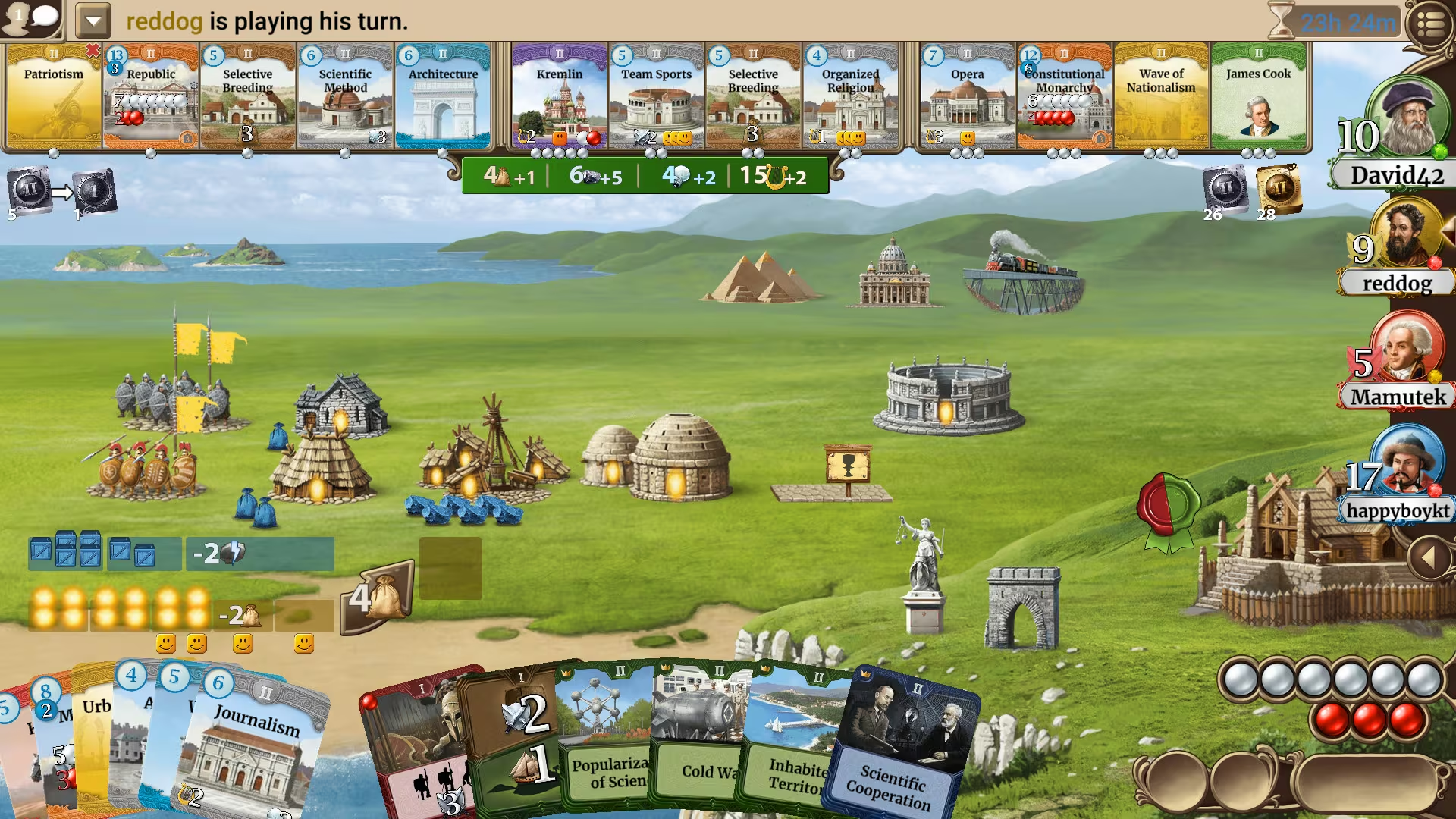
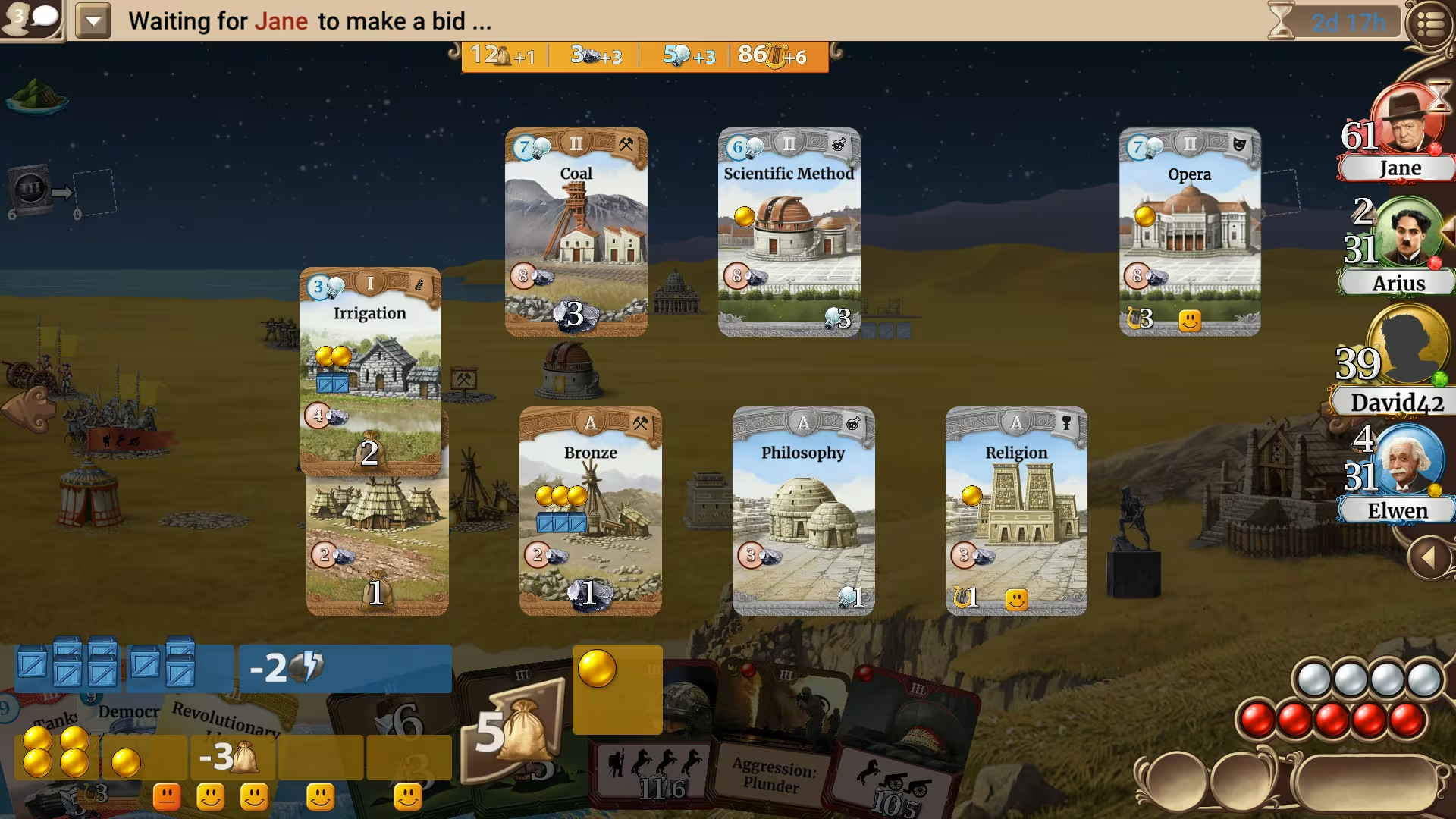
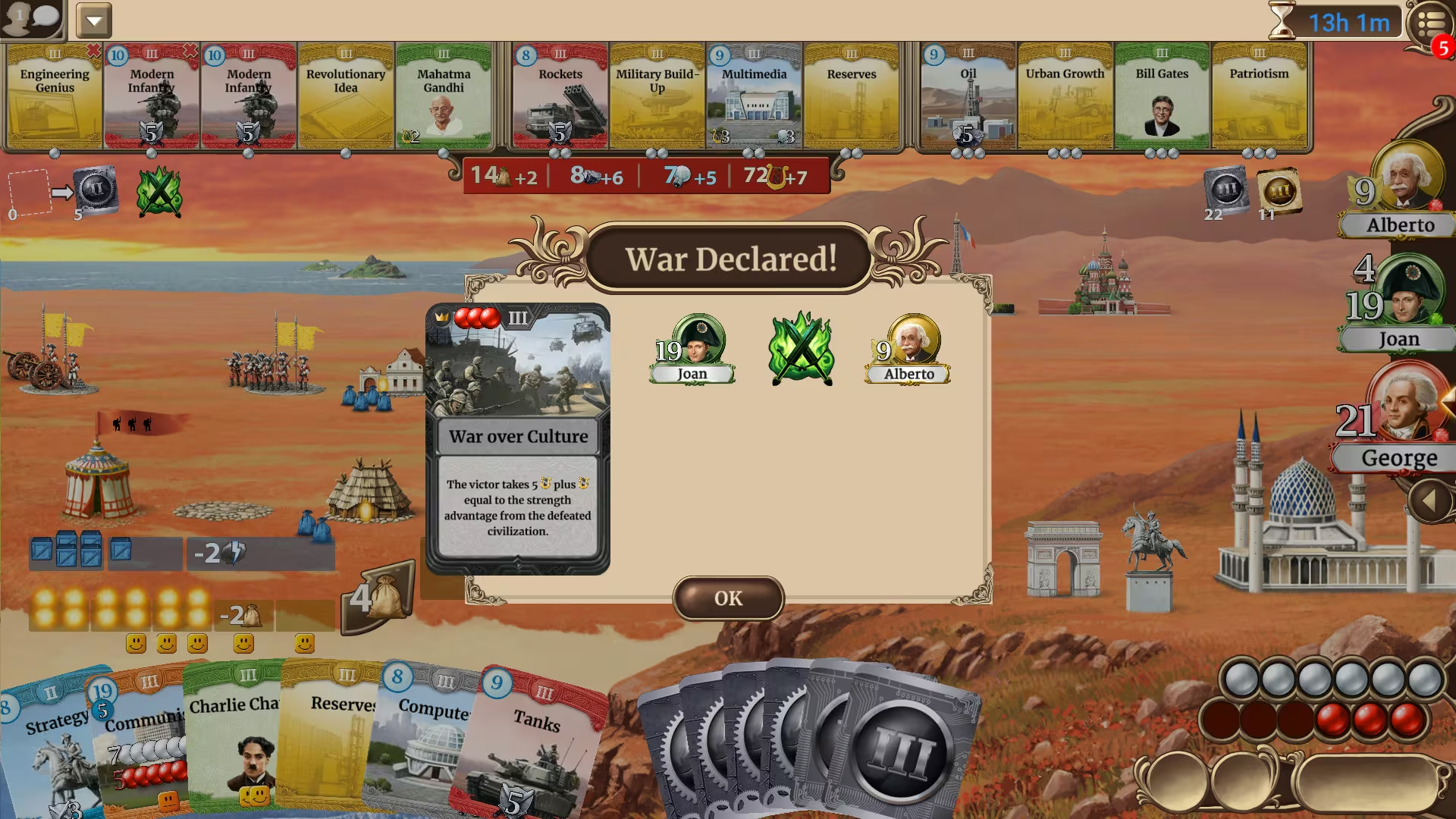
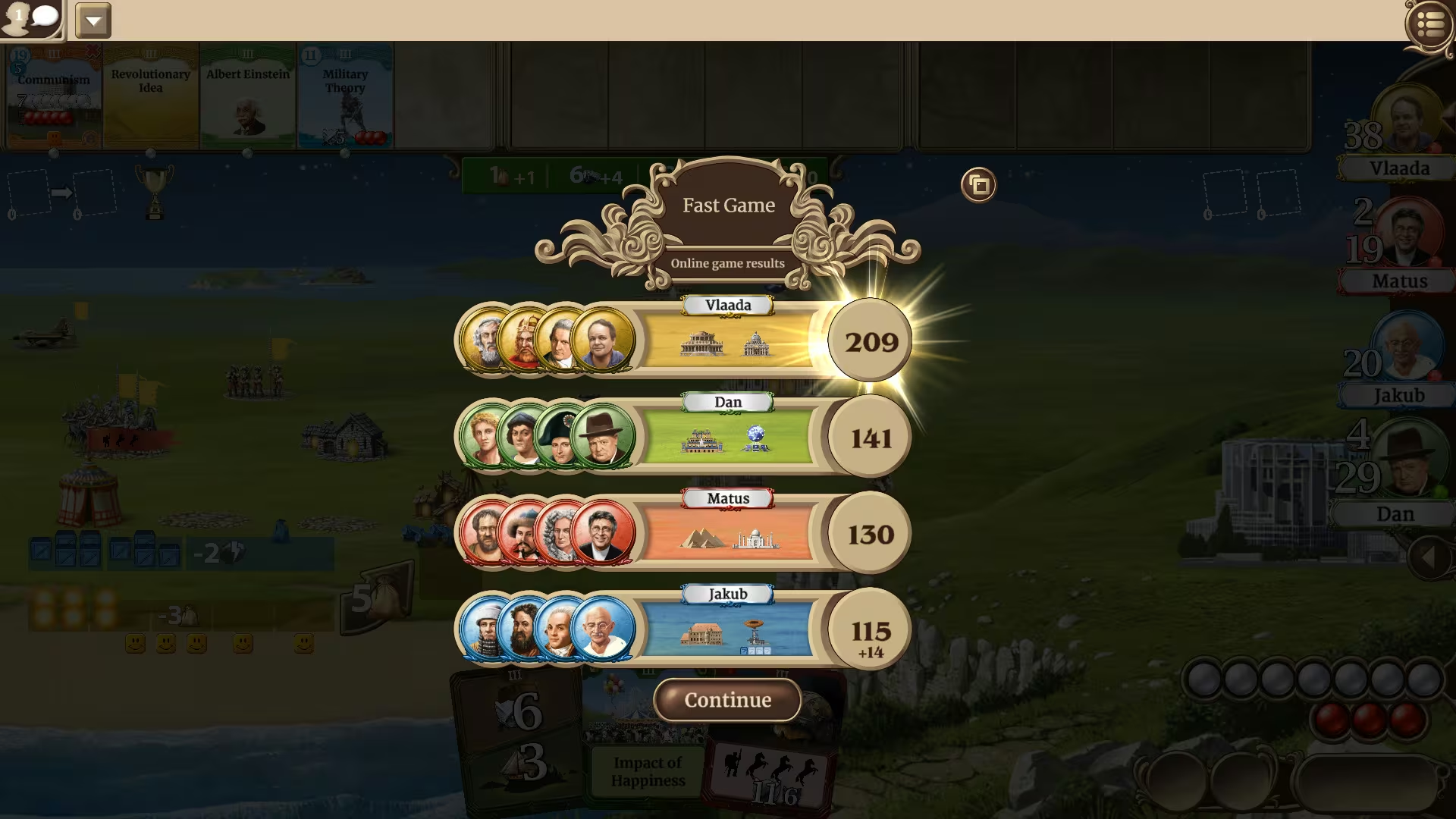
Through the Ages Thumbnail

Through the Ages similar games & best alternatives
Through the Ages

PC (Microsoft Windows) • 2018

Related articles

Quick resume

Legendary board game classic from award winning designer Vlaada Chvátil

Global score

91/100

Genres

Indie, Strategy

Similar games

    Pros

    • Deep and balanced strategic gameplay
    • Excellent tutorial and user interface
    • Strong ai and multiplayer modes
    • High replayability with challenges and expansions
    • Cross-platform asynchronous play

    Cons

    • Steep learning curve for new players
    • Graphics are functional but not flashy
    • Multiplayer games can be slow due to player thinking time
    • Some bugs and occasional crashes reported
    • Limited cooperative gameplay options

    Analysis

    Less representative of its motivational profile, with noticeable differences. Motivations that often define this kind of title include Competition, Fellowship, Domination, Status. Here, the score leans higher than usual among comparable games on Idle. It leans lower than usual among comparable games on Cooperation, Fantasy.

    How to use the graph
    Similar games map

    Each dot is a game. They are arranged from the same motivation profile as in the “Motivations” section below. Closer dots usually mean more similar reasons to play (exploration, competition, relaxation, etc.)—not that one game is “better” than another.

    • Larger dot with a light outline: the game you are viewing.
    • Colour: groups of games with comparable motivation patterns (statistical clusters).
    • Hover a dot to see the game name; click to open its page.
    • Scroll or double-click the chart to zoom out and see more games.

    Why don’t the axes read like a score? This view uses t-SNE: it only keeps who is close to whom. The scales are not “good to bad” or hours played—they separate groups on the map. Read distance between dots, not the axis numbers.

    Motivations

    • Autonomy
      4

      "Players have freedom to choose cards, leaders, strategies, and manage their civilization with many viable approaches."

    • Competence
      5

      "The game requires skillful decision-making, strategic planning, and mastery of complex mechanics with strong AI opponents."

    • Competition
      4

      "Strong multiplayer focus with ranked modes, leaderboards, and competitive asynchronous play."

    • Continuation
      4

      "High replayability with hundreds of hours logged, challenges, and long-term engagement."

    • Cooperation
      -3

      "Primarily competitive multiplayer and single-player against AI; limited cooperative gameplay."

    • Creativity
      3

      "Players create unique civilization builds and strategies by combining cards and leaders."

    • Domination
      3

      "Competitive dominance through military and cultural superiority is a key aspect."

    • Escapism
      3

      "Provides immersive distraction through deep strategic gameplay and historical progression."

    • Expectation
      -4

      "Players engage voluntarily out of intrinsic interest and enjoyment of strategy games."

    • Experimenting
      4

      "Players experiment with different card combinations, strategies, and game modes."

    • Exploration
      2

      "Exploration is abstracted through discovering new cards and strategies rather than physical areas."

    • Expression
      1

      "Limited cosmetic customization; expression mainly through strategic choices."

    • Fantasy
      -2

      "Grounded in historical and realistic civilization development rather than imaginative fiction."

    • Fellowship
      3

      "Active online community and multiplayer fosters social connection and group identity."

    • Growth
      4

      "Players learn complex mechanics and improve strategic skills over time."

    • Health
      -5

      "Sedentary gameplay with no physical activity involved."

    • Idle
      3

      "Supports asynchronous play allowing players to engage at their own pace."

    • Intimacy
      -3

      "Social interactions are mostly surface-level competitive or cooperative multiplayer."

    • Leadership
      2

      "Players lead their civilizations and make strategic decisions, but no direct leadership over other players."

    • Progression
      5

      "Strong emphasis on accumulating cards, technologies, wonders, and culture points."

    • Relaxation
      2

      "While challenging, the game can be played at a relaxed pace, especially asynchronously."

    • Sensation
      1

      "Visuals and sound are functional and minimalistic, focusing on clarity over sensory stimulation."

    • Status
      3

      "Online rankings and tournaments provide social recognition and status."

    • Story
      2

      "Narrative emerges from historical progression and civilization development rather than scripted story."

    • Strategy
      5

      "Core gameplay revolves around deep strategic planning, resource management, and tactical decisions."

    • Thrill
      3

      "Tense decision-making and unpredictable card draws create suspense and excitement."

    • Value
      4

      "High replay value and extensive content provide good return on investment."

    • Violence
      2

      "Military conflict is abstract and strategic rather than graphic or destructive."

    • Survival
      3

      "Players must manage threats and defend their civilization to avoid losing."

    Last update: 29/04/2026