Time Gentlemen, Please! and Ben There, Dan That! Special Edition  Double Pack Thumbnail

Time Gentlemen, Please! and Ben There, Dan That! Special Edition Double Pack similar games & best alternatives

Time Gentlemen, Please! and Ben There, Dan That! Special Edition Double Pack

PC (Microsoft Windows) • 2009

Related articles

Quick resume

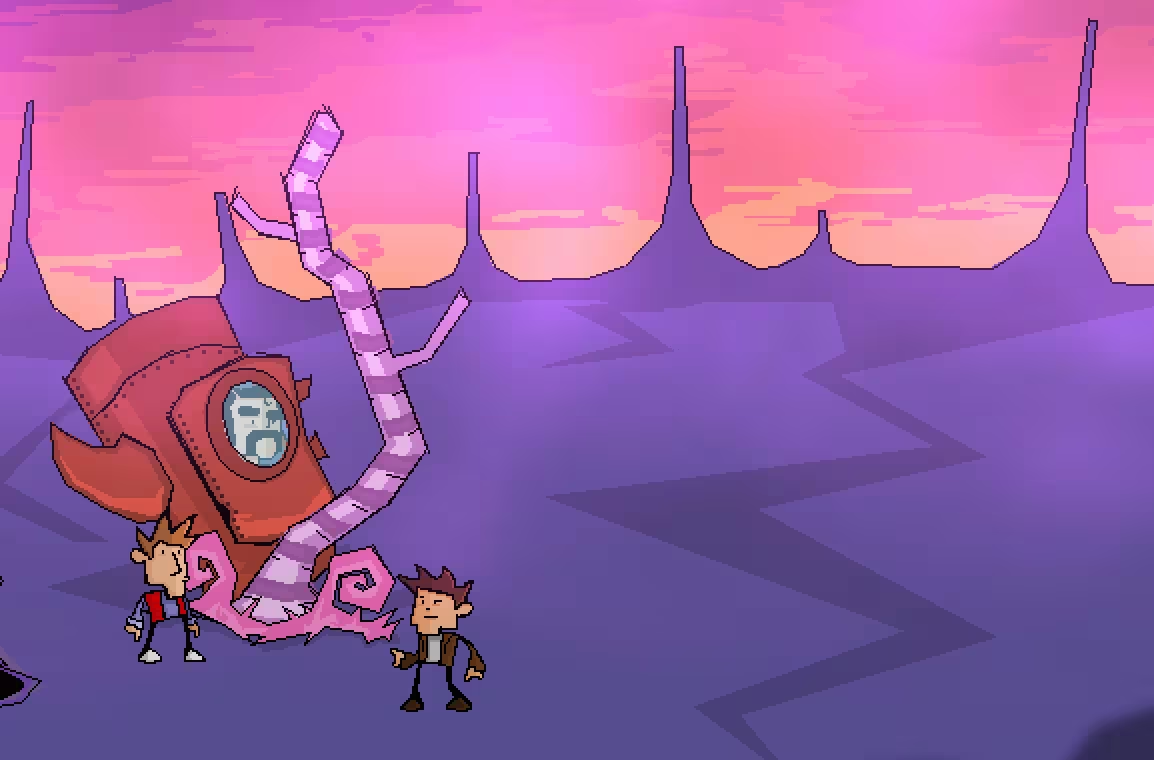
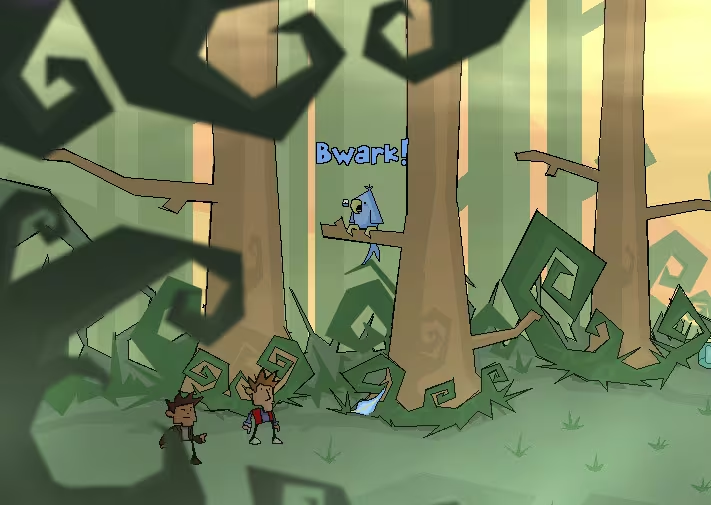
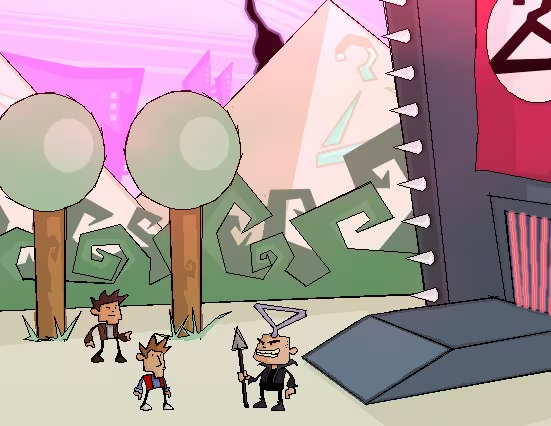
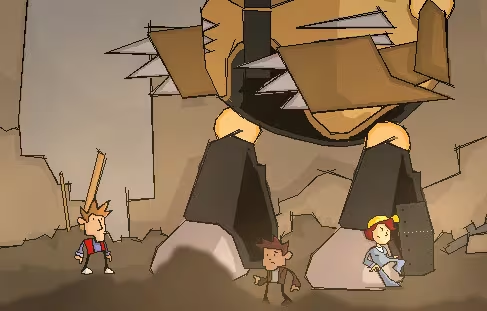
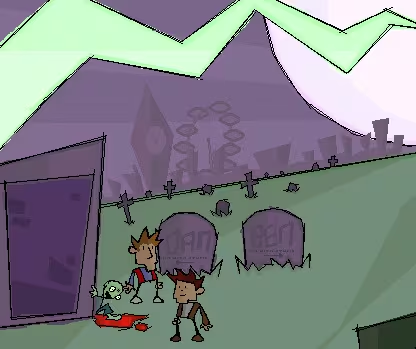
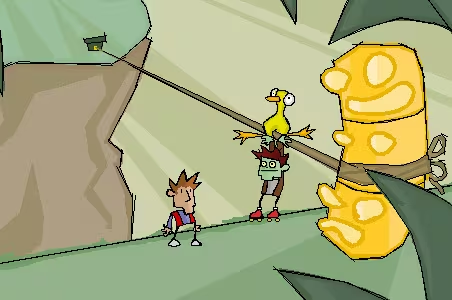
Ben There, Dan That! and Time Gentlemen, Please! are a couple of rip-roaring point-and-click adventure games . With tongue firmly in cheek, sit back, relax, and put your mind to work solving puzzles, and reading some very funny dialogue. It's like a book, only good!

Global score

80/100

Genres

Adventure, Indie, Point-and-click

Similar games

    Pros

    • Witty and abundant british humor
    • Clever and challenging puzzles
    • Strong nostalgic homage to classic point-and-click adventures
    • Absurd and imaginative storylines
    • Excellent value for price

    Cons

    • Simplistic, low-resolution graphics
    • Occasional frustrating or obscure puzzles
    • No voice acting, minimal sound effects
    • Interface can be clunky or unintuitive
    • Humor may be too crude or niche for some players

    Analysis

    A very typical example of its motivational profile. Motivations that often define this kind of title include Survival, Violence, Fellowship, Expression. Here, the score leans higher than usual among comparable games on Violence, Fantasy. It leans lower than usual among comparable games on Thrill.

    How to use the graph
    Similar games map

    Each dot is a game. They are arranged from the same motivation profile as in the “Motivations” section below. Closer dots usually mean more similar reasons to play (exploration, competition, relaxation, etc.)—not that one game is “better” than another.

    • Larger dot with a light outline: the game you are viewing.
    • Colour: groups of games with comparable motivation patterns (statistical clusters).
    • Hover a dot to see the game name; click to open its page.
    • Scroll or double-click the chart to zoom out and see more games.

    Why don’t the axes read like a score? This view uses t-SNE: it only keeps who is close to whom. The scales are not “good to bad” or hours played—they separate groups on the map. Read distance between dots, not the axis numbers.

    Motivations

    • Autonomy
      4

      "Players freely explore environments, choose dialogue options, and experiment with item combinations in a non-linear fashion."

    • Competence
      3

      "Puzzles require problem solving and logical thinking, though some are noted as frustrating or obscure."

    • Competition
      -4

      "Focus is on solo play and personal puzzle solving without competitive elements or leaderboards."

    • Continuation
      2

      "Players often engage for several hours and enjoy replaying for humor and puzzle exploration."

    • Cooperation
      -5

      "Entirely single-player experience with no cooperative or multiplayer features."

    • Creativity
      3

      "Players experiment with combining inventory items and exploring humorous interactions."

    • Domination
      -5

      "No social dominance or power dynamics; interactions are with game world and NPCs only."

    • Escapism
      4

      "Absurd humor, time travel, and surreal scenarios provide strong escapism from reality."

    • Expectation
      -4

      "Players engage voluntarily for fun and nostalgia, not out of obligation or pressure."

    • Experimenting
      4

      "Encouraged to try many item combinations and explore dialogue options to discover jokes and solutions."

    • Exploration
      3

      "Players explore multiple time periods and locations, uncovering secrets and story elements."

    • Expression
      -3

      "Limited customization; players interact with fixed characters and environments without personalization."

    • Fantasy
      5

      "Strongly imaginative fiction with time travel, aliens, robot dinosaurs, and absurd humor."

    • Fellowship
      -4

      "Minimal social interaction; experience focused on solo play and internal enjoyment."

    • Growth
      3

      "Players develop problem-solving skills and learn puzzle logic throughout gameplay."

    • Health
      -5

      "Sedentary gameplay typical of point-and-click adventures."

    • Idle
      -4

      "Requires focused attention to solve puzzles and progress; not suited for passive play."

    • Intimacy
      -4

      "No close social relationships formed; interactions are limited to game characters and humor."

    • Leadership
      -5

      "No leadership or group management elements present."

    • Progression
      3

      "Players collect and combine items to advance through puzzles and story."

    • Relaxation
      2

      "Humorous tone provides lightheartedness, though some puzzles cause frustration and tension."

    • Sensation
      1

      "Simple graphics and sound provide modest sensory stimulation; humor is primary engagement."

    • Status
      -4

      "No social recognition or ranking systems; focus is on personal enjoyment."

    • Story
      4

      "Narrative-driven with absurd plot, character dialogue, and meta-commentary on adventure games."

    • Strategy
      3

      "Puzzles require logical reasoning and planning to solve."

    • Thrill
      -2

      "Low risk and suspense; gameplay is more about humor and puzzle solving than excitement."

    • Value
      4

      "Highly praised for delivering strong entertainment and humor at a low price."

    • Violence
      1

      "Some violent themes (e.g. Hitler, death) but mostly presented in absurd, comedic context."

    • Survival
      -5

      "No survival or threat avoidance mechanics; stable, low-risk gameplay environment."

    Last update: 29/04/2026