To Be or Not To Be Thumbnail

To Be or Not To Be similar games & best alternatives

To Be or Not To Be

PC (Microsoft Windows) • 2015

Related articles

Quick resume

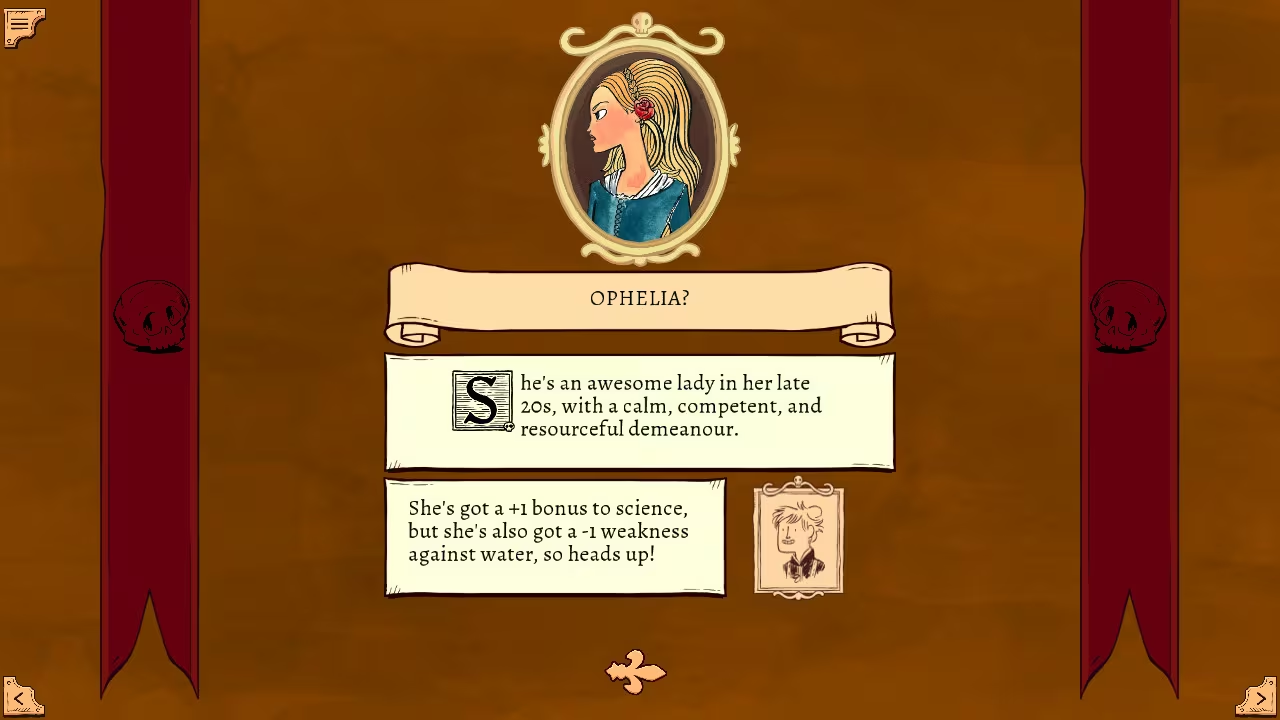
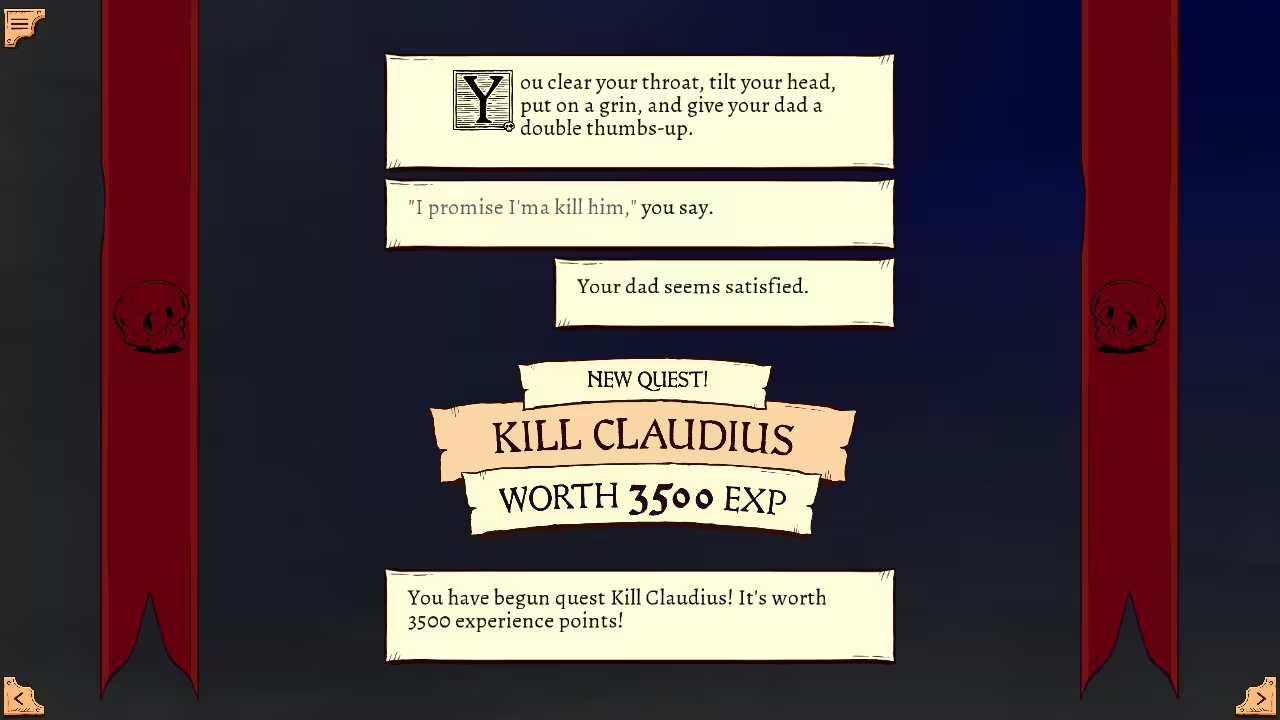
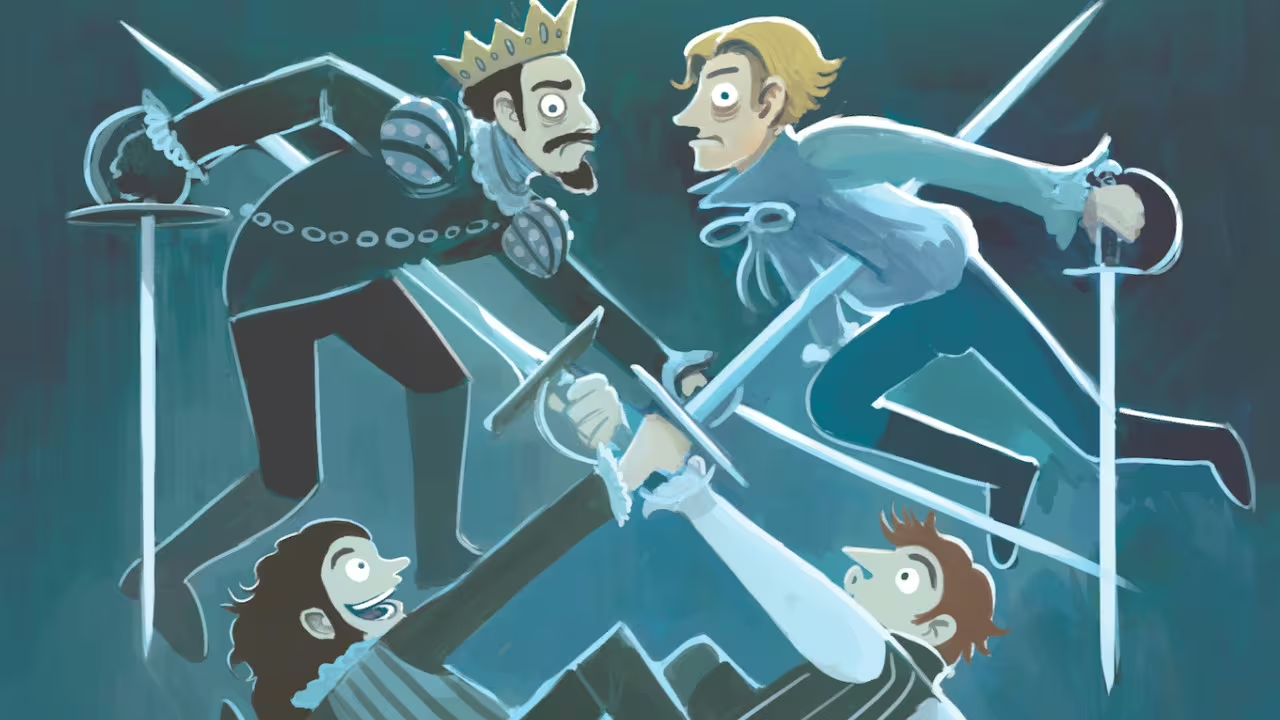
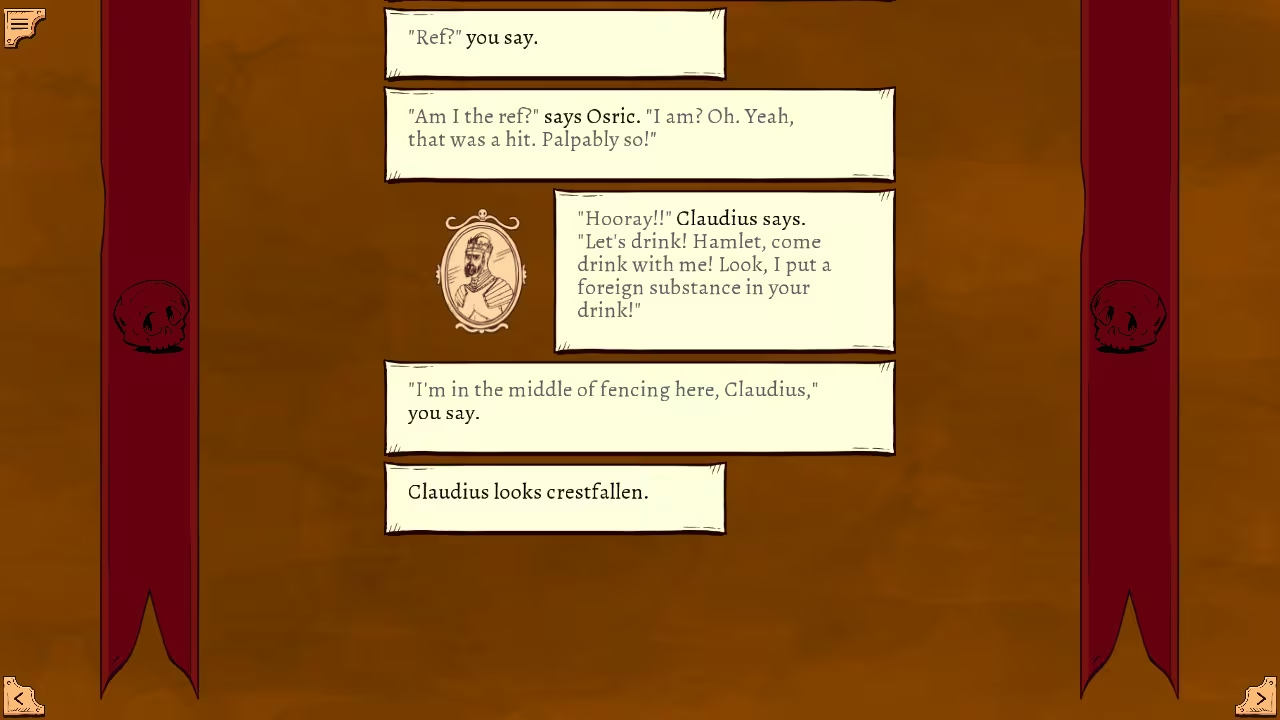
Guide Hamlet, Ophelia and Hamlet Sr. to hundreds of hilarious deaths in Ryan North's chooseable-path edition of Shakespeare's Hamlet!

Global score

90/100

Genres

Adventure, Casual, Indie

Similar games

    Pros

    • Clever and humorous writing
    • High replayability with many endings
    • Strong narrative immersion
    • Engaging parody of hamlet
    • Well-executed choose-your-own-adventure format

    Cons

    • Limited gameplay mechanics
    • Some repetition in text
    • Checkpoint system can be inconvenient
    • Narration synchronization issues
    • Price may be high for some players

    Analysis

    Less representative of its motivational profile, with noticeable differences. Motivations that often define this kind of title include Survival, Violence, Fellowship, Expression. Here, the score leans higher than usual among comparable games on Expression, Continuation, Experimenting.

    How to use the graph
    Similar games map

    Each dot is a game. They are arranged from the same motivation profile as in the “Motivations” section below. Closer dots usually mean more similar reasons to play (exploration, competition, relaxation, etc.)—not that one game is “better” than another.

    • Larger dot with a light outline: the game you are viewing.
    • Colour: groups of games with comparable motivation patterns (statistical clusters).
    • Hover a dot to see the game name; click to open its page.
    • Scroll or double-click the chart to zoom out and see more games.

    Why don’t the axes read like a score? This view uses t-SNE: it only keeps who is close to whom. The scales are not “good to bad” or hours played—they separate groups on the map. Read distance between dots, not the axis numbers.

    Motivations

    • Autonomy
      5

      "Players make numerous choices that alter the story's course, embodying high personal freedom and control over narrative outcomes."

    • Competence
      1

      "Engagement is primarily through reading and decision-making with minimal skill challenge, but exploring many endings offers some cognitive engagement."

    • Competition
      -5

      "No evidence of competitive elements; focus is on personal narrative exploration without comparison to others."

    • Continuation
      4

      "High replayability with many endings and branching paths encourages habitual and extended play sessions."

    • Cooperation
      -5

      "Single-player experience focused on individual choices; no cooperative gameplay or social collaboration."

    • Creativity
      4

      "Players creatively shape the story through choices, exploring alternative narratives and humorous reinterpretations."

    • Domination
      -5

      "No elements of exerting control or superiority over others; interactions are narrative and personal."

    • Escapism
      3

      "Provides humorous and imaginative escape from reality through parody and absurd scenarios based on Hamlet."

    • Expectation
      -4

      "Players engage voluntarily out of interest in humor, Shakespeare, or choose-your-own-adventure style; no obligation or pressure."

    • Experimenting
      5

      "Strong emphasis on exploring different story branches, testing choices, and discovering diverse outcomes."

    • Exploration
      4

      "Players discover numerous story paths and endings, uncovering secrets and alternative narratives."

    • Expression
      2

      "Limited character customization, but players express themselves through narrative choices and role selection."

    • Fantasy
      4

      "Engages players in imaginative fiction with ghosts, time travel, and absurd reinterpretations of Shakespeare's Hamlet."

    • Fellowship
      -5

      "Experience is solitary with minimal social interaction or community involvement."

    • Growth
      2

      "Players learn about Hamlet's story and literary humor, gaining knowledge and insight through multiple playthroughs."

    • Health
      -5

      "Sedentary text-based gameplay with no physical activity involved."

    • Idle
      -3

      "Requires focused reading and decision-making; not designed for passive or background play."

    • Intimacy
      -5

      "No evidence of forming close relationships or emotional social interactions."

    • Leadership
      Insufficient data
    • Progression
      3

      "Players unlock multiple endings, achievements, and artwork, reflecting accumulation and advancement."

    • Relaxation
      3

      "Humorous and lighthearted tone provides a relaxing and enjoyable reading experience."

    • Sensation
      1

      "Some sensory stimulation from music and artwork, but overall moderate sensory input typical of visual novels."

    • Status
      -5

      "No social recognition or status systems; achievements are personal and not publicly ranked."

    • Story
      5

      "Strong narrative immersion with branching storylines, character perspectives, and meta-commentary."

    • Strategy
      1

      "Limited strategic challenge; choices affect narrative but do not require complex planning or problem solving."

    • Thrill
      0

      "Humor and parody provide light excitement but no sustained suspense or risk."

    • Value
      3

      "Players perceive good value from humor, replayability, and literary content, especially at sale prices."

    • Violence
      -3

      "Violence is present in narrative but portrayed humorously and not emphasized as gameplay focus."

    • Survival
      -4

      "No survival mechanics or threat avoidance; story-driven without resource or life management."

    Last update: 29/04/2026