Tomb Raider IV: The Last Revelation (1999) Thumbnail

Tomb Raider IV: The Last Revelation (1999) similar games & best alternatives

Tomb Raider IV: The Last Revelation (1999)

PC (Microsoft Windows) • 2012

Related articles

Quick resume

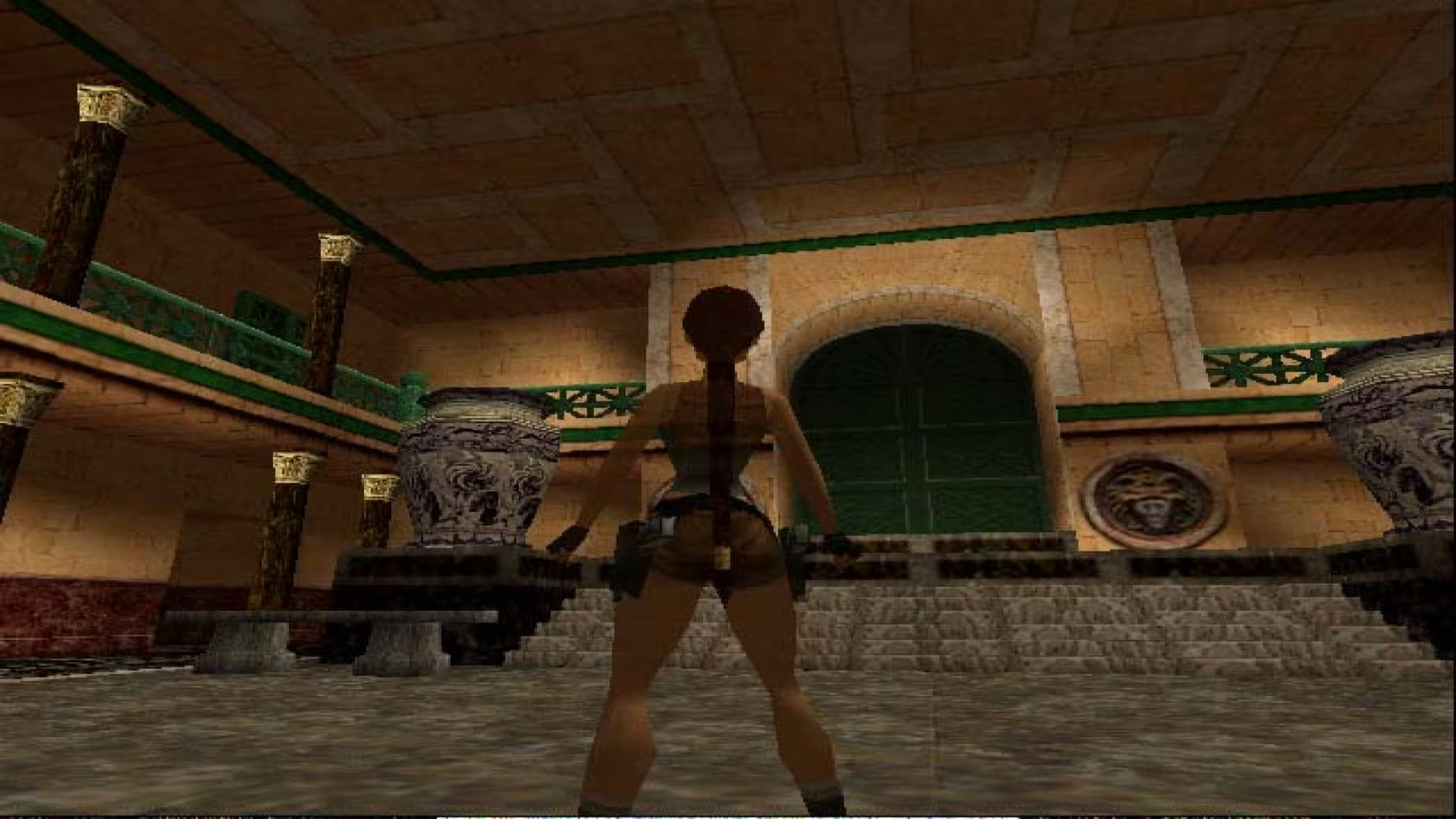
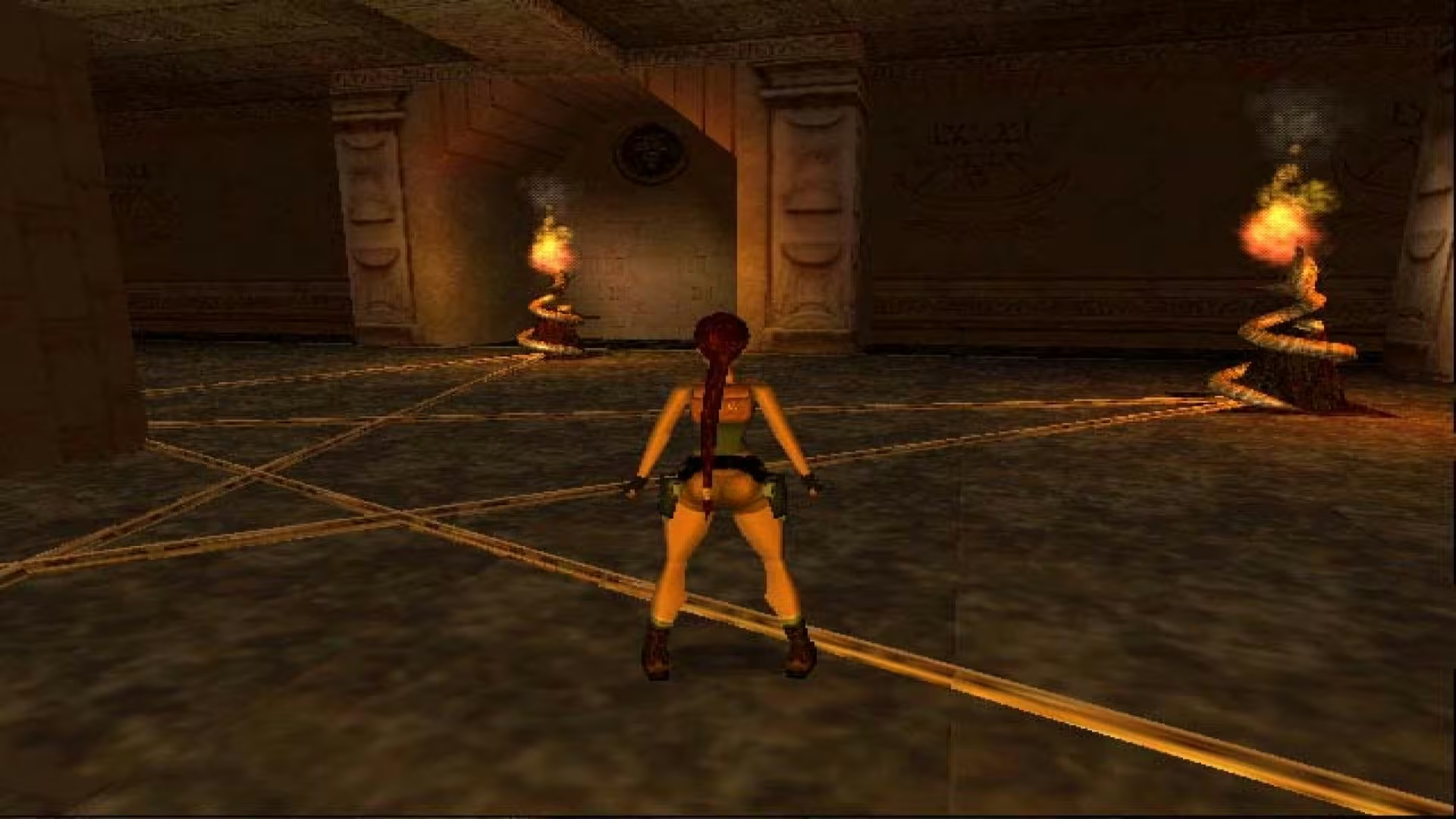
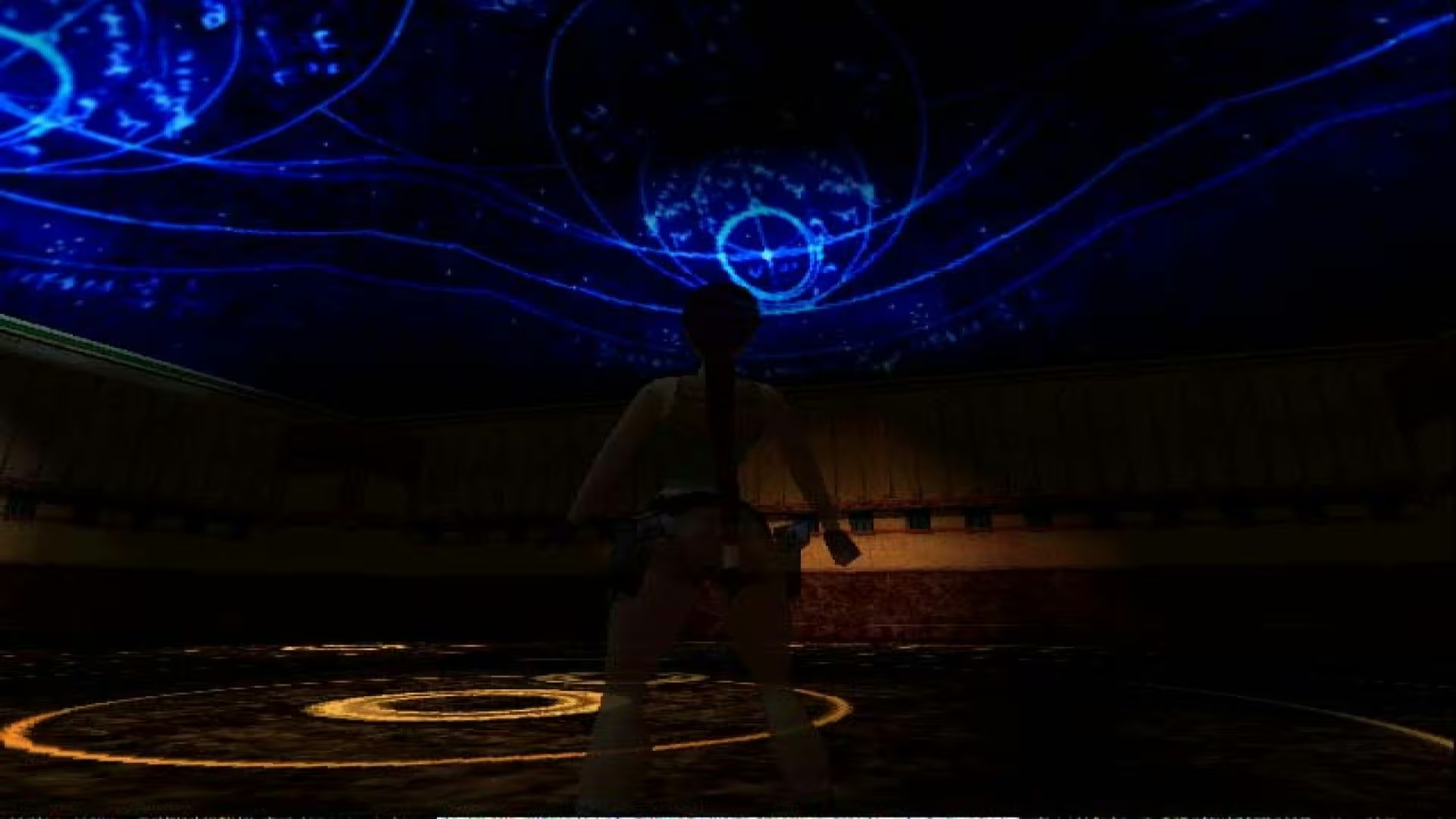
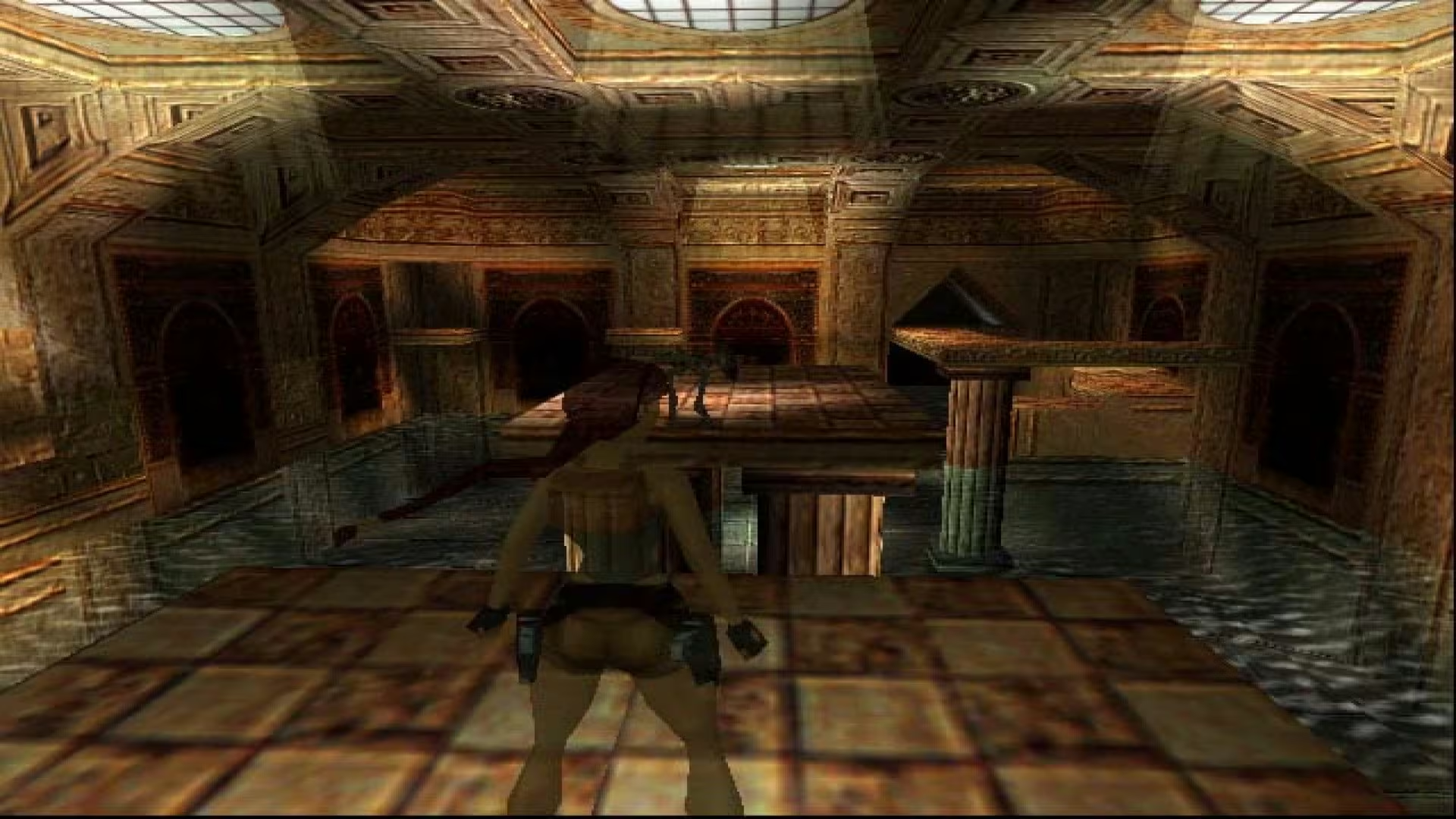
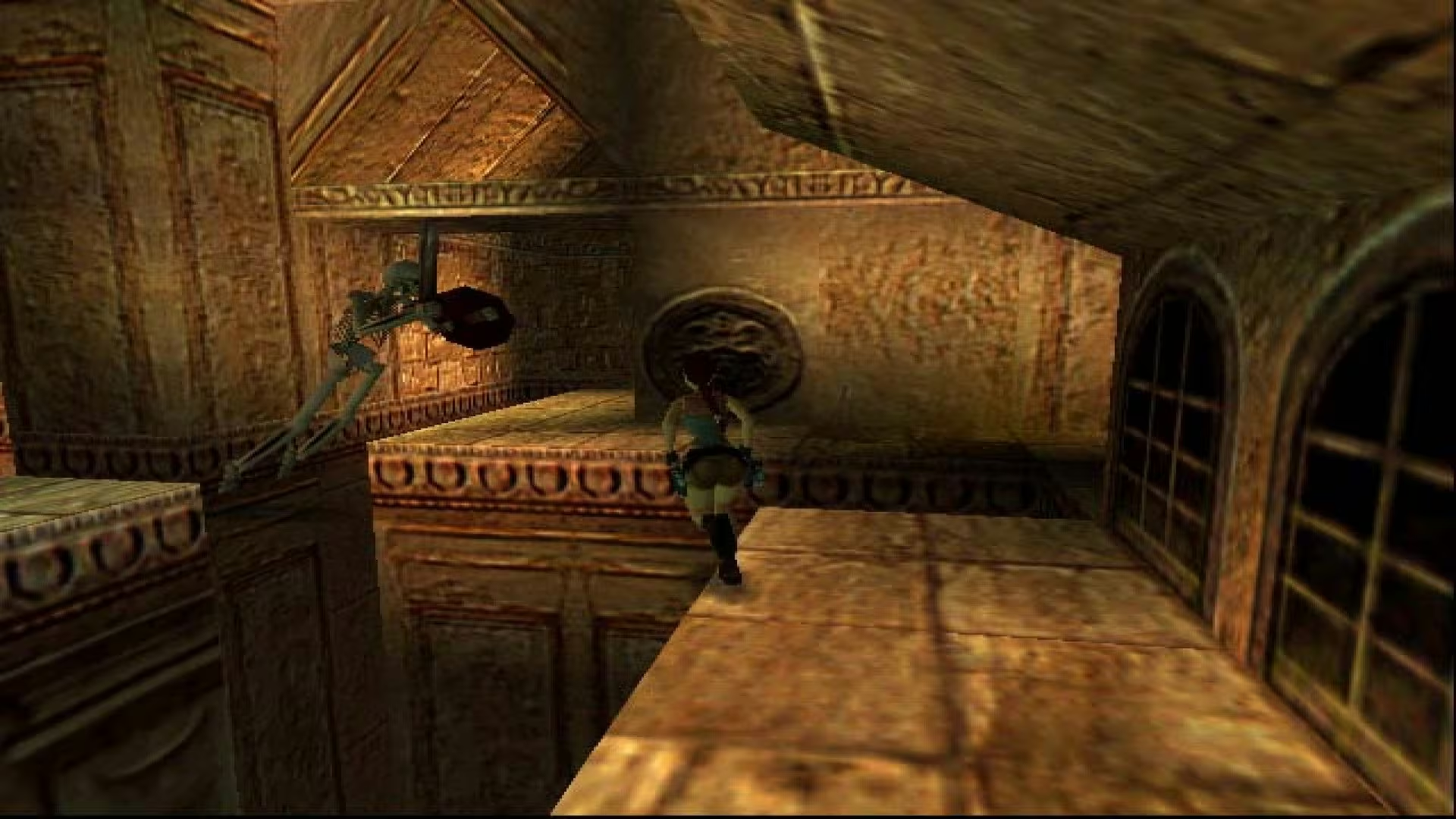
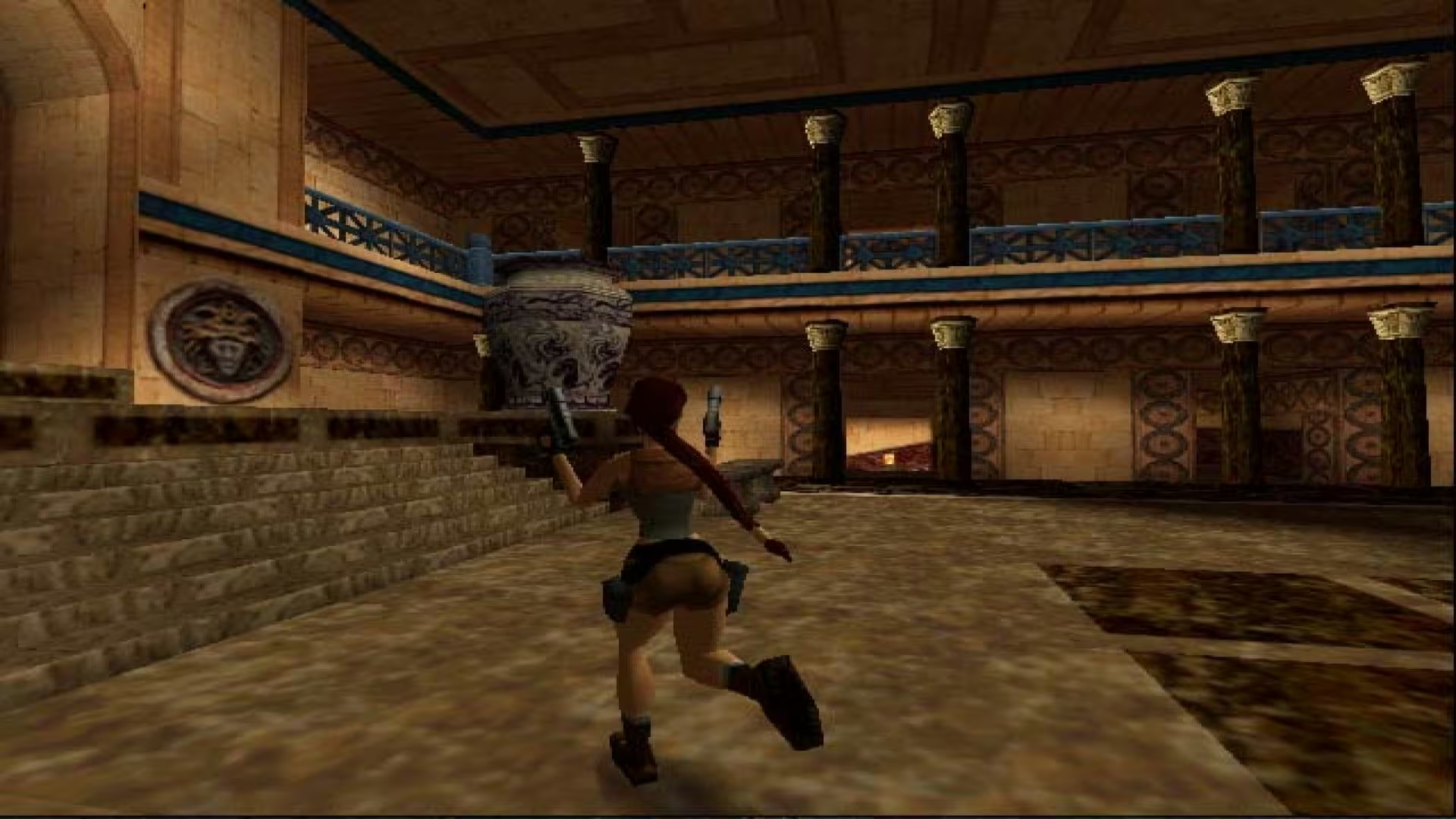
According to Egyptian legend, Horus, son of the light, outwitted the evil God Set and imprisoned him in a secret tomb. Five thousand years later, Lara Croft discovers the lost tomb and unwittingly unleashes the evil God Set, fulfilling the ancient prophecy of his return to plunge mankind into darkness!

Global score

85/100

Genres

Action, Adventure

Similar games

    Pros

    • Engaging and challenging puzzles
    • Immersive ancient egyptian setting
    • Non-linear level design with backtracking
    • Strong narrative with cinematic cutscenes
    • Long gameplay offering many hours of content

    Cons

    • Clunky and dated tank controls
    • Some frustrating backtracking and obscure puzzles
    • No multiplayer or cooperative features
    • Occasional bugs and technical issues on modern systems
    • Limited character customization and expression

    Analysis

    Broadly representative of its motivational profile, with a few distinct shifts. Motivations that often define this kind of title include Fellowship, Cooperation, Leadership, Violence. Here, the score leans higher than usual among comparable games on Exploration, Story. It leans lower than usual among comparable games on Expression.

    How to use the graph
    Similar games map

    Each dot is a game. They are arranged from the same motivation profile as in the “Motivations” section below. Closer dots usually mean more similar reasons to play (exploration, competition, relaxation, etc.)—not that one game is “better” than another.

    • Larger dot with a light outline: the game you are viewing.
    • Colour: groups of games with comparable motivation patterns (statistical clusters).
    • Hover a dot to see the game name; click to open its page.
    • Scroll or double-click the chart to zoom out and see more games.

    Why don’t the axes read like a score? This view uses t-SNE: it only keeps who is close to whom. The scales are not “good to bad” or hours played—they separate groups on the map. Read distance between dots, not the axis numbers.

    Motivations

    • Autonomy
      4

      "The game features non-linear level design with backtracking and item combination, allowing players to explore and solve puzzles at their own pace."

    • Competence
      4

      "Challenging puzzles and platforming require skill and problem solving; players report significant difficulty and rewarding mastery."

    • Competition
      -4

      "Single-player experience focused on personal exploration and puzzle solving without competitive elements."

    • Continuation
      4

      "Long gameplay (30+ hours), large levels, and complex puzzles encourage extended play and repeated sessions."

    • Cooperation
      -5

      "Entirely single-player with no cooperative or multiplayer features."

    • Creativity
      3

      "Players engage in exploration and puzzle solving with some item combination, but limited creation or modification."

    • Domination
      -5

      "No social dominance or power over others; purely individual gameplay."

    • Escapism
      4

      "Immersive ancient Egyptian setting and story provide strong escapism and adventure experience."

    • Expectation
      -4

      "Players engage voluntarily out of interest and nostalgia, not obligation or external pressure."

    • Experimenting
      3

      "Exploration of complex puzzles and backtracking encourages experimentation with game mechanics."

    • Exploration
      5

      "Large, interconnected levels with secrets and backtracking strongly emphasize exploration."

    • Expression
      -3

      "Limited character customization; Lara’s appearance and outfits remain mostly fixed."

    • Fantasy
      4

      "Story involves ancient Egyptian mythology, gods, curses, and supernatural elements."

    • Fellowship
      -5

      "No multiplayer or community features; purely solo experience."

    • Growth
      4

      "Players develop skills in puzzle solving, navigation, and mastering controls over a long playtime."

    • Health
      -5

      "Sedentary gameplay typical of classic adventure games."

    • Idle
      -4

      "Requires continuous focus and attention to solve puzzles and navigate levels."

    • Intimacy
      -5

      "No social or emotional relationship building; single-player narrative only."

    • Leadership
      -5

      "No leadership or group management elements present."

    • Progression
      4

      "Players collect items, unlock new areas, and gain new abilities to progress through the story."

    • Relaxation
      1

      "While immersive, the game’s difficulty and puzzles can create tension and frustration."

    • Sensation
      2

      "Atmospheric music and environments provide sensory engagement, though graphics are dated."

    • Status
      -5

      "No social recognition or ranking systems; focus is on individual achievement."

    • Story
      4

      "Engaging narrative with character development and cinematic cutscenes integrated into gameplay."

    • Strategy
      4

      "Complex puzzles and enemy encounters require planning, problem solving, and strategic thinking."

    • Thrill
      3

      "Suspenseful moments, traps, and enemy encounters create tension and excitement."

    • Value
      4

      "Long gameplay and challenging content provide good value for time and money."

    • Violence
      2

      "Includes combat with enemies and use of weapons, but balanced with exploration and puzzle solving."

    • Survival
      3

      "Players must avoid traps, manage health, and overcome threats to progress."

    Last update: 29/04/2026