TR-49 Thumbnail

TR-49 similar games & best alternatives
TR-49

PC (Microsoft Windows), Nintendo Switch, Mac • 2026

Related articles

Quick resume

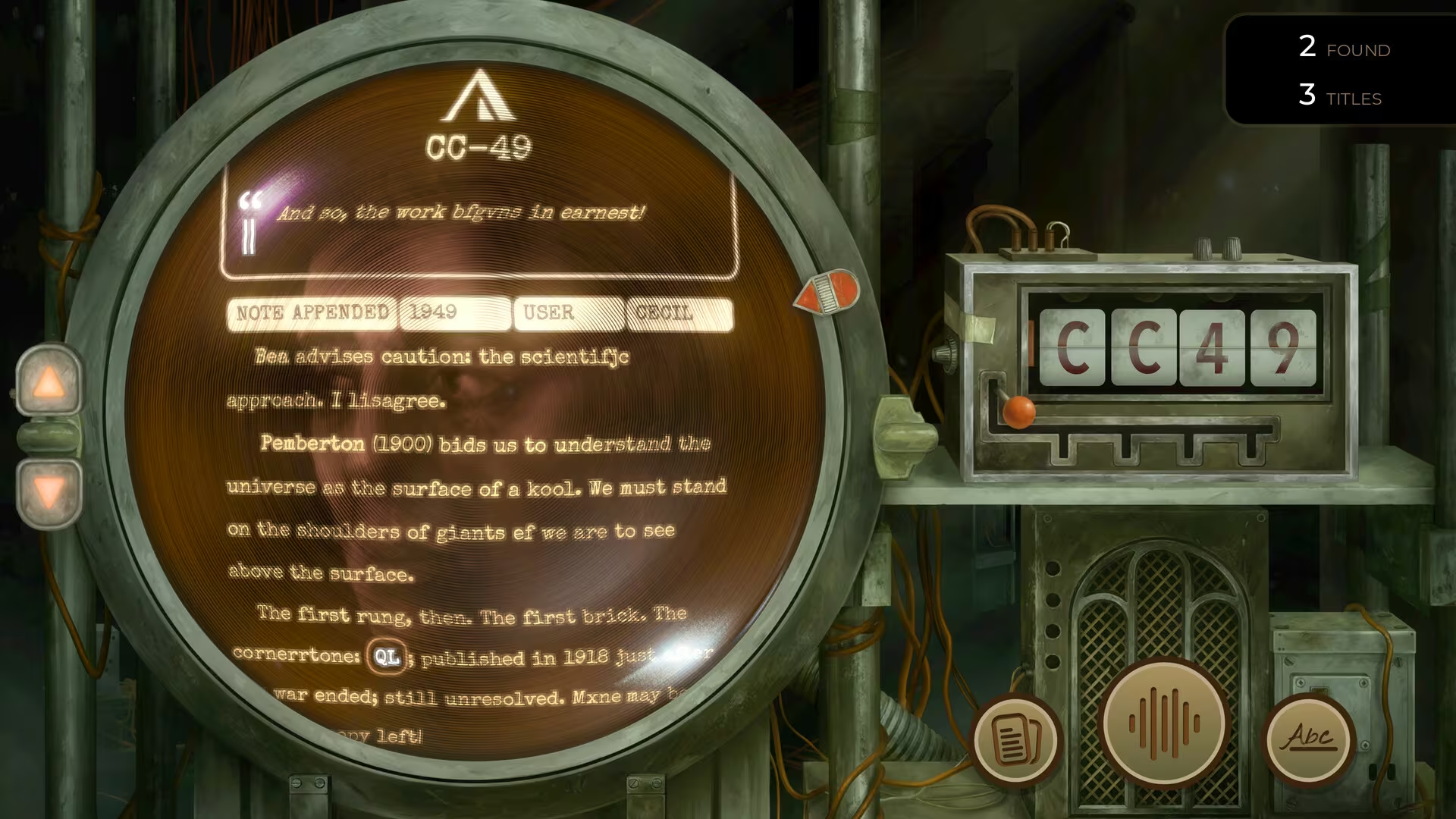
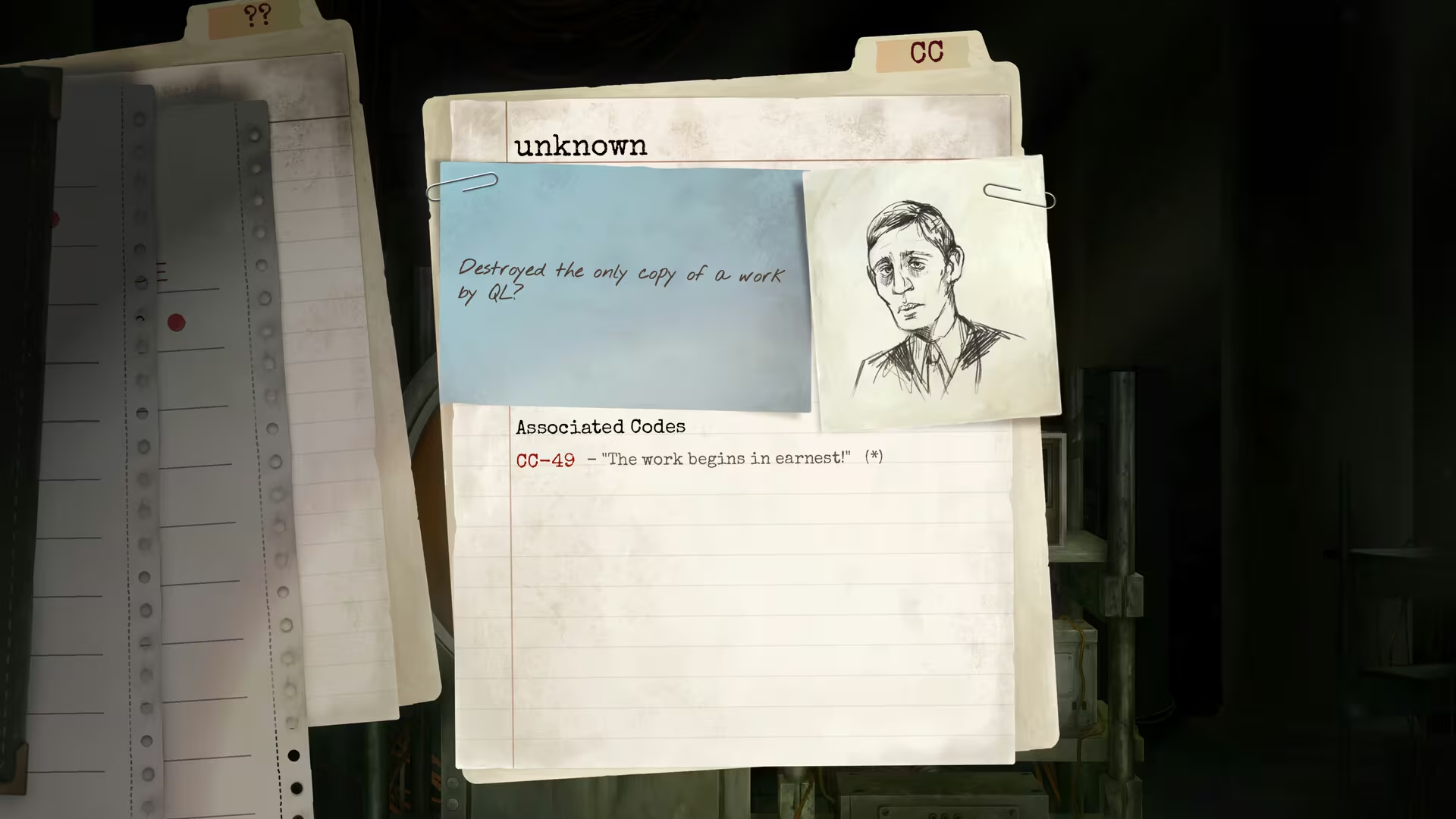
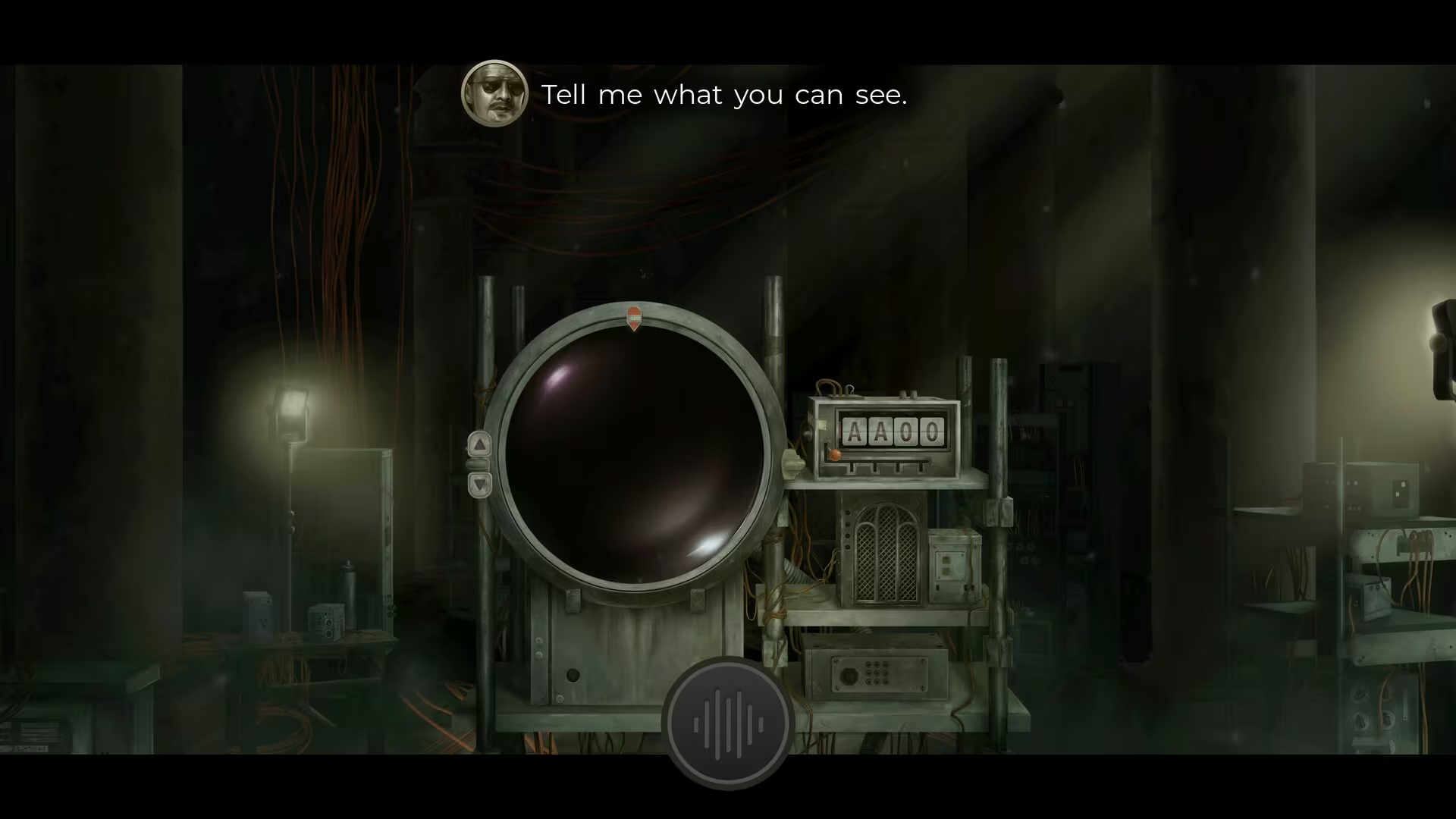
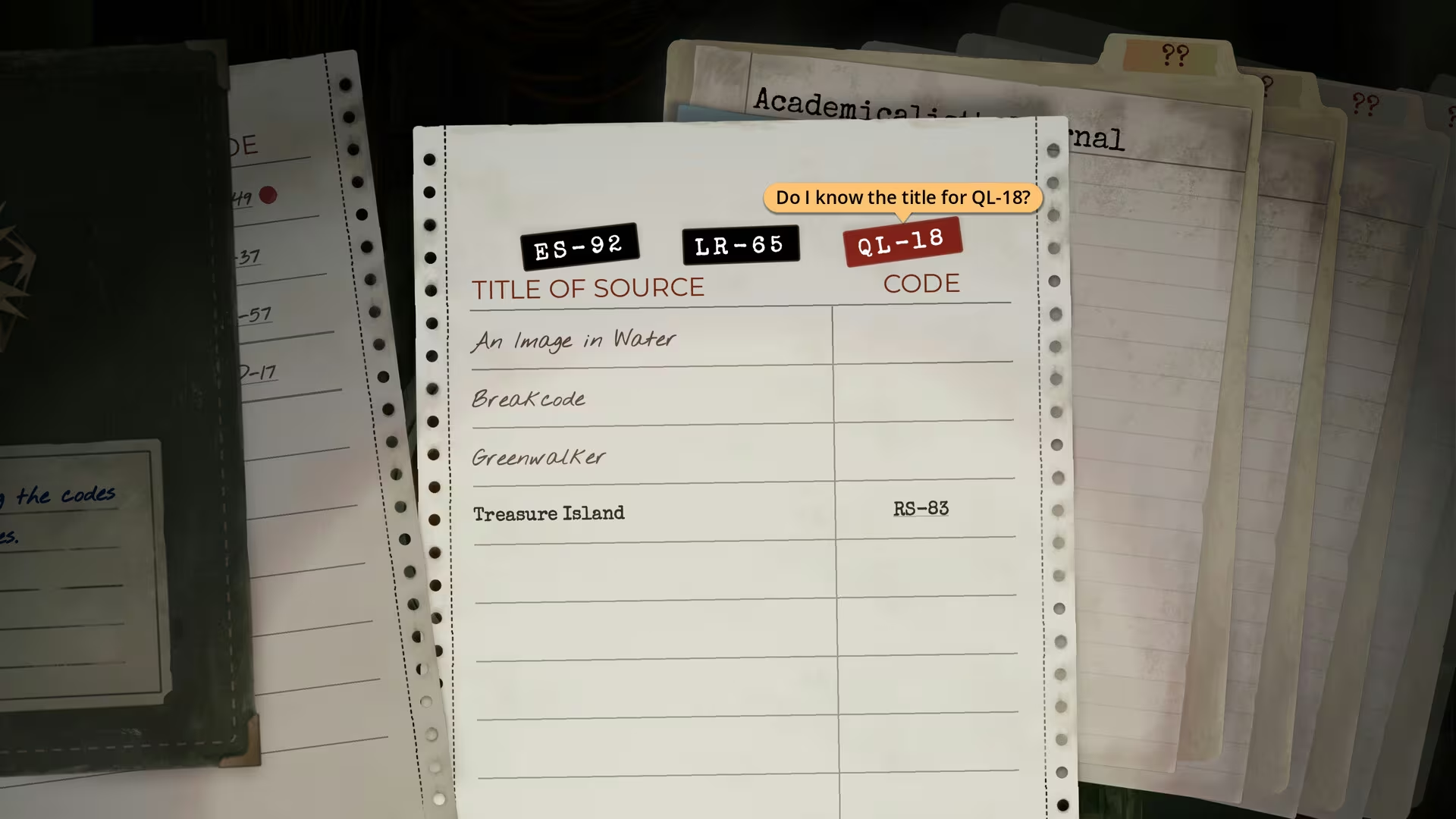
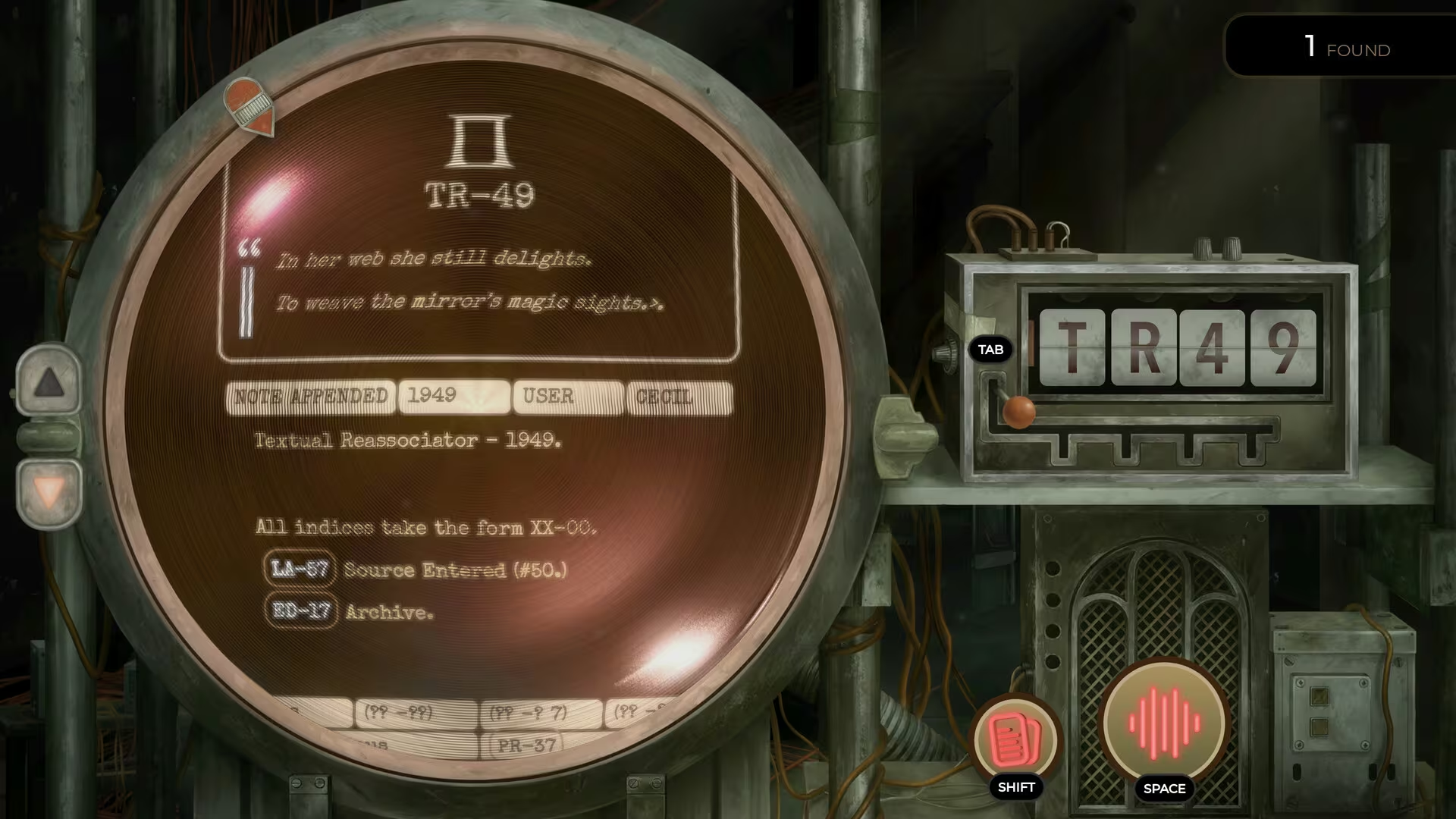
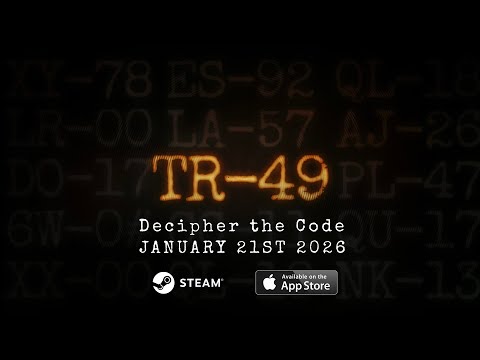
A World War II computer. An archive of lost books. A world-changing secret. Narrative deduction meets audio drama, from the creators of Overboard!, Heaven's Vault and A Highland Song.

Global score

95/100

Genres

Adventure, Visual Novel, Puzzle

Similar games

    Pros

    • Engaging and immersive narrative
    • Challenging and satisfying deduction puzzles
    • Atmospheric audio and visual design
    • Multiple endings and replay value
    • Intuitive interface with automatic note-taking

    Cons

    • Constant voice dialogue can be distracting
    • Some pacing issues with narrative interruptions
    • Lack of accessibility options (e.g. text size)
    • Minimal customization or social features
    • Short overall playtime

    Analysis

    Broadly representative of its motivational profile, with a few distinct shifts. Motivations that often define this kind of title include Survival, Violence, Fellowship, Expression. Here, the score leans higher than usual among comparable games on Thrill, Strategy. It leans lower than usual among comparable games on Relaxation.

    How to use the graph
    Similar games map

    Each dot is a game. They are arranged from the same motivation profile as in the “Motivations” section below. Closer dots usually mean more similar reasons to play (exploration, competition, relaxation, etc.)—not that one game is “better” than another.

    • Larger dot with a light outline: the game you are viewing.
    • Colour: groups of games with comparable motivation patterns (statistical clusters).
    • Hover a dot to see the game name; click to open its page.
    • Scroll or double-click the chart to zoom out and see more games.

    Why don’t the axes read like a score? This view uses t-SNE: it only keeps who is close to whom. The scales are not “good to bad” or hours played—they separate groups on the map. Read distance between dots, not the axis numbers.

    Motivations

    • Autonomy
      4

      "Players freely explore and deduce codes and connections in a nonlinear archive system with minimal hand-holding."

    • Competence
      4

      "The game challenges players to solve complex puzzles and make logical deductions, rewarding skillful pattern recognition and inference."

    • Competition
      -4

      "Focus is on individual puzzle solving and narrative discovery without competitive or ranked elements."

    • Continuation
      3

      "Players often engage in extended sessions to uncover all endings and explore lore, showing attachment and habitual play."

    • Cooperation
      -5

      "The game is a solitary experience centered on individual investigation and deduction."

    • Creativity
      3

      "Players create their own understanding and connections between fragmented data, though within a fixed narrative and puzzle structure."

    • Domination
      -5

      "No elements of exerting control or superiority over others; interactions are single-player and introspective."

    • Escapism
      4

      "The immersive sci-fi mystery and atmospheric setting provide strong escapism from real life."

    • Expectation
      -4

      "Players engage voluntarily out of interest in deduction and narrative, not due to obligation or external pressure."

    • Experimenting
      3

      "Players try different code combinations and explore various narrative threads, experimenting within the puzzle system."

    • Exploration
      4

      "The core gameplay involves discovering new archive entries and piecing together hidden lore, encouraging curiosity-driven exploration."

    • Expression
      -4

      "Customization or personalization is minimal; players interact with a fixed interface and narrative."

    • Fantasy
      3

      "The game features a speculative sci-fi narrative with imaginative fiction and mysterious technology."

    • Fellowship
      -5

      "The experience is solitary with minimal social or community interaction."

    • Growth
      4

      "Players develop deductive reasoning skills and deepen understanding of complex narrative layers."

    • Health
      -5

      "The game is sedentary with no physical activity components."

    • Idle
      -4

      "Requires focused attention and active engagement rather than casual or background play."

    • Intimacy
      -5

      "Social interactions are limited to superficial dialogue; no formation of close relationships."

    • Leadership
      -5

      "No leadership or group management roles; entirely single-player."

    • Progression
      3

      "Players accumulate knowledge, unlock entries, and achieve multiple endings, reflecting narrative and puzzle progression."

    • Relaxation
      1

      "The game balances tension and flow with moments of calm deduction and some narrative suspense."

    • Sensation
      2

      "Atmospheric audio and visual design provide moderate sensory stimulation enhancing immersion."

    • Status
      -5

      "No social recognition or status systems; focus is on personal discovery."

    • Story
      5

      "Narrative immersion is central, with layered storytelling, multiple endings, and rich lore."

    • Strategy
      4

      "Players engage in logical reasoning, planning, and problem solving to deduce codes and narrative connections."

    • Thrill
      2

      "Some suspense and tension arise from narrative mystery and puzzle solving, but risk is low."

    • Value
      4

      "Players find good value in the game's length, price, and intellectual engagement."

    • Violence
      -5

      "No combat or destructive gameplay; focus is on constructive deduction and exploration."

    • Survival
      -5

      "No survival or threat avoidance mechanics; stable and safe gameplay environment."

    Last update: 29/04/2026