Welcome to the Game II Thumbnail

Welcome to the Game II similar games & best alternatives

Welcome to the Game II

PC (Microsoft Windows), Mac • 2018

Related articles

Quick resume

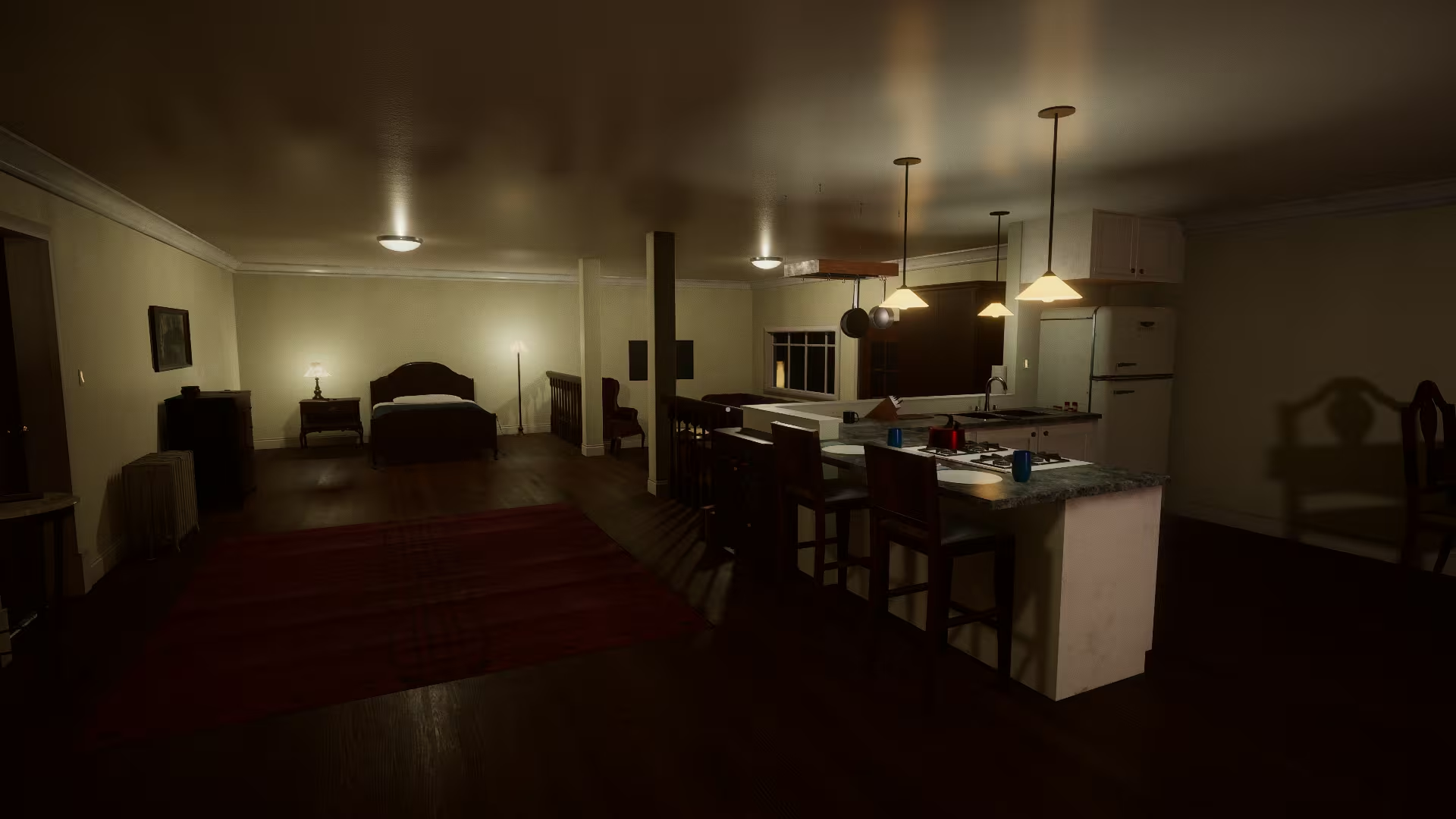
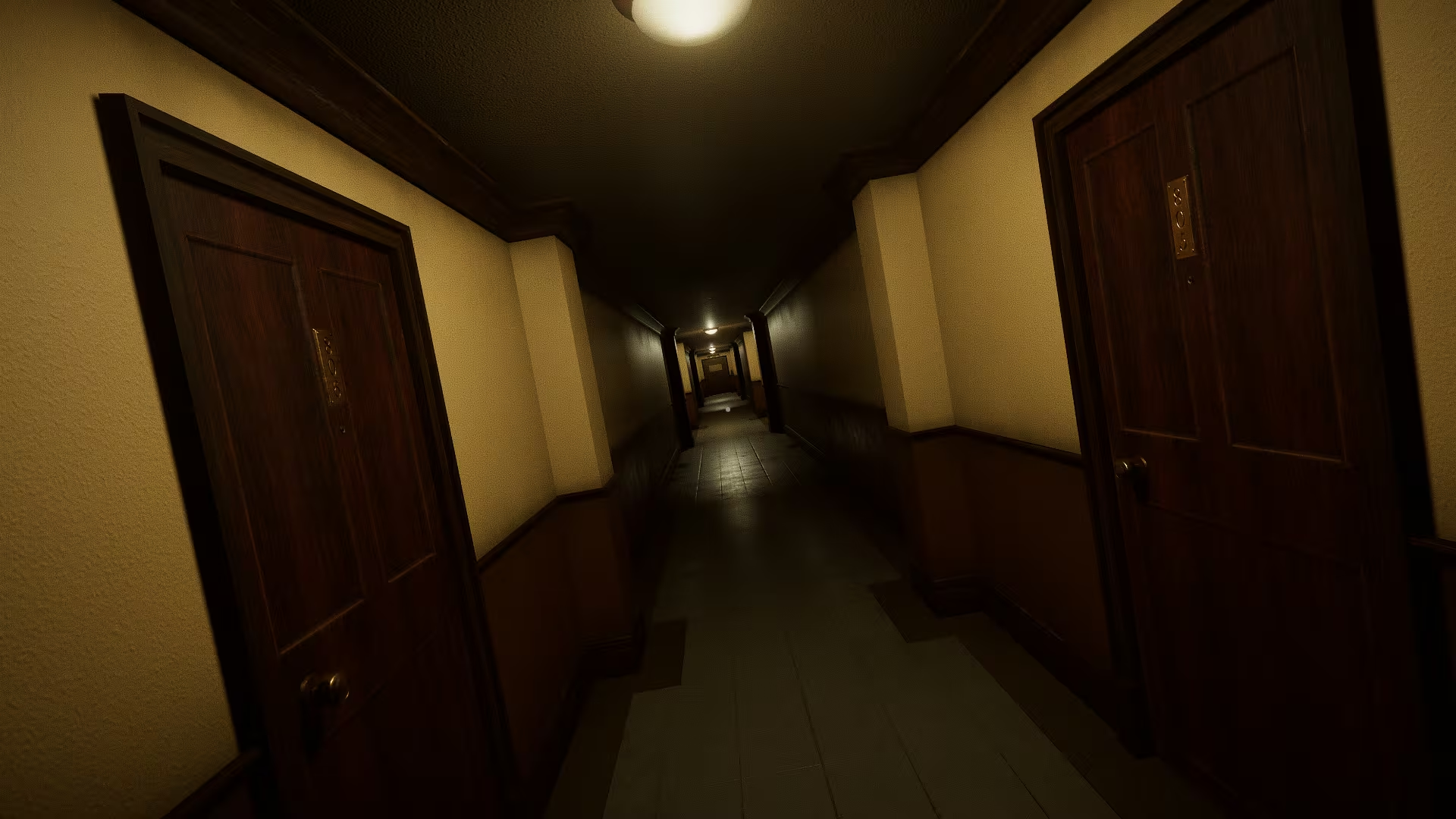
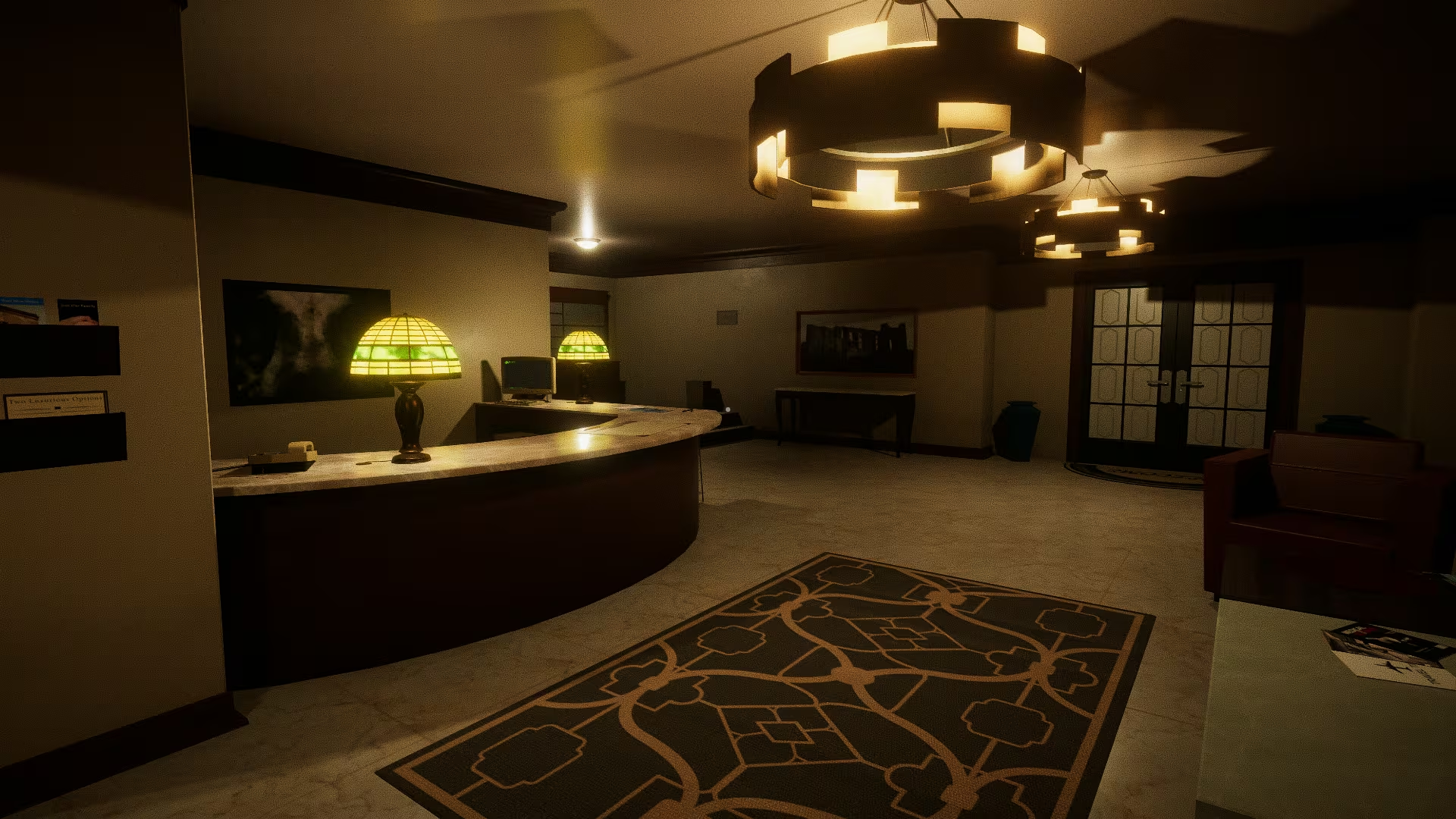
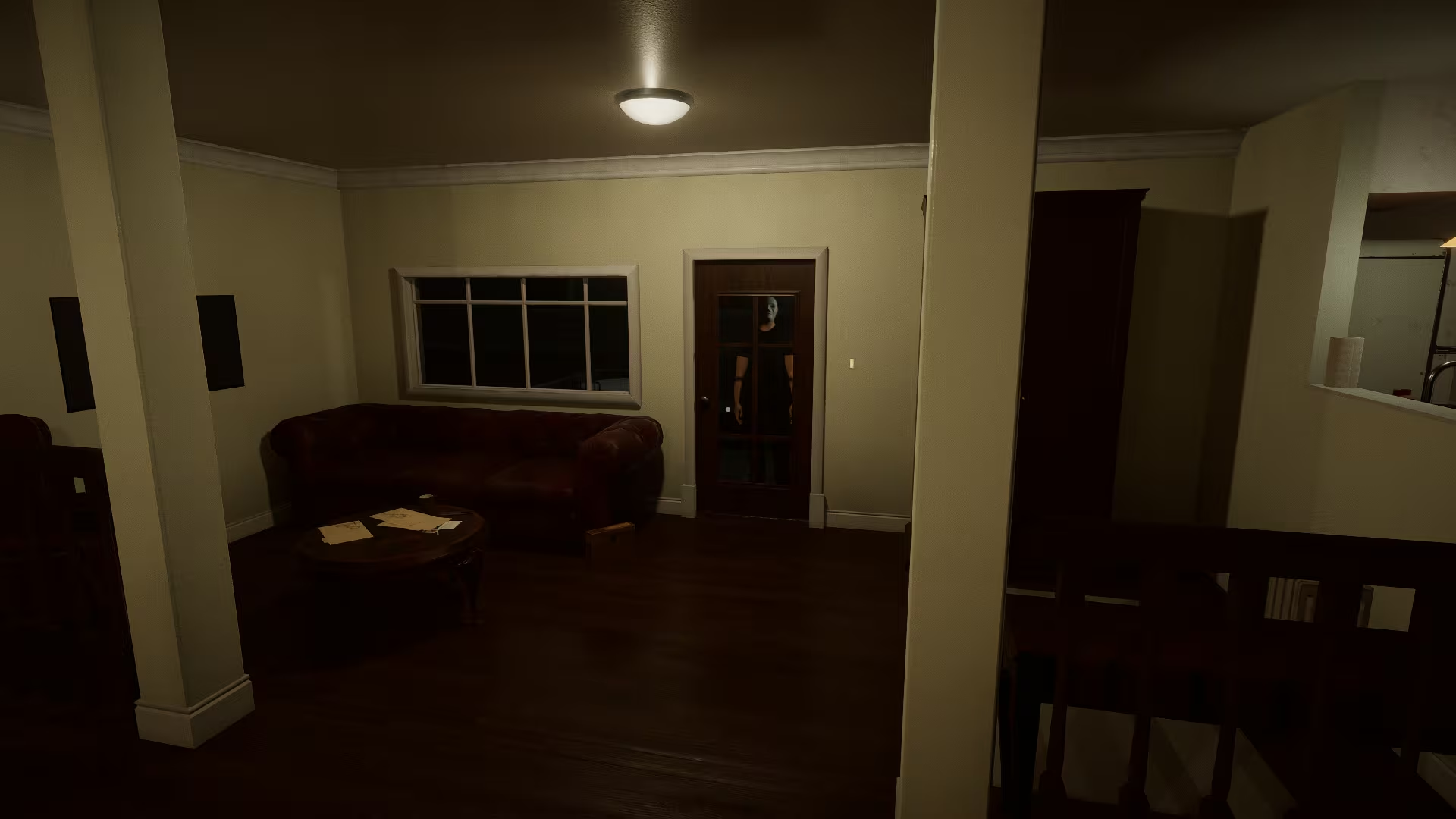
Welcome to the Game II is an atmospheric horror / strategy / puzzle game that takes you into the world of the deep web in search of the shadow web. Play as an investigative reporter trying to solve a case of a mysterious woman broadcasting for help as masked men are on the hunt to kill her.

Global score

84/100

Genres

Indie, Simulator, Strategy, Puzzle

Similar games

    Pros

    • Unique and immersive horror atmosphere
    • Complex and challenging gameplay
    • Detailed dark web exploration
    • High replayability with permadeath
    • Engaging sound design and tension

    Cons

    • Steep learning curve and difficulty
    • Permadeath can be frustrating
    • Some mechanics require external guides
    • Limited save system
    • Optimization issues on some systems

    Analysis

    Broadly representative of its motivational profile, with a few distinct shifts. Motivations that often define this kind of title include Relaxation, Survival, Violence, Fellowship. Here, the score leans higher than usual among comparable games on Exploration. It leans lower than usual among comparable games on Expression, Relaxation.

    How to use the graph
    Similar games map

    Each dot is a game. They are arranged from the same motivation profile as in the “Motivations” section below. Closer dots usually mean more similar reasons to play (exploration, competition, relaxation, etc.)—not that one game is “better” than another.

    • Larger dot with a light outline: the game you are viewing.
    • Colour: groups of games with comparable motivation patterns (statistical clusters).
    • Hover a dot to see the game name; click to open its page.
    • Scroll or double-click the chart to zoom out and see more games.

    Why don’t the axes read like a score? This view uses t-SNE: it only keeps who is close to whom. The scales are not “good to bad” or hours played—they separate groups on the map. Read distance between dots, not the axis numbers.

    Motivations

    • Autonomy
      4

      "Players have significant control over their actions, including exploration, hacking, and strategic item use, though within a challenging framework."

    • Competence
      5

      "The game demands high skill, multitasking, and learning complex mechanics with permadeath and difficult puzzles."

    • Competition
      -3

      "Focus is on individual progress and survival rather than competing against others; no mention of leaderboards or ranked modes."

    • Continuation
      3

      "Players engage in repeated long sessions driven by challenge and mastery despite frustration and difficulty."

    • Cooperation
      -5

      "The game is designed for solo play with no cooperative elements; players act independently."

    • Creativity
      2

      "Players can develop their own strategies and approaches to challenges, but within a fixed game structure."

    • Domination
      -5

      "Interactions are not about exerting control over others; gameplay is solitary and survival-focused."

    • Escapism
      5

      "Strongly immersive horror experience that induces anxiety and paranoia, providing escape from reality."

    • Expectation
      -4

      "Players engage voluntarily driven by intrinsic interest and challenge rather than obligation."

    • Experimenting
      4

      "Players experiment with hacking, item use, and strategies to overcome complex and unpredictable threats."

    • Exploration
      4

      "Exploration of a detailed apartment, alley, and dark web sites with discovery of hidden codes and secrets."

    • Expression
      -4

      "Limited customization or self-expression; focus is on survival and puzzle solving rather than avatar personalization."

    • Fantasy
      3

      "The game presents a fictional horror scenario with exaggerated dark web threats and characters."

    • Fellowship
      -5

      "Minimal social connection; players mostly play alone without community integration in gameplay."

    • Growth
      5

      "Players develop skills, knowledge, and strategies through trial, error, and learning complex systems."

    • Health
      -4

      "Sedentary gameplay with high stress and anxiety; no physical activity involved."

    • Idle
      -4

      "Requires constant attention and focus; players must actively manage multiple tasks and threats."

    • Intimacy
      -5

      "No evidence of forming close relationships; interactions are solitary and surface-level."

    • Leadership
      -5

      "No leadership roles; players act independently without managing or guiding others."

    • Progression
      4

      "Players accumulate items, upgrades, and currency (DOS coin) to improve chances of survival."

    • Relaxation
      -5

      "Sustained tension and anxiety dominate the experience; not relaxing or flow-inducing."

    • Sensation
      4

      "Strong sensory stimulation through audio cues, jump scares, and atmospheric tension."

    • Status
      -4

      "Achievements exist but social recognition or popularity is minimal; focus is on personal accomplishment."

    • Story
      3

      "There is a narrative involving rescuing a kidnapped girl and uncovering dark web mysteries."

    • Strategy
      5

      "High mental challenge requiring planning, problem solving, and multitasking to avoid threats and find keys."

    • Thrill
      5

      "Constant suspense, fear, and relief from narrowly avoiding death or capture."

    • Value
      4

      "Players perceive good value for time spent due to unique, challenging, and immersive gameplay."

    • Violence
      4

      "Violence is a core theme with combat, threats, and death from enemies like hitmen and police."

    • Survival
      5

      "Central motivation is avoiding death and failure through resource management and evasion."

    Last update: 29/04/2026