X-COM: Apocalypse Thumbnail

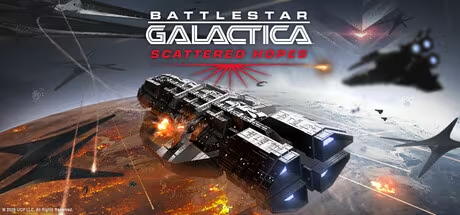
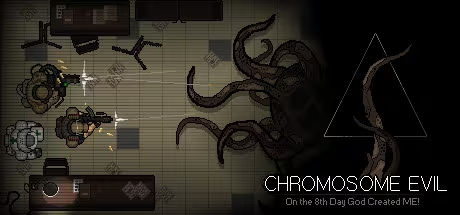
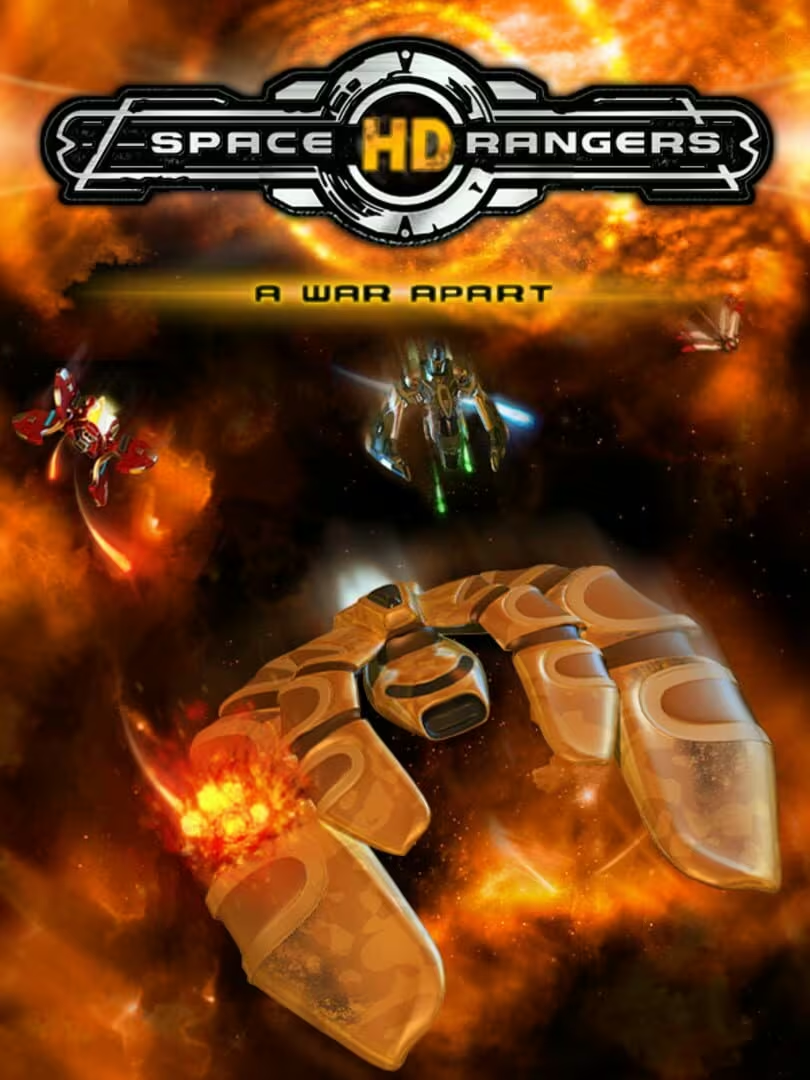
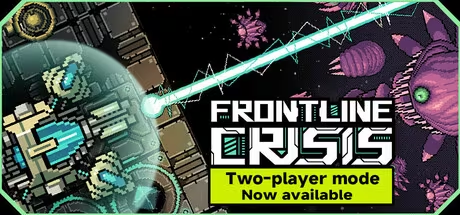
X-COM: Apocalypse similar games & best alternatives

X-COM: Apocalypse

PC (Microsoft Windows), DOS • 2008

Related articles

Quick resume

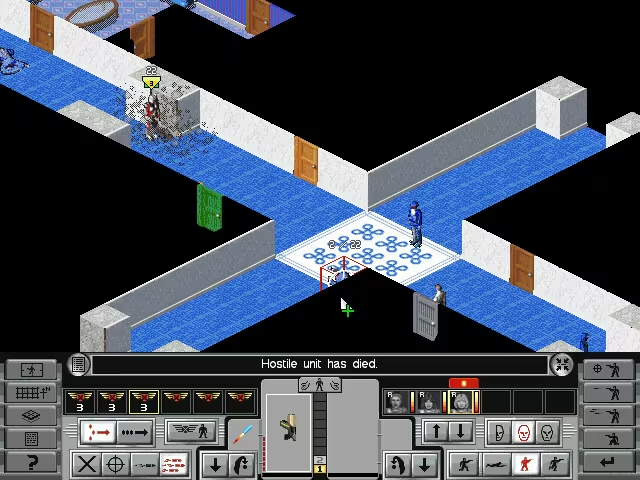
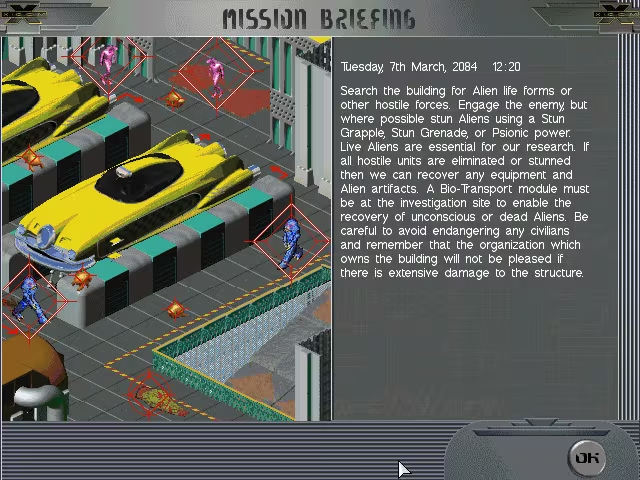
There's something evil in the city tonight... Earth has been ravaged by human excess, petty conflict and alien invasion. The world's population has been herded into huge cities, the first of which was Mega Primus. 2084: A Utopia shattered, social collapse and civil unrest reigns in Mega Primus. Fiendish aliens terrorize the city.

Global score

88/100

Genres

Strategy, Turn-based strategy (TBS), Real Time Strategy (RTS), Tactical

Similar games

    Pros

    • Deep tactical and strategic gameplay
    • High player autonomy and creativity
    • Immersive and dynamic city environment
    • Real-time and turn-based combat options
    • High replayability and long playtime

    Cons

    • Dated graphics and interface
    • Steep learning curve
    • Some bugs and crashes reported
    • Complexity may overwhelm new players
    • Limited social and multiplayer features

    Analysis

    Broadly representative of its motivational profile, with a few distinct shifts. Motivations that often define this kind of title include Competition, Fellowship, Domination, Status. Here, the score leans higher than usual among comparable games on Story, Leadership. It leans lower than usual among comparable games on Intimacy.

    How to use the graph
    Similar games map

    Each dot is a game. They are arranged from the same motivation profile as in the “Motivations” section below. Closer dots usually mean more similar reasons to play (exploration, competition, relaxation, etc.)—not that one game is “better” than another.

    • Larger dot with a light outline: the game you are viewing.
    • Colour: groups of games with comparable motivation patterns (statistical clusters).
    • Hover a dot to see the game name; click to open its page.
    • Scroll or double-click the chart to zoom out and see more games.

    Why don’t the axes read like a score? This view uses t-SNE: it only keeps who is close to whom. The scales are not “good to bad” or hours played—they separate groups on the map. Read distance between dots, not the axis numbers.

    Motivations

    • Autonomy
      5

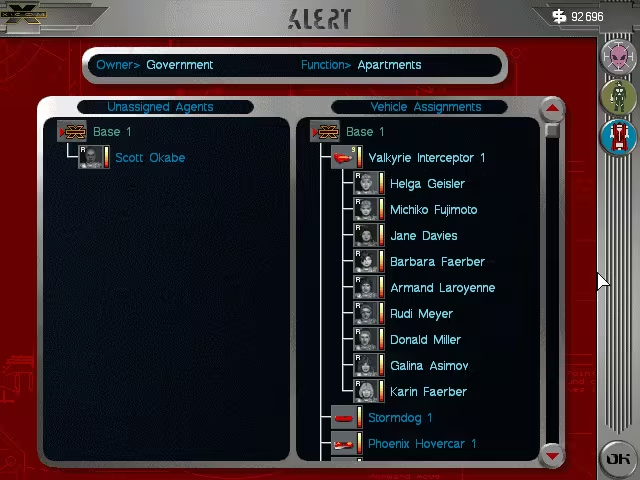
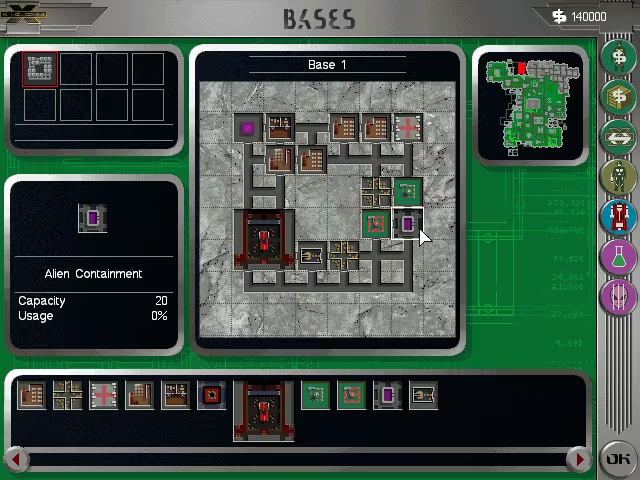
      "Players have extensive freedom to direct their actions, including managing bases, choosing missions, raiding organizations, and customizing squads and vehicles."

    • Competence
      4

      "The game offers complex tactical challenges, strategic management, and adaptive AI requiring skillful play and decision-making."

    • Competition
      1

      "While there is interaction with other organizations and factions, the focus is primarily on player-driven goals rather than direct competition with other players."

    • Continuation
      4

      "Players report investing hundreds of hours, indicating strong attachment and habitual play."

    • Cooperation
      2

      "Players can form alliances with city factions and cooperate with police forces, but much gameplay is focused on individual management and missions."

    • Creativity
      4

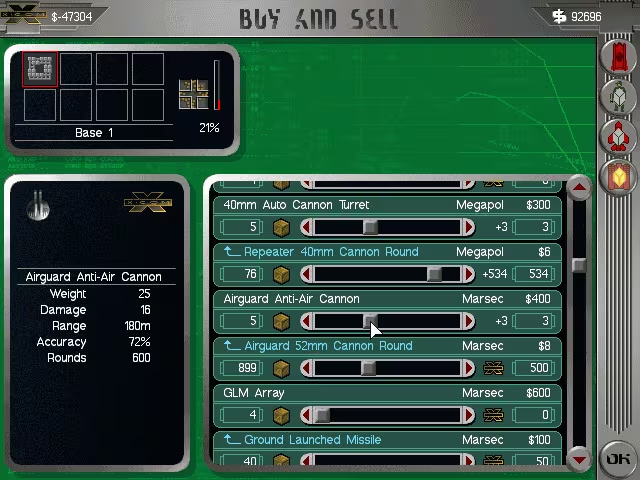
      "High creativity in customizing agents, vehicles, bases, and tactical approaches including destructible environments."

    • Domination
      1

      "Players can dominate factions and organizations, but interactions are more about strategic control than social dominance."

    • Escapism
      4

      "Players use the game as an immersive escape into a complex sci-fi city under alien siege."

    • Expectation
      -4

      "Players engage voluntarily out of personal interest and nostalgia rather than obligation."

    • Experimenting
      4

      "The game encourages trying different strategies, real-time or turn-based combat, and various tactical and strategic approaches."

    • Exploration
      3

      "Exploration of a detailed cityscape, alien dimension, and multiple mission types is a core element."

    • Expression
      3

      "Players customize soldiers, vehicles, and bases, expressing personal play styles."

    • Fantasy
      4

      "Strong sci-fi fantasy setting with aliens, psionics, and futuristic technology."

    • Fellowship
      1

      "Some community and faction interaction exists, but gameplay is largely individual."

    • Growth
      4

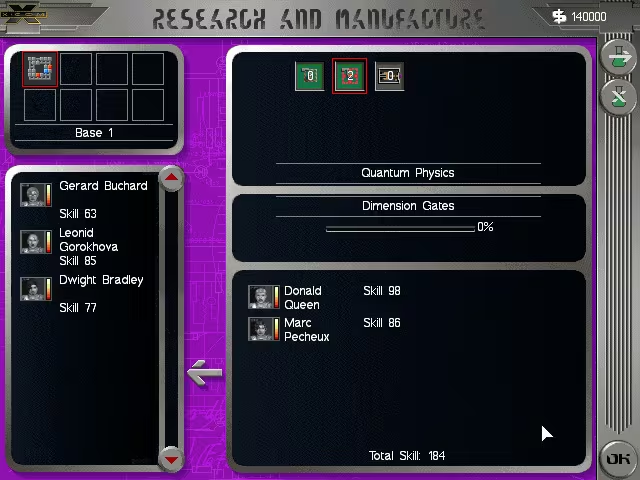
      "Players develop skills, research technology, and improve units over time."

    • Health
      -5

      "Sedentary gameplay typical of strategy games with no physical activity."

    • Idle
      -3

      "Requires focused attention and micromanagement rather than casual or background play."

    • Intimacy
      -4

      "Limited social interaction; focus is on individual gameplay and management."

    • Leadership
      4

      "Players lead squads, manage bases, and direct organizational strategy."

    • Progression
      5

      "Strong emphasis on accumulating technology, equipment, personnel, and bases."

    • Relaxation
      -2

      "Gameplay is challenging and can be tense, especially on higher difficulties."

    • Sensation
      2

      "Enjoyable audio and visual effects, including destructible environments and dynamic combat."

    • Status
      1

      "Recognition comes from in-game faction relations rather than social status or popularity."

    • Story
      3

      "Narrative immersion through city politics, alien invasion, and player-driven story progression."

    • Strategy
      5

      "Deep mental challenge with complex tactical and strategic decision-making."

    • Thrill
      3

      "Tense combat and unpredictable alien attacks provide suspense and excitement."

    • Value
      5

      "Players report hundreds of hours of gameplay for a low price, indicating high value."

    • Violence
      4

      "Combat involves extensive use of weapons, destruction, and alien extermination."

    • Survival
      4

      "Strong survival theme in defending the city and managing limited resources against alien threats."

    Last update: 29/04/2026