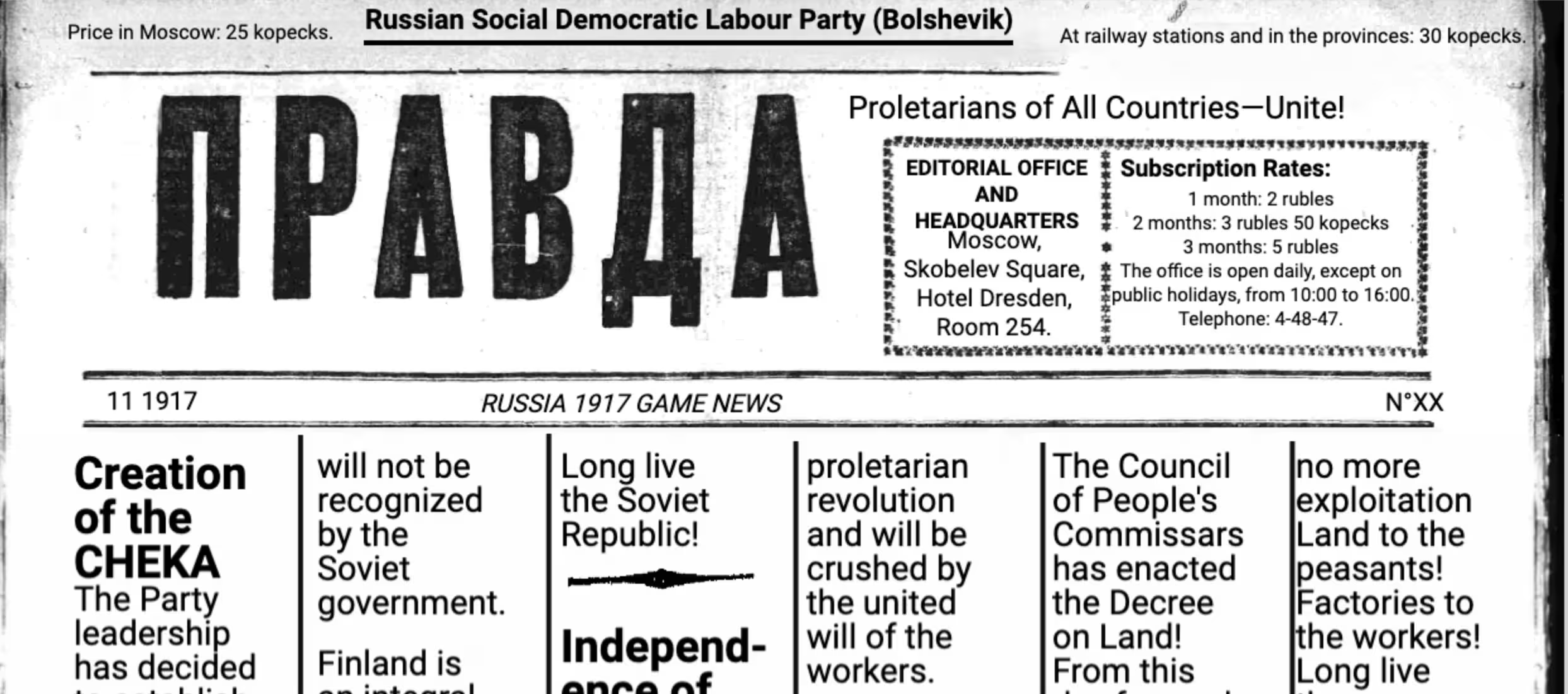
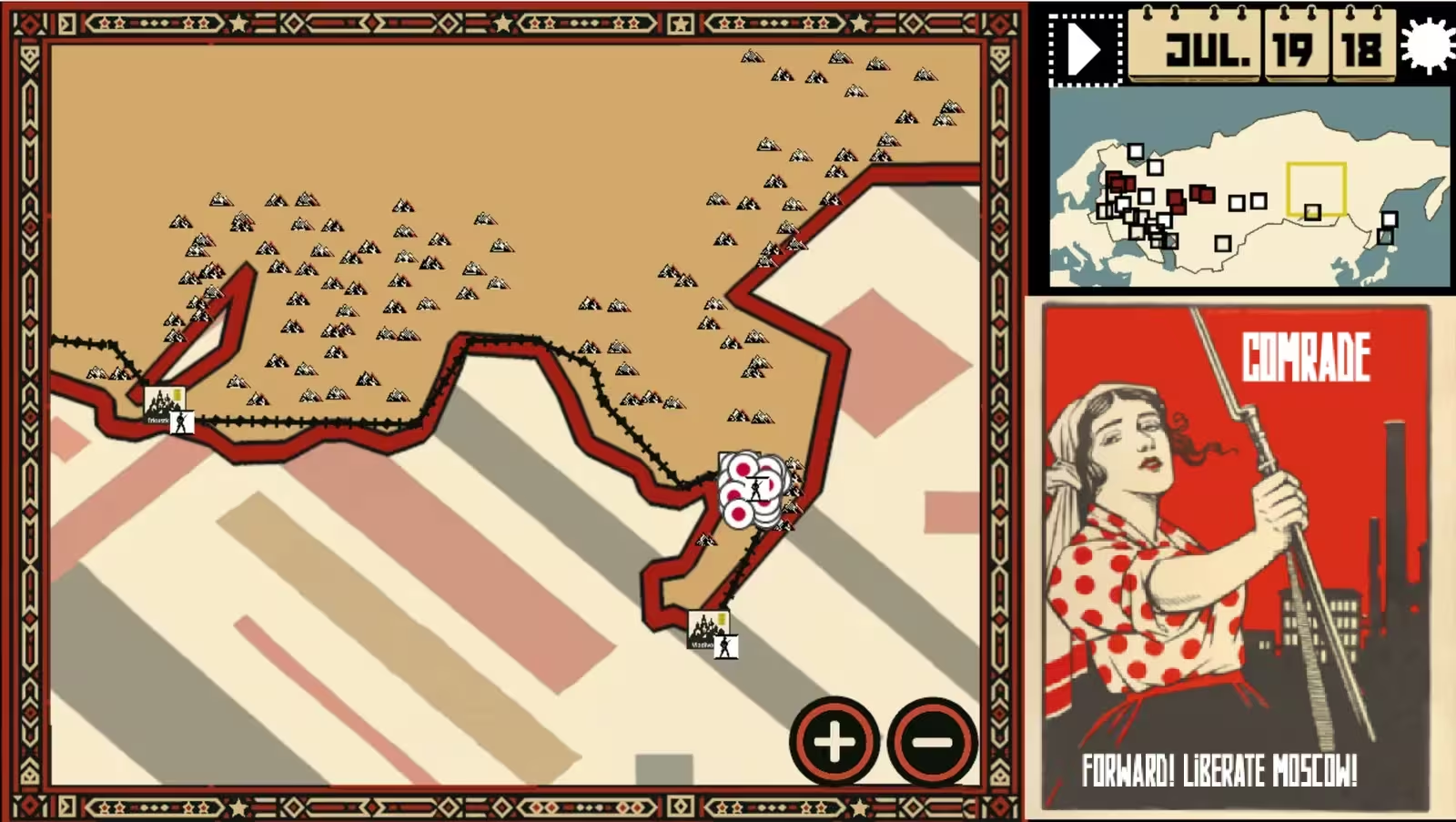
Russia 1917 is a mobile strategy game that puts the player in charge of the communist camp led by Lenin during the Russian Civil War. The player faces the White Russian forces as well as foreign armies. Between 1917 and 1923, the collapse of the Russian Empire opened a period of extraordinary complexity: revolutions, civil war, foreign interventions, independence movements, and political struggles became intertwined across an immense territory. It is against this backdrop that Russia 1917 seeks to introduce players to the full political complexity of the period through a real-time mobile strategy game.
An activist game: between education and political reflection
The starting point of Russia 1917 is rooted in a political and activist reflection: how can we make this revolution, which profoundly shaped the twentieth century, better known? And could it have unfolded differently?
Faced with an extremely complex historical reality—for example, more than 15 countries took part in the civil war—the developers wanted to make history accessible without oversimplifying it.
To achieve this, the game deliberately simplifies certain elements. The number of military unit types is limited, while more detailed historical information is presented through optional texts. This allows players to explore the historical context in greater depth without constantly interrupting the flow of the game.
The art direction, interface, music, and writing also contribute to immersing the player in the political and cultural world of the revolution. But the game’s activist dimension is not limited to its narrative or to defending a particular interpretation of history. It also lies in the ambition to offer a mobile game accessible to anyone interested in history and politics, rather than limiting this kind of experience to console and PC players.
Politics in video games: decisions and means
The very definition of politics in Russia 1917 differs from what can be found in many other games.
In Hearts of Iron IV, for example, players navigate a branching tree of political decisions: will they move closer to one country or another? These choices are structured and clearly defined, with each decision influencing other political developments. It is a highly inspiring approach.
In Russia 1917, however, the ambition is to make these political debates more concrete.
First, through immersion. A political debate is not reduced to a simple line such as “launch the New Economic Policy.” Instead, the player attends a discussion that can last several minutes, accompanied by documents explaining the advantages and disadvantages of each position.
Second, making a political decision does not necessarily mean that it will actually be implemented.
For example, if the player decides to take control of the economy, they must free up resources to put that decision into practice by assigning soldiers to it, which in turn reduces the number of troops available elsewhere. The player may also decide that a policy is too costly and reduce the resources allocated to it, even if that policy has already been approved.
If announced policies are not implemented, public support declines much more rapidly than if they are carried out, even only partially.
The final assessment
In Papers, Please, where the player takes on the role of a border inspector, the player’s actions can lead to many different endings. Supporting the resistance may eventually allow the player to escape the country, while remaining a loyal servant of the regime can ultimately lead to imprisonment. The game features more than 30 possible endings.
Russia 1917 builds on this idea by providing an assessment of the USSR the player has created.
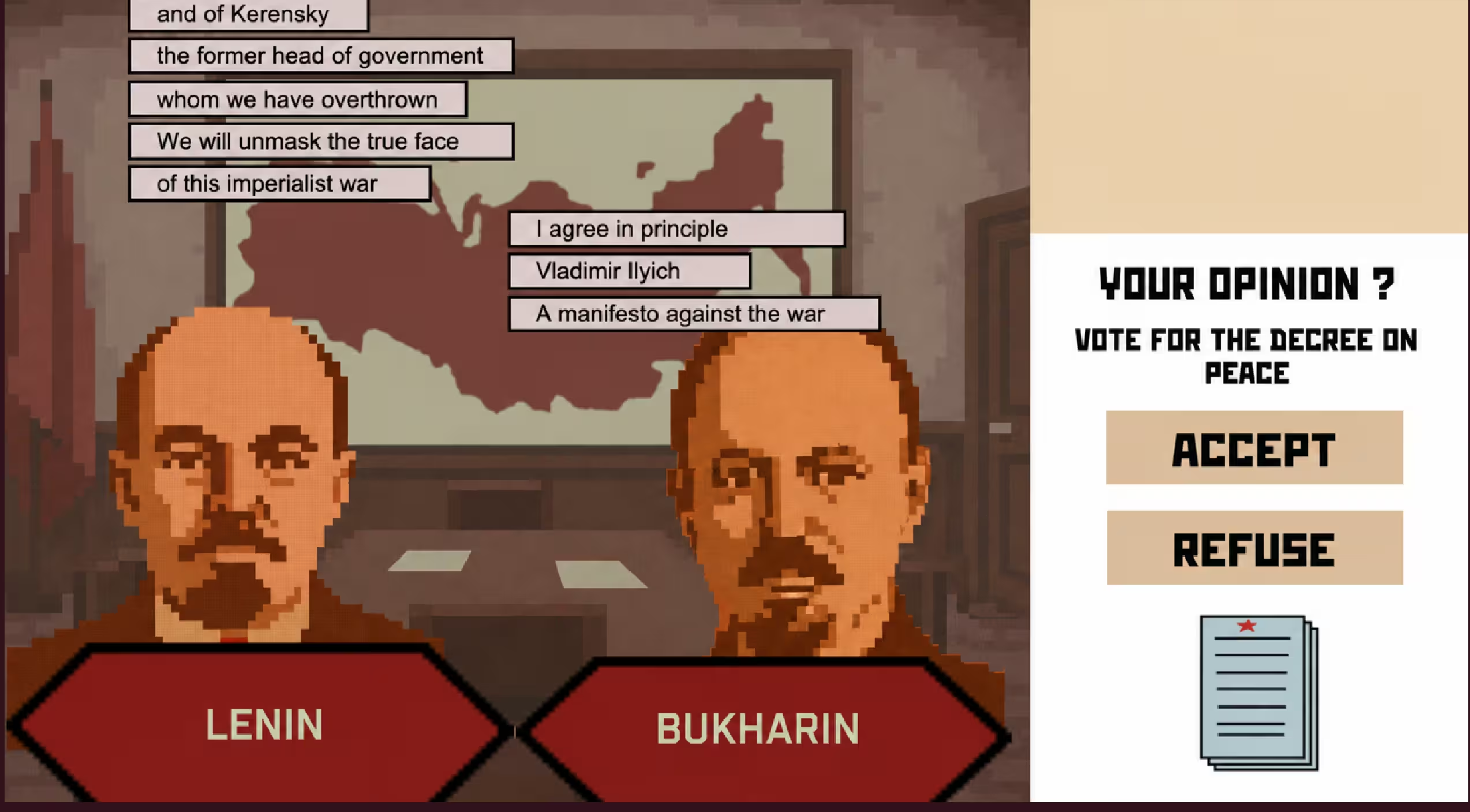
Each year, the Party Congress reviews the state of the country, and the game concludes with a final assessment. This allows the player to see what kind of state they have built.
Have they created an authoritarian state backed by a political police force, or a state that allows other political parties to exist and has an independent parliament?
Have they developed an economy focused on the needs of peasants and workers, or one that serves the interests of large landowners?
How have they treated minorities and foreign countries?
And, ultimately, what impact will this USSR have on the world of tomorrow?
The underlying idea is to ask whether, given the constraints imposed by the civil war, other choices might have been possible. The aim is to help players understand why certain decisions were made and to judge them in light of the historical context in which they occurred.
There is no single “good ending”.
Conclusion
To answer the initial question, Russia 1917 is an original video game that offers a political strategy experience with a level of complexity comparable to major wargames, while combining it with an accessible interface and relatively simple gameplay mechanics similar to those found in casual mobile games.