With the release of Vampire: The Masquerade – Bloodlines 2 in October 2025, and the criticism surrounding its departure from the original game’s RPG philosophy, I became curious about the first game.
I enjoy RPGs that reward curiosity, offer thoughtful dialogue, and make me feel like my decisions actually matter. So I decided to give the 2004 cult classic a try.
After installing community patches and visual improvements to fix bugs and modernize the graphics, I was pleasantly surprised by how playable it still felt. Not exactly modern, but certainly approachable.
Twenty Years of Progress Are Hard to Ignore
Let’s get the obvious out of the way: Bloodlines has aged.
Combat is clunky, animations are dated, and some bugs remain despite the community’s impressive restoration efforts. Stealth can also be frustrating, particularly because collision detection and enemy awareness aren’t always clearly communicated.
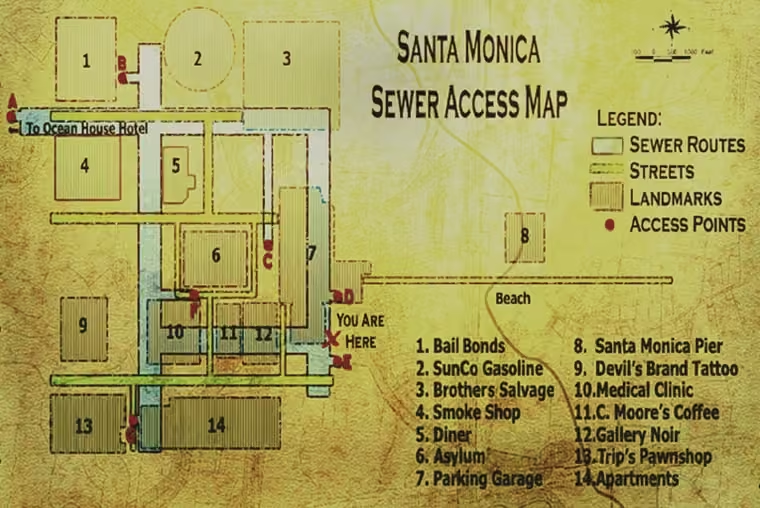
I chose to play as a Nosferatu, a vampire whose monstrous appearance forces him to remain hidden from ordinary humans.
On paper, it’s a fantastic concept. Being able to travel through the sewers to avoid exposing yourself adds an entirely different perspective to urban exploration.
In practice, though, the consequences of being seen are surprisingly forgiving. The Masquerade violation system gives you plenty of room for mistakes, making the supposed danger of walking through crowded streets less intimidating than expected.
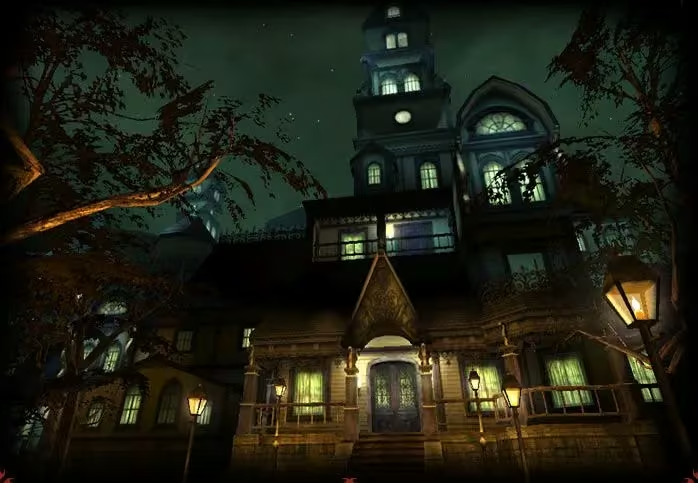
But my biggest frustration came when I got stuck in the Malkavian mansion. Even after looking up a walkthrough online, the thought of going through that section again felt more tedious than challenging.
And that’s where another major improvement in game design becomes obvious: autosaves.
Bloodlines comes from an era when regularly saving your progress was largely the player’s responsibility. Forget to save before a difficult or confusing section, and you might find yourself repeating a long stretch of gameplay you’d rather never revisit.
It’s easy to take modern checkpoint systems for granted, but experiences like this remind me just how much unnecessary frustration they’ve eliminated.
The Small Details That Modern RPGs Sometimes Forget
What surprised me most wasn’t the atmosphere, the quests, or even the vampire setting.
It was a rat.
Early in the game, a character asks you to feed on one. I wandered around, couldn’t find it, and eventually returned without completing the task.
In most modern games, I would expect the usual response: “You haven’t done what I asked. Come back when you’re finished.”
Instead, the character assumed I had been too disgusted by the idea of drinking rat blood to go through with it.
It’s such a small interaction, but it genuinely caught me off guard.
The game didn’t simply check whether I had completed an objective. It interpreted my behavior and responded in a way that made sense within its world.
Suddenly, I wasn’t just following quest markers. I was participating in a conversation.
And that’s something I find surprisingly rare, even in much more technically ambitious RPGs.
The Illusion of Choice Is Sometimes Enough
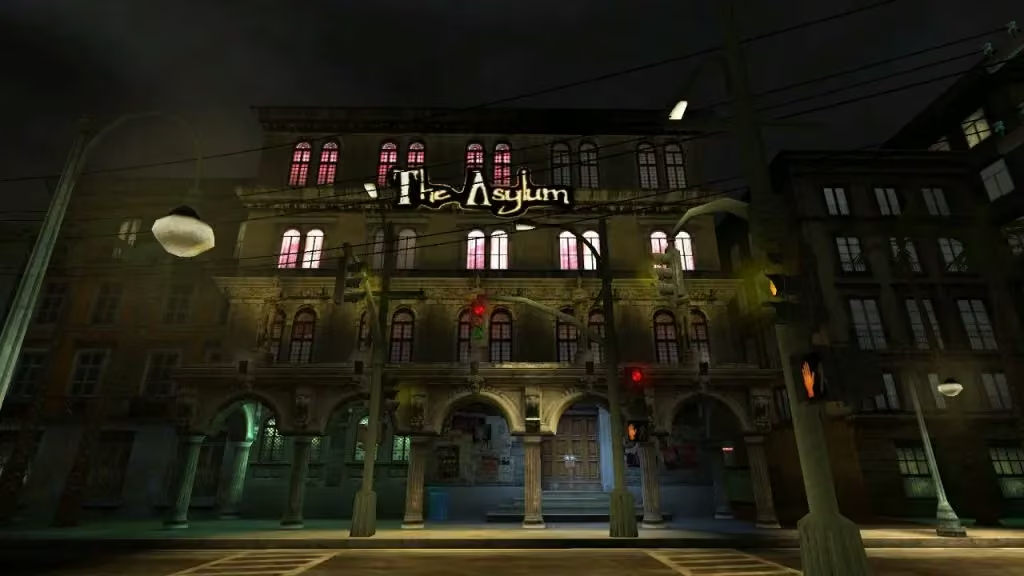
Another thing that genuinely impressed me was how natural the conversations felt.
The dialogue is well-written, characters have distinct personalities, and perhaps most importantly, you rarely feel completely safe choosing whatever response sounds the most entertaining.
But here’s the interesting part: your choices don’t always matter as much as the game makes you believe.
Early on, Bloodlines teaches you a very important lesson. Say the wrong thing to the wrong person, and you might find yourself in serious trouble, potentially even getting killed.
That experience changes how you approach every conversation afterward.
When a character offers you the opportunity to be rude, provocative, or downright reckless, you hesitate. You remember what happened earlier, and you naturally choose your words more carefully.
Yet if you actually experiment with those aggressive dialogue options later in the game, you’ll discover that the consequences are often much less dramatic than you expected.
The game doesn’t need every choice to have meaningful consequences. It just needs to convince you that it might.
And I think that’s a remarkably clever piece of game design.
Rather than building an impossibly complex branching narrative where every dialogue option leads somewhere different, Bloodlines establishes the stakes early and lets your imagination do much of the work.
The result is a world where conversations feel dangerous, even when the underlying systems are relatively forgiving.
Creativity Was the Real Technology
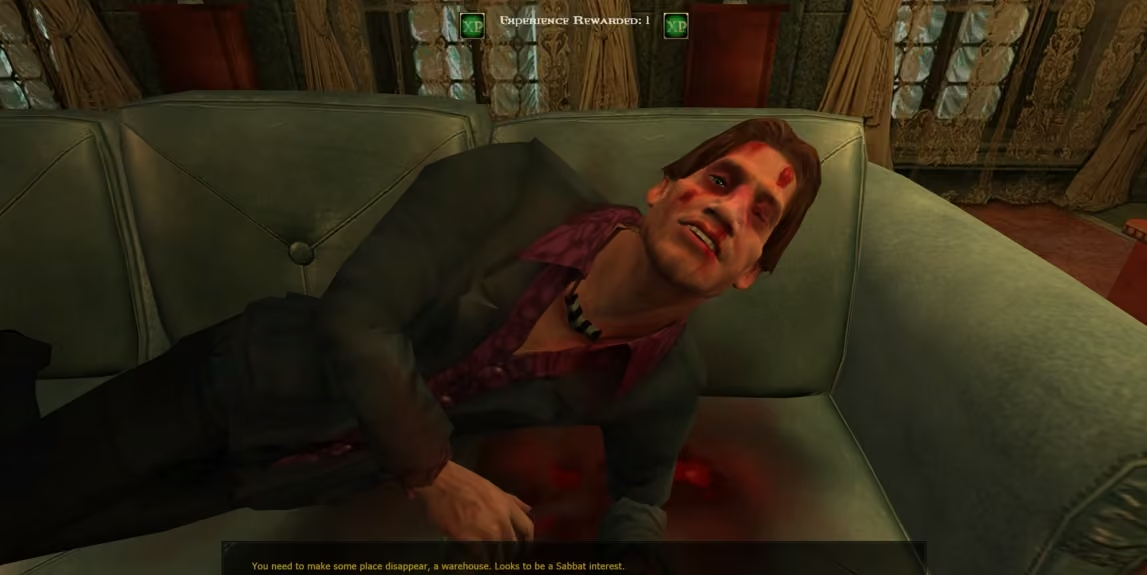
Playing Bloodlines today made me think about how developers approached immersion when their technical resources were far more limited.
They couldn’t rely on enormous environments, sophisticated animations, or thousands of cinematic interactions.
Instead, they often had to make relatively small spaces and simple systems feel alive through writing, creativity, and carefully anticipated player behavior.
The rat interaction and the illusion of dangerous dialogue choices are two sides of the same philosophy. One makes the world feel reactive, while the other makes you believe it could react at any moment.
That doesn’t mean older RPGs were universally better. Modern games have made extraordinary progress in accessibility, combat, presentation, and environmental storytelling.
But Bloodlines illustrates something worth remembering: a world doesn’t necessarily feel alive because of how much it can simulate, but because of how convincingly it responds to you.
And sometimes, simply making the player believe that a consequence is possible can be just as powerful as implementing that consequence.
Is Bloodlines Still Worth Playing?
If you’re looking for polished combat, fluid movement, and modern stealth mechanics, Bloodlines will probably test your patience. And I’d strongly recommend developing the habit of saving frequently.
But if you enjoy well-written RPGs, unusual character perspectives, and discovering how a game reacts to your decisions, there’s still something special here.
I’d also recommend installing the community’s Unofficial Patch before playing.
More than twenty years later, Vampire: The Masquerade – Bloodlines remains an imperfect but fascinating example of a particular RPG philosophy.
One where a small, unexpected line of dialogue can leave a stronger impression than an entire cinematic sequence.
I just wish I didn’t have to replay that mansion to experience more of it.