Rift of the NecroDancer similar games & best alternatives
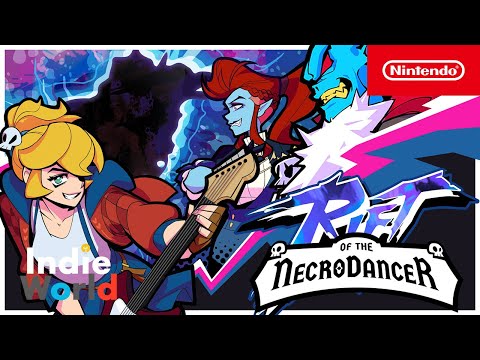
Rift of the NecroDancer
2025
Related articles
Quick resume
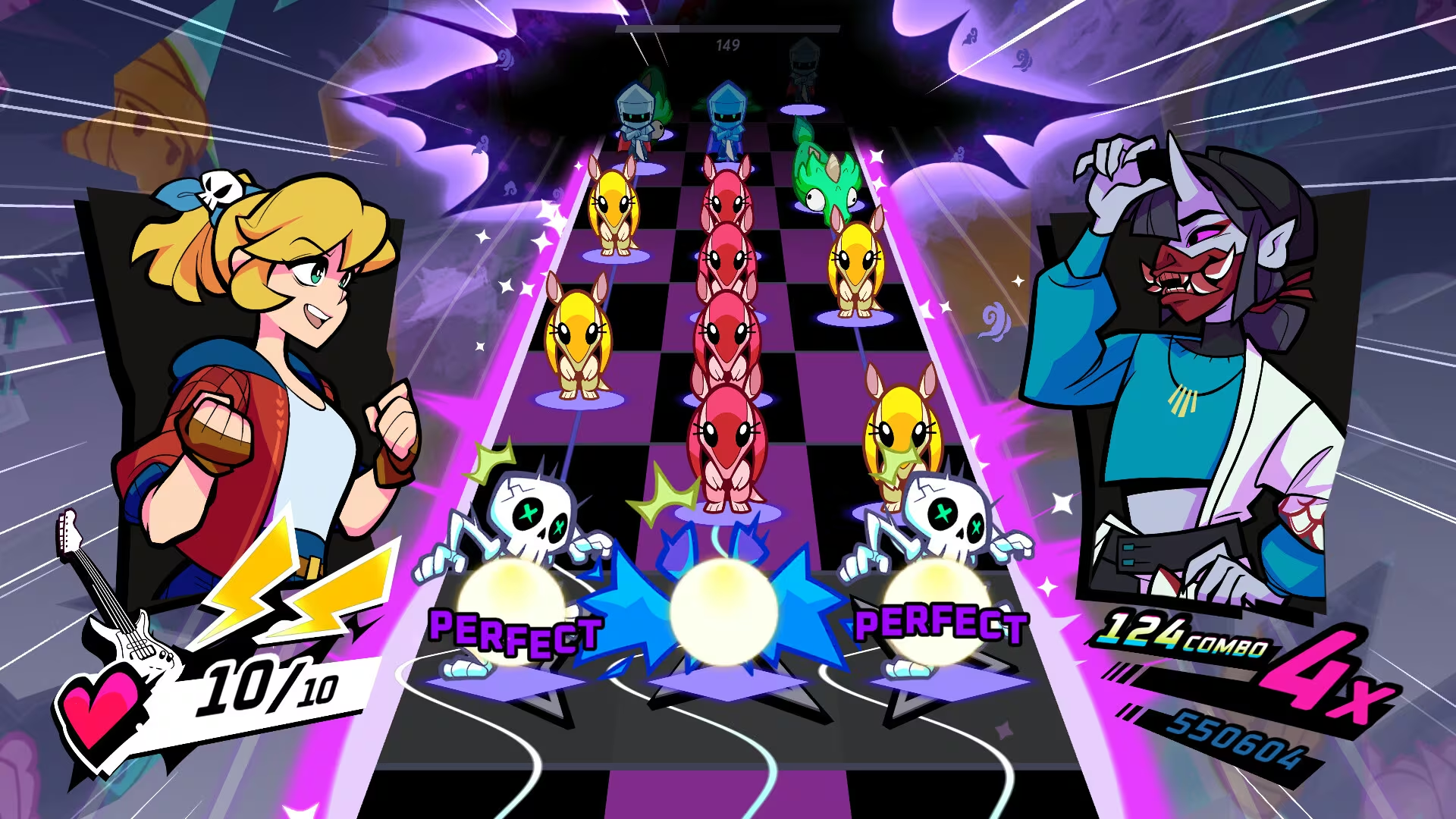
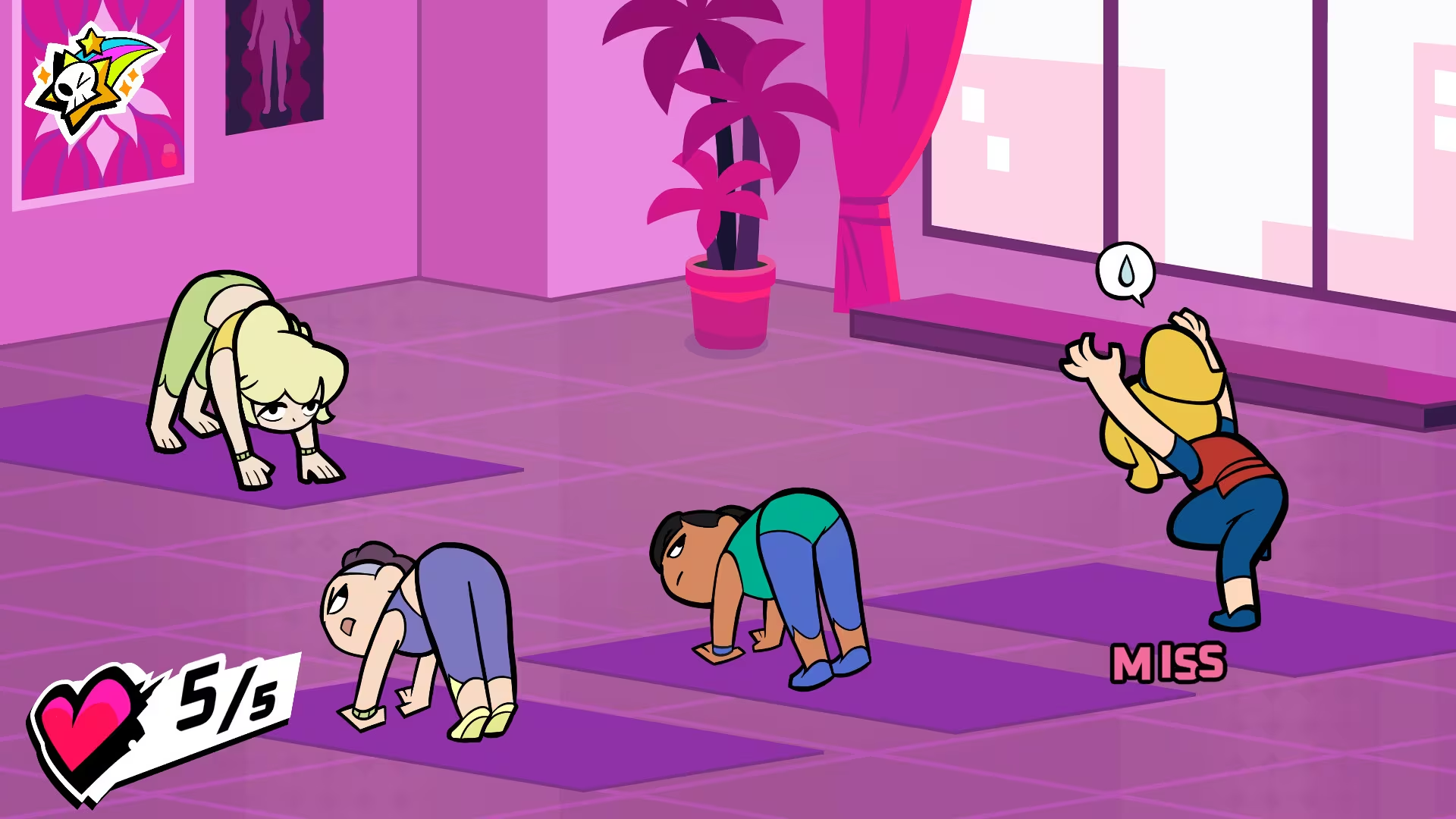
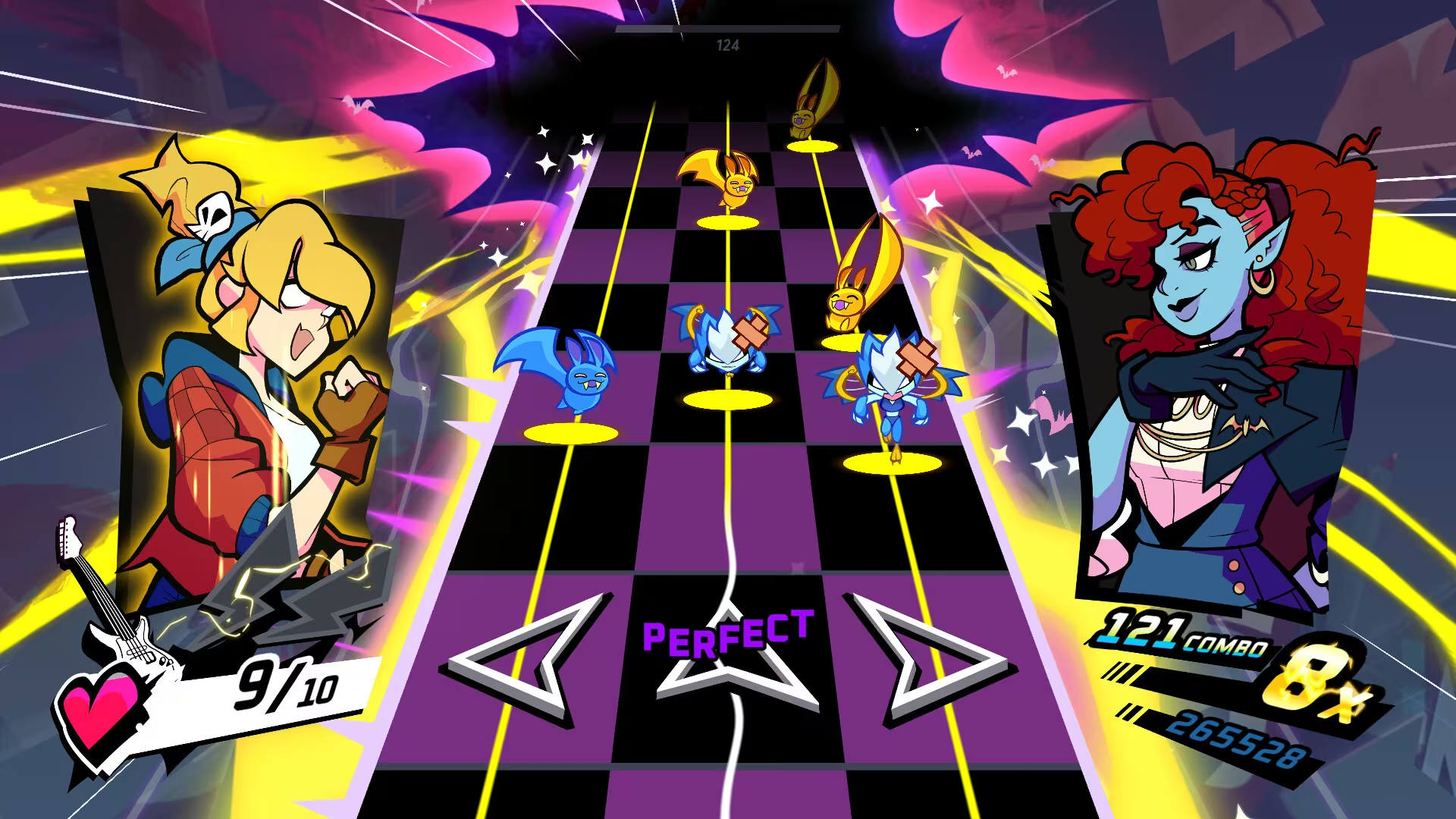
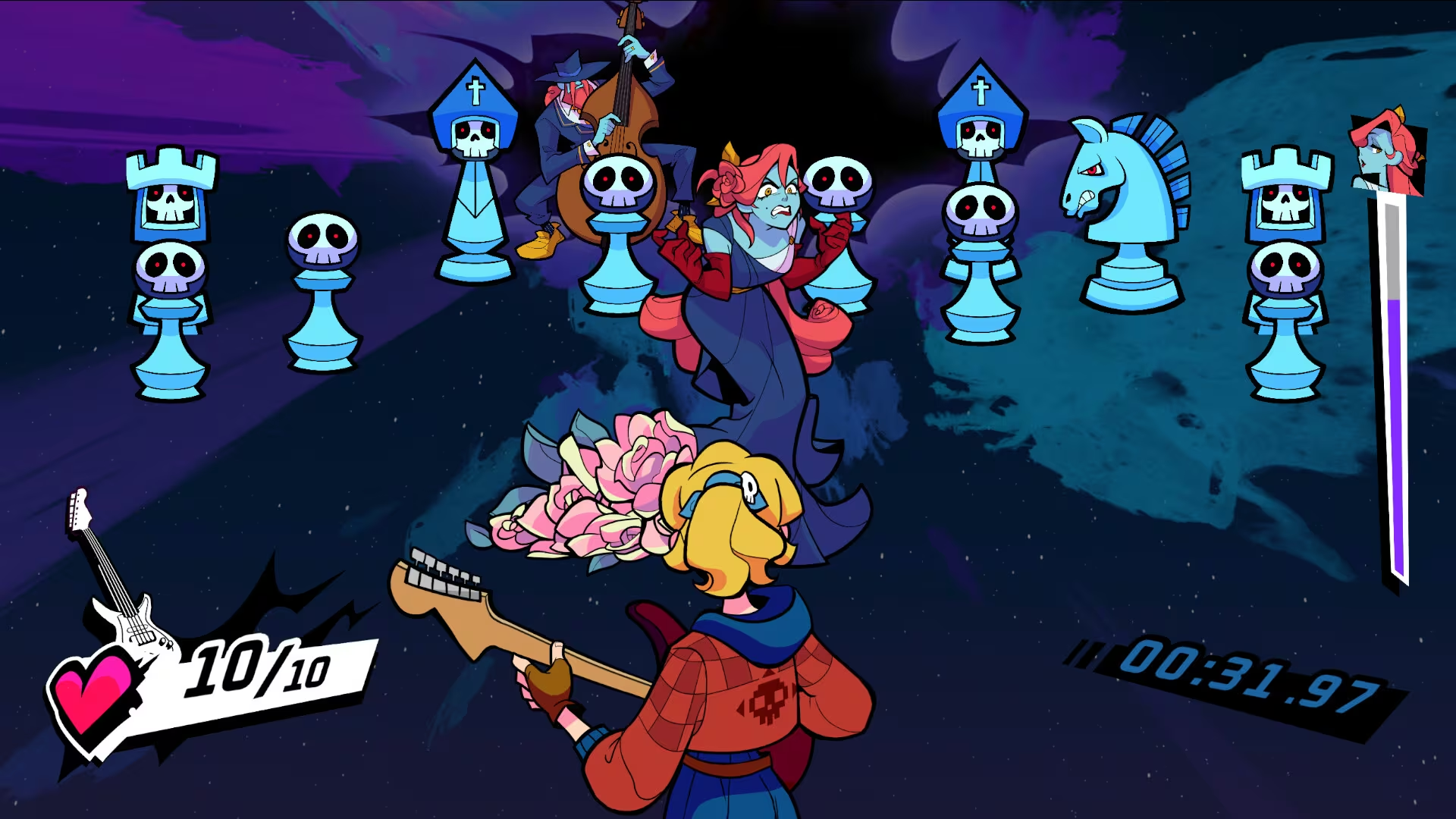
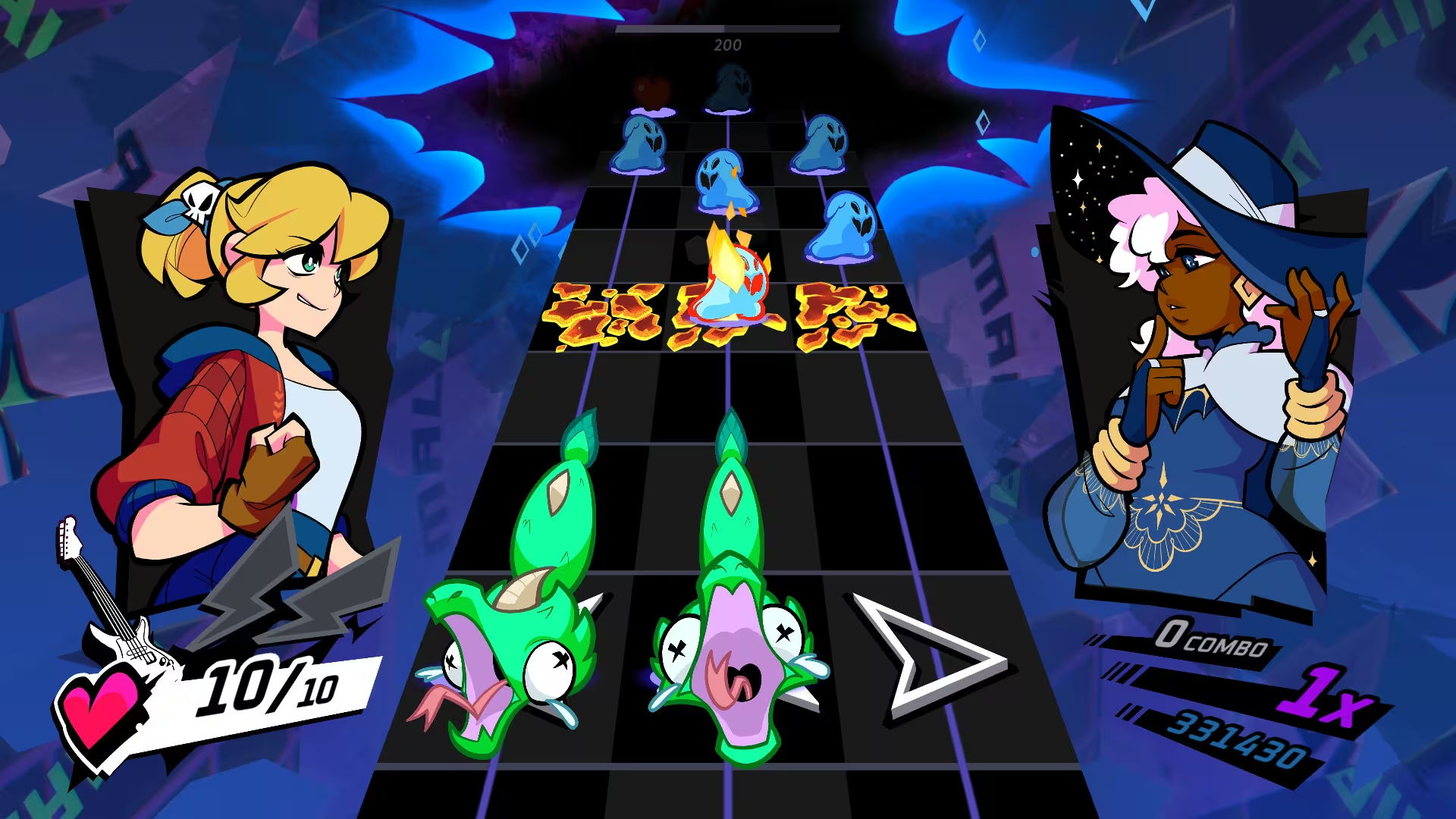
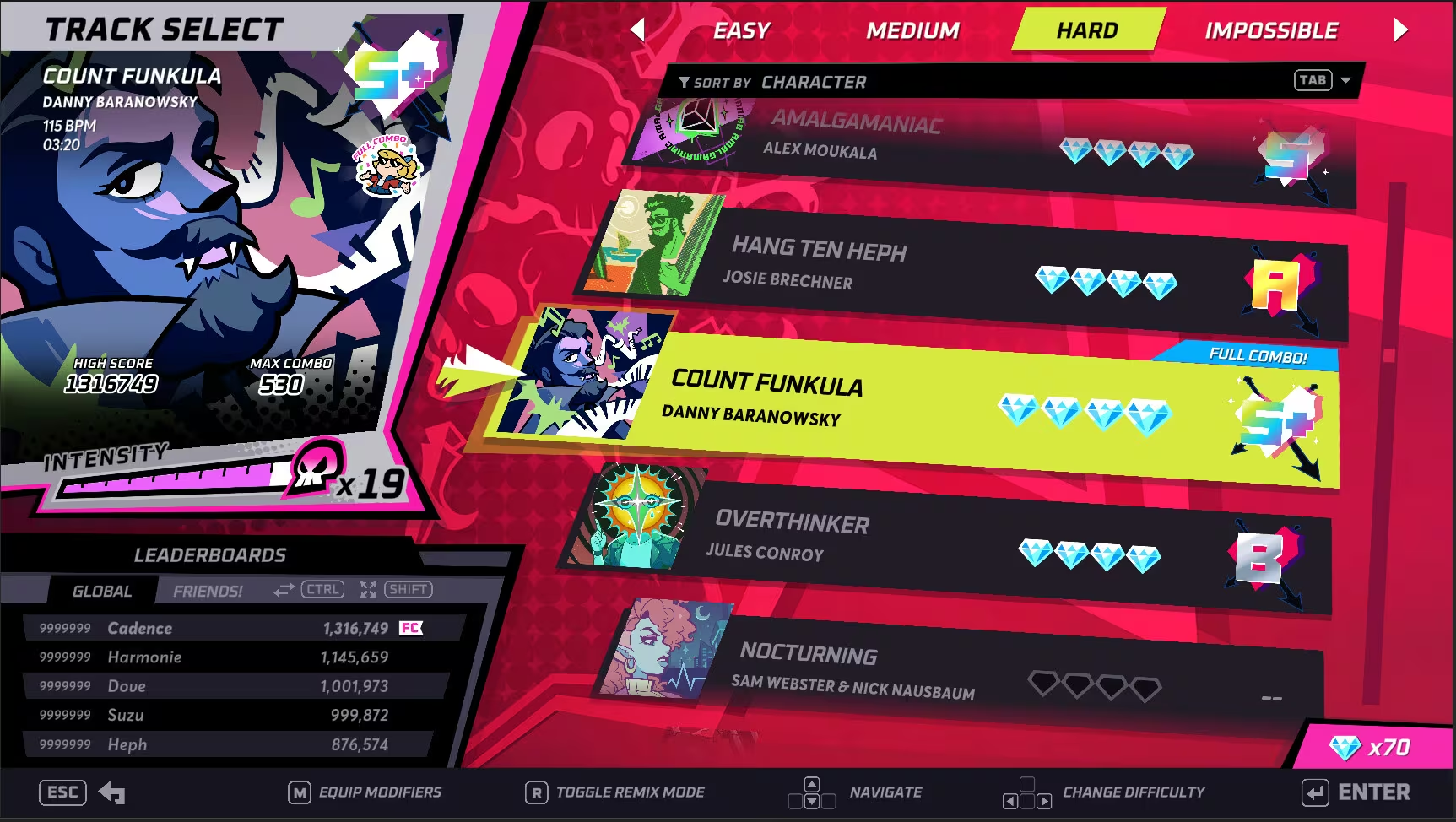
The NecroDancer's back in an all-new rhythm game! Dragged into a strange new world, Cadence must engage in musical combat with monsters surging through the Rift! Face pulse-pounding Rhythm Rifts where every beat is a battle, all set to an original soundtrack by Danny Baranowsky & friends.
Global score
95/100
Genres
Action, Indie, Role-playing (RPG), Music, Arcade
Similar games
Pros
- Innovative rhythm gameplay with unique enemy patterns
- Excellent soundtrack with diverse bangers
- Polished visuals and charming art style
- Strong replayability with remix mode and workshop support
- Accessible difficulty options with high skill ceiling
Cons
- Steep learning curve may deter newcomers
- Story mode is light and somewhat forgettable
- Boss fights can be confusing or unbalanced
- Tutorials can be overwhelming
- Requires high focus and can be frustrating
Analysis
A very typical example of its motivational profile. Motivations that often define this kind of title include Competition, Status, Story, Expression. Here, the score leans higher than usual among comparable games on Story, Violence. It leans lower than usual among comparable games on Fellowship.
How to use the graph
Similar games map
Each dot is a game. They are arranged from the same motivation profile as in the “Motivations” section below. Closer dots usually mean more similar reasons to play (exploration, competition, relaxation, etc.)—not that one game is “better” than another.
- Larger dot with a light outline: the game you are viewing.
- Colour: groups of games with comparable motivation patterns (statistical clusters).
- Hover a dot to see the game name; click to open its page.
- Scroll or double-click the chart to zoom out and see more games.
Why don’t the axes read like a score? This view uses t-SNE: it only keeps who is close to whom. The scales are not “good to bad” or hours played—they separate groups on the map. Read distance between dots, not the axis numbers.
Motivations
-
Autonomy4
"Players must learn and react to diverse enemy patterns on the fly, requiring active decision-making rather than following fixed routines."
-
Competence5
"High skill ceiling with challenging pattern recognition and timing; players receive clear feedback and must master complex charts."
-
Competition2
"Includes leaderboards and score rankings encouraging comparison, but many players focus on personal improvement and enjoyment."
-
Continuation4
"Players report long play sessions, habitual engagement, and replayability through challenges, remixes, and workshop content."
-
Cooperation-4
"Gameplay is primarily solo focused with individual pattern recognition and execution; minimal cooperative elements."
-
Creativity4
"Strong emphasis on chart creation and customization via level editor and Steam Workshop support."
-
Domination-3
"Interactions are balanced and respectful; no evidence of power imposition or trash talk."
-
Escapism4
"Players use the game as a challenging distraction and immersive rhythm experience, escaping real-life stress."
-
Expectation-4
"Players engage voluntarily out of intrinsic interest and enjoyment rather than obligation or pressure."
-
Experimenting4
"Players explore new mechanics, experiment with enemy patterns, and remix modes offer randomized challenges."
-
Exploration3
"Discovery of new enemy behaviors and chart patterns provides a sense of exploration within the rhythm game context."
-
Expression3
"Customization through user-created charts and cosmetic elements allows personal expression."
-
Fantasy3
"Game features imaginative fiction with monsters and a whimsical story, though grounded in rhythm gameplay."
-
Fellowship-3
"Minimal social connection; players mostly engage individually despite community content sharing."
-
Growth5
"Strong learning curve with skill acquisition in pattern recognition, timing, and strategic gameplay."
-
Health-5
"Typical sedentary rhythm game with no physical activity or rehab elements."
-
Idle-4
"Requires constant attention and focus due to fast-paced, complex gameplay."
-
Intimacy-4
"Limited social interaction; connections are surface-level or absent."
-
Leadership-4
"No leadership or authoritative roles; players act independently."
-
Progression3
"Progression through unlocking songs, difficulties, achievements, and custom content."
-
Relaxation2
"Some players experience flow and catharsis, though the game can also be stressful and demanding."
-
Sensation4
"Strong sensory stimulation from music, visuals, and rhythmic feedback."
-
Status2
"Leaderboards and achievements provide recognition, but social status is not a primary focus."
-
Story2
"Includes a light, whimsical story mode that adds context but is not the main draw."
-
Strategy4
"Requires strategic thinking to memorize enemy patterns and plan actions in rhythm."
-
Thrill3
"Players enjoy suspense and challenge from complex patterns and tight timing windows."
-
Value4
"Players perceive strong value due to content volume, polish, and replayability."
-
Violence2
"Combat against monsters is rhythmic and stylized, with some enjoyment of destruction."
-
Survival3
"Players manage health and avoid failure through pattern mastery and resource management."
Last update: 29/04/2026