Road to Empress I similar games & best alternatives
Road to Empress I
2025
Related articles
Quick resume
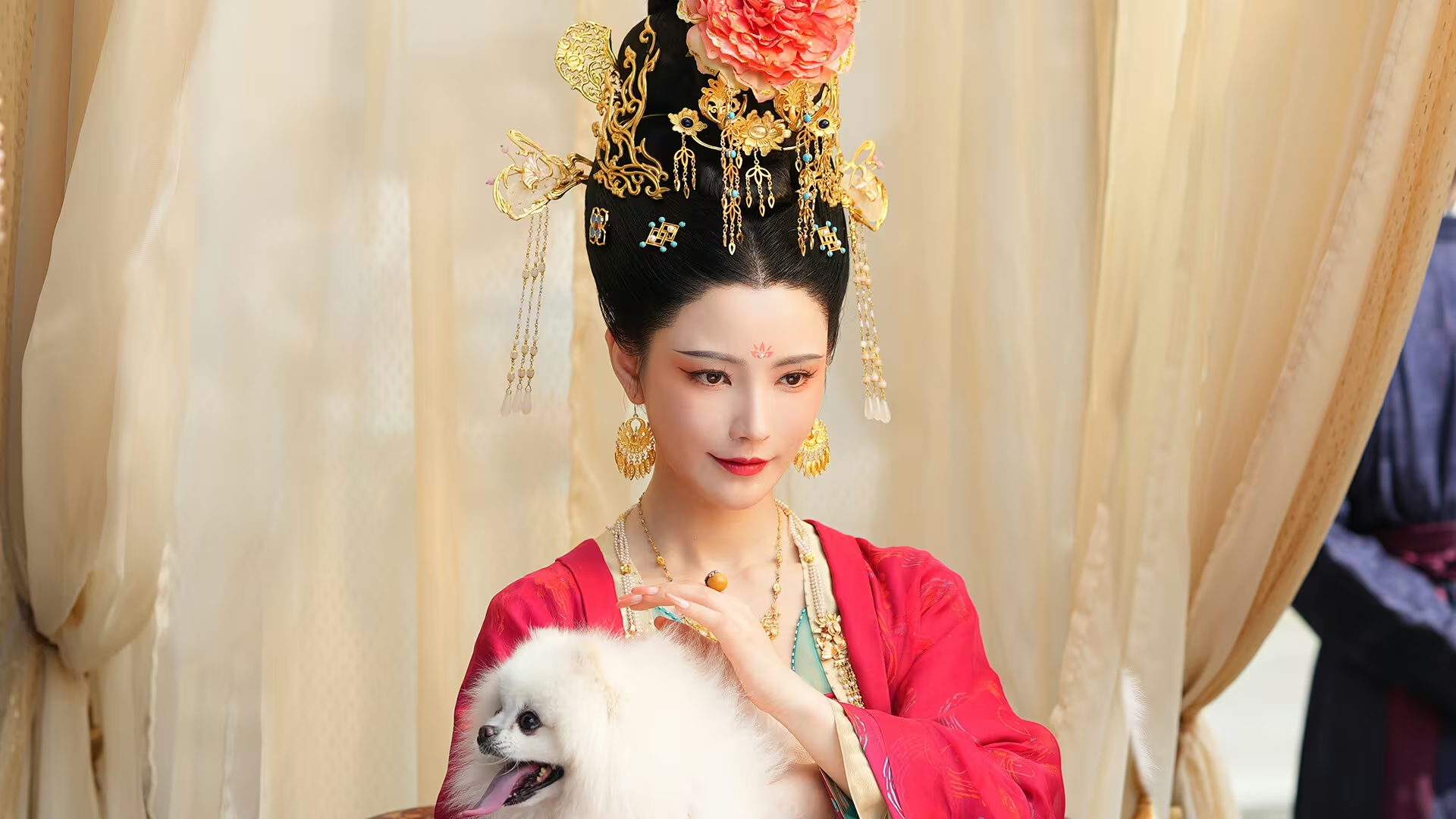
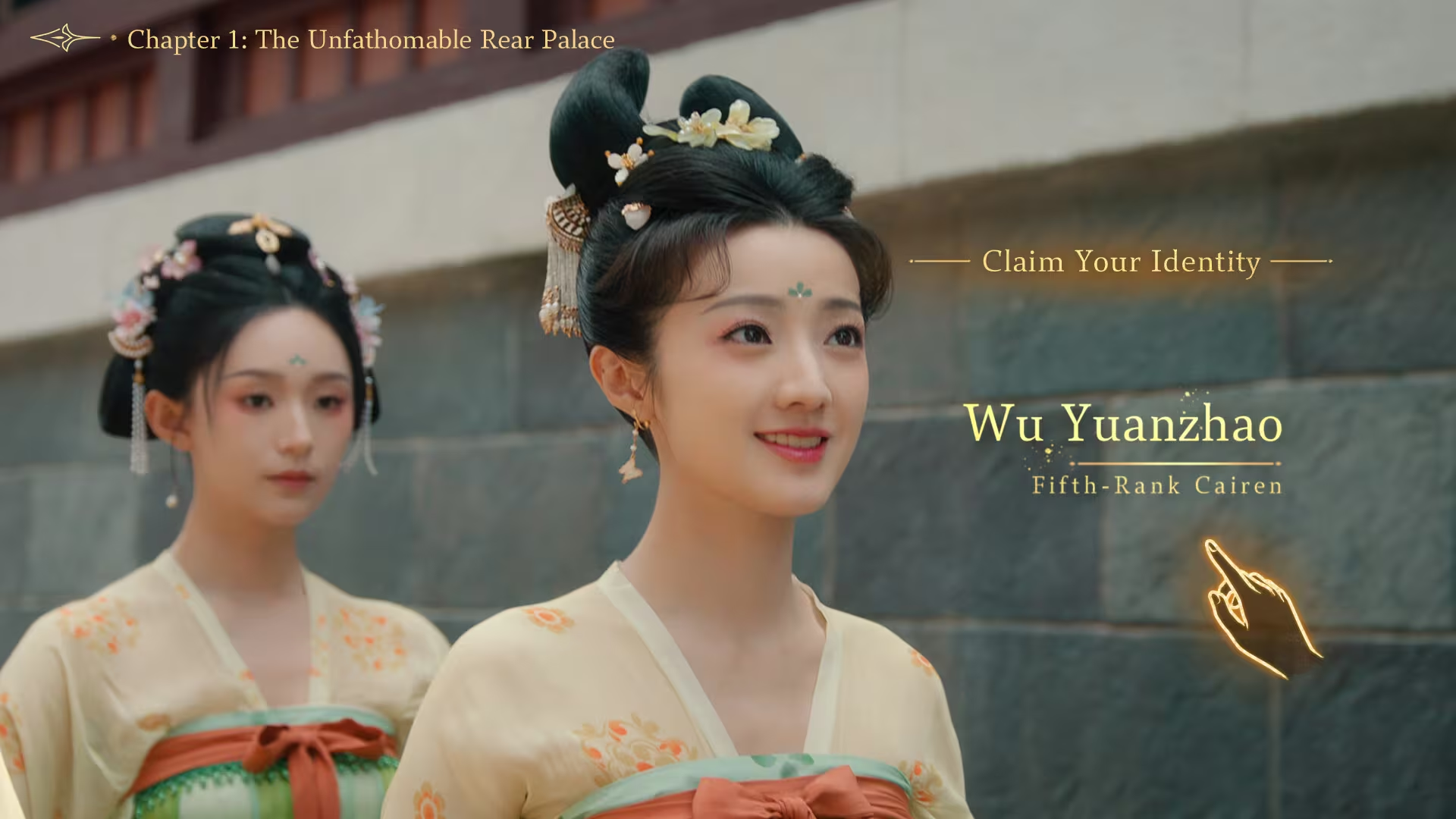
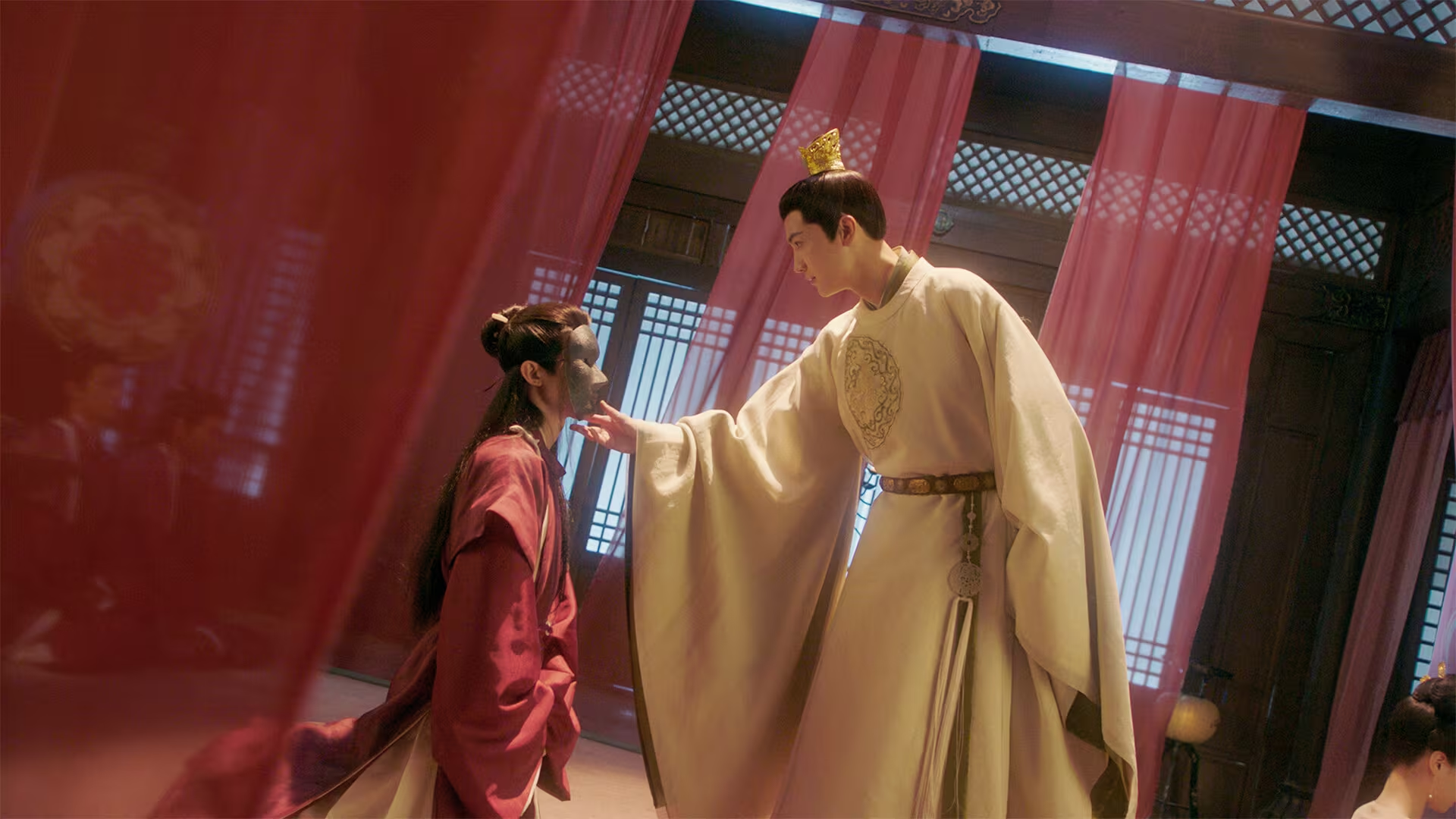
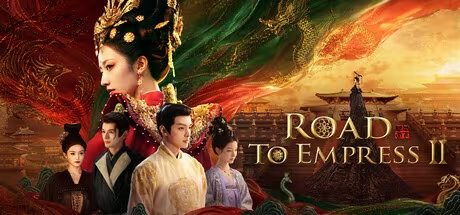
You've never played a game like this before. Road to Empress is a cinematic palace adventure where your choices decide everyone's fate. Tackle 100+ story branches and a high mortality rate with charm, wisdom and courage? First...survive.
Global score
87/100
Genres
Adventure, Casual, Indie, Role-playing (RPG), Simulator
Similar games
Pros
- High production quality with stunning visuals and costumes
- Immersive and emotionally engaging story with branching paths
- Frequent meaningful choices affecting outcomes
- High replayability with many endings and secret plotlines
- Excellent english translation and acting
Cons
- Game ends on a cliffhanger requiring purchase of sequel
- Some choices lead to forced death limiting freedom
- Subtitle speed can be too fast at times
- Mobile ui elements feel out of place on pc
- Repetitive death scenes can become tedious
Analysis
Less representative of its motivational profile, with noticeable differences. Motivations that often define this kind of title include Fellowship, Cooperation, Leadership, Violence. Here, the score leans higher than usual among comparable games on Intimacy, Survival, Story.
How to use the graph
Similar games map
Each dot is a game. They are arranged from the same motivation profile as in the “Motivations” section below. Closer dots usually mean more similar reasons to play (exploration, competition, relaxation, etc.)—not that one game is “better” than another.
- Larger dot with a light outline: the game you are viewing.
- Colour: groups of games with comparable motivation patterns (statistical clusters).
- Hover a dot to see the game name; click to open its page.
- Scroll or double-click the chart to zoom out and see more games.
Why don’t the axes read like a score? This view uses t-SNE: it only keeps who is close to whom. The scales are not “good to bad” or hours played—they separate groups on the map. Read distance between dots, not the axis numbers.
Motivations
-
Autonomy3
"Players make meaningful choices affecting story outcomes, including key decision nodes, though some paths lead to forced death, indicating some narrative steering."
-
Competence2
"Players engage in decision-making and learn from failures; skill involves understanding story and choices rather than mechanical challenges."
-
Competition-3
"Focus is on personal story progression and exploration rather than competing against others; leaderboard exists but is optional and unrelated to core gameplay."
-
Continuation4
"Players report long sessions, replaying to explore multiple endings and branches; high engagement and desire to continue playing."
-
Cooperation-5
"Single-player experience focused on individual decision-making without multiplayer or cooperative elements."
-
Creativity1
"Players can shape character personality and story outcomes through choices but within a predefined narrative structure."
-
Domination-4
"Interactions emphasize survival and intrigue rather than exerting power over other players; no evidence of dominance over others."
-
Escapism5
"Strong immersion in a historical fantasy setting with emotional engagement and escape into palace intrigue and drama."
-
Expectation-4
"Players engage voluntarily out of interest and enjoyment; no indication of obligation or external pressure to play."
-
Experimenting3
"Players explore multiple story branches, try different choices, and replay to discover new outcomes and hidden plotlines."
-
Exploration4
"High exploration of narrative branches, secret plotlines, and multiple endings; players actively seek to uncover all content."
-
Expression2
"Some character shaping and personality analysis based on choices, but limited cosmetic customization."
-
Fantasy5
"Set in a fictionalized version of Tang Dynasty China with palace intrigue, romance, and dramatic storytelling."
-
Fellowship-5
"Primarily a solo experience with minimal social interaction; community engagement mostly external."
-
Growth3
"Players learn from repeated failures and develop understanding of story mechanics and character relationships."
-
Health-5
"Sedentary gameplay typical of FMV and visual novel genres; no physical activity involved."
-
Idle-4
"Requires focused attention to follow story and make timely decisions; not designed for background or idle play."
-
Intimacy2
"Some emotional engagement with characters and romance options, but limited to narrative rather than real social bonding."
-
Leadership-5
"No leadership or group management elements; player acts individually within story."
-
Progression3
"Progression through story chapters, unlocking endings and collectibles; some in-game currency exists but does not affect core progression."
-
Relaxation3
"Balanced pacing with moments of tension and release; some players find it immersive and relaxing despite dramatic content."
-
Sensation4
"High sensory stimulation through detailed visuals, costumes, music, and cinematic presentation."
-
Status-3
"Limited social recognition within game; optional leaderboards exist but are not central to experience."
-
Story5
"Strong narrative focus with branching storylines, character development, and emotional engagement."
-
Strategy2
"Requires planning and careful choice selection to avoid death and achieve desired outcomes, though no complex puzzles."
-
Thrill3
"Tension from high stakes decisions and frequent character deaths creates suspense and emotional highs."
-
Value4
"Players perceive strong value for price given production quality, length, and replayability."
-
Violence3
"Game includes frequent death scenes and palace intrigue involving betrayal and murder, emphasizing violent outcomes."
-
Survival5
"Core gameplay revolves around avoiding death and navigating dangerous palace politics to survive and progress."
Last update: 29/04/2026