Zen of Sudoku Thumbnail

Zen of Sudoku similar games & best alternatives

Zen of Sudoku

PC (Microsoft Windows) • 2006

Related articles

Quick resume

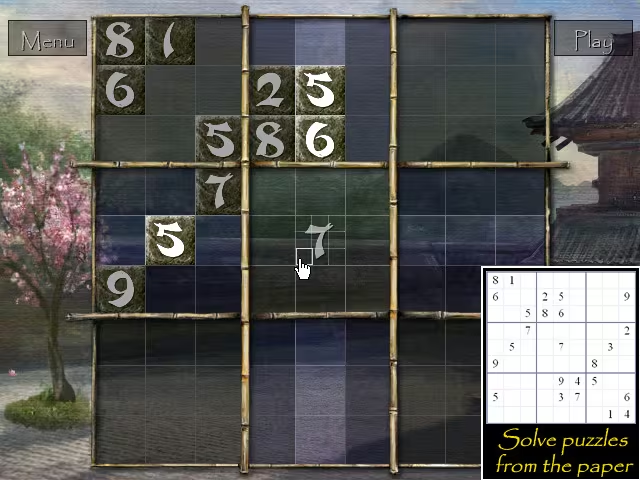
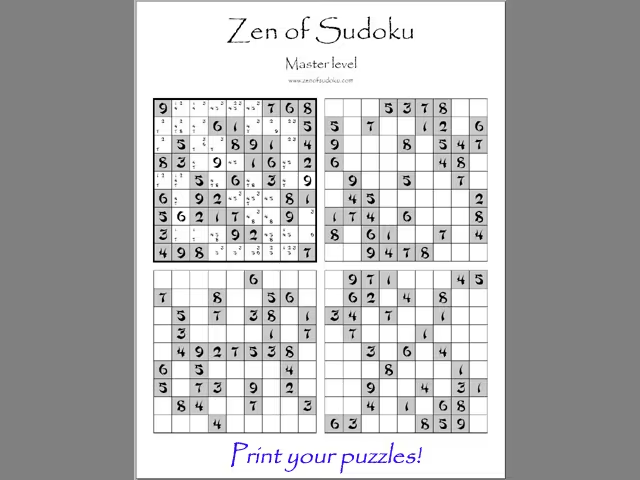
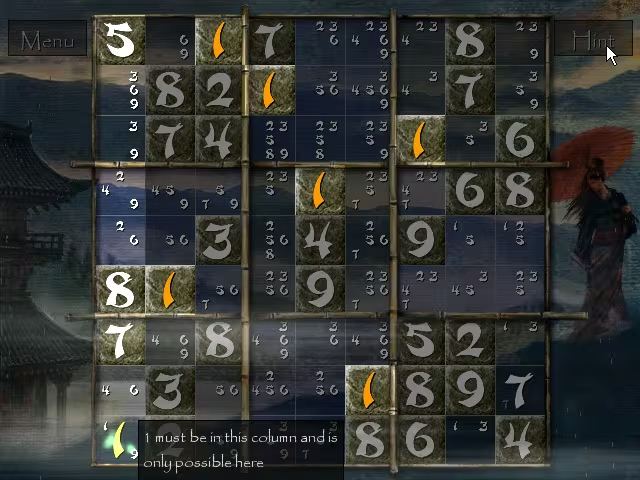
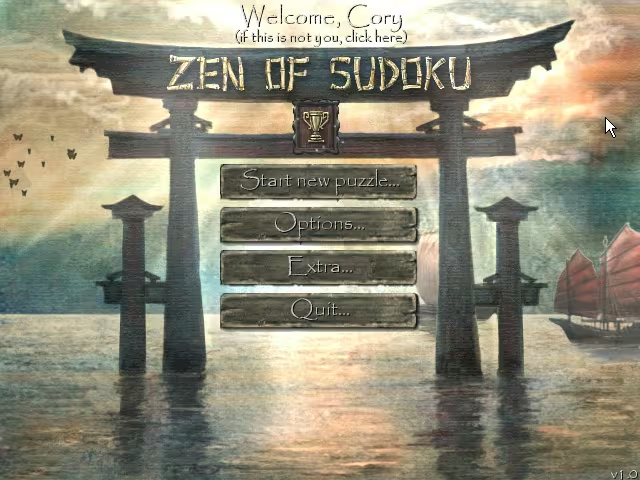
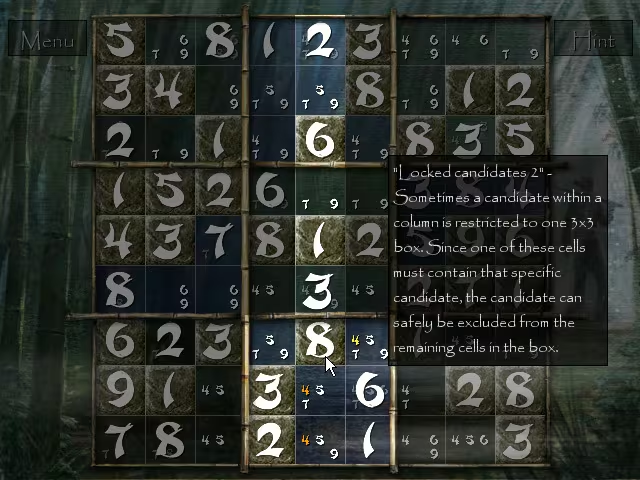
From the creators of Natural Selection comes Zen of Sudoku, a relaxing, easy to play version of Sudoku for your PC.Relax with hand-painted Japanese-styled backgrounds, no timer and lush natural soundscapes.Stimulates your brain to keep it healthy and alert.

Global score

89/100

Genres

Casual, Indie, Puzzle

Similar games

    Pros

    • Relaxing atmosphere with soothing music and visuals
    • Multiple difficulty levels suitable for beginners and experts
    • Intuitive and accessible interface with mouse and keyboard support
    • Ability to create and import custom puzzles
    • Free to play with no intrusive ads or microtransactions

    Cons

    • Outdated low-resolution graphics with no resolution options
    • Small window size in windowed mode and stretched fullscreen
    • Limited customization and no social or multiplayer features
    • Some interface quirks such as lack of undo/reset and sound control granularity
    • Achievements not integrated with steam and some unachievable

    Analysis

    Broadly representative of its motivational profile, with a few distinct shifts. Motivations that often define this kind of title include Fantasy, Violence, Story, Thrill. It leans lower than usual among comparable games on Exploration, Expression, Fantasy.

    How to use the graph
    Similar games map

    Each dot is a game. They are arranged from the same motivation profile as in the “Motivations” section below. Closer dots usually mean more similar reasons to play (exploration, competition, relaxation, etc.)—not that one game is “better” than another.

    • Larger dot with a light outline: the game you are viewing.
    • Colour: groups of games with comparable motivation patterns (statistical clusters).
    • Hover a dot to see the game name; click to open its page.
    • Scroll or double-click the chart to zoom out and see more games.

    Why don’t the axes read like a score? This view uses t-SNE: it only keeps who is close to whom. The scales are not “good to bad” or hours played—they separate groups on the map. Read distance between dots, not the axis numbers.

    Motivations

    • Autonomy
      4

      "Players freely choose difficulty levels, use various input methods, and decide on hints and gameplay options, reflecting high control over their play experience."

    • Competence
      3

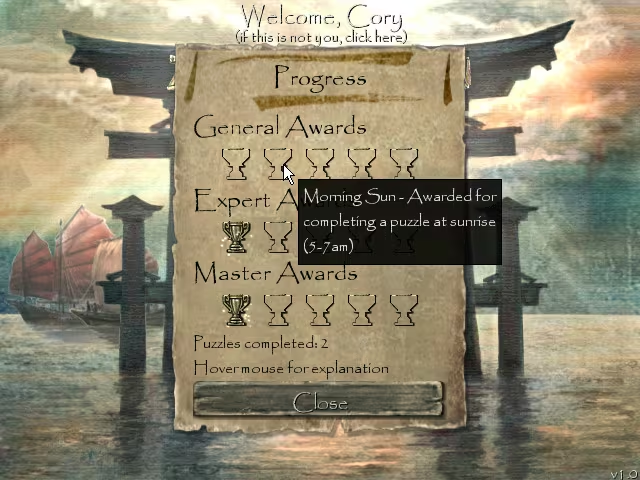
      "The game offers multiple difficulty levels and challenges players to solve puzzles using logic, providing skill-based feedback and in-game achievements."

    • Competition
      -4

      "Focus is on individual puzzle solving without leaderboards or player ranking; gameplay is casual and self-paced."

    • Continuation
      4

      "Many users report habitual, long play sessions and returning frequently, indicating strong engagement and attachment."

    • Cooperation
      -5

      "Single-player puzzle game with no multiplayer or cooperative elements."

    • Creativity
      2

      "Includes a feature to create and import custom puzzles, allowing some creative input beyond standard play."

    • Domination
      -5

      "No elements of dominance or power over others; purely individual puzzle solving."

    • Escapism
      4

      "Players use the relaxing atmosphere and puzzles to unwind and escape daily stress."

    • Expectation
      -4

      "Players engage voluntarily for enjoyment and mental exercise, not out of obligation."

    • Experimenting
      2

      "Players can experiment with different difficulty levels, hints, and puzzle creation, encouraging exploration within the game."

    • Exploration
      -5

      "Gameplay is confined to known Sudoku grids without spatial or narrative exploration."

    • Expression
      -3

      "Limited customization mainly via puzzle creation and minor font mods; no avatar or environment personalization."

    • Fantasy
      -5

      "Realistic logic puzzles with no fictional or imaginative elements."

    • Fellowship
      -5

      "No social or community features; entirely solo play."

    • Growth
      4

      "Players develop logical thinking and Sudoku skills, aided by tutorials and hints."

    • Health
      -5

      "Sedentary puzzle game with no physical activity component."

    • Idle
      -3

      "Requires focused attention to solve puzzles; not designed for passive or background play."

    • Intimacy
      -5

      "No social interactions or relationship-building features."

    • Leadership
      -5

      "No leadership or group management elements."

    • Progression
      3

      "Players progress through puzzles of increasing difficulty and can earn in-game trophies and achievements."

    • Relaxation
      5

      "Strong emphasis on calm, zen atmosphere with soothing music and visuals designed to promote relaxation."

    • Sensation
      2

      "Pleasant audio-visual elements enhance sensory enjoyment, though graphics are simple and dated."

    • Status
      -5

      "No social recognition or visibility features; achievements are local and not integrated with Steam."

    • Story
      -5

      "No narrative or plot; pure puzzle gameplay."

    • Strategy
      4

      "Requires logical reasoning and problem-solving to complete puzzles, with hints explaining strategies."

    • Thrill
      -3

      "Low suspense or risk; gameplay is calm and predictable."

    • Value
      5

      "Free to play with solid features and replayability, providing excellent value for time invested."

    • Violence
      -5

      "No violent or destructive content; purely constructive puzzle solving."

    • Survival
      -5

      "No survival or threat elements; stable and safe gameplay environment."

    Last update: 29/04/2026