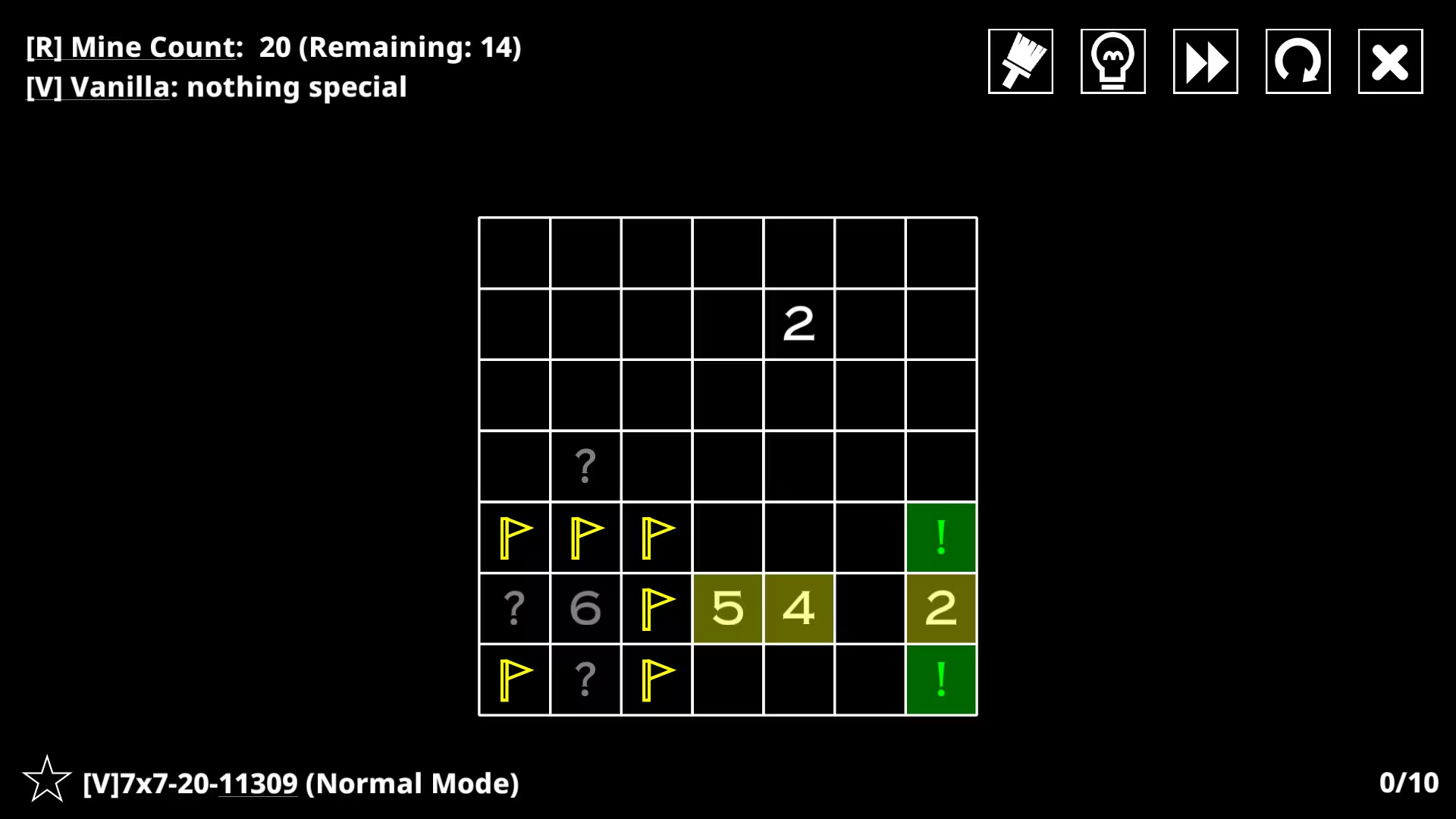
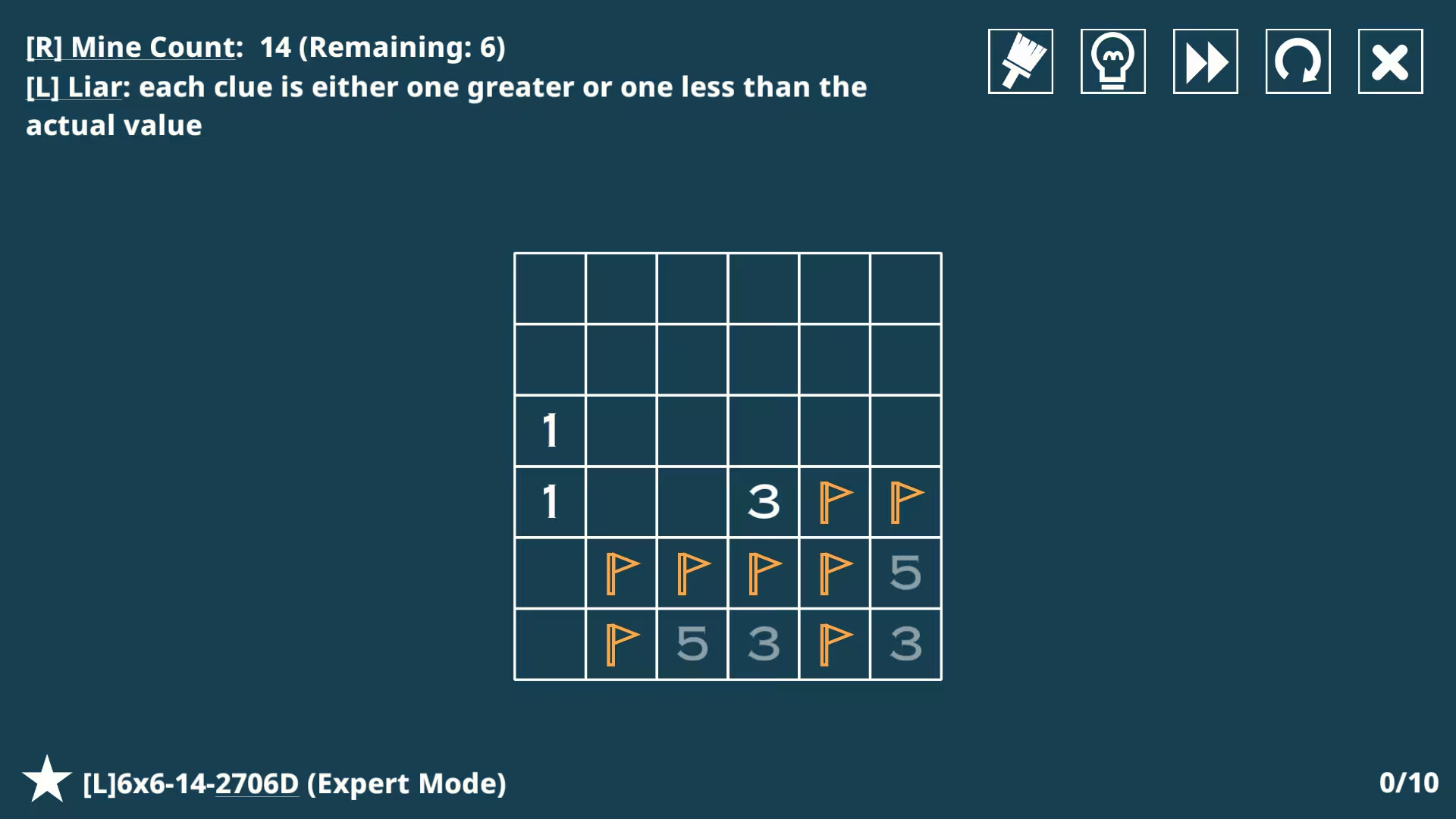
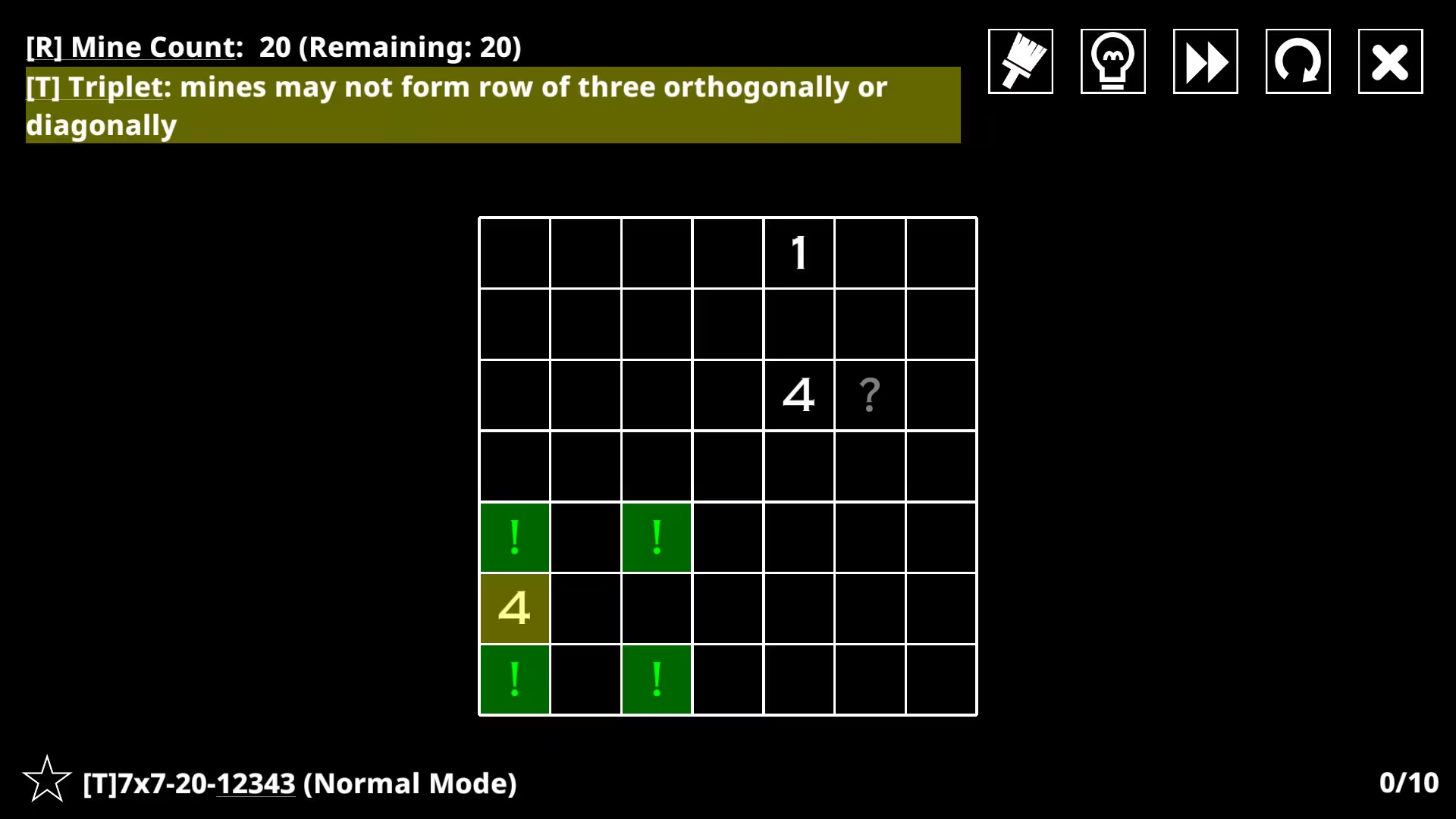
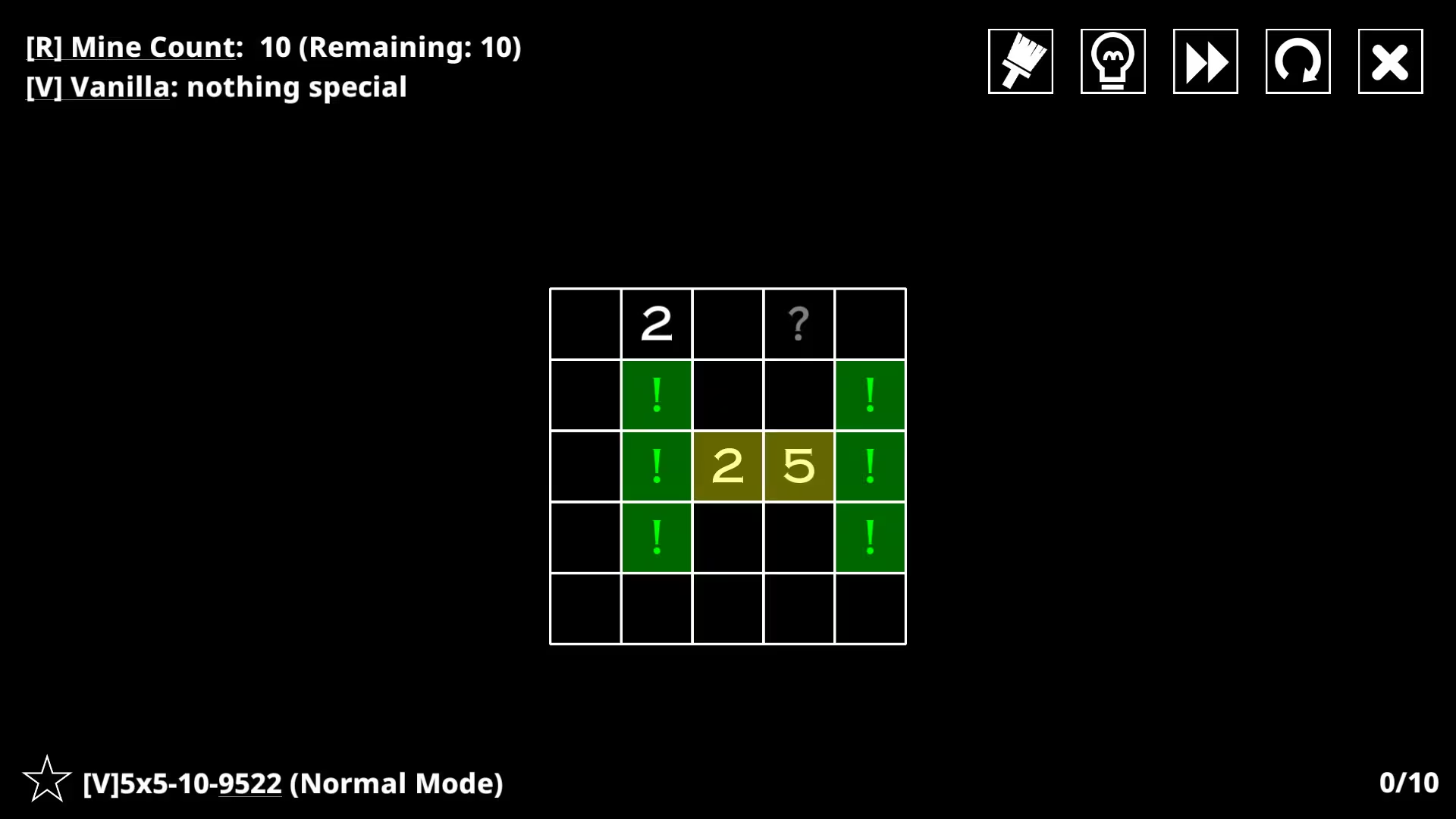
14 Minesweeper Variants Thumbnail

14 Minesweeper Variants similar games & best alternatives

14 Minesweeper Variants

PC (Microsoft Windows) • 2022

Related articles

Quick resume

Minesweeper but the rules are changing.

Global score

97/100

Genres

Casual, Indie, Strategy, Puzzle

Similar games

    Pros

    • Extensive and challenging puzzle variants
    • No guessing required, pure logic gameplay
    • Procedurally generated puzzles with handcrafted feel
    • Helpful drawing and note-taking tools
    • High replayability and long-term engagement

    Cons

    • Minimalist graphics and sound may feel bare
    • Procedural puzzles can vary in difficulty and feel
    • No social or multiplayer features
    • Some variants may feel tedious or overly complex
    • Lack of handcrafted puzzles for aesthetic flow

    Analysis

    Less representative of its motivational profile, with noticeable differences. Motivations that often define this kind of title include Fantasy, Violence, Story, Thrill. It leans lower than usual among comparable games on Relaxation, Sensation, Fantasy.

    How to use the graph
    Similar games map

    Each dot is a game. They are arranged from the same motivation profile as in the “Motivations” section below. Closer dots usually mean more similar reasons to play (exploration, competition, relaxation, etc.)—not that one game is “better” than another.

    • Larger dot with a light outline: the game you are viewing.
    • Colour: groups of games with comparable motivation patterns (statistical clusters).
    • Hover a dot to see the game name; click to open its page.
    • Scroll or double-click the chart to zoom out and see more games.

    Why don’t the axes read like a score? This view uses t-SNE: it only keeps who is close to whom. The scales are not “good to bad” or hours played—they separate groups on the map. Read distance between dots, not the axis numbers.

    Motivations

    • Autonomy
      4

      "Players have full control over their logical deductions and decisions; no guessing allowed in expert mode, emphasizing personal reasoning."

    • Competence
      5

      "The game challenges players with complex logic puzzles requiring skillful deduction and problem-solving, with feedback on correctness."

    • Competition
      -3

      "Focus is on individual puzzle solving at personal pace; no mention of leaderboards or direct player competition."

    • Continuation
      5

      "Players report hundreds of hours played, with addictive progression and a vast amount of content encouraging long-term engagement."

    • Cooperation
      -5

      "Entirely single-player experience focused on individual puzzle solving without cooperative elements."

    • Creativity
      3

      "Players use drawing tools and note-taking to experiment with hypotheses and plan moves, supporting creative problem exploration."

    • Domination
      -5

      "No social dominance or power over others; gameplay is purely personal and self-directed."

    • Escapism
      3

      "Many players use the game as a mental challenge and distraction, engaging deeply in abstract logic puzzles."

    • Expectation
      -4

      "Players engage voluntarily out of intrinsic interest and love for logic puzzles; no obligation or external pressure noted."

    • Experimenting
      4

      "The game encourages trying new variants and combinations, exploring different logical approaches and puzzle types."

    • Exploration
      3

      "Players discover new variants, rules, and puzzle combinations progressively, fostering curiosity and discovery."

    • Expression
      2

      "Drawing and note-taking tools allow some degree of personal expression in puzzle solving, though visual customization is minimal."

    • Fantasy
      -5

      "The game is grounded in realistic logic puzzles without fictional or imaginative narrative elements."

    • Fellowship
      -5

      "No social or community features; gameplay is solitary and independent."

    • Growth
      5

      "Strong emphasis on learning new logic techniques, improving deduction skills, and mastering complex puzzle variants."

    • Health
      -5

      "Sedentary puzzle gameplay with no physical activity or health-related features."

    • Idle
      -4

      "Requires focused attention and logical thinking; not suited for background or idle play."

    • Intimacy
      -5

      "No social or emotional relationship-building elements present."

    • Leadership
      -5

      "No leadership or group management roles; purely individual puzzle solving."

    • Progression
      4

      "Players unlock new variants, larger boards, and achievements, providing a sense of advancement and collection."

    • Relaxation
      -2

      "While some find it meditative, the high difficulty and mental challenge create sustained tension rather than pure relaxation."

    • Sensation
      -3

      "Minimalist visuals and sound with moderate sensory stimulation; focus is on mental engagement rather than sensory excitement."

    • Status
      -5

      "No social recognition or status systems; achievements are personal and not publicly displayed."

    • Story
      -5

      "No narrative or story elements; gameplay is context-free logic puzzles."

    • Strategy
      5

      "Heavy emphasis on strategic thinking, logical deduction, and problem solving across multiple complex variants."

    • Thrill
      -3

      "Low risk and suspense; challenge comes from logic rather than emotional thrill or tension."

    • Value
      5

      "Players report exceptional value for time and money due to vast content and deep gameplay."

    • Violence
      -5

      "No combat or destructive elements; gameplay is constructive and logic-based."

    • Survival
      -4

      "No survival or threat elements; stable puzzle environment focused on deduction."

    Last update: 29/04/2026