







Dreamland Thumbnail

Dreamland similar games & best alternatives

Dreamland

PC (Microsoft Windows) • 2022

Related articles

Quick resume

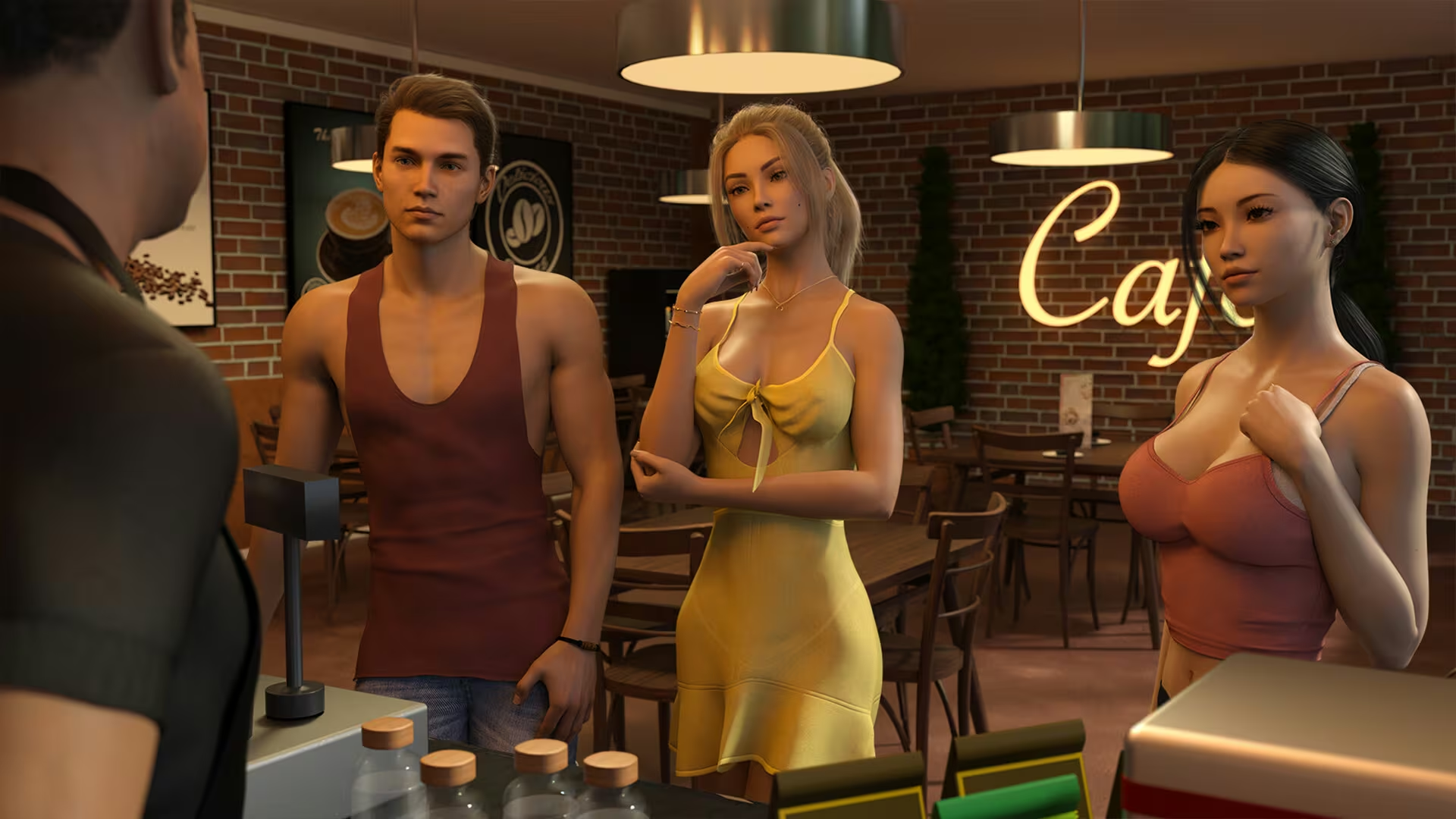
Welcome to Dreamland! A town which hosts the wildest college spring break activities filled with hot girls, parties and sex. However, if you look close enough, you'll discover that Dreamland also hides a dark and horrifying mystery which haunts you and your friends...

Global score

77/100

Genres

Adventure, Casual, Indie, Free To Play, Early Access

Similar games

    Pros

    • Stunning graphics and animations
    • Engaging and intriguing story
    • Meaningful player choices affecting outcomes
    • Free initial chapter with quality content
    • Collectible cards and achievements add replay value

    Cons

    • Very short chapters and limited content
    • Slow development and infrequent updates
    • Some players find writing inconsistent or juvenile
    • Lack of deep gameplay mechanics or strategic depth
    • No multiplayer or social interaction features

    Analysis

    Less representative of its motivational profile, with noticeable differences. Motivations that often define this kind of title include Survival, Violence, Fellowship, Expression. Here, the score leans higher than usual among comparable games on Intimacy, Thrill. It leans lower than usual among comparable games on Competence.

    How to use the graph
    Similar games map

    Each dot is a game. They are arranged from the same motivation profile as in the “Motivations” section below. Closer dots usually mean more similar reasons to play (exploration, competition, relaxation, etc.)—not that one game is “better” than another.

    • Larger dot with a light outline: the game you are viewing.
    • Colour: groups of games with comparable motivation patterns (statistical clusters).
    • Hover a dot to see the game name; click to open its page.
    • Scroll or double-click the chart to zoom out and see more games.

    Why don’t the axes read like a score? This view uses t-SNE: it only keeps who is close to whom. The scales are not “good to bad” or hours played—they separate groups on the map. Read distance between dots, not the axis numbers.

    Motivations

    • Autonomy
      3

      "Players can make choices that affect story outcomes and character relationships, indicating some control over actions and decisions."

    • Competence
      1

      "The game involves some decision-making and collecting cards, but overall gameplay is simple and lacks complex skill challenges."

    • Competition
      -5

      "No evidence of competitive elements; focus is on personal story progression and exploration."

    • Continuation
      2

      "Players express desire to continue playing and await updates, but slow development and short chapters limit habitual play."

    • Cooperation
      -5

      "No multiplayer or cooperative gameplay elements mentioned; single-player visual novel experience."

    • Creativity
      2

      "Players can explore different story branches and collect hidden cards, allowing some creative exploration within predefined structures."

    • Domination
      -5

      "No indications of exerting control or superiority over others; interactions are narrative-focused."

    • Escapism
      4

      "Players use the game as a form of escapism, enjoying immersive story and visuals to distract from real life."

    • Expectation
      -3

      "Players engage voluntarily out of interest and enjoyment, though some feel pressure to support development."

    • Experimenting
      2

      "Some experimentation with story choices and collecting cards, but limited by short content and linear progression."

    • Exploration
      3

      "Players explore story branches and hidden collectibles, encouraging discovery within the game world."

    • Expression
      -2

      "Limited customization or personalization; focus is on narrative and character interaction rather than self-expression."

    • Fantasy
      4

      "Game features imaginative fiction with adult themes, fictional characters, and dramatic storylines."

    • Fellowship
      -4

      "Minimal social connection; primarily a solo experience with little community interaction described."

    • Growth
      2

      "Players learn story nuances and character relationships; some personal development through narrative engagement."

    • Health
      -5

      "No physical activity involved; sedentary gameplay typical of visual novels."

    • Idle
      -3

      "Requires focused reading and interaction; not a background or idle game."

    • Intimacy
      3

      "Players form emotional connections with characters and experience intimate storylines."

    • Leadership
      -5

      "No leadership or group management elements present."

    • Progression
      3

      "Players progress through story chapters, unlock achievements, and collect cards, showing accumulation and advancement."

    • Relaxation
      3

      "Game provides a relaxing experience with balanced pacing and immersive storytelling."

    • Sensation
      4

      "High-quality visuals and animations provide strong sensory stimulation and emotional engagement."

    • Status
      -4

      "No social status or recognition systems; achievements are personal and not socially competitive."

    • Story
      4

      "Strong narrative immersion with character development, branching storylines, and engaging plot."

    • Strategy
      1

      "Some decision-making involved, but overall straightforward with limited strategic depth."

    • Thrill
      2

      "Some suspense and mystery elements in the story create mild thrill and anticipation."

    • Value
      3

      "Free initial content and quality visuals provide good value; paid DLCs add more content but with slow updates."

    • Violence
      -5

      "No combat or destructive gameplay; focus on narrative and character interaction."

    • Survival
      -5

      "No survival or threat avoidance mechanics; stable and safe narrative environment."

    Last update: 29/04/2026