Polaris Sector Thumbnail

Polaris Sector similar games & best alternatives

Polaris Sector

PC (Microsoft Windows) • 2016

Related articles

Quick resume

Can anyone build an empire in a place like this? Other factions are naturally suspicious of newcomers and may wage war at the first sign of unidentified craft. Here, a natural death is an uncommon luxury.

Global score

72/100

Genres

Simulator, Strategy

Similar games

    Pros

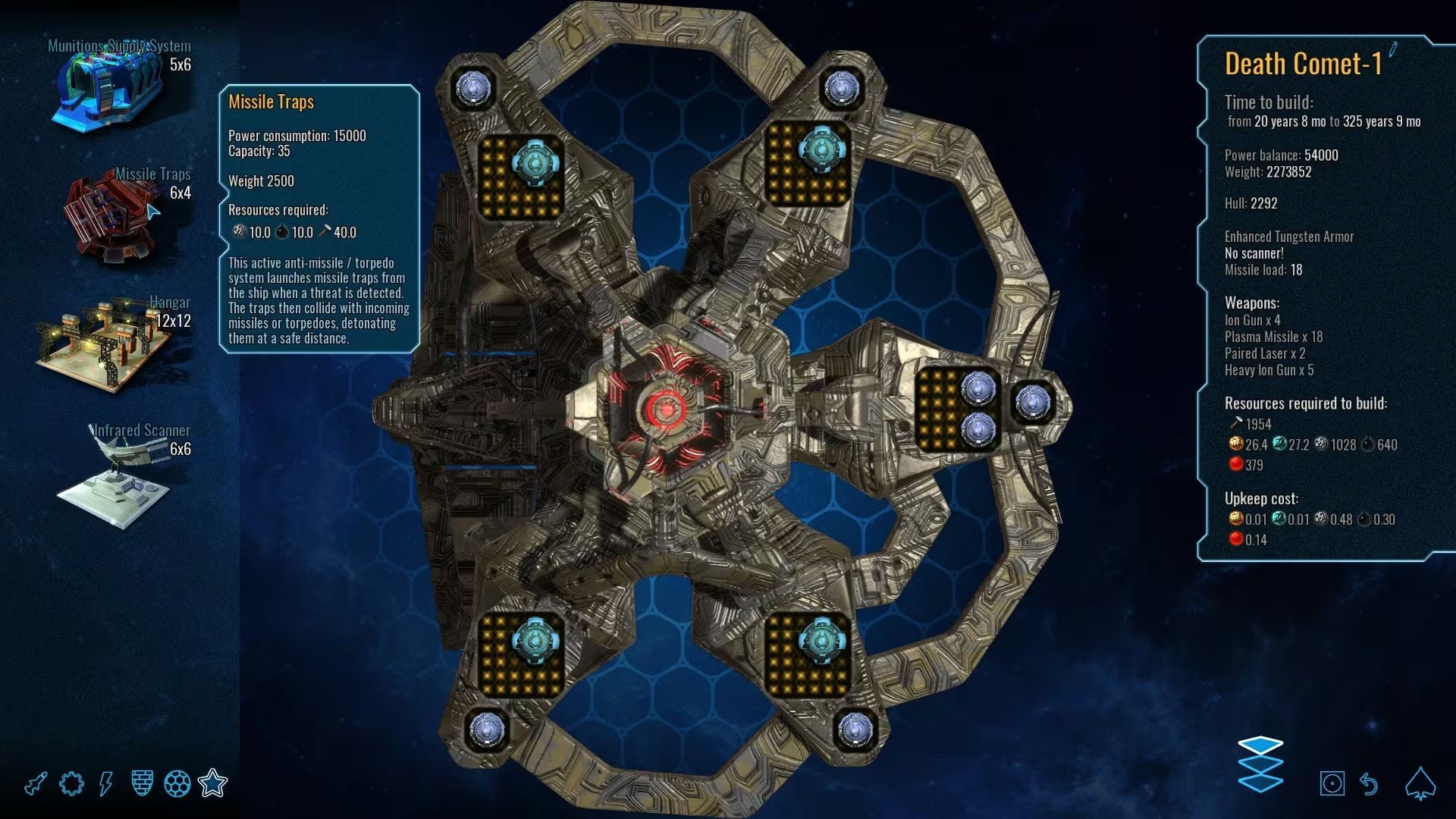
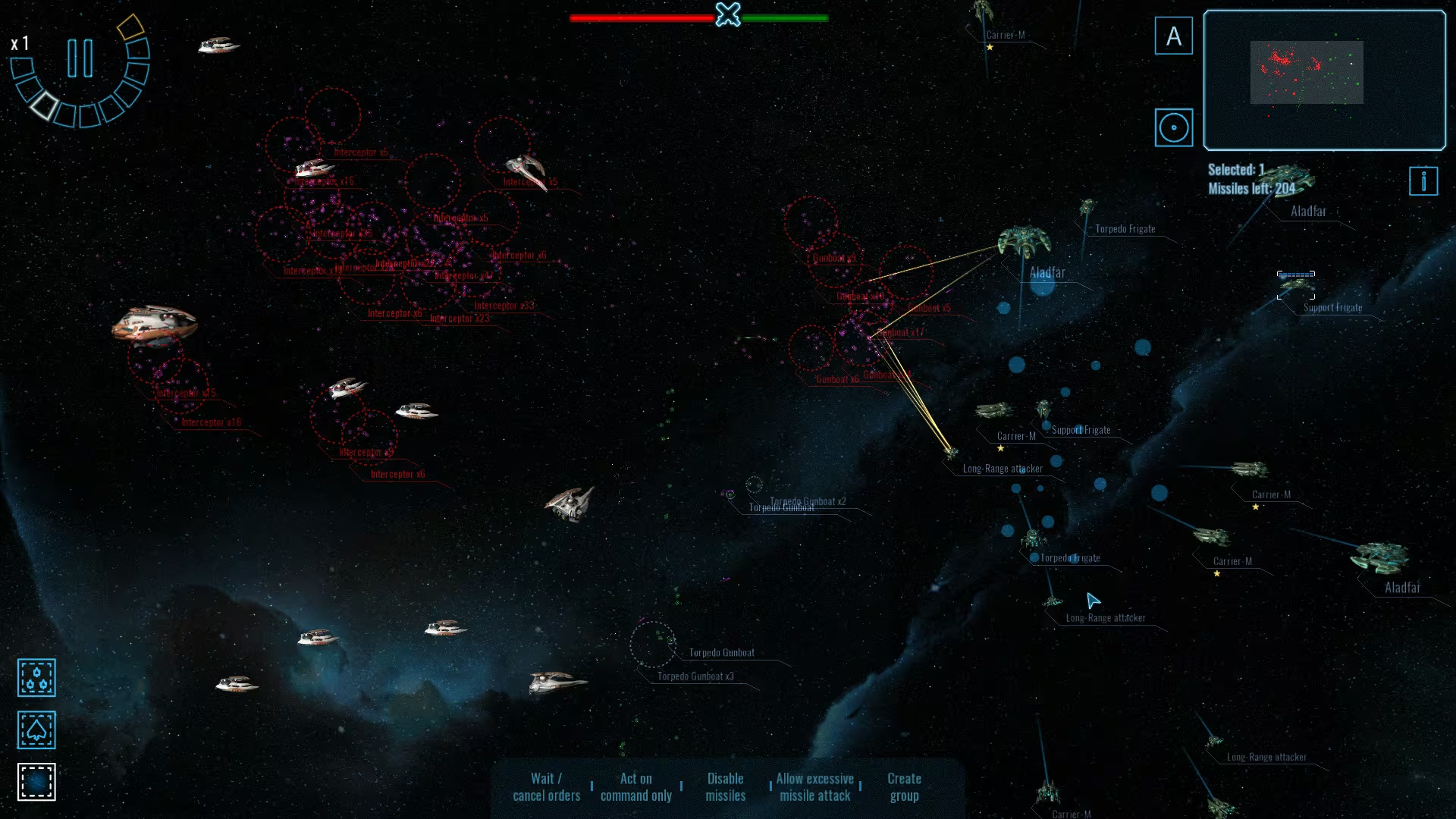
    • Deep and creative ship design system
    • Challenging ai and tactical combat
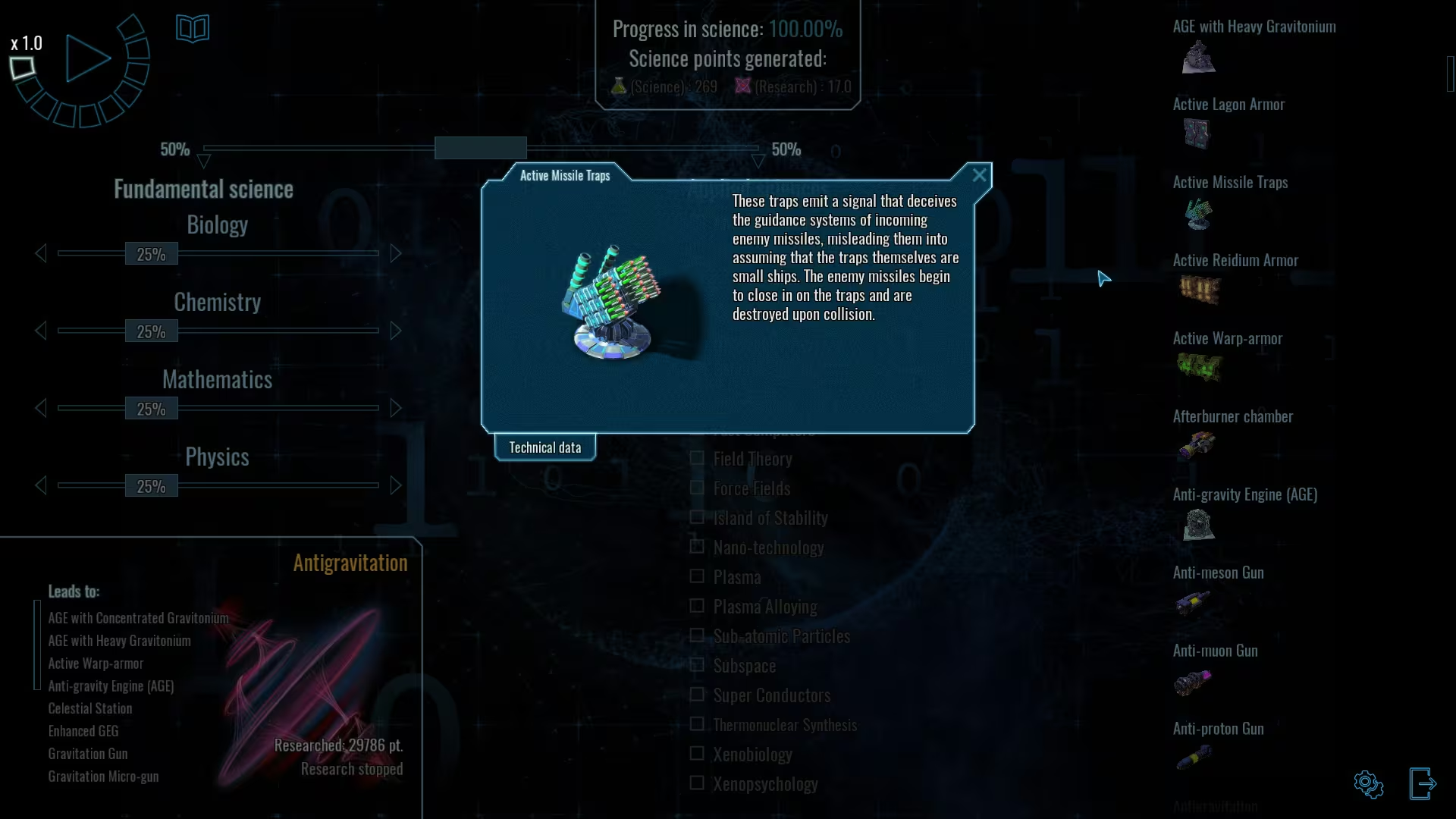
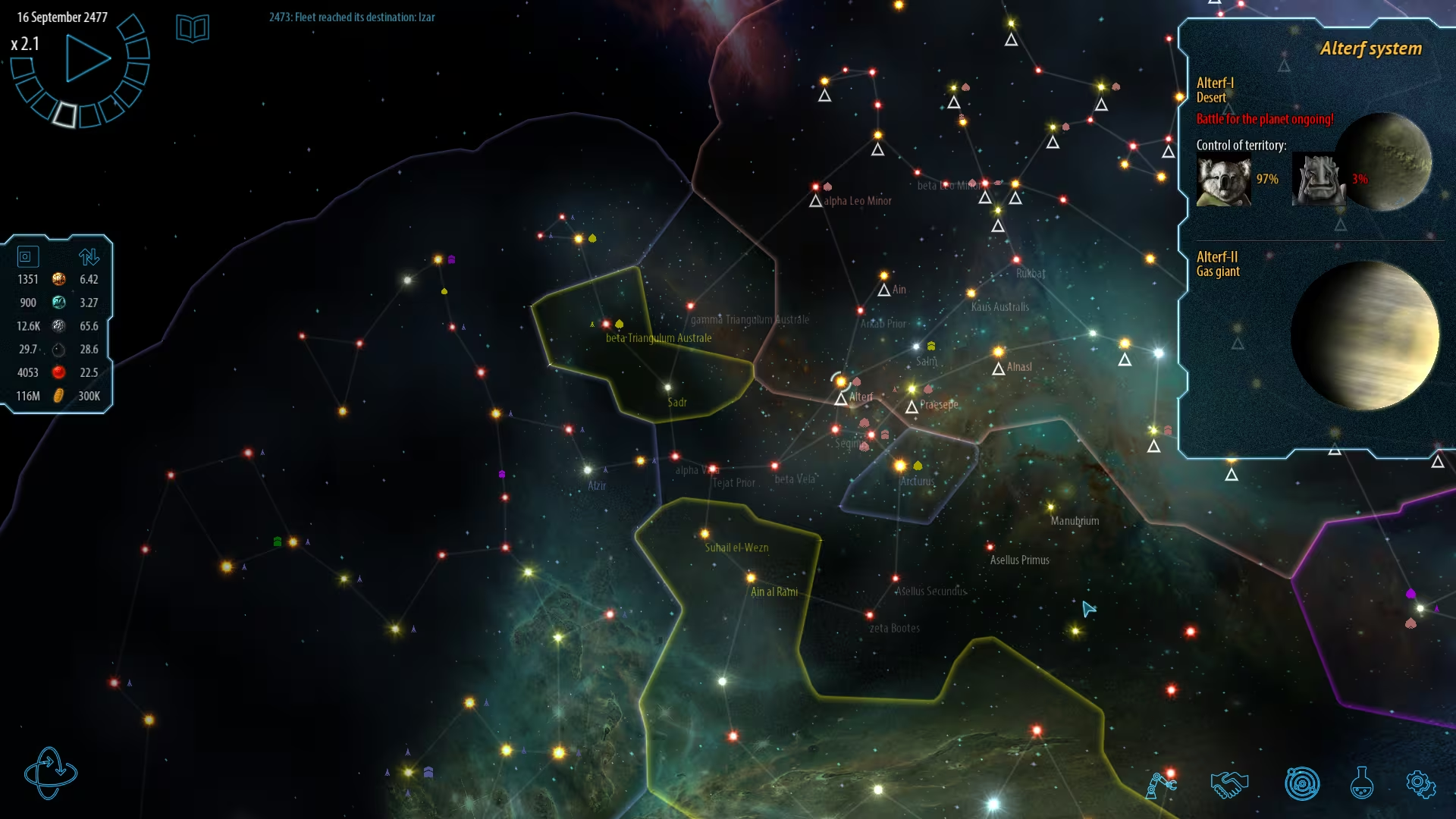
    • Unique research mechanics
    • Automation options reduce micromanagement
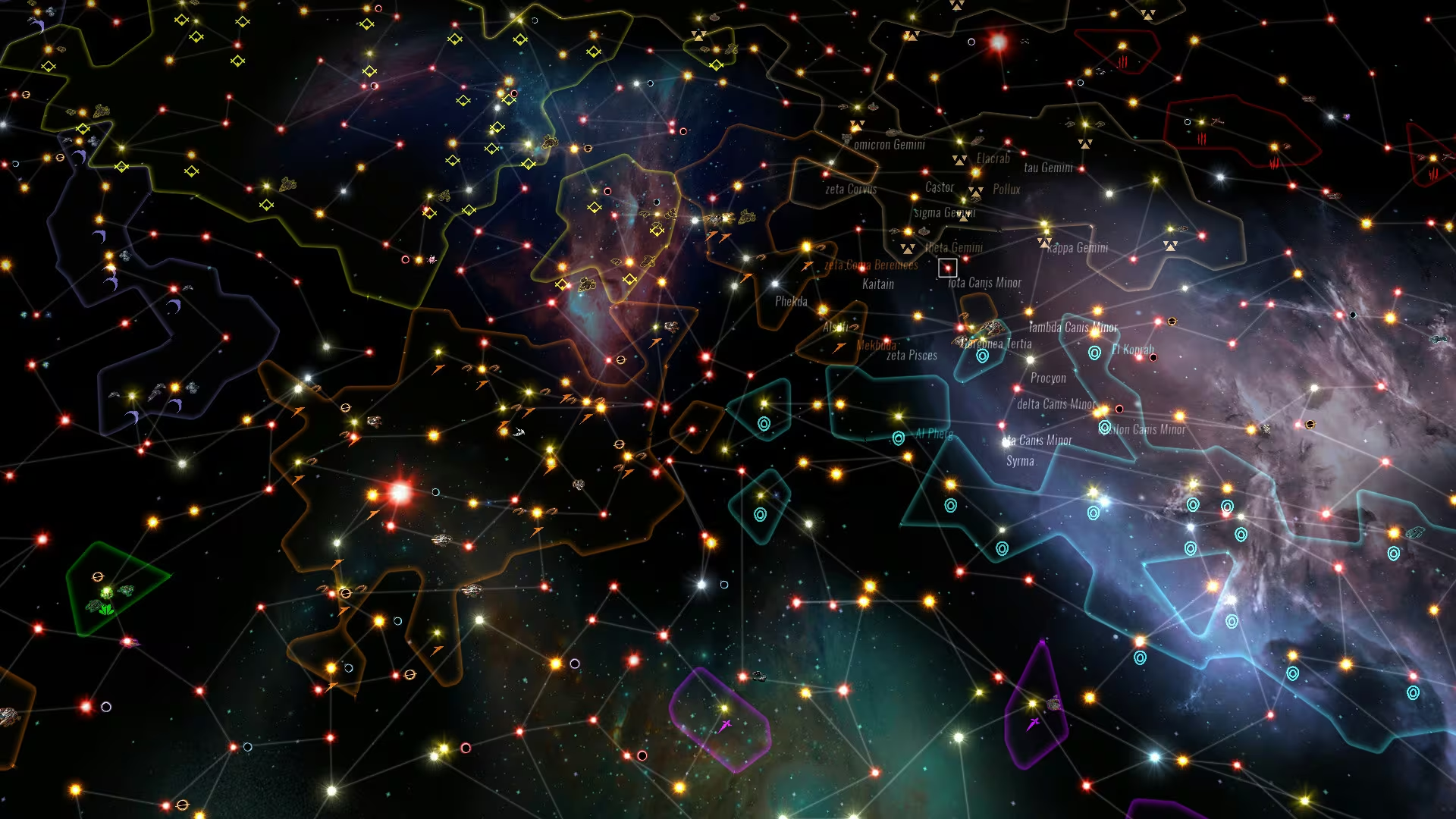
    • Epic scale and replayability

    Cons

    • Dated graphics and ui quirks
    • Some bugs and technical issues
    • Slow pacing and long game length
    • Limited multiplayer and social features
    • Diplomacy and ground combat could be improved

    Analysis

    Less representative of its motivational profile, with noticeable differences. Motivations that often define this kind of title include Leadership, Survival, Violence, Strategy. Here, the score leans higher than usual among comparable games on Competition, Domination, Creativity.

    How to use the graph
    Similar games map

    Each dot is a game. They are arranged from the same motivation profile as in the “Motivations” section below. Closer dots usually mean more similar reasons to play (exploration, competition, relaxation, etc.)—not that one game is “better” than another.

    • Larger dot with a light outline: the game you are viewing.
    • Colour: groups of games with comparable motivation patterns (statistical clusters).
    • Hover a dot to see the game name; click to open its page.
    • Scroll or double-click the chart to zoom out and see more games.

    Why don’t the axes read like a score? This view uses t-SNE: it only keeps who is close to whom. The scales are not “good to bad” or hours played—they separate groups on the map. Read distance between dots, not the axis numbers.

    Motivations

    • Autonomy
      4

      "Players have freedom to design ships, choose research focus, and control tactical combat; automation options exist but manual control is emphasized."

    • Competence
      4

      "Game challenges players with complex ship design, strategic planning, and tactical combat requiring skill and critical thinking."

    • Competition
      3

      "Competitive AI opponents and multiplayer absent; focus is on challenging AI and player skill rather than ranked competition."

    • Continuation
      4

      "Long play sessions with epic scale and deep gameplay encourage habitual and extended engagement."

    • Cooperation
      -3

      "Gameplay is primarily single-player focused with limited multiplayer and minimal emphasis on player cooperation."

    • Creativity
      5

      "Highly creative ship design system and flexible research paths allow players to customize strategies extensively."

    • Domination
      2

      "Players exert control over AI opponents through warfare and diplomacy, but no evidence of toxic or aggressive social dominance."

    • Escapism
      3

      "Immersive sci-fi setting and epic galactic conquest provide strong escape from real life."

    • Expectation
      -4

      "Players engage voluntarily out of interest and enjoyment rather than obligation or external pressure."

    • Experimenting
      4

      "Encourages experimentation with ship designs, research allocations, and tactical approaches."

    • Exploration
      3

      "Exploration of large galaxies and star systems is a core element, though some reviews note limited events and anomalies."

    • Expression
      3

      "Customization of ships and empire development allows player expression, though character/avatar customization is minimal."

    • Fantasy
      4

      "Strong sci-fi fantasy setting with imaginative races, technologies, and interstellar warfare."

    • Fellowship
      -4

      "Primarily single-player experience with limited social interaction or community focus."

    • Growth
      4

      "Players learn complex systems and improve skills in strategy, ship design, and tactical combat."

    • Health
      -4

      "Typical sedentary gameplay with no physical activity elements."

    • Idle
      -3

      "Requires sustained attention and micromanagement, though automation options reduce some tedium."

    • Intimacy
      -4

      "Minimal social or emotional connections; gameplay is focused on strategy rather than relationships."

    • Leadership
      3

      "Players lead empires and fleets, making strategic decisions and managing resources."

    • Progression
      4

      "Strong progression through research, ship upgrades, and territorial expansion."

    • Relaxation
      1

      "Some players find the game relaxing and rewarding, others note frustration and slow pacing."

    • Sensation
      1

      "Visuals and audio are functional but not spectacular; gameplay provides moderate sensory stimulation."

    • Status
      -3

      "Achievements and social recognition are minimal; focus is on individual gameplay."

    • Story
      2

      "Some narrative elements and lore exist, but gameplay is largely open-ended without strong story focus."

    • Strategy
      5

      "Deep strategic and tactical gameplay requiring planning, problem solving, and adaptation."

    • Thrill
      2

      "Tactical battles and strategic challenges provide moments of suspense and excitement."

    • Value
      2

      "Generally considered good value for money, especially on sale; some note price is high for indie game."

    • Violence
      3

      "Combat and destruction are central to gameplay, with emphasis on space battles and planetary invasions."

    • Survival
      3

      "Players must manage resources and defend against threats to maintain empire survival."

    Last update: 29/04/2026