Particle Fleet: Emergence similar games & best alternatives
Particle Fleet: Emergence
2016
Related articles
Quick resume
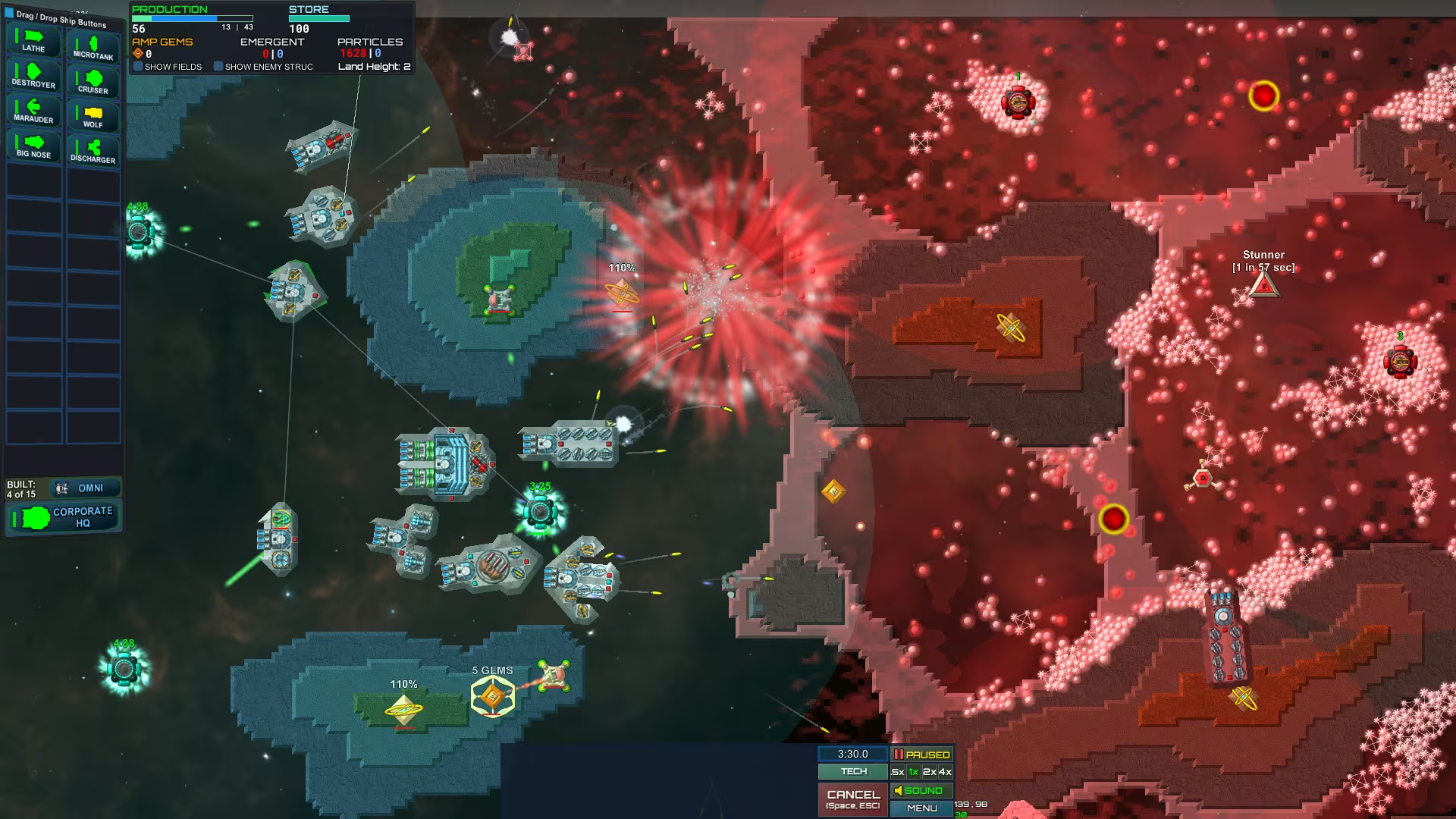
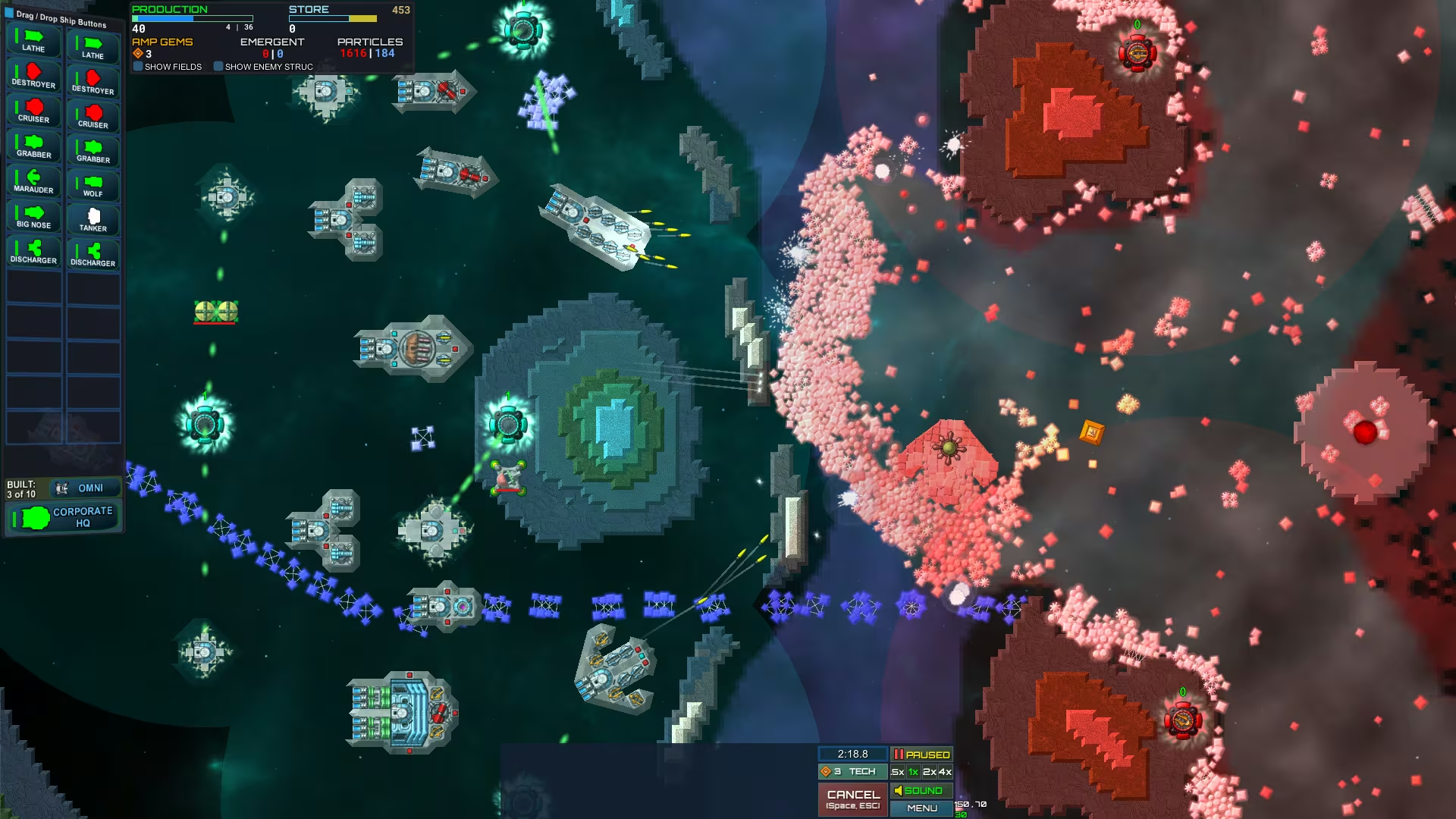
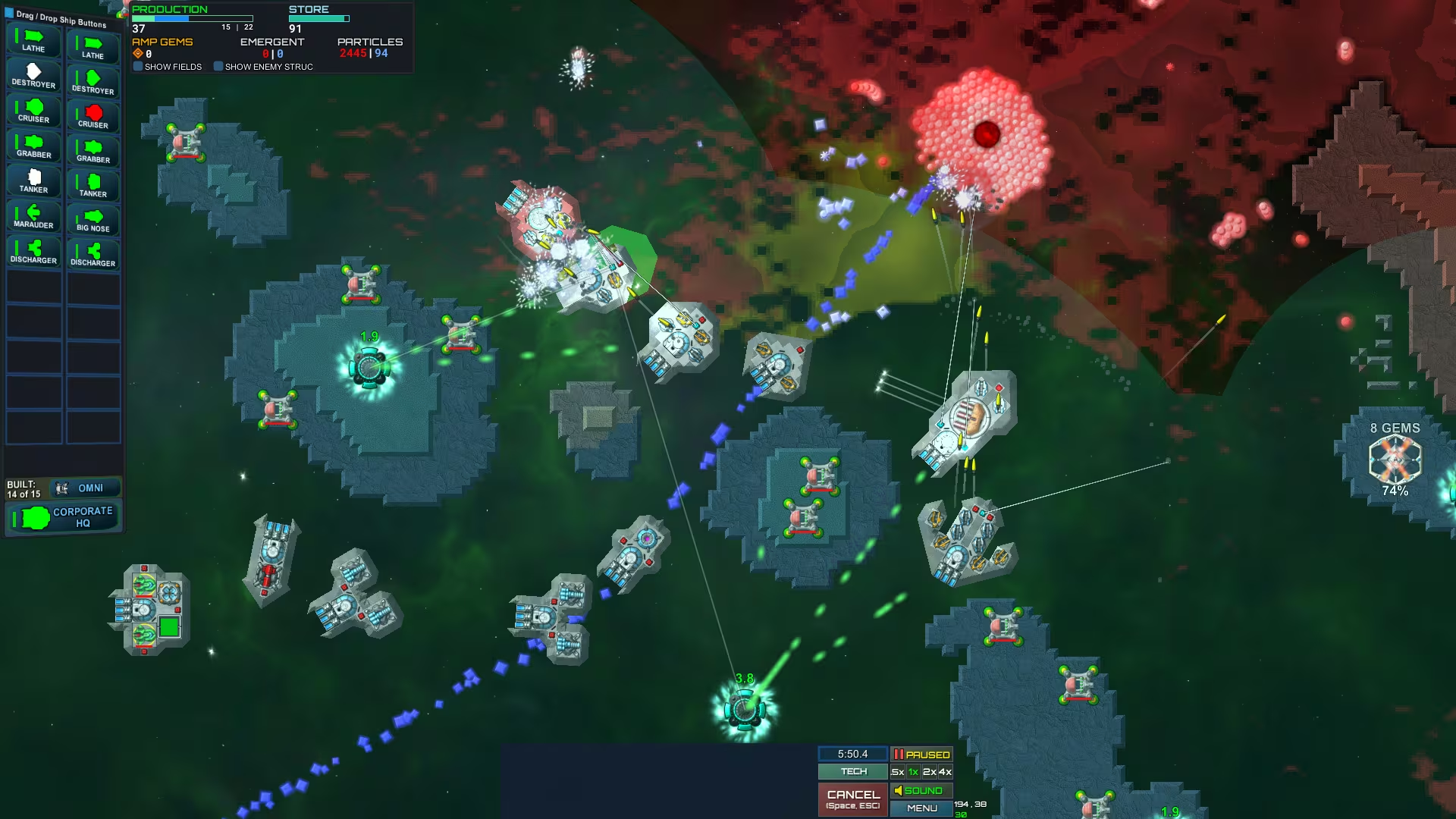
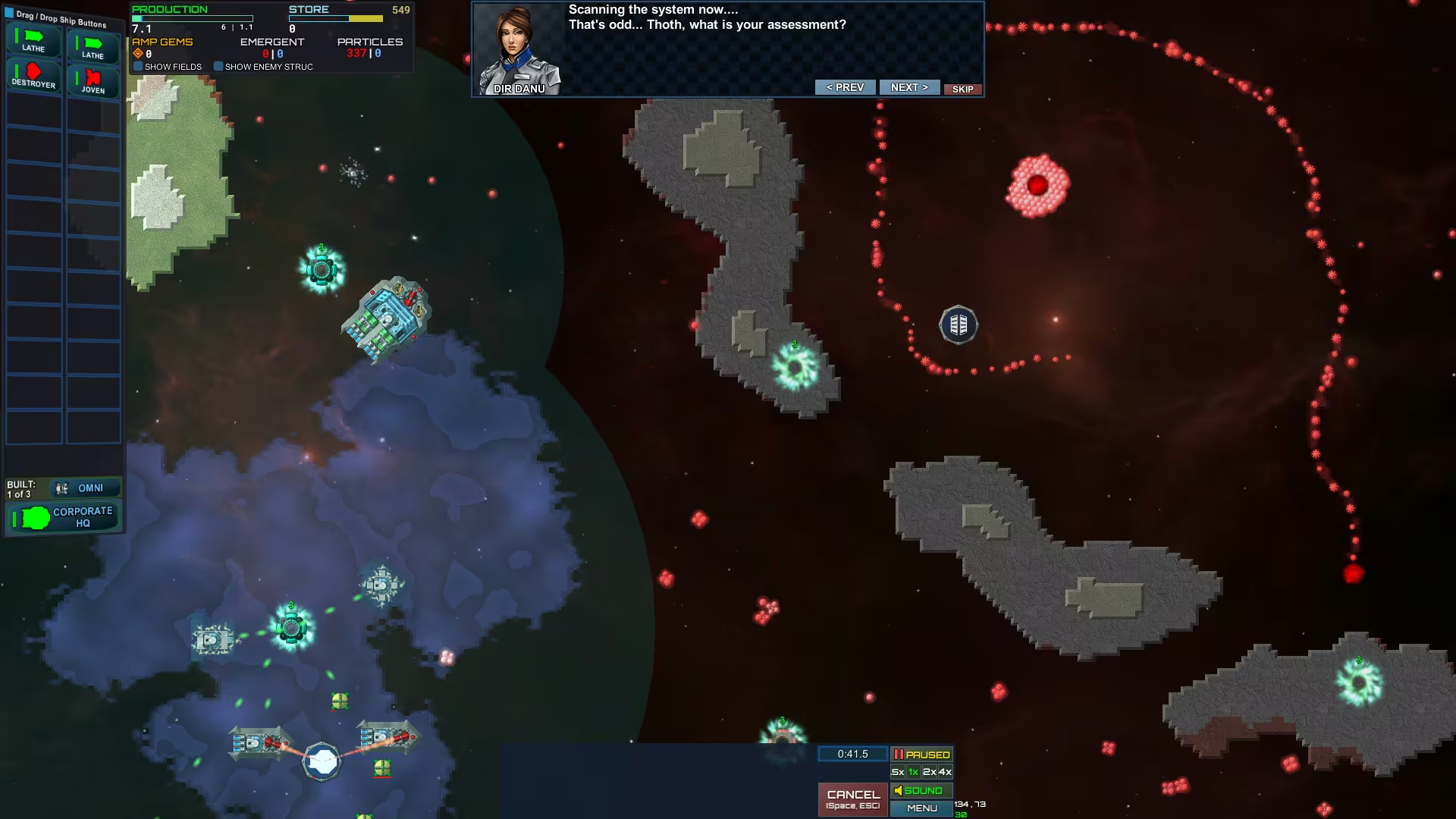
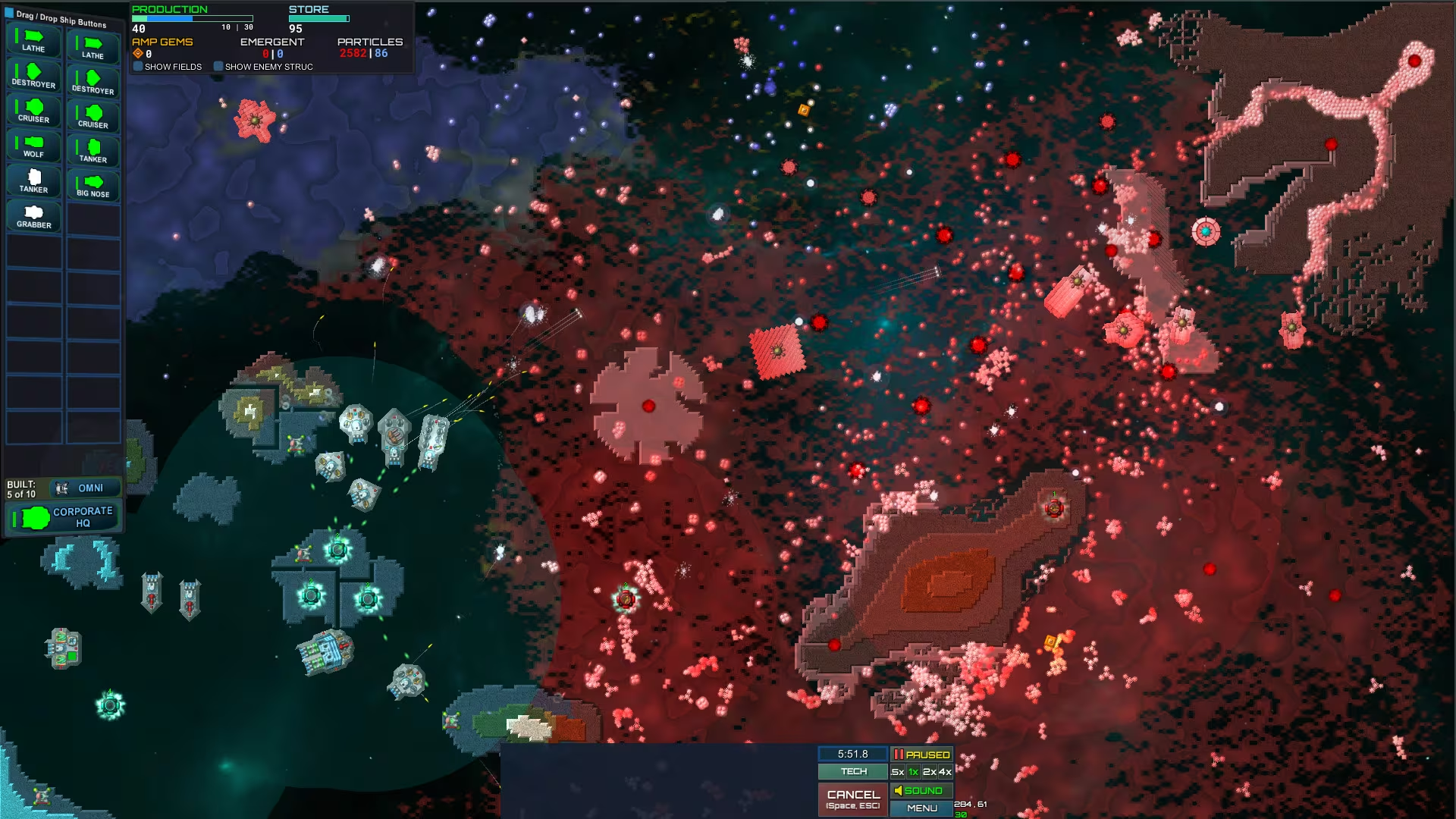
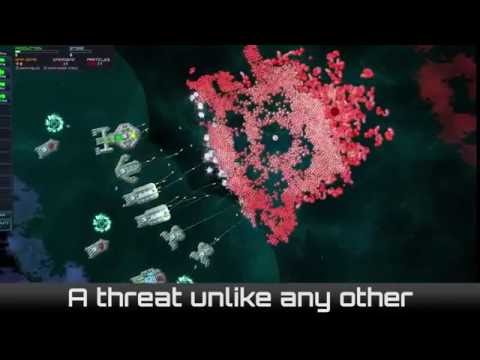
Build and design your own fleets and stand opposed to the Particulate in this physics/strategy/RTS/fleet hybrid. Build partially destructible and self repairing ships that interact with enemies less controlled by some scripted logic and more driven by a real time massive physics particle simulation.
Global score
92/100
Genres
Indie, Simulator, Strategy
Similar games
Pros
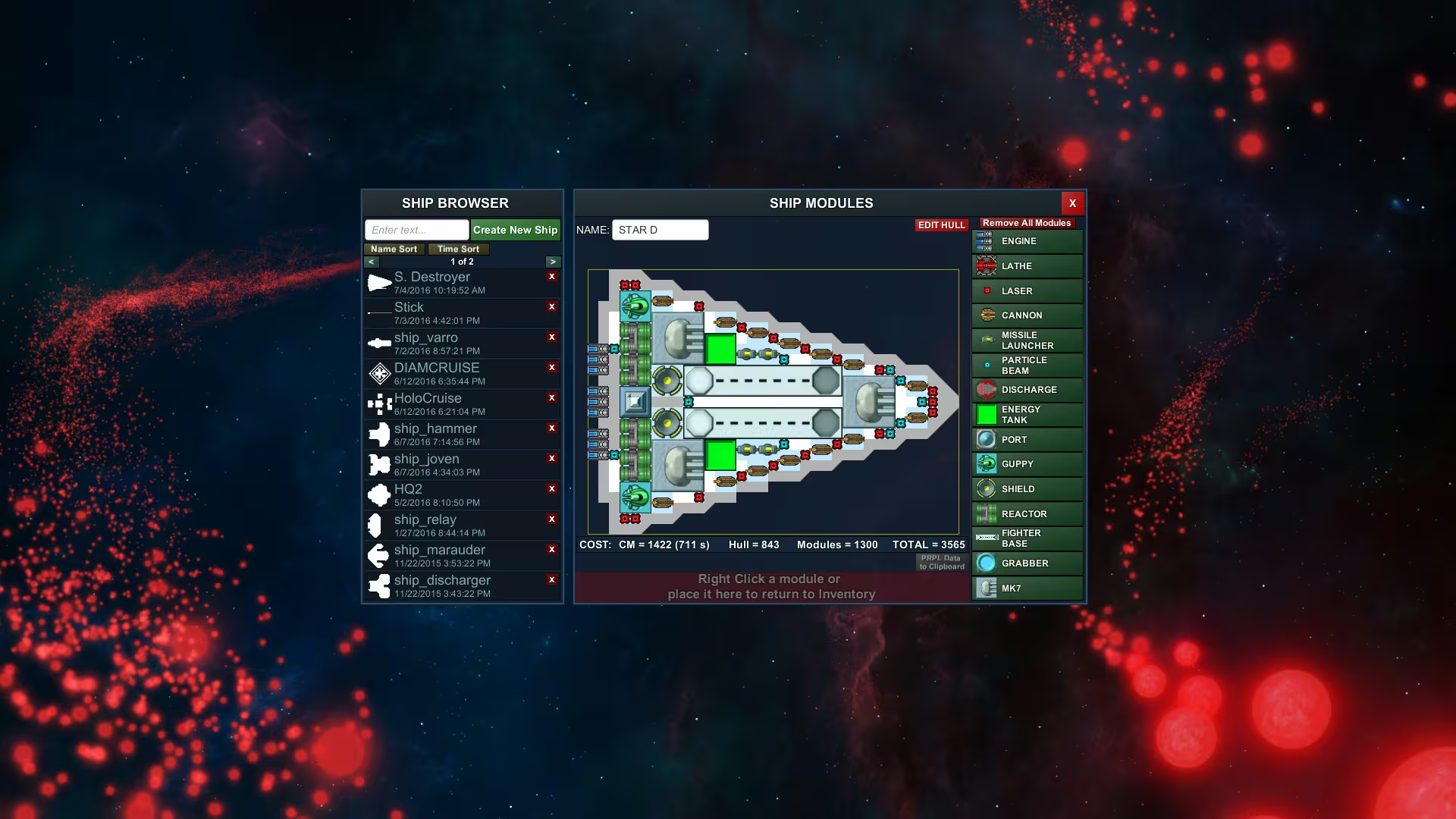
- Ship and map editors with extensive customization
- High replayability with random and user-generated maps
- Engaging and challenging strategic gameplay
- Active developer support and community involvement
- Unique sci-fi setting with creative enemy mechanics
Cons
- Campaign is relatively short and less compelling
- Interface and tutorials can be confusing or lacking
- Limited multiplayer or cooperative gameplay
- Some ui and editor tools feel clumsy or buggy
- Not as difficult or deep as previous creeper world titles
Analysis
Broadly representative of its motivational profile, with a few distinct shifts. Motivations that often define this kind of title include Competition, Status, Story, Expression. Here, the score leans higher than usual among comparable games on Leadership, Violence, Story.
How to use the graph
Similar games map
Each dot is a game. They are arranged from the same motivation profile as in the “Motivations” section below. Closer dots usually mean more similar reasons to play (exploration, competition, relaxation, etc.)—not that one game is “better” than another.
- Larger dot with a light outline: the game you are viewing.
- Colour: groups of games with comparable motivation patterns (statistical clusters).
- Hover a dot to see the game name; click to open its page.
- Scroll or double-click the chart to zoom out and see more games.
Why don’t the axes read like a score? This view uses t-SNE: it only keeps who is close to whom. The scales are not “good to bad” or hours played—they separate groups on the map. Read distance between dots, not the axis numbers.
Motivations
-
Autonomy4
"Players can create and customize their own ships and fleets, choose strategies, and design maps, indicating high personal control and freedom."
-
Competence4
"The game is simple to learn but difficult to master, requiring strategic planning, ship design, and tactical execution with feedback on performance."
-
Competition3
"Leaderboards for speedruns and user-created maps encourage comparison with others, though much gameplay is single-player focused."
-
Continuation4
"High replayability with random map generators, map editors, and user-created content encourages long-term engagement."
-
Cooperation-3
"Gameplay is primarily single-player focused with limited collaboration; community content sharing exists but no direct co-op gameplay."
-
Creativity5
"Strong emphasis on creativity with ship editors, map editors, and scripting language for custom content creation."
-
Domination-2
"Interactions are balanced and respectful; no evidence of power imposition or trash talk."
-
Escapism4
"Players use the game as a challenging distraction and stress relief with immersive sci-fi strategy gameplay."
-
Expectation-4
"Players engage voluntarily out of intrinsic interest and enjoyment, with no pressure or obligation noted."
-
Experimenting5
"Experimentation is encouraged through ship design, map creation, and testing different strategies."
-
Exploration3
"Exploration occurs through discovering new maps, user-created content, and procedural generation, though maps are 2D and familiar in style."
-
Expression5
"Players express themselves by customizing ships, fleets, and maps, including naming and design choices."
-
Fantasy3
"Set in a sci-fi universe with imaginative fiction elements like particle enemies and space fleets."
-
Fellowship1
"Community sharing of maps and ships fosters some group identity, but gameplay is mostly individual."
-
Growth4
"Players develop skills in strategy, ship design, and map creation, with learning opportunities throughout."
-
Health-4
"Game involves sedentary play with no physical activity components."
-
Idle-3
"Requires continuous attention and strategic focus; not designed for idle or background play."
-
Intimacy-4
"Social interactions are limited to casual exchanges via community content sharing; no close relationships formed in-game."
-
Leadership2
"Players lead fleets and make strategic decisions, but no evidence of managing or directing other players."
-
Progression4
"Progression through unlocking ships, tech upgrades, and completing missions is a core gameplay element."
-
Relaxation2
"Balancing challenge and skill provides satisfying flow, though some missions can be tense and demanding."
-
Sensation3
"Visual and auditory feedback is engaging with colorful particle effects and an epic soundtrack."
-
Status2
"Leaderboards and community ratings provide recognition and social status within the player base."
-
Story2
"A narrative campaign exists but is relatively short and less compelling than previous series entries."
-
Strategy5
"Strong emphasis on mental challenge, planning, and problem solving throughout gameplay."
-
Thrill3
"Tension arises from managing limited resources and responding to enemy attacks, providing suspense and relief."
-
Value4
"Players perceive good value due to extensive replayability, community content, and developer support."
-
Violence4
"Combat and destruction of enemy particles and structures are central to gameplay."
-
Survival3
"Players must avoid failure by managing resources and defending against overwhelming enemy forces."
Last update: 29/04/2026