Distant Worlds: Universe Thumbnail

Distant Worlds: Universe similar games & best alternatives
Distant Worlds: Universe

PC (Microsoft Windows) • 2014

Related articles

Quick resume

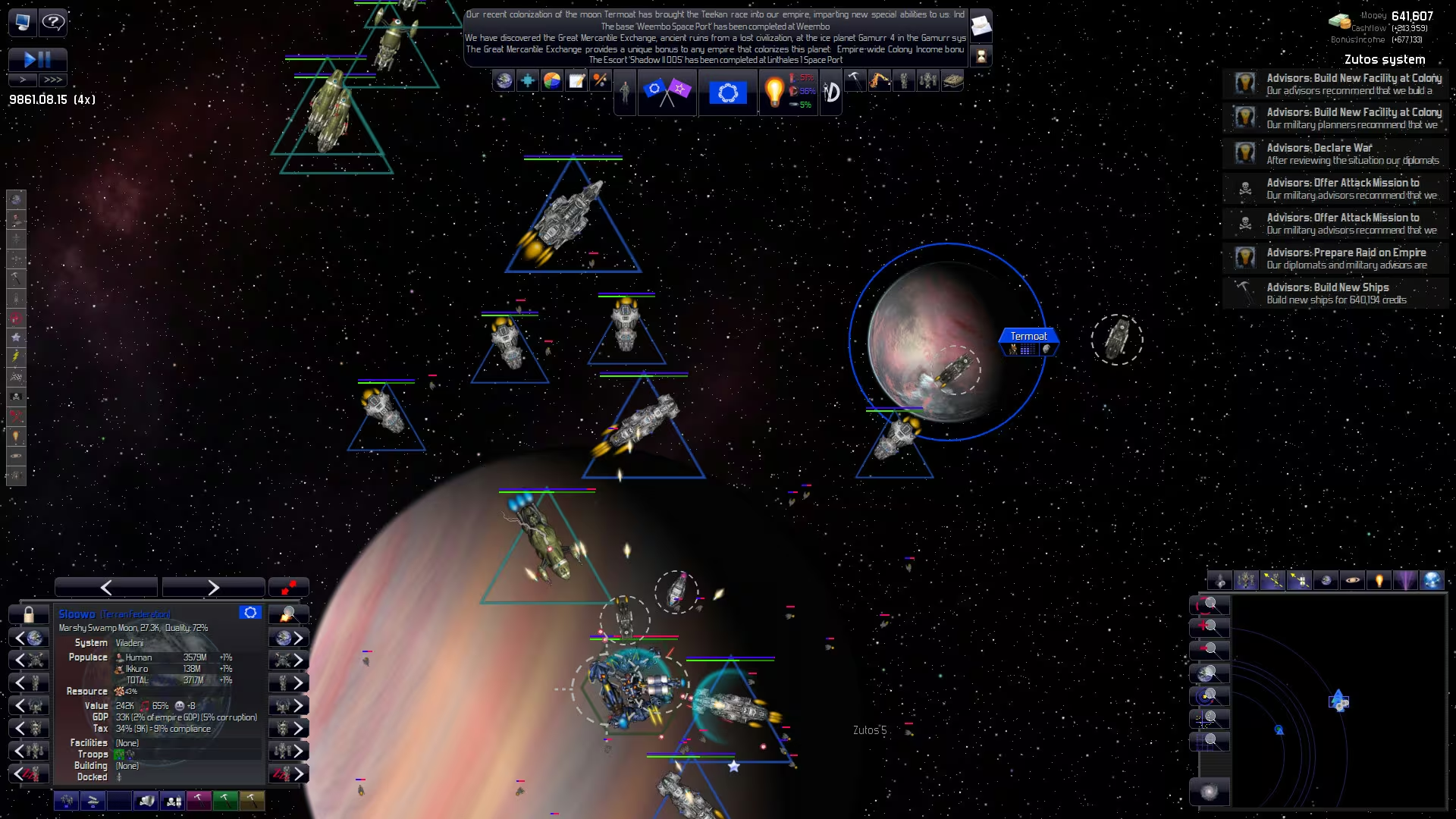
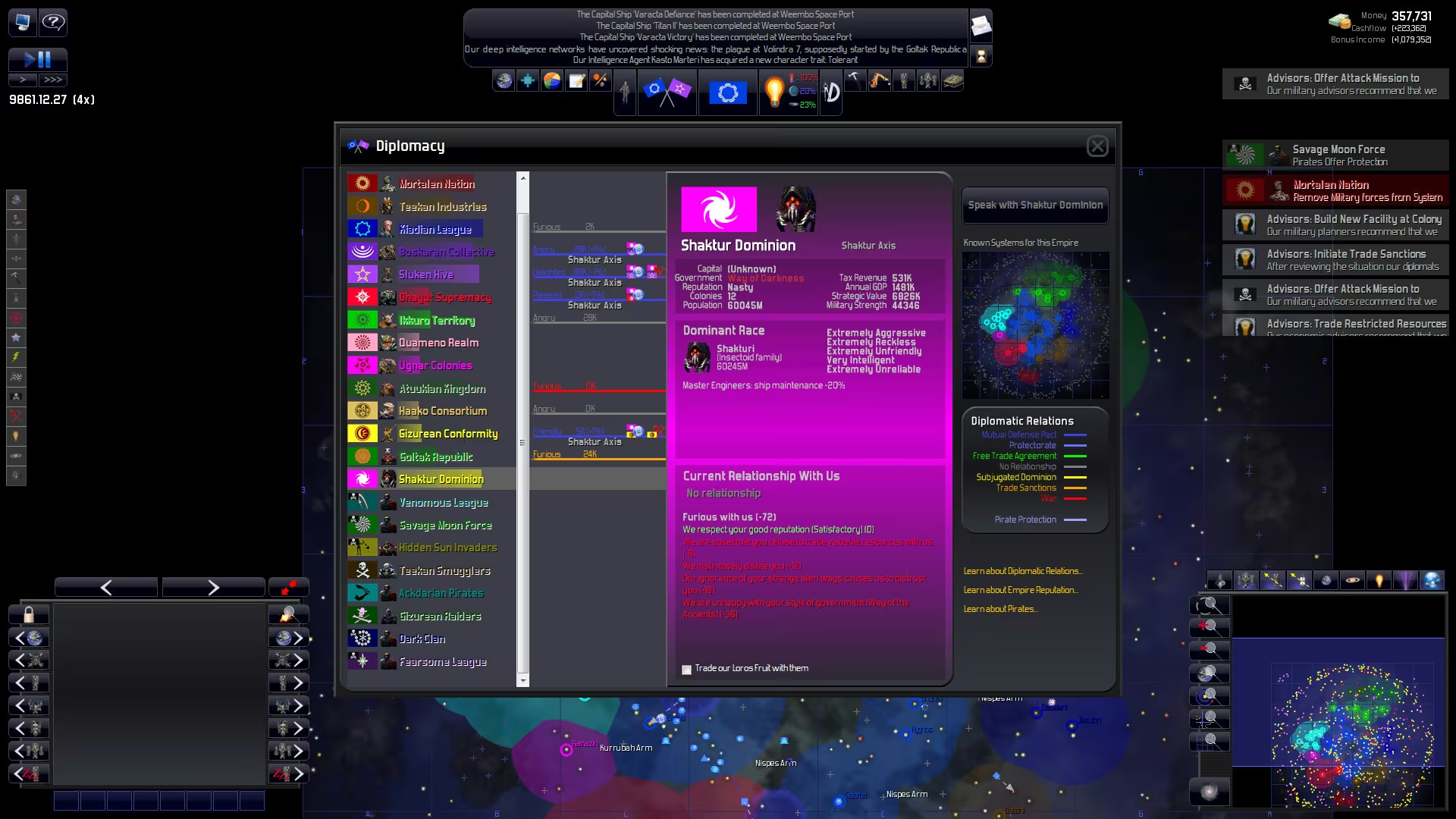
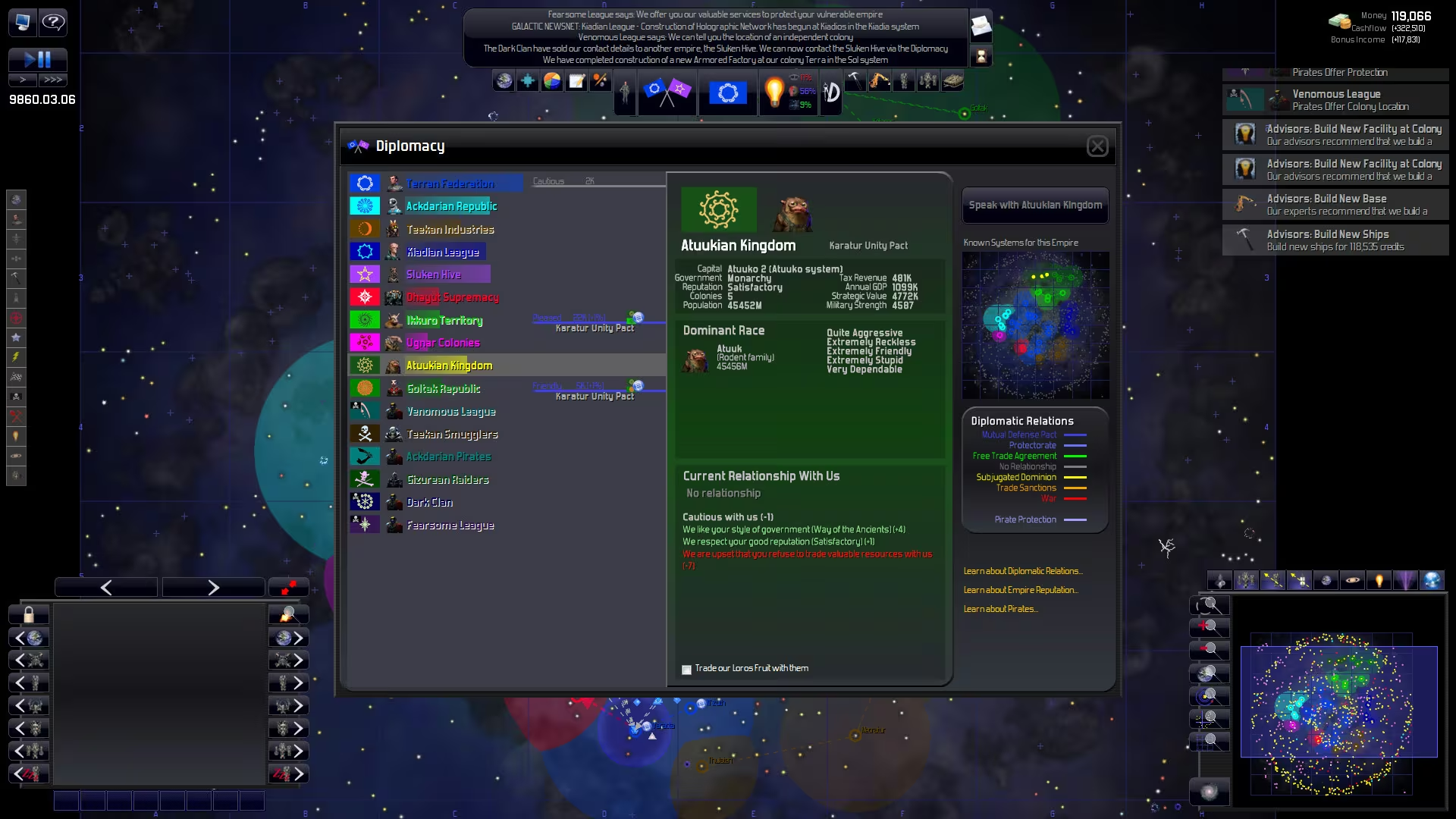
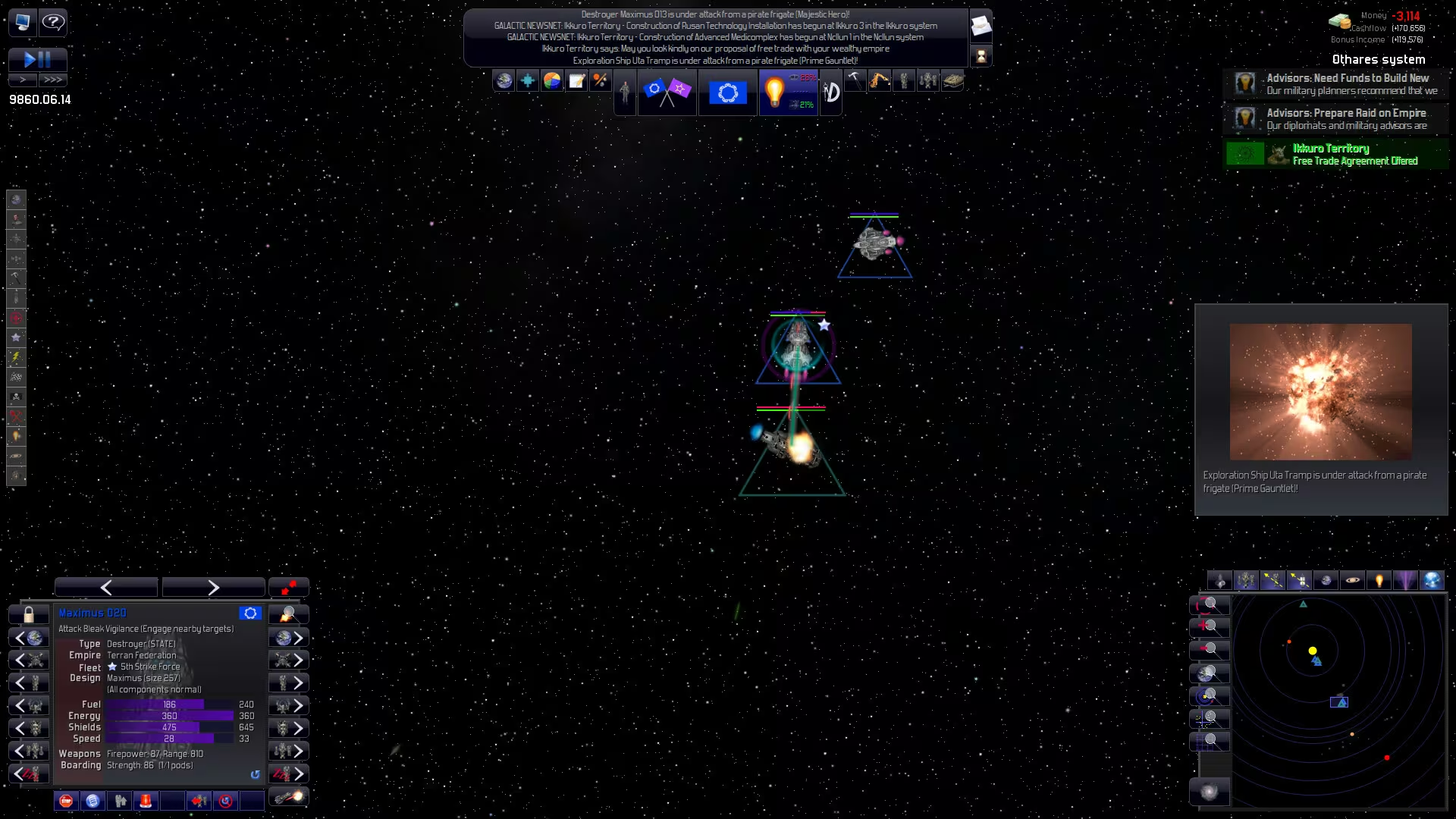
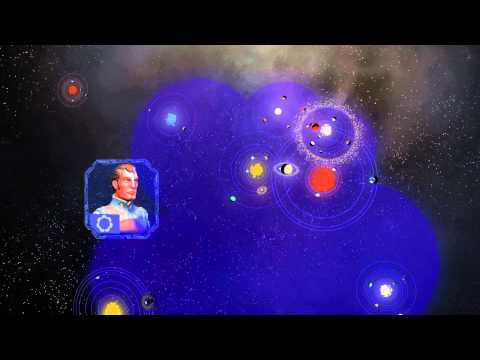
Distant Worlds is a vast, pausable real-time 4X space strategy game. Experience the full depth and detail of turn-based strategy, but with the simplicity and ease of real-time, and on the scale of a massively-multiplayer online game.  

Global score

75/100

Genres

Simulator, Strategy, Real Time Strategy (RTS)

Similar games

    Pros

    • Extensive automation options
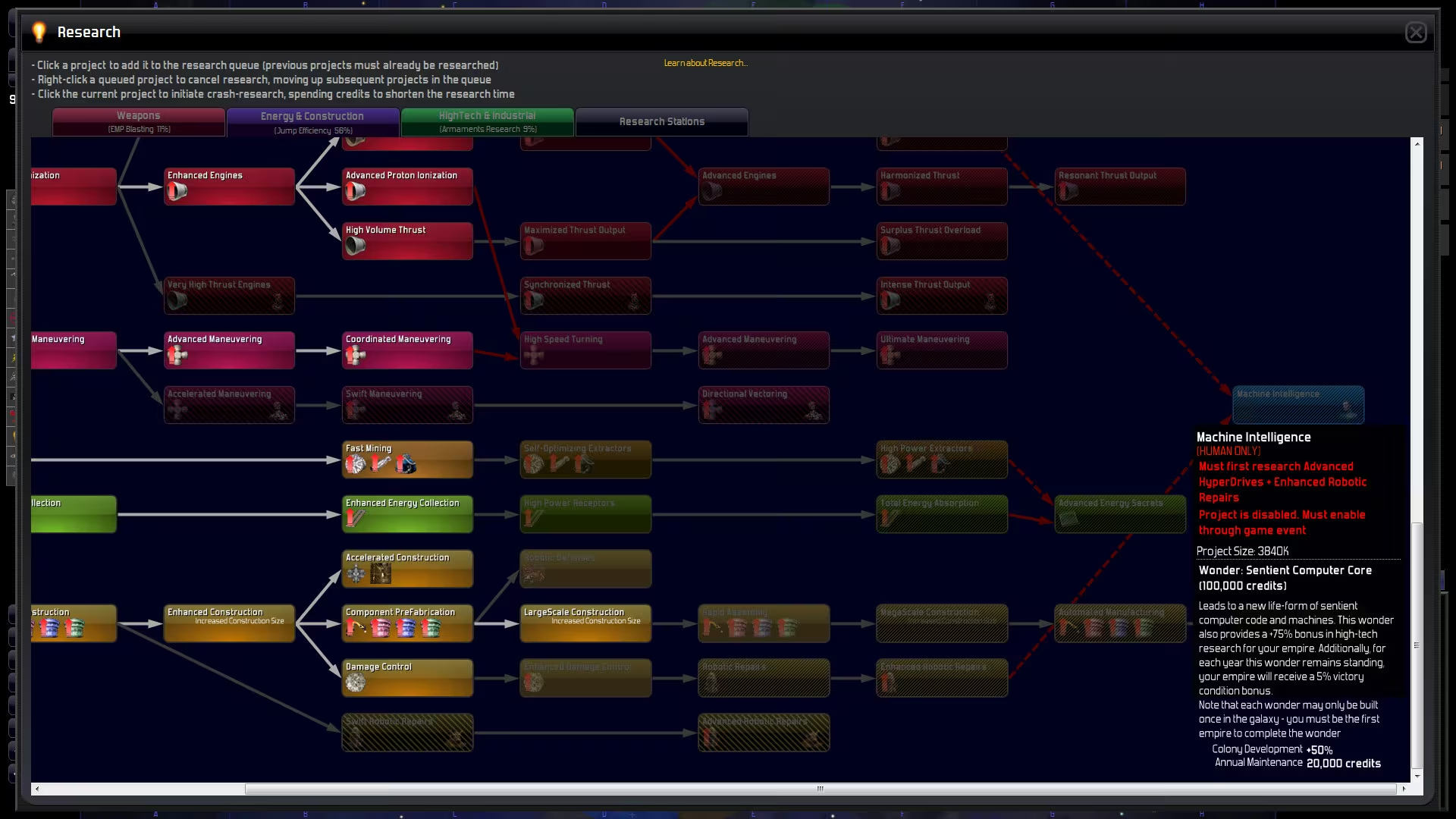
    • Deep and complex gameplay
    • Huge customizable galaxies
    • Immersive space opera setting
    • Strong replayability and mod support

    Cons

    • Dated graphics and ui
    • Steep learning curve
    • Limited diplomacy and multiplayer
    • Some clunky interface elements
    • High price without sale

    Analysis

    Less representative of its motivational profile, with noticeable differences. Motivations that often define this kind of title include Leadership, Survival, Violence, Strategy. Here, the score leans higher than usual among comparable games on Competition, Domination, Cooperation.

    How to use the graph
    Similar games map

    Each dot is a game. They are arranged from the same motivation profile as in the “Motivations” section below. Closer dots usually mean more similar reasons to play (exploration, competition, relaxation, etc.)—not that one game is “better” than another.

    • Larger dot with a light outline: the game you are viewing.
    • Colour: groups of games with comparable motivation patterns (statistical clusters).
    • Hover a dot to see the game name; click to open its page.
    • Scroll or double-click the chart to zoom out and see more games.

    Why don’t the axes read like a score? This view uses t-SNE: it only keeps who is close to whom. The scales are not “good to bad” or hours played—they separate groups on the map. Read distance between dots, not the axis numbers.

    Motivations

    • Autonomy
      5

      "Players have extensive control over empire management, ship design, diplomacy, and can automate or manually control any aspect, reflecting high autonomy."

    • Competence
      5

      "The game demands mastering complex systems, ship design, logistics, and strategic decision-making, providing strong competence challenges."

    • Competition
      2

      "While primarily single-player, competition against AI empires with different playstyles and difficulty settings encourages comparative skill."

    • Continuation
      5

      "High replayability with huge galaxies, multiple races, and deep mechanics encourage long sessions and habitual play."

    • Cooperation
      1

      "Diplomacy and alliances exist but are limited; cooperation is present but not a core focus."

    • Creativity
      4

      "Extensive ship and station design, galaxy customization, and modding support enable creative expression."

    • Domination
      1

      "Players can dominate through military or economic means but interactions with AI are balanced and respectful."

    • Escapism
      4

      "Immersive space opera setting and complex simulation provide strong escapism from real life."

    • Expectation
      -3

      "Players engage voluntarily driven by interest and enjoyment rather than obligation or external pressure."

    • Experimenting
      4

      "Players experiment with galaxy settings, ship designs, strategies, and automation levels extensively."

    • Exploration
      5

      "Exploring vast galaxies, discovering ruins, resources, and new races is a major gameplay element."

    • Expression
      4

      "Customization of ships, bases, and empire policies allows for personal expression."

    • Fantasy
      3

      "Science fiction setting with space opera elements and imaginative technologies."

    • Fellowship
      -2

      "Primarily single-player with limited social interaction; community exists but gameplay is mostly individual."

    • Growth
      5

      "Players learn complex mechanics, improve strategies, and develop skills over long play sessions."

    • Health
      -5

      "Sedentary gameplay with no physical activity involved."

    • Idle
      -3

      "Requires sustained attention and management, especially when playing manually."

    • Intimacy
      -4

      "Minimal social or emotional connections; gameplay is focused on strategic management."

    • Leadership
      4

      "Players lead vast empires, manage fleets, and direct diplomacy, embodying leadership roles."

    • Progression
      5

      "Strong progression through research, empire expansion, ship upgrades, and resource acquisition."

    • Relaxation
      2

      "Pausable real-time gameplay allows for moments of flow and relaxation, though complexity can cause tension."

    • Sensation
      1

      "Visuals are functional and dated; sensory stimulation is moderate and secondary to gameplay depth."

    • Status
      -3

      "Single-player focus limits social recognition or status seeking within gameplay."

    • Story
      3

      "Includes story elements and events that add narrative immersion but is largely sandbox oriented."

    • Strategy
      5

      "High mental challenge with deep strategic planning, resource management, and tactical combat."

    • Thrill
      3

      "Tense moments arise from managing threats like pirates and hostile empires, creating suspense."

    • Value
      4

      "Offers extensive content, expansions included, with high replay value justifying the price."

    • Violence
      3

      "Combat and destruction are core gameplay elements, including ship battles and planetary bombardments."

    • Survival
      4

      "Players must manage threats, protect supply lines, and maintain empire stability to survive."

    Last update: 29/04/2026