Star Shelter Thumbnail

Star Shelter similar games & best alternatives

Star Shelter

PC (Microsoft Windows) • 2018

Related articles

Quick resume

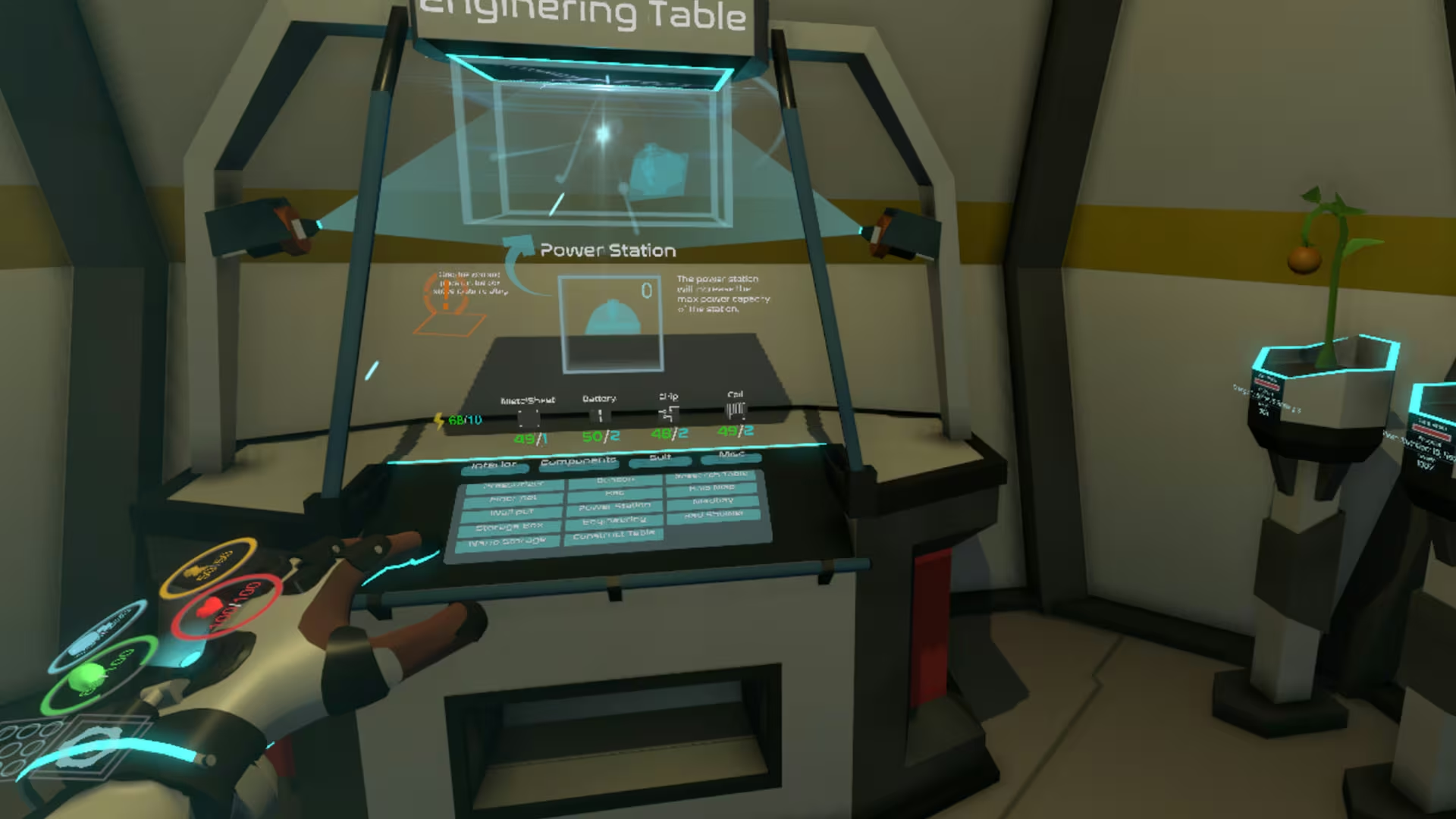
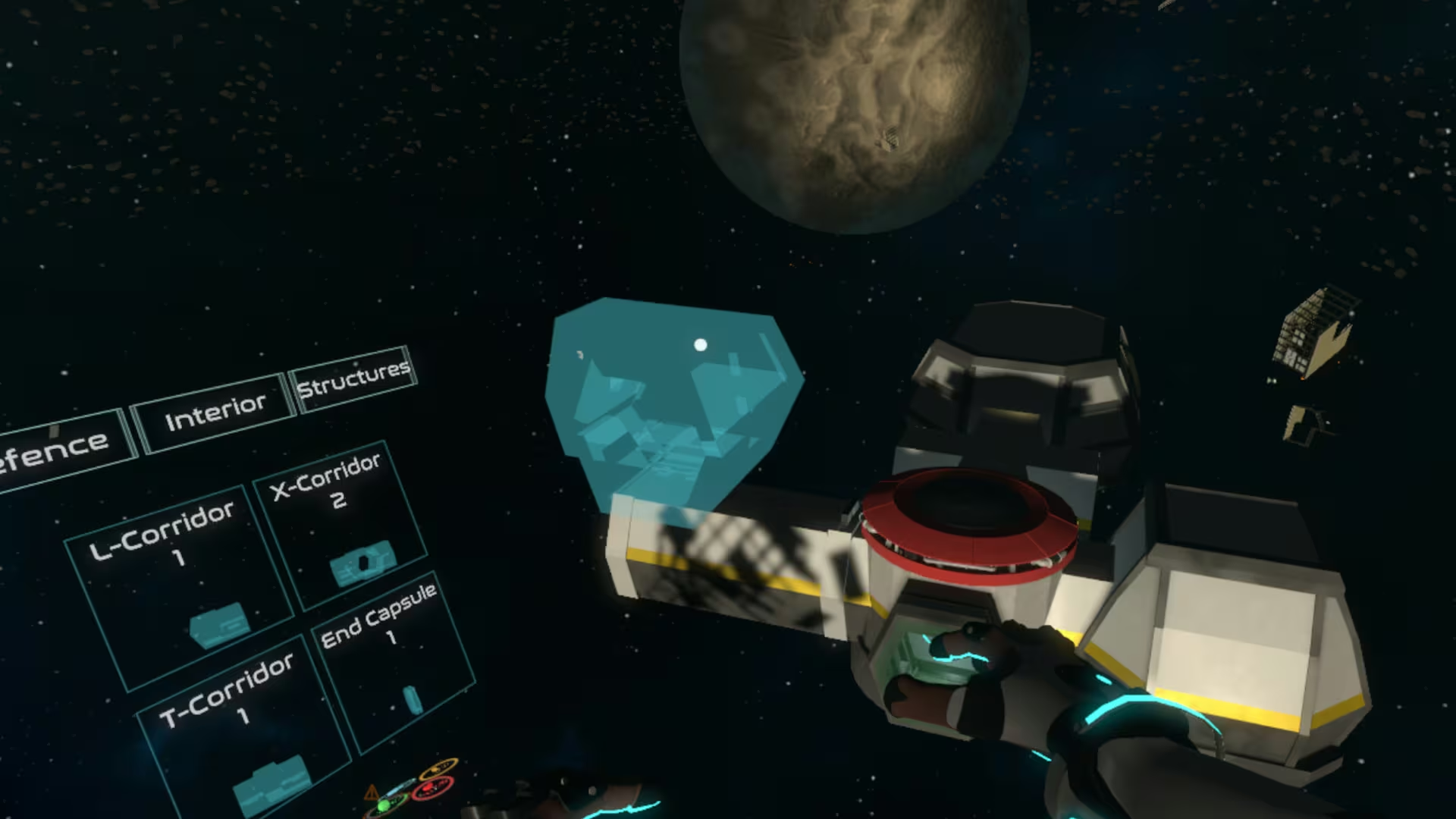
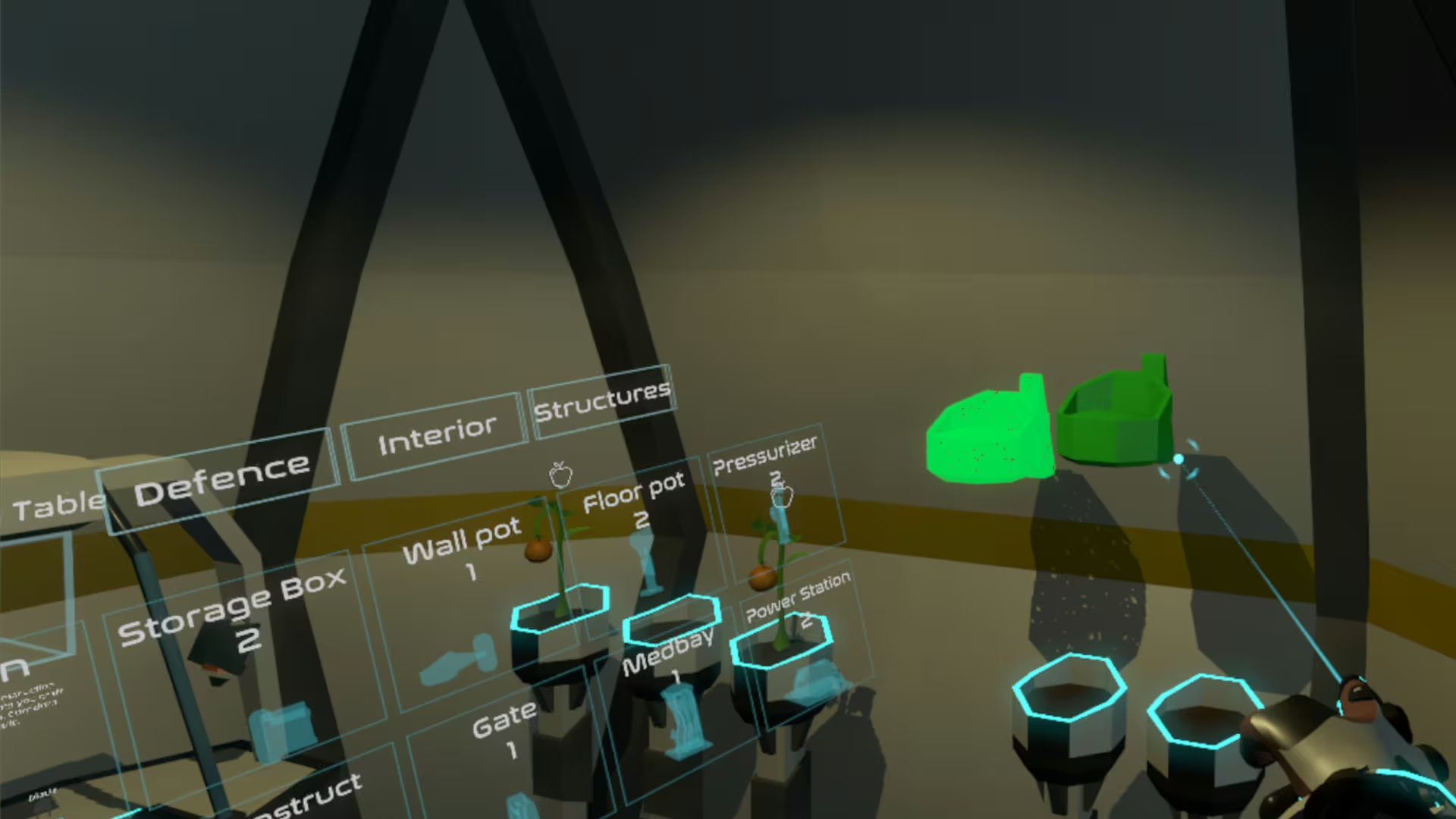
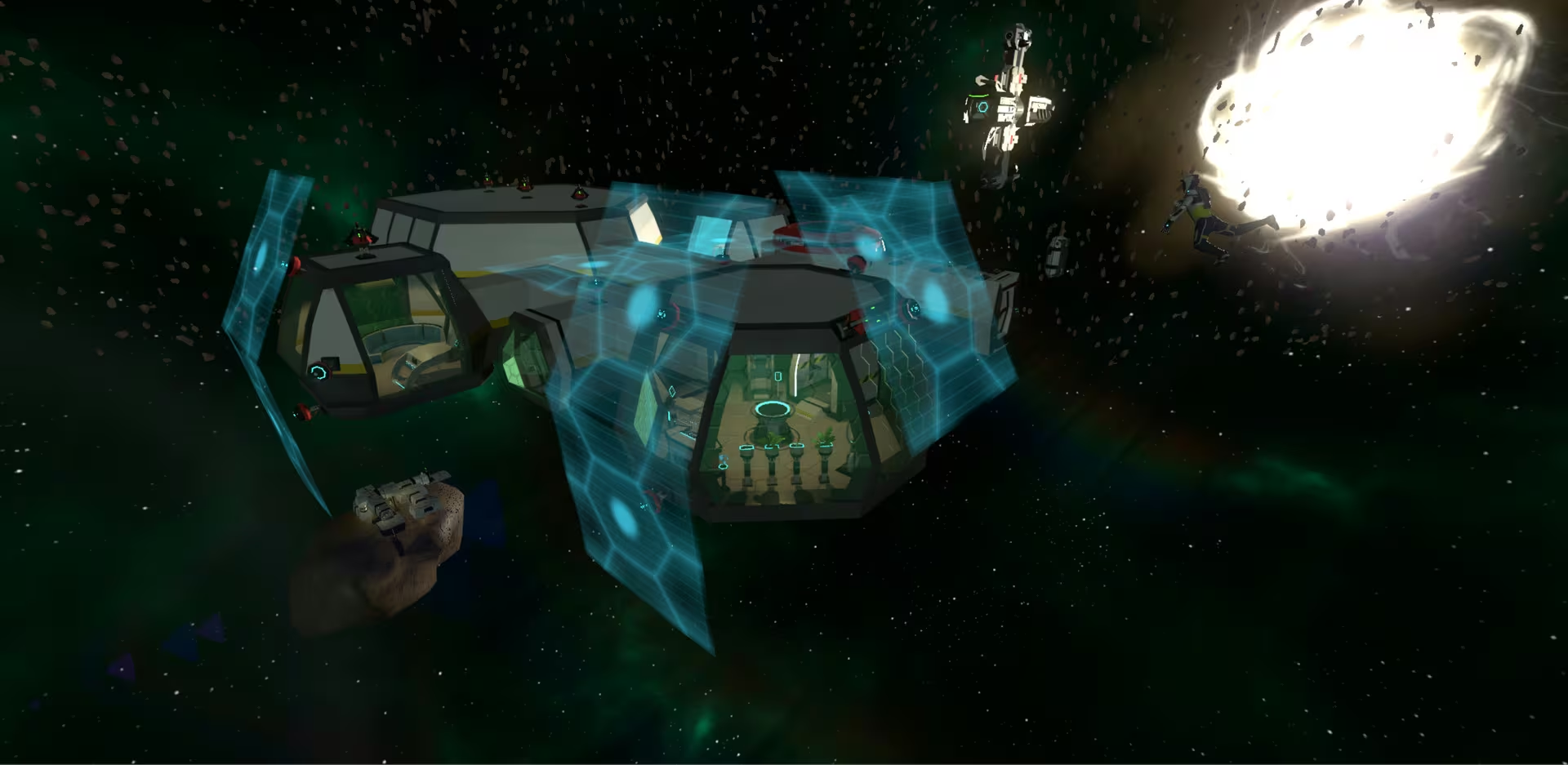
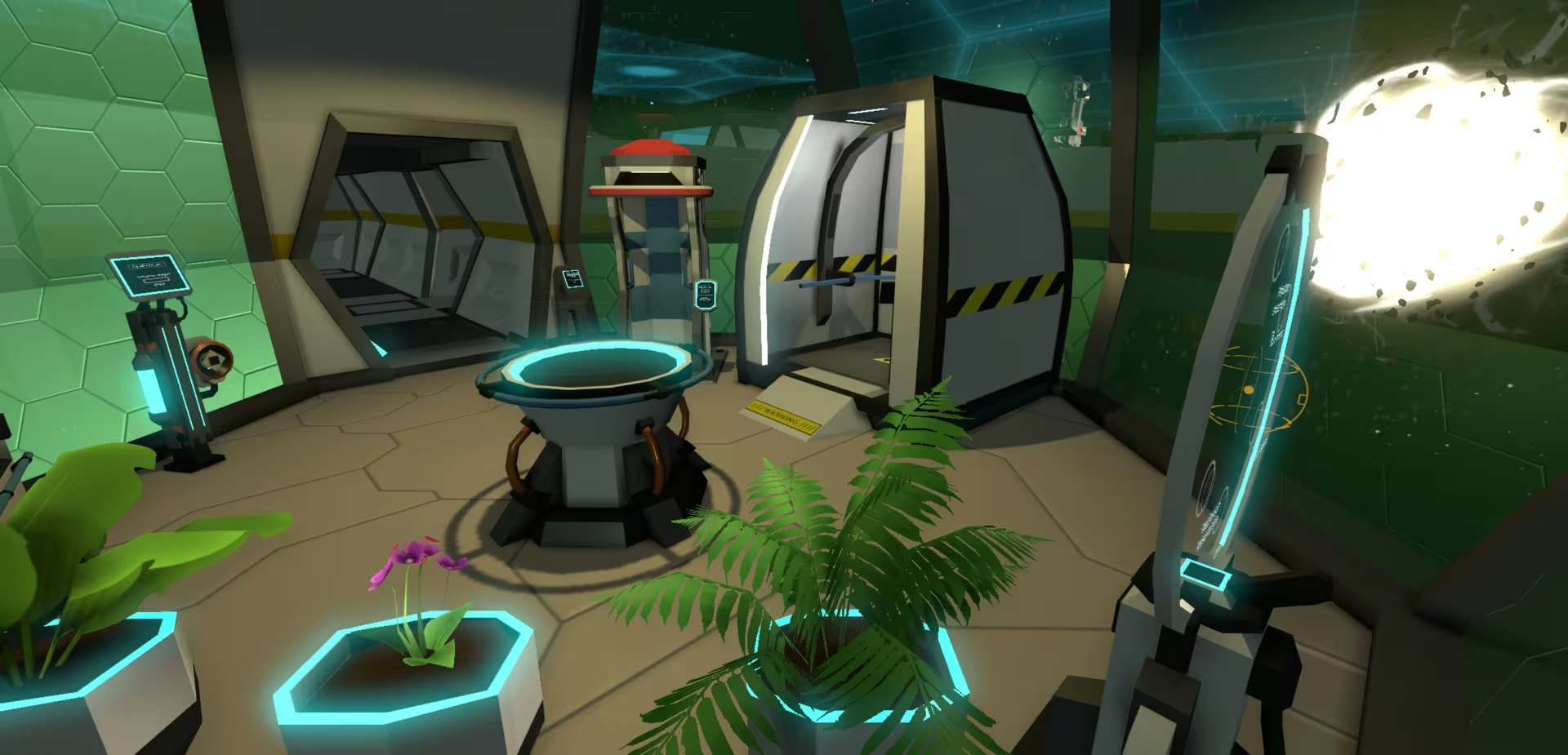
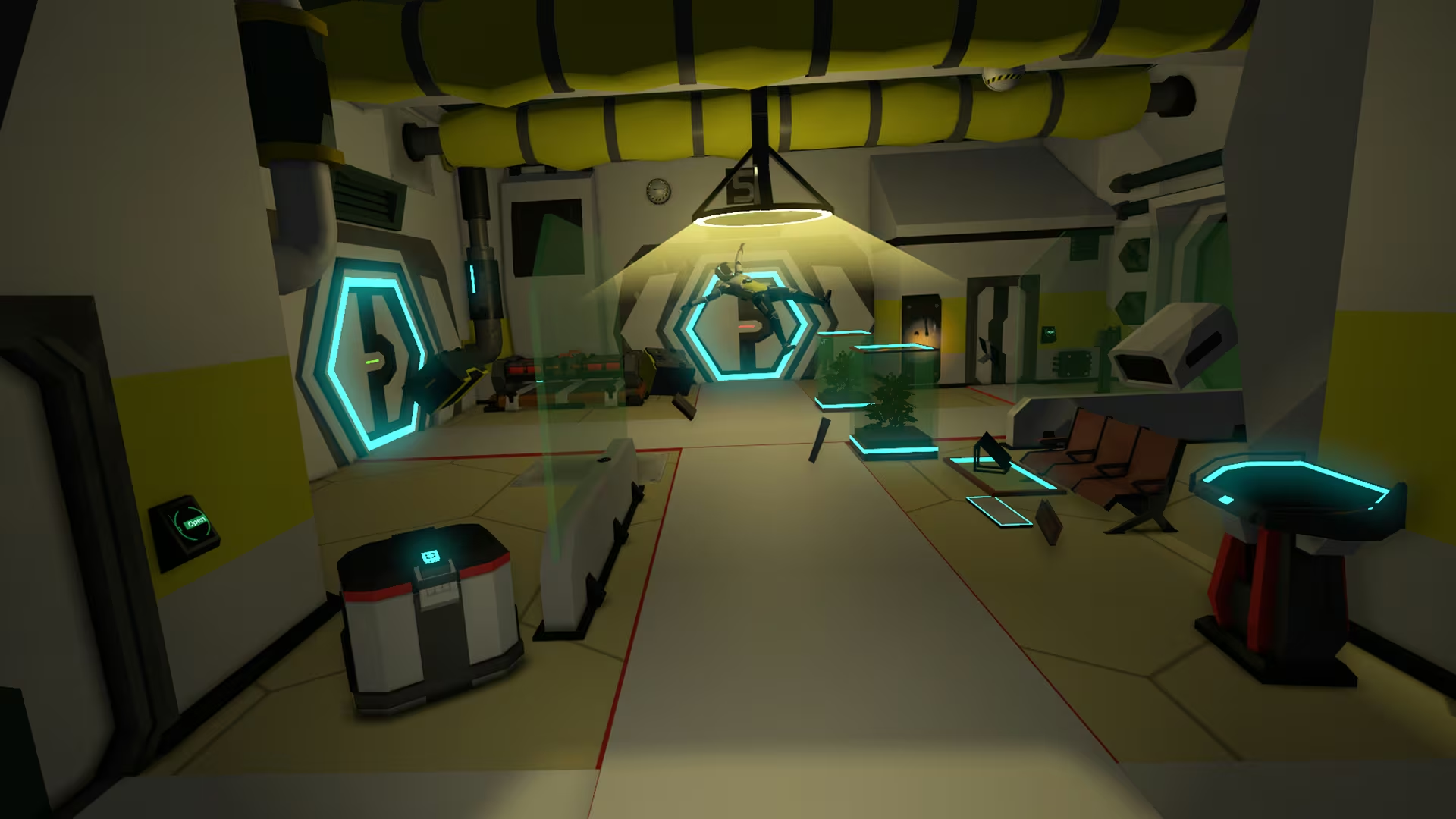
Star shelter is a space survival game built from the ground up for VR. You are stranded in space, you must climb around in Zero-G, explore, scavenge, craft, hack and fight to survive. You have to build, arm and upgrade your own space station in order to escape the cosmic graveyard.

Global score

77/100

Genres

Action, Adventure, Indie, Role-playing (RPG), Simulator

Similar games

    Pros

    • Immersive zero-g locomotion
    • Deep survival and crafting mechanics
    • Active and responsive developers
    • Engaging exploration and base building
    • High replay value

    Cons

    • Early access bugs and glitches
    • Steep learning curve
    • Lack of multiplayer/co-op
    • Some clunky controls and ui issues
    • Limited narrative depth

    Analysis

    Broadly representative of its motivational profile, with a few distinct shifts. Motivations that often define this kind of title include Fellowship, Cooperation, Leadership, Violence. Here, the score leans higher than usual among comparable games on Survival, Exploration. It leans lower than usual among comparable games on Violence.

    How to use the graph
    Similar games map

    Each dot is a game. They are arranged from the same motivation profile as in the “Motivations” section below. Closer dots usually mean more similar reasons to play (exploration, competition, relaxation, etc.)—not that one game is “better” than another.

    • Larger dot with a light outline: the game you are viewing.
    • Colour: groups of games with comparable motivation patterns (statistical clusters).
    • Hover a dot to see the game name; click to open its page.
    • Scroll or double-click the chart to zoom out and see more games.

    Why don’t the axes read like a score? This view uses t-SNE: it only keeps who is close to whom. The scales are not “good to bad” or hours played—they separate groups on the map. Read distance between dots, not the axis numbers.

    Motivations

    • Autonomy
      4

      "Players have freedom to explore, scavenge, build, and make strategic decisions on resource management and survival."

    • Competence
      4

      "Game involves skillful zero-G movement, resource prioritization, survival tactics, and mastering crafting and combat mechanics."

    • Competition
      -4

      "Focus is on personal survival and progression without competitive or ranked multiplayer modes."

    • Continuation
      4

      "Many players report long sessions, repeated playthroughs, and habitual engagement despite difficulty and setbacks."

    • Cooperation
      -3

      "Currently primarily single-player; some mention of drone co-op but no full multiplayer or teamwork gameplay."

    • Creativity
      3

      "Players build and upgrade their base and ship, craft items, and customize survival strategies."

    • Domination
      -5

      "No evidence of exerting control over others; interactions are solitary and survival-focused."

    • Escapism
      5

      "Strong immersion in space survival provides escape from real life, with many players describing it as calming and immersive."

    • Expectation
      -4

      "Players engage voluntarily out of intrinsic interest and enjoyment, not obligation or pressure."

    • Experimenting
      4

      "Trial and error, exploration of mechanics, and learning survival strategies are core to gameplay."

    • Exploration
      5

      "Exploring derelict ships, space stations, and unknown environments is a key motivation."

    • Expression
      2

      "Some customization through base building and upgrades, but limited cosmetic personalization."

    • Fantasy
      3

      "Imaginative sci-fi setting with space survival and zero-G physics, though grounded in plausible scenarios."

    • Fellowship
      -4

      "Minimal social connection; mostly solo play with limited social features."

    • Growth
      4

      "Players develop skills, learn mechanics, and improve survival capabilities over time."

    • Health
      -4

      "Sedentary VR play with no physical exercise focus; some motion sickness reported but generally manageable."

    • Idle
      -4

      "Requires continuous attention and active engagement; not suited for passive or background play."

    • Intimacy
      -5

      "No evidence of forming close relationships or emotional social interactions."

    • Leadership
      -5

      "No leadership or group management roles; single-player focus."

    • Progression
      4

      "Strong progression through resource gathering, base building, and upgrades."

    • Relaxation
      2

      "Some players find it calming and immersive, but survival pressure and hazards create tension."

    • Sensation
      3

      "Immersive zero-G physics, visuals, and sound provide sensory stimulation and emotional engagement."

    • Status
      -5

      "No social recognition or status systems present."

    • Story
      2

      "Some narrative elements and lore, but largely open-ended survival gameplay."

    • Strategy
      4

      "Requires planning resource use, base defense, and survival tactics."

    • Thrill
      3

      "Tense moments from survival threats like oxygen depletion, drones, and meteor showers."

    • Value
      4

      "Players report high value for price with many hours of gameplay and active developer support."

    • Violence
      -2

      "Some combat with drones and turrets, but focus is more on survival and building than destruction."

    • Survival
      5

      "Core gameplay revolves around managing threats, resource scarcity, and staying alive."

    Last update: 29/04/2026