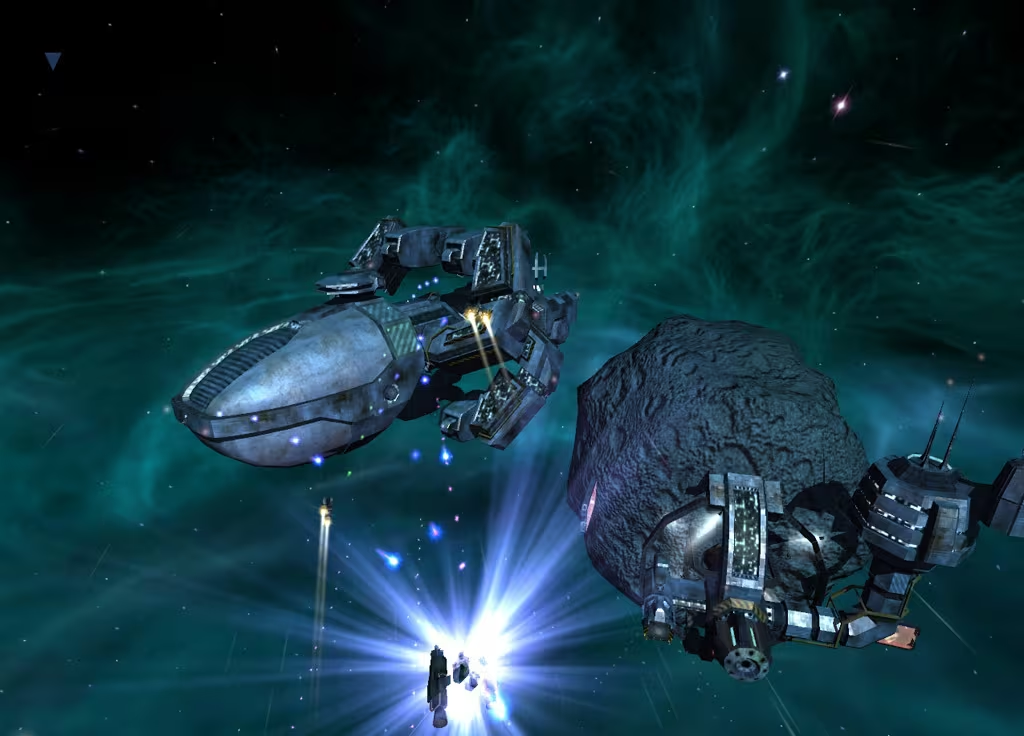
X2: The Threat Thumbnail

X2: The Threat similar games & best alternatives

X2: The Threat

PC (Microsoft Windows), Mac, Linux • 2006

Related articles

Quick resume

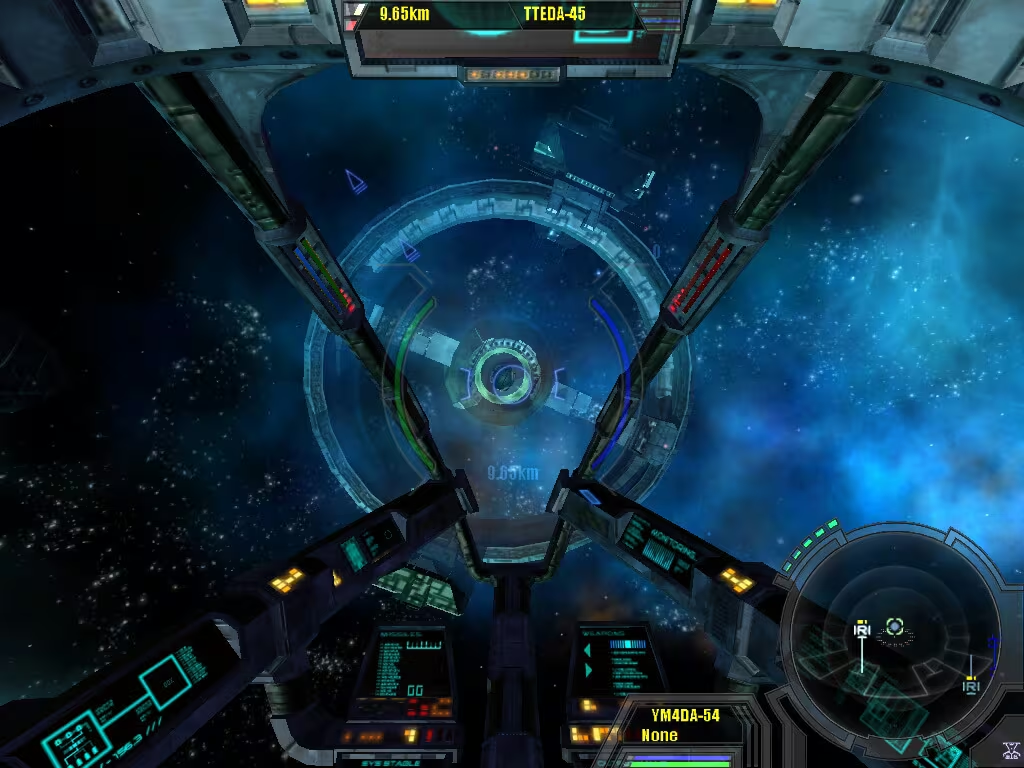
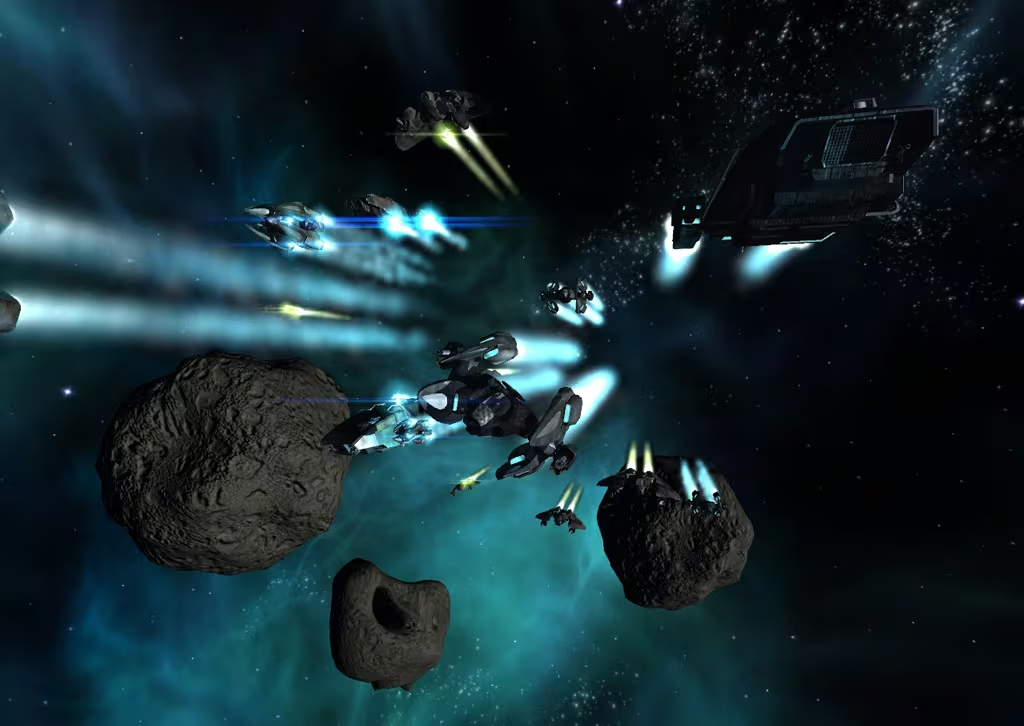
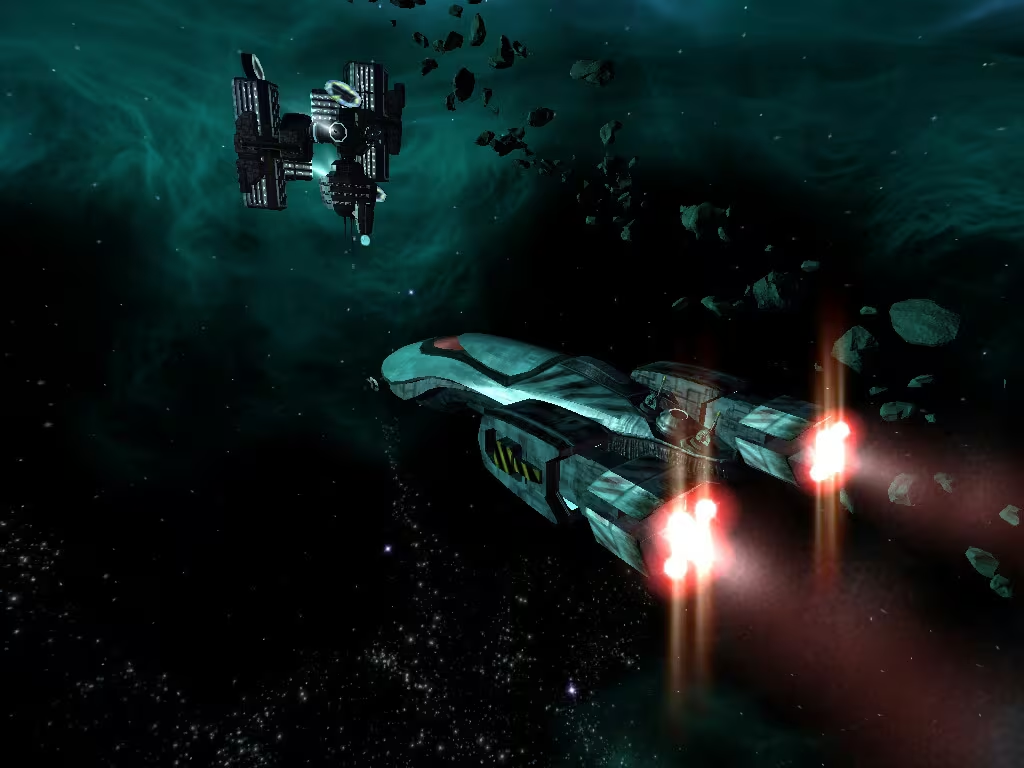
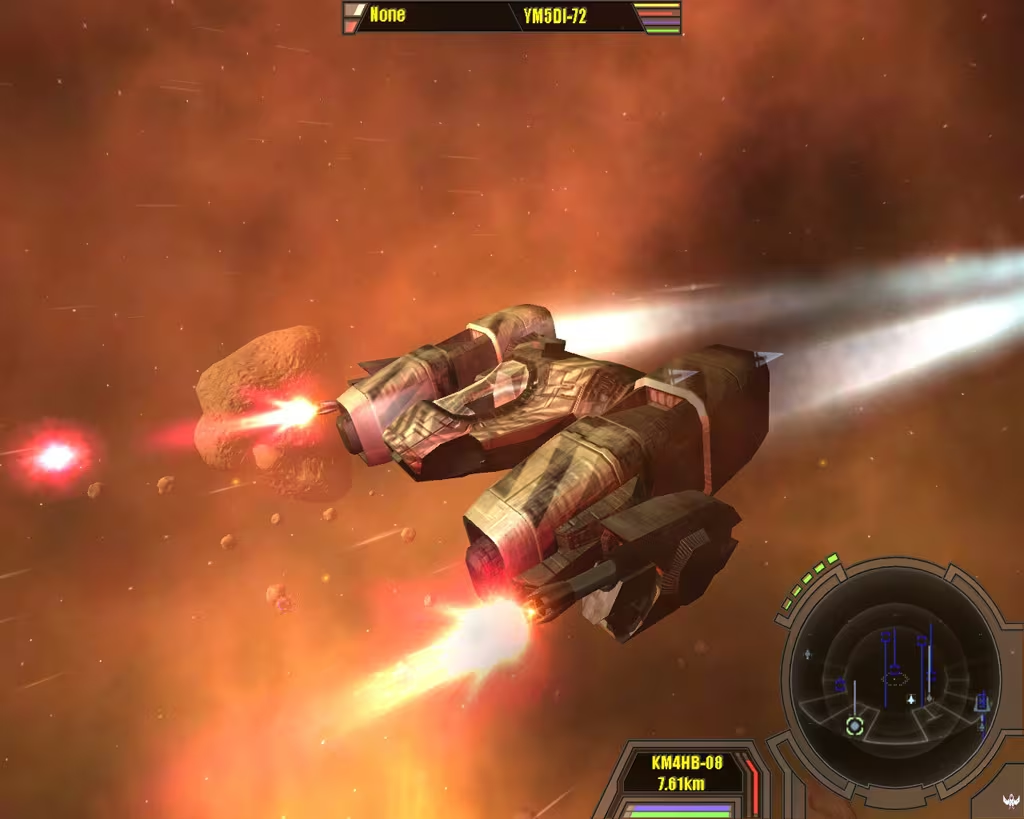
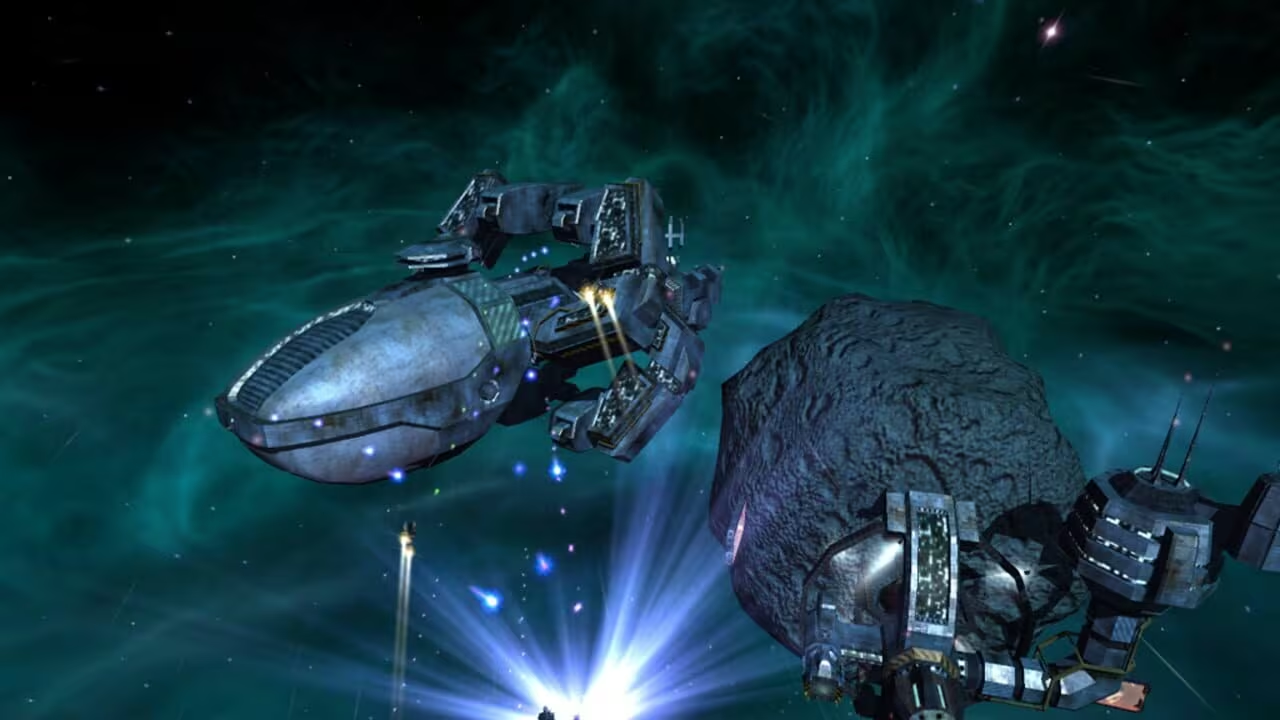
X²: The Threat is of a new generation of space simulator games, you play the role of Julian Gardna who continues the story set by X: Beyond The Frontier. The updated graphics engine gives the universe a fresher feel with newly designed ships and stations adding to the complexity of the universe.

Global score

83/100

Genres

Strategy, Simulator

Similar games

    Pros

    • Vast open universe with freedom of choice
    • Deep economic and trading systems
    • Long-term engagement and progression
    • Immersive space simulation atmosphere
    • Strong modding and community support

    Cons

    • Steep learning curve and complex controls
    • Dated graphics and character animations
    • Slow pacing and grind-heavy early game
    • Limited social and cooperative features
    • Some technical bugs and crashes reported

    Analysis

    Broadly representative of its motivational profile, with a few distinct shifts. Motivations that often define this kind of title include Leadership, Survival, Violence, Strategy. Here, the score leans higher than usual among comparable games on Exploration, Domination. It leans lower than usual among comparable games on Violence.

    How to use the graph
    Similar games map

    Each dot is a game. They are arranged from the same motivation profile as in the “Motivations” section below. Closer dots usually mean more similar reasons to play (exploration, competition, relaxation, etc.)—not that one game is “better” than another.

    • Larger dot with a light outline: the game you are viewing.
    • Colour: groups of games with comparable motivation patterns (statistical clusters).
    • Hover a dot to see the game name; click to open its page.
    • Scroll or double-click the chart to zoom out and see more games.

    Why don’t the axes read like a score? This view uses t-SNE: it only keeps who is close to whom. The scales are not “good to bad” or hours played—they separate groups on the map. Read distance between dots, not the axis numbers.

    Motivations

    • Autonomy
      5

      "Players have almost complete freedom to choose their own goals, roles, and actions in a vast open universe."

    • Competence
      4

      "Steep learning curve and complex mechanics require skill and mastery to be effective."

    • Competition
      -3

      "Focus is on personal empire building and sandbox play rather than direct competition or ranked modes."

    • Continuation
      5

      "Many players report hundreds of hours invested and strong attachment to the game."

    • Cooperation
      -2

      "Primarily a single-player experience with limited multiplayer or cooperative features."

    • Creativity
      4

      "Players can build and customize stations, fleets, and trade networks extensively."

    • Domination
      -1

      "While players can conquer sectors and build fleets, interactions are mostly balanced and respectful."

    • Escapism
      4

      "Players use the game as a deep immersive space simulation to escape real life."

    • Expectation
      -4

      "Players engage out of intrinsic interest and personal desire, not obligation."

    • Experimenting
      4

      "Game encourages trying different roles, strategies, and economic setups."

    • Exploration
      5

      "Huge universe with many sectors and secrets to discover."

    • Expression
      3

      "Customization of ships, stations, and fleet composition allows personal expression."

    • Fantasy
      3

      "Set in a sci-fi universe with fictional races and story elements."

    • Fellowship
      -3

      "Mostly a solo experience with minimal social or community interaction."

    • Growth
      5

      "Players develop skills, knowledge, and economic power over long play sessions."

    • Health
      -4

      "Primarily sedentary gameplay with long sessions and no physical activity."

    • Idle
      -3

      "Requires focused attention due to complex controls and management."

    • Intimacy
      -4

      "Limited social interaction, mostly surface-level or none."

    • Leadership
      3

      "Players command fleets and manage stations, exercising leadership over AI units."

    • Progression
      5

      "Strong emphasis on accumulating ships, stations, and wealth."

    • Relaxation
      3

      "Many find the game meditative and immersive once past the learning curve."

    • Sensation
      2

      "Visual and auditory elements are pleasant but not intense or highly stimulating."

    • Status
      -2

      "Achievements and progress are mostly personal with little social recognition."

    • Story
      1

      "Optional storyline present but many players focus on sandbox gameplay."

    • Strategy
      5

      "Requires planning, resource management, and tactical decision-making."

    • Thrill
      2

      "Some suspense in combat and economic challenges, but generally controlled pacing."

    • Value
      4

      "Players report excellent value for time and money invested."

    • Violence
      -2

      "Combat exists but is balanced with constructive economic and building gameplay."

    • Survival
      3

      "Players must manage threats and protect assets, but game is not high-risk survival focused."

    Last update: 29/04/2026