Pythagoria similar games & best alternatives

Pythagoria

PC (Microsoft Windows) • 2016

Should you play it?

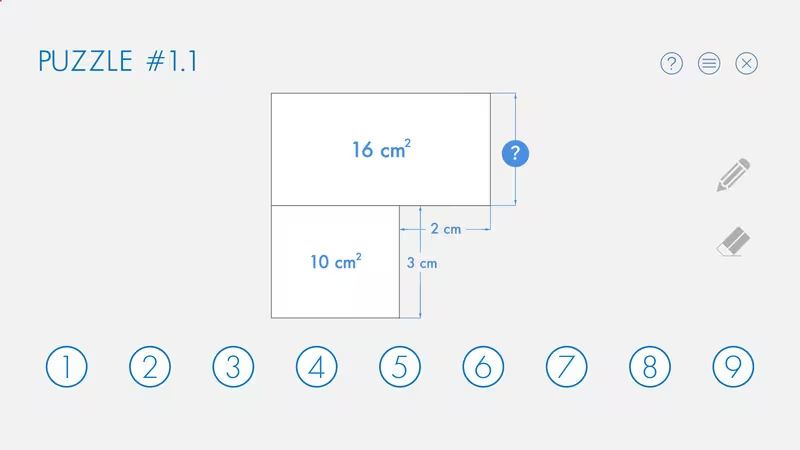
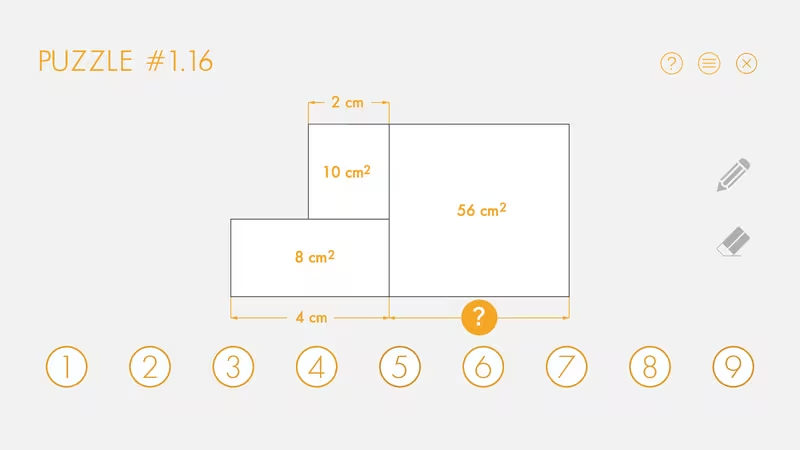
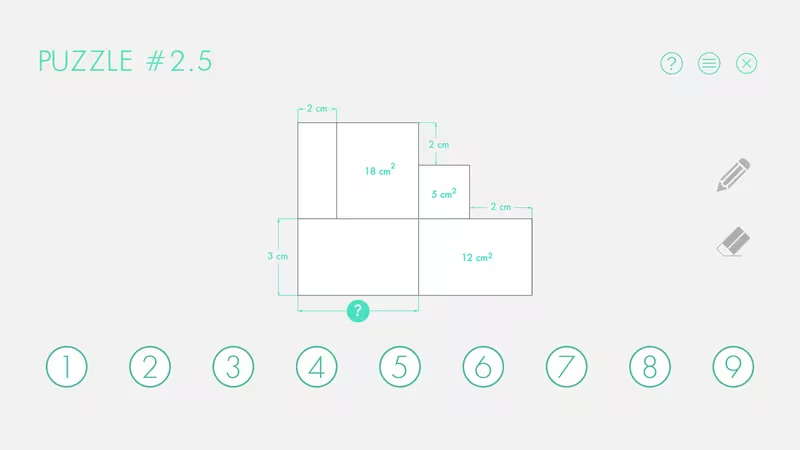
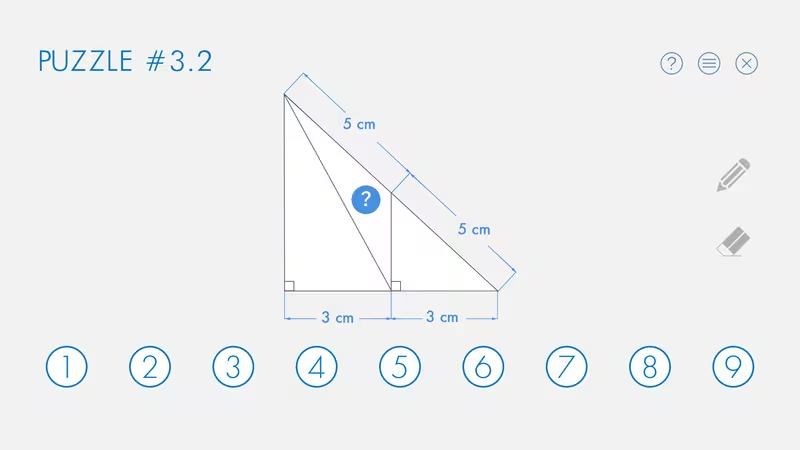
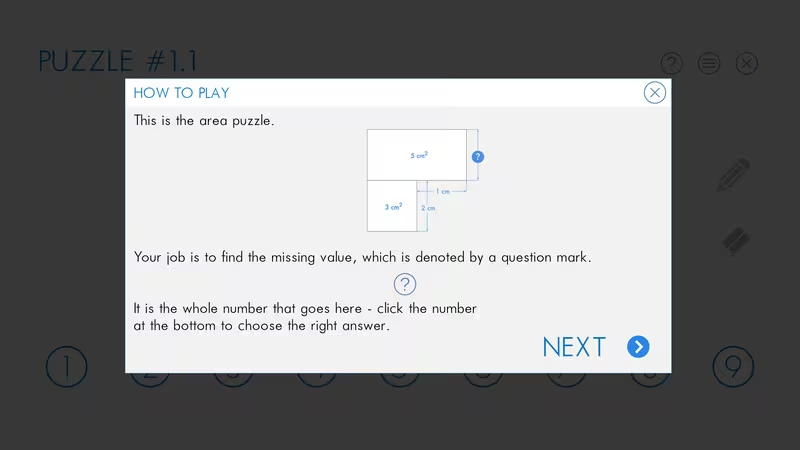
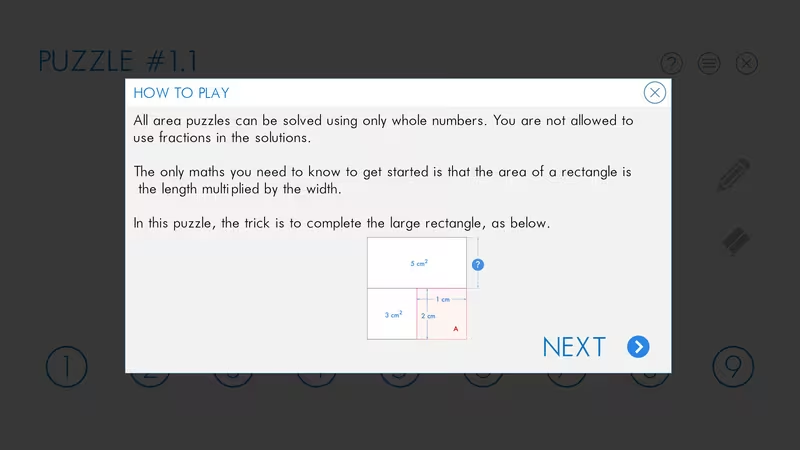
Pythagoria is a brain-teasing number puzzle game.

What works

  • Engaging geometry puzzles
  • Encourages creative problem solving
  • Minimalist and clear presentation
  • Calming soundtrack
  • Affordable price

Things to keep in mind

  • Lack of tutorial and explanations
  • Inconsistent difficulty and puzzle quality
  • No penalty for guessing answers
  • Short length and low replay value
  • Poor implementation of note-taking tools

What to play next

Top picks

Games that feels the closest overall

  • Two Digits

  • VOI

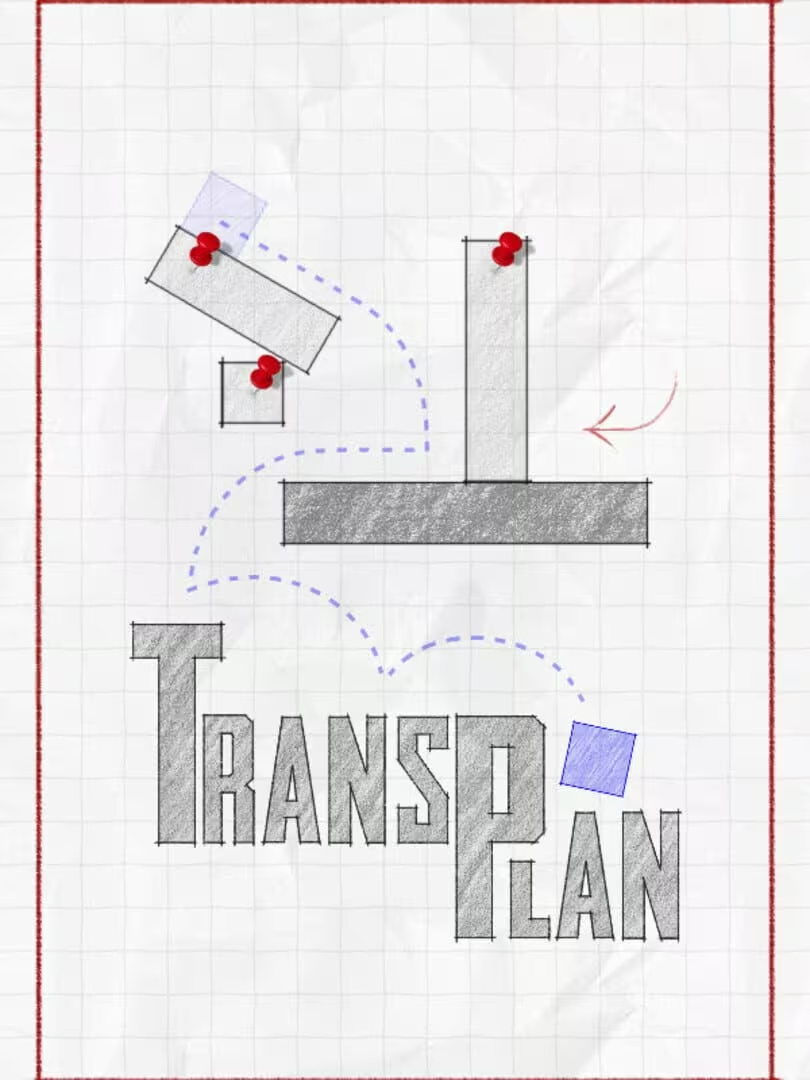
  • TransPlan

  • Linked

  • Hade

  • Up Left Out

More exploratory

Games that feels like Pythagoria but with more exploration of areas and secrets

  • Maxwell's puzzling demon

  • macdows 95

  • 14 Minesweeper Variants

  • I hate this game

  • Malware

  • Understand

More status-driven

Games that feels like Pythagoria but with more focus on status and recognition

  • Zup! Z

  • Lines X

  • Oik 3

  • qop

  • qop 3

  • Oik 2

More sensation-seeking

Games that feels like Pythagoria but with more sensory thrills and emotional fun

  • Hook

  • SquareCells

  • CrossCells

  • Hexcells

  • RYB

  • Sudoku Jigsaw / 拼图数独

More expressive

Games that feels like Pythagoria but with more self-expression and customization

  • Circuits

  • Classic Sudoku

  • Sudoku Universe / 数独宇宙

  • Unium

  • LineWay

  • Lines Infinite

Choose your own criteria ->

Similarity map

How to compare these games

Compare nearby games

Each card is a nearby game on the similarity map, compared with Pythagoria. Swipe sideways to move between games. Titles already listed in What to play next are left out.

  • Cover and title: open that game’s page.
  • What works / keep in mind: the same highlights as the desktop comparison panel.
  • Bars: the main motivational differences versus this game.
How to use the graph

Similarity map

Each dot is a game placed from its motivation profile relative to this page’s game. Direction shows which motivation differs most; distance along that axis shows how large the gap is.

  • Purple star: this page’s game at the centre — everything is relative to it.
  • Direction: each axis is a main motivational difference vs this game (e.g. more / less competitive).
  • Distance on an axis: how large that difference is (ring scales show +/− points).
  • Coloured chips: click to highlight games that mainly differ on that motivation; click again to reset.
  • Dotted line: link between this page’s game and the one selected for comparison.
  • Hover a dot to preview that game in the panel on the right; click to keep that comparison.
  • Scroll or double-click the chart to zoom.

How to read the map This is a polar difference map: direction = which motivation differs, and distance = how much (same units as the sidebar deltas).

Swipe to compare nearby games with Pythagoria. These titles are not in What to play next.

Pythagoria: Less representative of its motivational profile, with noticeable differences. Motivations that often define this kind of title include Violence, Fantasy, Thrill, Story. It leans lower than usual among comparable games on Sensation, Exploration, Expression.

Last update: 21/08/2026