Chime Thumbnail

Chime similar games & best alternatives

Chime

PC (Microsoft Windows), Xbox 360 • 2010

Related articles

Quick resume

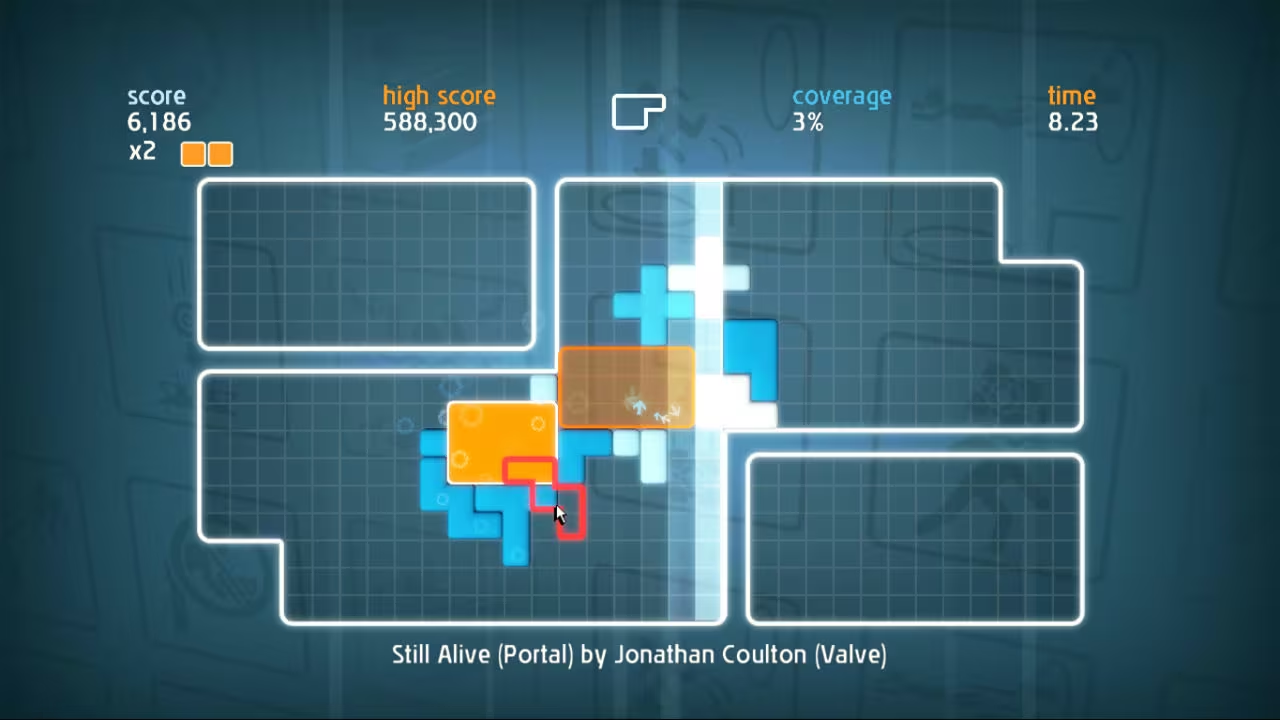
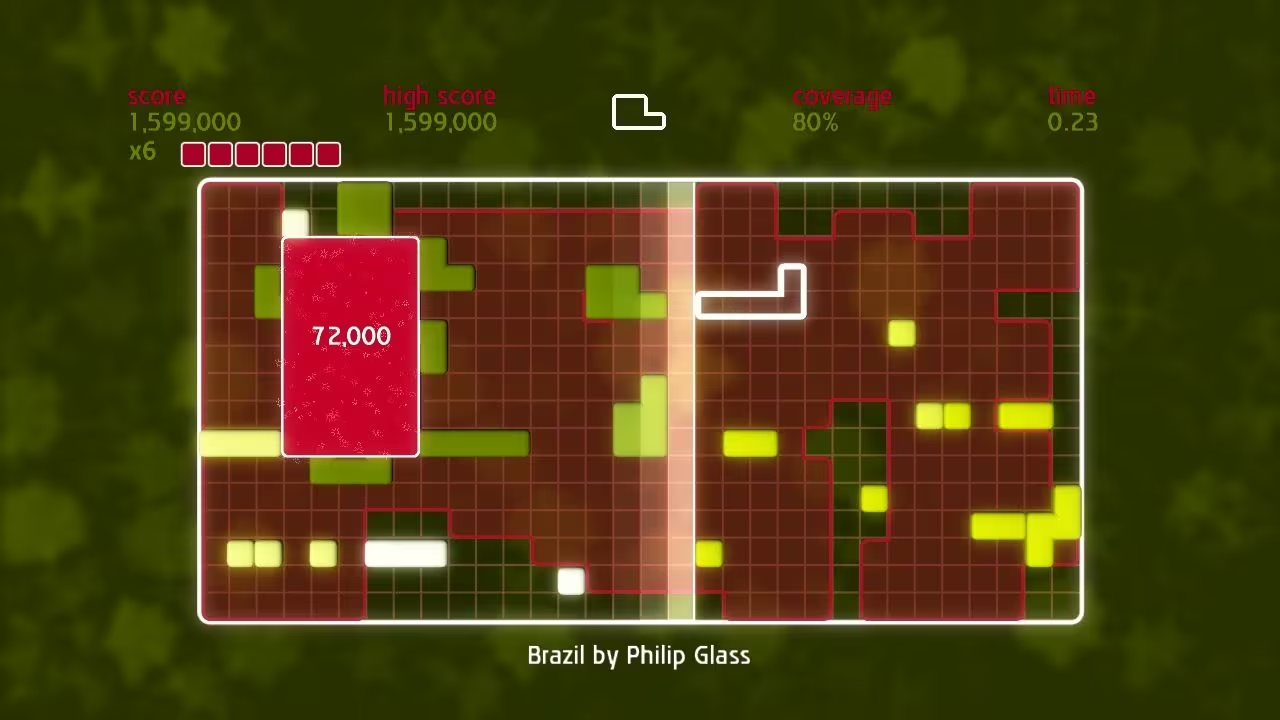
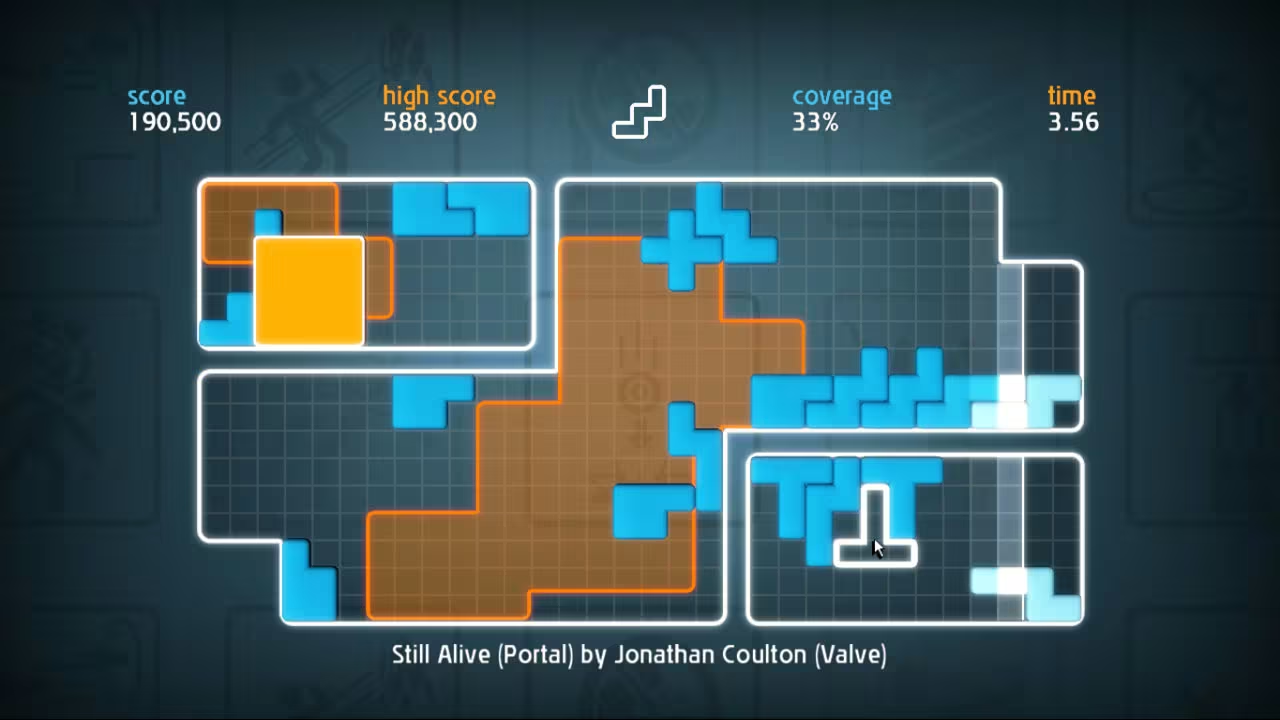
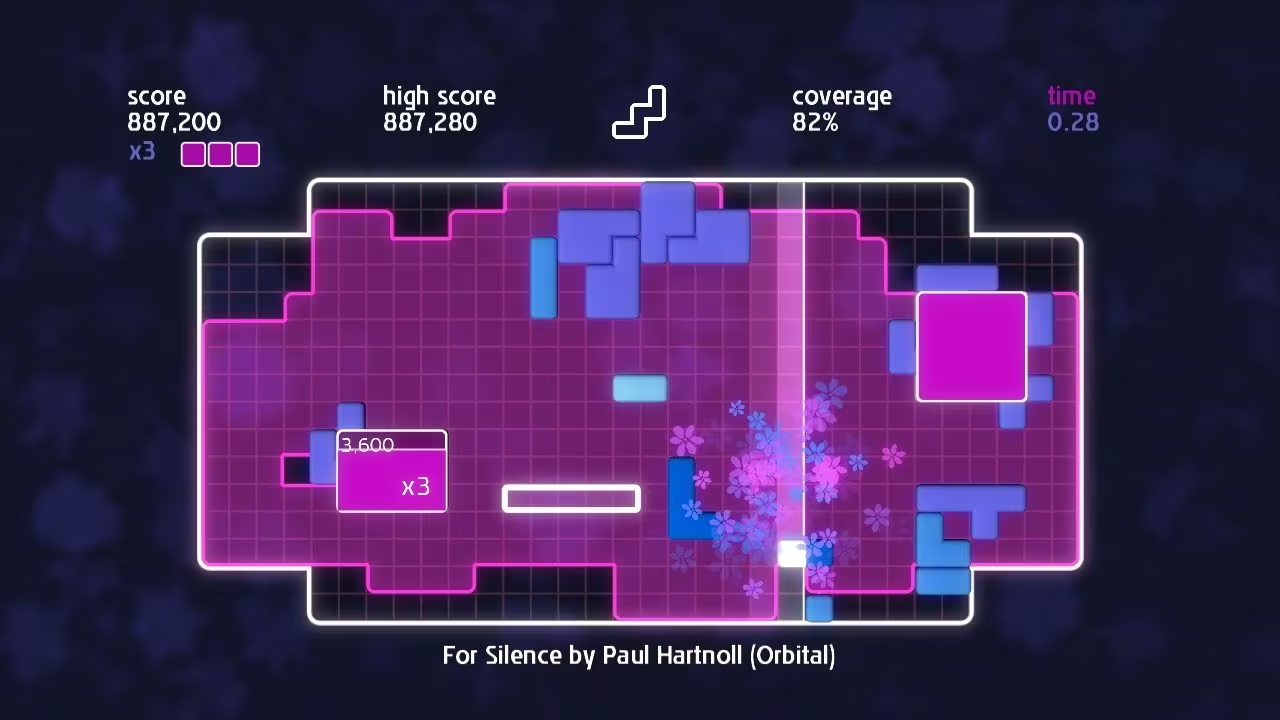
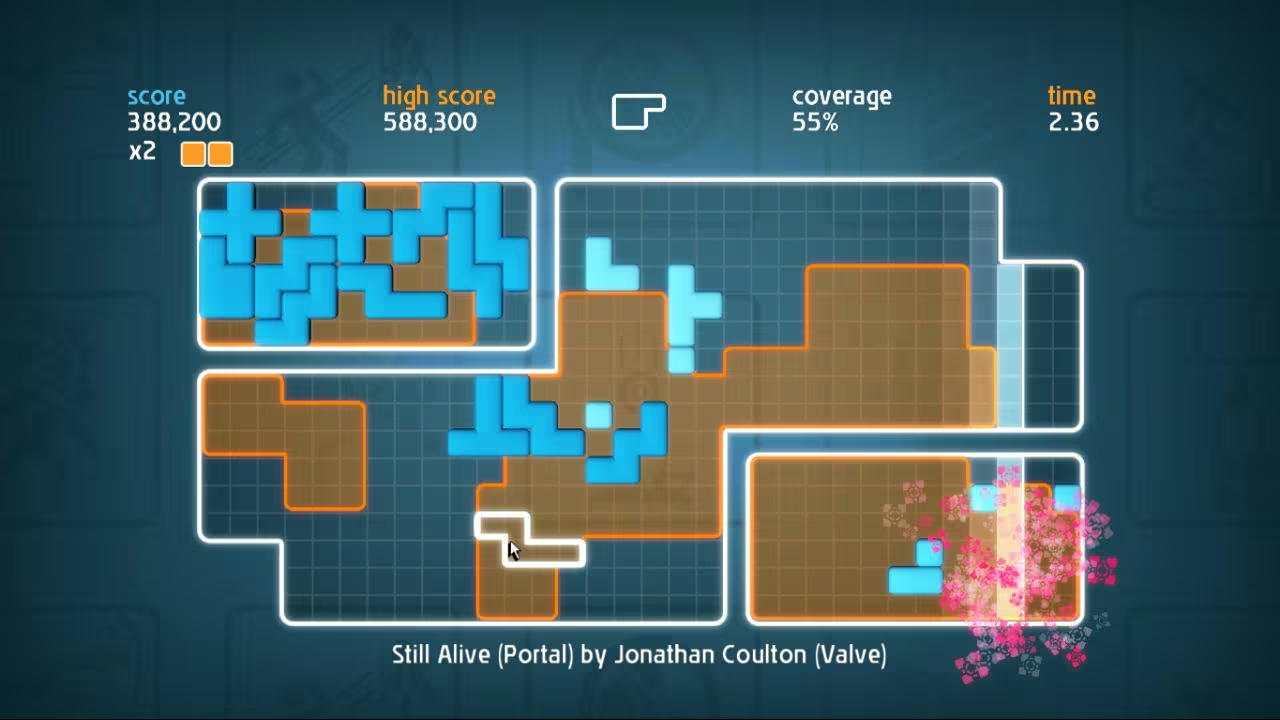
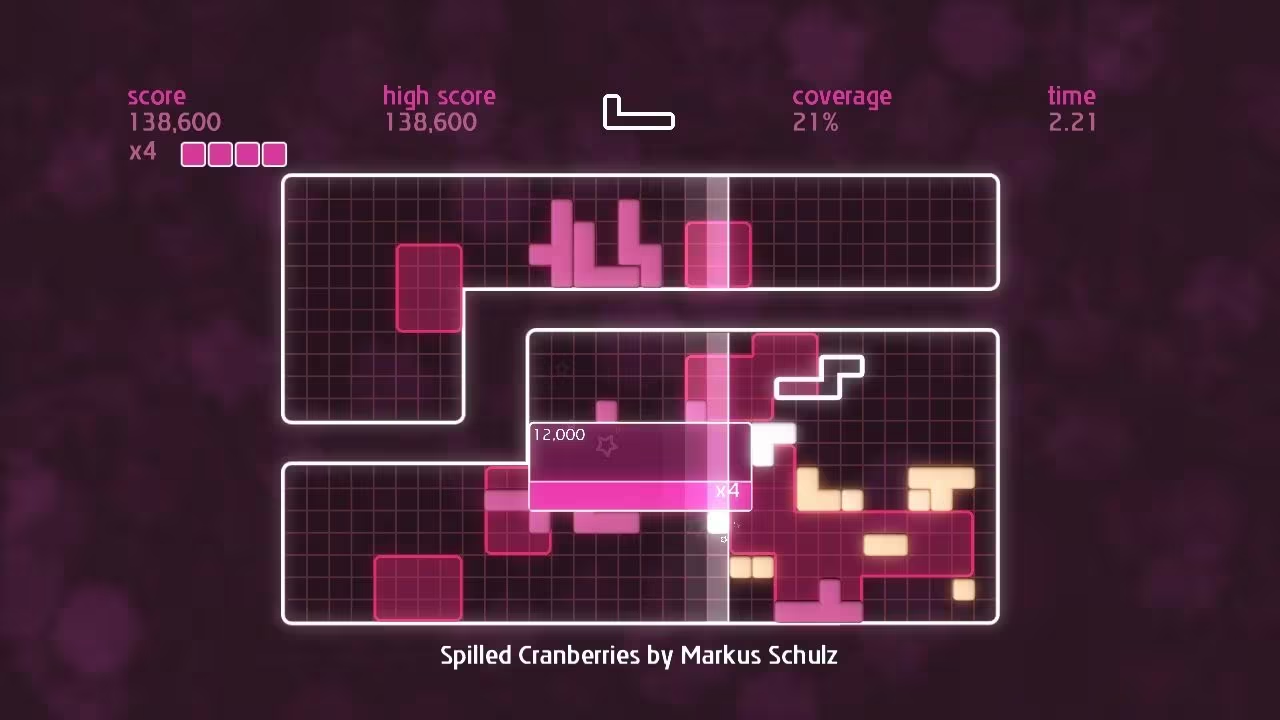
A Zoë Mode production for the video game charity initiative OneBigGame, Chime pits gamers against the melody in this acclaimed puzzle experience.

Global score

94/100

Genres

Casual, Music, Indie, Puzzle

Similar games

    Pros

    • Relaxing and hypnotic music integration
    • Addictive and challenging puzzle gameplay
    • Good value for price with charity support
    • High replayability and long play sessions
    • Simple to learn but difficult to master

    Cons

    • Limited number of levels and songs
    • Lack of multiplayer or social features
    • Some control issues reported with mouse input
    • Repetitive music tracks can become tiring
    • Short overall content length

    Analysis

    Broadly representative of its motivational profile, with a few distinct shifts. Motivations that often define this kind of title include Fantasy, Violence, Story, Thrill. Here, the score leans higher than usual among comparable games on Competition, Status. It leans lower than usual among comparable games on Exploration.

    How to use the graph
    Similar games map

    Each dot is a game. They are arranged from the same motivation profile as in the “Motivations” section below. Closer dots usually mean more similar reasons to play (exploration, competition, relaxation, etc.)—not that one game is “better” than another.

    • Larger dot with a light outline: the game you are viewing.
    • Colour: groups of games with comparable motivation patterns (statistical clusters).
    • Hover a dot to see the game name; click to open its page.
    • Scroll or double-click the chart to zoom out and see more games.

    Why don’t the axes read like a score? This view uses t-SNE: it only keeps who is close to whom. The scales are not “good to bad” or hours played—they separate groups on the map. Read distance between dots, not the axis numbers.

    Motivations

    • Autonomy
      4

      "Players freely place pieces anywhere on the grid, allowing personal strategy and decision-making rather than following preset routines."

    • Competence
      3

      "The game requires planning and skillful placement of pieces to maximize score and coverage, with increasing challenge in timed modes."

    • Competition
      2

      "Includes leaderboards and high score chasing, encouraging comparison with others, but also supports relaxed solo play."

    • Continuation
      3

      "Many players report long playtimes and habitual returns to the game, indicating strong engagement and replayability."

    • Cooperation
      -5

      "The game is primarily a single-player puzzle experience with no cooperative multiplayer elements."

    • Creativity
      3

      "Players creatively place blocks to form shapes and influence the music, though within the constraints of given pieces and grids."

    • Domination
      -5

      "No evidence of exerting control or superiority over others; interactions are individual and non-confrontational."

    • Escapism
      4

      "Players use the relaxing music and hypnotic gameplay as a soothing activity to escape stress and unwind."

    • Expectation
      -4

      "Players engage voluntarily for enjoyment and relaxation rather than out of obligation or pressure."

    • Experimenting
      2

      "Some experimentation with piece placement and strategies is encouraged to optimize score and coverage."

    • Exploration
      -3

      "Limited number of levels and fixed grids reduce exploration; gameplay focuses on mastering known boards."

    • Expression
      2

      "Players influence the music dynamically through their placement choices, allowing some personal expression within gameplay."

    • Fantasy
      -5

      "The game is abstract and puzzle-based with no narrative or fictional roleplaying elements."

    • Fellowship
      -4

      "Minimal social interaction; primarily a solitary experience with some leaderboard comparison."

    • Growth
      3

      "Players develop spatial reasoning and strategic planning skills to improve performance and achieve higher scores."

    • Health
      -5

      "Sedentary gameplay with no physical activity or health-related features."

    • Idle
      -3

      "Requires focused attention and planning rather than passive or background play."

    • Intimacy
      -5

      "No evidence of forming close relationships or emotional social interactions."

    • Leadership
      -5

      "No leadership or group management elements present."

    • Progression
      3

      "Players progress by completing levels, unlocking achievements, and improving scores, though content is limited."

    • Relaxation
      5

      "Highly praised for its relaxing music and calming gameplay, ideal for stress relief and flow states."

    • Sensation
      3

      "Enjoyable audiovisual feedback with dynamic music changes and colorful visuals provide sensory stimulation."

    • Status
      1

      "Leaderboards provide some recognition, but social status is not a major focus."

    • Story
      -5

      "No narrative or story elements; gameplay is context-free puzzle solving."

    • Strategy
      4

      "Requires planning and spatial reasoning to optimize piece placement and maximize score."

    • Thrill
      1

      "Timed modes add some tension and challenge, but overall experience is more calming than thrilling."

    • Value
      4

      "Players find good value in the game’s price, especially considering its charity contribution and replayability."

    • Violence
      -5

      "No violent or destructive gameplay elements; focus is on constructive puzzle solving."

    • Survival
      -4

      "No survival or threat avoidance; gameplay occurs in stable, low-risk conditions."

    Last update: 29/04/2026