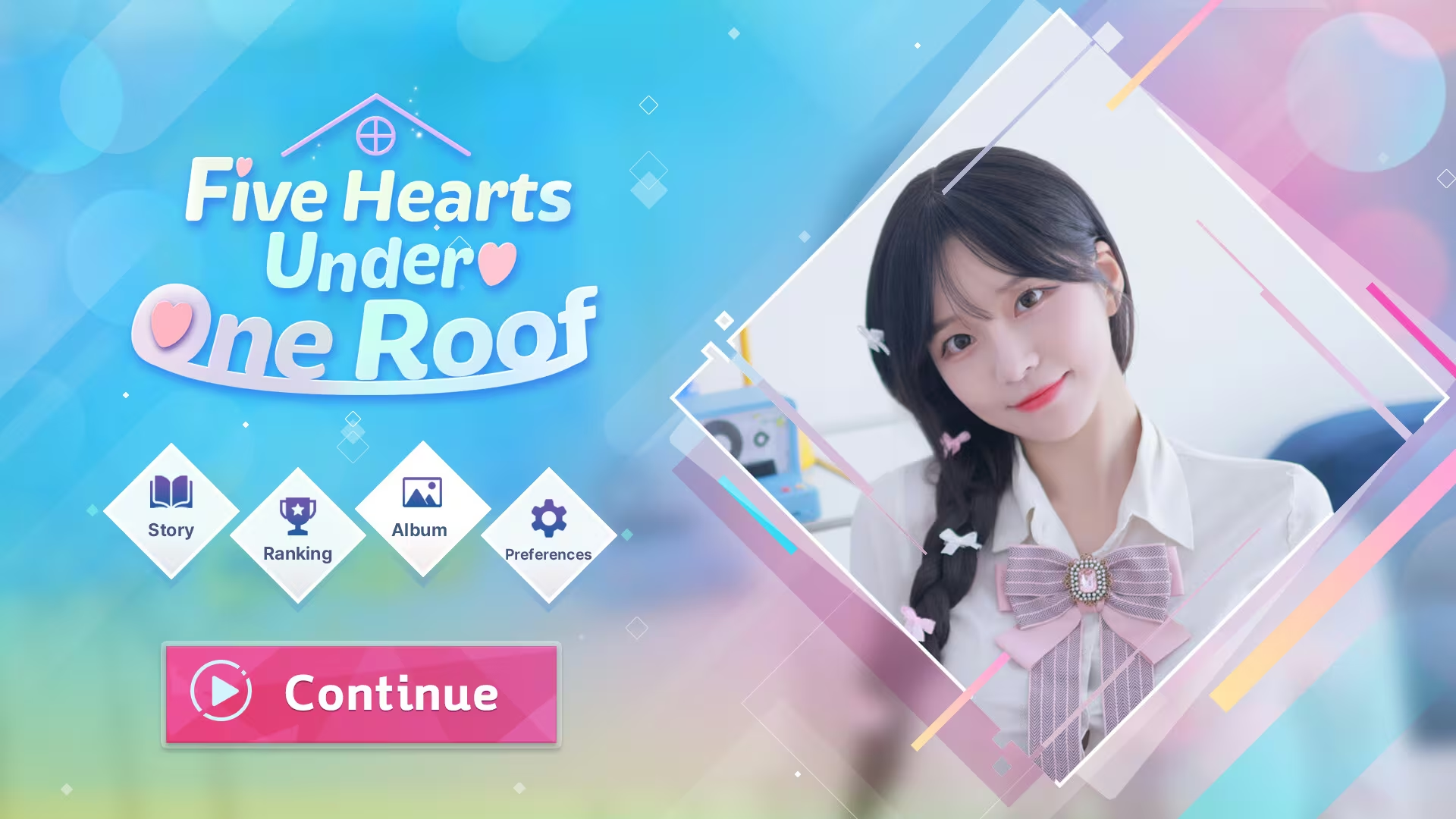
Five Hearts Under One Roof Thumbnail

Five Hearts Under One Roof similar games & best alternatives

Five Hearts Under One Roof

PC (Microsoft Windows), Mac, PlayStation 4, Nintendo Switch, Linux • 2024

Related articles

Quick resume

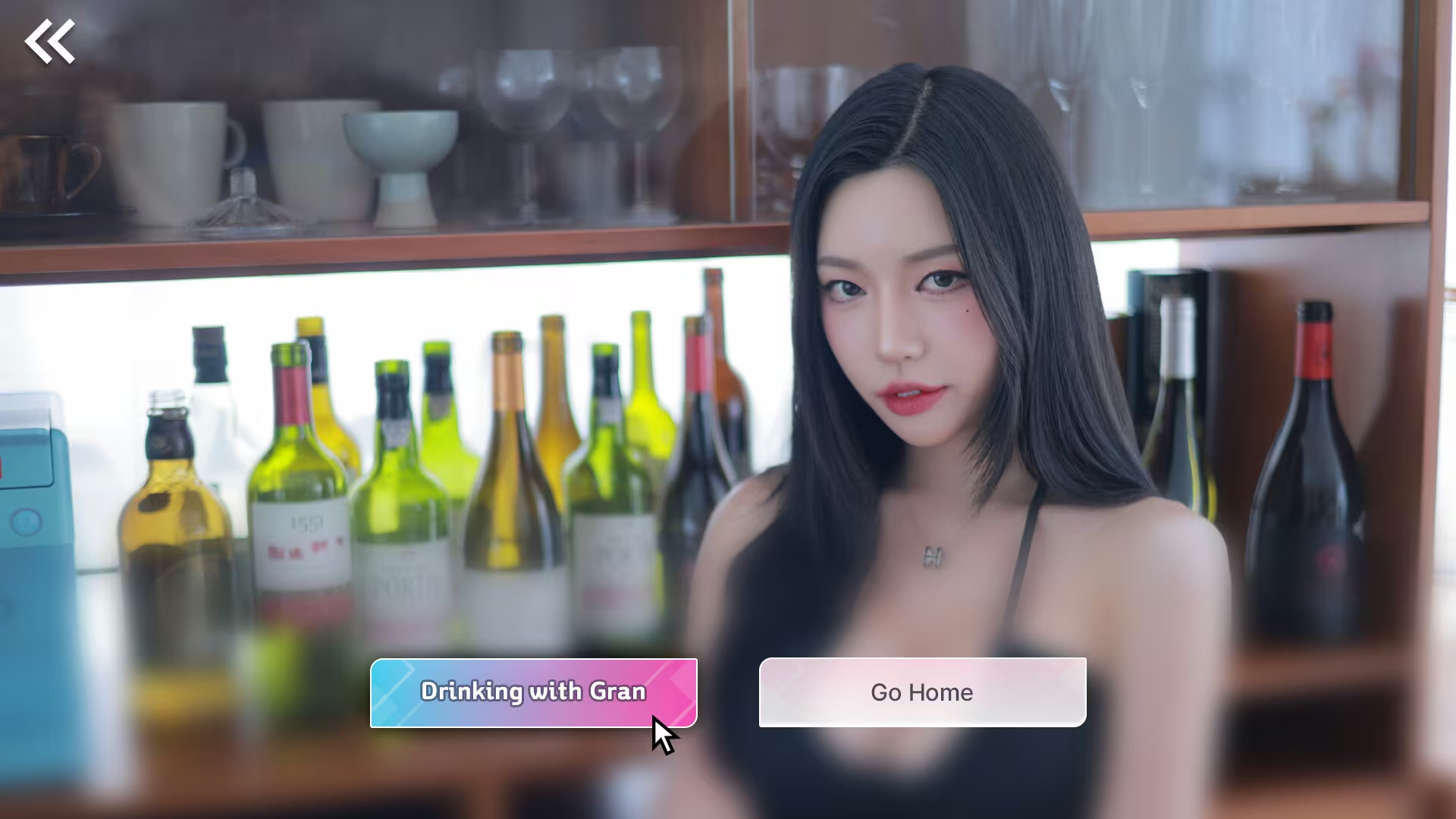
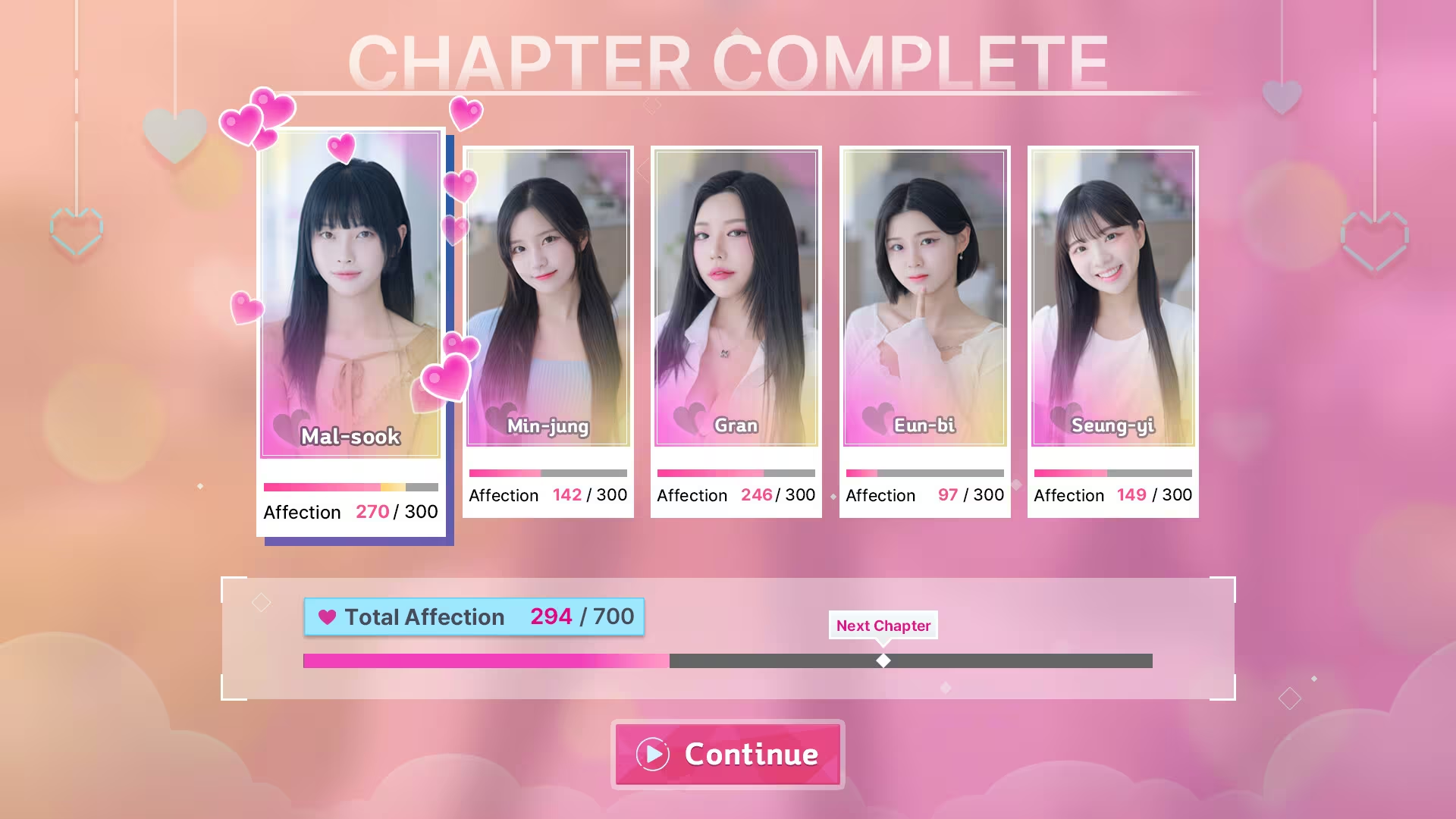
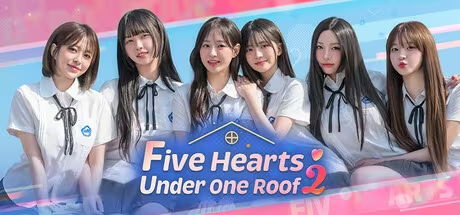
Yuman’s, the player, once solitary home and routine are now invaded by five beautiful women! Each has her unique charm – the 'childhood friend of 20 years,' the 'first love and former idol,' the 'demanding boss,' the 'bold younger girl,' and the 'shy recluse.' Who will you choose?

Global score

91/100

Genres

Adventure, Role-playing (RPG), Simulator, Visual Novel, Strategy

Similar games

    Pros

    • Engaging story and characters
    • High replay value with multiple endings
    • Strong emotional and escapism appeal
    • Quality acting and production
    • User-friendly interface

    Cons

    • Progression gating requiring repetitive play
    • Some translation and localization issues
    • Short overall playtime per run
    • Limited player agency due to fixed narrative
    • Lack of explicit romance or physical intimacy

    Analysis

    A very typical example of its motivational profile. Motivations that often define this kind of title include Intimacy, Survival, Violence, Competition. Here, the score leans higher than usual among comparable games on Intimacy. It leans lower than usual among comparable games on Cooperation, Survival.

    How to use the graph
    Similar games map

    Each dot is a game. They are arranged from the same motivation profile as in the “Motivations” section below. Closer dots usually mean more similar reasons to play (exploration, competition, relaxation, etc.)—not that one game is “better” than another.

    • Larger dot with a light outline: the game you are viewing.
    • Colour: groups of games with comparable motivation patterns (statistical clusters).
    • Hover a dot to see the game name; click to open its page.
    • Scroll or double-click the chart to zoom out and see more games.

    Why don’t the axes read like a score? This view uses t-SNE: it only keeps who is close to whom. The scales are not “good to bad” or hours played—they separate groups on the map. Read distance between dots, not the axis numbers.

    Motivations

    • Autonomy
      3

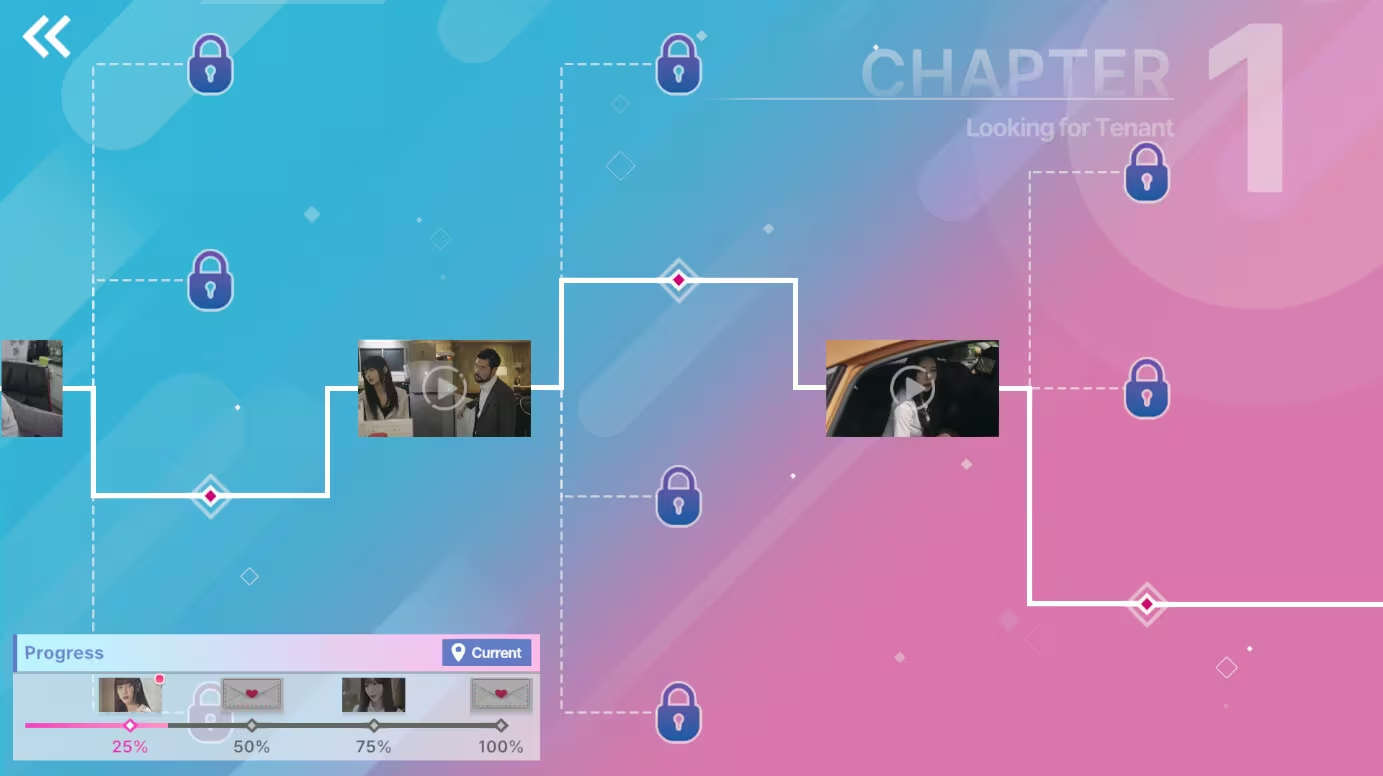
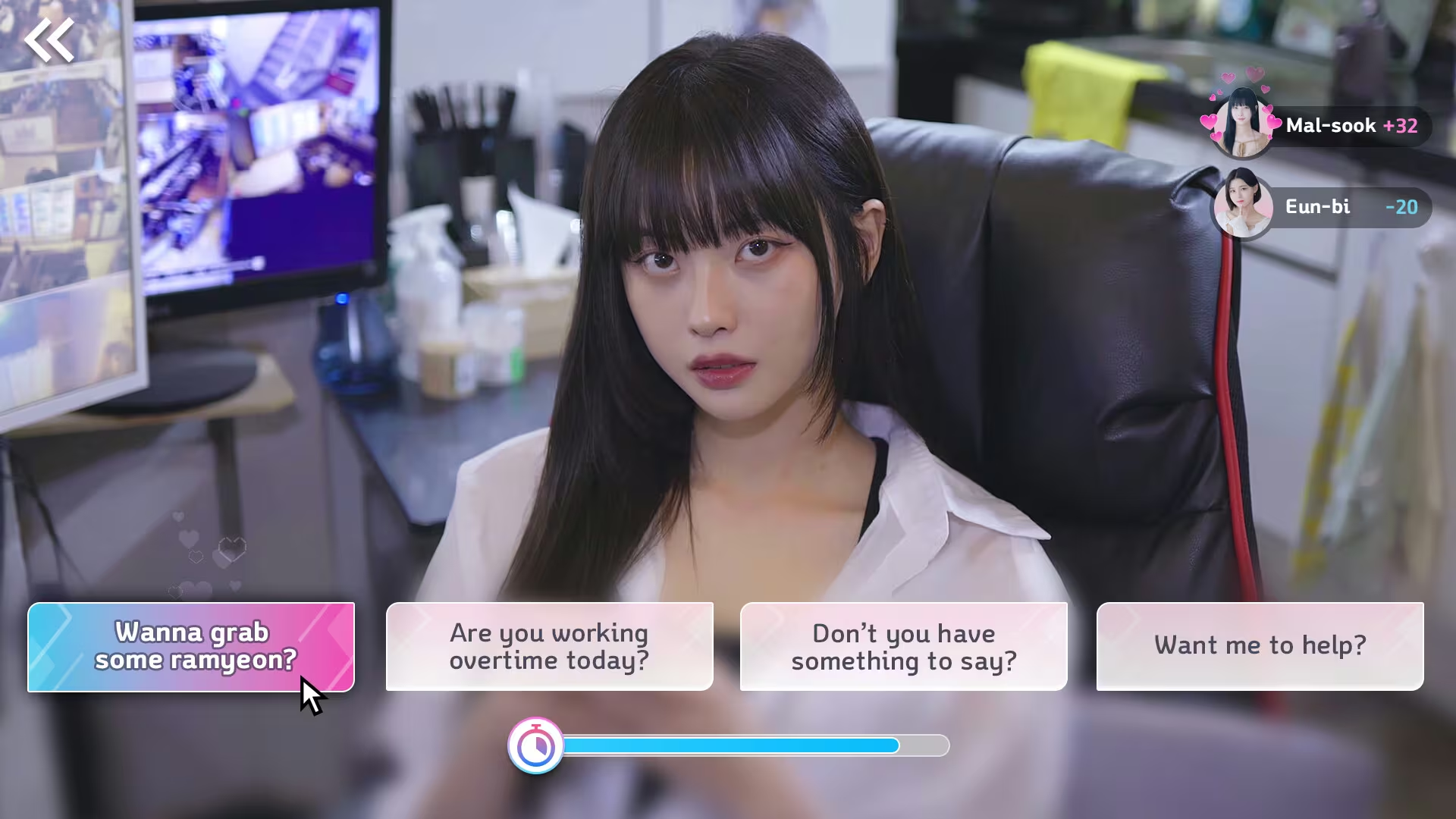
      "Players make choices that influence story progression and character relationships, though progression is gated by affection points requiring replaying chapters."

    • Competence
      1

      "Game involves making choices and unlocking endings, but skill demands are low and progression can be repetitive and grindy."

    • Competition
      -3

      "Focus is on personal story experience and relationship building without leaderboards or direct player comparison."

    • Continuation
      4

      "Many players report long playtimes, multiple replays to unlock endings, and strong attachment to characters."

    • Cooperation
      -5

      "Single-player experience focused on individual narrative and choices without multiplayer or teamwork."

    • Creativity
      2

      "Players explore different dialogue options and story branches, but within a fixed narrative structure."

    • Domination
      -5

      "Interactions emphasize mutual relationships and emotional connection rather than control or superiority."

    • Escapism
      5

      "Strong theme of emotional escape and comfort from loneliness, with players expressing deep personal resonance."

    • Expectation
      -4

      "Players engage voluntarily for enjoyment and emotional connection, not out of obligation or external pressure."

    • Experimenting
      3

      "Encourages trying different dialogue choices and story paths to unlock multiple endings and secret scenes."

    • Exploration
      1

      "Exploration is limited to narrative branches and unlocking scenes rather than physical world discovery."

    • Expression
      1

      "Some player expression through choice selection, but no character customization or avatar personalization."

    • Fantasy
      3

      "Imaginative romantic scenarios with idealized characters and storylines, typical of dating sims and FMV games."

    • Fellowship
      1

      "Some social sharing and streaming experiences mentioned, but core gameplay is solitary."

    • Growth
      2

      "Players develop understanding of characters and story through multiple playthroughs, with some personal reflection."

    • Health
      -5

      "Sedentary gameplay with no physical activity or health-related mechanics."

    • Idle
      -3

      "Requires focused attention on story and choices; not designed for background or idle play."

    • Intimacy
      4

      "Strong emotional connections to characters and feelings of companionship expressed by players."

    • Leadership
      -5

      "No leadership or group management elements; player follows narrative paths."

    • Progression
      3

      "Progression through affection points and unlocking chapters/endings, though some find gating frustrating."

    • Relaxation
      3

      "Generally relaxing and enjoyable experience with lighthearted and emotional moments."

    • Sensation
      2

      "Appealing visuals, music, and acting provide sensory enjoyment but not intense stimulation."

    • Status
      -4

      "Achievements and leaderboards are minimal; focus is on personal experience rather than social recognition."

    • Story
      5

      "Narrative-driven game with strong character arcs, multiple endings, and emotional engagement."

    • Strategy
      1

      "Choice selection involves some planning but overall straightforward without complex problem solving."

    • Thrill
      0

      "Game provides emotional highs and lows but lacks suspense or risk-based thrill elements."

    • Value
      3

      "Players report good value for time with multiple endings and replayability despite some frustration."

    • Violence
      -5

      "No combat or destructive gameplay; focus on relationship building and narrative."

    • Survival
      -5

      "No survival mechanics or threat avoidance; stable narrative environment."

    Last update: 29/04/2026